

The art world in focus
Subscribe to our newsletter for news and insights on artists, galleries and exhibitions.

Alicja Kwade’s L’Élévation des Mondes (2026), on display outside the Grand Palais. Courtesy Art Basel.
Ahead of yesterday’s announcement, speculation that Art Basel Paris would close early was already growing—helped along on Wednesday by an Instagram post from Alicja Kwade, in which she wrote that her installation outside the fair would be dismantled earlier than planned. The artist attributed the decision to “people who simply want to resort to violence”.
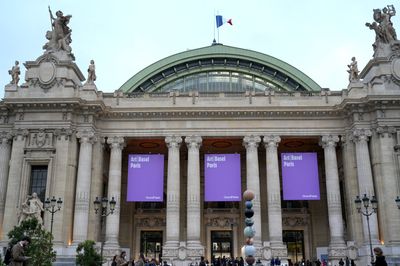
Art Basel Paris’ organisers confirmed yesterday afternoon that the fair will close from 7pm this evening, two days ahead of schedule, and ahead of the protests that are expected to return to the streets of Paris this weekend. The works lining Avenue Winston Churchill, directly outside the Grand Palais, will also be removed today, including Kwade’s stone sphere sculpture, L’Élévation des Mondes (2026).
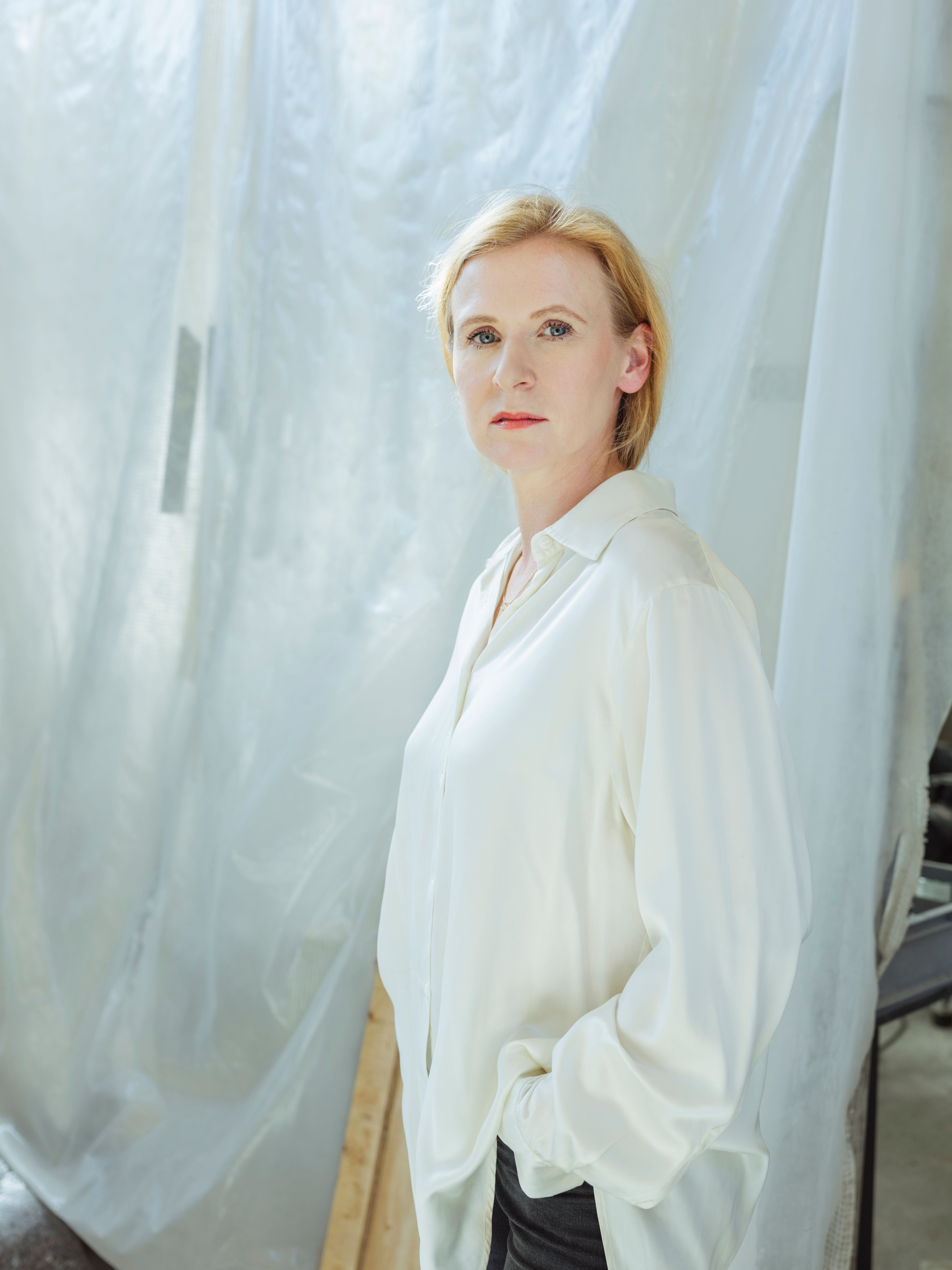
Speaking to Ocula, the artist confirmed that the decision to dismantle her work was a joint one, made in consultation with fair organisers—but said that, personally, she would have liked it to remain in place. “I am not particularly concerned about the sculpture itself. Public art is made for people,” Kwade said.
“It is meant to be accessible, to become part of everyday life, to invite encounters, interaction and dialogue. I believe that art in public space should belong to the people who share that space, rather than being something distant or untouchable.
“The possibility that people might interact with it, touch it, or even damage it is part of the reality of placing art in public space. That is not my concern.”
L’Élévation des Mondes (2026) is made up of 10 polished stone spheres, stacked on top of one another to create a 4.4-metre, somewhat precarious-looking tower. This stacking is reminiscent of the Tower of Babel and is intended as a cautionary tale: some systems created by humans often come close to collapse.
The work is one of eight sculptures installed outside the Grand Palais as part of Art Basel Paris’ public programme, including Carmen Herrera’s Angulo Amarillo (2017), Simone Fattal’s Door (2024) and Yinka Shonibare’s Abstract Bronze VIII (2026), which uses Dutch wax patterns to point to layered histories of trade, identity, and cultural exchange.
All will come down before tomorrow when, despite curfews across Paris, plans to ban what President Emmanuel Macron has termed “illegitimate protests” and the mobilisation of 70,000 security forces across France, concerns remain about another weekend of violence and looting.
Last weekend’s riots drew attention away from the original message of student-led protests that began in September: the underfunding of state education. More recently, protesters have expanded to channel anger at soaring living costs, including steep increases in the prices of fuel, energy and housing.
“I strongly support the legitimate concerns behind these protests, particularly the demands for better education, social justice and fair living conditions,” Kwade said. “It is therefore especially sad to see these important causes overshadowed by violence and destruction, which ultimately undermine the very issues people are fighting for.”
The Polish-German artist, who is represented by Pace and known for her poetic examinations of social structures, explained that while she has no concerns for the safety of her work, she is concerned for the safety of protestors.
“The sculpture does not have a permanent foundation,” she explained, referring to the temporary, and therefore somewhat less stable, nature of her installation. “And of course, one can never guarantee with absolute certainty that it could not be pushed over if enough people were determined to do so.”
She continued: “I find it very unfortunate that public art has to be removed under these circumstances. But ultimately, the safety of people must come before the preservation or presentation of an artwork.”
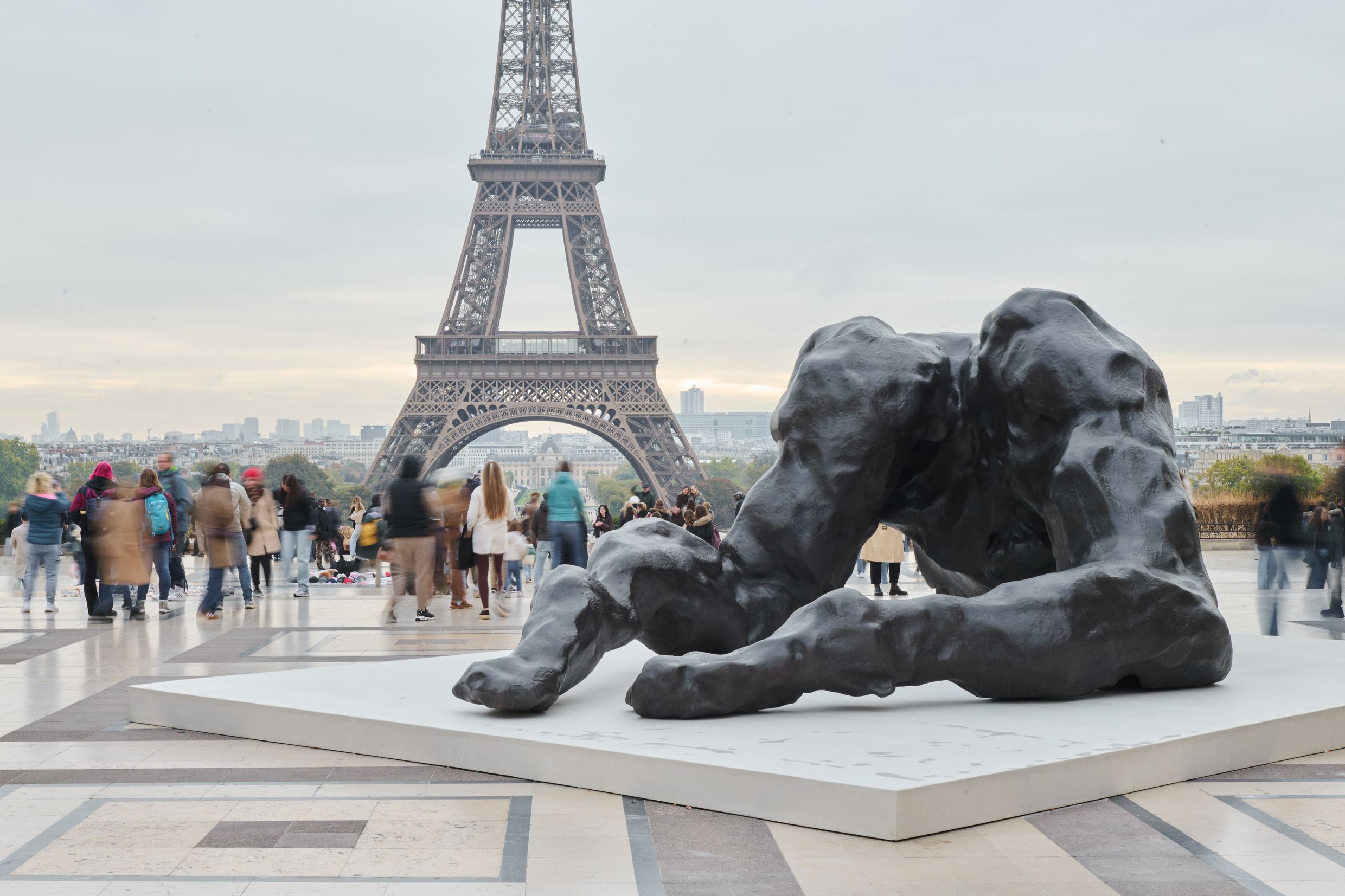
Art Basel Paris’ wider programme of public art spans eight locations around the city, and includes Tracey Emin’s bronze sculptures I lay here for you (2018), I Followed You to the End (2024) and I Will Not Be Alone (2025), installed at Parvis des Droits de l’Homme, in sight of the Eiffel Tower. An Art Basel spokesperson told Ocula that arrangements for public programme works are being assessed on a “site by site” basis.
Elsewhere in Paris, however, decisions have already been made. The Louvre, the Musée d’Orsay and the Musée Picasso will be closed on Saturday, the French ministry of culture announced earlier today. The Fondation Louis Vuitton will also shutter, as will Fondation Cartier and Lafayette Anticipations.
Galleries planning to close include Gagosian, Perrotin and Esther Schipper, while fairs closing their doors include the Moderne Art Fair, which will now conclude later today, and Post-Fair, which will close its doors from 1pm tomorrow.
A respected voice in contemporary art discourse.
Focusing on ambitious storytelling and insightful art-world commentary. Ocula Magazine publishes in-depth interviews, critical essays and timely analysis on the artists, exhibitions and ideas driving the global art world.
Learn more about Ocula Magazine
Showcasing the best of the art world.
Ocula partners with galleries from around the world to highlight their artists, artworks and exhibitions. Gallery membership is by application and invitation, with each member vetted by an independent panel.
Learn more about Ocula Membership
Specialises in the sale of major artworks.
Led by a team with deep ties to the world’s leading auction houses, galleries and collectors. Ocula’s advisory team offers bespoke services to high-net-worth clients from around the world who are looking to acquire the best of contemporary and modern art.
Learn more about our team and services


