

The art world in focus
Subscribe to our newsletter for news and insights on artists, galleries and exhibitions.

During the early modern period, Japan was riven by conflicts between regional warlords, until a ruthless samurai took central control around 1603. It was one of his successors who closed the country and banned most external trade, ushering in an unprecedented period of peace and an explosion in the domestic economy. Over the next 250 years, Japan’s towns and cities flourished. The resulting hedonistic, pleasure-oriented, art-saturated urban world was given a nickname, The Floating World (Ukiyo 浮世)—an ironic echo of the Buddhist term of the same name, which means “sorrowful”, or “ephemeral” world. The period spawned its own artistic genre, ukiyo-e, woodblocks and paintings that depicted its courtesans, musicians and other salacious characters. It was floating because all delight is ephemeral; it’s also because it was out of ordinary reach.
In his first novel, art critic and editor Ben Eastham has taken up art’s relationship with power, hedonism and capital. In The Floating World, published by Fitzcarraldo, the idea of the Ukiyo is literalised as a luxurious gated community, called the Floating World, constructed on an unnamed Aegean island, underneath a giant dome. It’s in the process of being built by the billionaire owner of the Morel Corporation as a gated retreat for the world’s elite, the unsavouriness of which will be smoothed over with a spectacular opening: an immersive, vast multiscreen installation that will take place over one night throughout the Floating World itself. Our protagonist—an arts journalist in his mid-thirties—is hired to handle the media storytelling and assist in the writing element of the artmaking. In this, he’ll support the famous artist Finn Reith, a slightly garrulous older man, who wants to infest the dome with screens and create an immersive world “filled with stories”, a “living cinema”, a “great blooming, buzzing confusion”. As a slightly clunky early exchange between the narrator and his friends in a pub lays out, the narrator is well aware of the potential ethical shortfalls of his involvement in such a project.
As the protagonist’s friend Rotimi tells him: “It’s literally a doomsday bunker for billionaires. It’s a gated community beneath a giant dome on a desert island. They might as well have built it into the heart of a volcano, they might as well have installed a swimming pool full of sharks, they might as well have put a sign up. You know the Morel Corporation trades with apartheid states, that it manufactures arms, that it has made billions of dollars defying the embargoes?”
In other words, it’s exactly the kind of institution that tends to be the most enthusiastic about artwashing, which will serve “to signify the Floating World’s membership of that globalised, mobile, free-market economy of which contemporary art was the cultural expression,” the narrator observes. “More specifically, it would brand the island as a site of innovation and imagination, in which the future was being remade.” All our journalist needs to do is “communicate this message”.
The novel—which is narrated in the first person by our wry, thoughtful narrator—travels between Athens, the UK and the island, and follows his increasingly close relationships with his friend Asha, the installation’s director, and project manager Selima. Eastham’s snowglobe art world is populated by enjoyable caricatures—at a party, “a moon-faced curator […] explaining her ideological commitments to a Swiss collector”. The curator, “who I had seen that afternoon at reception complaining that her bed was not a double but rather two singles pushed together, was saying that her ideological commitments were broadly anarcho-syndicalist”.
Behind this activity, we glimpse in fragments or impressions something disquieting about the state of global capitalism. As the novel continues, updates come from London about “runs on the banks, soldiers breaking up campus demonstrations, roaming far-right mobs, the overcrowding of broken hospitals, the encampments or expulsion of tens of thousands of people.” In Athens, portents of disquiet are everywhere: a woman protesting in a gallery wearing a T-shirt “printed with the logo of one of the many recently proscribed organisations”, riot vans encircling the anarchist neighbourhood. On the narrator’s first night in Athens, riot police fire tear gas at protestors, who respond with Molotov cocktails; in the morning “a small army of bent-backed women in black” delivers baklava to the policemen. “I couldn’t know what any of this meant,” the protagonist muses, “but I knew it had nothing to do with me.”
“Eastham’s snowglobe art world is populated by enjoyable caricatures”
It’s a refrain we’ll hear again. In a direct address to the reader halfway through the book, our protagonist says that “If you are impatient to learn who was to blame for the disaster, then you might as well be disappointed now [...] The only thing I can say with any certainty is it had nothing to do with me.” The disavowal is part of a broader cluelessness that the protagonist exhibits. This stems partly from a basic lack of understanding: who is fighting whom, and why. He might end up, for instance, at a protest in Athens, but is too embarrassed to ask what they’re protesting. It may well be an accurate description of how revolution—or at least social upheaval—happens for most of us just off-stage, but it strains the characterisation of our otherwise reasonably politically astute protagonist. His deft observations—“a young woman resembling a precocious child wizard was castigating a group of adults for fetishising traditional cultures over the impartial pro-sociality of European capitalism”—are simply more convincing than his lapses into moral vagueness.
A more charitable reading is possible, if we consider that his confusion may perhaps be a product of the profound dislocation of grief. Two years before the novel begins, the protagonist’s wife, Cora, was killed in a missile strike in the unnamed country of her birth, where she was investigating the deaths, years previously, of her aid-worker parents. Our narrator takes the Morel job, in part, to escape the sluggishness and inertia of his despair and, in his vague way, to try to solve the nagging questions around his wife’s death, even as he is unable to articulate precisely what they are. His moral evasiveness towards his implication in the Morel project prevents him from asking the obvious. What does a company’s “implication in apartheid regimes” actually mean? What systems control how bombs come to kill aid workers? Who killed Cora? As a consequence, this art world satire becomes a whodunnit, but one that unspools mazily and haltingly. As the book’s epigraph from Roland Barthes reads, “I look for signs, but of what?”
The protagonist’s ignorance and evasiveness are emphasised by comparison to the wisdom displayed by the women in the novel—particularly Asha and Selima—who are mysterious, capable, intelligent and elemental. They anticipate where he’ll be and leave him cryptic notes, even in the most chaotic of circumstances. When the protagonist swims out to sea in a panic and gets dashed against a rock, Selima finds him and rescues him, in a scene that couldn’t help but remind me of the horse nosing Aragorn back to consciousness on the riverbank in The Two Towers. At the end of the novel, when the opening for the Floating World finally takes place, a team of women escorts the guests across the island. They are all named Melissa, the nymph in Greek myth who discovered honey (and from whom bees received their Greek name, melissae). All the women in this book strike me as like these Melissae: individuals, but who nevertheless seem to have a shared consciousness. (Bees are a recurring, mystic symbol in the novel, perhaps a stand-in for artists: as pollinators, strange industrialists, and beings that pass between earth and heaven.)
There’s a reason for this feminine mysteriousness, however: Selima and Asha, the architects of the exhibition, have all along been plotting to destroy it. Selima has been illicitly supporting war-fleeing migrants to stop off and refuel on the island; she and Asha have no intention of allowing it to become the elite escape it was intended to be. It is they who have moral backbones. On the opening night, as everything starts to collapse, the protagonist finds his way to the heart of a maze in which there are three display cabinets. One contains an image of Cora, and a fragment of a missile with Morel emblazoned across it. The whole plot orchestrated against Morel is revenge for the abstracted violence his corporation has unleashed elsewhere—the campaign that killed Cora’s parents, then Cora. There is shelling and then gunshots, and the Floating World sets alight, burning to the ground. The corporate violence of the arms dealer has been turned towards itself. Morel himself, Selima says when the team regroups, “won’t be found”.
In 1986, Kazuo Ishiguro borrowed the Floating World for his second novel, An Artist of the Floating World, in which the protagonist Masuji Ono—an ageing painter—is coming to grips with Japan’s post-war humiliation and the tarnishing of his once-illustrious reputation as a propaganda painter for the imperialist wartime government. Over the course of the novel, Ono unconvincingly tells himself and his family that, though he may be criticised, the artist must always be forgiven because of his effort to “rise above the mediocre”. Besides, he says more than once, “whatever we did, we did at the time in the best of faith”—a defence he struggles to maintain in the face of embarrassment or open hostility from his family and former students.
Ishiguro’s novel depicts an artist grappling with his own implication in systems of cruelty. Should we similarly be reluctant to take at face value The Floating World’s protagonist’s insistence that he knows nothing, can understand nothing, can affect nothing? After all, he’s been specifically selected to work on the art world’s most enormous, expensive and controversial project. His work, when we glimpse it, seems to deliver exactly what’s wanted. He’s good at the job, and not that fussed about doing it. In fact, he seems to cross a line from willing ignorance to active enthusiasm when he wrangles with Morel to try to get a permanent job on the island after the opening at the expense of Asha’s job, essentially throwing her under the bus so that he (and, in his secret plan, Selima) can replace her: the very image of the grubby critic trying desperately to get behind the velvet rope. Faced with the collapse of society as we know it, wouldn’t we all try it? As the protagonist puts it: “Here I was, convinced that the waters of a great flood were rising, having weekly conversations with Noah about the progress of his ark. Who wouldn’t be wondering whether there was space left onboard?”
In his non-fiction book The Imaginary Museum (2020), Eastham wrote about the position taken by the critic: “Thinking about the boundaries of the art world might make it possible to at least try to move more nimbly back and forth across it, never getting trapped on one side or the other.” In The Floating World, the protagonist similarly hovers between the roles of worker and boss, insider and outsider, and villain or fool. This between-ness has a warping effect on his psychology: “Something was wrong with my relation to things. I felt as if I was having to maintain a fixed position between two moving walls of glass, my reflection never meeting in the middle.” The critic’s ability to “move between”, it’s implied, can generate a double vision that obscures one’s sense of self; that makes impossible a “fixed position” of moral certainty. Similarly, The Floating World’s commitment to its protagonist’s innocence—and self-interest—means that while this art world satire presents us with a world of sordid connection, it stops short of really unpicking any of the knots. The critic is implicated and, what’s more, invested in the dominant hermeneutic system. What now?
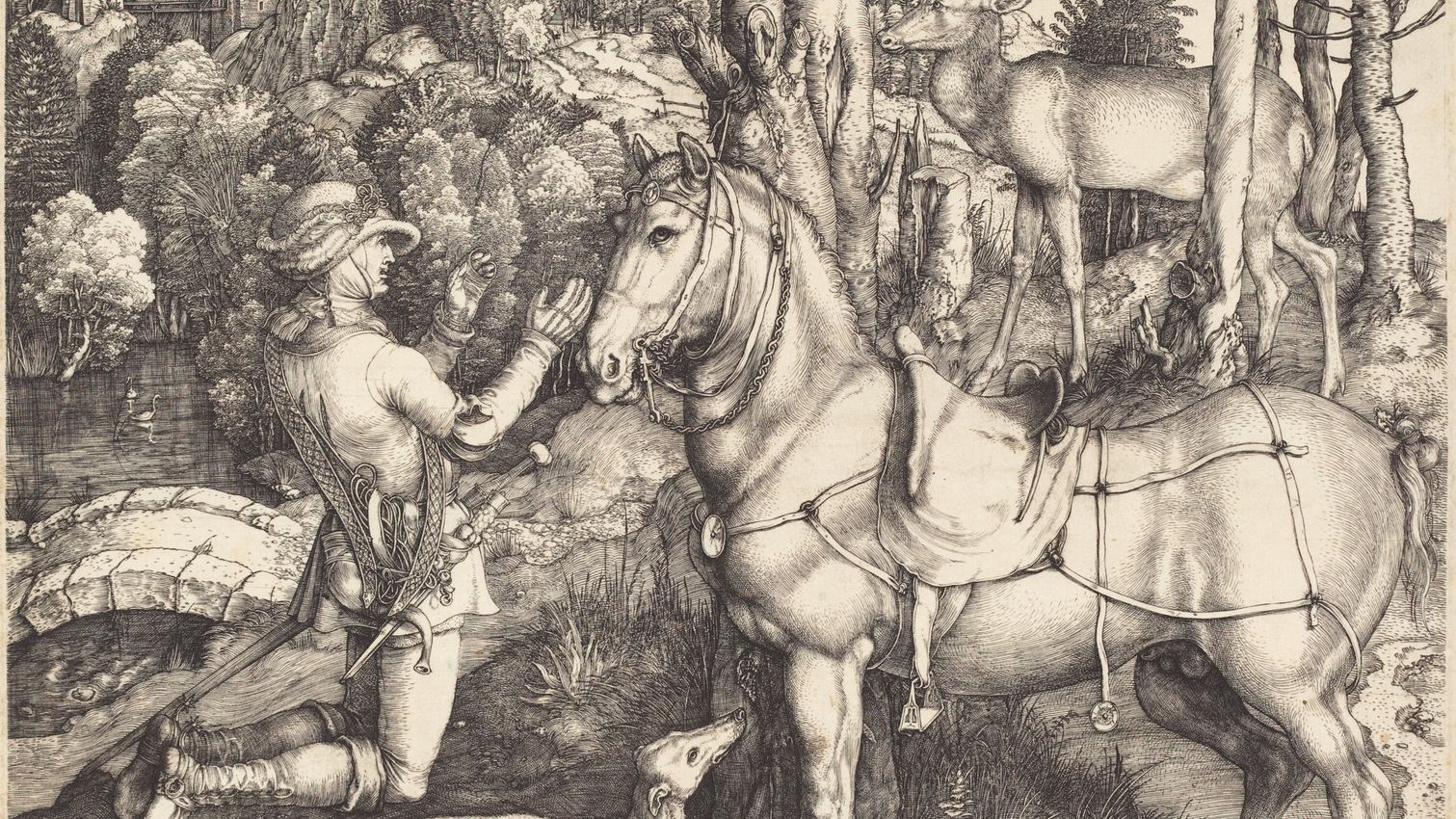
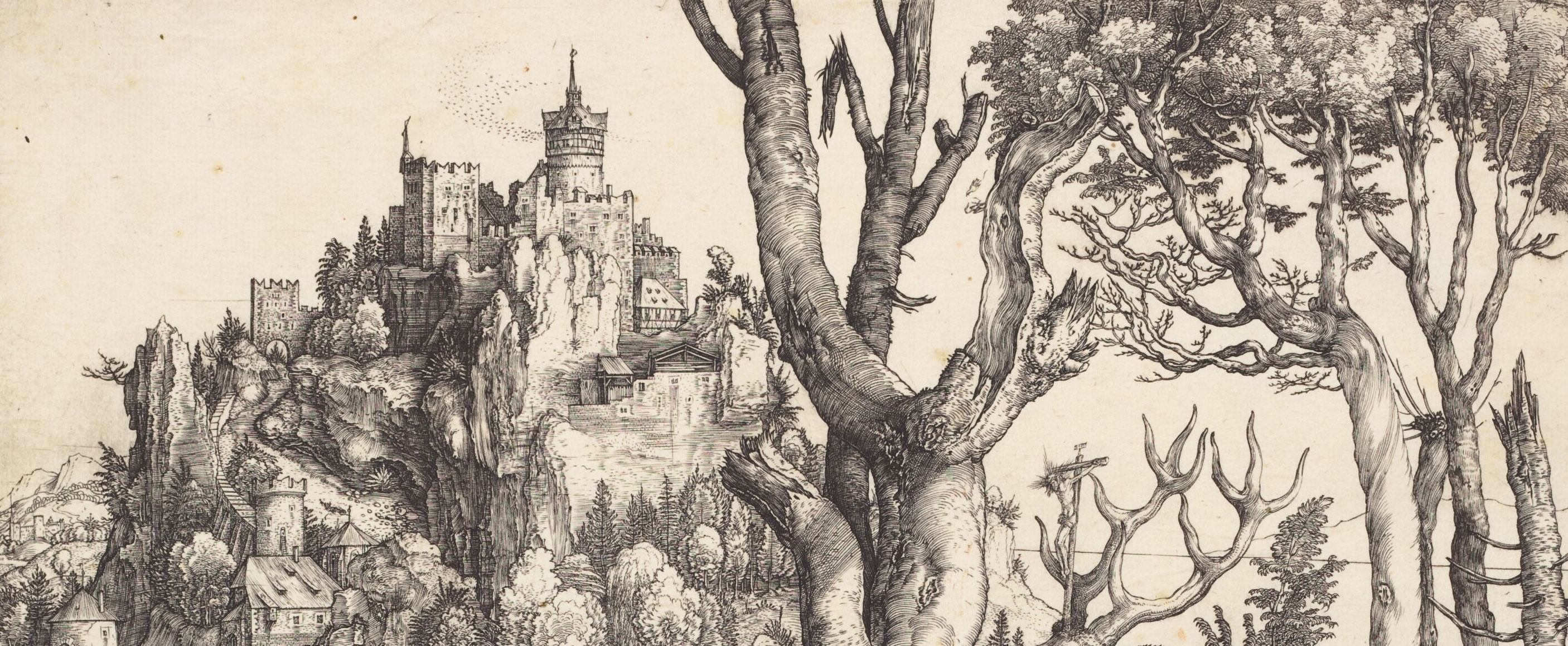
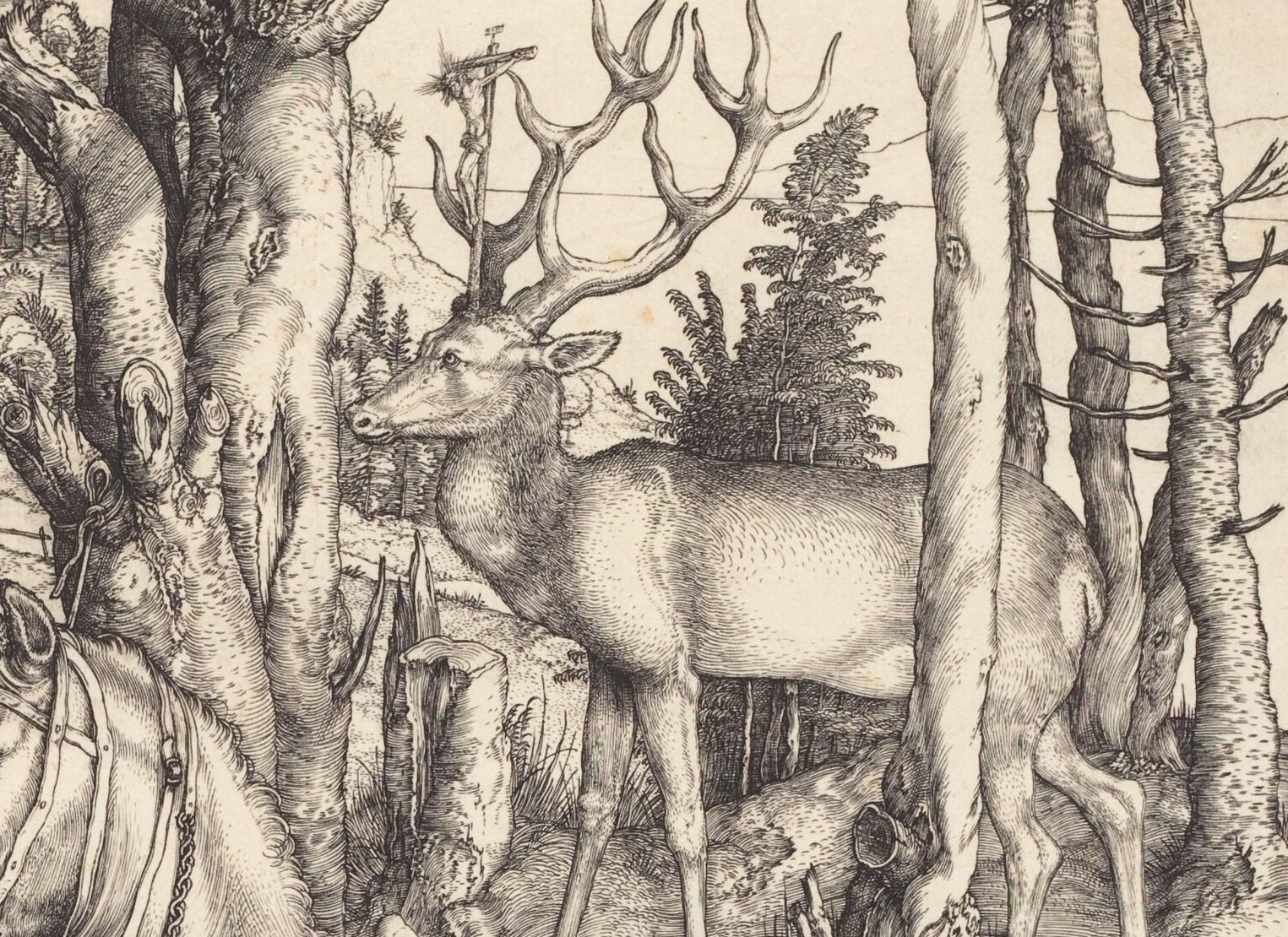
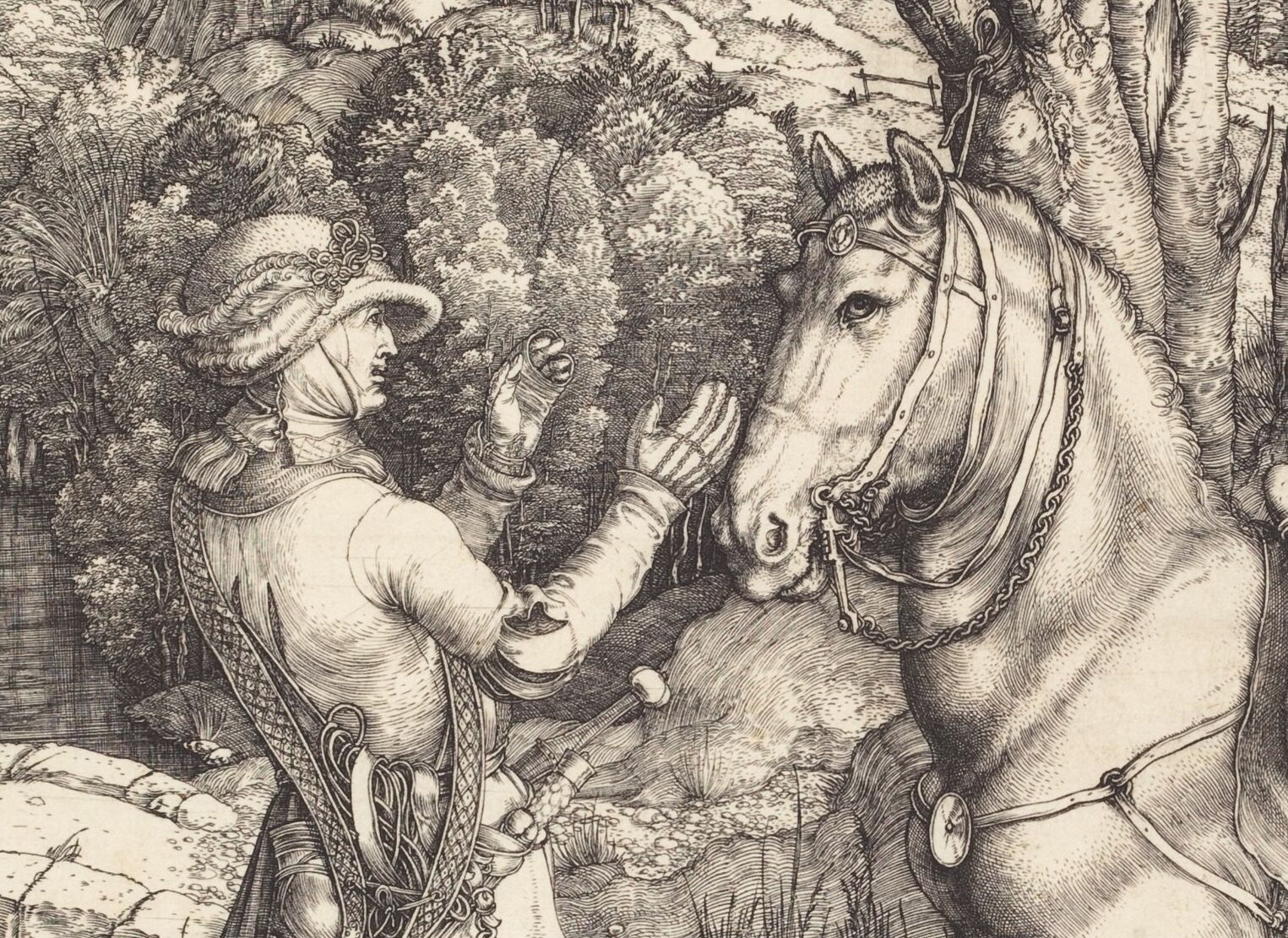
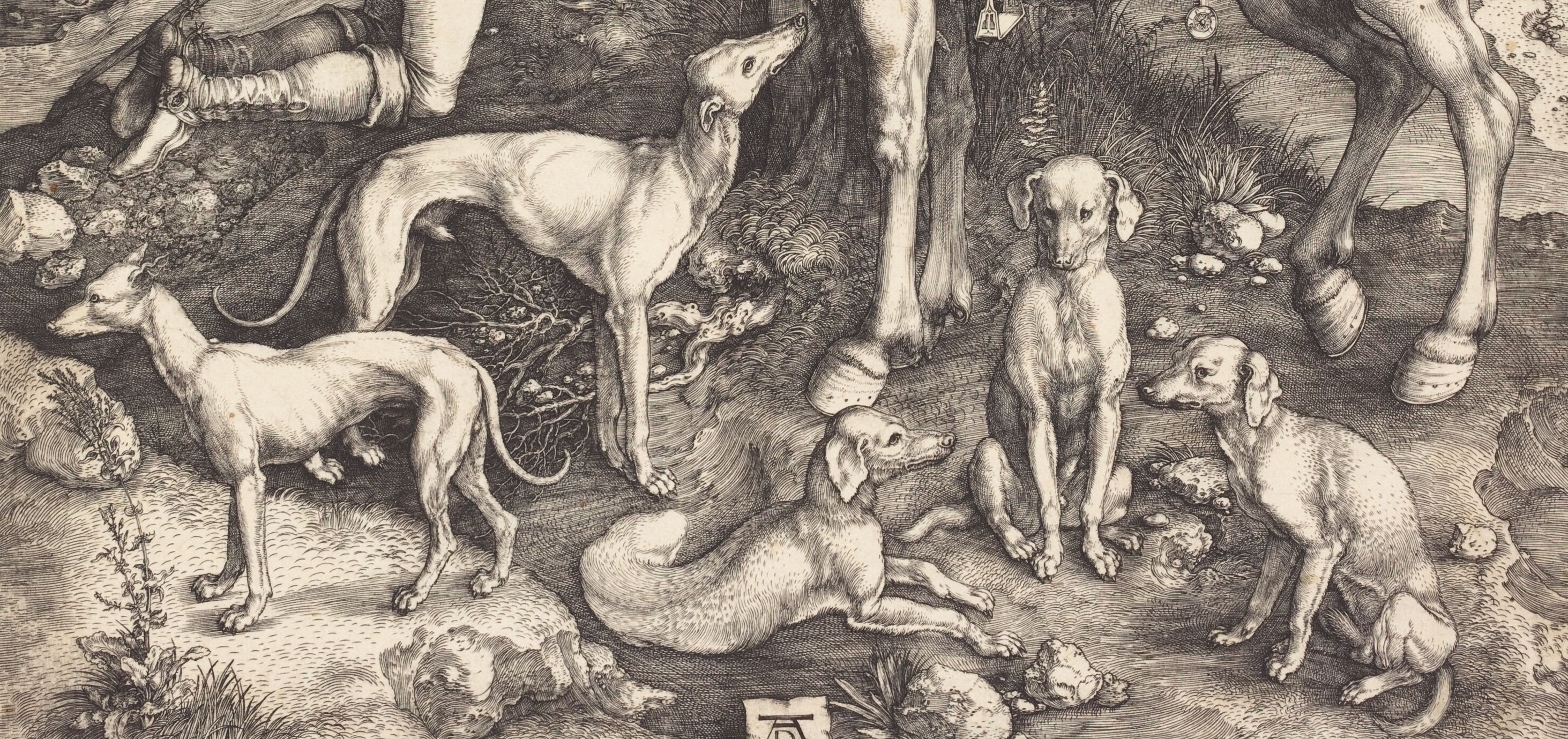
Yet what the novel does do, magnificently, is communicate something startling about the nature of daily existence, and the pleasure of the transformation of this raw material into art. Halfway through the book, the protagonist identifies art’s opacity as the cause of its miraculousness—that “it exceeds the infrastructures by which we strive to make sense of it”. Eastham’s deft use of symbolism becomes its own metaphor for the way that art allows us to process a fundamental excess of meaning. The novel’s vivid world—from the bent-backed women bearing baklava to the Dürer etching reproduced on the title pages depicting Saint Eustace (a Roman who lost his sons crossing a river in Egypt, an echo of the migratory routes taken by the off-page asylum seekers)—feels weighted with meaning.
“While this art world satire presents us with a world of sordid connection, it stops short of really unpicking any of the knots”
The novel might not, in the end, peel back every layer of the complex systems of art and capital—but it ends up aiming at a different target, an attempt to explain what it can feel like to be alert to the world and the things in it. The novel’s starting question, “What is the art world?”, is ceded to the more pressing question: “What is the world?” The line of Reith’s, about creating a “blooming, buzzing confusion”, is more properly the defining quality of life itself. The words are a sly, unattributed quote from the 19th-century psychologist William James, and were originally used by James to refer to a newborn’s first experience of the world. Eastham’s novel is disguised as an art world satire, but ultimately it becomes a subtly exultant book about the miraculousness of consciousness, the mysticism of its intersecting symbolic and physical planes, and its ephemerality. Not for nothing does the novel’s villain, Morel, bear the first name Thanasis, meaning “immortal”; Eastham, by contrast, is on the side of everything transient. That is what electrifies life and provides the substance of being: “blooming”, like the fleshy white magnolia, and “buzzing”, like those social, generous bees.—[O]
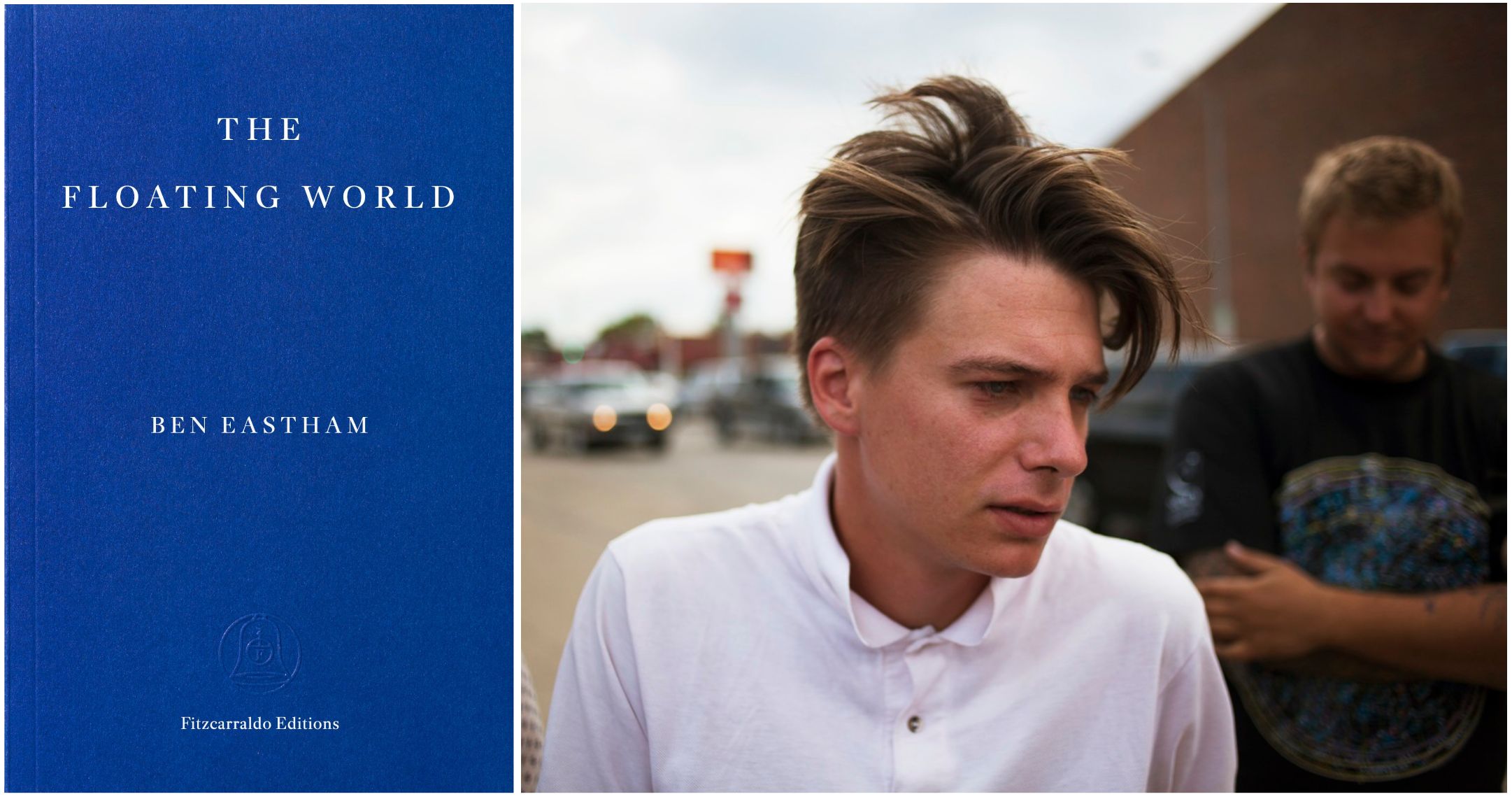
Ben Eastham, The Floating World (2026) is published by Fitzcarraldo
A respected voice in contemporary art discourse.
Focusing on ambitious storytelling and insightful art-world commentary. Ocula Magazine publishes in-depth interviews, critical essays and timely analysis on the artists, exhibitions and ideas driving the global art world.
Learn more about Ocula Magazine
Showcasing the best of the art world.
Ocula partners with galleries from around the world to highlight their artists, artworks and exhibitions. Gallery membership is by application and invitation, with each member vetted by an independent panel.
Learn more about Ocula Membership
Specialises in the sale of major artworks.
Led by a team with deep ties to the world’s leading auction houses, galleries and collectors. Ocula’s advisory team offers bespoke services to high-net-worth clients from around the world who are looking to acquire the best of contemporary and modern art.
Learn more about our team and services