Press Release

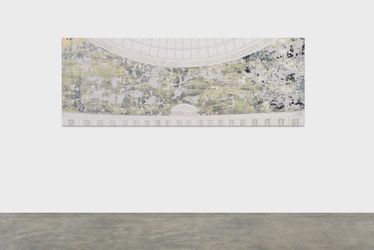
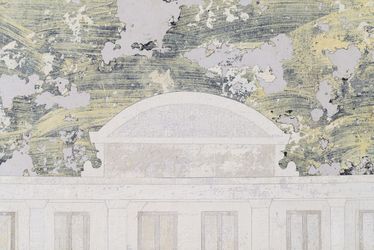
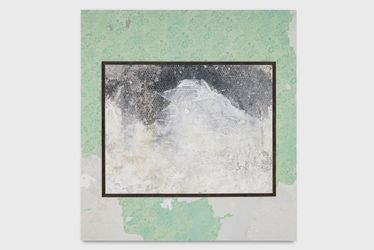
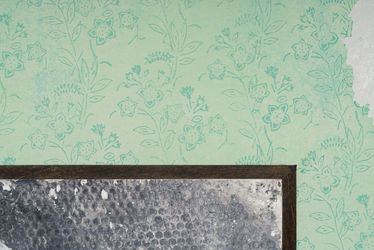
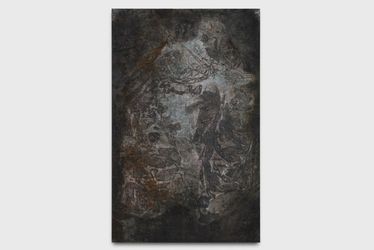
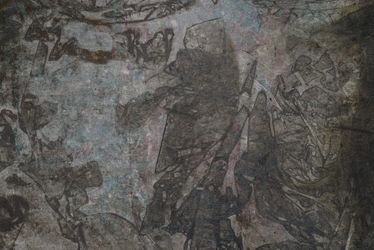
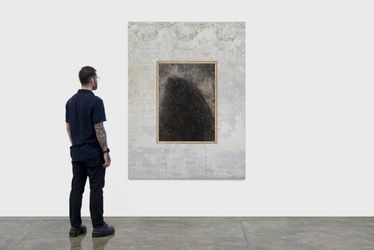
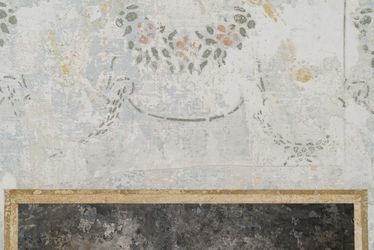
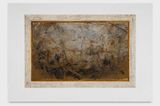
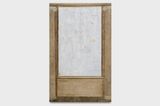
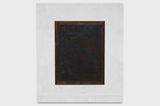
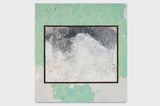
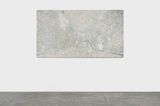
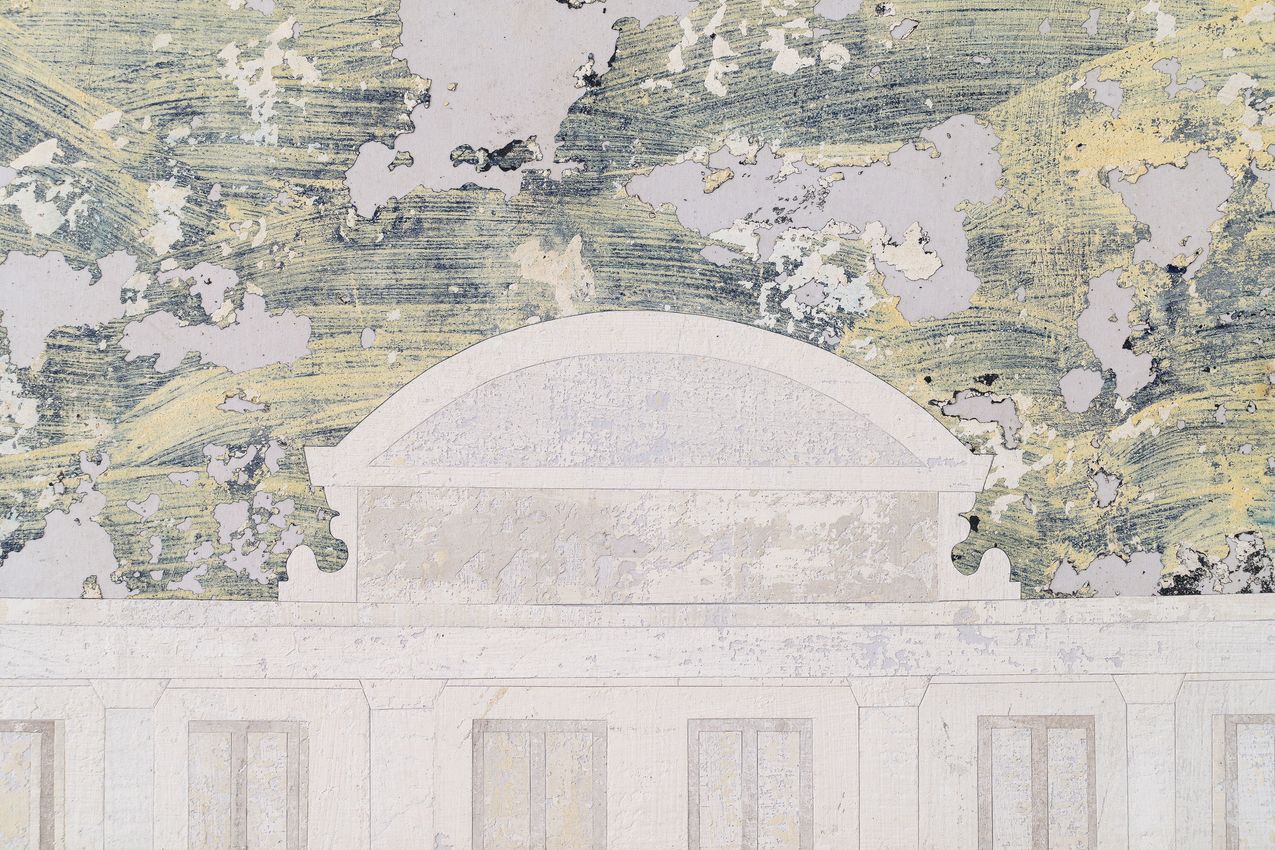
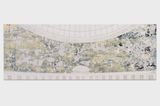
Nara Roesler Rio de Janeiro is pleased to present _Daniel Senise – I Live Comfortably in the Museum, a solo exhibition by the artist featuring 13 new works produced over the past two years. Created in his new studio, these pieces incorporate new processes and materials, stemming from his long-standing collection of fabric imprints taken since the early 2000s from the floors and walls of ruins, historical sites, or his own workspaces. By meticulously cutting and gluing small sections of these fabrics, Daniel Senise reconstructs the image of the location where the captures were made or recreates other imagined spaces – such as rooms, perspectives, and façades of museums and art institutions. More recently, he has begun adding new materials such as liquid paint, iron powder, bitumen, and charcoal to these printed fabrics.
The exhibition features a critical text by art critic Luiz Armando Bagolin, and its title refers to a phrase spoken by a character in the novel The Invention of Morel by Bioy Casares (1914–1999) – a man sentenced to life imprisonment who, upon arriving on an island, refers to the abandoned building he inhabits as a museum.

Among the works on view are new developments of some of Senise‘s most recognized series, such as Museums e Galleries. In these compositions, he juxtaposes printed fabrics to depict museum and gallery interiors, stripped of all elements except those belonging to the architecture itself. According to Bagolin, Senise‘s works “function as panels of a museum of the future, in which we will no longer see canonical images, but their absences – what remains of them after time, neglect, and the collapse of the gaze. Nonetheless, this absence is inhabited. Because what we see on these surfaces, prepared like stages for disappearance, is not emptiness, but the memory of the image as a form of survival – as if art, even after being erased, still left a dusting of meaning suspended in the air.” He continues: ”Senise‘s recent works are not enigmas to be deciphered, but zones of indeterminacy where the image no longer presents itself as a full presence, but rather as interval, noise, or residue. There is no closed discourse here about the end of painting—rather, there is the poetic sustainment of its latency. What is seen is what has not yet fully come into being, but insists on remaining. In times of image saturation, perhaps this is the most radical gesture: to return to painting the power to be gap, silence, and expectation.”

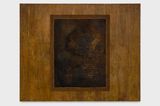
In another group of works, Senise applies materials such as bitumen, charcoal, and iron powder onto the printed fabrics, resulting in stains throughout the composition—an element that, according to the artist, was prominent in his work from the 1980s and 1990s. In this sense, these recent works can be seen as a connection to earlier moments in his practice.

For many years, the artist referred to his printed fabrics as “monotypes,” a term he has since abandoned in favour of “captures.” According to him, these works involve “a transfer of matter. It happens only once. That’s why I used to call them monotypes. But monotype is not necessarily a transfer of matter. These works carry matter that was on the wall.” While many of these captures were historically taken from floors, in recent years, Senise has focused on walls, often retaining several of their surface layers.

Read More

Installation Views

Selected Works

Loading...
About the Artist

Daniel Senise (b. 1955, Rio de Janeiro, Brazil), lives and works in Rio de Janeiro. Senise graduated in civil engineering in 1980 from the Universidade Federal do Rio de Janeiro (UFRJ), and studied Arts at the Escola de Artes Visuais do Parque Lage (EAV—School of Visual Arts) from 1981 to 1983. From 1985 to 1996, Senise was a painting professor at the EAV-School of Visual Arts in Rio de Janeiro. His current painting practice revolves around balance and weight of space with the presence and absence of everyday objects. He often incorporates the corrugations of floors onto the canvas, iron dust, lead objects or fabrics. Some of his works have densely worked surfaces while others have very fine layers of paint. In Musée D’Orsay (2014), Senise uses acrylic medium and residues on canvas glued onto aluminium to construct the gallery space of the Paris museum in tones of white and tan. Although the viewer cannot identify the paintings within the space, however, the architectural component of the white cube style of displaying art shine through as a way of manipulating space and its interaction with art. Senise participated in many biennials, including São Paulo’s in 1985, 1989, 1998 and 2010 editions, the Biennial de La Habana in 1986, and also the Venice Biennale in 1990, among others.

View Artist Profile

Also Exhibiting

About the Gallery

Founded in São Paulo in 1989, Galeria Nara Roesler is a leading Brazilian gallery dedicated to showing the work of contemporary Brazilian and international artists. The gallery established another branch in Rio de Janeiro in 2014, followed by its first international outpost in New York City in 2015.

View Gallery Profile
Address
Rua Redentor 241
Ipanema
Rio de Janeiro
Brazil
Opening Hours
Mon - Fri, 10am - 7pm, Sat, 2pm - 6pm
Book your visit via the link or by emailing agendamento.rj@nararoesler.art
(1)
Rio de Janeiro Rua Redentor 241
Galeria Nara Roesler
Rua Redentor 241, Ipanema, Rio de Janeiro, Brazil
+55 213 591 0052
http://www.nararoesler.art

Opening hours
Mon - Fri, 10am - 7pm, Sat, 2pm - 6pm
Book your visit via the link or by emailing agendamento.rj@nararoesler.art
The art world in focus