

The art world in focus
Subscribe to our newsletter for news and insights on artists, galleries and exhibitions.

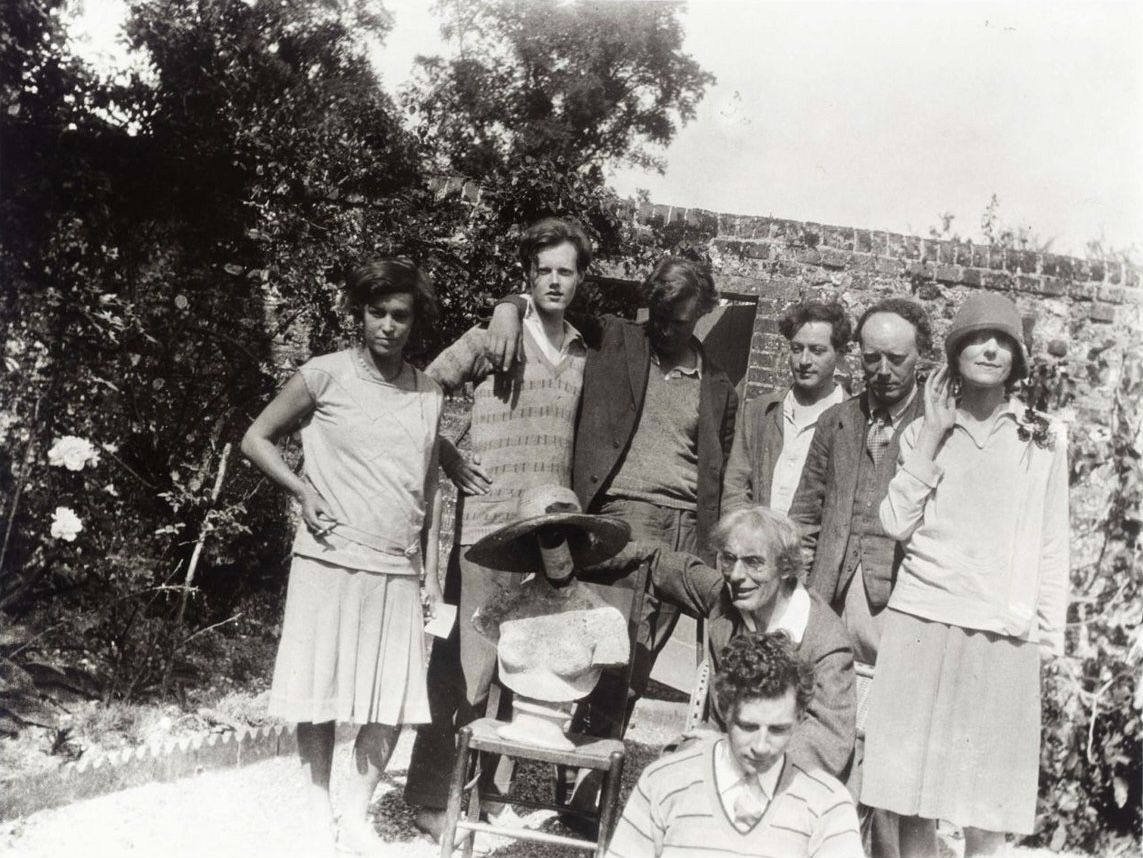
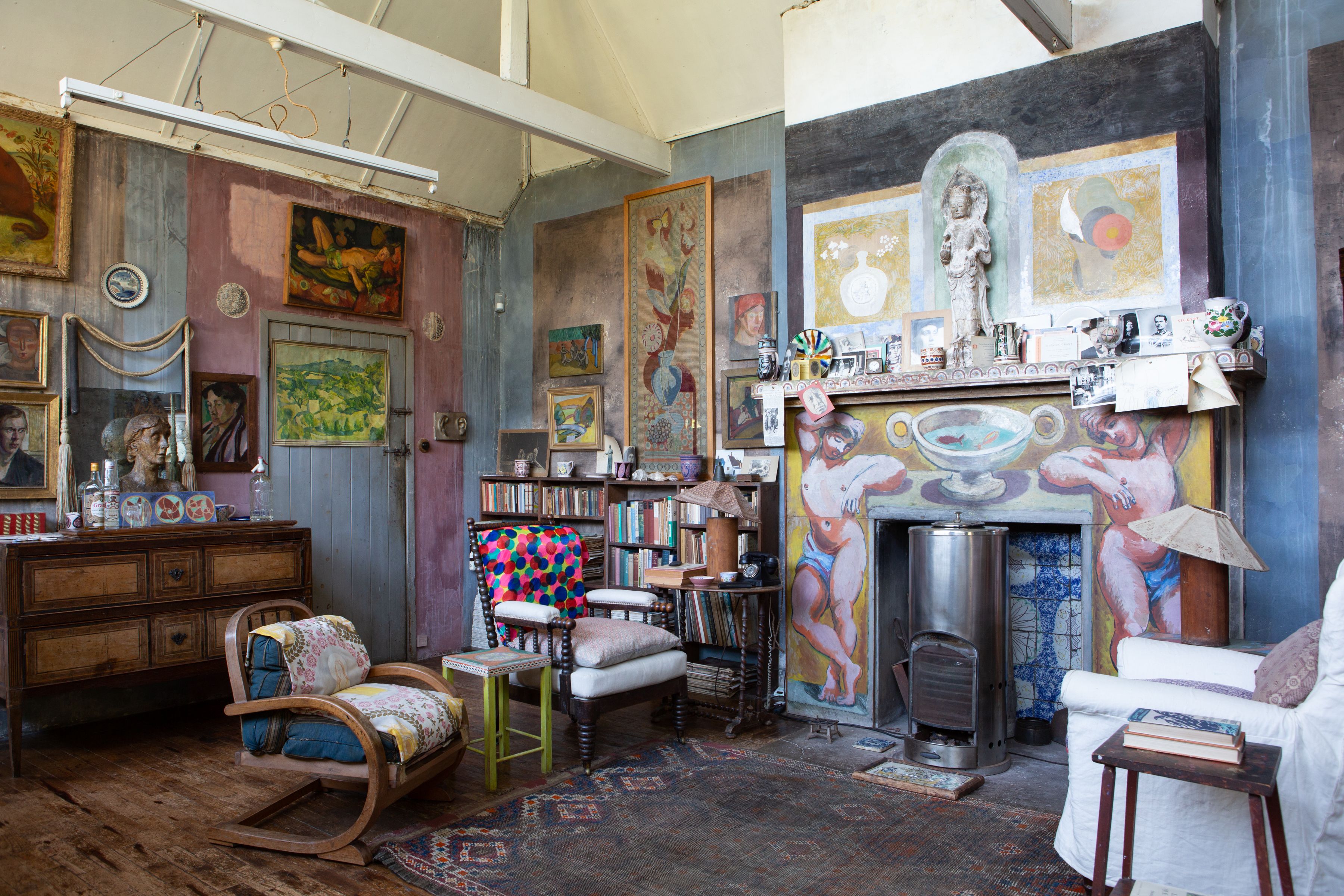
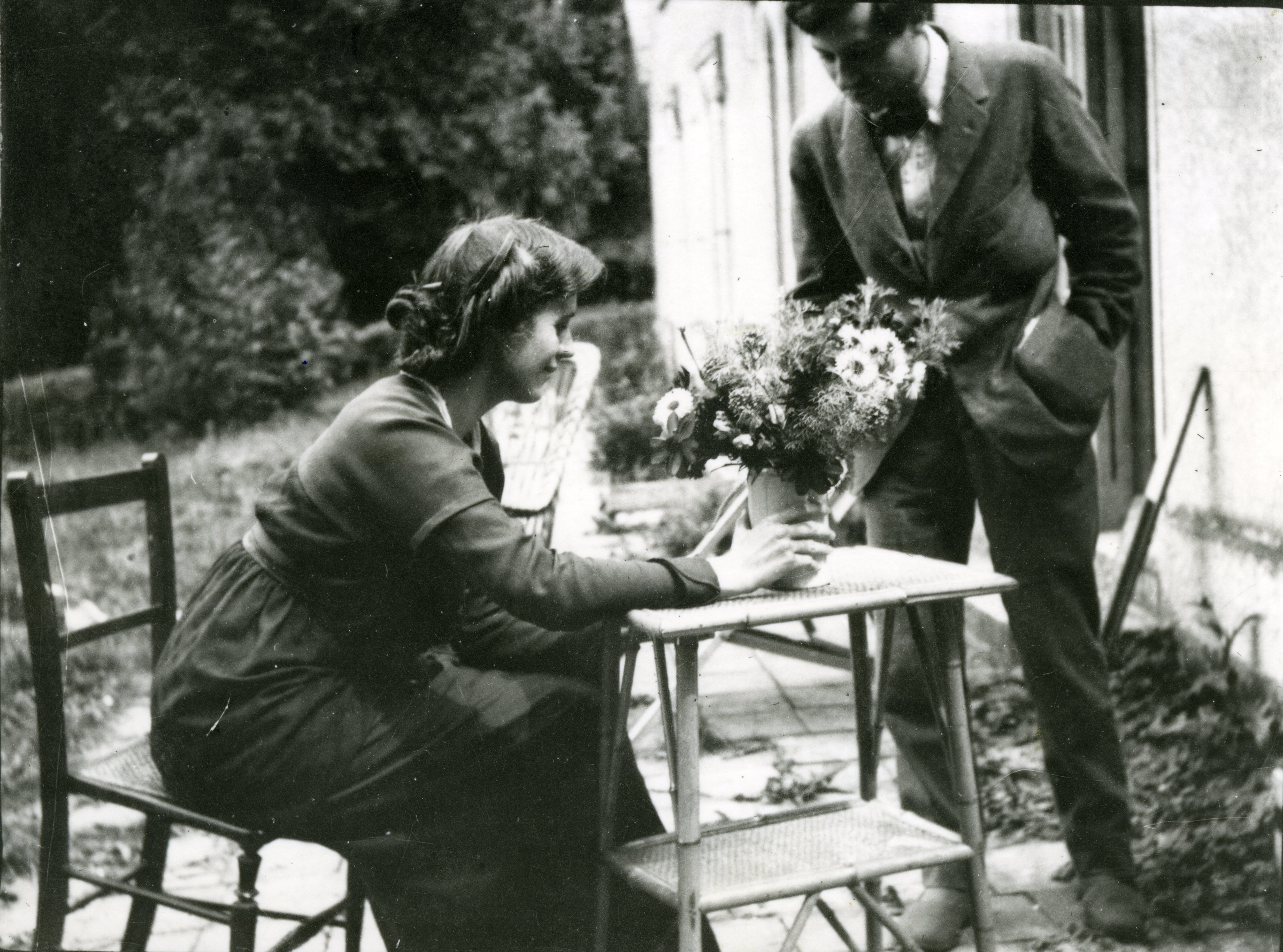
Charleston, the Sussex cottage turned-bohemian conference centre occupied by Vanessa Bell and Duncan Grant from 1916 until their deaths, is perhaps the best example of how the politics encoded into a domestic interior can be undermined by its beauty. Charleston, according to its website, was a house “where some of the 20th century’s most progressive artists and writers came together to imagine society differently”, which refers to Grant, Bell and their visitors’ affiliations with subjects including queerness, conscientious objection, and proto-feminist theory. But what really draws the crowds today is the visual expression of these ideals of freedom: the extensively painted walls and furniture of the house.
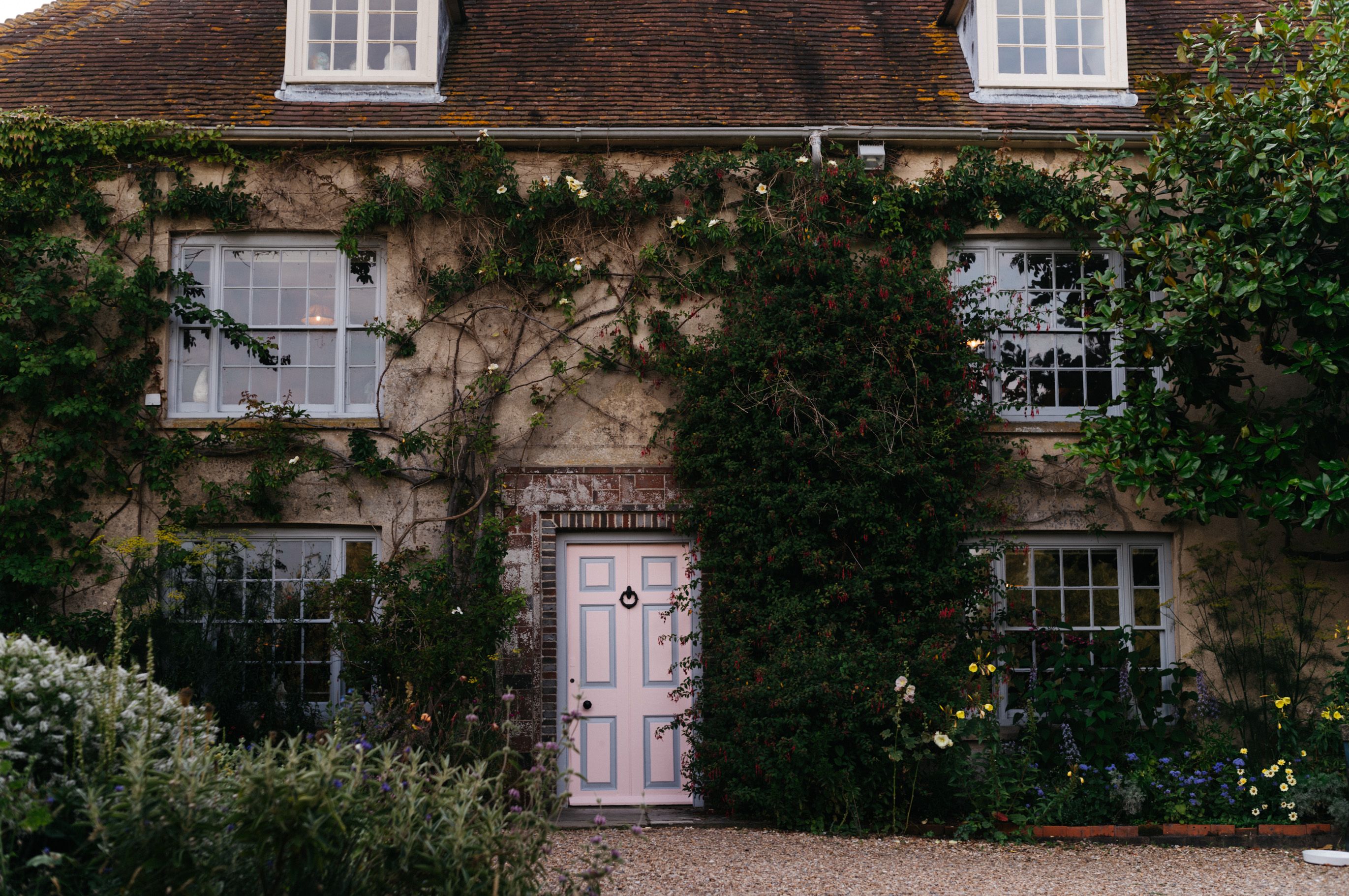
Perhaps it rankles that Charleston remains one of the UK’s best-known models for radical domesticity because other experiments in alternative ways of living have been almost extinguished. Rather than socialised experiments, we’re more used to the elite and their separatist fantasies, whether they’re space colonies or apocalypse bunkers. In England, the housing market has foreclosed the traditional arenas for experimentation. New-builds on Railton Road in Brixton, the street where 50 years ago radical politics flourished in squatted properties including the 121 Centre, are now going for £1.3 million; it’s the same story on Beck Road in Hackney, which became a whole street of artists’ squats during the 1970s after the ownership of the properties became unclear. Now, the erosion of squatters’ rights and the decimation of vacant housing stock by Right to Buy and the 1988 Housing Act have conspired to make occupying vacant properties impossible.
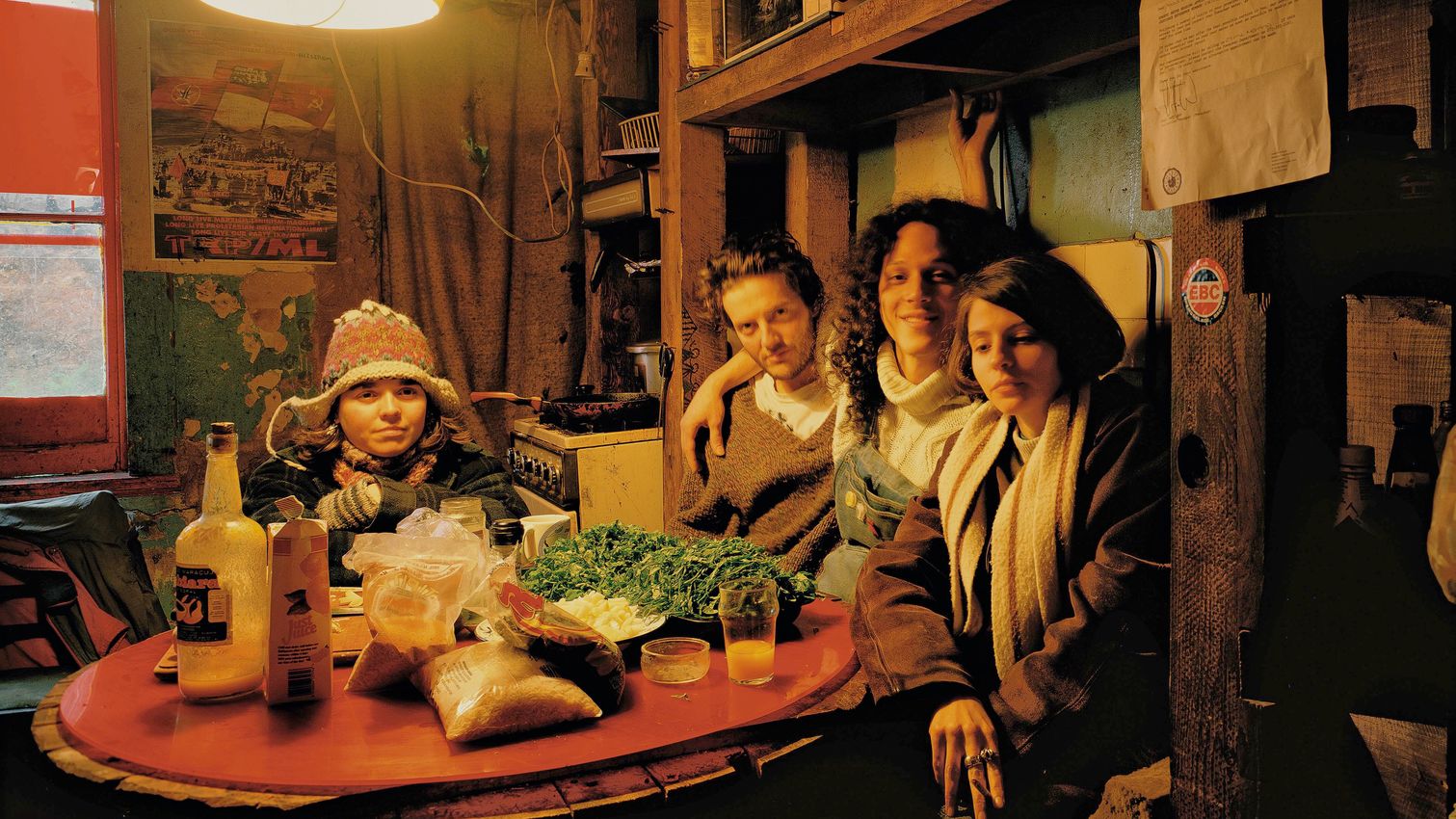
There are many squatters in the new exhibition Earthly Paradise: Radical Living in the UK at the William Morris Gallery in London’s Walthamstow, some—incredibly—drinking beers in a squatted London Fields Lido. The show surveys the history of the unconventional ways artists have lived in the UK, through a constellation of images, artwork and documentation that tell a story of housing as a tremendously powerful, but simultaneously precarious, commodity. It spans soldiers returning from the Second World War to find a bombed-out housing stock, to Bengali families taking over houses off Brick Lane during the 1970s—highlighting the people who, in the last century, have unsettled the prevailing sense of what domestic spaces look like and what they are for. Nowadays I’d suspect that more people venerate Charleston purely because of its aesthetics, and the vague knowledge that it was considered a hive of “radical” ideas, than because of its specific political history. But Earthly Paradise reminds us that the home is where politics foments, the fixed perspective from which society can be envisioned differently.
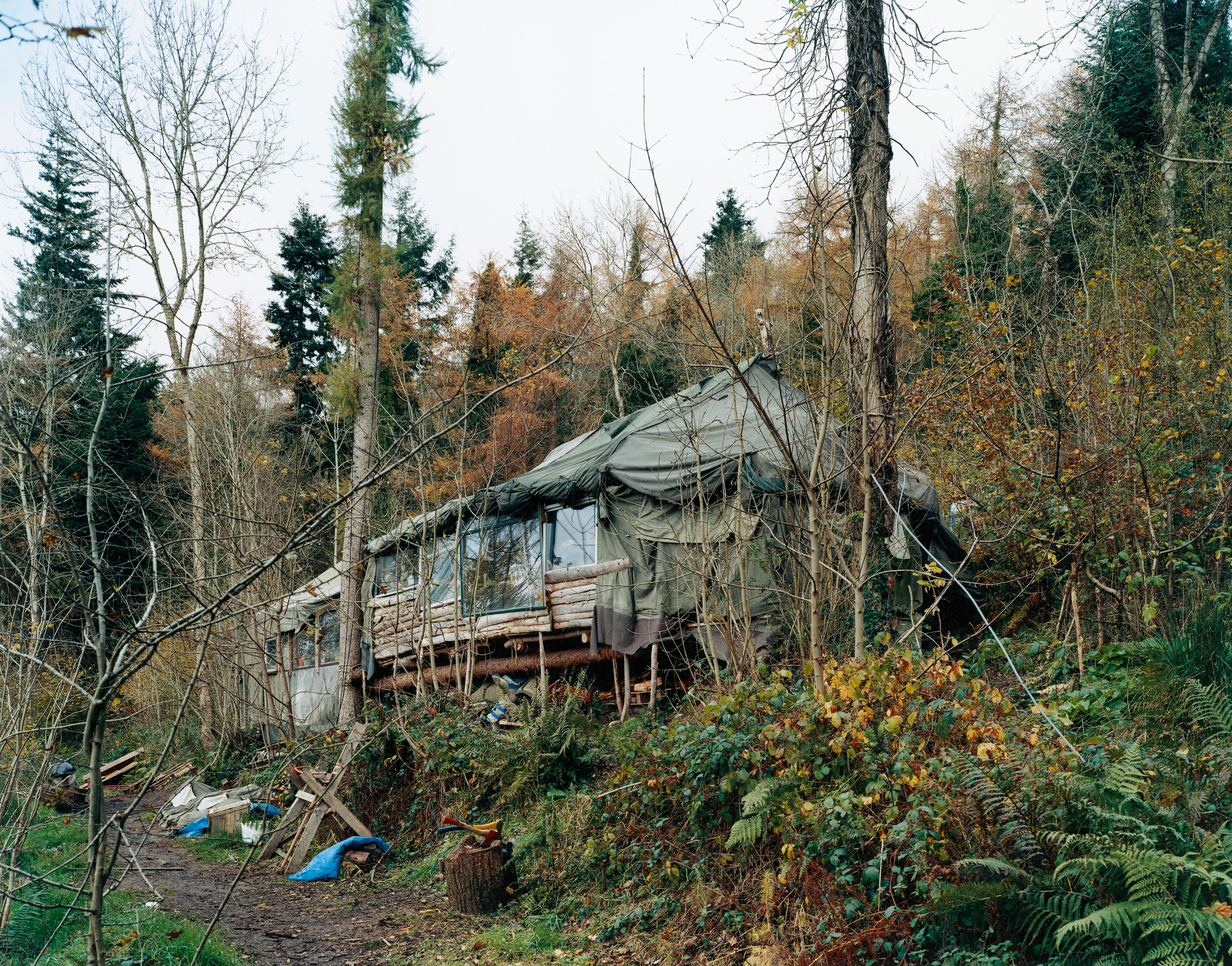
The exhibition proposes that even Charleston is worth looking at again, with fresher eyes. It presents a new commission from British Romani artist Delaine Le Bas, a vast collage of drawing, writing, and other collected material, which includes a photograph of the artist standing naked in Charleston—an act that the show’s co-curator Linsey Young describes as a “highly controversial thing to do within the Romany community” and, more broadly, “for an older woman to impose her body and its unruliness upon this very English place”. Le Bas’ work positions Charleston as a representative not of radicality but of a benign, settled Englishness, in contrast to the unruliness of the older female nude. But the image also gets us to look at Charleston again—as a scruffier, more friendly version of itself, the camera not perfectly framing the décor but focused on the person, Le Bas, in the centre of the room.
But perhaps the categorisation of people as good, interiors as superficial, isn’t so clear-cut. When a viewer pauses over a photo of a beautiful squatter, in a red-painted bathroom, framed against a window made dark with ivy, does it matter what they are admiring: the demonstration of liberation or how a similar bohemian effect might be achieved with Dulux colour match? Beauty, and living conditions that allow us access to beauty, are key to quality of life, and therefore to politics. Writer Sam Johnson-Schlee writes that, perhaps, one of the reasons we like commodities so much is that each commodity contains within it a “seed of social relations”—Morris thought that beautiful wallpaper might remind the worker that he belonged to the world; that the wallpaper, in effect, might be as meaningful a text as a socialist tract. Beauty is impressive—and what is impressed on us lasts longer, and can fortify our political commitments.
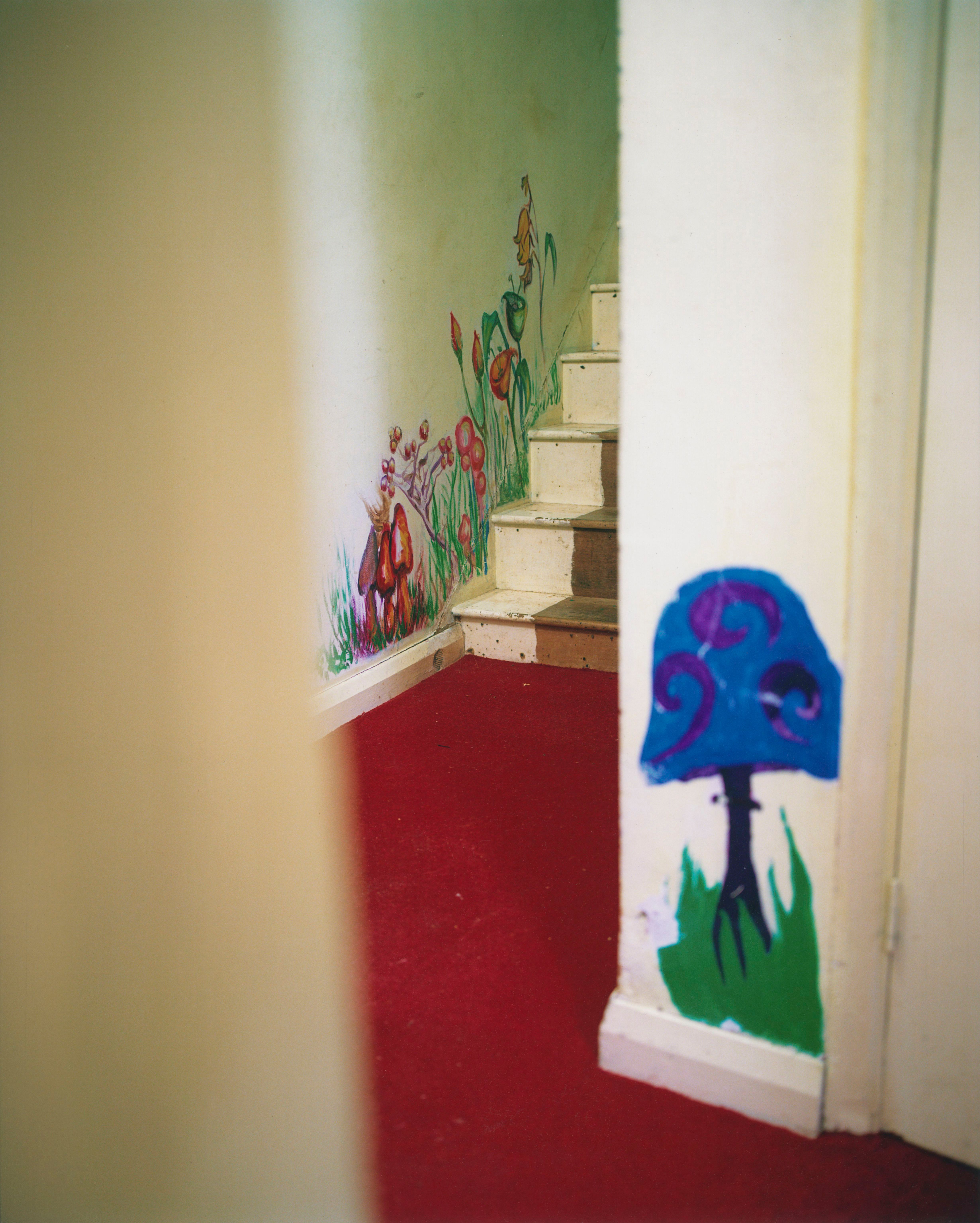
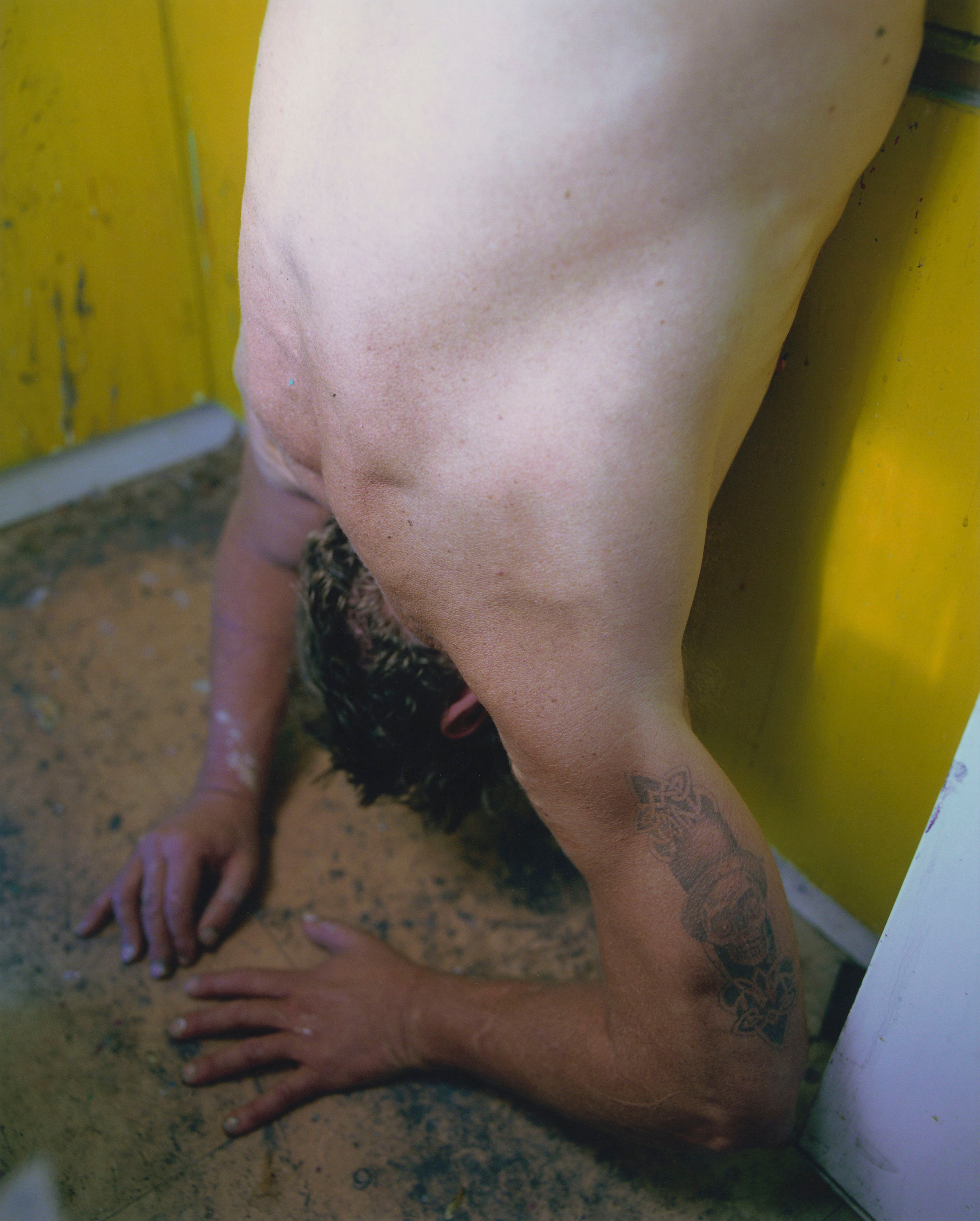
In the exhibition, there are several of Gareth McConnell’s intimate photographs of the people and interiors of houses in which he has lived. One depicts the bottom of a set of stairs. The carpet is bright red and tired-looking, and you can see where the stair runner has been ripped off. Colourful mushrooms have been painted on the wall. It’s a modern-day version of Morris’ proposition: that what Johnson-Schlee calls “the joy of decorative fantasy” underpins his socialist convictions, in particular the vital link between the urban proletariat and the organic world, which Morris considered to be every English labourer’s rightful inheritance. It also might allude to some of the interests of the house’s inhabitants, as McConnell describes them in an accompanying essay—one a prolific burglar of pharmacies, another with a permanently wonky smile after making a mistake when injecting speed. As in the Delaine Le Bas photo, the image is taken from low down, behind a doorframe, as if it’s taken from the perspective of one person peeping at another—an indication of how intimate the interiors of houses can be, and how alive.
“Does it matter what they are admiring: the demonstration of liberation or how a similar bohemian effect might be achieved?”
How might we better understand Morris’ legacy, which seems confusingly split between agitating for social justice and producing high-end interior products for the wealthy? Freddie Yauner is an artist and designer who spends three months of each year living as William Morris (which involves, among other things, growing his red beard long and wearing a nice woollen suit). He points out that Morris spent far more of his life agitating for the socialist league than he did making the prints and wallpapers for Morris & Co, a part of his career Morris dismissed as “pandering to the swinish luxury of the rich”. The disjunct between these two things was something Morris was unable to resolve—and neither have those who have come after. When I ask Yauner: “How does an artist live?” He replies: “Through compromise.”
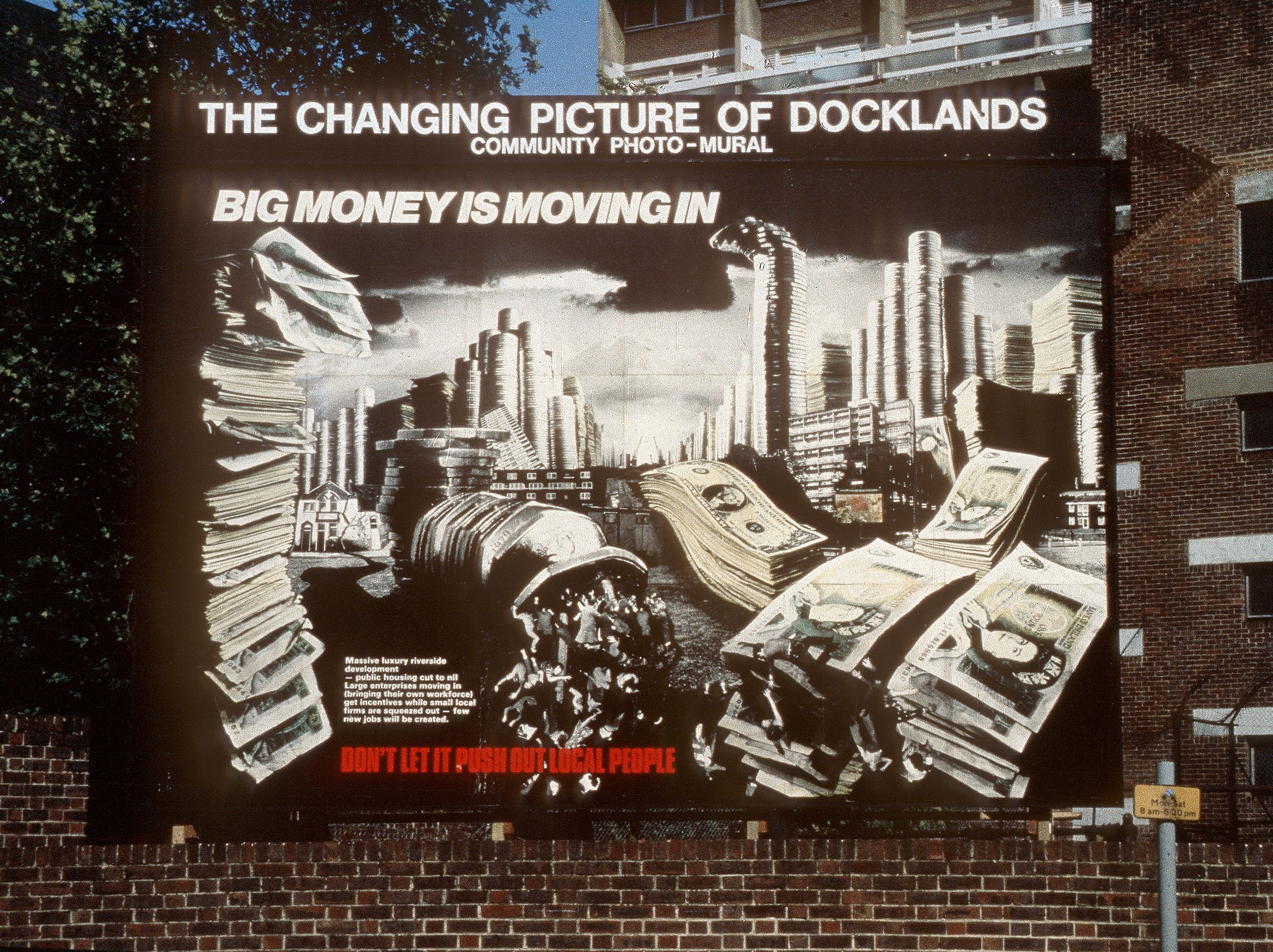
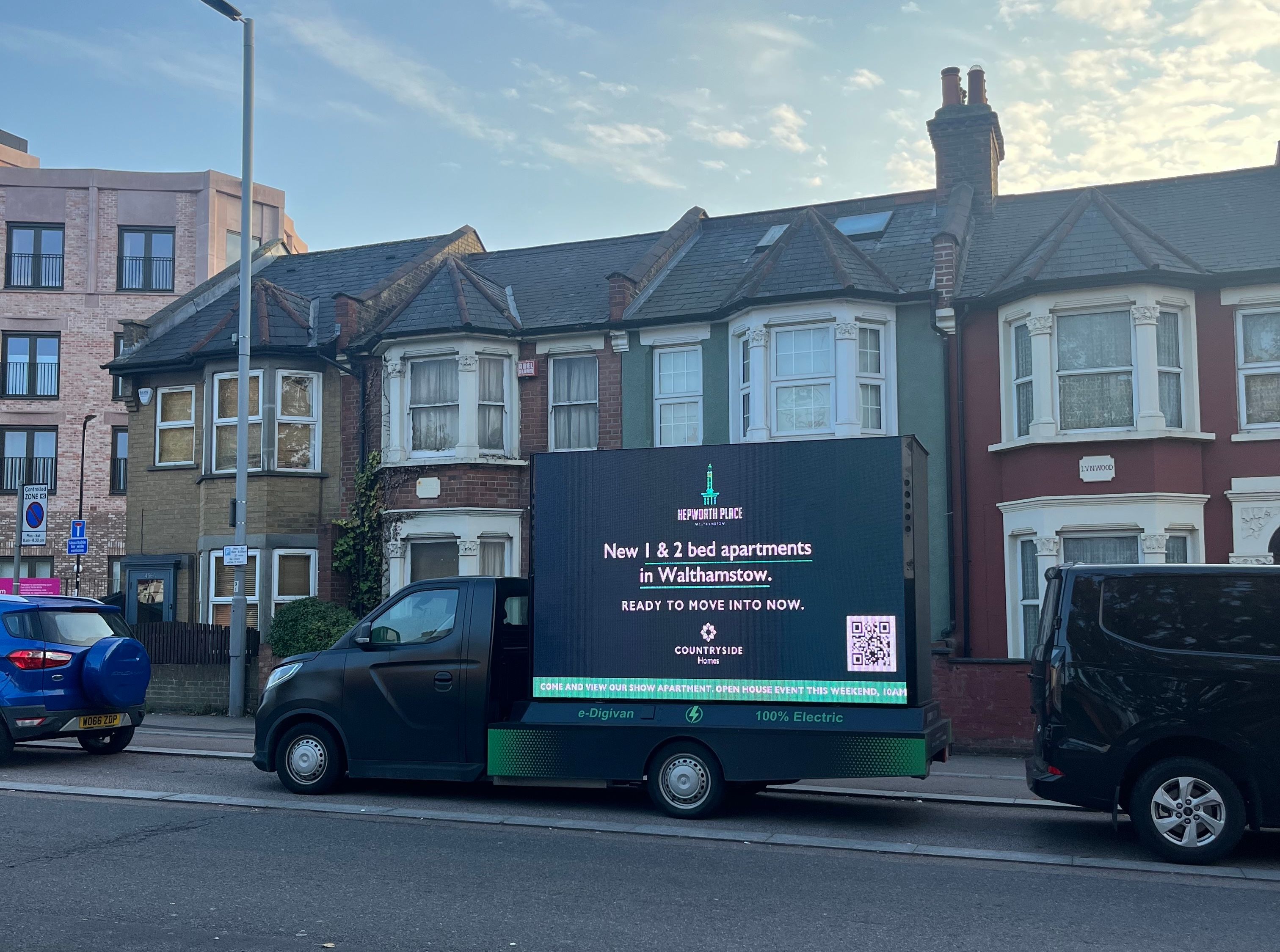
Outside the doors of the gallery, the housing market is keen to remind you that it still decides how the English capital is organised. Across the road, a truck has been set up with a large LED screen on its bed, looping an advert for a Walthamstow-based property company. “New one- and two-bed apartments ready to move in now!” it declares. Over footage of a couple walking along, takeaway coffee in hand, the ad exhorts the viewer to “Become part of a neighbourhood with its own energy, character and plenty to discover.” It’s either a sign of capital’s unrelenting hold on housing or, perhaps, an admission of anxiety. As Earthly Paradise informs us, the spatial architecture of a city may feel permanent, but it’s not—if a street in London Fields was squatted yesterday, it may well be squatted again tomorrow.—[O]



A respected voice in contemporary art discourse.
Focusing on ambitious storytelling and insightful art-world commentary. Ocula Magazine publishes in-depth interviews, critical essays and timely analysis on the artists, exhibitions and ideas driving the global art world.
Learn more about Ocula Magazine
Showcasing the best of the art world.
Ocula partners with galleries from around the world to highlight their artists, artworks and exhibitions. Gallery membership is by application and invitation, with each member vetted by an independent panel.
Learn more about Ocula Membership
Specialises in the sale of major artworks.
Led by a team with deep ties to the world’s leading auction houses, galleries and collectors. Ocula’s advisory team offers bespoke services to high-net-worth clients from around the world who are looking to acquire the best of contemporary and modern art.
Learn more about our team and services


