

The art world in focus
Subscribe to our newsletter for news and insights on artists, galleries and exhibitions.
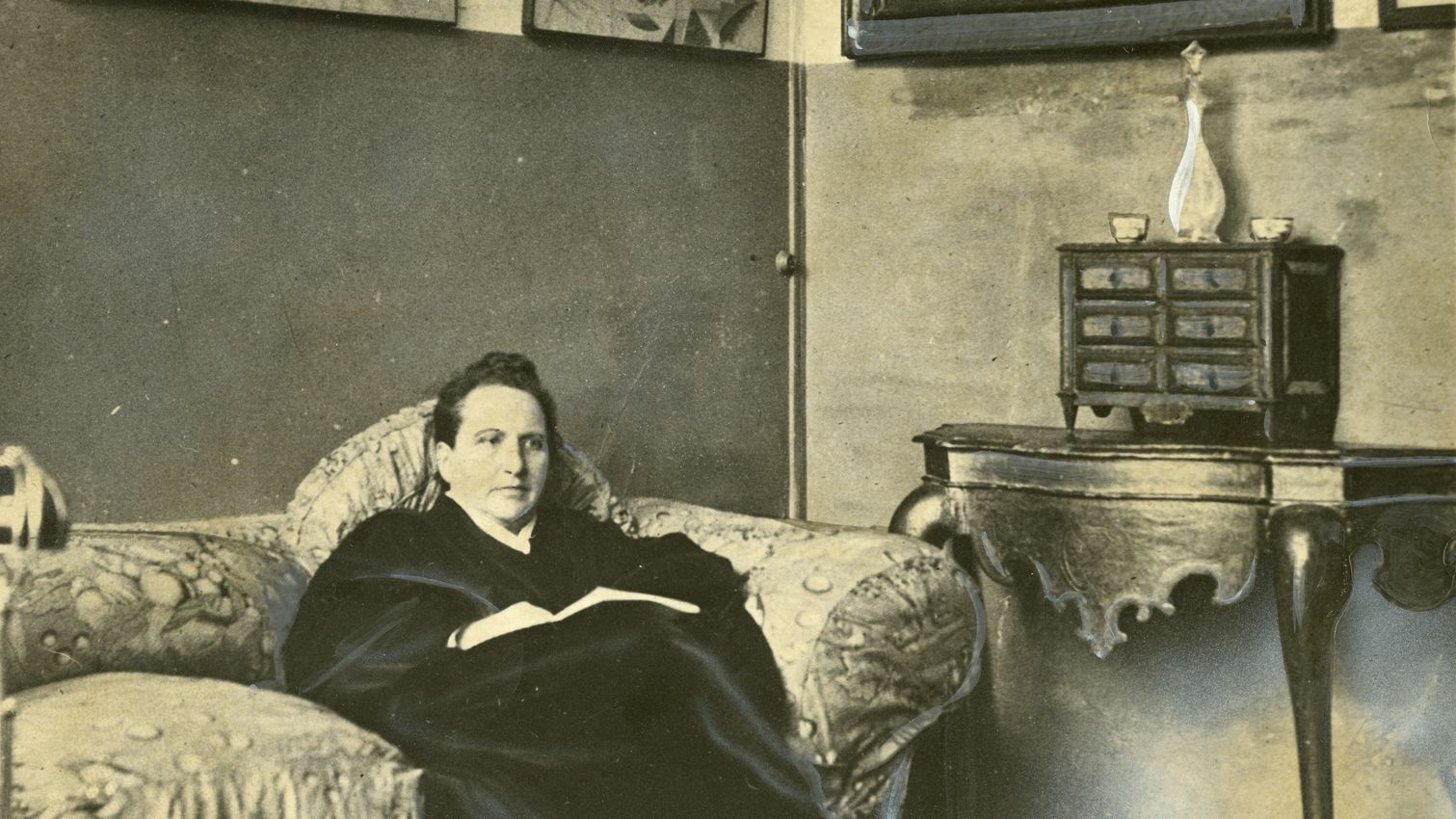
In summer 1905, in the Mediterranean fishing village of Collioure, Matisse started using colour “straight from the tube” to create works he exhibited at the Salon d’Automne in Paris later that year, kicking off a movement that would later be labelled Fauvism, literally translated from French as the art of “wild beasts”. In 1907, Picasso began splintering into Cubism. Gertrude Stein, then in her early 30s, newly settled in Paris, watched from close quarters as the art and their artists were laughed at, argued over, bought, imitated and, at last, revered. Her American lectures of 1934–1935, gathered and published this month as Listen to Me by Fitzcarraldo Editions, offer a slantwise theory of how a canon forms, as told from the passenger seat.
Stein wrote these lectures to be heard in real time, and I like to imagine the laughter and gasps in the room egging her on. Read silently, with no voice to carry them, they can be maddening. They’re hard to quote in fragments, since the sense builds up through repetition across whole pages, and commas, which she thought “servile”, hardly appear. Francesca Wade, author of Gertrude Stein: An Afterlife (2025), selected the lectures, and her introduction catches the odd shape of Stein in her newly famous mode, fresh from publishing the acclaimed The Autobiography of Alice B. Toklas (1933), a memoir written in her companion’s voice.
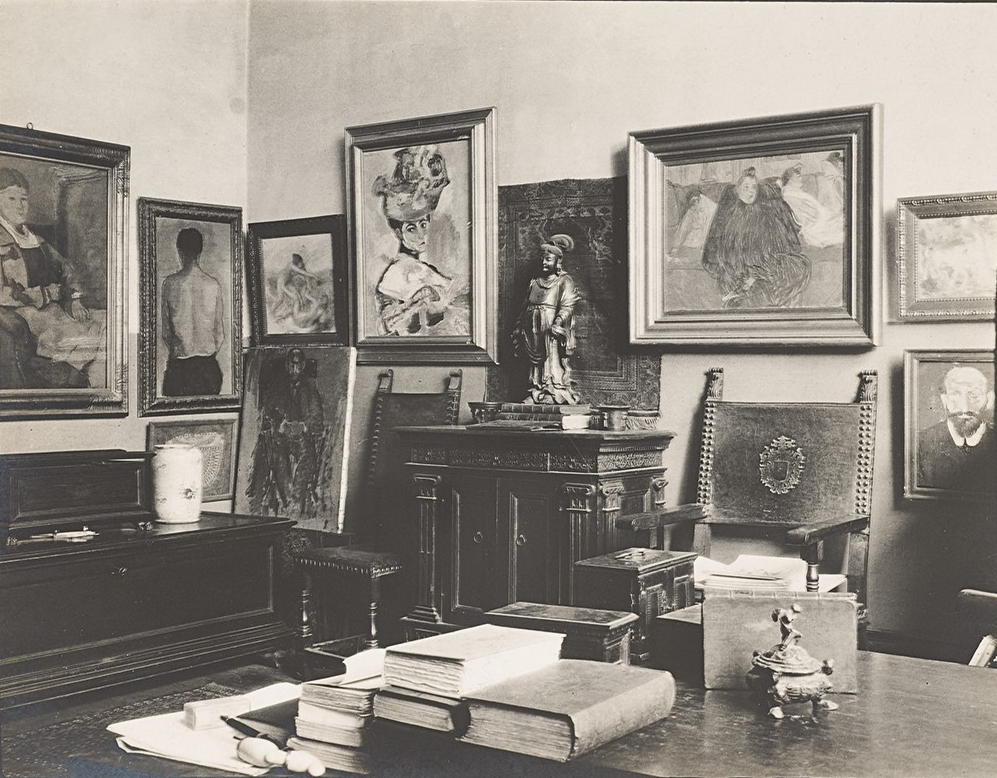
The papers called her the “Mother Goose of Montparnasse”; she had spent 30 years collecting personalities (Picasso and Hemingway among them), and now found herself turned into one, famous for a book in which she appears through somebody else’s eyes. Wade asks what this new celebrity, stepping off the boat in New York City on 24 October 1934, might say to readers “who pronounced themselves flummoxed by the verbal pyrotechnics of Tender Buttons, the soporific repetitions of The Making of Americans, or the enigmatic koans of Four Saints in Three Acts”. The lectures, she suggests, were Stein’s answer: “Her intellectual autobiography, an exposition of original literary theory and avant-garde manifesto.” Stein explained herself in her own idiom, so the explanations come out as strange as the work they set out to explain. Audiences who came expecting to be confounded certainly were, but they may also have felt something close to what guests at 27 Rue de Fleurus (her Parisian home) once felt in front of the paintings on her walls: a new art arriving before anyone knew what to make of it, the kind of picture visitors laughed at on arrival and were still arguing about on the way home.
Stein dreaded the first lecture she gave, arranged by the British poet Edith Sitwell for the summer of 1926, and wrote the whole of it, Composition as Explanation, in a single day, sitting on the step of a broken-down Ford while her own car was being repaired. She read it at Cambridge and then at Oxford, and its two central ideas would travel with her to America: the “continuous present” and the image of the artist as outlaw. “The creator of the new composition in the arts is an outlaw until he is a classic; there is hardly a moment in between and it is really too bad very much too bad naturally for the creator but also very much too bad for the enjoyer.” Her word for the audience is the homely “enjoyer”, a pleasure-seeker, not a critic wielding the colder precision of educated judgement. Enjoyers, in her account, get far more from a work “just after it has been made” than once it has become an inert classic, a state of affairs that’s “too bad” for everyone involved. That unofficial pleasure would become the real subject of the lectures she brought to America eight years later.
“If Stein had watched the new painting from close quarters in Paris, America showed her, from the passenger seat, how it belonged to the modern world”
She was drawn back to her home country, after some 30 years in Paris, by an invitation to give a series of lectures, with the writer and photographer Carl Van Vechten, her most loyal American champion, as guide. She had long vowed, she later recalled in Everybody’s Autobiography (1937), to stay away from America “until I was a real lion a real celebrity”, and in 1934 the big cat sauntered back to a wild reception, with Toklas beside her. Reporters fussed over her Robin Hood cap, and before the tour was out, she took tea with Eleanor Roosevelt at the White House and met Charlie Chaplin in Beverly Hills.
Early in the tour, hosts in Chicago offered to fly Stein to the Illinois city to see Four Saints in Three Acts (1927), the opera she had written with Virgil Thomson. On 7 November 1934 Stein and Toklas, who had never before left the ground, boarded with Van Vechten, each armed with a beaded charm he had given them for luck. The engines drowned out conversation, so they wrote to one another instead—the scraps survive in the Beinecke library at Yale, where I once read them over a cold December afternoon. One declares that “an airplane is made for writers”; in another, Stein, lion or not, resolves to collect the pilot’s autograph, himself the real celebrity of the age.
Looking down from the plane, she later wrote, she saw the lines of Cubism spread across the American earth, drawn by painters who had never been up in the air. Lecturing in Chicago a few months later, she said that Americans “all move so much even when they stay still”, since no daily routine holds them, while the English, who carry their routines with them, “even when they are travelling are not moving”. The flight had already made the paradox literal: two women sat motionless, passing notes, as the country slid by beneath them. If Stein had watched the new painting from close quarters in Paris, America showed her, from the passenger seat, how it belonged to the modern world.
The lectures themselves were delivered—at universities, galleries, private clubs and public spaces—by a writer some American newspapers still treated as a punchline, largely on the strength of Tender Buttons (1914), a book of prose portraits of household things from roast beef to a carafe, which prised words loose from their dictionary meanings. Stein handled language the way her friends handled paint, as matter with a stubborn thingness of its own, something that had to be built up stroke by stroke. Her eye went straight to what an object essentially was, and lingered on the freakishness of putting that into words. Her sentences keep returning to an idea from another side, the way a Cubist still life shows a jug from several angles at once.
They are among the most revealing accounts we have of the avant-garde’s founding irony. “For a very long time everybody refuses,” she had said in 1926, “and then almost without a pause almost everybody accepts.” Art made in open defiance of the taste of its day tends to become the house style of the very class it once affronted, and the objects that caused the most trouble end up, a few decades on, printed on tote bags in the museum shop. In that first lecture in 1926, Stein had laid down the law, telling her listeners that “a thing accepted becomes a classic”, which is problematic when “the characteristic quality of a classic is that it is beautiful”.
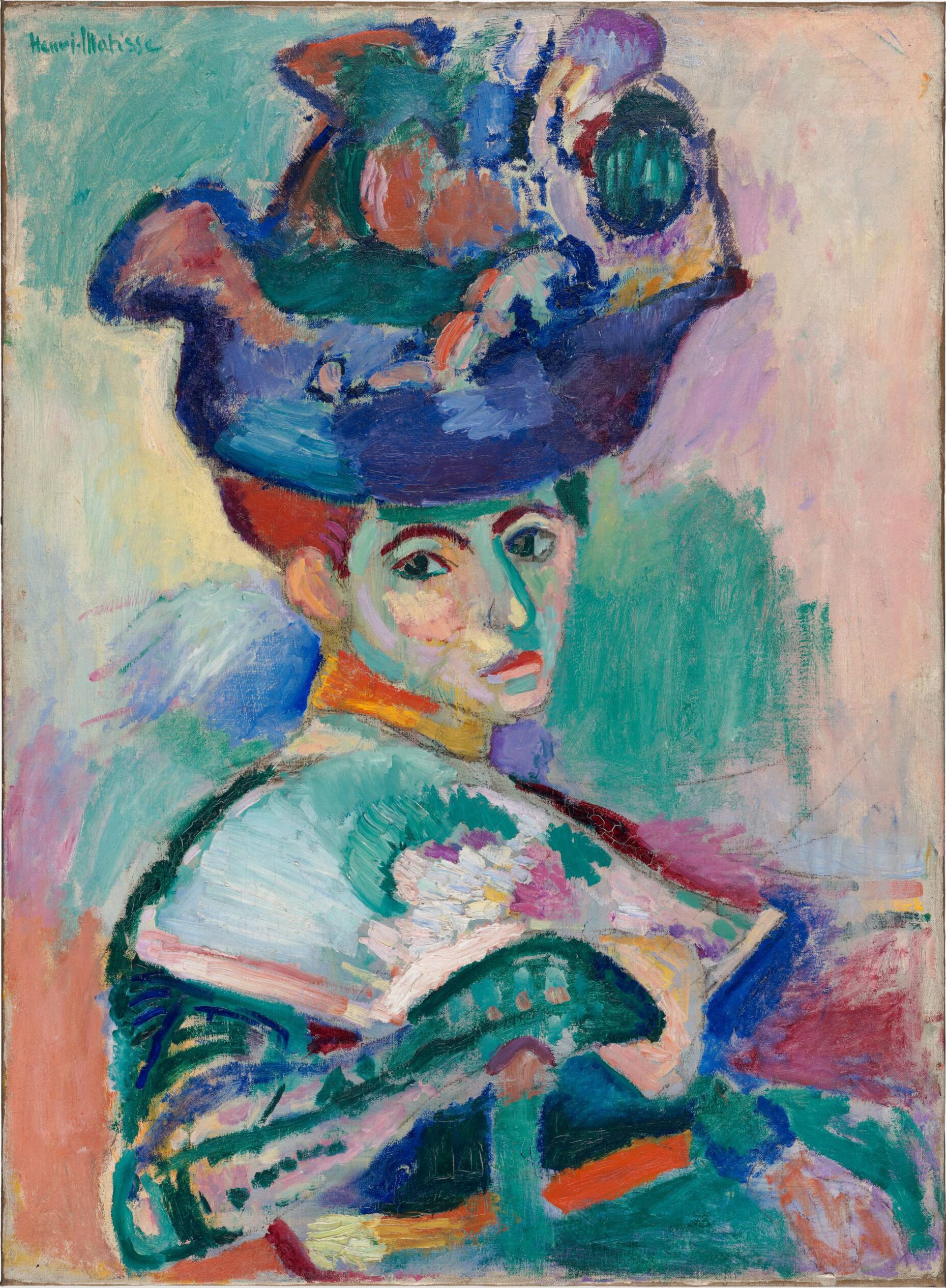
Take Woman with a Hat (1905), Matisse’s portrait of his wife with her face slashed with green, the painting at the centre of the uproar at the Salon d’Automne. Leo Stein, Gertrude’s more fastidious older brother, judged it “the nastiest smear of paint” he had ever seen, and then the Steins went back to look at it again and again over the following weeks. They paid Matisse 500 francs for it. This summer the San Francisco Museum of Modern Art, which now owns it, made it the centrepiece of Matisse’s Femme au chapeau: A Modern Scandal, an otherwise dull exhibition which did at least restage the Salon gallery where the trouble started. If the avant-garde set out to dissolve art into ordinary life, with Duchamp submitting his urinal to the Society of Independent Artists, the institution’s answer was to absorb such trespasses and frame them.
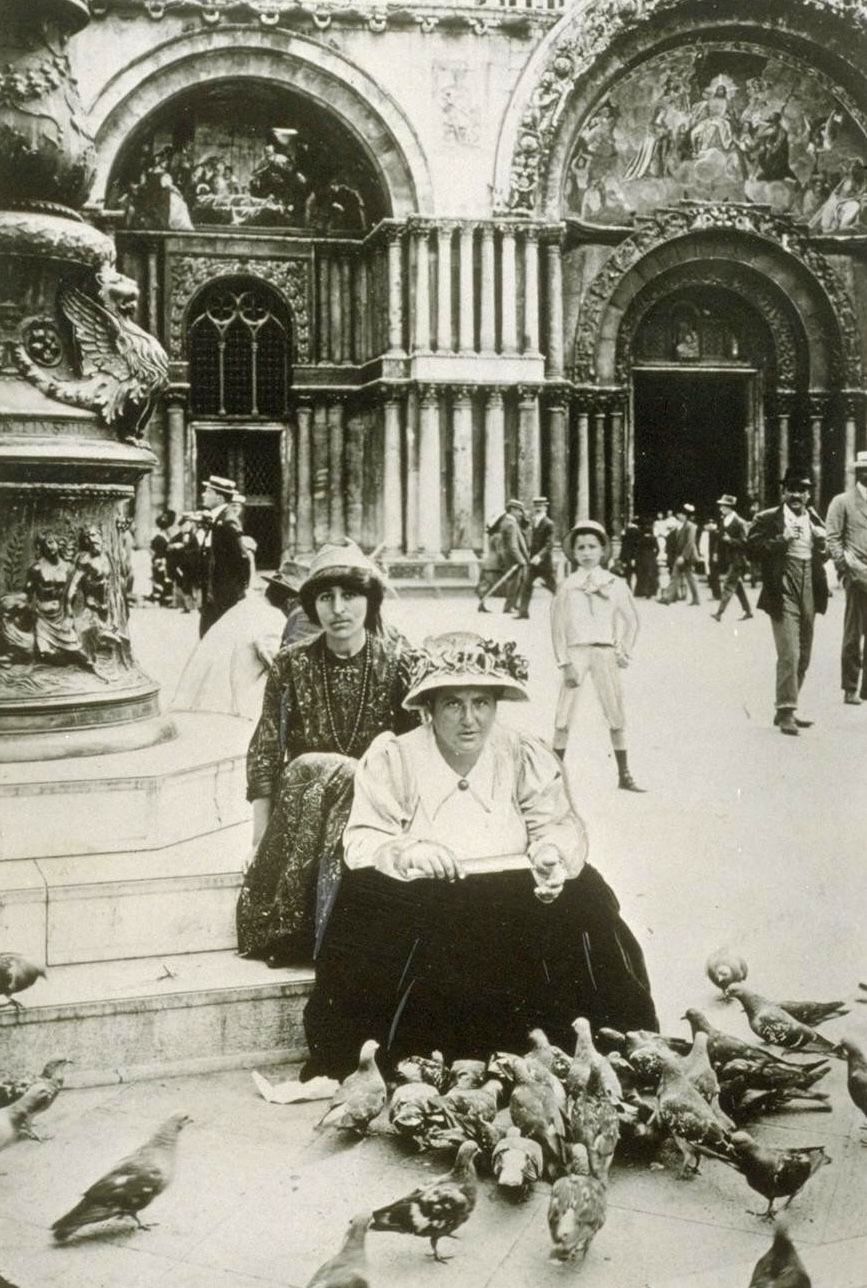
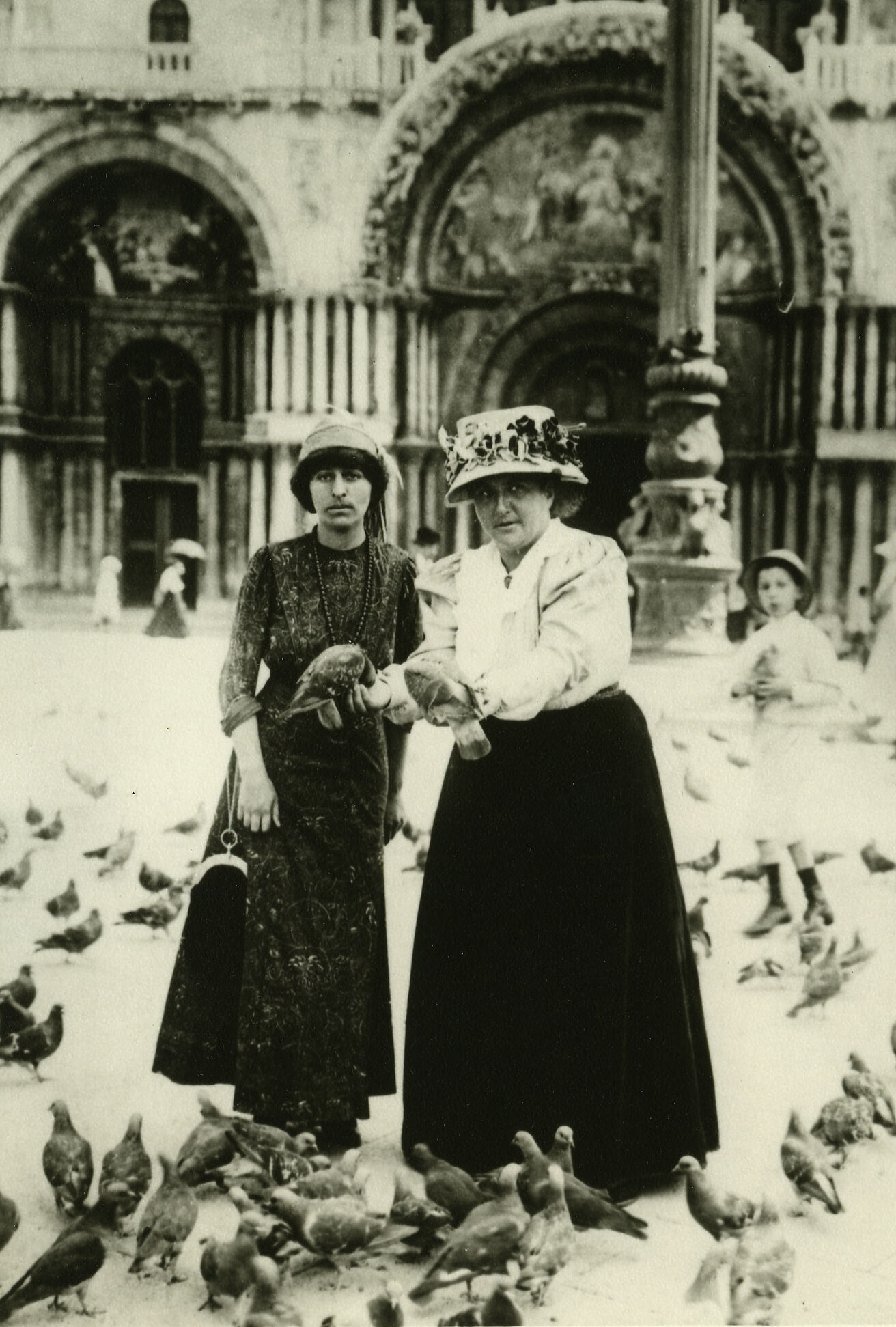
The tour proper began under the auspices of a museum doing more than any other to decide what Americans should admire, if not always enjoy. The Museum of Modern Art in New York City had opened only five years earlier with a show of Cézanne, Gauguin, Seurat and van Gogh, and its director, Alfred H Barr Jr, already pictured the collection as a torpedo moving through time, its nose in the advancing present. Stein’s lecture, Pictures, was given to members of the museum in November 1934 in the ballroom of the Colony Club on Park Avenue, which admitted only women. Yet for all the Upper East Side hauteur, Pictures was a lecture about liking things, addressed to the enjoyers in the room, and Stein just liked looking at pictures: “The painting may be good it may be bad, medium or very bad or very good but anyway I like to look at it.” The sentence runs through the connoisseur’s whole scale, from very bad to very good, and then “anyway” cancels the grading: the verdict has no bearing on whether she keeps looking. Pleasure, for Stein, comes first and outlasts judgement, which keeps her where the 1926 lecture said the enjoyer does best, just after a work has been made and before anyone has settled what it is worth.
Stein wanted more from a painting than a place on a wall. Every painter who believes in painting, she said, hopes above all that the picture will “live outside its frame”. “Everybody has to like something,” she told her audience. “Some people like to eat some people like to drink, some people like to make money, some like the theatre, some even like sculpture, some like gardening, some like dogs, some like cats.” One thing follows another, and each item is simply allowed to be there, as equal to its neighbours as the patches of colour in a Cézanne, whose paintings had taught her that every part of a composition matters as much as the whole. Sculpture slips in with a sly “even”, a minority interest ranked no higher than the dogs and cats that close the list. Cats come last for no better reason than that the sentence ends there.
“Pleasure, for Stein, comes first and outlasts judgement”
The joke had an edge for this audience, because Stein’s own walls had done a good deal of the museum’s ranking in advance. Matisse and Picasso hung at her apartment a quarter of a century before the Museum of Modern Art got around to them, and she had bought them the way she describes looking in Pictures, because she liked them and kept going back. In effect, the list reminds the museum where its canon came from. Somebody enjoyed these things first, with no scale to measure them against, and the ranking was written up afterwards, as if everyone had known it all beforehand. What she really loved was “the picture part of modern art”, and the “other parts of it” (presumably the market, the criticism, and even the collecting), she admitted, “interest me much less”. When friends complained that Picasso’s 1906 portrait of her was a poor likeness, he told them she would grow into it, and she did, so completely that the mask-like face he gave her, startling while the paint was still wet and familiar now, on the wall of the Metropolitan Museum of Art, has become one of the presiding faces of modernism.
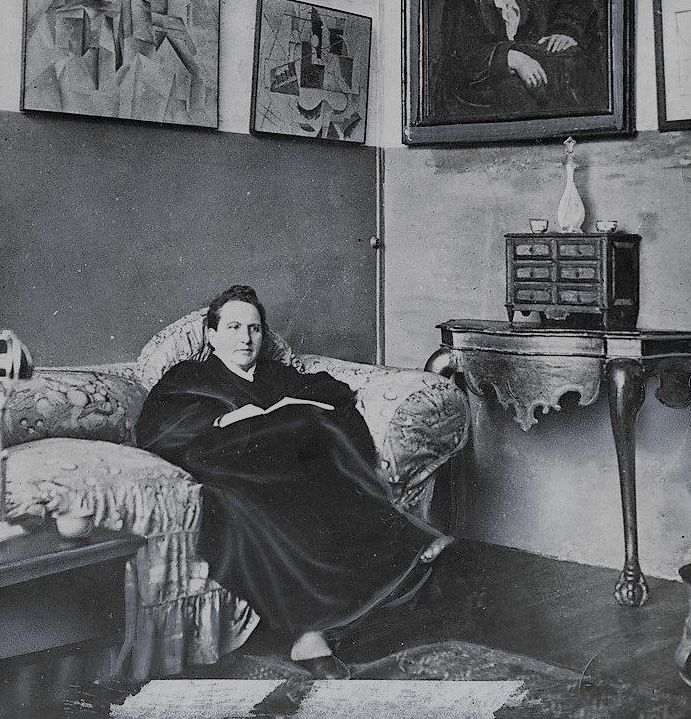
The enjoyer’s view has its blind spot, and the setting of Pictures shows where it falls. That women-only ballroom on Park Avenue was filled with members of a museum the Rockefellers had helped to found. Nine months earlier, a short walk away at Rockefeller Centre, Diego Rivera’s mural for the lobby of the RCA Building Man at the Crossroads had been chiselled off the wall because he refused to paint out a portrait of Lenin. In the same month Stein spoke, the Artists’ Union, formed by painters scraping by on relief, brought out the first issue of its magazine Art Front, arguing that an artist was a worker who needed a wage. Across the country, roughly one worker in five had no job at all. Stein keeps every bit of this outside the ballroom. Her enjoyer is a private person alone with a picture, and the question of who gets through the door to stand in front of it rarely troubles her. Read today, the lectures are best taken as a record of what modern art felt like to the first people allowed close to it, written by someone who had spent 30 years as one of them.—[O]

A respected voice in contemporary art discourse.
Focusing on ambitious storytelling and insightful art-world commentary. Ocula Magazine publishes in-depth interviews, critical essays and timely analysis on the artists, exhibitions and ideas driving the global art world.
Learn more about Ocula Magazine
Showcasing the best of the art world.
Ocula partners with galleries from around the world to highlight their artists, artworks and exhibitions. Gallery membership is by application and invitation, with each member vetted by an independent panel.
Learn more about Ocula Membership
Specialises in the sale of major artworks.
Led by a team with deep ties to the world’s leading auction houses, galleries and collectors. Ocula’s advisory team offers bespoke services to high-net-worth clients from around the world who are looking to acquire the best of contemporary and modern art.
Learn more about our team and services