

The art world in focus
Subscribe to our newsletter for news and insights on artists, galleries and exhibitions.


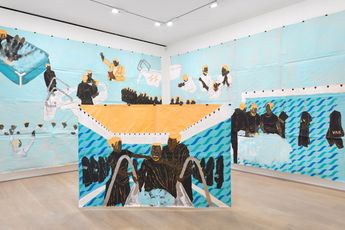
Last year, the prize was won by Bangladeshi visual artist, Ashfika Rahman. Ashfika Rahman, Than Para—No Land Without Us, 2025 - ongoing. Joy, 2026 at the PinchukArtCentre. © Photo: Ela Bialkowska, OKNO Studio.
The Kyiv-based art foundation PinchukArtCentre has today announced the artists shortlisted for the eighth edition of the Future Generation Art Prize, a $100,000 award that seeks to offer long-term support to the next generation of artists.
Selected from 12,488 entries across more than 170 countries, the final shortlist includes 21 artists and artist collectives, all under the age of 35 at the time of application. The shortlist includes Brazil-based painter Maxwell Alexandre, UK multimedia artist Danielle Brathwaite-Shirley, Côte d’Ivoire’s Ange-Frédéric Koffi and Natalia Lassalle-Morillo, a visual and theatre artist from Puerto Rico.
They are joined by Palestinian collective Osprey V, “Gaza’s first rock band”, and US-born Yussef Agbo-Ola, who has described elements of his practice as “medicinal architecture”.
Together the shortlisted artists’ work spans nearly every artistic medium, including sculpture, moving image, photography, painting, video games, performance and music. In their selection, the judges—who include Nicolás Cuello, curator at Museo de Arte Moderno de Buenos Aires; Hana Halilaj, curator at the National Gallery of Kosovo and David Riley, senior production manager at at New York non-profit arts space, The Kitchen—sought out artistic intent beyond traditional genres.
Riley told Ocula that he was drawn to the artists for many different reasons—some for their deep reverence for the natural world, others for their unexpected use of technologies and still others for their subversions of the canon.
“I looked for artists who are responding with urgency, curiosity, and complexity to the overlapping crises of our contemporary moment: climate emergency, faltering institutions, migration and displacement, accelerating technologies, and the atomising effects of hyper-capitalism,” he said.
“In each case, I was impressed by their unique voice, the quality of their thinking, and their unconventional use of materials. Taken together, these artists present a compelling vision for a future that is malleable, connective, transformative and collectively imagined.”
The prize’s shortlist has been announced as Russia’s war in Ukraine nears the end of its fourth year and, as the PinchukArtCentre’s artistic director Björn Geldhof pointed out to Ocula, during an intensification of armed conflict around the world.
“When we engage with artists, we do so from a certain context,” Geldhof explained of the centre’s work. “Yet Ukraine is not alone in dealing with the challenges that it faces, and so the prize is a way of forming a bridge—to have conversations with other places in the world where it’s also very difficult.”
The continuation of the prize in adverse circumstances, Geldhof made clear, represents a commitment to art’s ability to create space. “Art allows us to be critical in situations where critique is difficult,” he said.
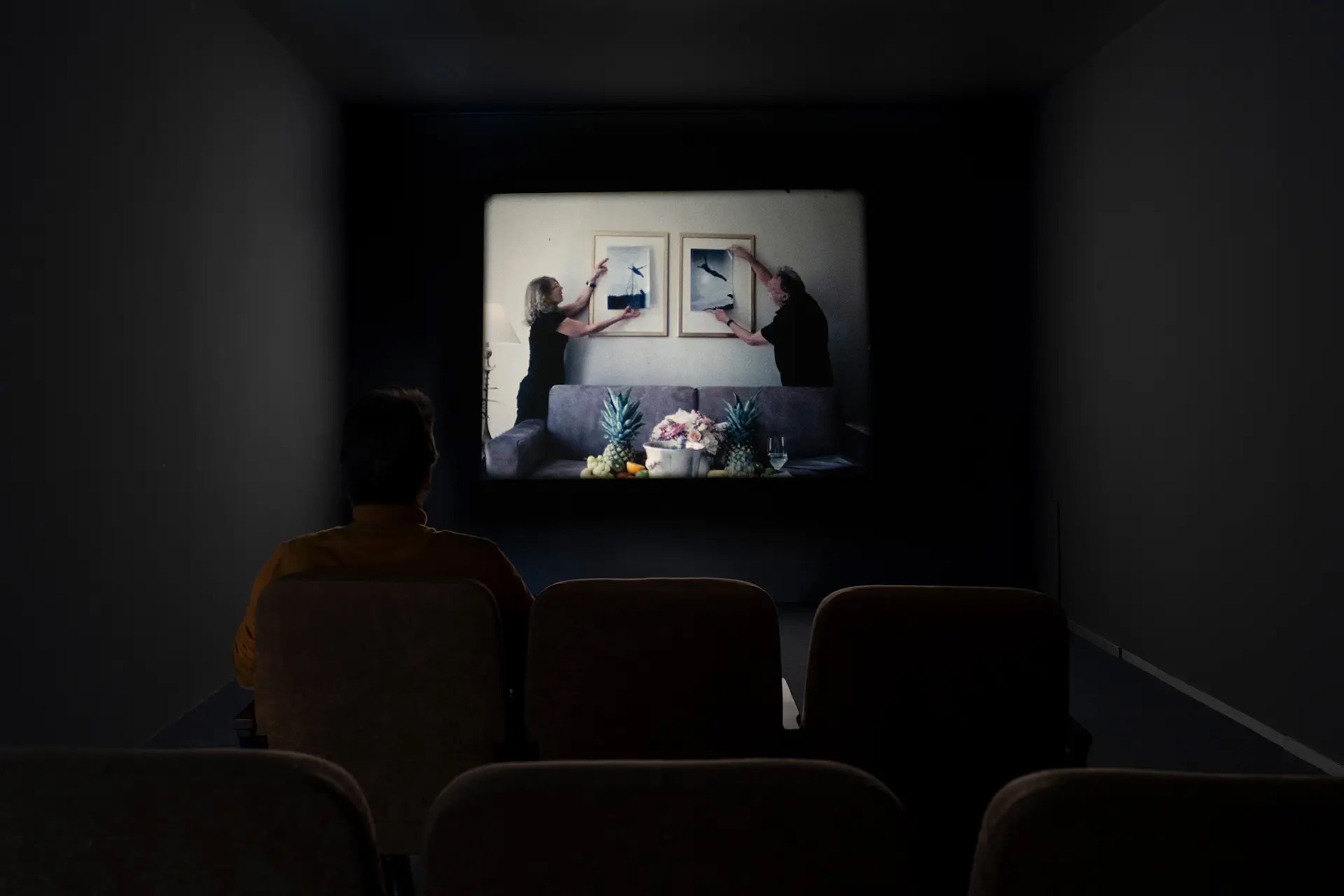
“More than 100,000 people came to Joy, our last exhibition, held in Kyiv under systematic attack, under bombs and rockets. Why? Because art gives us the ability to breathe, to live, to think.
“We can never underestimate the need that we have, as human beings, to think differently—and to seek out sources of different thought.”
The Future Generation Art Prize was established by the Victor Pinchuk Foundation in 2009, after its namesake realised that all the existing art prizes relied on nominations as part of the application process.
“It doesn’t matter who you are, where you’re from—as long as you’re 35 or under, please apply, and you can do so for free,” Geldhof told Ocula. “That was pretty revolutionary in 2009, and I think still is today.”
Each shortlisted artist will be commissioned to create new works to be presented in the Future Generation Art Prize exhibition organised by the PinchukArtCentre, when the jury will determine the winners of the main prize and special prizes.
The main award -winner’s $100,000 will be divided between a $60,000 cash prize and a $40,000 investment in their practice. A further $20,000 will be awarded as a special prize shared between up to five artists for projects that develop their artistic practice.
A respected voice in contemporary art discourse.
Focusing on ambitious storytelling and insightful art-world commentary. Ocula Magazine publishes in-depth interviews, critical essays and timely analysis on the artists, exhibitions and ideas driving the global art world.
Learn more about Ocula Magazine
Showcasing the best of the art world.
Ocula partners with galleries from around the world to highlight their artists, artworks and exhibitions. Gallery membership is by application and invitation, with each member vetted by an independent panel.
Learn more about Ocula Membership
Specialises in the sale of major artworks.
Led by a team with deep ties to the world’s leading auction houses, galleries and collectors. Ocula’s advisory team offers bespoke services to high-net-worth clients from around the world who are looking to acquire the best of contemporary and modern art.
Learn more about our team and services