

The art world in focus
Subscribe to our newsletter for news and insights on artists, galleries and exhibitions.

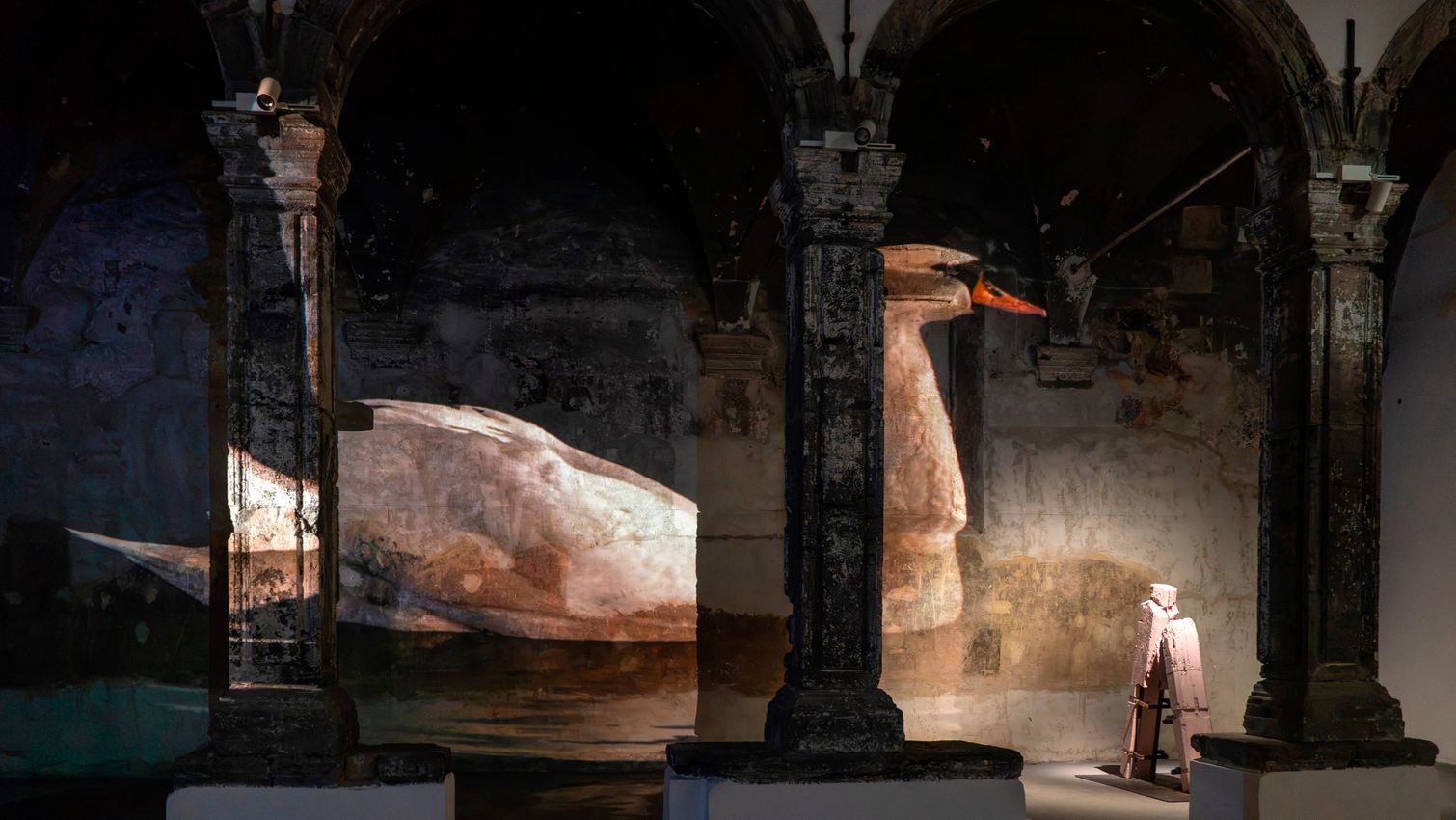
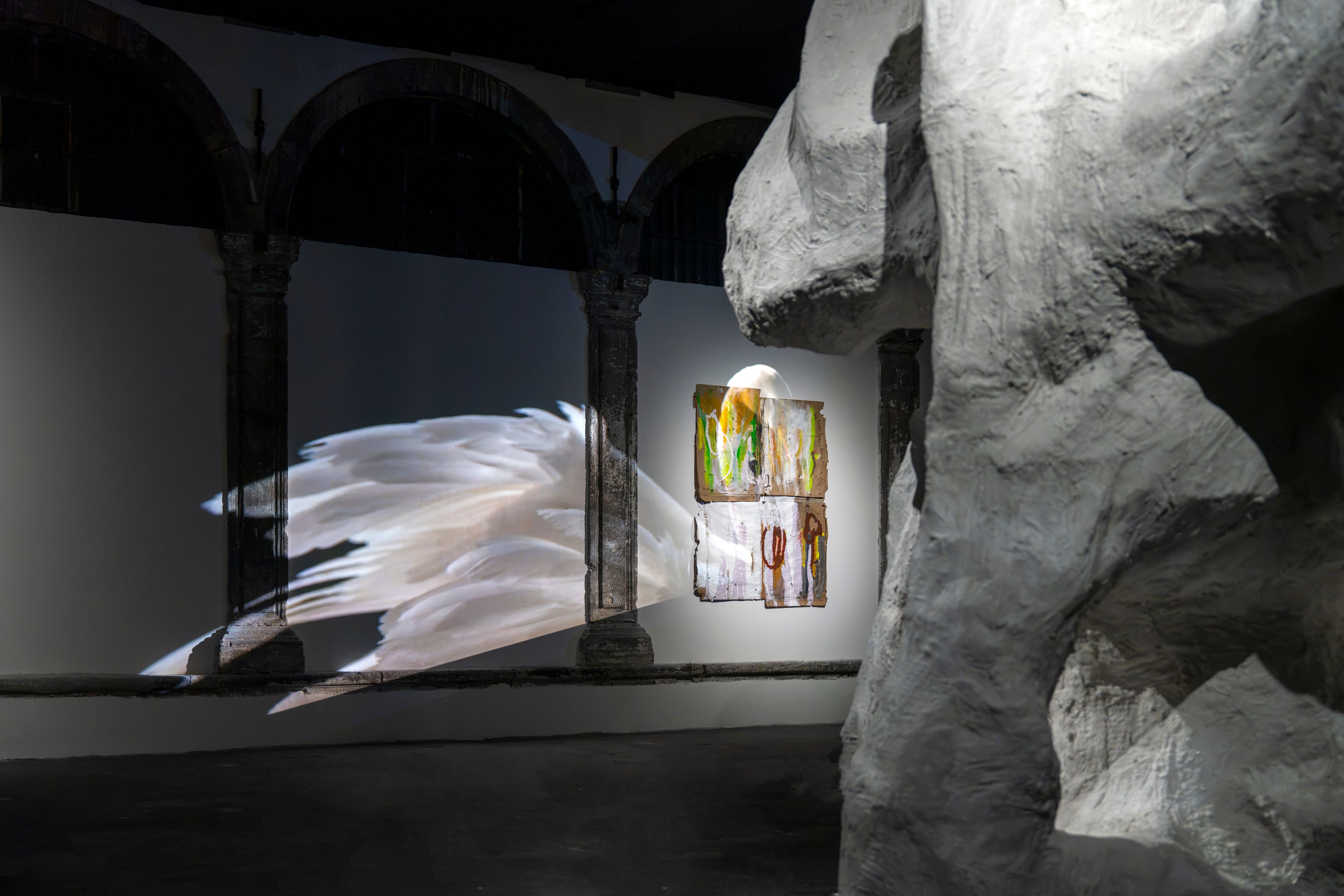
I first spoke to Anohni on a warm October afternoon, while she sat on the floor of the 16th-century cloister of the Renaissance Church of Santa Caterina a Formiello, Naples, the site of Fondazione Made in Cloister, contemporary art and cultural foundation. The British musician, and the lead singer of the band Anohni and the Johnsons, was finalising her sculpture The Angel of Death (2026), a five-metre-tall, abstract white form inspired by Kali, the Hindu goddess of destruction and renewal.
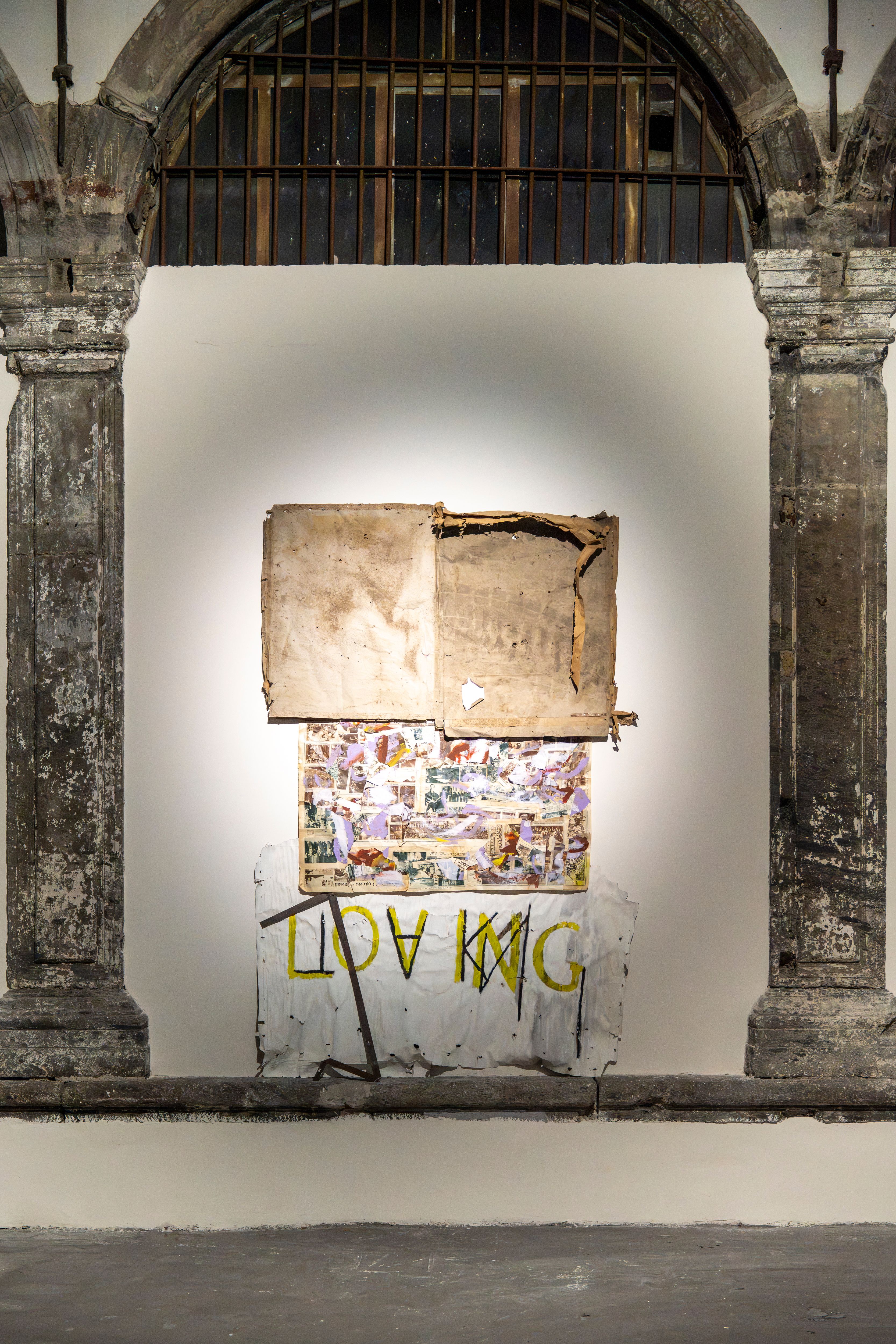
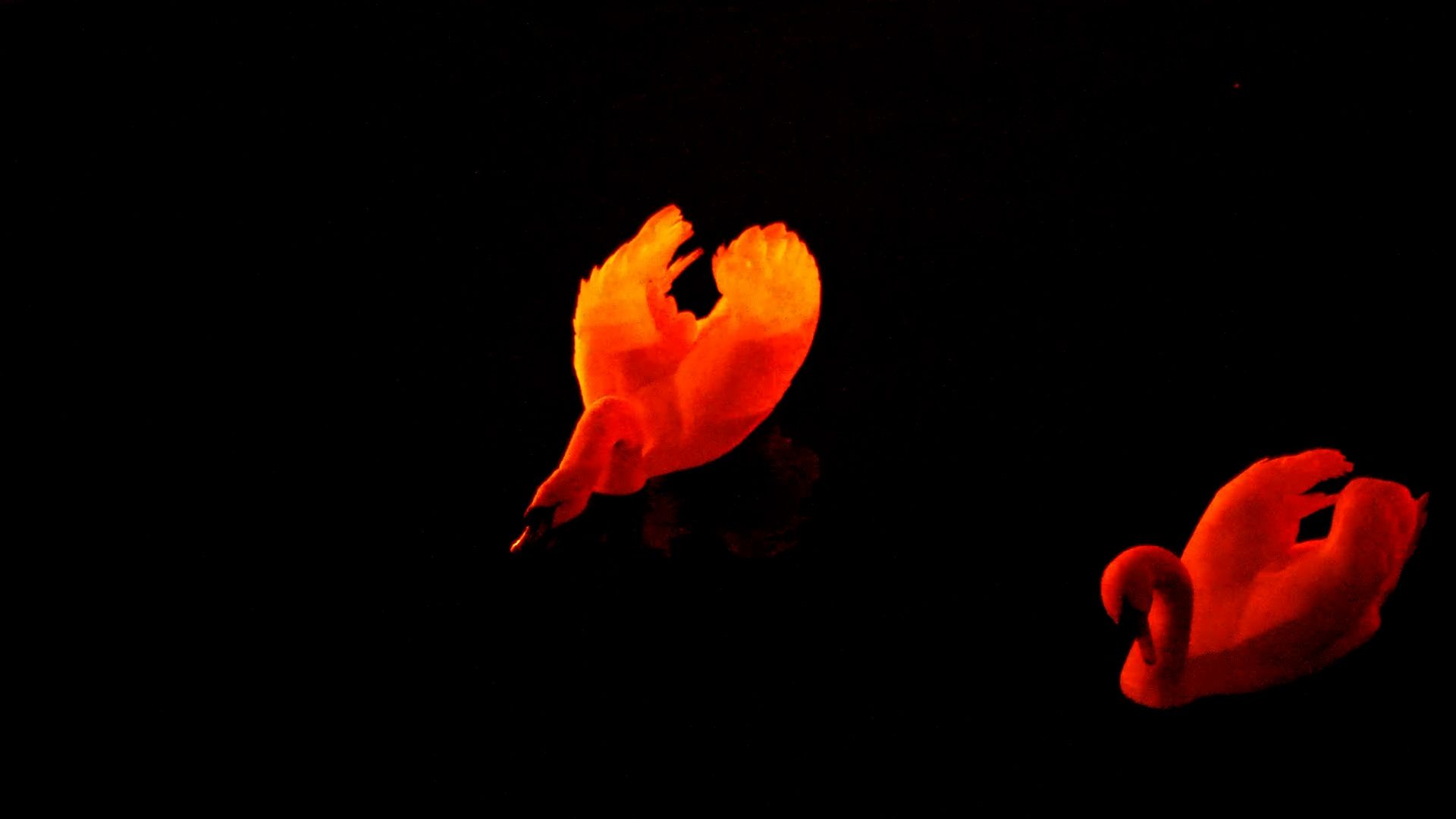
The monumental goddess is the centrepiece of Jesus as a Girl, Anohni’s artist takeover of the venue, wrapping up the foundation’s two-year programme Rebirth. The cloister’s sources of natural light have been covered to create a cavernous space, while a projection of swans swimming on Berlin’s canals at nighttime encircles the room, alternately illuminating the works that line the perimeter: a series of abstract paintings, texts, and sculptures, created by Anohni during her three-week residency in Naples, with many drawn from discarded materials found in the city’s streets and industrial yards.
A haunting new song, also by Anohni, fills the space. An artist and theatre director, she is best known for her operatic voice. Lou Reed found it so moving that he once compared it to that of an angel. Drawing on her long-time exploration of the idea of a post-apocalyptic future in which Jesus is a girl, we are asked to consider a world from which a girl might be resurrected, restoring the archetype of the feminine as central to creation and human co-existence, and supporting the renewal of the biosphere.
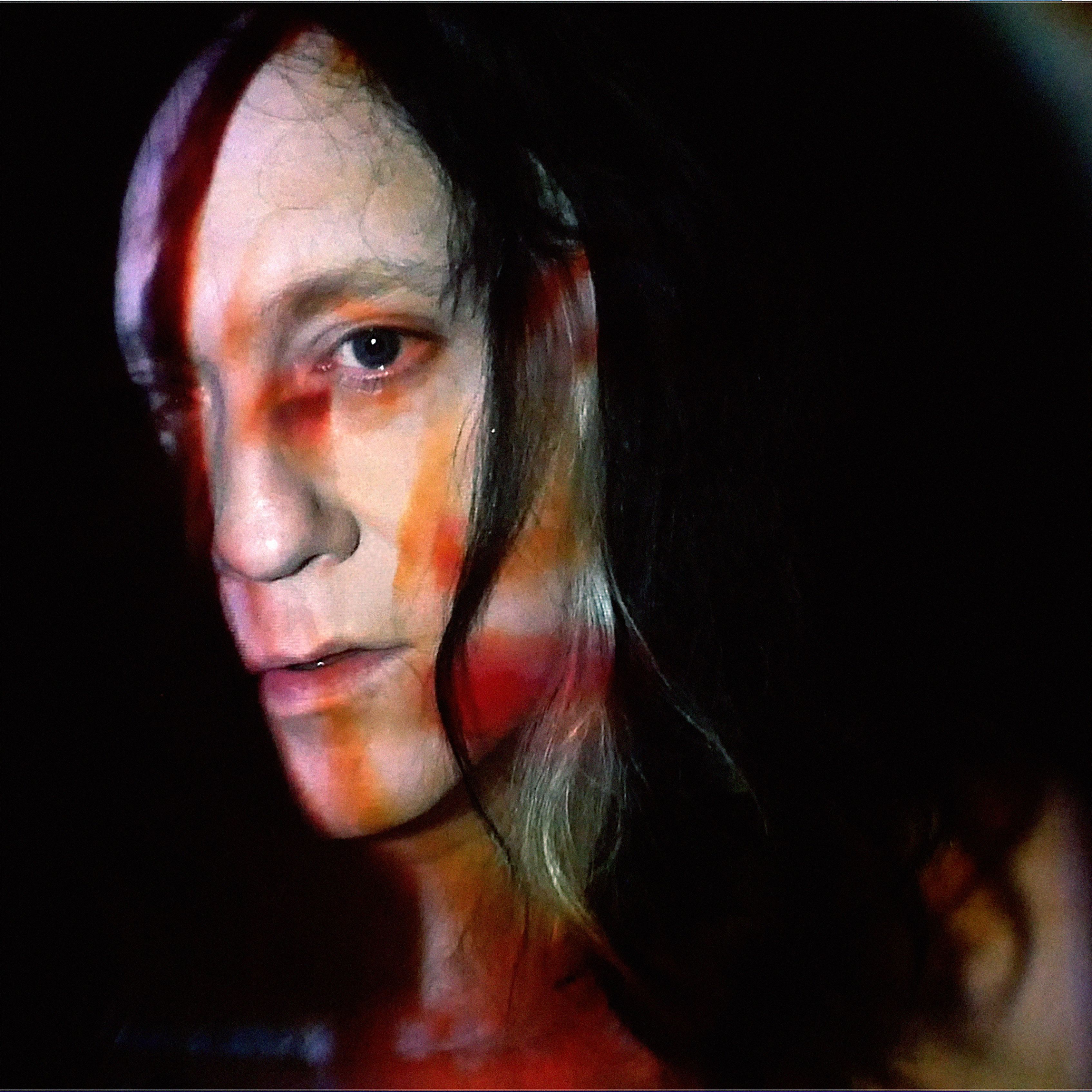
Anohni: When I moved to New York [during the 1980s], I found a David Wojnarowicz photo in the rubbish. In those days people would die from AIDS, and their belongings would be thrown in the rubbish. It was just a very different time. As I’ve gotten older, I’ve thought about how queer people have eroticised self-deportation to kind of ghettos—though nice ghettos. As soon as we were able, we fled from our families of origin, churches and communities, and went to a city where we would inhabit unmonetised or undesirable spaces. That was where we would build our world—a sort of outcast world. So, I think there’s something about discarded material that is essential to queer American identity.
I suppose these are all little different rivulets that lean toward another thing, which is that I am an animist, and I’m innately interested in the magical properties of materiality. What I hate about picture frames is that they’re a symbol of containment—of process, and of the passage of time. The whole idea is to preserve or to embalm rather than to celebrate movement.
Using discarded material is also just really a joyful process. It’s something that I learned from my friend, the artist James Elaine, who is the kind of person who’d say: “Oh my God, I’ve just discovered my next great painting!” and you’d go out and there would be some beautiful, shredded bit of material in the rubbish. He just saw the diamond in its eye. Do you remember the story of Jesus [in Islamic mystical and Sufi literature] looking at the corpse of a dog, thinking it had really nice teeth? There’s something about seeing beauty in the things that have been discarded that is quite Jesus-y.
A: I’m a queen, I’m trans. I only have a tiny bit of agency, and it’s only very conditionally assigned to me. The fact that I’ve been afforded a platform as a musician, within any media, in certain public spaces, is a very big miracle in our society. As soon as I understood my exceptional circumstances, I sought to try to best utilise the platform I have, to be useful within my sphere of influence. That’s what any of us can do; that’s what I encourage everyone to do. Whether you’re a writer or a journalist or a greengrocer or a mother, utilise your sphere of influence, participate to the best of your ability. There are certain things that my nervous system wouldn’t be able to tolerate because of my life experiences—acts of courage that I have to rely on others to take. But I have pushed myself as far as I feel I can go—of course, there’s always further you can go than you can feel you can go—but a body is to be used.
“I think there’s something about discarded material that is essential to queer American identity”
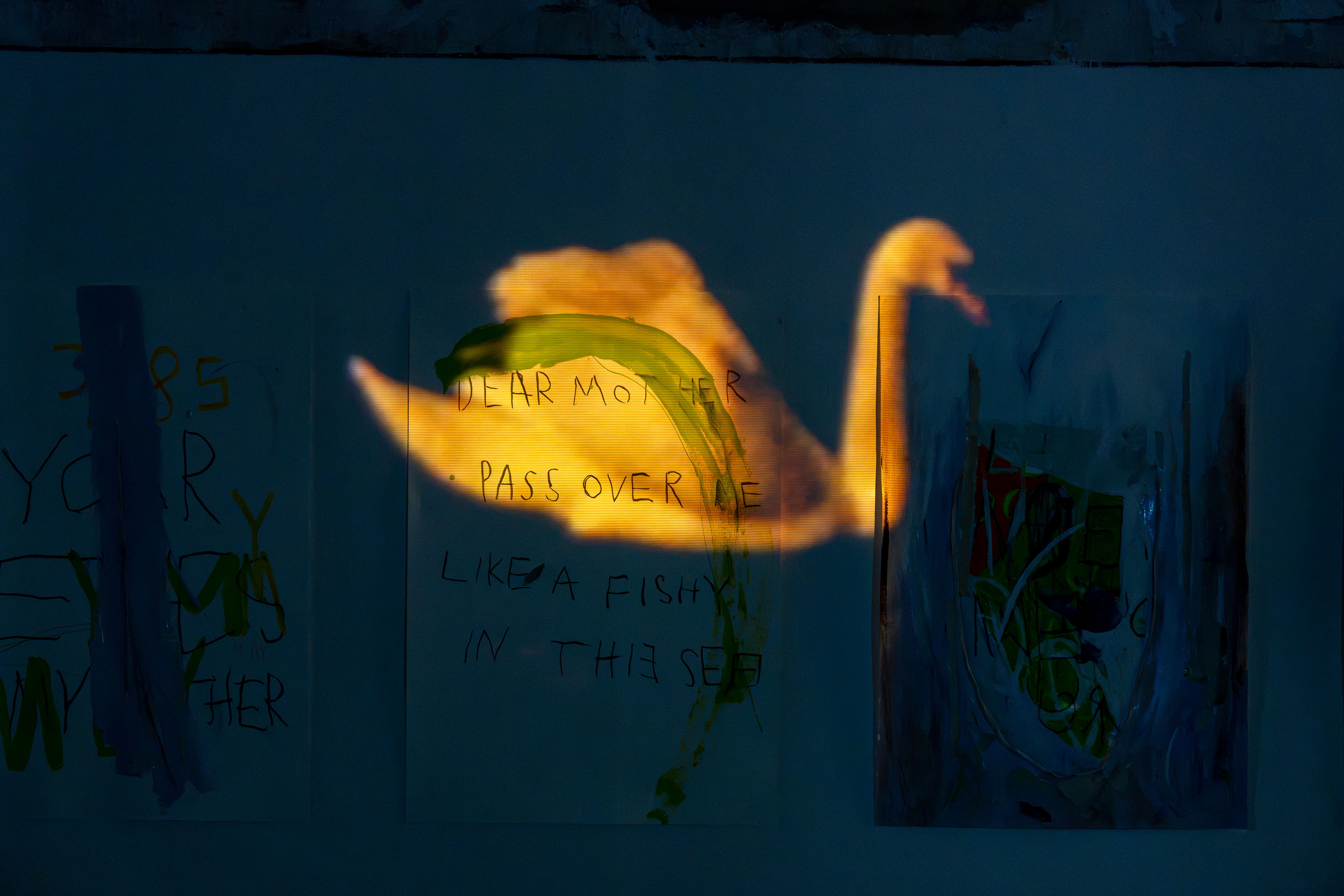
A: I filmed the swans while I was living in Berlin last winter, at night, and they were struggling because of avian flu, and a few had died there on the banks of the Kreuzberg canals, but the others were continuing forward with this kind of incredible composure, with ferocity and dignity. Swans have very strong personal lives: they have only one partner, they mate for life, they’re very romantic, they’re very fierce. I think they’re interesting because one of the survival strategies they’ve developed is to be beautiful in order to live in a kind of uncomfortable proximity to human beings, in order to get their needs met. Yet make no mistake: they’re wild animals and they’re witnesses. I thought there’s something about the swans as a witness, as a sort of amoral witness and as a representative of a non-binary spiritual paradigm. A swan doesn’t care about good or evil, it cares about other things, it cares about its animate life. It’s not beholden to these horrific symbolic constructs and constraints. It’s living very much within the reality of the present, and it’s watching us.
A: I’ve been reading this one book: it’s by Benjamín Labatut called When We Cease to Understand the World (2020). He’s a Chilean writer and the book is an account of emergent technologies and the people behind them in the early 20th century—chemical industries and nascent tech industries—and the ways that they were embedded in the violence ongoing at that time, the fervour and madness of the First and Second World Wars and the psychology behind it.
Mostly, I just carry around Thích Nhất Hạnh—he was nominated for a Nobel Peace Prize by Martin Luther King. I don’t really like Buddhism particularly, but I do love him because he didn’t separate the idea of divinity from an idea about the manifest. He really just talked about the precious value of the actual world around us. He didn’t have any hair—he shaved it all off—so I always draw hair on his picture on the cover, so that he has nice long hair. That’s about it.



A respected voice in contemporary art discourse.
Focusing on ambitious storytelling and insightful art-world commentary. Ocula Magazine publishes in-depth interviews, critical essays and timely analysis on the artists, exhibitions and ideas driving the global art world.
Learn more about Ocula Magazine
Showcasing the best of the art world.
Ocula partners with galleries from around the world to highlight their artists, artworks and exhibitions. Gallery membership is by application and invitation, with each member vetted by an independent panel.
Learn more about Ocula Membership
Specialises in the sale of major artworks.
Led by a team with deep ties to the world’s leading auction houses, galleries and collectors. Ocula’s advisory team offers bespoke services to high-net-worth clients from around the world who are looking to acquire the best of contemporary and modern art.
Learn more about our team and services