

The art world in focus
Subscribe to our newsletter for news and insights on artists, galleries and exhibitions.
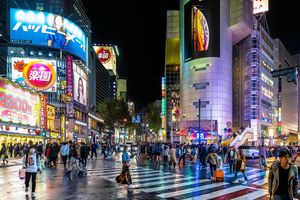
A flying car zooms between skyscrapers, passing a giant advertisement of a geisha swallowing a tablet. Beneath it, the rain-soaked streets look curiously low-tech: a noodle stall with a dragon-shaped neon sign; its elderly owner, who we hear speaking Japanese; a shop stacked with vintage televisions. This is Los Angeles in 2019, as dreamed up by Ridley Scott’s film Blade Runner back in 1982.
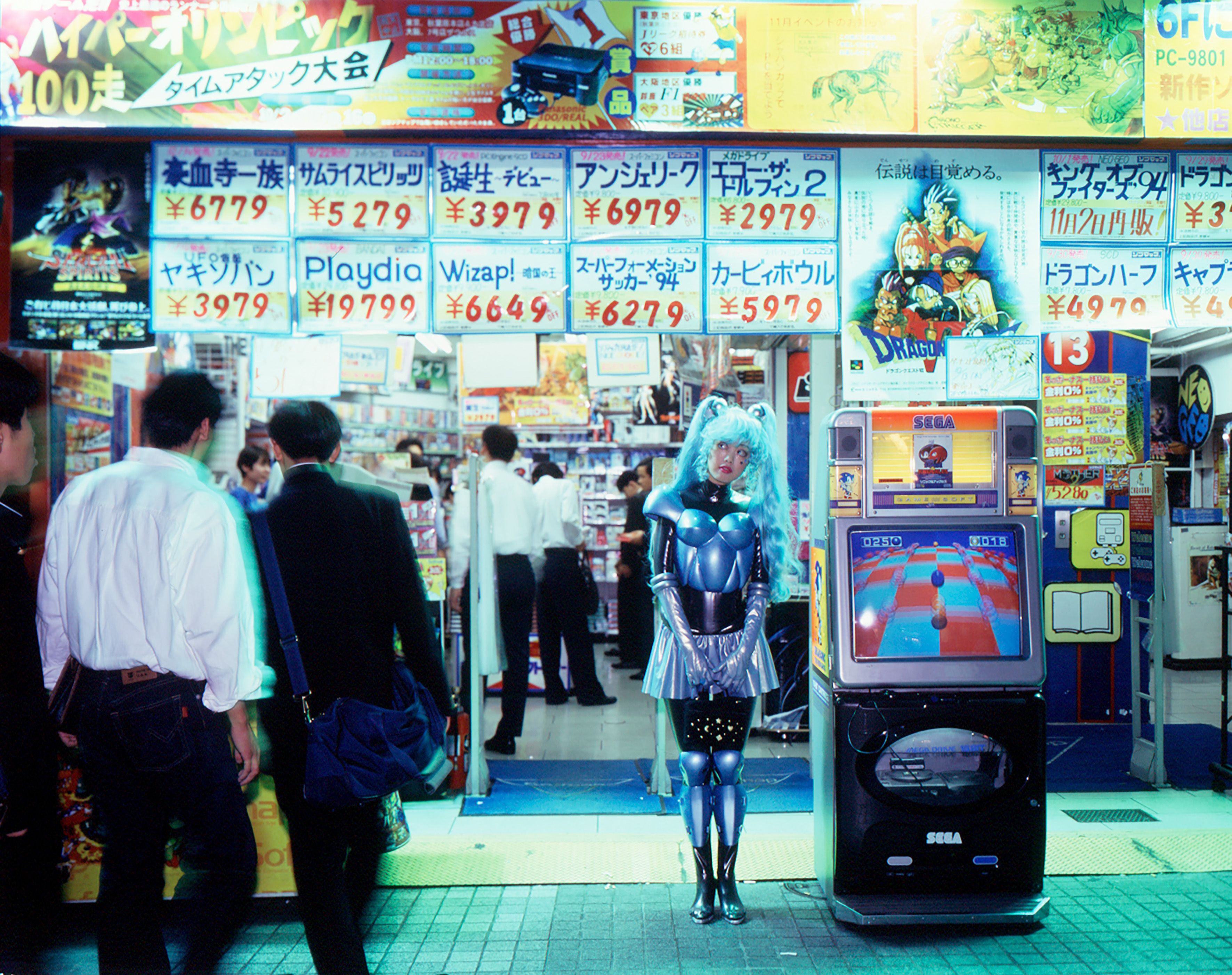
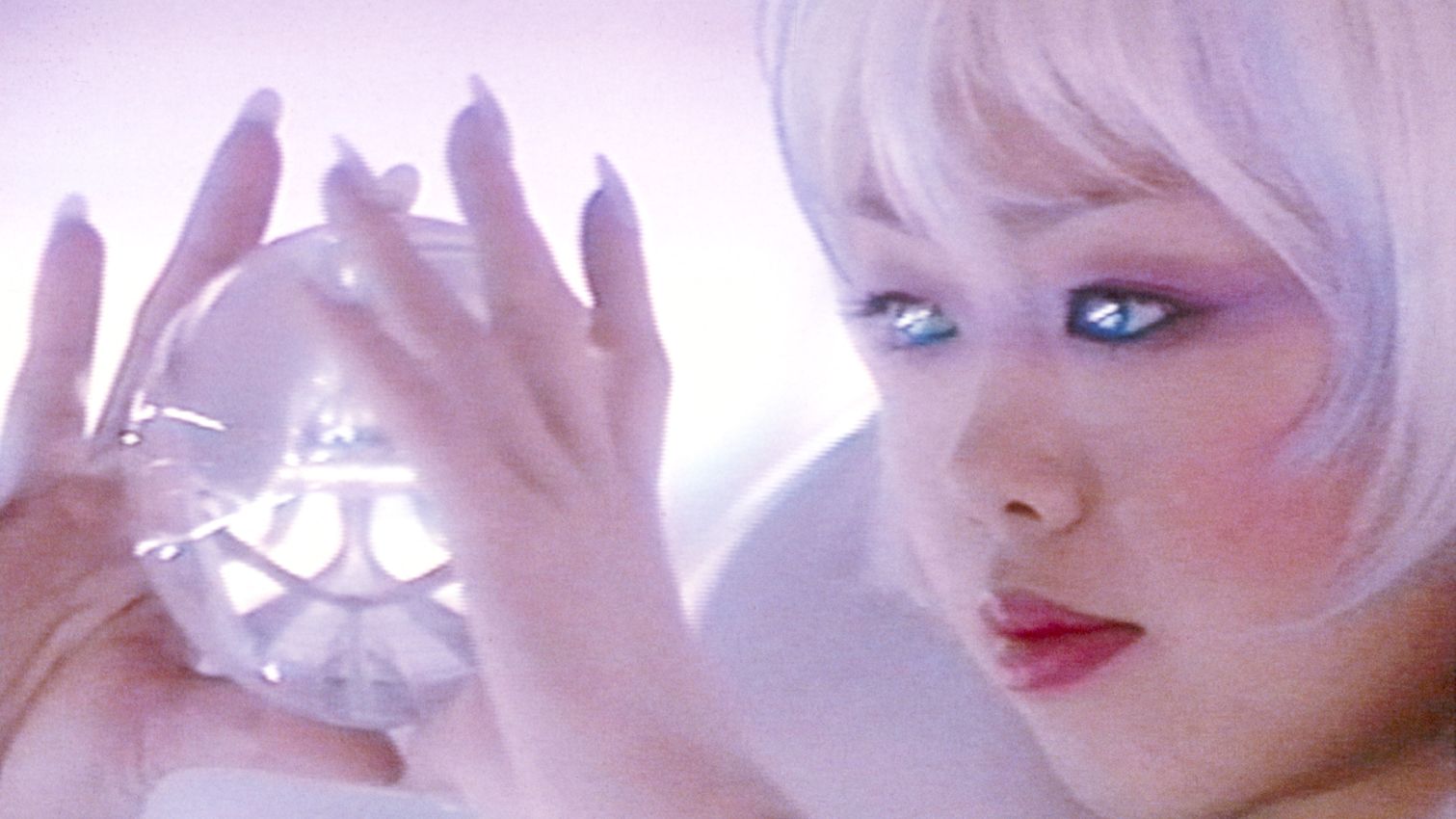
Revisiting Mariko Mori’s early futuristic images reminds me of this scene. In Play with Me (1994), a blue-haired, armoured figure stands beside a video-game machine on a busy street in Japan; in Miko No Inori (1996), a white-haired figure turns a clear sphere over in her hands, standing in Kansai International Airport in Osaka. Dressed in an iridescent costume, white wig and blue contact lenses, she seems at home within the airport’s immaculate surfaces. Her slow handling of the sphere, however, gives this transit hub the stillness of a ritual space. Spiritual imagery and the tech-forward architecture of the airport conspire to promise access to another state of being.
These works feature in All That Shines at Tokyo’s Mori Art Museum, on show until March next year. Spanning more than 30 years, the exhibition is her first major retrospective in Japan since 2002. Mori used technology as a vehicle for transcendence, interconnectedness and spiritual renewal, projecting a version of the future that was technological but rich in substance. Revisiting her work raises questions about that promise. Is this version of the future still possible? How does it sit alongside the imagined futures of the artists who have followed her, in which we realise that bodies remain bound to work, technological control and the histories they carry?
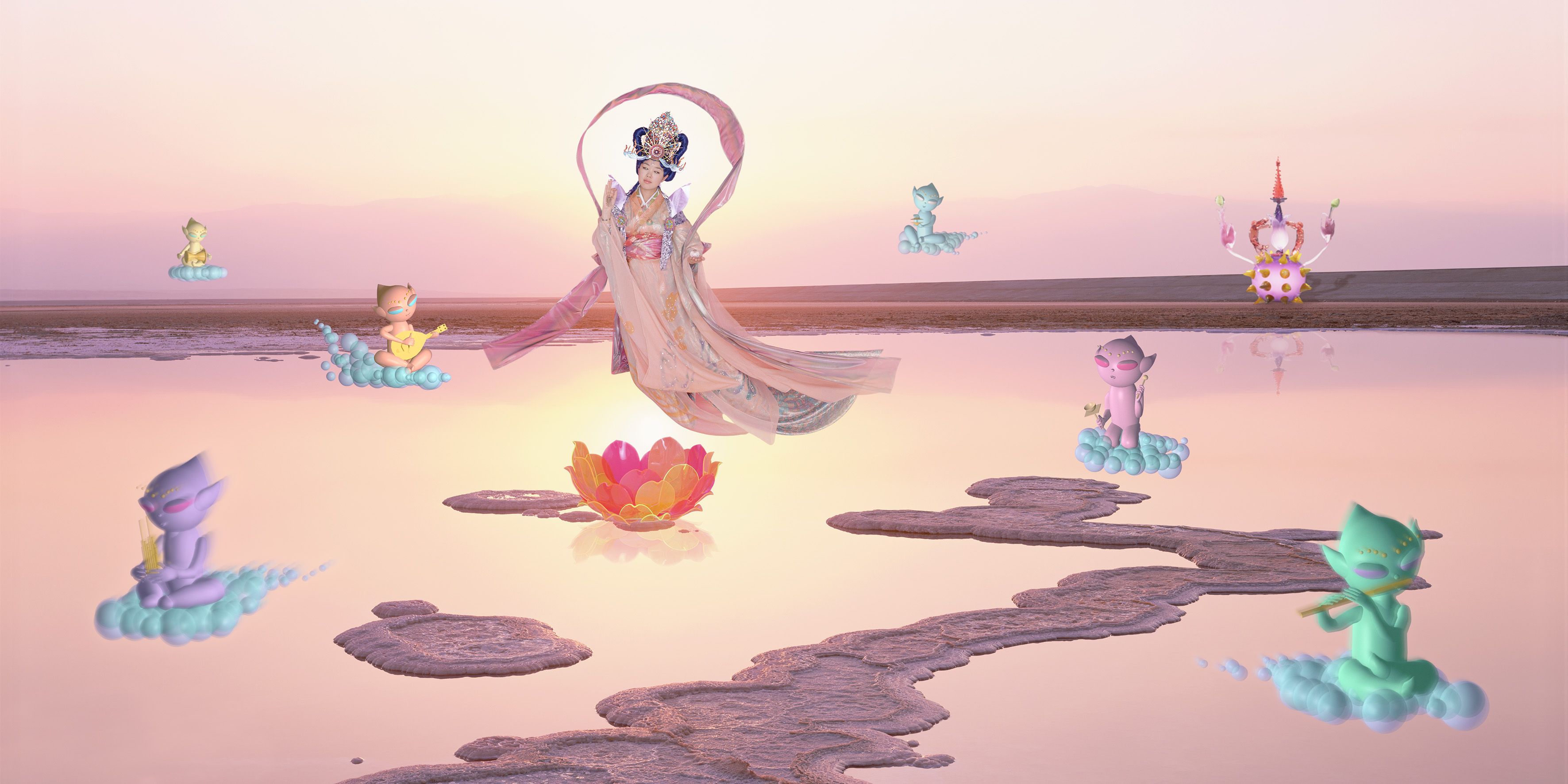
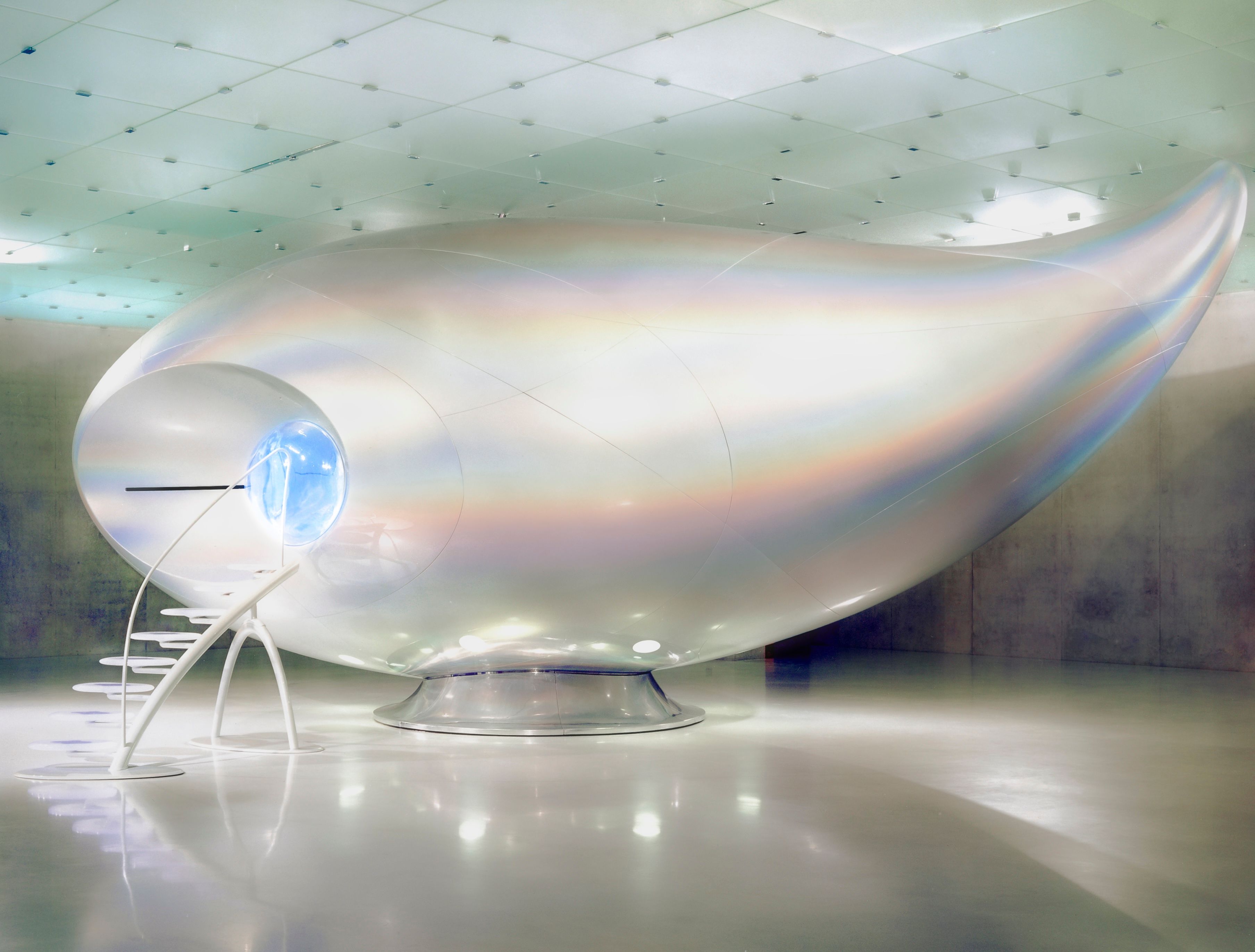
Mori came of age during Japan’s economic boom of the 1980s, when Donna Haraway’s socialist feminist essay A Cyborg Manifesto (1985) offered a vocabulary for thinking about emerging technologies and identities in more fluid ways. That fluidness can be felt in the artist’s early work. Wave UFO (1999–2002), documentation of which is on display as part of the retrospective, extends Mori’s exploration of transcendence to the viewer’s body. Drawing on Yogācāra Buddhist philosophy, the installation invited participants into an ethereal, pod-like structure, three at a time. They would ascend steps shaped like lily pads and then lie down; their brainwave activity would then be translated into projected imagery. The technical interface proposed a connection between strangers, giving Mori’s spiritual ideal of interconnectedness a perceptible form. In the work, transcendence seemed to become measurable through data and image.
“Mori could inhabit and manipulate the images through which femininity was being imagined”
At this time, Mori also started exploring Japan’s otaku culture—which includes manga, anime and gaming—in which artificial worlds could seem more real than reality itself. By staging herself as a schoolgirl, a manga-inflected cyborg or a costumed futuristic figure in photographs and films, Mori could inhabit and manipulate the images through which femininity was being imagined. She took control, making herself both the maker and the object of the spectacle. Her immaculate costumes were designed to present the fantasy as constructed while retaining its appeal.
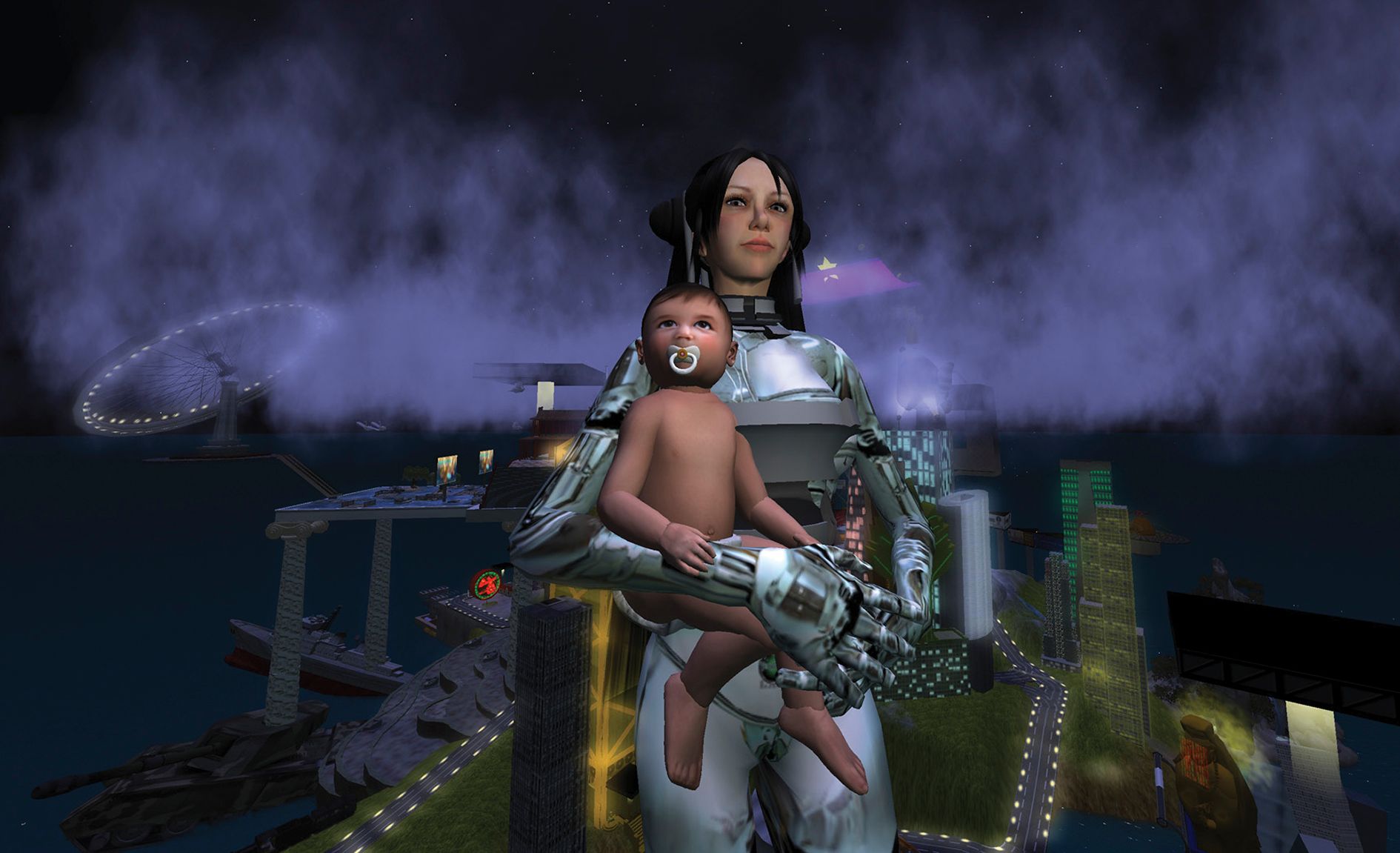
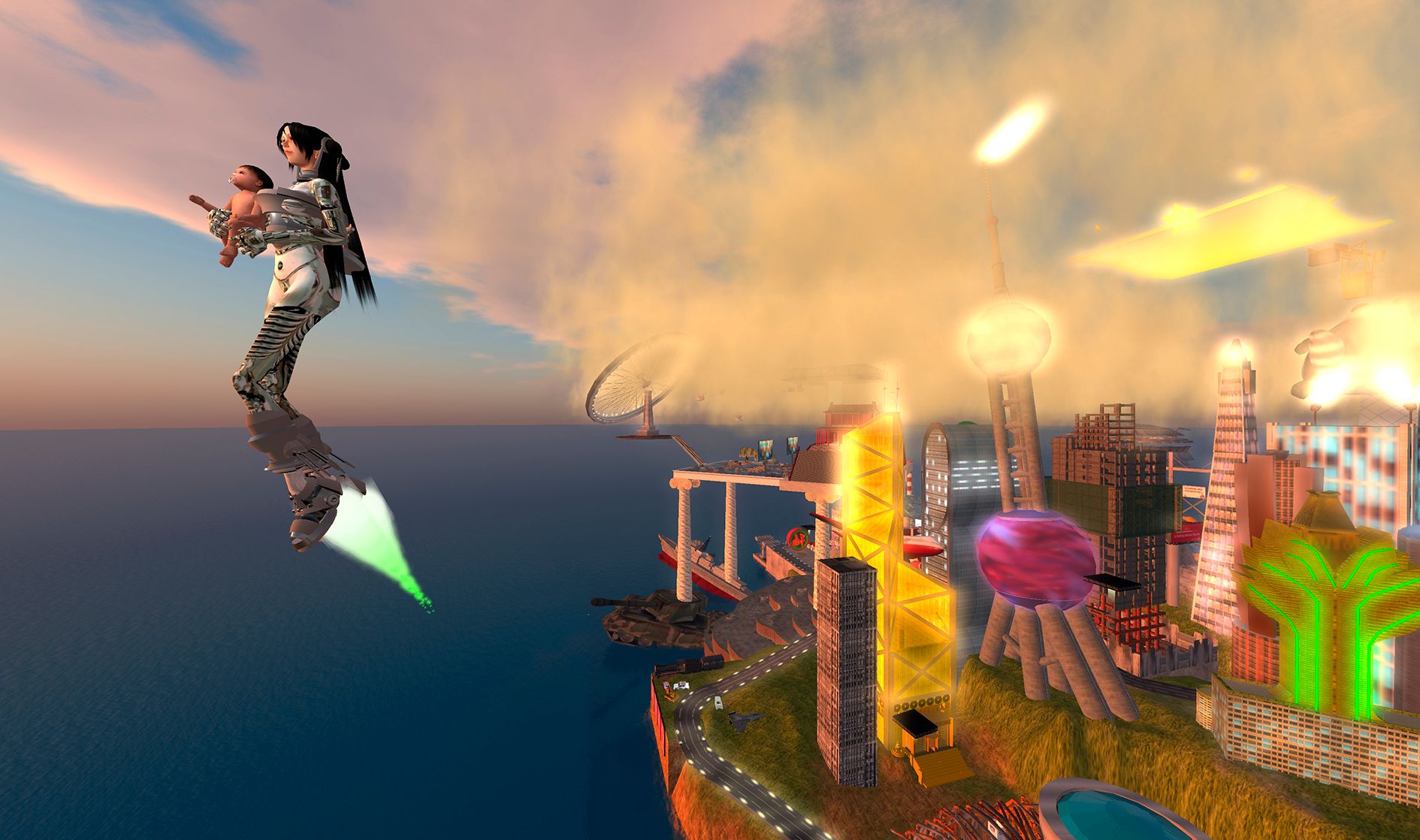
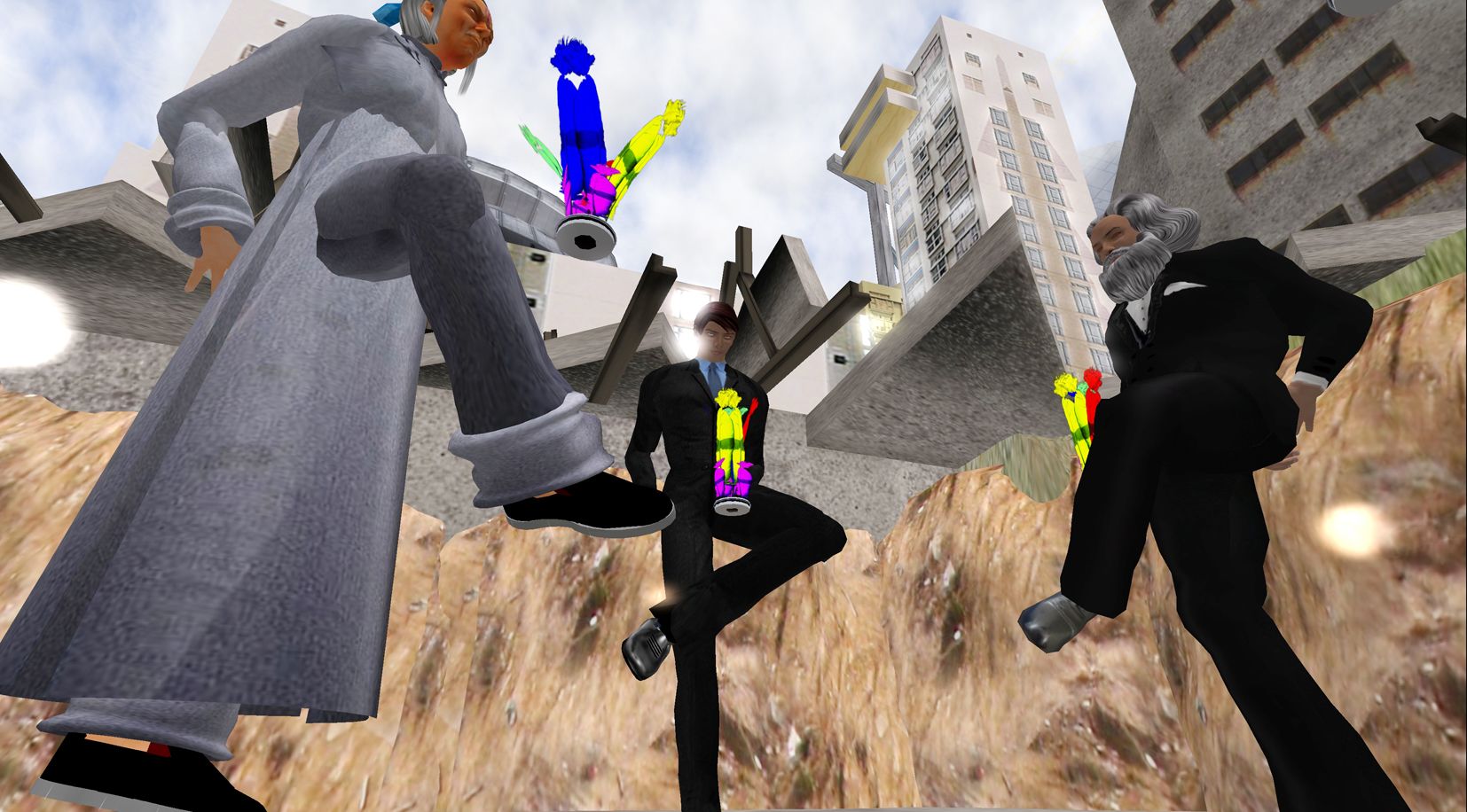
Mori is one of several artists working in East Asia who emerged after the 1980s economic boom and who have explored the idea of the future. Some have sought to destabilise the positivist ground on which such tropes were built. Born a decade after Mori, Cao Fei grew up in Guangzhou in the reform era, as China was transitioning out of a Communist economic model and into what the country terms a “socialist market economy”. In RMB City (2007–2011), Cao’s avatar China Tracy inhabits a metropolis in the online platform Second Life whose crowded landmarks include a flooded, reimagined Tiananmen Square (the site where pro-democracy protestors were killed by the Chinese authorities in 1989) and a rusted Olympic stadium; a virtual city marked by China’s urban ambitions and upheavals. In South Korea, Lee Bul’s Cyborg sculptures of the late 1990s offered another version of the refashioned body: idealised figures with missing heads or limbs. Their polished surfaces promised perfection while their incompleteness destabilised the promise. Lee described her series as an inquiry into technology and power, and into visions that failed to materialise.
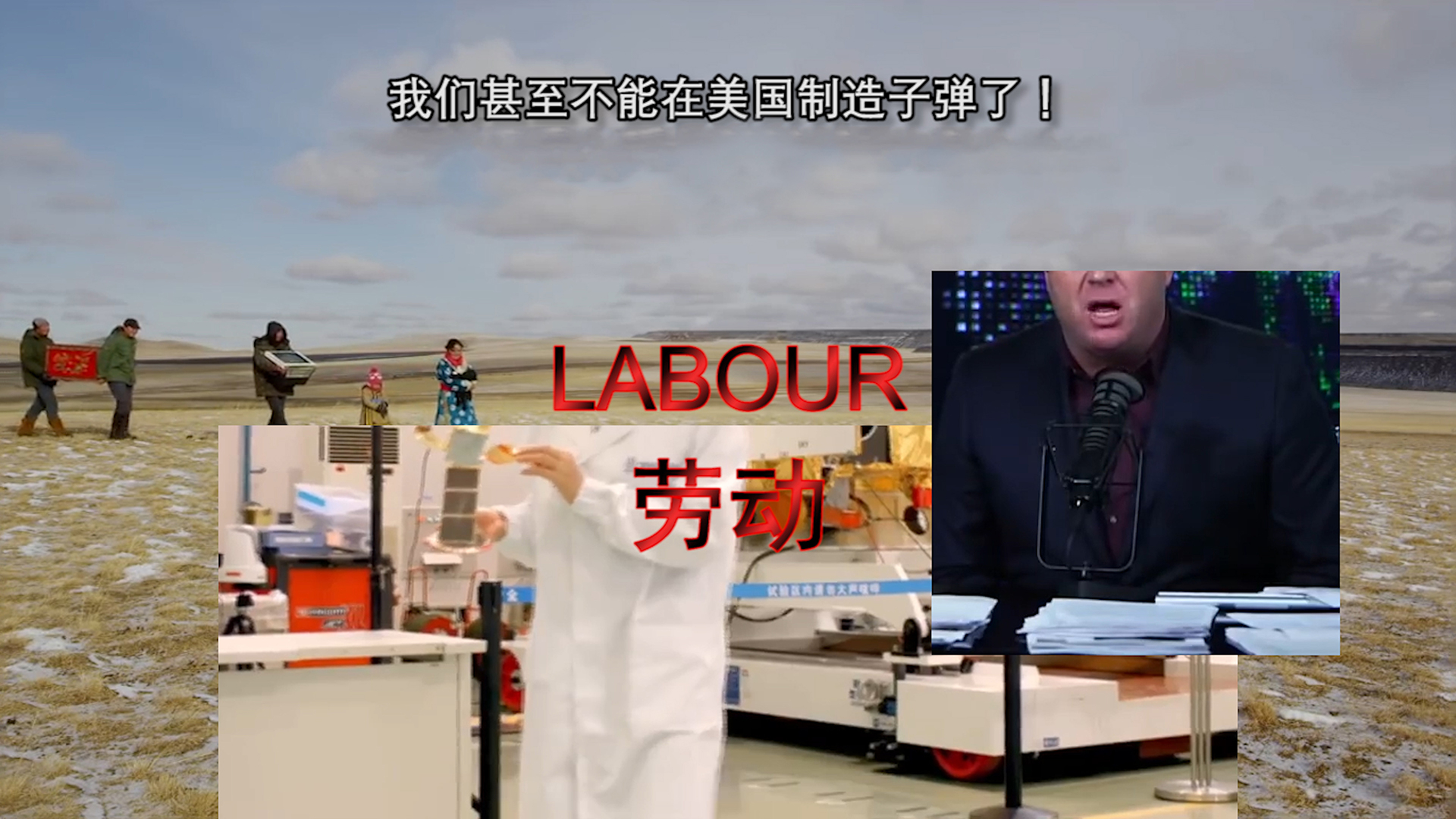
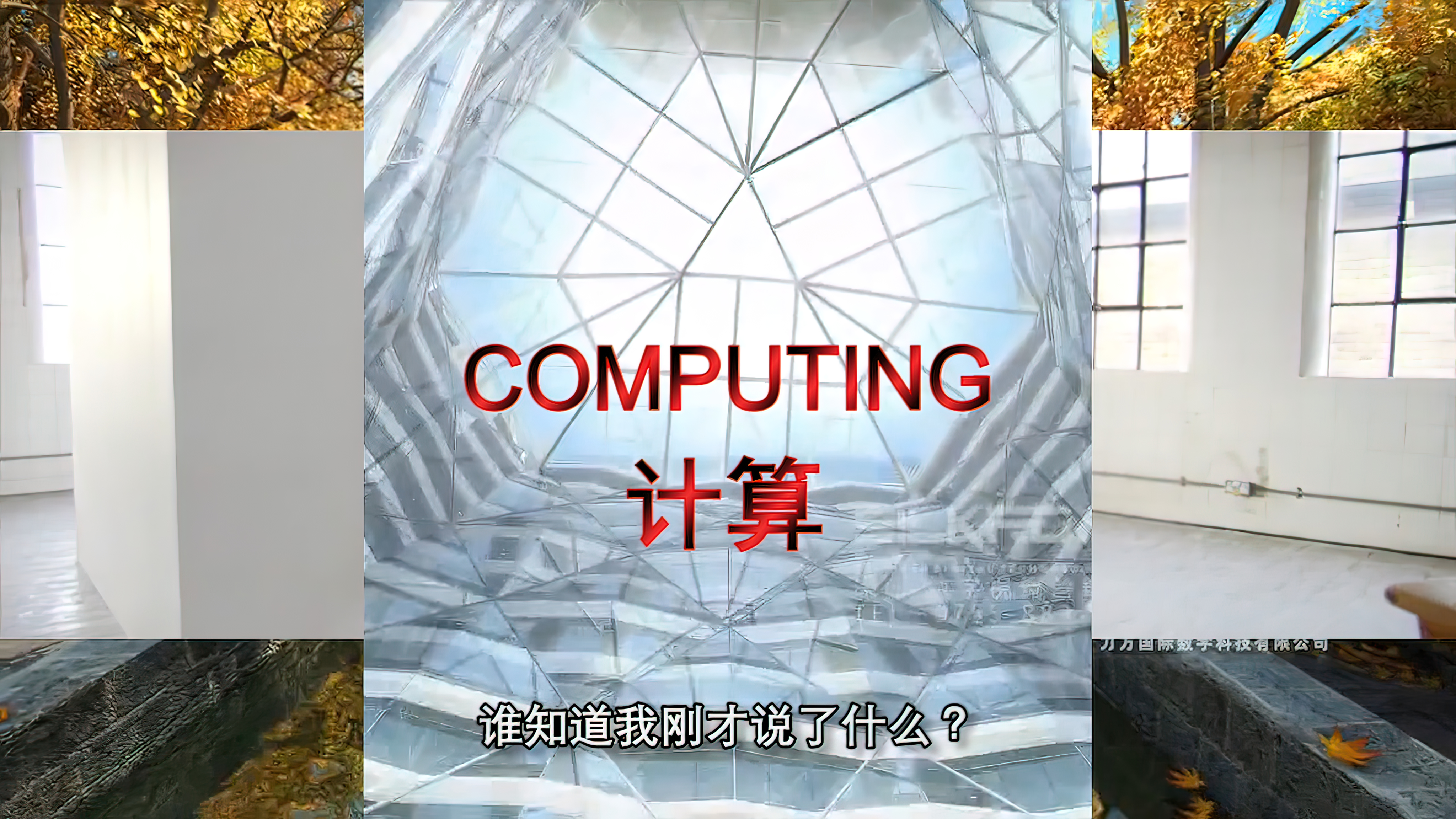
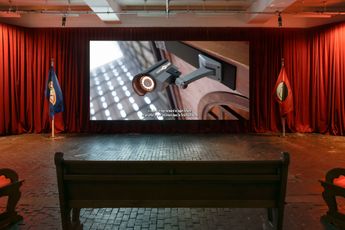
Lawrence Lek, a London-based Malaysian Chinese artist of the same generation as Fei, released his video essay Sinofuturism (1839–2046 AD) in 2016 as AI tools were being rapidly developed. It incorporates the regional label into its name, overlapping voices and images to narrate a speculative theory. Spanning China and its diaspora, and drawing on Afrofuturism and Gulf Futurism, Lek exaggerates stereotypes of industrious, imitative, machine-like labour. The video proposes something “radical”, the robotic narrator tells us. “That Sinofuturism is in fact a form of artificial intelligence, a massively distributed neural network, focused on copying rather than originality, addicted to learning from massive amounts of raw data rather than philosophical critique or morality, with the post-human capacity for work.” China, the voice suggests, operates on the same principles as artificial intelligence. Lek’s work raises the question of whether we are looking at a future at all, as AI-generated imagery and algorithmic media shape our experience of reality through processes that can recede from view as their results become familiar.
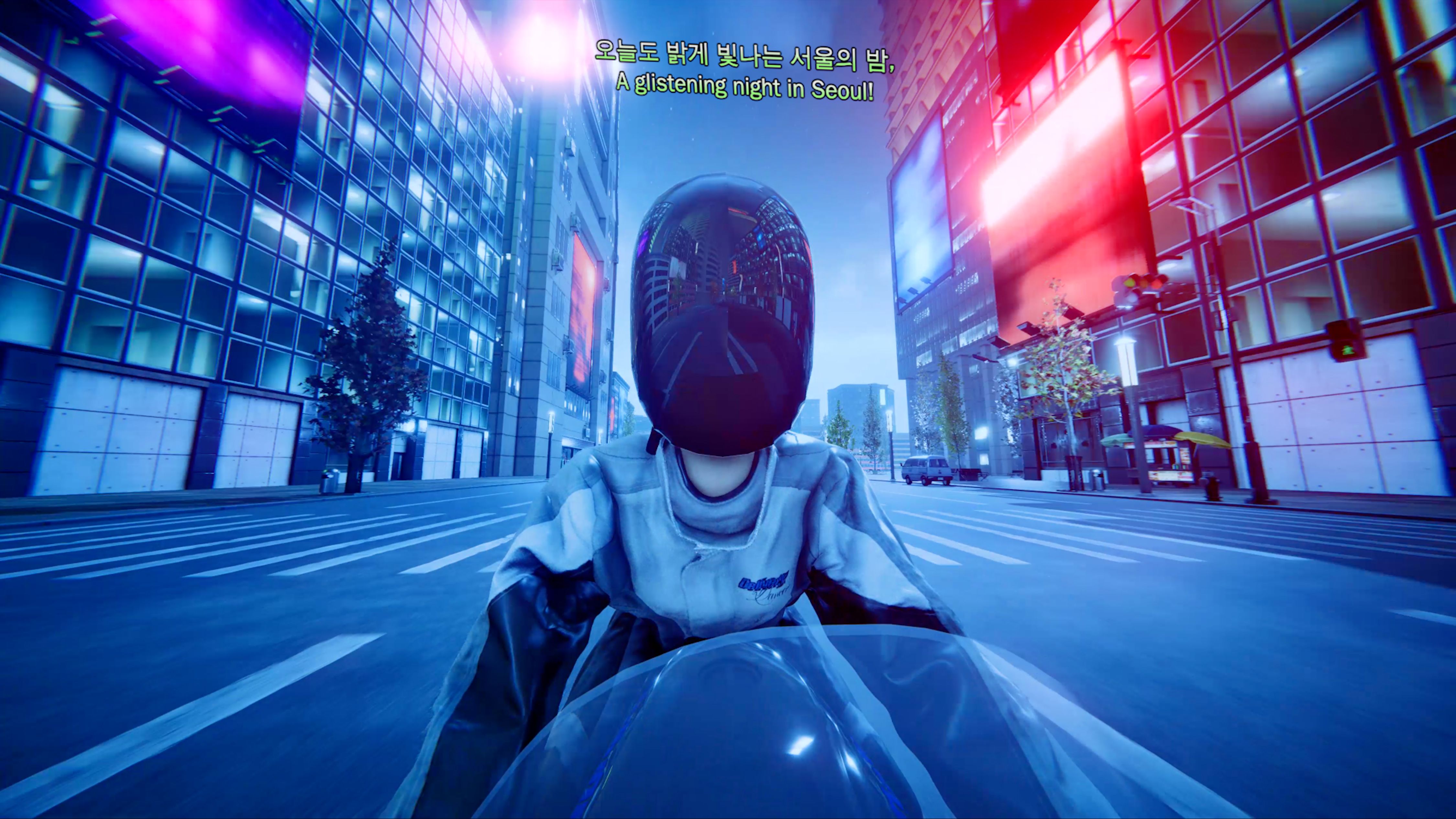
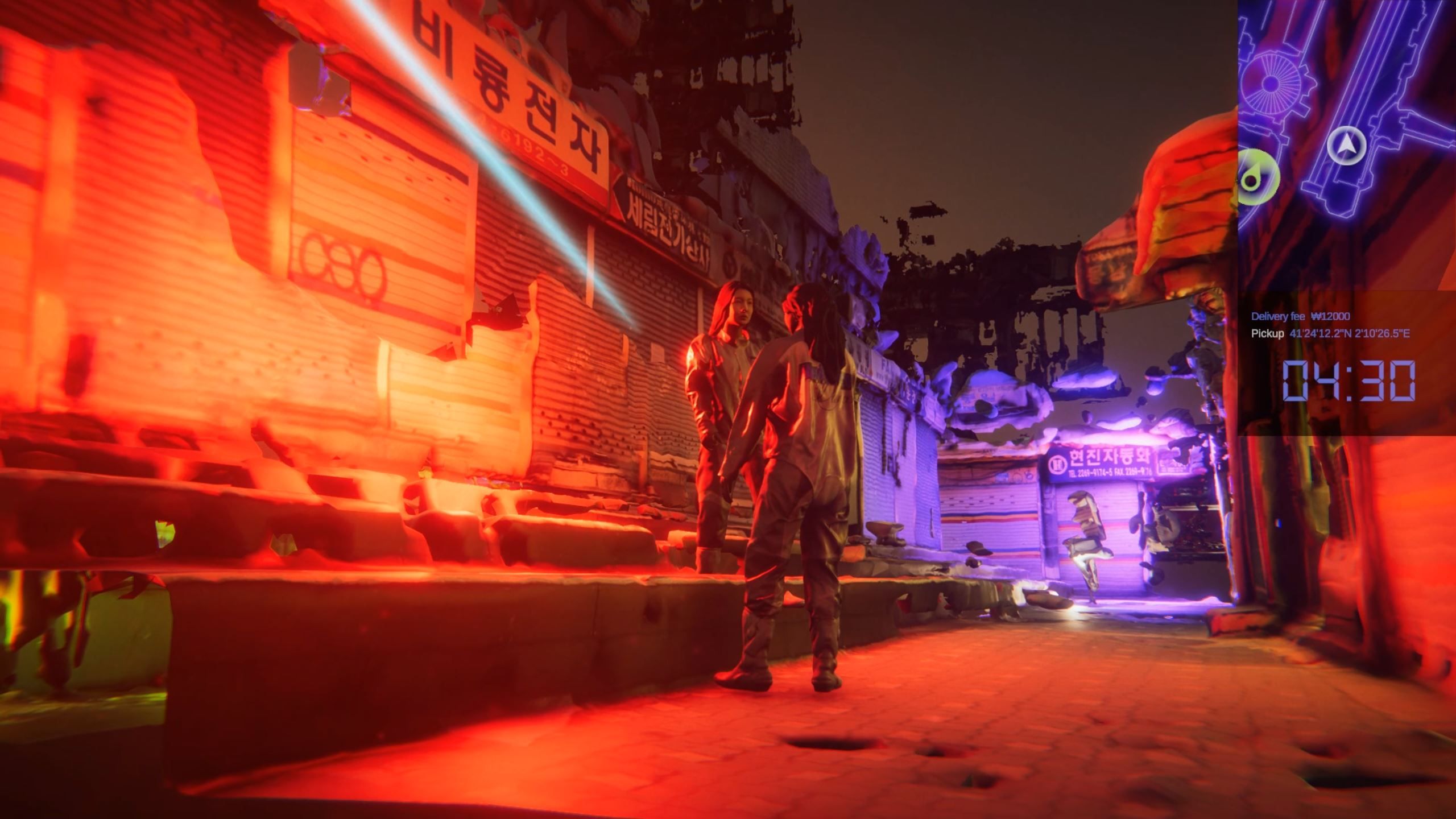
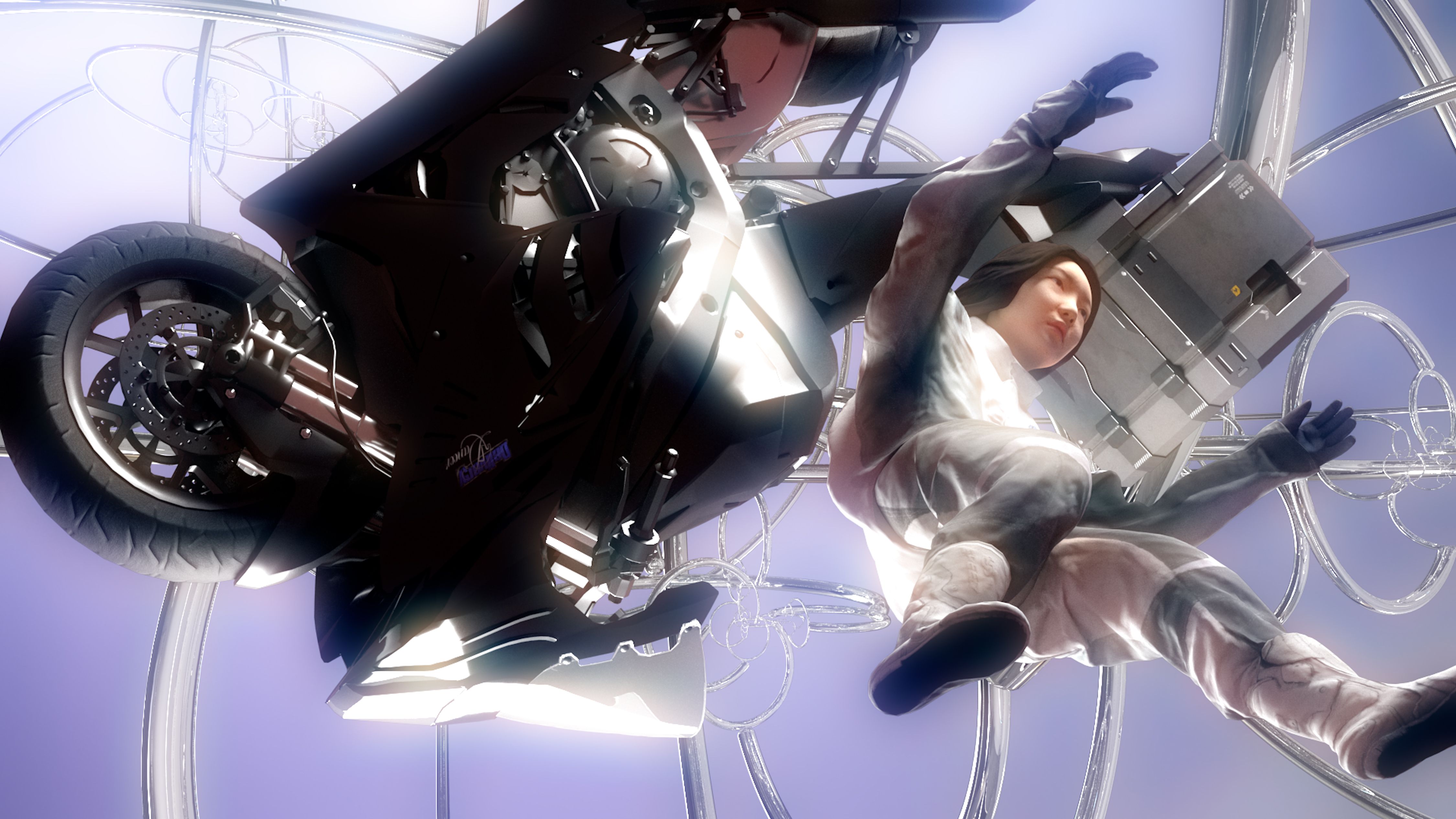
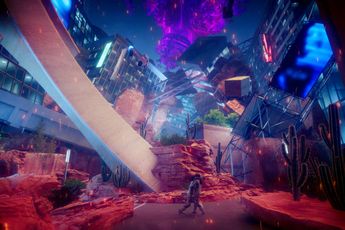
Game engines and generative AI shape the Seoul of Ayoung Kim’s Delivery Dancer series (2022–2025). Its motorcycle courier, Ernst Mo, moves through a vacant, fragmented city. As part of her research, Kim interviewed a delivery rider and rode pillion on her motorbike, weaving her experience of the city and the labour of its inhabitants into a fictional tale. She paints a portrait of gig labour through GPS routes and instructions from a delivery platform for completing impossible tasks. Meanwhile, Ernst Mo’s attraction to her identical double from a parallel world, En Storm, pulls against the demand to keep working.
In an interactive iteration of the work, a controller makes that pressure tactile: streets become passages to negotiate; the rider becomes the player’s means of completing a task. The rider’s vulnerability, Seoul’s social geography, and the working conditions, become distant in the pleasure (or confusion) of seeking the next mission. The research fades into the background and that fading resembles platform work, where the fact of completing the next delivery becomes more important than the person making it.
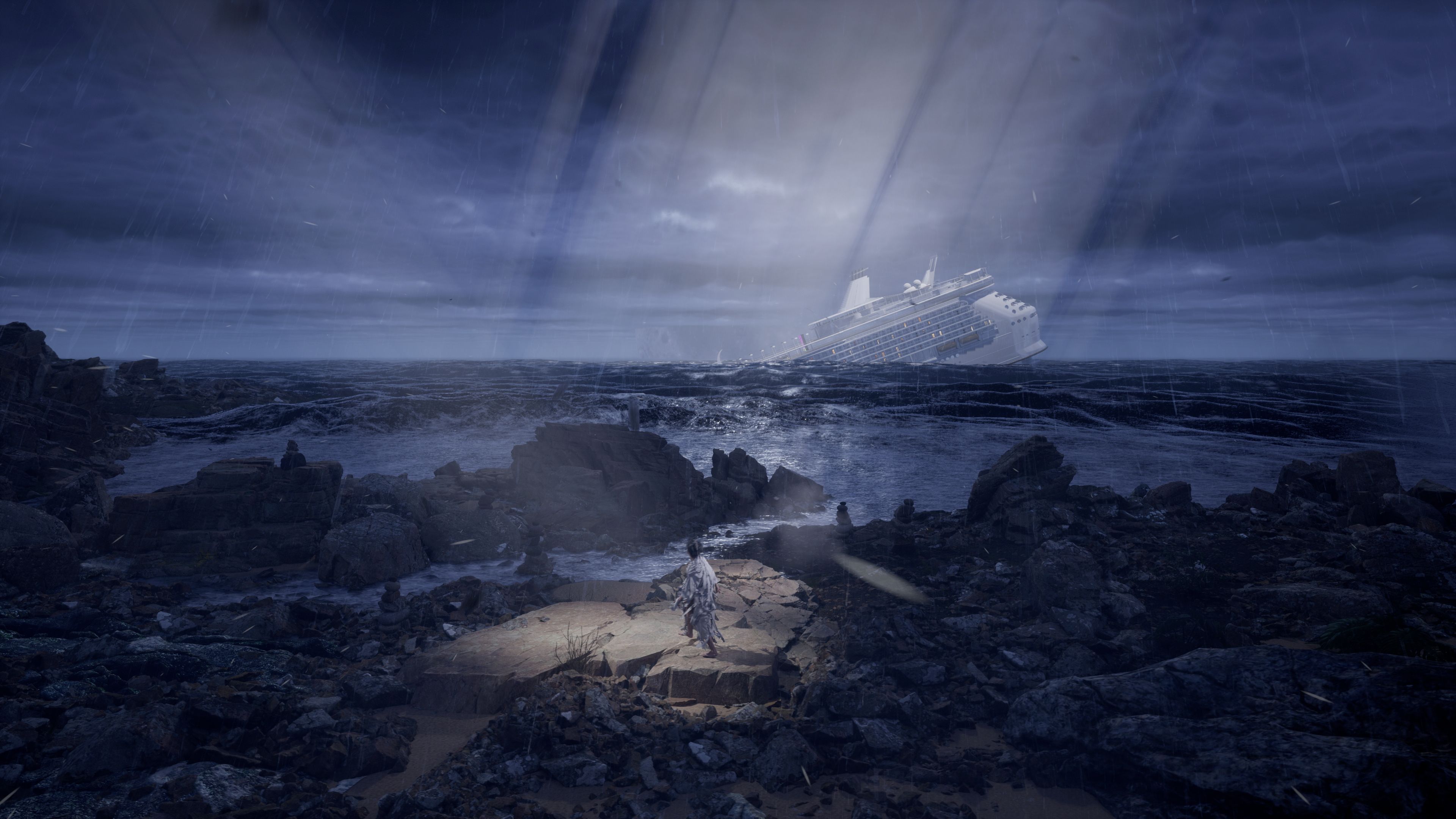
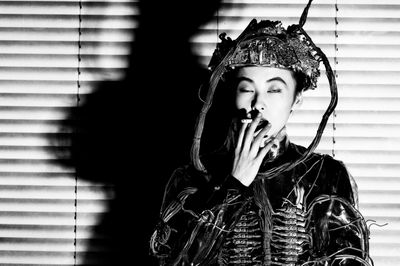
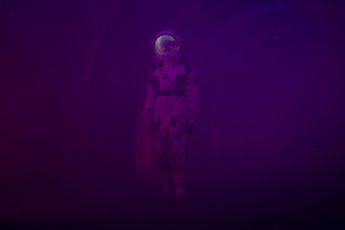
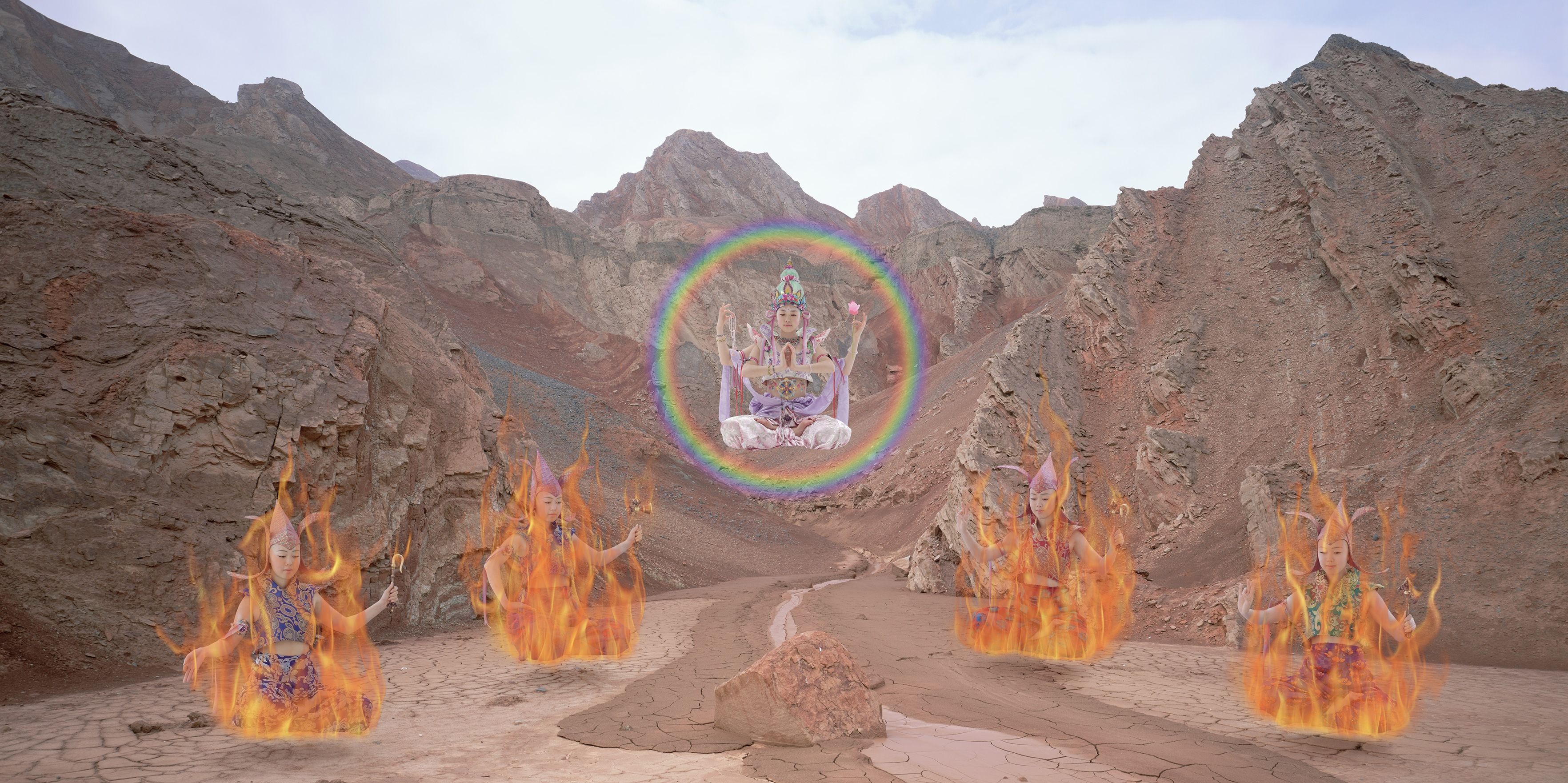
More than 40 years after Blade Runner, cultural signifiers (such as the neon dragon) and religious imagery continue to become interchangeable signs of Asian-ness in visions of the future. Shanghai-born artist LuYang subverts this visual language by bringing together specific references from across the region: Japanese animation and games, Chinese medical imagery and Tibetan Buddhist cosmology. In The Beast (2012), a figure turns into a cyborg angel, with wooden cylinders engraved with Chinese characters mounted on its back. A sparse, cult-like setting gives way in a later series, called DOKU (c 2019–), to multiplying bodies. The artist’s face recurs across gender-neutral avatars associated with the six Buddhist realms of rebirth.
“Cultural signifiers and religious imagery continue to become interchangeable signs of Asian-ness in visions of the future”
The DOKU avatars take on elements from cultures beyond the artist’s own: Balinese Legong dance informs the heavenly avatar’s movement; the Asura figure does a warrior dance. LuYang also cites the controlled facial expressions of Kerala’s Kathakali performers, describing an interest in “the control of consciousness over the physical body”. Eyes, fingers and muscles acquire their precision through years of training, but motion capture makes that discipline available to an avatar. The resulting body joins LuYang’s face to gestures learned and performed by someone else. A cultural reference can be visible in the image without explaining the processes through which that body is made and moves.
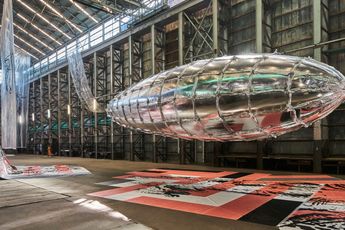
These futures, those imagined by the generations following Mori, take their material from the present. Lek exaggerates stereotypes of labour, Kim shows how a delivery platform directs a courier’s work, and LuYang gives avatars the movements of trained dancers. Mori’s vision remains otherworldly, offering the possibility of spiritual transcendence in this same world. In the artist’s recent installation work Shrine (2025), silk veils suspended from a traditional wooden structure surround Kamitate Stone I (2025), a rock rendered in layered acrylic with a two-tone colour coating. The veils stir with the soft breezes of air circulating around the room. The form of the installation draws on the myth of the Kamitategami-iwa rock, which is associated with the creation of the mythical Onokoro Island in Japan. The sculpture remains still, while its colour shifts with the light and the viewer’s position. The piece is intended to recreate the spiritual experience of entering a shrine in Japan. The technological finish remains, giving a particular creation myth an unfamiliar look. The promise of another state of being persists beyond the future imagined by Mori in the 1990s. —[O]

A respected voice in contemporary art discourse.
Focusing on ambitious storytelling and insightful art-world commentary. Ocula Magazine publishes in-depth interviews, critical essays and timely analysis on the artists, exhibitions and ideas driving the global art world.
Learn more about Ocula Magazine
Showcasing the best of the art world.
Ocula partners with galleries from around the world to highlight their artists, artworks and exhibitions. Gallery membership is by application and invitation, with each member vetted by an independent panel.
Learn more about Ocula Membership
Specialises in the sale of major artworks.
Led by a team with deep ties to the world’s leading auction houses, galleries and collectors. Ocula’s advisory team offers bespoke services to high-net-worth clients from around the world who are looking to acquire the best of contemporary and modern art.
Learn more about our team and services