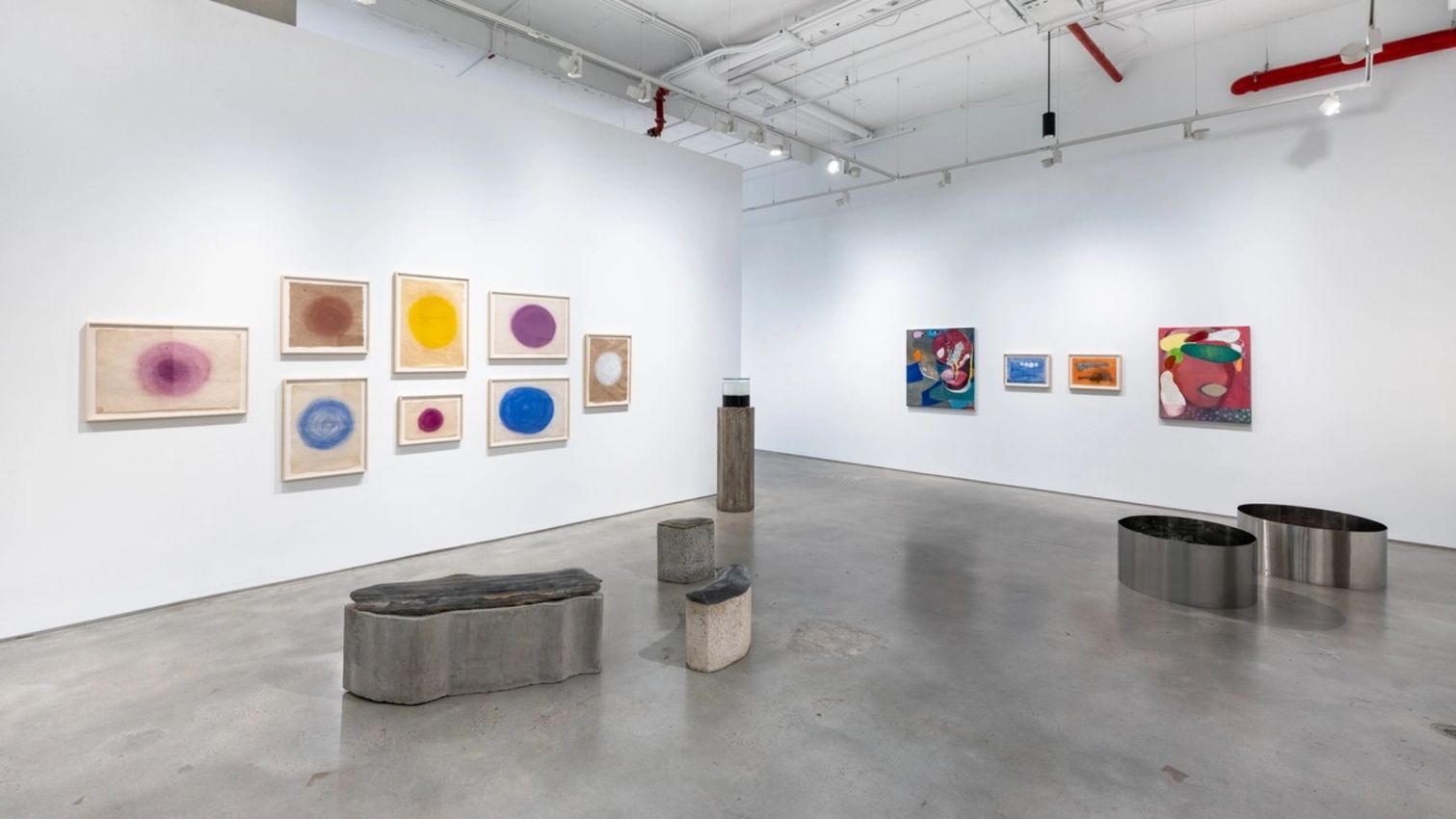
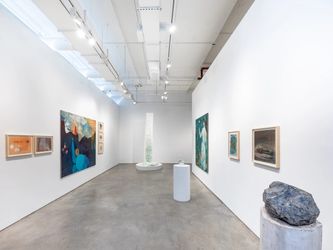
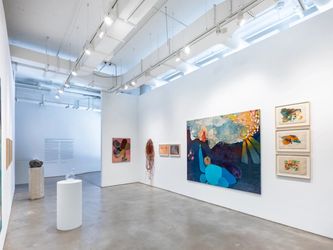
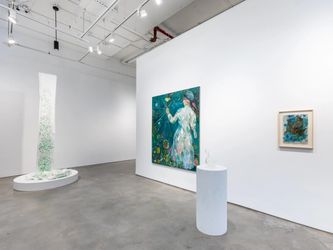
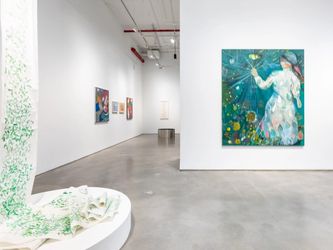
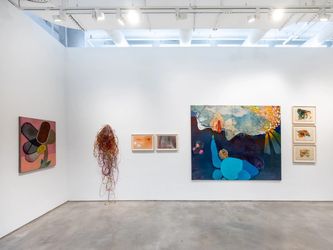
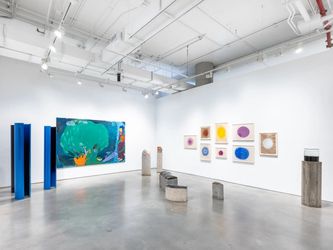
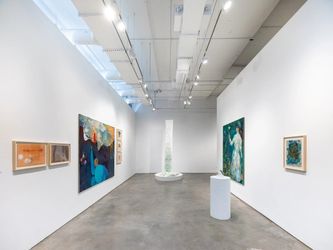
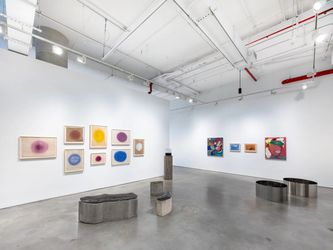
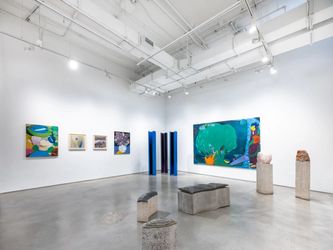
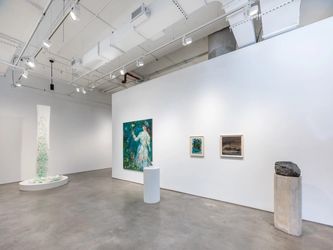
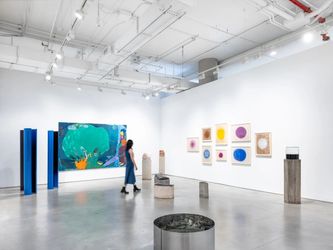
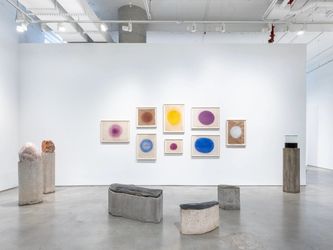
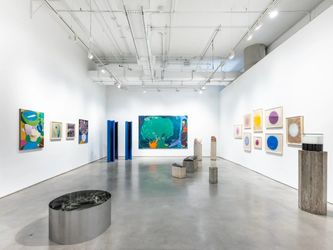
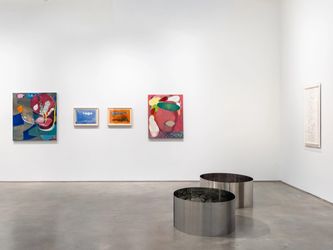
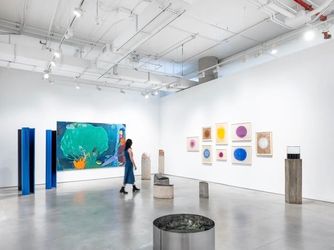
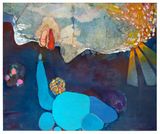
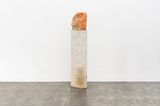
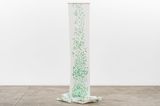
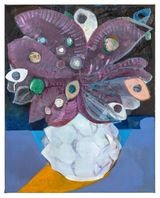
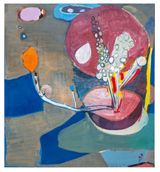
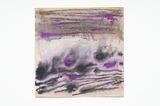
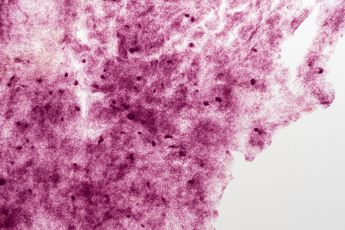
Nara Roesler New York presents, throughout 2026—marking its 50th anniversary—a series of exhibitions conceived as encounters between artists from different generations, whose works establish resonances through formal and conceptual affinities. Among these dialogues, the exhibition On the Nature of Figures highlights the rapprochement between Amelia Toledo (1926–2017) and Cristina Canale (b. 1961), two artists whose practices, although distinct in media and procedures, converge in their investigation of form in relation to nature and to the structures that organize the visual field.
Amelia Toledo is a central figure in 20th-century Brazilian art, with a body of work that establishes decisive connections between modernism and contemporary art. In dialogue with artists such as Lygia Clark, Mira Schendel, and Lygia Pape, her work displaces the constructive tradition by incorporating natural processes, organic materials, and a sustained attention to space. In doing so, she reconfigures abstraction as a sensorial experience, marked by the presence of matter, the action of time, and dynamics inherent to the physical world.
Cristina Canale’s production is situated within this horizon while simultaneously updating it within the field of contemporary painting. Recognized as one of the leading painters of her generation, Canale develops compositions marked by dense and carefully constructed chromatic fields, in which figures emerge or dissolve within surfaces that evoke magmatic and oceanic atmospheres. Her painting articulates figure and ground as unstable instances, in which form appears to be continually in the process of formation or disappearance.
The rapprochement between the two artists is built upon this shared interest in the natural world and in form as process. In Toledo, this dimension manifests through the incorporation of materials and natural phenomena that tension and reorganize the structure of the work. In Canale, it appears in the pictorial construction, where color, gesture, and chromatic density operate as forces that configure and destabilize the image. In both cases, form presents itself as a field in transformation, in which both the forces that constitute it and the systems that sustain it become visible.
Amelia Toledo (b. 1926, São Paulo, Brazil - d. 2017, Cotia, Brazil) started studying visual arts at the end of the 1930s, as she began to frequent Anita Malfatti’s studio. During the following decade, she continued her studies with Yoshiya Takaoka and Waldemar da Costa. In 1948, she started working as a project designer for the architecture studio Vilanova Artigas. Her encounters with iconic figures of Brazilian Modern Art encouraged her to develop a multifaceted oeuvre, entwining diverse artistic languages such as sculpture, painting and printmaking, which further flourished through her contact with other artists of her generation including Mira Schendel, Tomie Ohtake, Hélio Oiticica and Lygia Pape.
Amelia Toledo’s diverse practice in terms of media, reveals the artist’s investigative ambition to seek an expanded understanding of artistic possibilities. Starting in the 1970s, the artist’s production transcended its constructive grammar - characterized by geometric elements and curves -, turning instead to organic shapes. Toledo began to collect various materials, such as shells and stones, making her surrounding landscape a fundamental element in her practice. In parallel, Toledo’s paintings took on monochromatic characteristics, revealing her interest in investigating color and its behavior.
Amelia Toledo has participated in many exhibitions in Brazil and internationally. Recently her works were presented in solo shows as: Amelia Toledo - Paisagem Cromática, at MuBE (2024), in São Paulo, Brazil; Amelia Toledo – Lembrei que esqueci, at Centro Cultural Banco do Brasil (CCBB-SP) (2017), in São Paulo, Brazil; and Amelia Toledo, at Estação Pinacoteca (2009), São Paulo, Brazil. Main recent group exhibitions include: Radical Women: Latin American Art, 1960–1985, at Hammer Museum (2017), in Los Angeles, USA; at Brooklyn Museum (2018), in New York, USA; and at Pinacoteca do Estado de São Paulo (2018), São Paulo, Brazil; and 29ª Bienal de São Paulo, São Paulo, Brazil (2010).
Her works are part of major permanent museum collections such as: Fundação Calouste Gulbenkian, Lisbon, Portugal; Instituto Itaú Cultural, São Paulo, Brazil; Museu de Arte Moderna de São Paulo (MAM-SP), São Paulo, Brazil; Museu de Arte de São Paulo (MASP), São Paulo, Brazil; and Pinacoteca do Estado de São Paulo, São Paulo, Brazil; among others.
Cristina Canale (b. 1961, Rio de Janeiro, Brazil) rose to prominence following her participation in the iconic group exhibition Como vai você, Geração 80?, at Escola de Artes Visuais do Parque Lage (EAV Parque Lage) in Rio de Janeiro in 1984. Like many of her colleagues from the so-called “Generation 80”, her early works reveal the influence of the international context as painting resurfaced, especially with that of German Neo-expressionism. Loaded with visual elements and thick paint, her early paintings have a material or textural characteristic that is reinforced by her use of contrasting and vivid colors. In the early 1990s, Canale moved to Germany to study in Düsseldorf under the guidance of the Dutch conceptual artist Jan Dibbets. Her compositions soon acquired a sense of spatiality, as she began to incorporate the use of planes and depth, while also adding greater fluidity to her use of colors.
Cristina Canale’s work is often based off prosaic everyday scenes, which she extracts from advertising photography. Her paintings result in elaborate compositions that intertwine the figurative and the abstract, often blurring one with the other. According to the curator Tiago Mesquita, Canale’s production opposes the quest for constituing structures of the image, which artists such as Gerhard Richter and Robert Ryman engage with, tackling instead “the image and established genres of painting in a subjective manner following the belief in a singular experience.”
Cristina Canale lives and works in Berlin, Germany. Her recent solo exhibitions include: Cristina Canale – Dar Forma ao Mundo, at Casa Roberto Marinho (2024), in Rio de Janeiro, Brazil; Cristina Canale: Zwischen den Welten, at Kunstforum Markert Gruppe (2015), in Hamburg, Germany; Entremundos, at Paço Imperial (2014), in Rio de Janeiro, Brazil. She participated in the 21st São Paulo Biennial, São Paulo, Brazil (1991), where she received the State Governor’s Award.
Her works are held in major institutional collections such as: Instituto Itaú Cultural, São Paulo, Brazil; Museu de Arte Contemporânea da Universidade de São Paulo (MAC USP), São Paulo, Brazil; Museu de Arte Contemporânea de Niterói (MACNiterói), Niterói, Brazil; Museu de Arte Moderna do Rio de Janeiro (MAM Rio), Rio de Janeiro, Brazil; Pinacoteca do Estado de São Paulo, São Paulo, Brazil.
Founded in São Paulo in 1989, Galeria Nara Roesler is a leading Brazilian gallery dedicated to showing the work of contemporary Brazilian and international artists. The gallery established another branch in Rio de Janeiro in 2014, followed by its first international outpost in New York City in 2015.