Pace is pleased to present Robert Irwin in Los Angeles, an exhibition of work produced by Robert Irwin between 1960 and 1971, at its Los Angeles gallery, marking the first exhibition of Irwin’s work mounted by Pace since the artist’s death in 2023 and his first posthumous presentation in California.
On view from April 5 to June 7, the show will shed light on the most prolific period of Irwin’s career—during which he began moving away from object-based art, setting out to create non-representational works centring on questions of perception—and celebrate his many contributions to the arts in Southern California.
Robert Irwin in Los Angeles is presented on the occasion of Pace’s 65th anniversary year, during which the gallery is mounting exhibitions of work by major 20th century artists—with whom it has maintained decades-long relationships—at its spaces around the world.
A foundational figure in the California Light and Space movement, Irwin was a serial innovator across painting, sculpture, and installation over the course of nearly seven decades, expanding the contours of the canon and continually pushing the limits of what art can be. Through his influential and experimental practice—marked by both scientific and philosophical rigour—he proposed a new kind of art making, which revolved around phenomenology and the subjectivity of the viewer. Through his profound artistic inventions, which used light and space as primary materials, Irwin cultivated a reputation as a visionary figure, defining the vanguard of what is known today as experiential art.
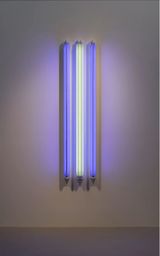
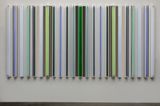
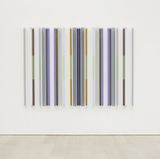
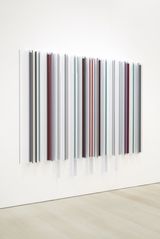
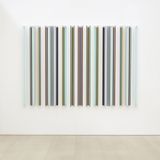
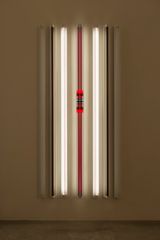
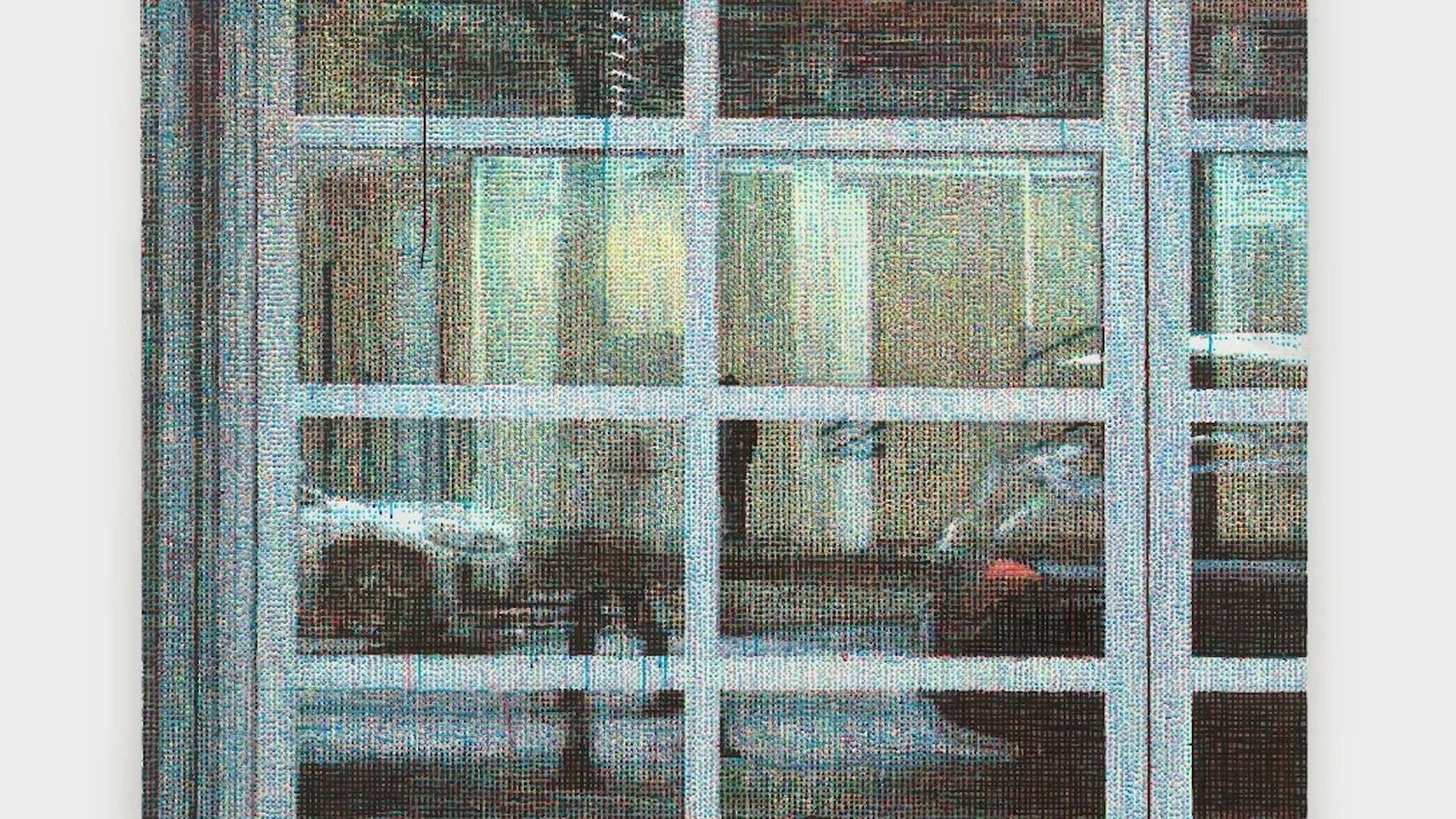
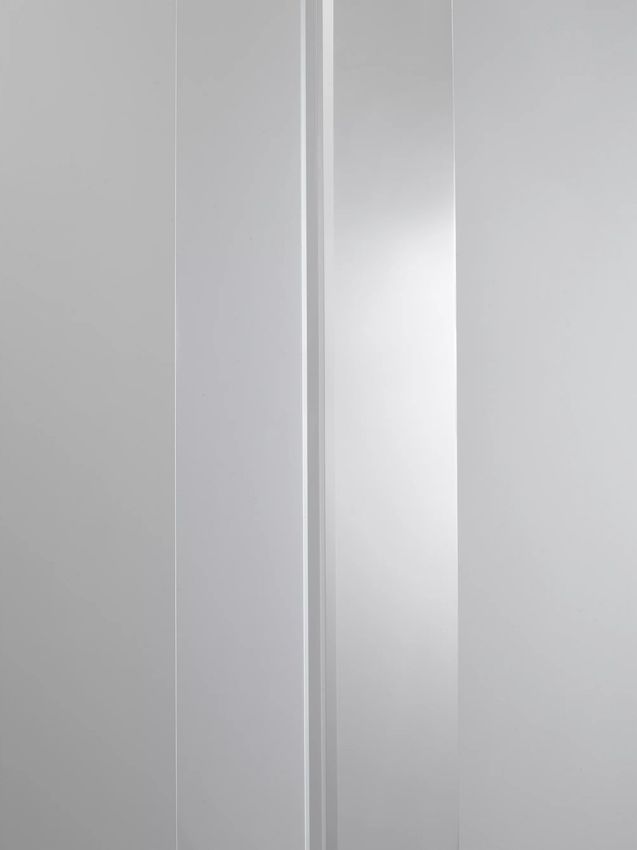
The gallery’s upcoming presentation in Los Angeles will bring together historically significant paintings and sculptures created by Irwin in the 1960s and 1970s—the years that would come to define the Light and Space movement. Among the works on view will be major paintings from Irwin’s early Line and Dot series of the mid-1960s, in which he pushed the medium to new conceptual territories. These works will be in dialogue with his celebrated Discs of the late 1960s, which further obscured the boundaries between the physical and the sensory. The exhibition will also include a rare, nine-foot-tall acrylic column that appears like a ripple in space—this sculpture is among the last physical objects that Irwin made before turning toward an entirely ephemeral and installation-based practice in the 1970s.
Born in Long Beach, California in 1928, Irwin began his career as a charismatic painter in the Los Angeles “cool school” scene, presenting his first monographic exhibition at the city’s Felix Landau Gallery in 1957 and then showing at Ferus Gallery in subsequent years—Ferus artists like Craig Kaufman, Billy Al Bengston, and Ken Price were influential on Irwin’s practice. By the early 1960s, his work became increasingly attuned to illusory and perceptual effects. It was during this period that he began his Line paintings—guided principally by questions of structure, colour, and perception—and, soon after, the Dot paintings, works composed of fields of tiny painted dots in complementary colours on gently bowed supports, which are invisible at a distance but give the painting a sense of perceptual instability. A few years later, in 1966, Irwin started producing his celebrated series of curved aluminium and acrylic Discs, which dissolved the distinction between painting, sculpture, and environment.
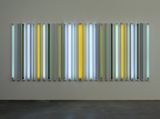
After 1969, Irwin abandoned his studio practice entirely, dispensing with traditional modes of making to embark instead on a decades-long investigation into the relationships between light, space, and perception through site-specific and often ephemeral installations. In this pursuit, he took up what he termed a “conditional art,” growing his practice of creating installation-based works that intervened into the broader field of architecture. He became known for using various media—including fluorescent lights, fabric scrims, coloured and tinted gels, paint, wire, acrylic, and glass—to create site-responsive works whose very materials are the specific contexts in which the viewer encounters them. “Catching lightning in a bottle” was the artist’s favoured metaphor for his practice.
Irwin’s first permanent museum installation was 1° 2° 3° 4°(1997), which he created for the Museum of Contemporary Art San Diego. He also produced permanent site-conditioned landscape works over the course of his career, beginning with his design of the Central Garden at the J. Paul Getty Center in Los Angeles in 1997. Other landscape projects include his palm garden for the Los Angeles County Museum of Art, completed in 2016.
Irwin first exhibited with Pace in 1966, presenting his Dot paintings at the gallery’s West 57th Street space in New York. He would go on to mount some 20 solo shows with Pace over his lifetime, maintaining a close friendship with the gallery’s Founder and Chairman Arne Glimcher for almost 60 years.
A Desert of Pure Feeling—a feature documentary about Irwin, directed by Jennifer Lane and co-produced by Arne Glimcher—premiered in 2022, and, in recent years, the artist has been the subject of solo exhibitions at the Judd Foundation and Dia Beacon in New York.
To mark the opening of Robert Irwin in Los Angeles on Saturday, April 5, Pace Live will present a conversation between Pace CEO Marc Glimcher; Michael Govan, Director of the Los Angeles County Museum of Art; and philanthropist, collector, and President Emeritus of NPR Jarl Mohn, who, with his wife Pamela, recently gifted 300 works by local artists to LACMA, MOCA, and the Hammer as part an initiative called MAC3, the Mohn Art Collective. This event will take place in the courtyard of Pace’s LA gallery, and further details will be announced soon.

For over six decades, Robert Irwin (b. 1928, Long Beach, California) has explored perception as the fundamental issue of art. Irwin, who began his career as a painter in the 1950s and became a pioneer of the ‘Light and Space’ movement in the 1960s, has, through a continual breaking down of the frame, come to regard the role of art as ‘conditional’—working within and responding to the specific surrounding world of experience. He has conceived over fifty-five site-conditional projects, including the Central Gardens for the Getty Center, Los Angeles (1999–998) and the architectural and grounds design for Dia:Beacon, New York (1999–2003). His large-scale permanent installation at the Chinati Foundation in Marfa, Texas (2001–2016) is the first free-standing structure devoted exclusively to his work. Irwin received the Guggenheim Fellowship in 1976, the John D. and Catherine T. MacArthur ‘Genius’ Award in 1984, and was elected as an Academician at the National Academy in 2012. Pace has represented Irwin since 1966.


A respected voice in contemporary art discourse.
Focusing on ambitious storytelling and insightful art-world commentary. Ocula Magazine publishes in-depth interviews, critical essays and timely analysis on the artists, exhibitions and ideas driving the global art world.
Learn more about Ocula Magazine
Showcasing the best of the art world.
Ocula partners with galleries from around the world to highlight their artists, artworks and exhibitions. Gallery membership is by application and invitation, with each member vetted by an independent panel.
Learn more about Ocula Membership

Specialises in the sale of major artworks.
Led by a team with deep ties to the world’s leading auction houses, galleries and collectors. Ocula’s advisory team offers bespoke services to high-net-worth clients from around the world who are looking to acquire the best of contemporary and modern art.
Learn more about our team and services