





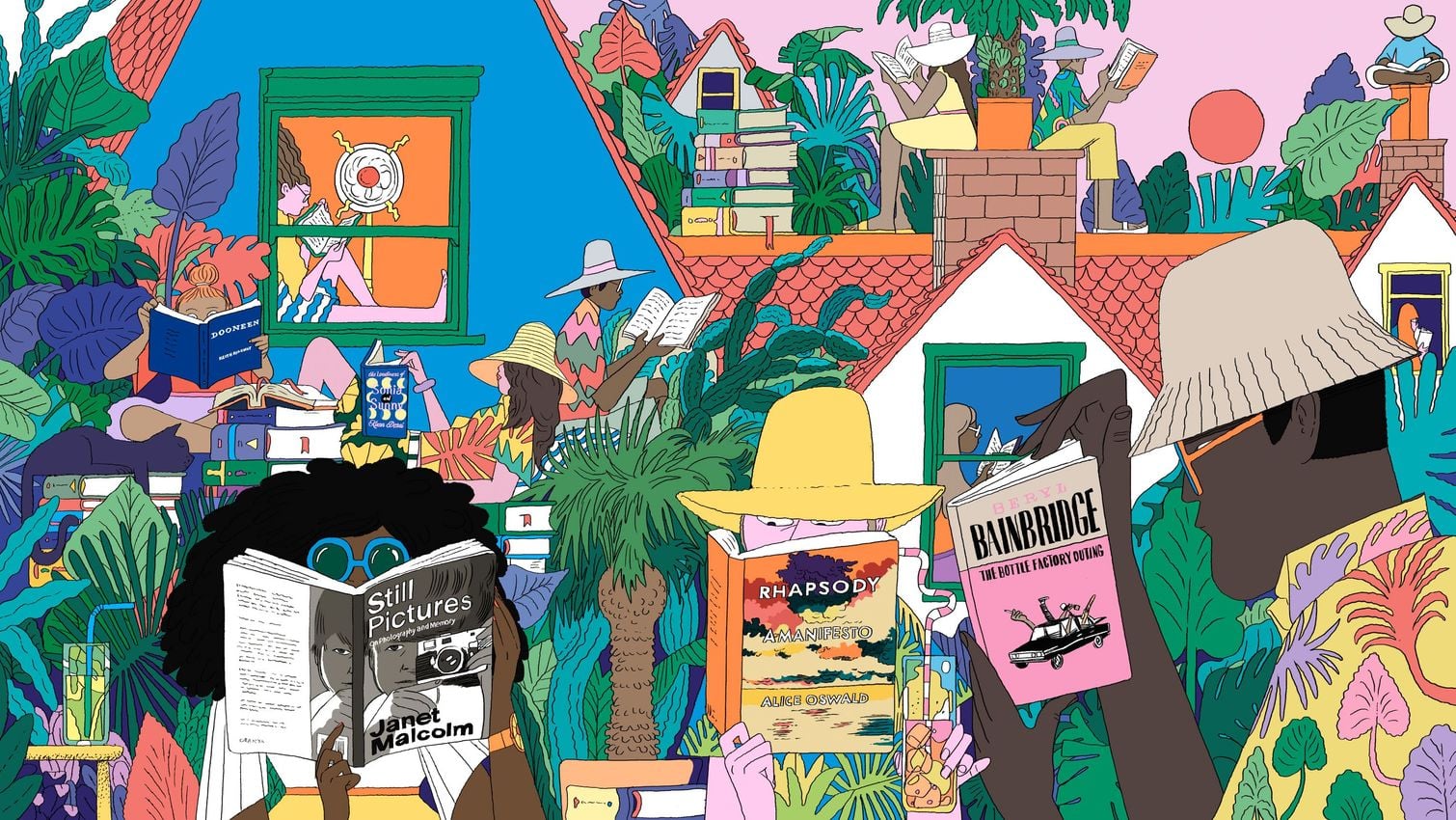
While for some, the summer holiday has become a race to the next Insta-worthy selfie spot, many of us still relish the downtime a vacation provides and the chance to step away from work messages and social media. With that in mind, Ocula has asked a selection of artists, critics and writers what they’ll be reading—or have just read—on café terraces and at the beach this year.
NON FICTION
Agustín Fernández Mallo, The Book of All Loves (2024)
I feel like Agustín Fernández Mallo’s fiction-essay-philosophy blend The Book of All Loves got buried in the publishing cycle, which is maybe fitting for a book about the end of the world. Mallo’s 2021 novel, The Things We’ve Seen, is one of my favourites ever. Moments in The Book of All Loves recall it, especially when time starts to stretch and bend. There’s a nested anecdote in which Hitler visits the Austrian pavilion at the Venice Biennale and drops a statue’s marble eyes into wet concrete, thus setting off a malevolent chain reaction; balls of different kinds proliferate.—Will Harris
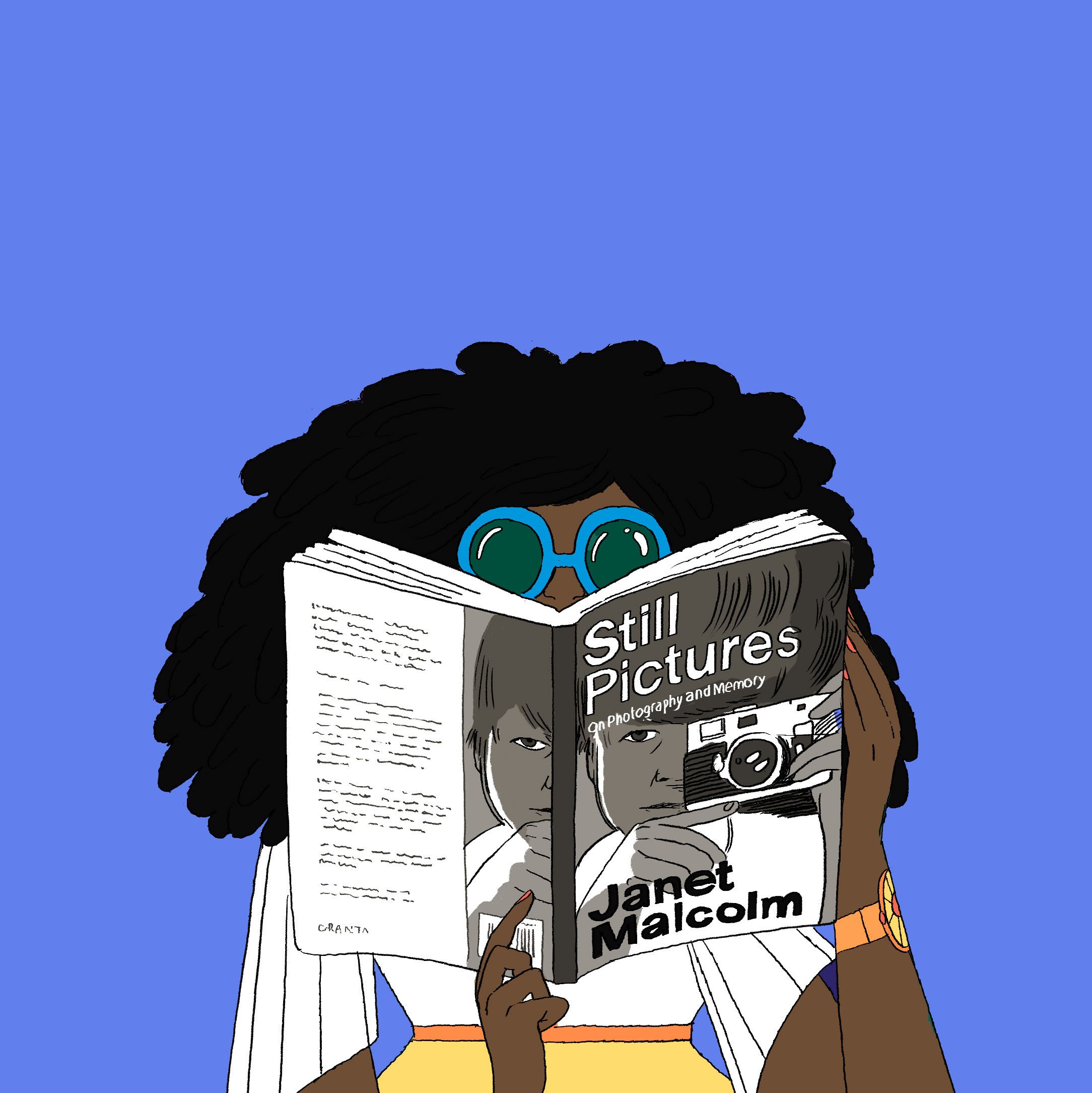
Janet Malcolm, Still Pictures: On Photography and Memory (2023)
I am on a quest to read everything Janet Malcolm ever wrote. In Still Pictures: On Photography and Memory—her posthumously published book of essays—through mostly personal and family photographs, something like an autobiography emerges alongside reflections on topics such as love and desire, art, family, sex, marriage, dreams, betrayal, war, class, race, gender, forgetting, pettiness and grace. The book is funny and heartbreaking, acerbic and vulnerable and it shifted how I see the world around me as a person and an artist. Reflecting on a photo of herself with a group of other teens that leads her to ponder “the virus of lovesickness”, she asks: “When we look at our lives and notice what we are consistently, helplessly gripped by, what else can we say but ‘me too’?” Throughout the book I became viscerally aware that I am lovesick for Janet Malcolm. After reading countless perfectly constructed sentences, which shock me with their capacity to elucidate or devastate, seduce or clarify, there is so often nothing else I can say but “me too”. I would follow her anywhere.—Gray Wielebinski
Yoshida Kenkō, Tsurezuregusa (Essays in Idleness) (1330–1332, first published in English 1911)
Certain existential anxieties like to announce themselves in the quietude of a summer holiday, but such threats have yet to deter me from seeking out the extremes of leisure. For fretful loafers like myself, I prescribe a diversion into Tsurezuregusa (Essays in Idleness) by medieval Japanese monk Kenkō. His farcical tales of 14th-century hijinks by holy men and imperial courtiers, punctuated by the odd Buddhist reflection, make the impermanence of life (and time off work) all the easier to bear.—Kat Kitay
Jon Young, What the Robin Knows: How Birds Reveal the Secrets of the Natural World (2012)
In my head, What the Robin Knows sits next to The Hidden Life of Trees:What They Feel, How They Communicate—Discoveries from A Secret World (2015) by Peter Wohlleben and Entangled Life: How Fungi Make Our Worlds, Change Our Minds and Shape Our Futures (2020) by Merlin Sheldrake in a genre I made up, where late-career naturalists get deep into the enchantment of the Earth. The result, here, is a pop-science text that reads more like writing by the American spiritual leader Ram Dass than David Attenborough and, while it’s not above criticism, I do love reading it. I know “touching grass” is a joke, but feeling connected to the natural world, to me, is an important antidote in any tech critic’s arsenal.—Noelle Perdue
Bernadette Mayer, Memory (1975)
Last July, I tried to do a read-along of the poet Bernadette Mayer’s Memory, a month-long documentary project she began in July 1971 during which she shot a roll of 35mm film a day and kept a journal of her encounters and experiences. About 10 days in, I realised that I couldn’t keep up with my life and Mayer’s at the same time, and so Memory gradually fell by the wayside. This year, I decided to dip back into Memory—which Mayer has described as “an emotional science project”—to remind myself that, even on days when I feel too hot or exhausted to do anything “productive”, the world (and my life) is waiting to be observed, admired and documented.—Terry Nguyen
Hilton Als, White Girls (2013)
Hilton Als’ plush and prickly 2013 essay collection is a series of portraits of US figures from Eminem to Louise Little (Malcolm X’s mother). Als’ witchy grasp of psychology makes it almost like an autobiography of his past lives, each chapter its own seance. I’ve come back from the book hoping this masterclass in voice will loosen my writing muscle, stiff from a season of painting. I’m getting that and then some; aunties are raising their eyebrows at me reading on the train, presumably because of the title.—Mohammed Z Rahman
William Finnegan, Barbarian Days: A Surfing Life (2015)
A memoir that follows one life through a disappearing world: from 1960s Hawaiʻi and the South Pacific to apartheid South Africa and present-day Madeira. This pursuit of waves—“both profoundly egocentric and selfless, dynamic and ascetic”—becomes a meditation on obsession, risk, and freedom. There is something elegiac, too, in this “pure energy, impossibly sculpted, ecstatically edged”: a form whose perfection lies precisely in its vanishing.–Daniel Szehin Ho
Kathryn Talalay, Composition in Black and White: The Life of Philippa Schuyler (1995)
Usually I read theory books but lately I’ve been absorbed by Kathryn Talalay’s Composition in Black and White: The Life of Philippa Schuyler. It tells the story of probably the most iconic person you’ve never heard of. Philippa Schuyler was a biracial child prodigy tested with an IQ of 185 at the age of five. A concert pianist, composer, polyglot, and later war correspondent who died at 35 years old in a helicopter evacuation on a mission to save the lives of Vietnamese orphans. It’s engrossing, deeply accessible, and the rare biography I’d adapt immediately.—Sedrick Chisom
Arundhati Roy, Mother Mary Comes to Me (2025)
As with any book, but especially an Arundhati Roy book, I read Mother Mary Comes to Me with a pencil in hand. Underlining favourite lines, circling paragraphs, laughing at the jokes. Yes, the jokes. She’s so intensely personal, so political, but also so funny. I don’t think people talk enough about how funny she is. The book, a biopic of sorts, zigzags through her life: the backwaters of Kottayam and her mother—her “shelter and storm”—then Delhi, architecture school, lifelong friendships, a brief flirtation with acting, screenwriting, a Booker Prize. And then back again: to being her mother’s daughter. To misbehaving. To writing, writing, writing. To standing with anyone pushed to the margins: Muslims, migrants, farmers, Adivasis. Maybe that’s why it felt so close. Like me, she’s a Delhi girl. Her writing is inseparable from the city’s history, culture, people and politics. So rooted in one place, yet somehow speaking to the whole world. When the student protests broke out last week at Jantar Mantar, she was there, as she so often is. I remember thinking, “Yes, that’s her!” And then, because I was there too: “Yes. That’s me.”—Gautami Reddy
Shigeo Miki, The Viscera and the Mind (『内臓とこころ』) (originally published 1982)
I’ve always felt that I’m unusually sensitive to my own fatigue. My body often tells me, “I have no energy”, “take a break”, “go to sleep”. Since I was young, I’ve tried to quiet those voices by going to acupuncture, bodywork, and various relaxation treatments. At some point, I began to wonder whether any of these were really addressing the root of the problem. What if the source of this persistent exhaustion wasn’t from my muscles, but my internal organs? It was a vague feeling I’d carried for a long time. That’s when I came across this book. Through ideas such as “visceral sensation” and “visceral rhythm”, it explores the relationship between our internal organs and the mind in a style that is both lucid and light. I’d like to spend a holiday with this book in hand, taking the time to care for my own internal organs.—Sasaoka Yuriko
Oswald Spengler, The Decline of the West (both volumes, 1923)
This isn’t your typical beach read—it’s more of an early 20th-century German philosopher’s insanely far-reaching, semi-mystical theory of cultural destiny. Spengler wrote that all cultures follow a life cycle that corresponds to the seasons: an energetic birth in the spring that ripens in the summer and matures into the fall, inevitably hardening into the winter of civilisation. What astonishes me is how well his ideas map on to human life cycles, too. It’s basically my new astrology for determining what stage of empire you’re in.—Janelle Zara
FICTION
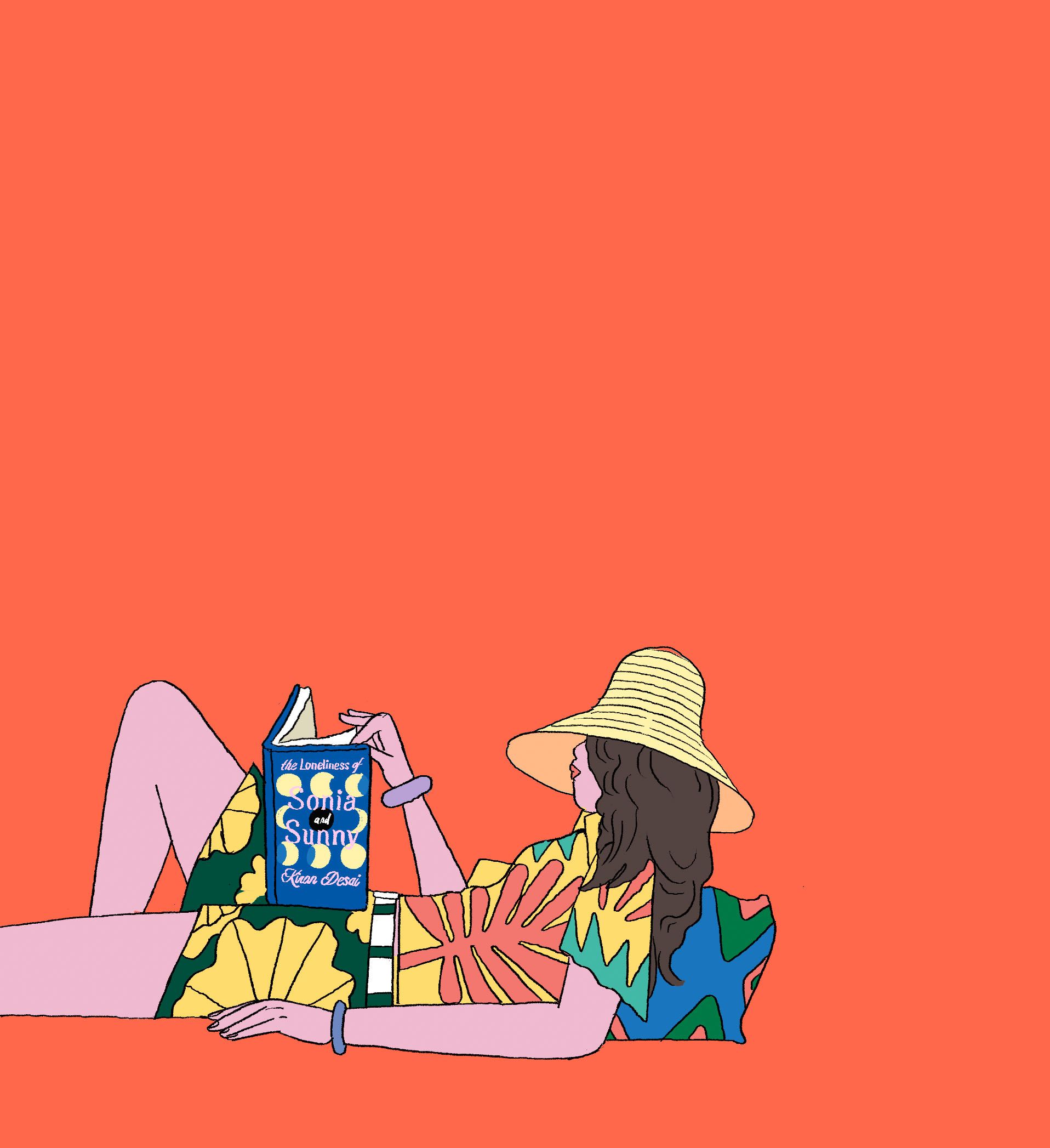
Kiran Desai, The Loneliness of Sonia and Sunny (2025)
What I’m looking for in a summer read is an escape path, and Kiran Desai’s novel The Loneliness of Sonia and Sunny took me far away. Set mainly in Allahabad and Goa, it is the story of two fated lovers and, being an Indian story, it is also about the intricacy of family ties. Many times, it made me laugh out loud. The clincher is its villain, Ilan de Toorjen Foss, the diabolical artist whose needy ego knows no bounds.—Arthur Lubow
Clarice Lispector, Água Viva (The Stream of Life (1973)
I chose to read Água Viva by Clarice Lispector this winter break (I’m in Sǎo Paulo, where it’s the cold season at the moment) because it feels like the kind of book that invites reflection and quiet contemplation. Rather than following a conventional plot, it explores thoughts, emotions and fleeting moments of consciousness with remarkable depth. I was also especially excited to read it because it was a gift from Priscilla, my studio manager, which made the experience feel more personal. It seems like the perfect book to accompany a slower, more introspective season.—Sophia Loeb
Jacqueline Harpman, Moi Qui N’ai Jamais Connu Les Hommes (I Who Have Never Known Men) (1995)
With books, I used to alternate between trash and quality. One for me, one for my brain, one for relaxation, one for intellectual growth. Some schlocky sci-fi followed by, like, Proust or that kind of thing, trying to prove to myself that I’m not just an idiot. As time has worn on, I’ve tended more towards the trash. Maybe I’ve accepted that I’m just an idiot. This summer, though, I’m fighting back against those accusations (which I have levelled at myself, admittedly; it’s a complex, judgemental society up in my head) by reading something that ticks both boxes. Belgian author and psychoanalyst Jacqueline Harpman’s Moi Qui N’ai Jamais Connu Les Hommes is a 1995 sci-fi novel about a group of women who are released from prison to discover a world without men. It’s shlocky trash, sure, but it’s also a serious bit of critical feminist writing. And I’m reading it in the original French. I might be an idiot, but I’m a bilingual idiot.—Eddy Frankel
Isabel Waidner, As If (2026)
This is a stylish, intricate and funny novel: a Sliding Doors-like tale of two almost-identical men who meet outside London’s Barbican in a moment of crisis and seem to swap lives. As If is addictive to read, as Isabel Waidner cleverly renders each man’s turns of thought in hilarious, acute monologues that ponder identity and performance, doubles and impostors, class and fate. I particularly enjoyed Waidner’s crisp, controlled and meticulous sentences. A banger.—Izabella Scott
Keith Ridgway, Dooneen (2026)
A new novel from Irish writer Keith Ridgway is always a treat. I loved his Robbe-Grillet-inflected anti-detective novel Hawthorn and Child (2012), and the connected short stories that give a fragmented but realistic take on London life in A Shock (2021). Dooneen is set in Dublin and fits into that tradition of exploratory Irish writing from James Joyce to Dermot Healy, centring around a gay relationship and a mysterious, politically motivated murder. As ever, it’s witty, humane and intriguingly oblique, and an absolute joy to read.—Juliet Jacques
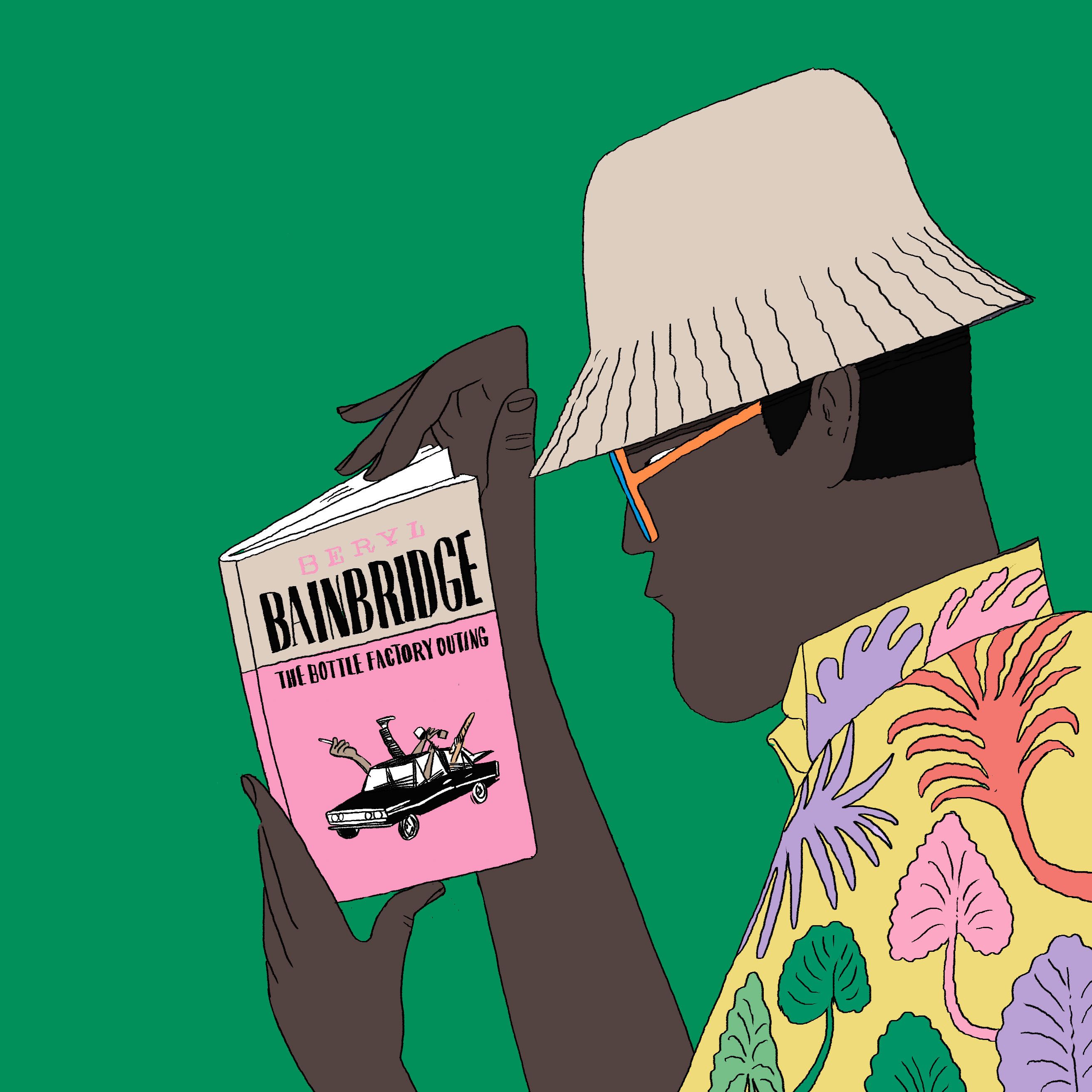
Beryl Bainbridge, The Bottle Factory Outing (1974)
My best read of the summer so far has been Beryl Bainbridge’s 1974 The Bottle Factory Outing. It follows two women living in a grim bedsit and working in a bottling plant and is a masterfully mean tale of sex and dreams and factories and death. Bainbridge writes in a storied tradition of poetically hilarious Scousers, and I love her depiction of friendship: tender and vicious at once. Currently packed to be taken with me to France next week are Doireann Ní Ghríofa’s Said the Dead (2026) and Emma Warren’s Up the Youth Club: A Love Letter (2025). Both produce the kind of gorgeous, mind-expanding creative non-fiction that has me buzzing to sit down and write.—Jennifer Jasmine White
Junichiro Tanizaki, The Makioka Sisters (first published in English in 1957)
Set in Japan between 1936 and 1941, this is a story about four sisters, but it is also a tale of the decline of the traditional Japanese elite in the face of Western influence. Nothing much happens, but the world is so absorbing and the characters and relationships so beautifully crafted that I wanted it to go on forever. Which is lucky, because it’s an absolute brick of a book: perfect for getting lost in on a lazy summer’s day.—Rosanna McLaughlin
Han Kang, We Do Not Part (2021)
Set on Jeju, the volcanic island off the southern tip of the Korean Peninsula, now better known as a summer destination than for its violent past, this novel unfolds through a constrained setting, a minimal cast, and a sequence of quietly unfolding scenes. What begins as a journey to care for an injured friend’s pet bird gradually opens on to the buried history of the Jeju Massacre. Here, snow is never merely weather, but the medium through which Han Kang entwines intimacy, violence and intergenerational memory.—Sam Shiyi Qian
Mercè Rodoreda, In Diamond Square (1962)
I read this beautiful book earlier this year; it was given to me by my friend Richard, recommended to him while he was working in Spain. It’s brilliant. It’s very short but tells the story of the whole life of a woman who is born in Barcelona during the 1930s. The Spanish Civil War erupts and her husband goes off to fight the fascists. But it’s really the story of how small incidents shape the course of our lives. You can read it in a day, but it will stay with you much longer.—Rachel Connolly
Yang Shuang-Zi , Taiwan Travelogue (2020)
This summer I’m taking Taiwan Travelogue by Taiwanese writer Yang Shuang-Zi on holiday with me to Greece. It’s a sumptuously narrated historical story about the love that unexpectedly springs up between a Bourdain-like Japanese novelist and her interpreter while the former visits Taiwan, then a colonial outpost of Japan, in 1938. Featuring sensational passages about food and desire, it leaves you hungry in more ways than one—but it’s also an intriguing portrait of colonialism from a perspective rarely seen in literature. No wonder it won the International Booker Prize this year.—Zing Tsjeng
Olivia Kan-Sperling, Little Pink Book (2025)
I first experienced Little Pink Book at Earth in Chinatown, New York City, during a warm summer night, when Olivia Kan-Sperling hosted a voyeuristic reading, inviting passers-by to read her book silently, behind a glowing video screen posed in front of an ever-changing audience. Little Pink Book isn’t just sad; it’s “sad sad”: hyper-catastrophic stardom, microblogging, latte art, bedroom performances, and longing from the margins—wry descriptions of alienation and despair. The author’s brilliant second novel explores the ever-deepening rift between our desire as individuals and the unforgiving fiction the world writes around us—and I haven’t gotten over that yet.—Christopher Kulendran Thomas
POETRY
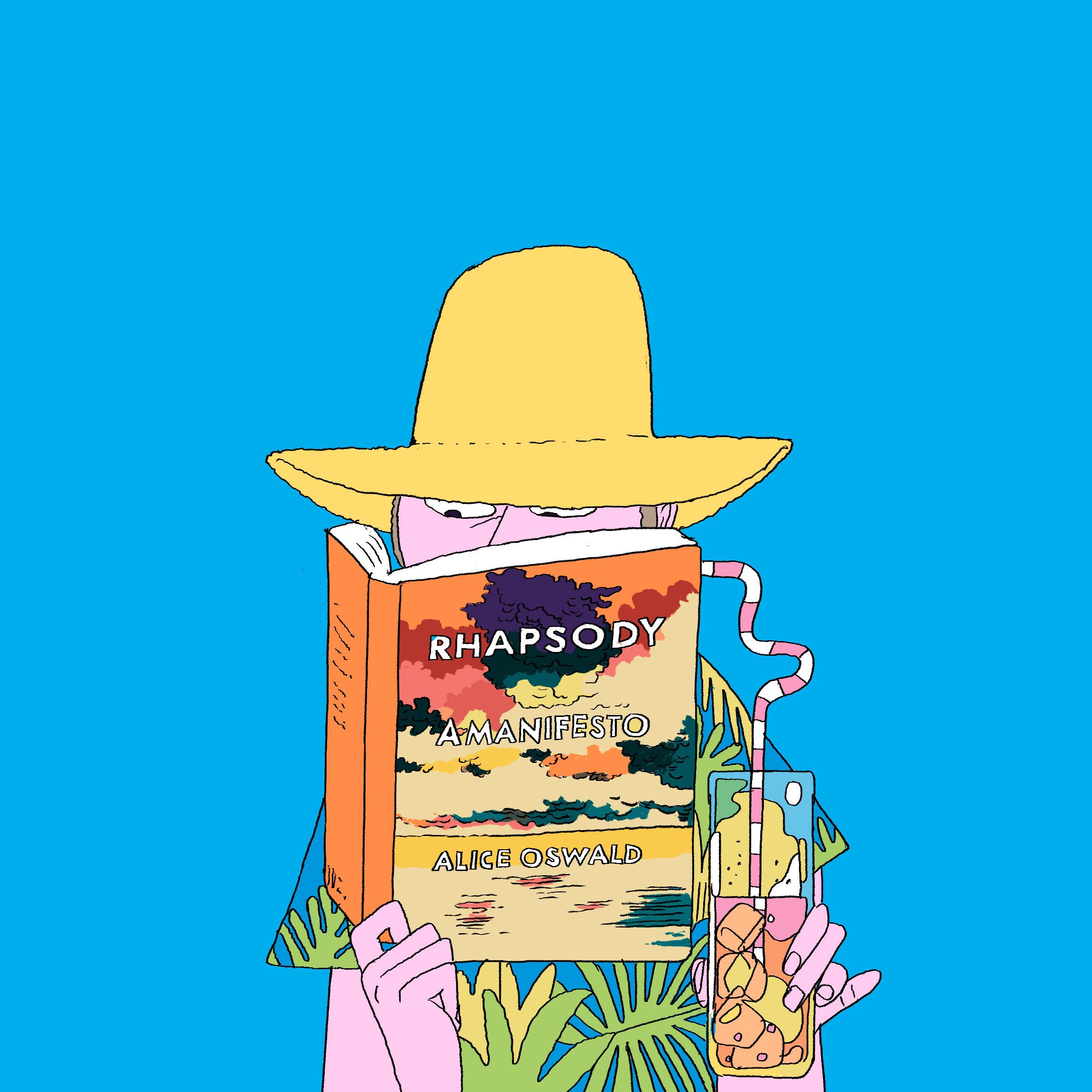
Alice Oswald, Rhapsody: a Manifesto (forthcoming September 2026)
Sometimes one’s reading feels attended by a mystical aura of synchronicity. For me, this summer, it’s the classics – the hype around Christopher Nolan’s big screen adaptation of The Odyssey, obviously, but also because I happened to start The Last Samurai by Helen deWitt, with its long passages on the linguistic structures of Ancient Greek. In the same vein, the book I’m taking to the lido this summer is Alice Oswald’s Rhapsody: a Manifesto. In her opening pages, Oswald explains that the book began at a point when “I still thought a person could encounter Homer by reading the Iliad. I had not realised that oral poetry demands a more drunken and bat-like enquiry from one eavesdropping to another.” The book pursues poetry’s anonymous tradition: the nameless oral storytellers, singers and bards, the musicality of insect noise, and poetry that comes from war drums and post-war lamentation. Oswald, who was arrested last year for holding a placard in support of Palestine Action, is a war poet and this book begins with war: Homer’s, first, but also Bagdad, Troy, Gaza, the Battle of Stalingrad and 10th-century Cairo. It goes on to King Lear, graffiti, grasshoppers, Genghis Khan, all subject to Oswald’s material apprehension of living things and of language. To borrow an Iliad-ian word, it feels like being held just under the surface of a ἀγάρροος (swift-flowing) river.—Nell Whittaker
Holly Pester, Cafés (2026)
I am going to France this summer, and I am going to take a book that makes the 1990s French-inspired, UK-based brasserie chain Café Rouge a key character. Holly Pester’s new collection Cafés is notable for its truthfulness: often evasive, always playful, but with a rare honesty and attention to the world. She turns the space of the café into a partition of the mind, suffuse with labour relations, grief for things not realised, despair and hope in equal measure. Holly is a bona fide genius.—Sam Johnson-Schlee




A respected voice in contemporary art discourse.
Focusing on ambitious storytelling and insightful art-world commentary. Ocula Magazine publishes in-depth interviews, critical essays and timely analysis on the artists, exhibitions and ideas driving the global art world.
Learn more about Ocula Magazine
Showcasing the best of the art world.
Ocula partners with galleries from around the world to highlight their artists, artworks and exhibitions. Gallery membership is by application and invitation, with each member vetted by an independent panel.
Learn more about Ocula Membership
Specialises in the sale of major artworks.
Led by a team with deep ties to the world’s leading auction houses, galleries and collectors. Ocula’s advisory team offers bespoke services to high-net-worth clients from around the world who are looking to acquire the best of contemporary and modern art.
Learn more about our team and services