





Spin Cycle
The performers in Miet Warlop’s works blend theatre and visual art to encapsulate abstract feelings. Her Venice Biennale show asks viewers to inhabit a “wheel of infinity”, where humour, language and performance spin around to create emotional clarity. Save to My Ocula
There is often a point during Miet Warlop’s live shows when one of the performers begins to spin. In One Song (2022), a piece of theatre art in which a group of students performs to one track over and over again while completing a rigorous workout on gym apparatus, it is a man in a cheerleading costume. He begins to rotate in the corner of the stage, moving faster and faster, his pom-poms clutched to his head as the music reaches a climax, before breaking out of the movement and beginning to dance again. In the Belgian pavilion at this year’s Venice Biennale, Warlop’s performance—titled It Never SSST—opens with one dancer spinning on the spot while he chants “cadi cadi cadi cadi”, which is Italian for “you fall”.
Spinning, Warlop says, “is something very special to me”. “It’s not for nothing that it’s something people do to connect in a high concentration, physically. You find a freedom, not mentally, but spiritually, or you connect, somehow, in the space above your body. I think that’s the beauty of it.”
The moment in the opening of her Venice pavilion performance was inspired by a painting Warlop saw of the fall of the rebel angels. “You get kicked out of something, and so you fall, you fall,” she says, speaking in her echoing voice, cigarette in hand, from the empty Belgian pavilion, the week before the vernissage. The performers are “spinning and singing in some kind of choir-like circular song”. The artist wanted to represent a process “of circling from making to showing to understanding”. The chanting of the performer serves as “a call for action in this moment of spinning”. In Warlop’s conception, it is the start of something: a song, a show, a moment to remember that we have bodies rather than just minds.
“My dad is an accountant, but actually, he’s also like a freak”
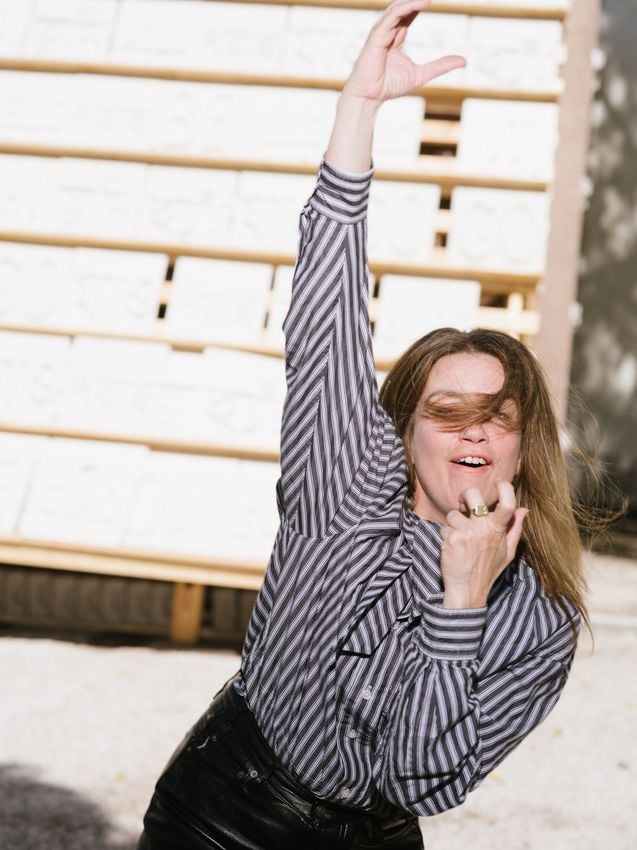
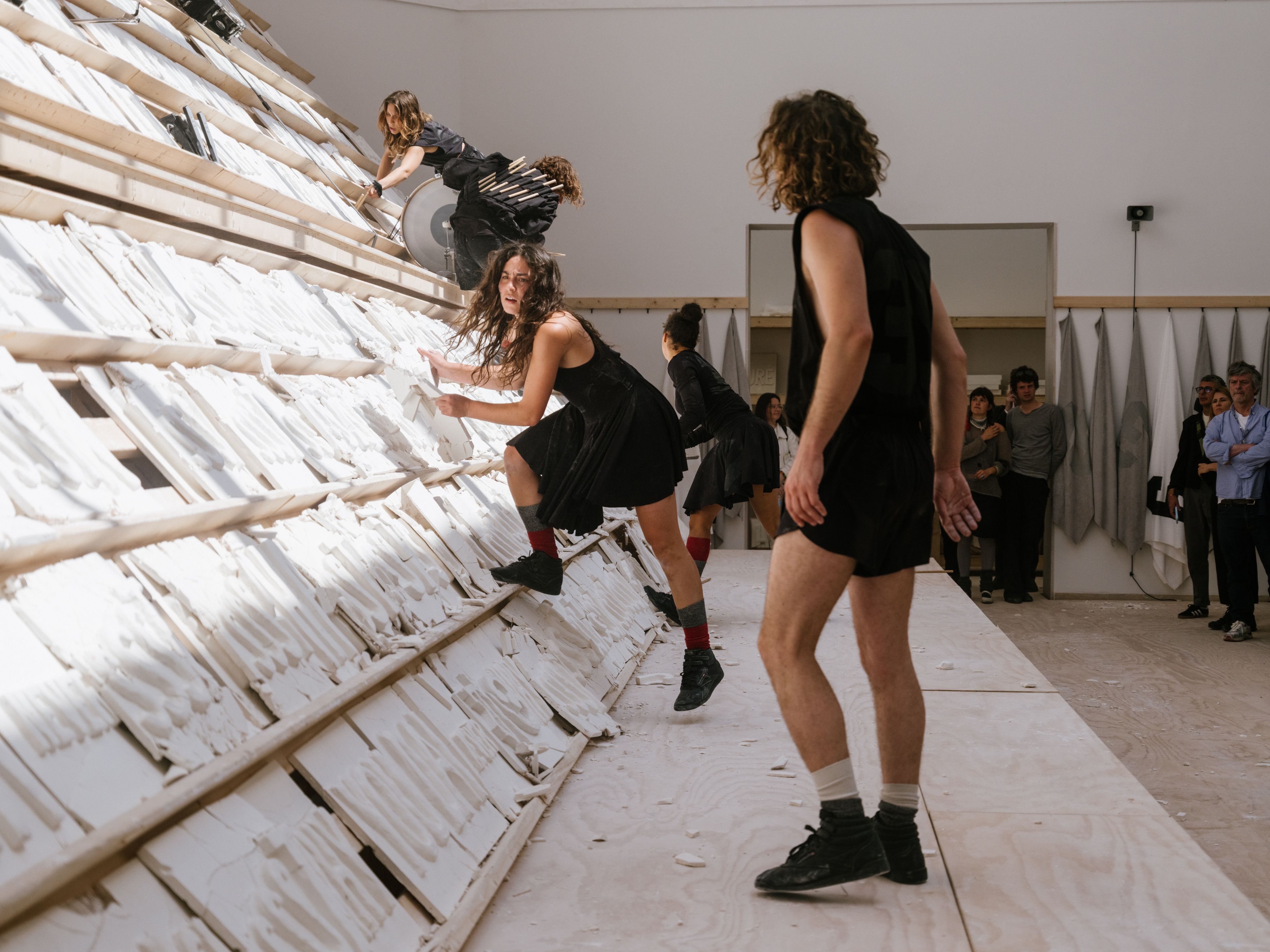
This is what Warlop does: describe abstract feelings and emotions with physical movement and sound, or “making the invisible visible” as she puts it. Using choreography, live music, props and a troupe of extremely high energy performers—in this case, mostly cast in Venice—she crafts non-narrative works that blend theatre with visual art and performance art. They tend to have a chaotic energy: performers are often alone in different parts of the stage—playing the drums, singing or dancing with extraordinary amounts of energy—rather than in synchronicity. Despite the tornado of movement, they have a strong emotional clarity.
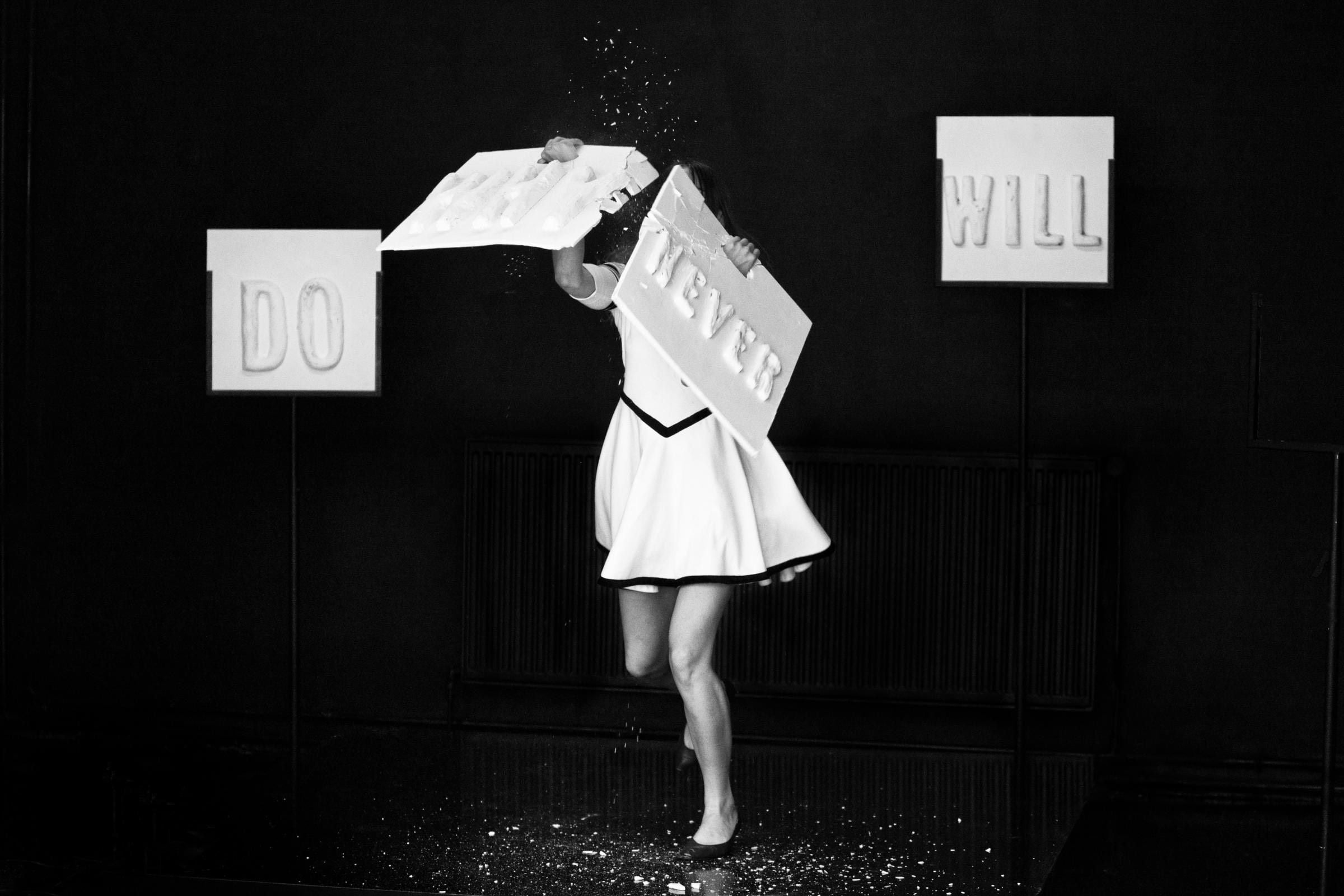
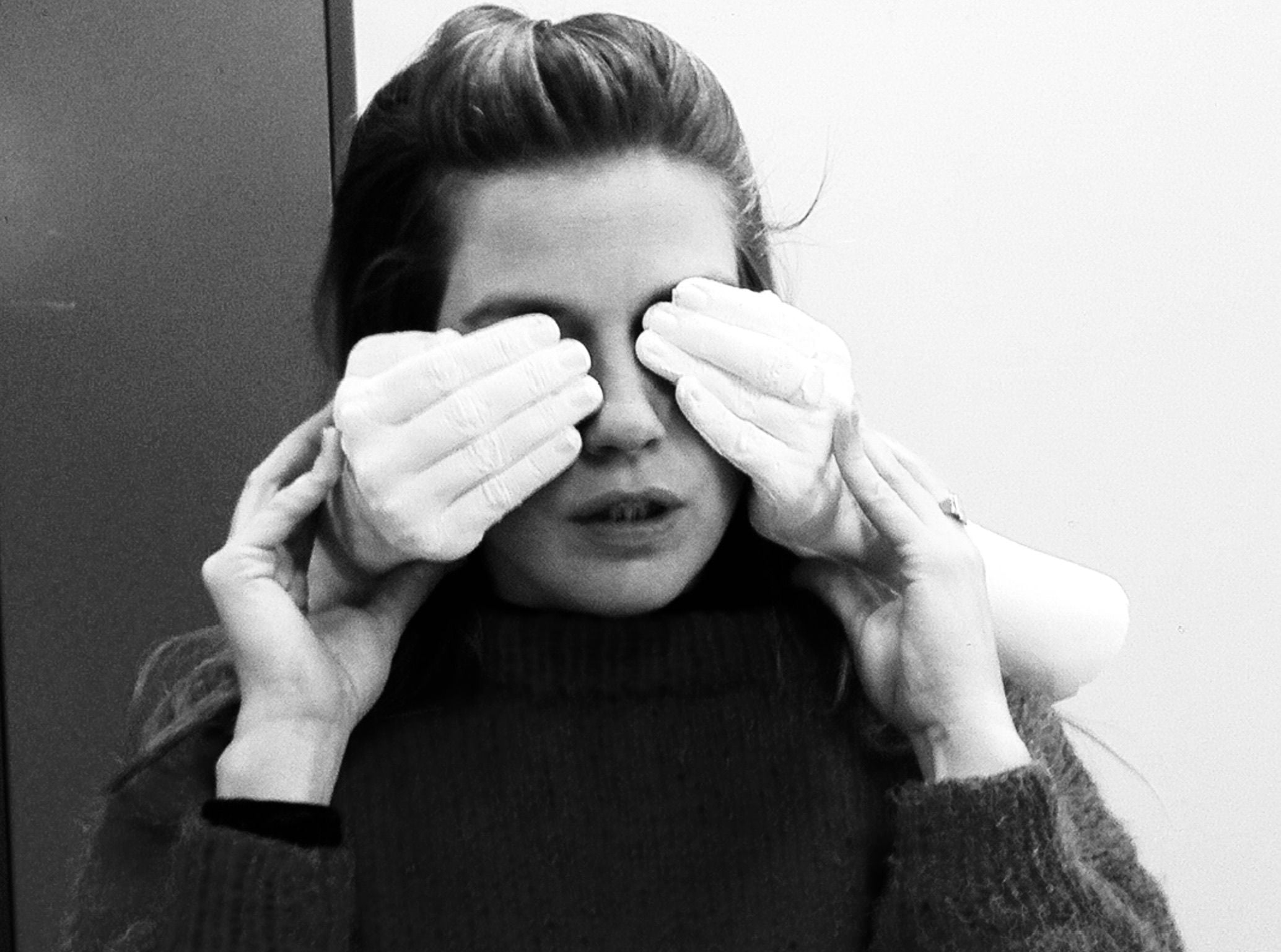
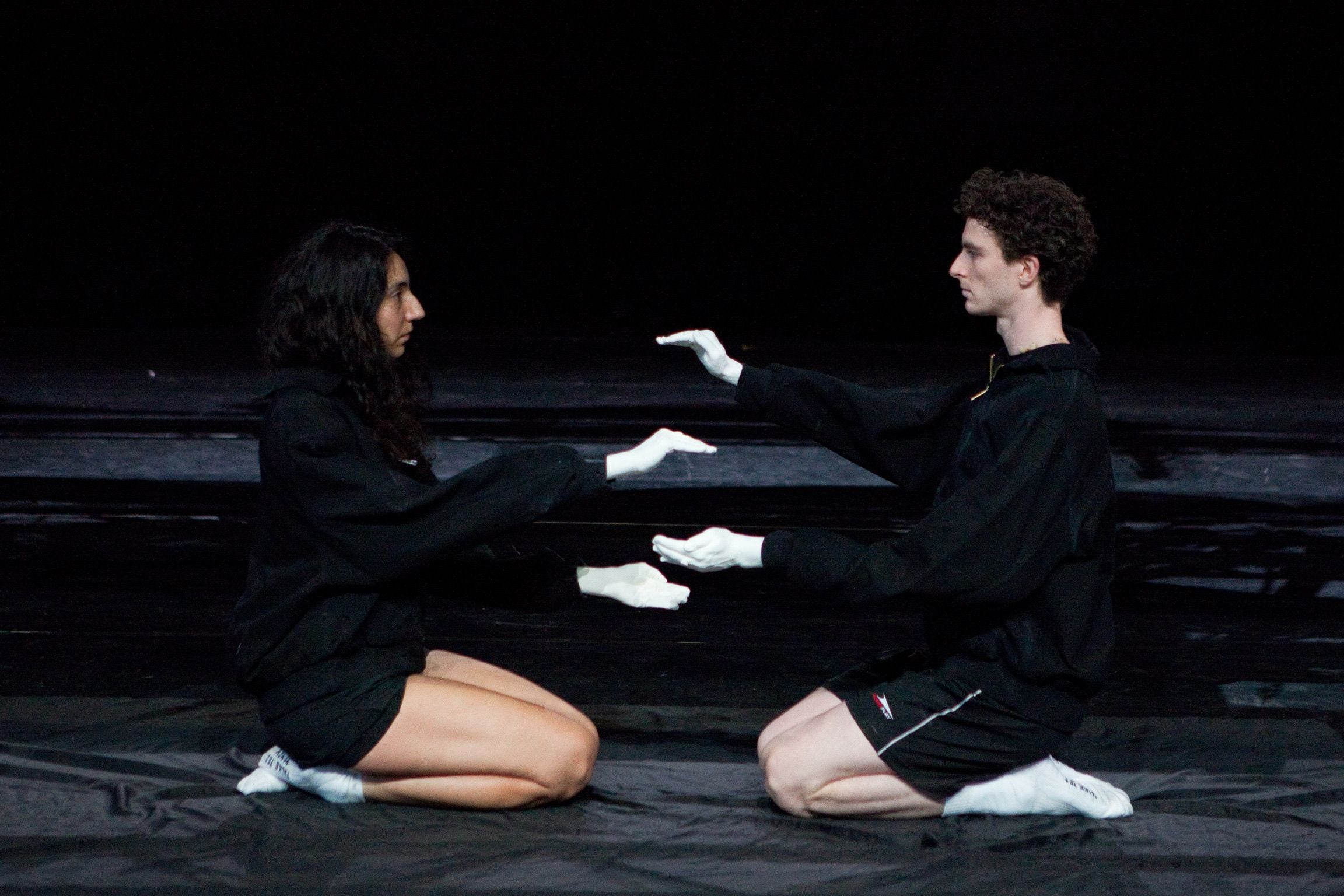
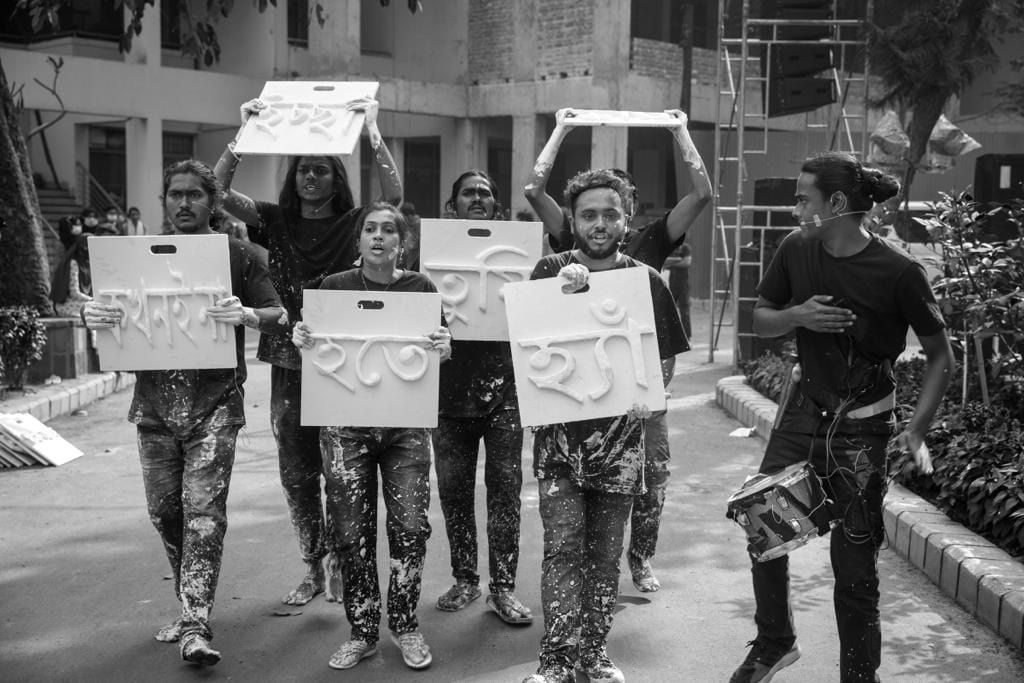
In last year’s Inhale Delirium Exhale, which premiered at Kunstenfestivaldesarts in Brussels, performers manipulated almost four miles of Hermès deadstock silk as it cascaded down from the ceiling, at times being subsumed by the rippling fabric and at others manipulating it, as a means of exploring the experience of trying to cope with something than oneself. In One Song, the collective endeavour of struggling to make music while running or jumping or doing gymnastics, the lead singer repeating the words “Run. Run for your life till you die”, became a ritualistic evocation of life, death and rebirth, in part a form of homage to Warlop’s late brother, who died by suicide in 2004.
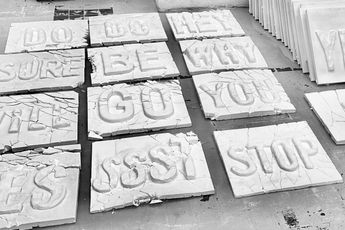
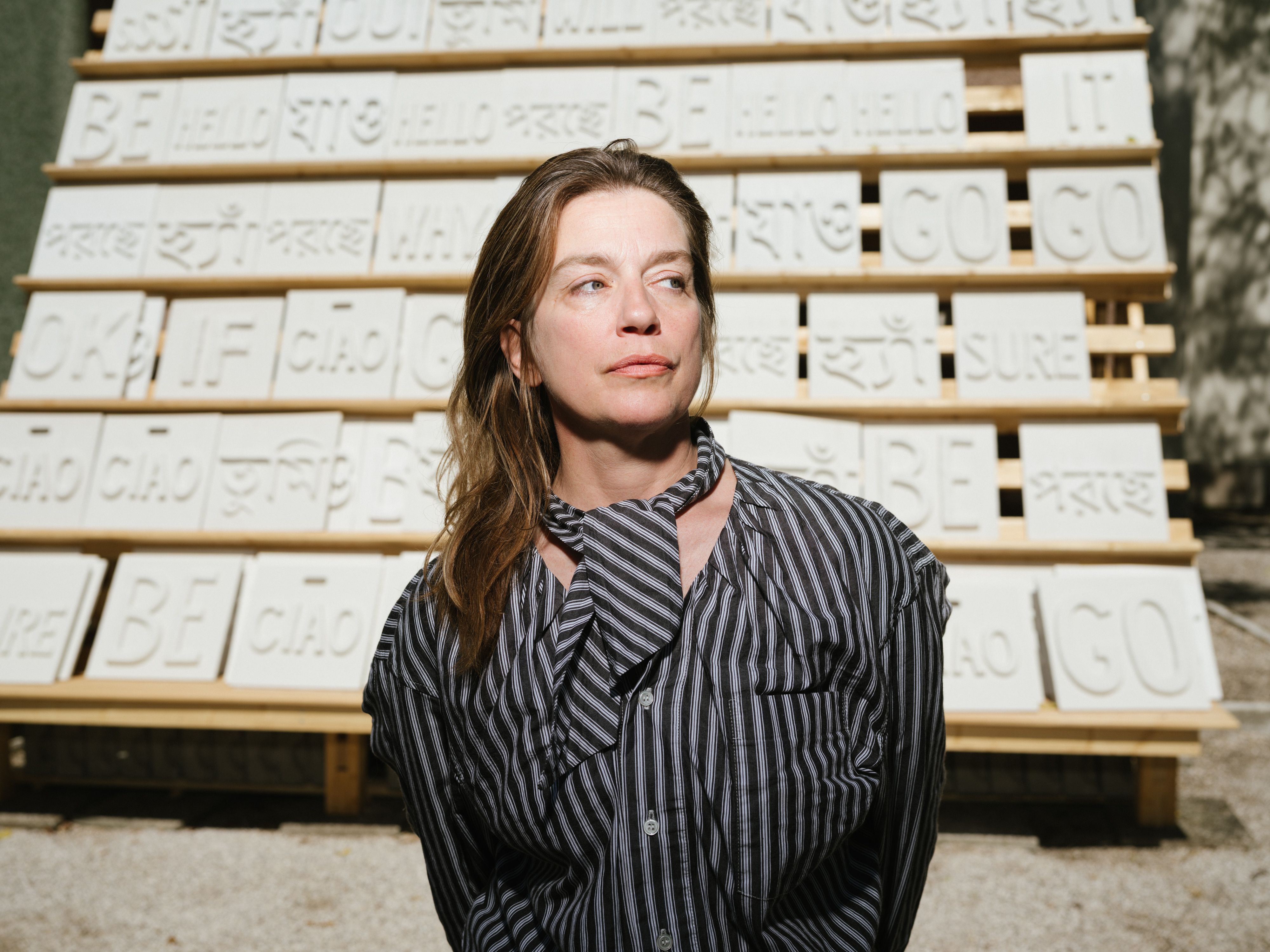
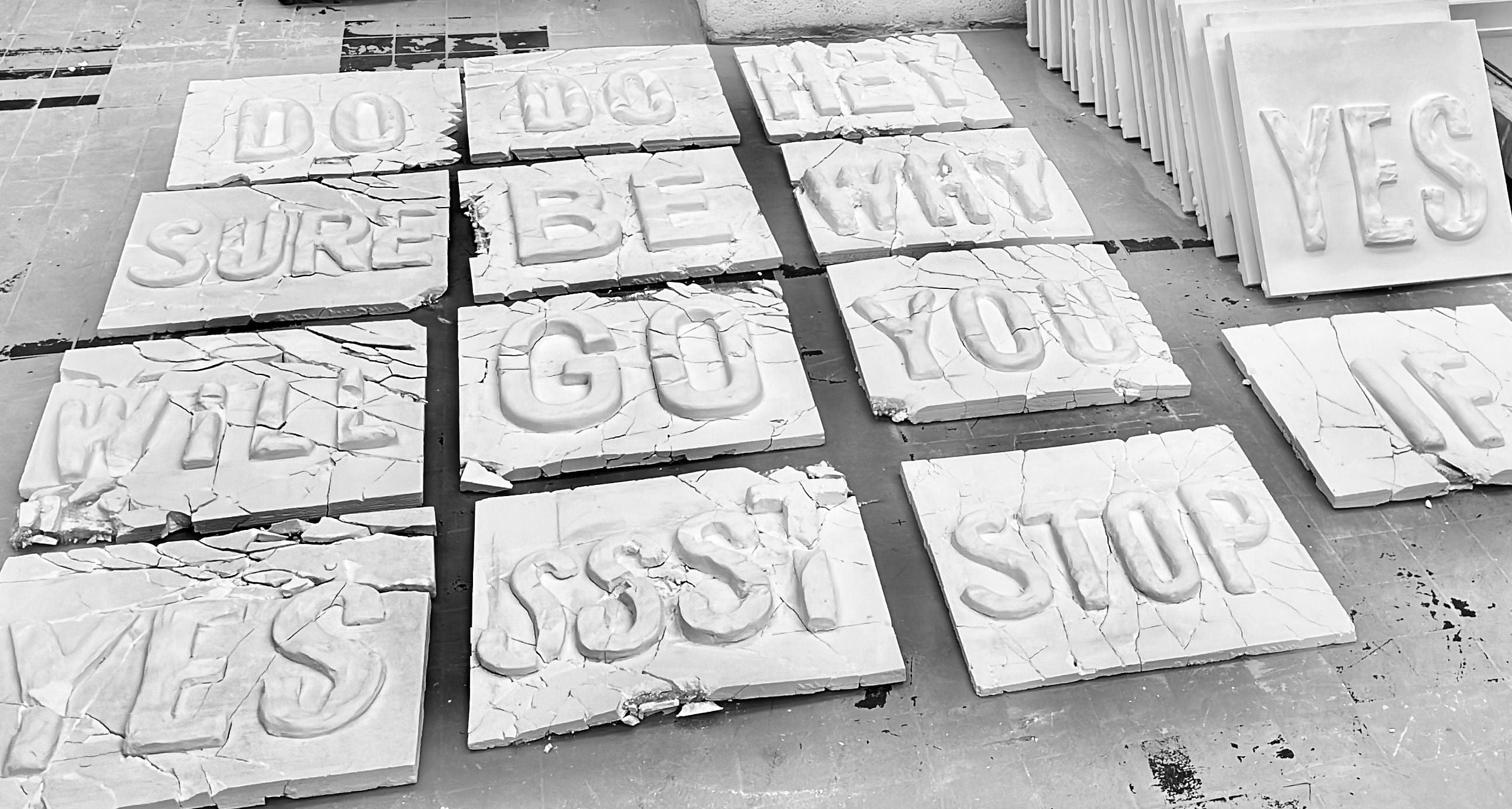
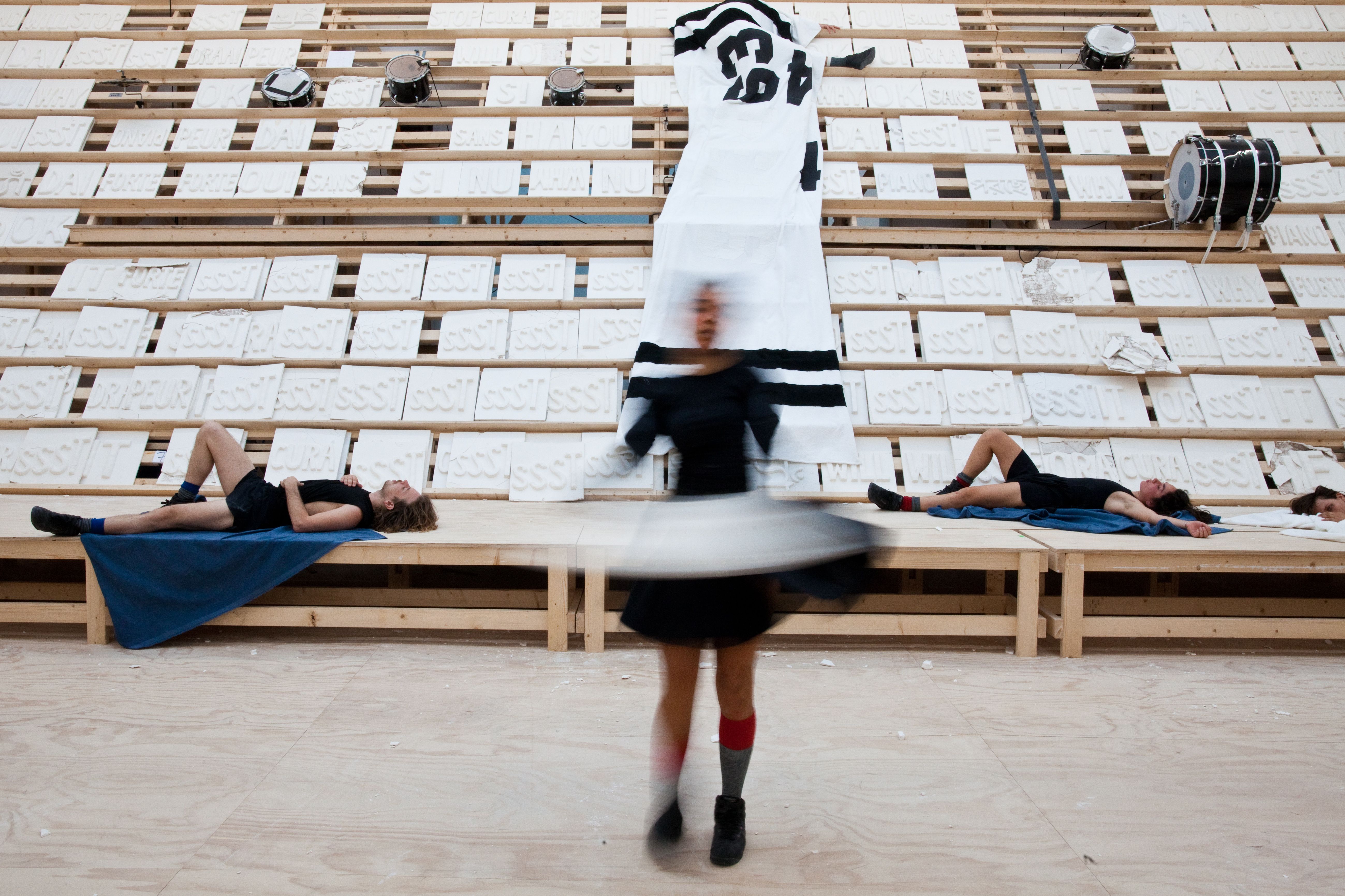
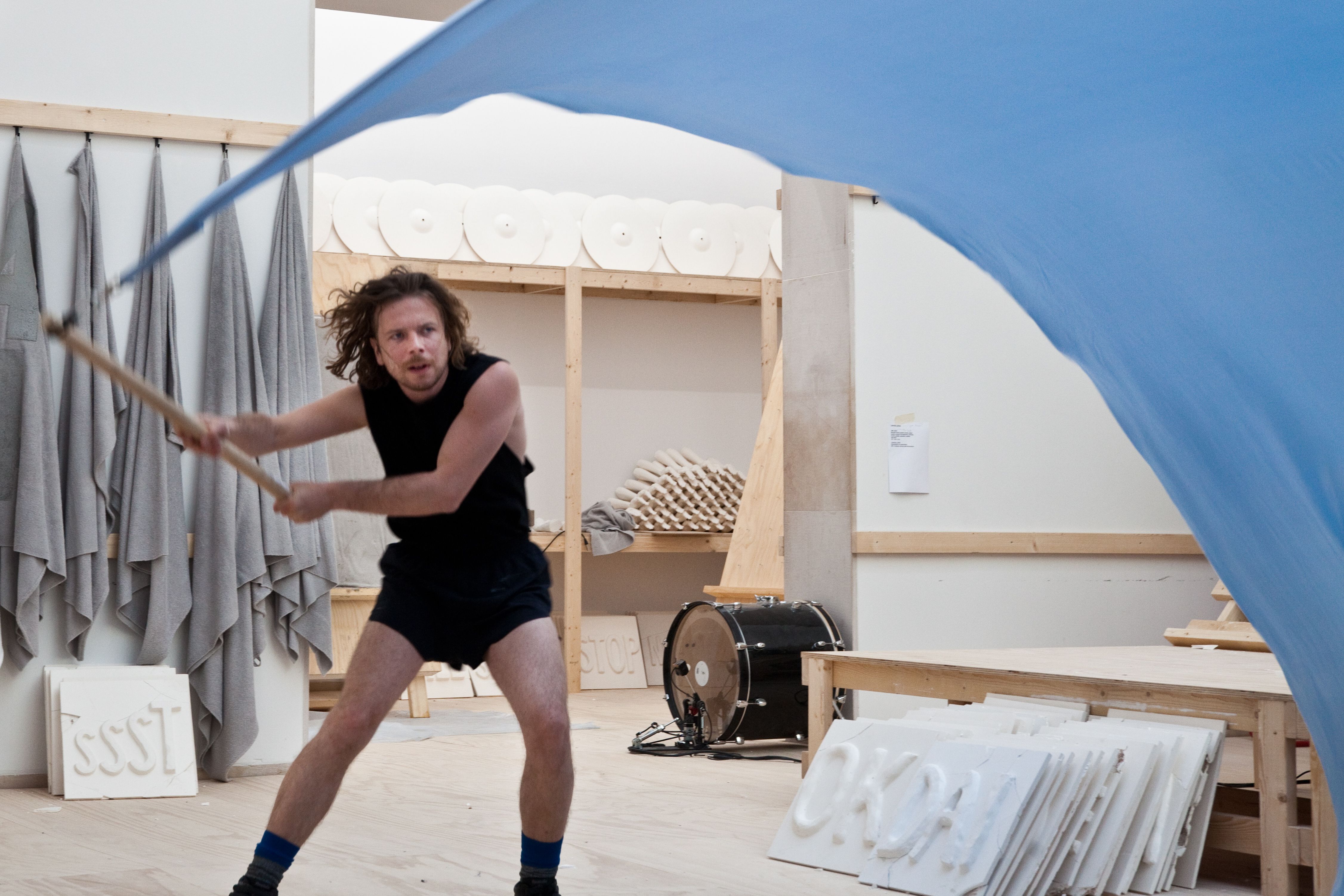
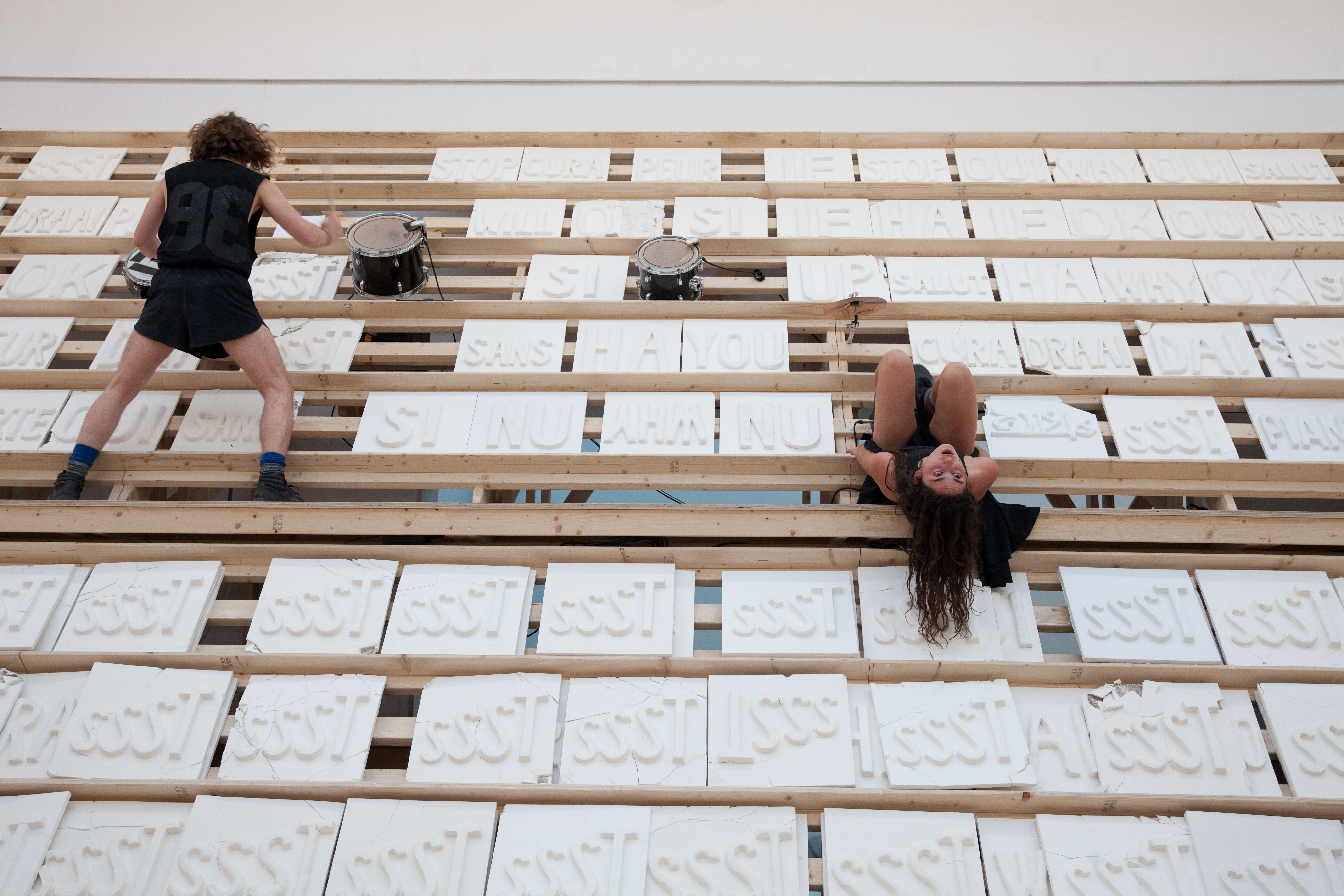
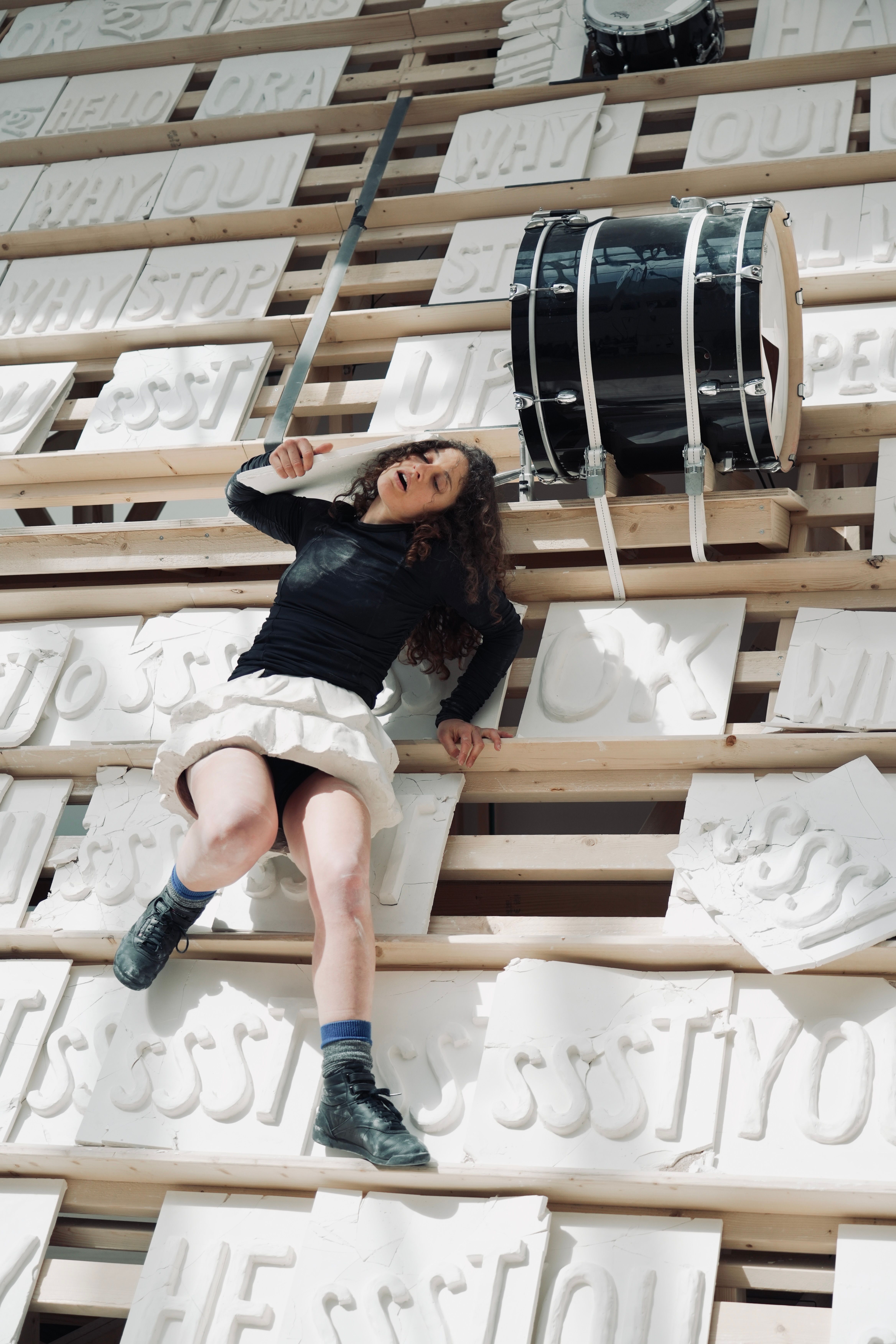
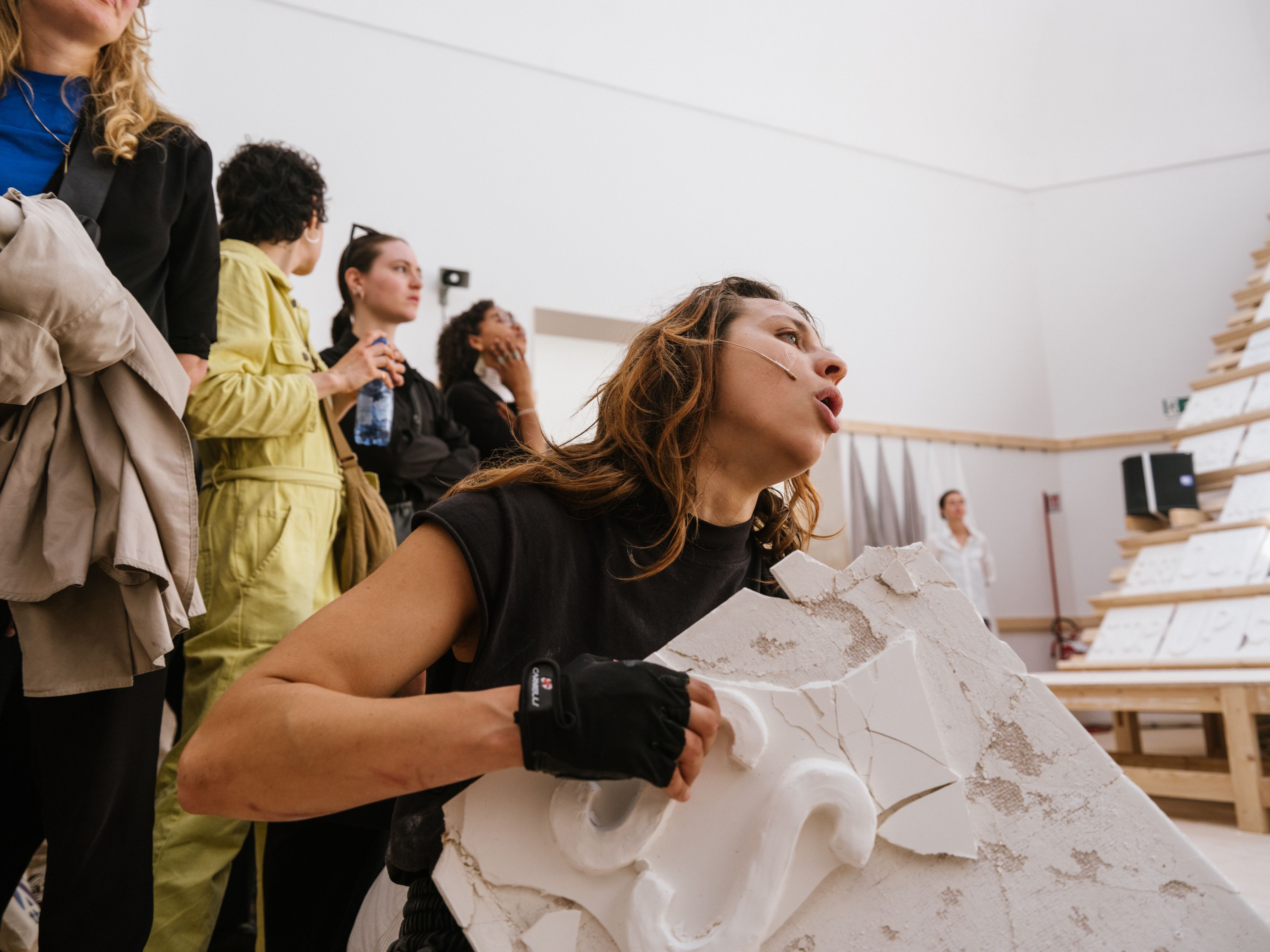
In Venice she has created a huge wooden stand, like those found at football matches. From these spaces the performers play drums, sing, chant and run in circles, passing plaster casts of words in different languages between them and placing them on the stand in different configurations, creating sentences that don’t quite make sense: “die, ssst, you, why, it, never, cura.”
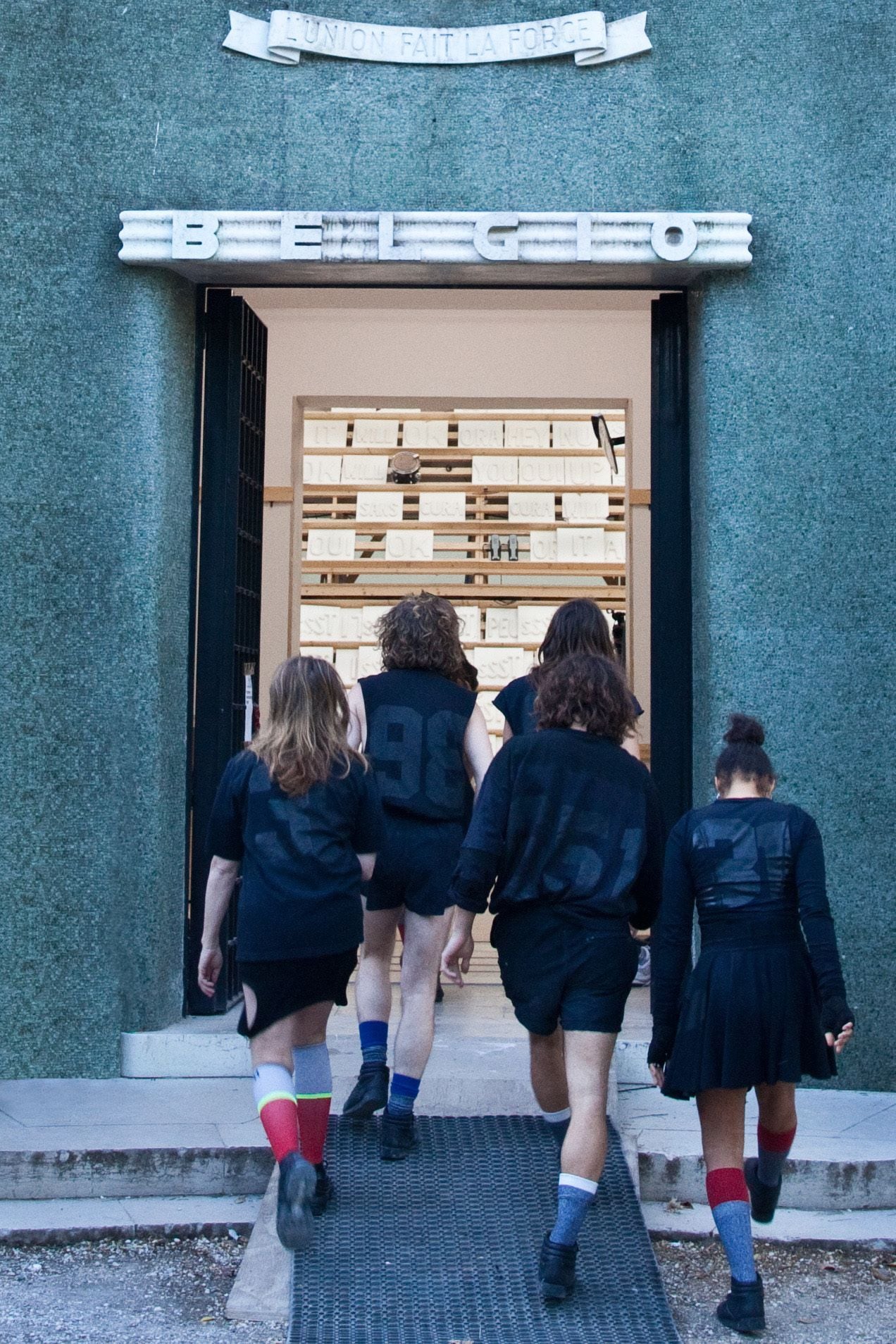
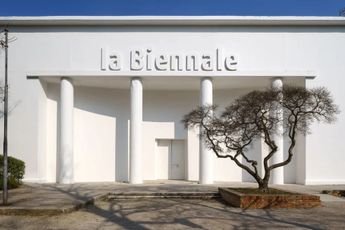
All contained in a bright white, neutral space, the performance has a kind of purgatorial atmosphere. In the midst of a Venice Biennale characterised by an intense charge and febrile atmosphere, catalysed by the return of the Russian and Israeli pavilions, it has resonated. In opening week, there was a constant queue snaking out of the door, even in apocalyptic rain.
Warlop was born in 1978 in Torhout, Belgium, to a father who worked as an accountant and a mother who taught children with learning disabilities. “My dad is an accountant, but actually, he’s also like a freak,” she says. “He sees all the shows, all exhibitions that are actually reachable. He travels to the end of the world to see something.” His mantra, Warlop says, is: “You have to highlight things in your life. Otherwise, everything looks the same. You have to highlight—buy a big fluorescent pen. Otherwise it’s never-ending boring things. You have to celebrate things.”
The artist’s parents took her to a lot of theatre shows when she was growing up. “They dragged me everywhere,” she says, laughing. Her mother would also bring home her pupils and Warlop would play with them. “I laughed a lot with them, and had so much fun. It just brought many things together,” she remembers.
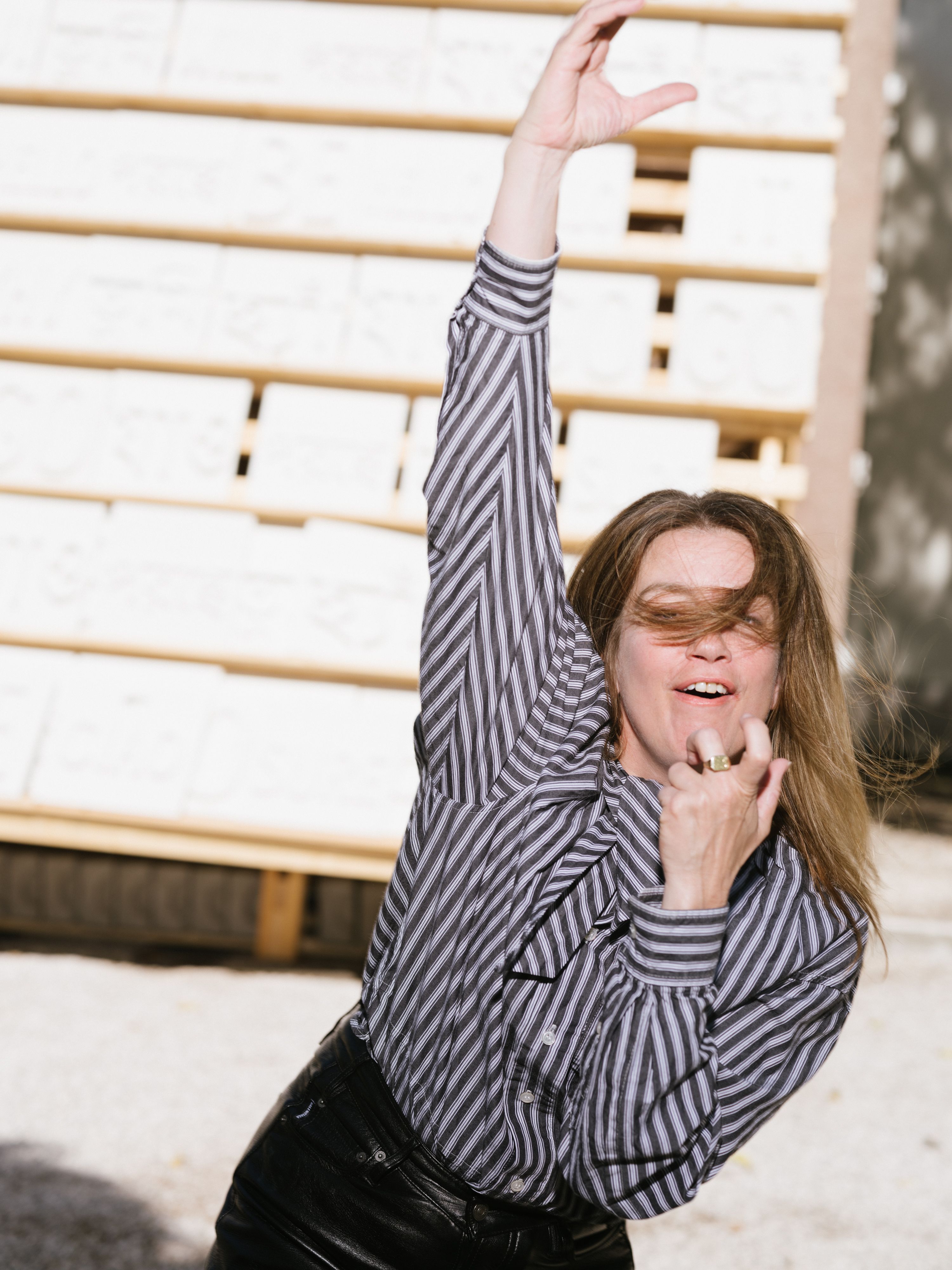
Warlop went on to study three-dimensional art at the Royal Academy of Fine Arts in Ghent. Her final project, Huilend Hert, Aangeschoten Wild (Crying Deer, Wounded Game) (2003), an “inhabited installation” of six living tableaux and a crawling figure, was picked up by a theatre, sparking the idea that she could work in a space between performing and visual arts. From there, she continued making work that oscillates between avant-garde performance art and wacky, entertaining, gripping, theatre-filling dramatics.
“Can you buy a performance or not?”
The artist applied to represent Belgium in Venice, and named her piece, It never SSST, carefully. “It is a way to say that we don’t have to shut up, and it will never stop, and we keep going, and on and on and on, and that we are all in this together somehow,” she explains. “That we are part of a very long chain behind and in front of us, so that we are just in this kind of wheel of infinity.” This language play sits beautifully in the context of the biennale, with its queues made up of visitors from all over the world. The plaster words add further to this: they crack and break apart as the performance goes on, creating spontaneous moments of poignancy. She points to the word “die”, a reference to death in English, but the Italian “dai”, pronounced the same but meaning “let’s go” in Italian, as an example of this. “So there’s constantly… not in every word, but in most of the words you have it: a double meaning,” she says, “When you read it, say it, or see it.”
Warlop’s interest in these collisions of meaning is born, in part, out of a Belgian sense of humour, which she describes as “quite absurd and straightforward, and it has a lot of self-mockery, which I find one of the most important things”. She puts this down to an “absurdity in our existence, because we got run over so much and split up”. In the past 500 years, Belgium has been governed by Habsburg Spain, the Austrian Habsburgs and Revolutionary France, before the Belgian revolution secured the country’s independence in 1830. “One big advantage is that you don’t carry millions of years of one-track history, you know. So you have an identity problem,” she explains. “I mean, it’s not a problem any more. It became an identity in itself.”
This sense of humour has served Warlop well in Venice—she is delighted to find herself back in a visual arts context, but describes the biennale’s atmosphere as simultaneously “very serious” and “a bit funny”. It has, however, allowed her to ask more serious questions of her own work. “What is a work, what is not a work? From which moment does it become a work? Is the visual artwork as strong as the performance? Can you buy a performance or not?,” she says, before her sharp, dead-pan humour returns. “I’m now saying really stupid shit.”
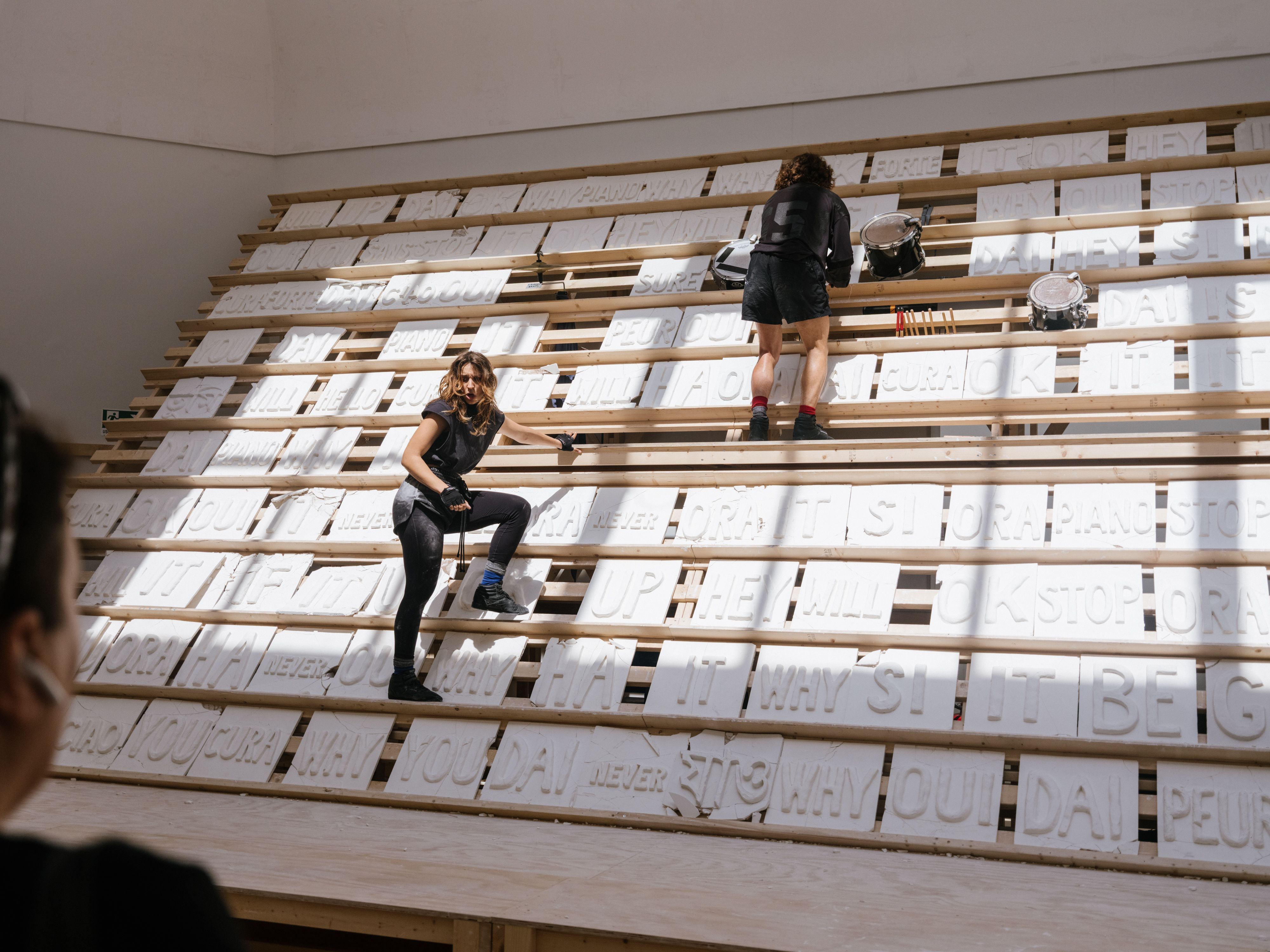
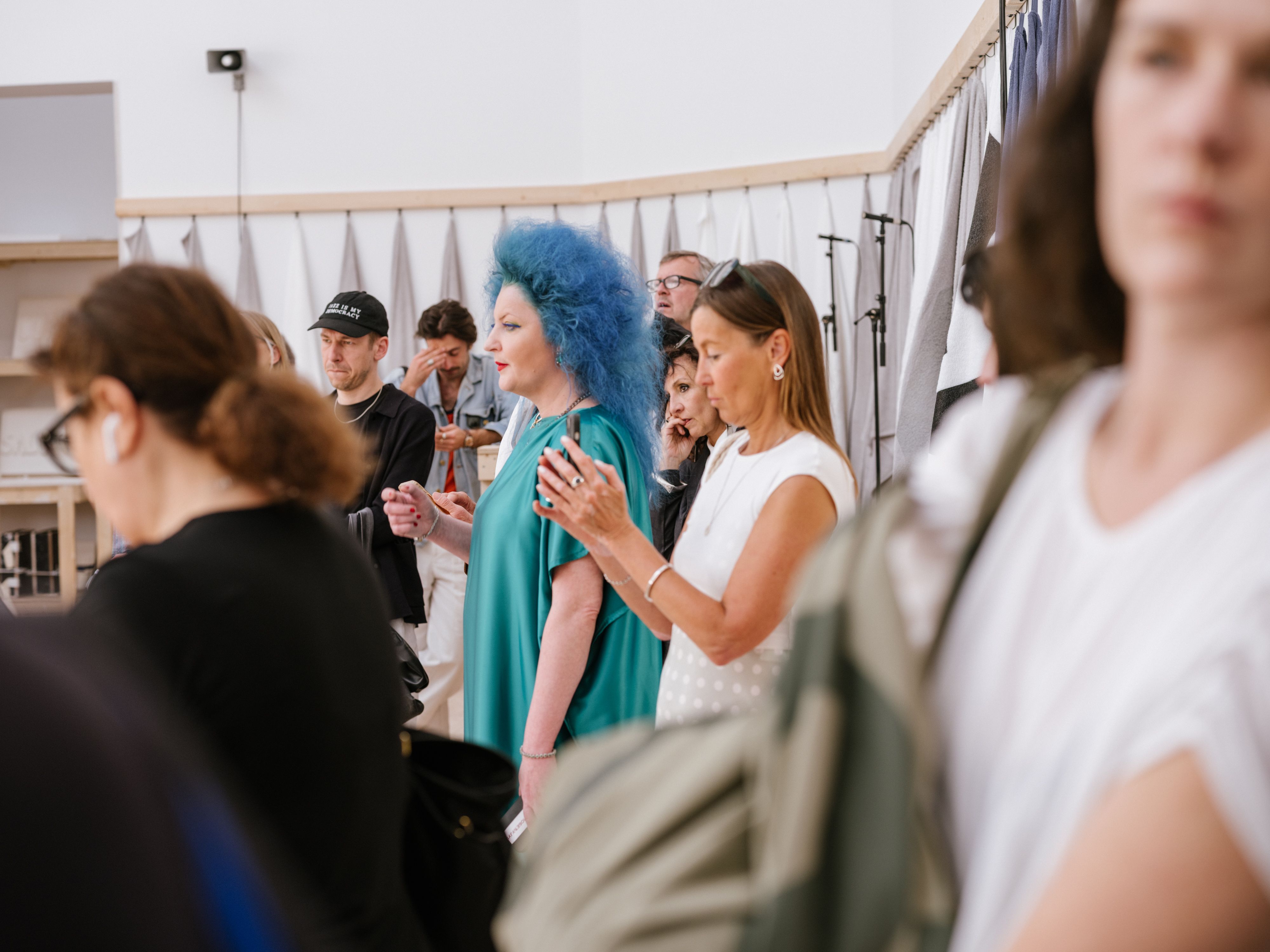
Nonetheless, she seems at home in the Belgian pavilion. Dressed in a chocolate-coloured leather mini skirt and matching bomber jacket and trainers, she’s smoking straights, watching the show, talking to the sound team, cheering on the performers. They have made some merch for the work, too: little packets of chewing gum branded It never SSST in a retro American college-style font. She’s inviting people to chew something over, to get stuck in a pattern, to ruminate a bit, and then spit it out. Inside the theatre, everyone’s doing it together. —[O]
Main image: Installation view: Miet Warlop, IT NEVER SSST (2026) Belgian Pavilion, Biennale Arte 2026. Photo: Reinout Hiel.







A respected voice in contemporary art discourse.
Focusing on ambitious storytelling and insightful art-world commentary. Ocula Magazine publishes in-depth interviews, critical essays and timely analysis on the artists, exhibitions and ideas driving the global art world.
Learn more about Ocula Magazine
Showcasing the best of the art world.
Ocula partners with galleries from around the world to highlight their artists, artworks and exhibitions. Gallery membership is by application and invitation, with each member vetted by an independent panel.
Learn more about Ocula Membership
Specialises in the sale of major artworks.
Led by a team with deep ties to the world’s leading auction houses, galleries and collectors. Ocula’s advisory team offers bespoke services to high-net-worth clients from around the world who are looking to acquire the best of contemporary and modern art.
Learn more about our team and services