STEVENSON is pleased to present Bilongue, an exhibition of new work by Barthélémy Toguo—his third with the gallery, following Strange Fruit in Johannesburg in 2016 and Celebrations in Cape Town in 2014.
While the artist’s preceding exhibitions interrogated social malaise and revelled in ‘life with all its feelings’ respectively, Bilongue unites these preoccupations as Toguo pays homage to the sufferings and joys of the residents of a Cameroonian settlement facing unequitable conditions. He remarks:
‘I chose the title of Bilongue because of the inhabitants of this neighbourhood in Douala. I lived and worked here for months in 2015 while preparing for All the World’s Futures, Okwui Enwezor’s Venice Biennale. I met incredible people and told myself I had to come back to Bilongue to portray them. These are people who left poor cities to come to Douala and figure themselves out. They came to settle down in a very challenging area. And they live there and survive there daily, not through violence but through solidarity. When there is a need, one runs to help the other. It is a flat area so there is a lot of stagnant water. When water floods the house of a neighbour everyone helps them, and so it goes on. I went to capture the images of their faces to tell them that in this difficult city of Douala, they exist as heroes.’
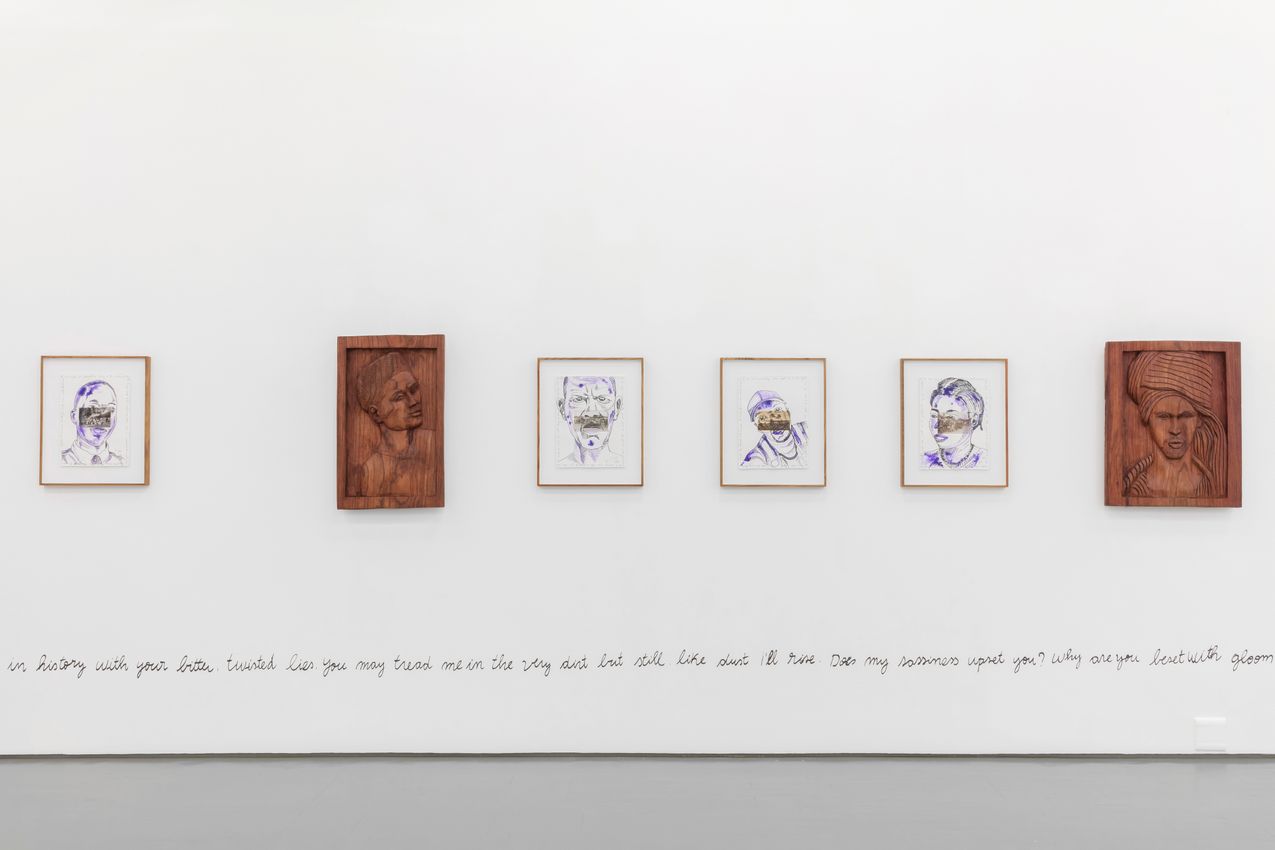
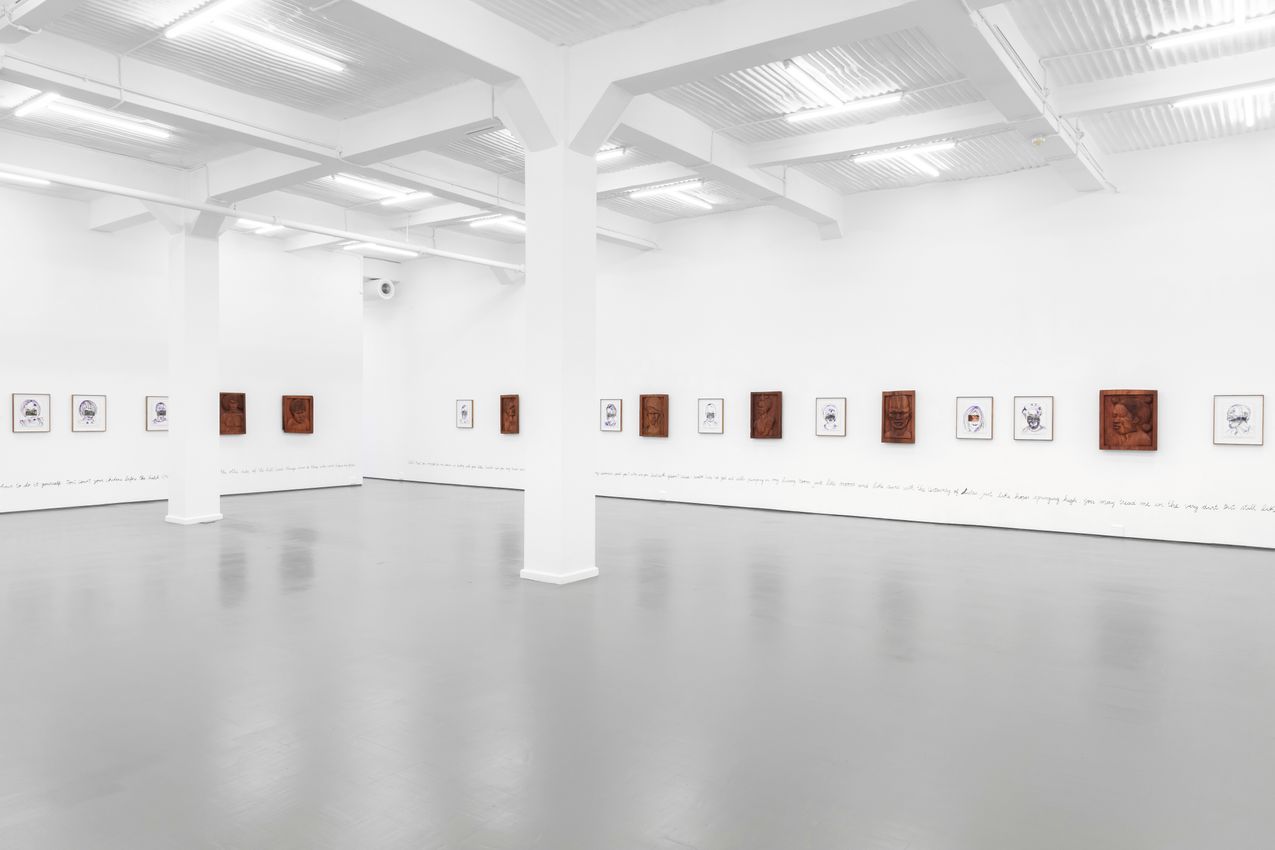
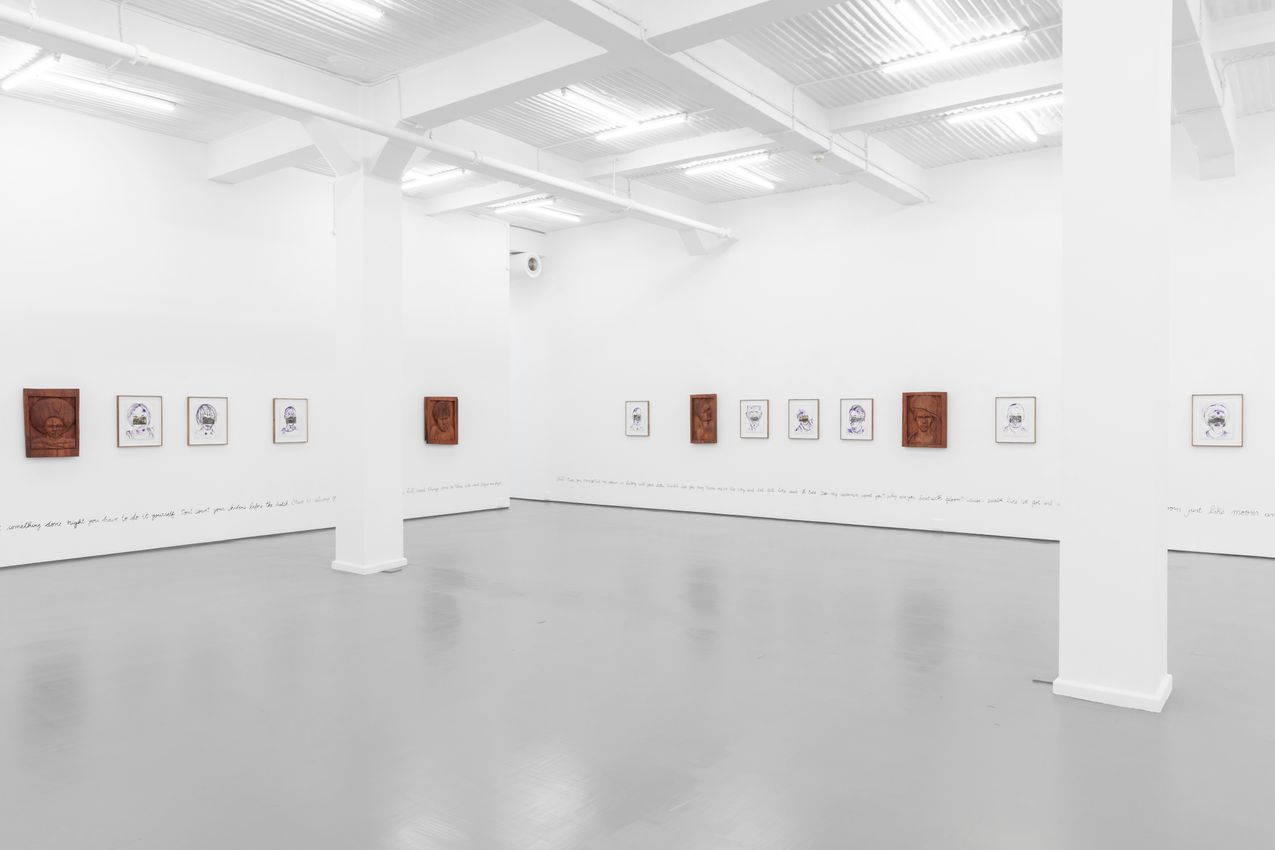
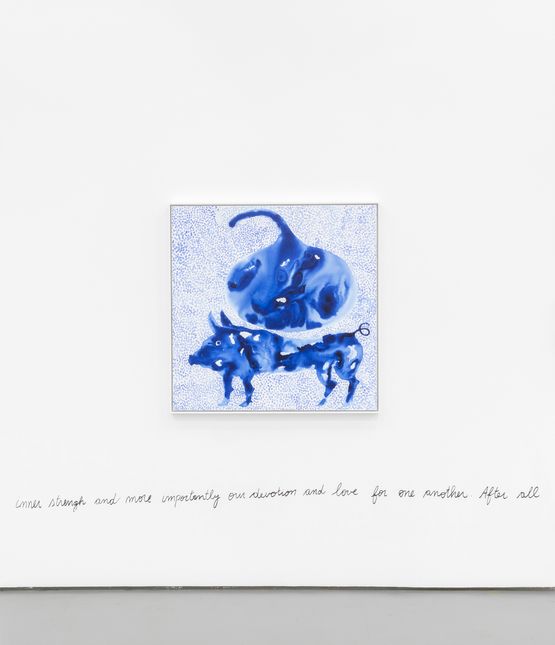
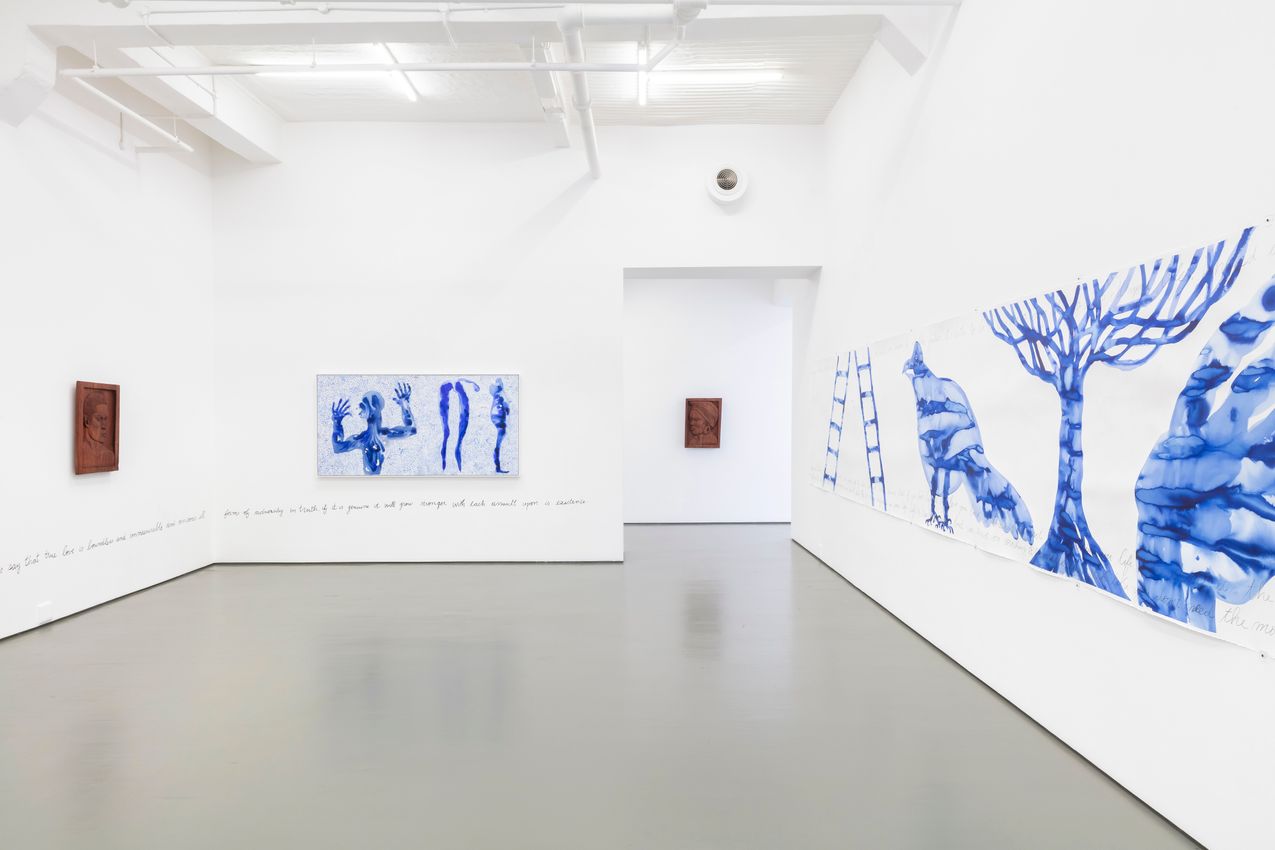
The portrait form is employed throughout this exhibition as Toguo depicts the people of Bilongue on both wood and paper, crafting an enduring tribute. In a new series of drawings, colonial-era photographs are placed at the centre of portraits delicately rendered in ink and watercolour and bordered by idiomatic phrases of common wisdom. Portraying schools, rivers, trading posts, settlements and plantations, the photographs function as reminders of the colonial encounter and its residual impact. Yet Toguo resists a tableau of victimhood, foregrounding instead the persistence of insightfulness and dignity within adversarial systemic conditions.
Toguo’s wood carvings, making their premiere at this exhibition, take this notion further. Sculpted from the Zingana trees found throughout the country, each person’s features are interpretively chiselled by the artist as he sought to capture the emotional specificity in Bilongue’s people, affirming an iconography of the everyman.
‘It was a way to come back to the academic training I received 30 years ago in the Ivory Coast, when I had to copy the Dying Slave of Michelangelo, among other works. And myself, I wanted to portray the people of Bilongue as heroes. Differences are important in this carving ensemble—it’s important to have exaggeration in the faces, in the cheeks, in the eyes or the neck or the teeth. When you look at an individual you capture a communication in the making and that’s what is important: the soul of the people and what they left within me.’
Toguo uses the striations of the wood to emphasise what is unique in each face, adding: ‘I felt pleasure seeing the magic coming to life, coming out of the wood.’
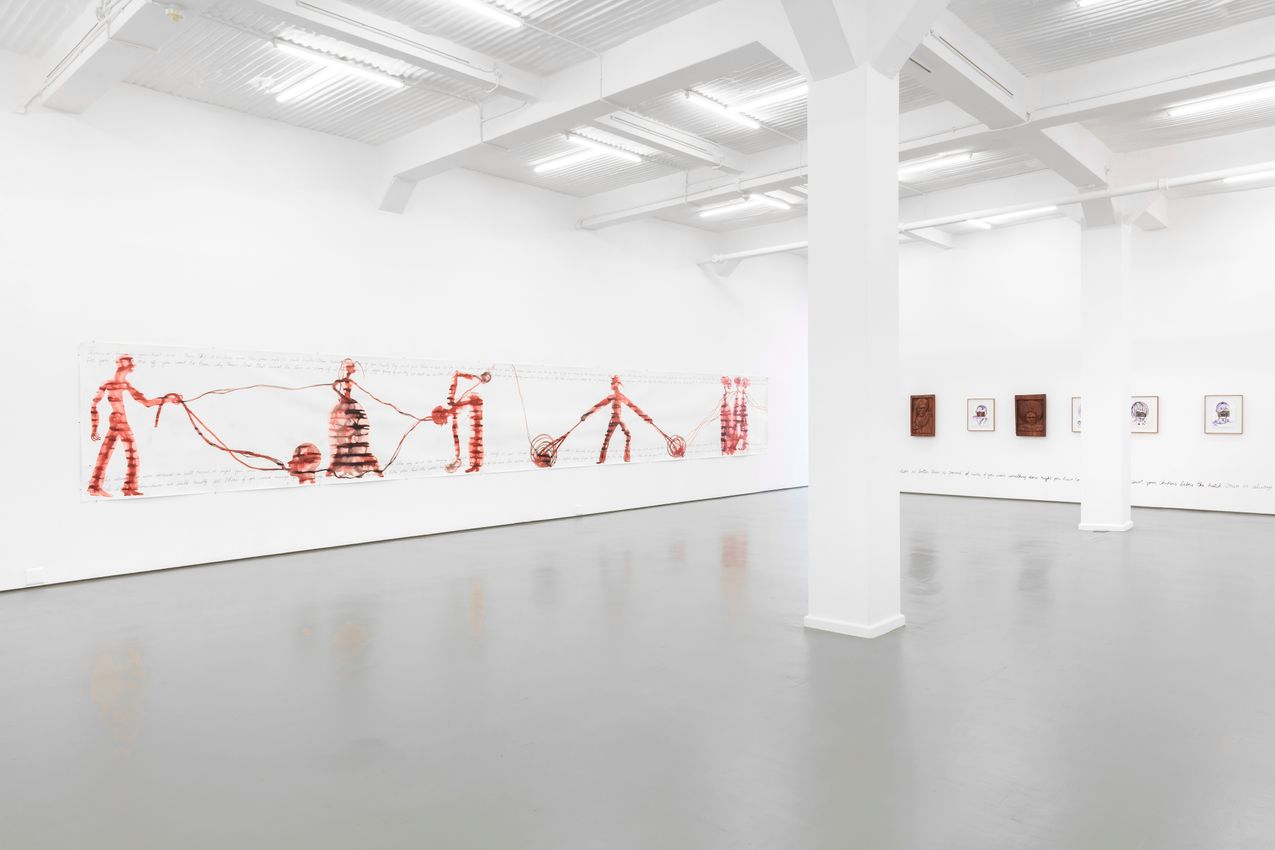
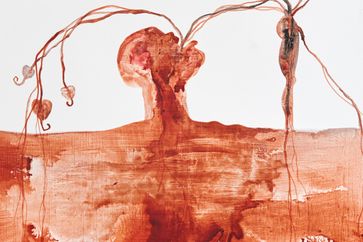
Alongside the Bilongue portraits are Toguo’s signature watercolour paintings, which convey his longstanding commitment to articulating the complexity of experience. As stated in a conversation at the time of his exhibition Déluge at Carré Sainte-Anne, Montpellier, in 2016:
My formal propositions, my ethical process, my aesthetic vocabulary converge in the long run to go towards the other, the others, with empathy; this is what drives my creative work, and I identify with what Camus said when he received the Nobel Prize: ‘In my eyes, art is not a solitary pleasure. It is a means of stirring the greatest number of people by offering them a privileged picture of common joys and sufferings.’
Toguo was born in 1967 in Cameroon and lives between Paris and Bandjoun. He trained at the École Nationale Supérieure des Beaux-Arts in Abidjan, Ivory Coast; the École Supérieure d’Art in Grenoble, France; and the Kunstakademie, Düsseldorf, Germany. He founded Bandjoun Station, a centre for artistic exchange between local and international artists featuring residencies, an exhibition space, a library and plantations in Bandjoun, Cameroon, in 2007.

Stevenson opened in 2003 in Cape Town’s Green Point district, after a visit to documenta 11, curated by Okwui Enwezor, by founding directors Michael Stevenson and Andrew da Conceicao. Moved by Enwezor’s ethos, they decided to create a new platform for contemporary art in South Africa, which was short on dedicated spaces at the time. Since its inception, Stevenson has connected local artists to the global art world, and introduced international practitioners to South African audiences.

A respected voice in contemporary art discourse.
Focusing on ambitious storytelling and insightful art-world commentary. Ocula Magazine publishes in-depth interviews, critical essays and timely analysis on the artists, exhibitions and ideas driving the global art world.
Learn more about Ocula Magazine
Showcasing the best of the art world.
Ocula partners with galleries from around the world to highlight their artists, artworks and exhibitions. Gallery membership is by application and invitation, with each member vetted by an independent panel.
Learn more about Ocula Membership

Specialises in the sale of major artworks.
Led by a team with deep ties to the world’s leading auction houses, galleries and collectors. Ocula’s advisory team offers bespoke services to high-net-worth clients from around the world who are looking to acquire the best of contemporary and modern art.
Learn more about our team and services