





‘If I Want to Make Fun of Something, I Will’: Hamza Badran Brings Humour to Political Art
The Palestinian artist, now based in Basel, was a winner at this year’s Swiss Art Awards with his date‑paste sculptures of Nelson Mandela. He talks to Lydia Eliza Trail about mocking political symbols, the expectations placed on Palestinian artists, and his relationship with his brothers. Save to My Ocula“Art is tired,” Palestinian-born, Basel-based artist Hamza Badran reflected while standing outside the Israeli pavilion at this year’s Venice Biennale. It was the day of ANGA’s strike protesting Israel’s inclusion in the Biennale, which saw Palestinian flags draped over several artworks within the main exhibit and the closure of several pavilions.
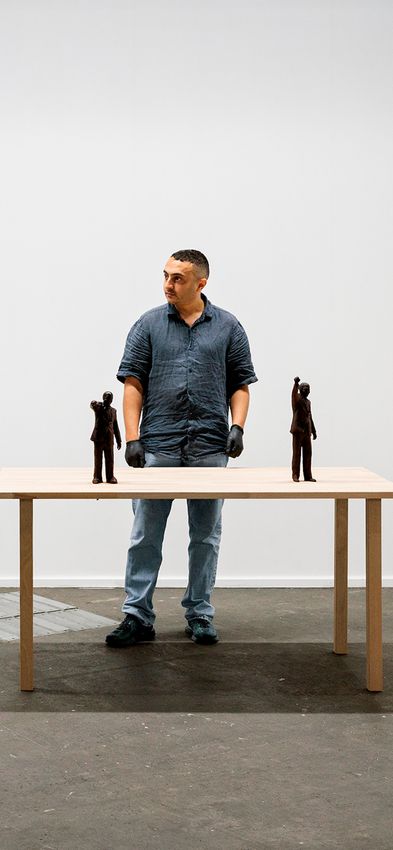
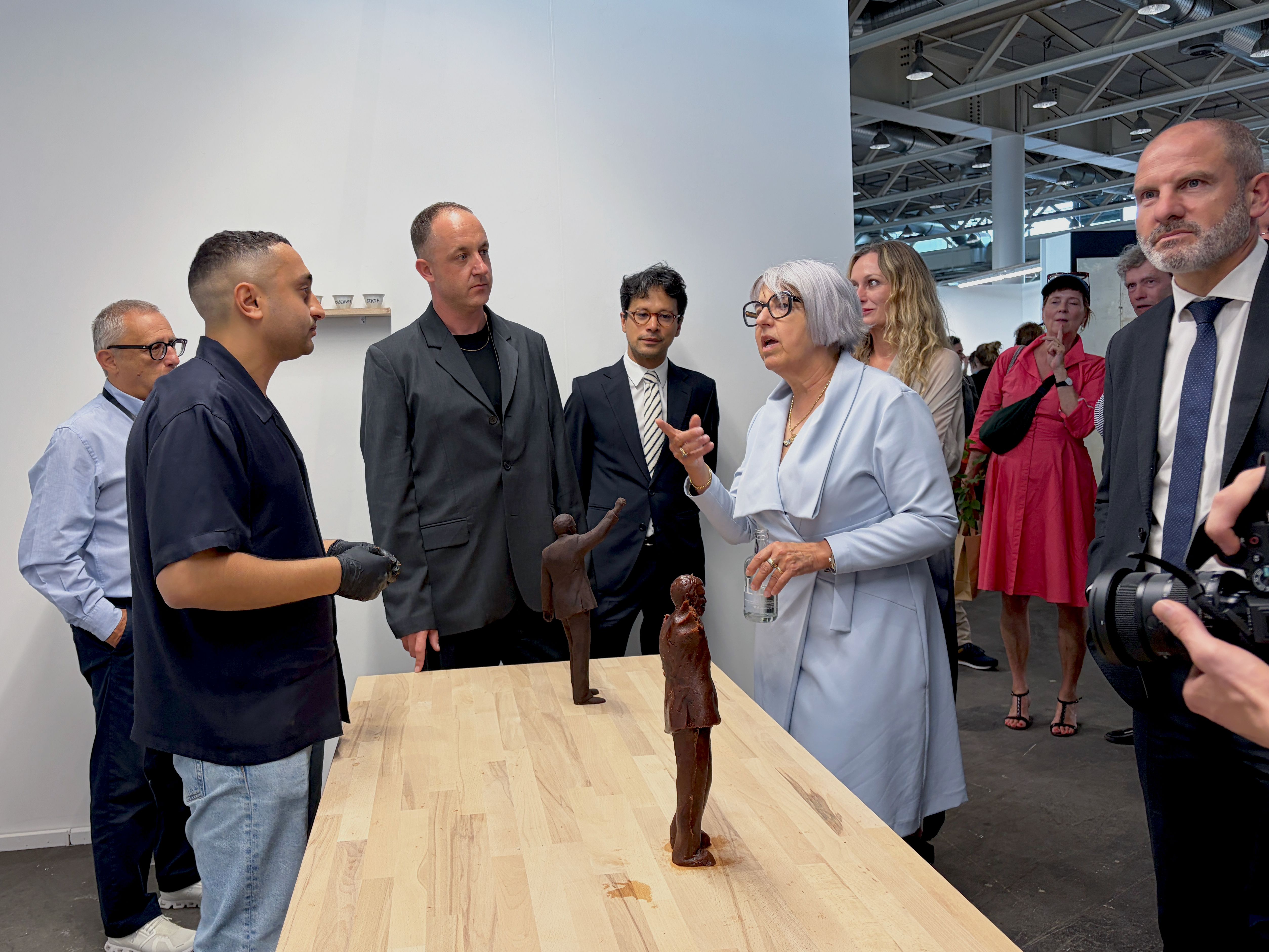
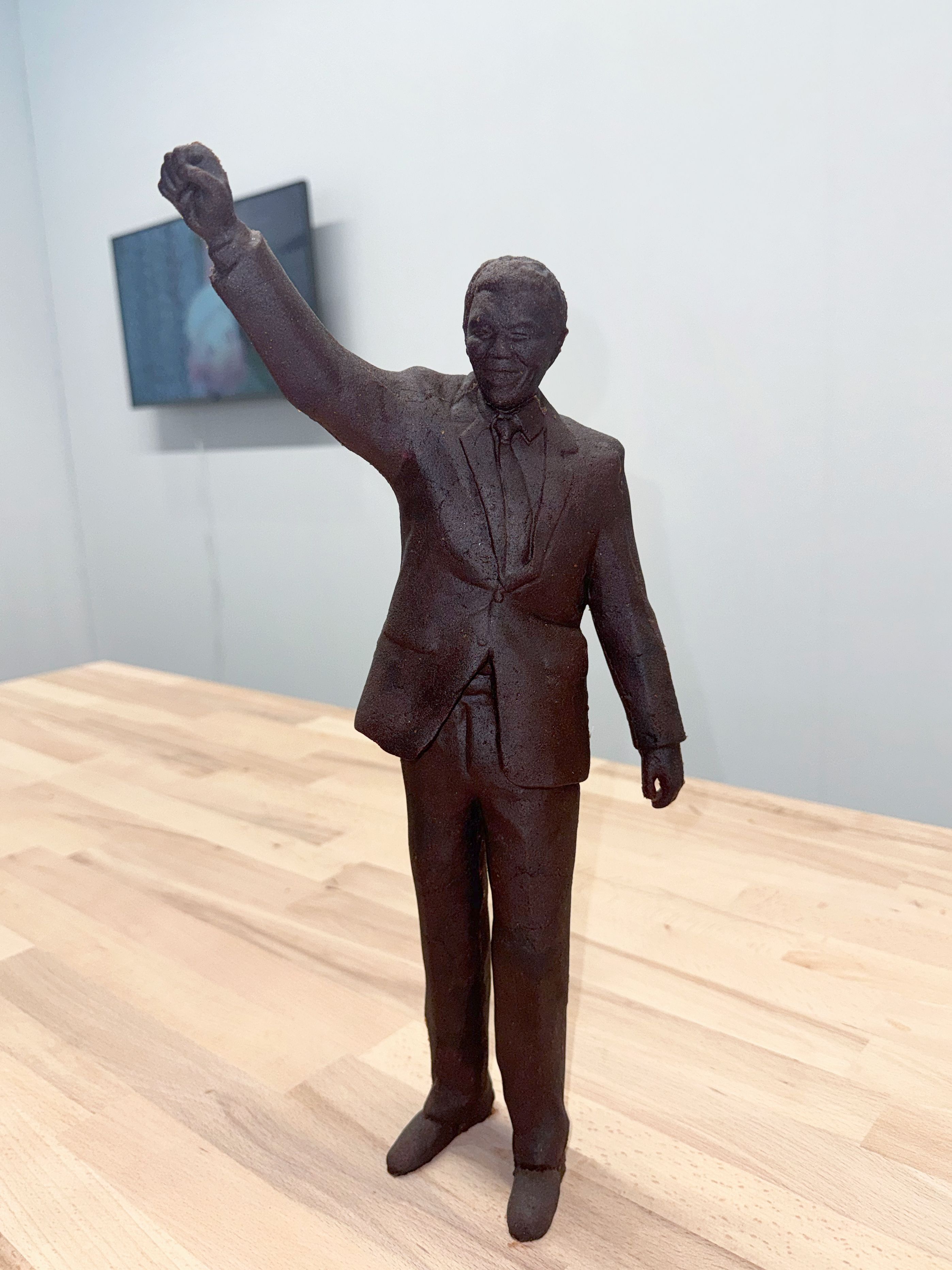
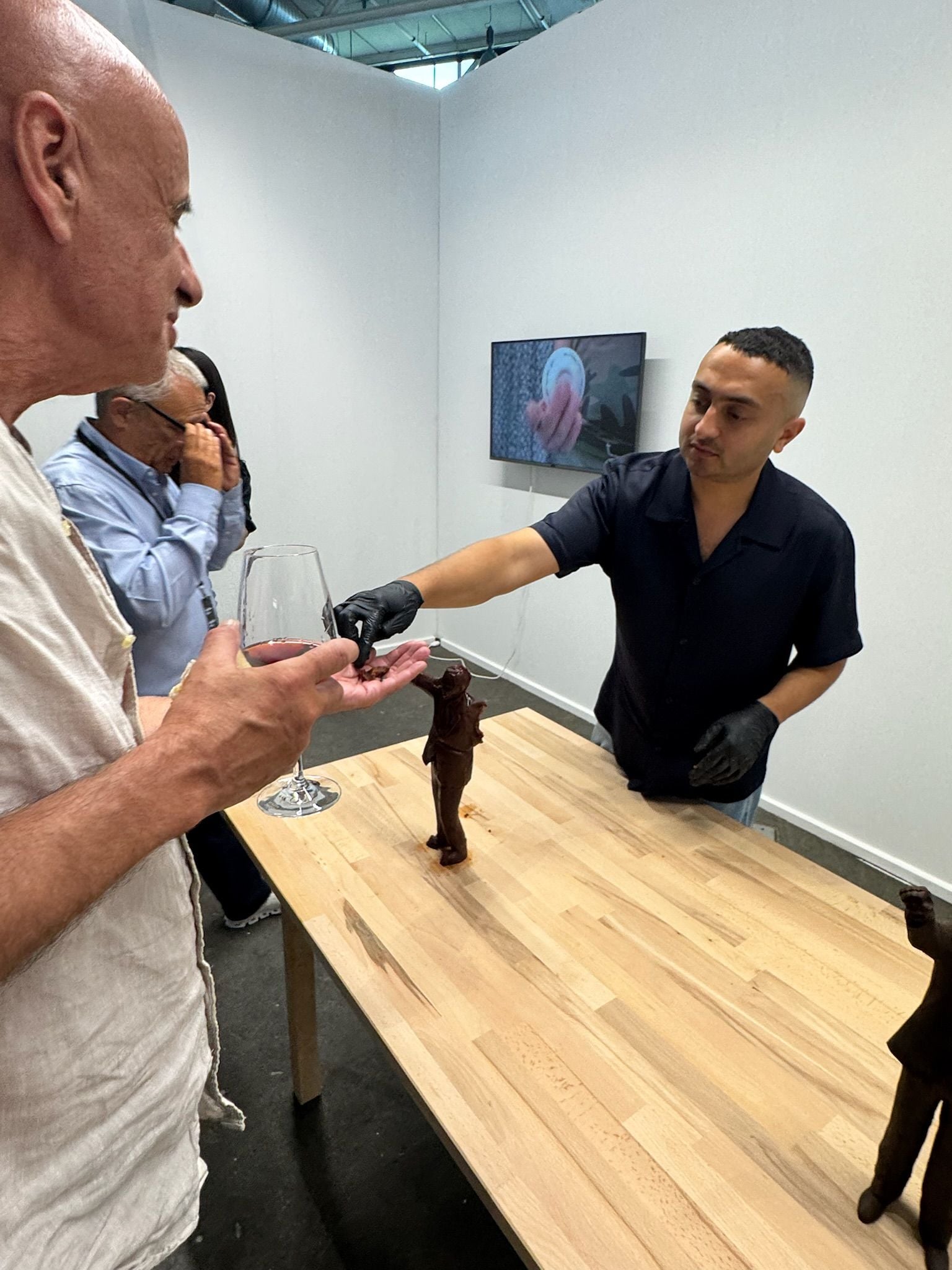
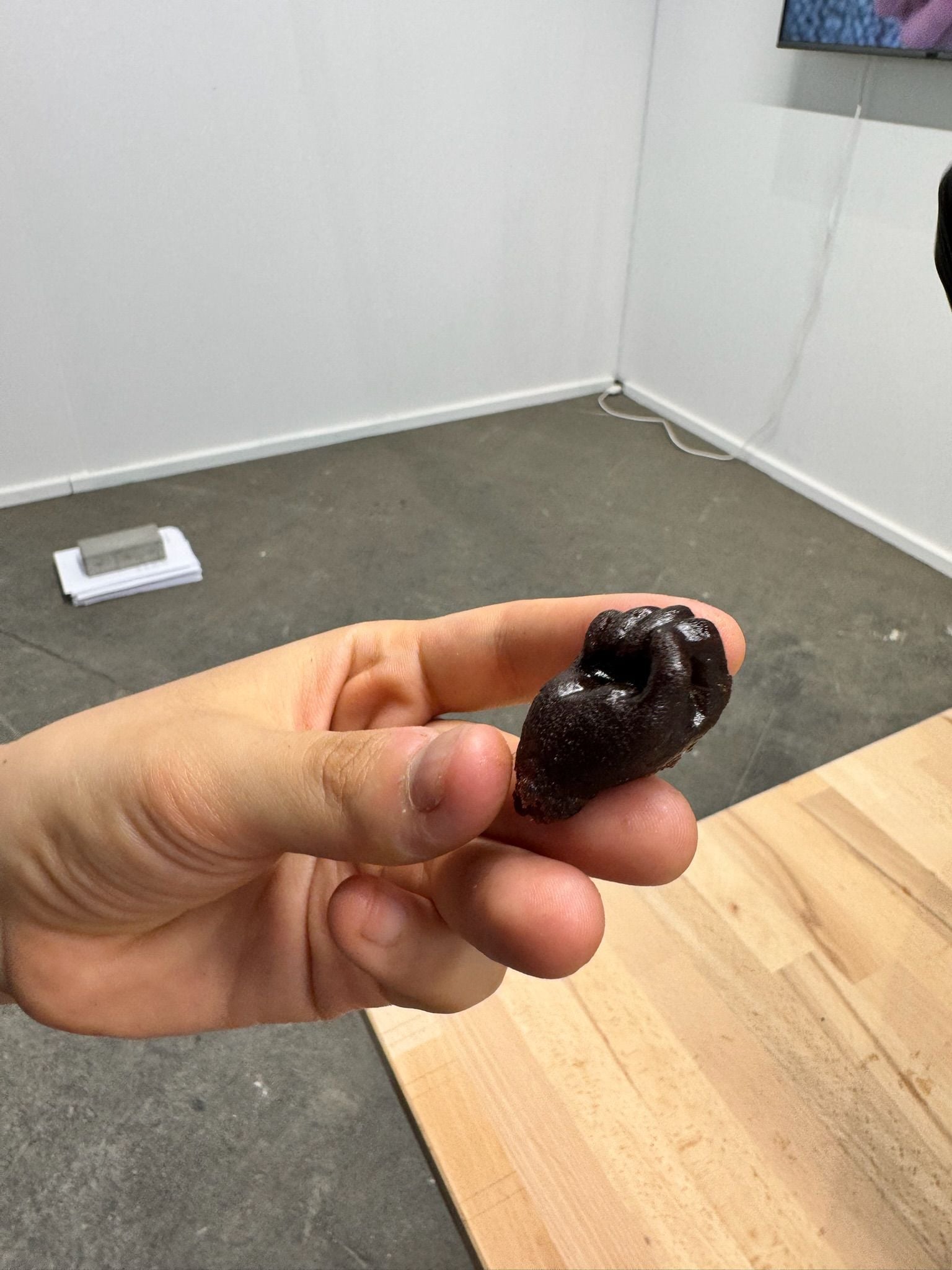
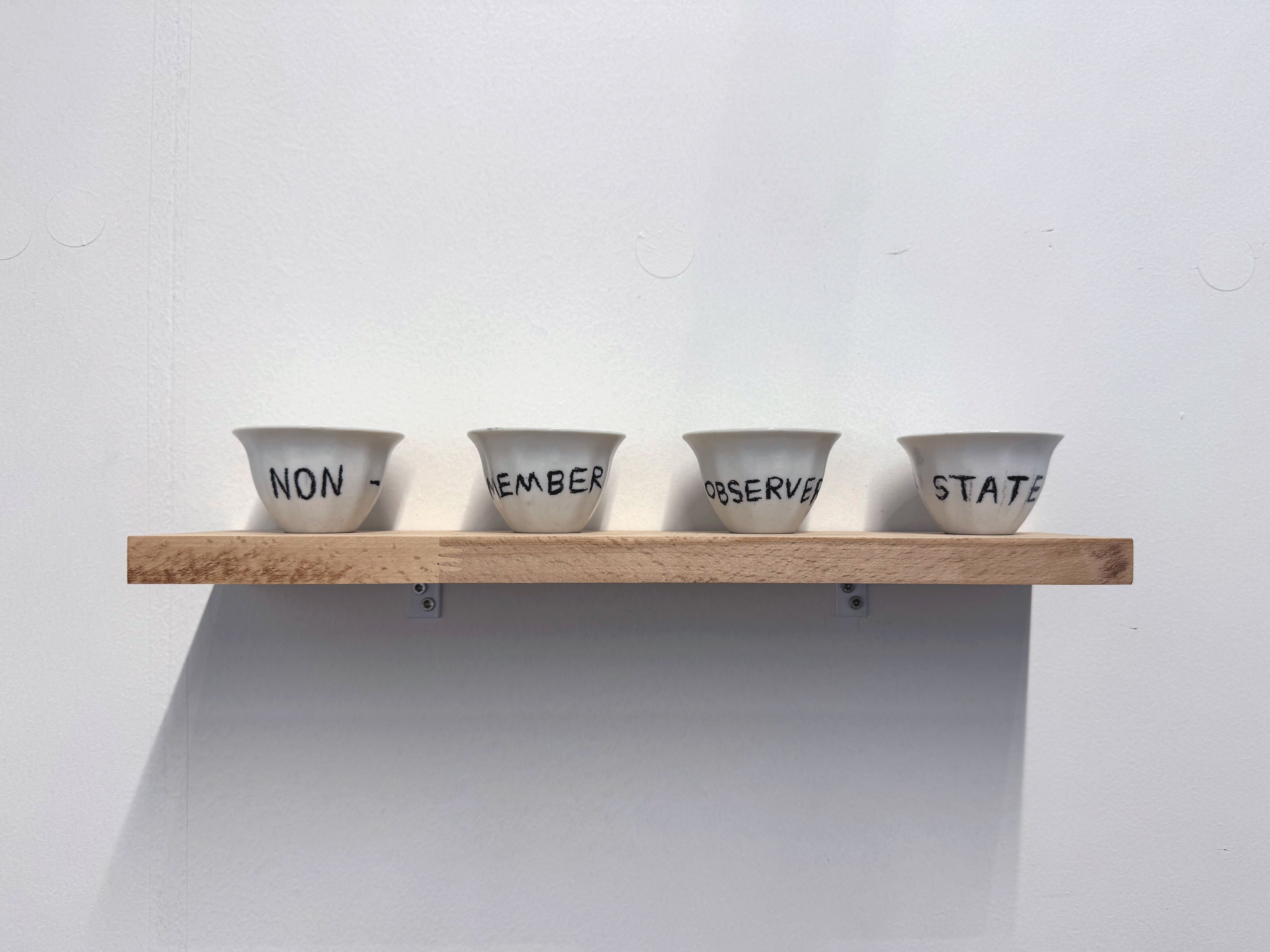
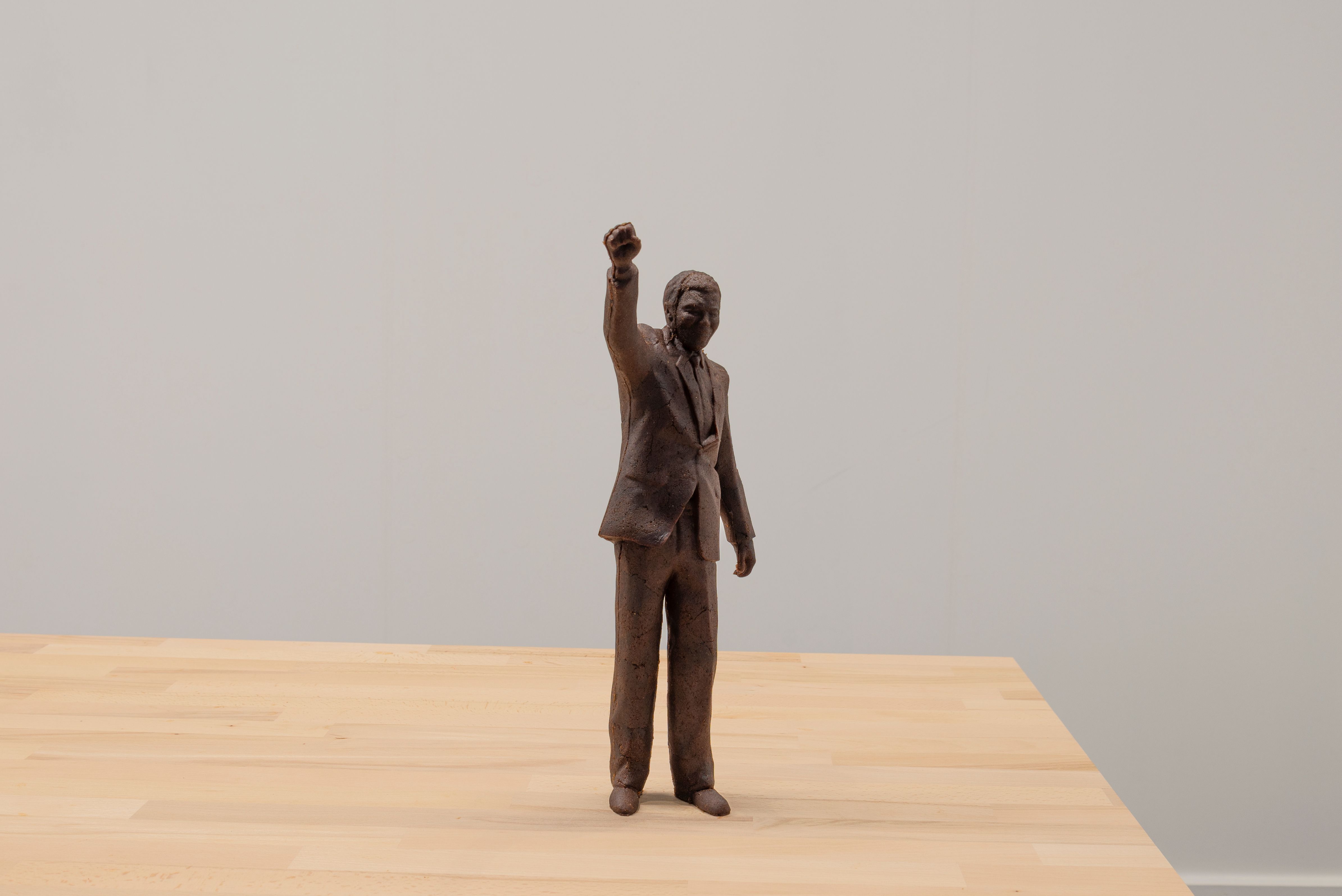
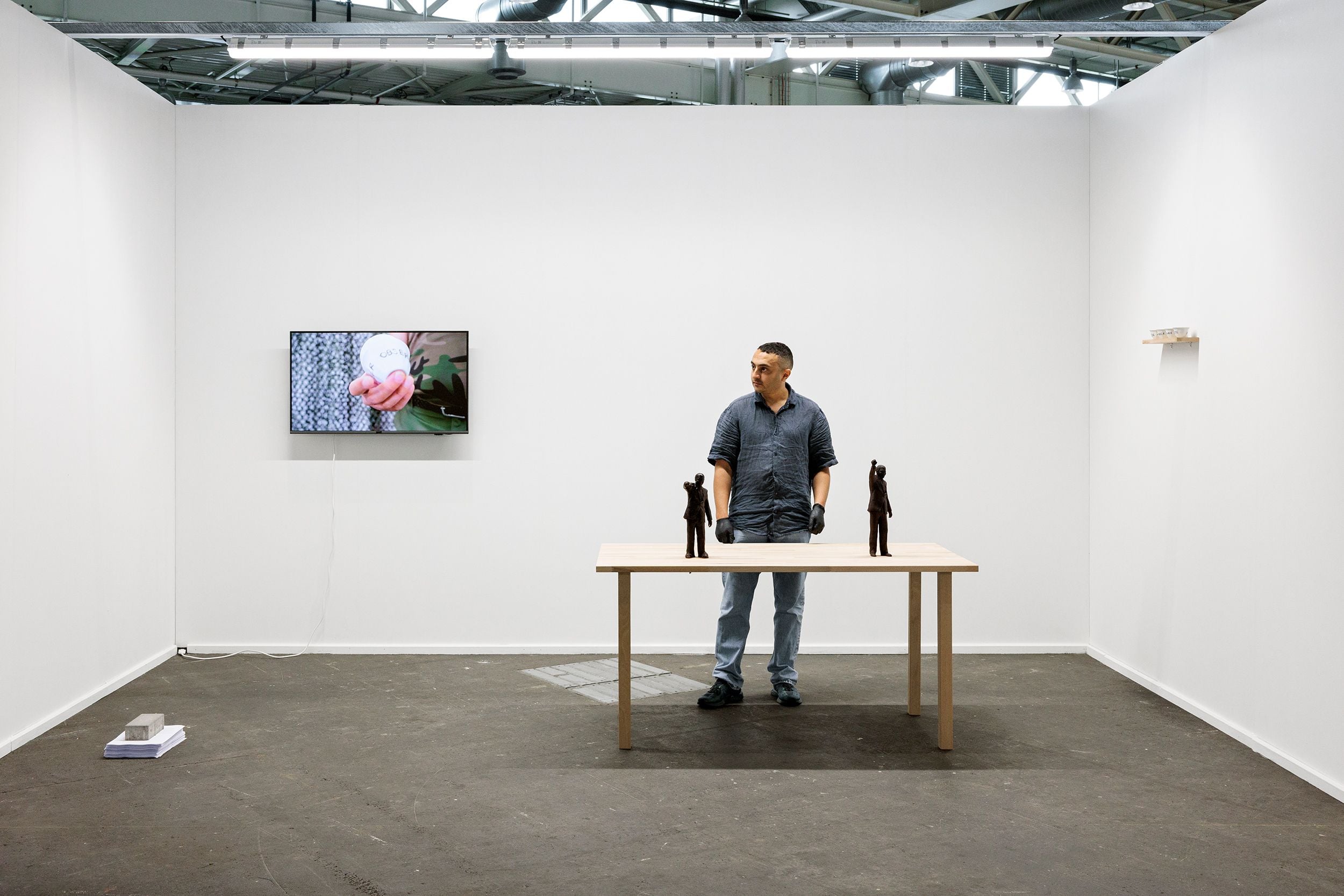
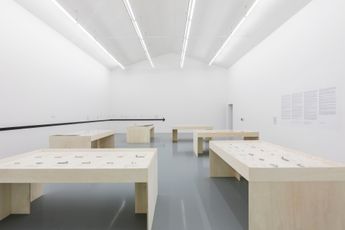
A month later, Hamza was announced as a winner at the annual Swiss Art Awards in Basel. His winning work, Freedom Molasses (2026), was made up of two sculptures made from a sweet date paste, modelled after a six-foot Nelson Mandela statue held in Al-Tira, Ramallah’s wealthiest neighbourhood. Alongside these statues, which were later consumed by the public, was a small shelf holding Arabic teacups, each one bearing the words “Non-member-observer-state”.
Born in Nablus, a city in the West Bank, in 1993, Badran’s elision of satirical commentary under state-mandated propaganda is what makes his art unique, combined with a sentimental reflection on his childhood in Palestine. It is a quiet humour that underpins his practice, uniting his critique of government, enforced sovereignty, and institutional exclusion.
Lydia Eliza Trail: Could you describe the origins of Freedom Molasses?
Hamza Badran: The statue is made from a mould of a 3D scan of a large bronze sculpture of Nelson Mandela in Ramallah. I attended the unveiling of the statue in 2016, and it struck me how a symbol of liberation becomes shared property between political parties, how the heritage of liberatory leaders of these movements of resilience—such as Mandela or Yasser Arafat or Che Guevara—is shared.
“We consume Mandela in the same way that we consume these slogans of the Palestinian state”
The statue was installed in the richest neighbourhood in Palestine, not the refugee camps or villages where the actual struggle lives, which felt cynical. In Islam, usually a statue of a person indicates their status is worthy of worship. The cynicism of presenting such a symbol in an area which does not contain the real struggle was present in my mind while making Freedom Molasses.
As for the material, there is an old story that before the arrival of Islam, non-believers would construct statues of gods out of date paste, a domestic god they could worship indoors. The story goes on to say that if people were hungry, they would eat the god, so I replicated this idea by serving the statue of Mandela to the people of Basel. This connects to some of my earlier billboard works, and we consume Mandela in the same way that we consume these slogans of the Palestinian state.
LET: What was the thinking behind your billboard works?
HB: This was a very early student project. I shot videos of me stealing billboards from the streets of Ramallah and creating large-scale sculptures from them. The State of Nap Tent (2018) sees a large-format plastic advertising billboard for the National Bank of Palestine repurposed into a tent for Al Hadidiyah, a Palestinian Bedouin village in the Jordan Valley, one which is always chased by Israeli settlers.
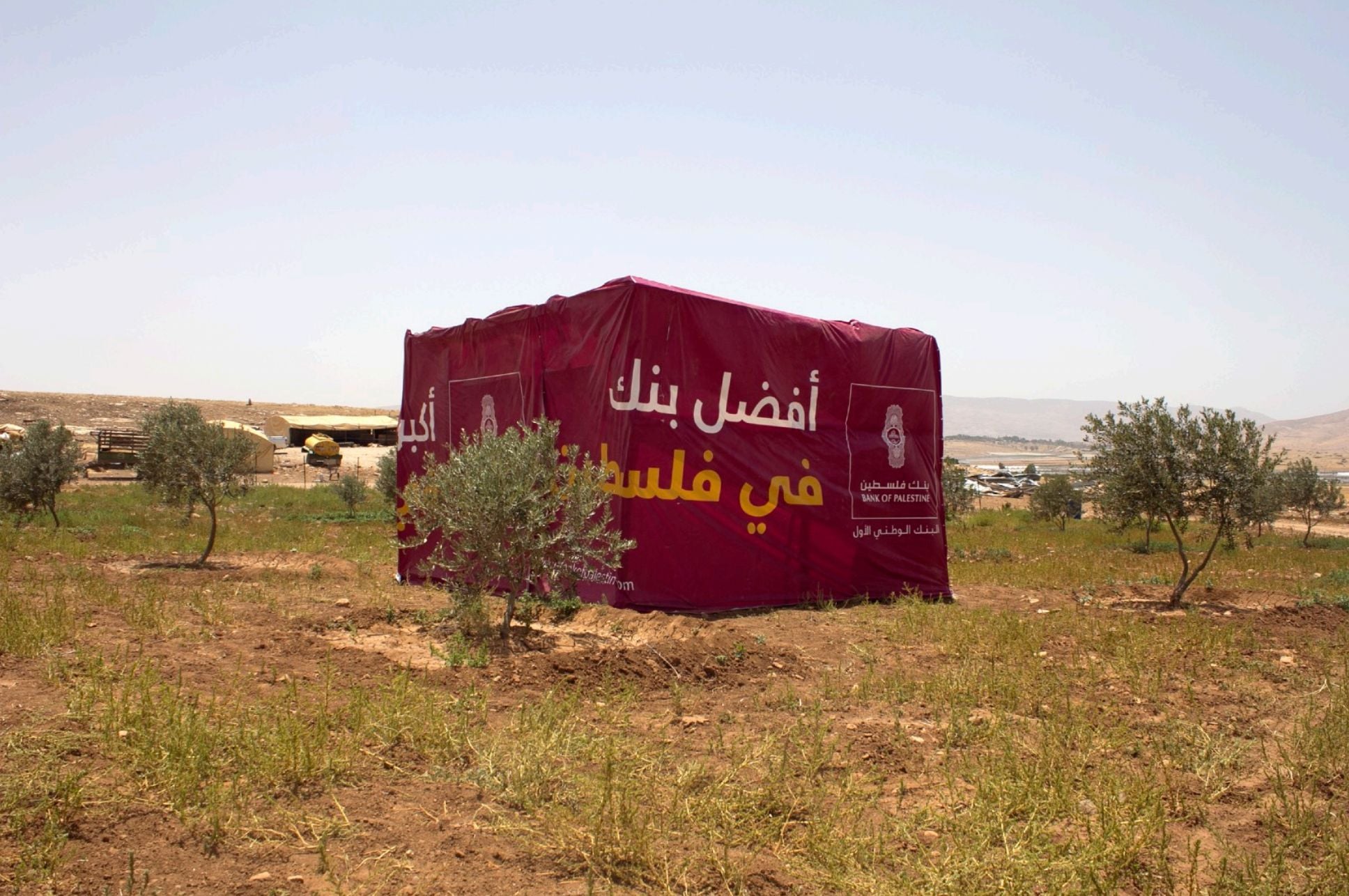
The artwork wasn’t about being a saviour, just about going there and building them a “nap tent”, which is what they asked for. It didn’t save their home. It was a tent which carried the Bank of Palestine slogans such as “The Best Bank in Palestine” and “The Biggest Bank in Palestine”. In this work and Freedom Molasses, there’s this thing of working with political symbols, mocking them, being sarcastic about their purpose.
LET: Do you think art that is classed as political is also allowed to be humorous?
HB: Humour is important to me. People come into the studio and say they don’t like sarcastic work, but I’m the artist—if I want to make fun of something, I will. It’s sarcastic but also critical, questioning the audience, provoking something, even when it’s as simple as building a Mandela statue out of dates and feeding it to people.
There’s an expectation that a Palestinian artist has to be the suffering one, dying for the cause, super serious, reading books, providing solutions for how Palestine should be. There’s so much pressure on political artists because there’s so much performing of political activism generally. I don’t always have to be a solution-provider.
“My daily life is a fight”
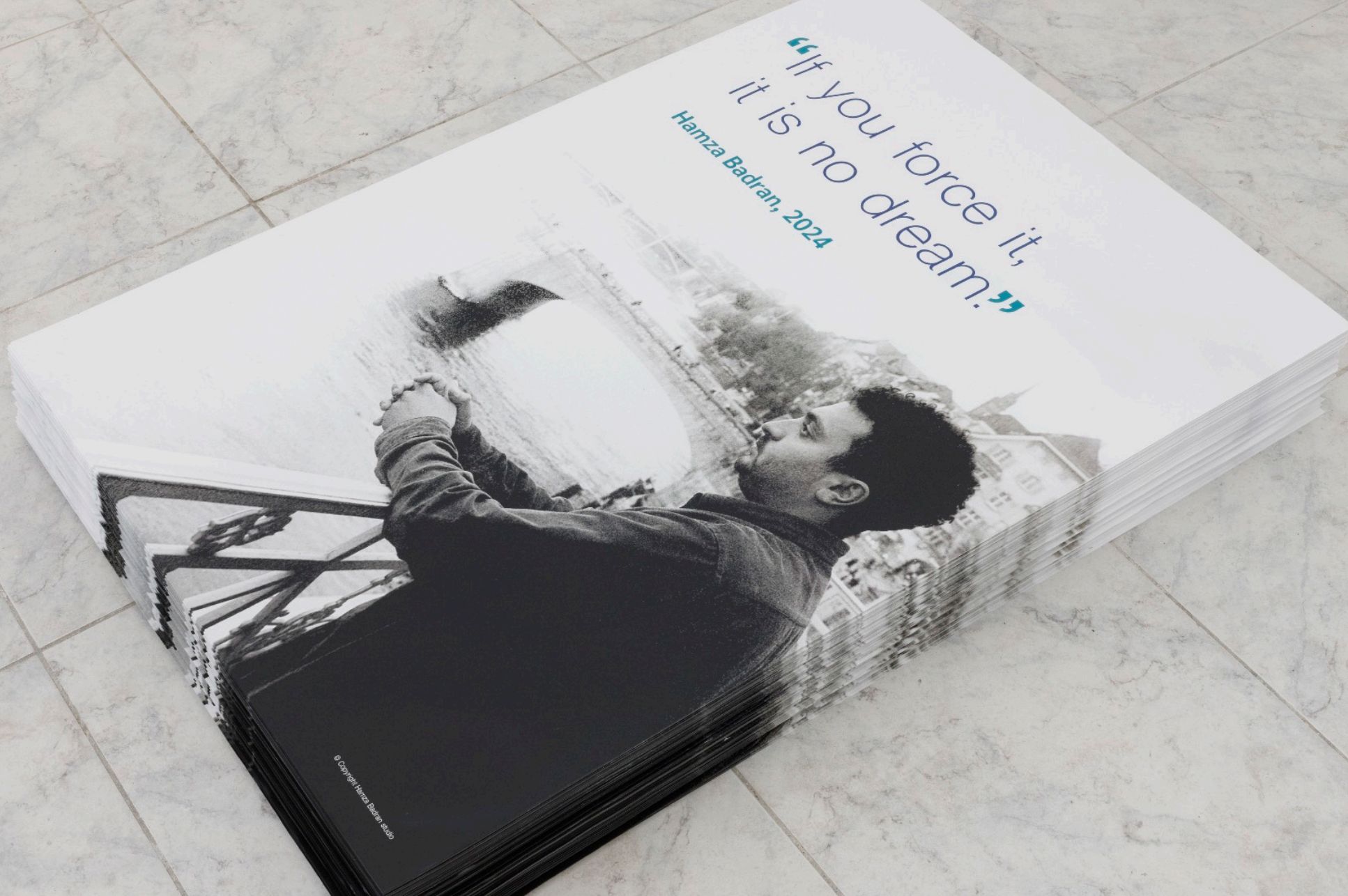
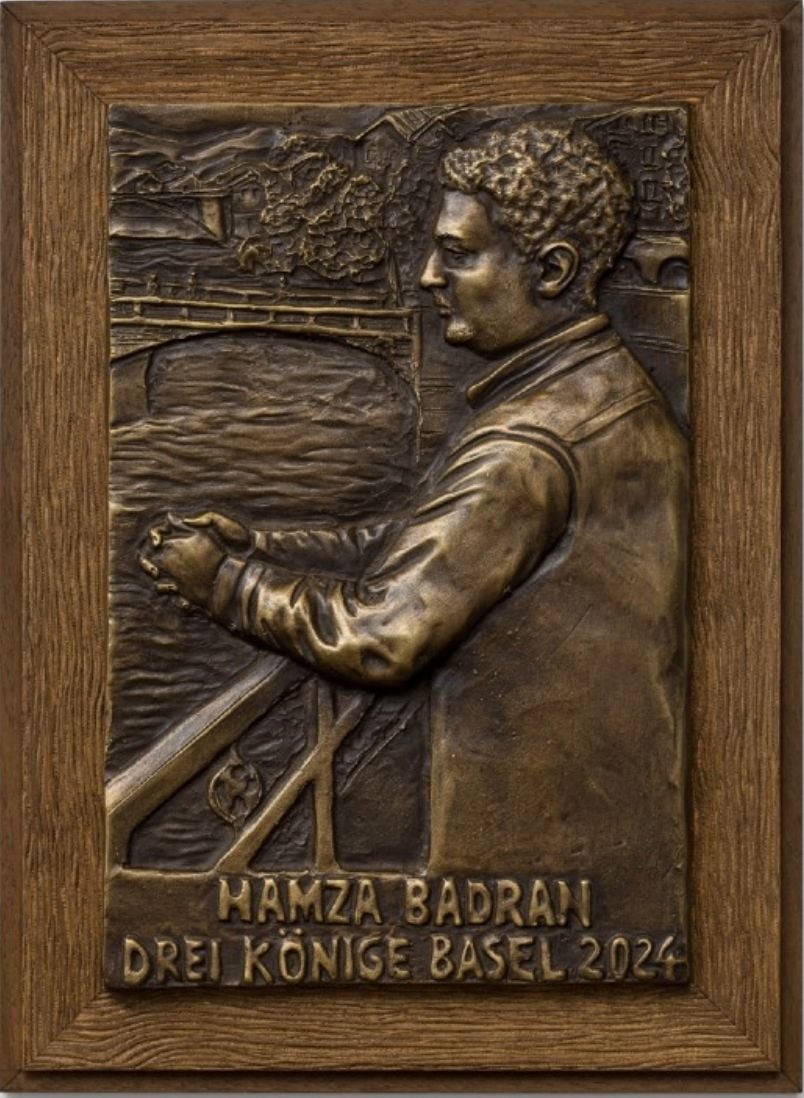
LET: At the 2024 Swiss Art Awards, you showed If You Force It, There Is No Dream (2024), made in the hotel room where Zionist figurehead Theodor Herzl resided during the Fifth Zionist Congress in Basel in 1901. What was the methodology behind the piece?
HB: The room, at Hotel Les Trois Rois in Basel, is still named after him: the Herzl Suite. Inside is a bronze relief portrait of him looking out of the balcony. For Liste Art Fair in 2024, with Gian Marco Casini Gallery, I made a replica with my own image, standing on the balcony recreating this canonical photo. It’s about that icon, but it’s also a criticism of the structural, institutional racism of Basel itself—not only the Zionist project.
I did my bachelor’s at the International Art Academy in Palestine, a 10-year project in Ramallah funded by the Norwegian government. I later attended Basel Art School through a scholarship. But as a Palestinian artist, I had a very difficult time in the city itself and within the art scene: ignored, marginalised, pushed away, investigated… even while I was getting to exhibit my work.
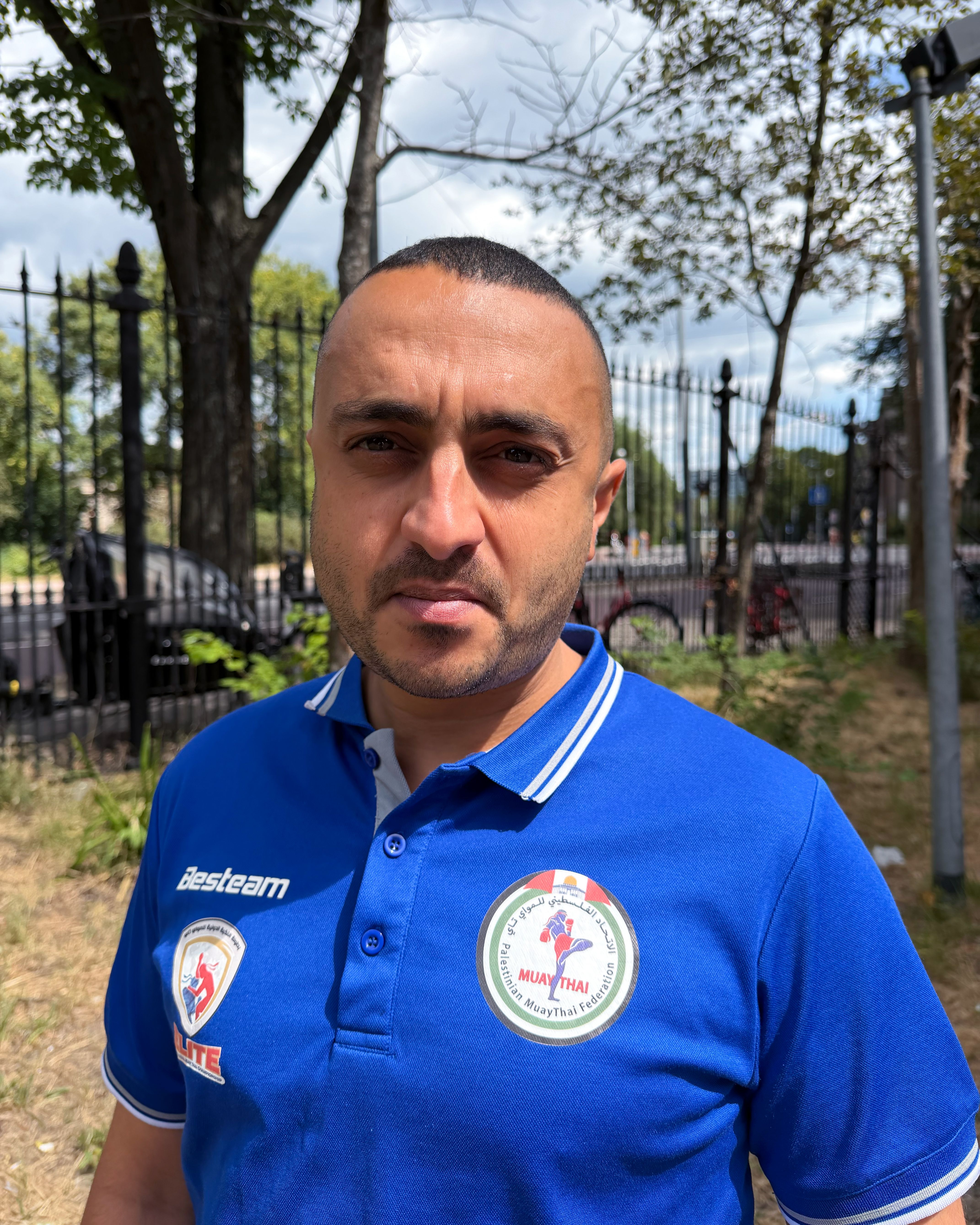
LET: When we met at the Venice Biennale, you were wearing a Muay Thai Palestine shirt, which you’re often pictured in. What does that shirt mean to you?
HB: I have two brothers aged 16 and 23 who both fight for the Palestine Muay Thai Federation. One of them, Amir Al-Amleh, is a world champion; we call him the Palestine Cobra. My daily life is a fight, and I love watching how they fight too, how they’ve built what they have while living in Palestine.
He is always giving me his old shirts because he finds me inspiring, too. Sometimes we compete in who is achieving more. It’s also a fight for the family. We’ve struggled a lot: the first intifada, second intifada, the recent genocide; our family has lost almost 90 percent of what our grandparents inherited since 1967.
My brother and I are now working on together on a new project concerned with the Palestinian male body. In the media, their bodies are always connected with blood, with being killed, being bombed. I try instead to look at the beauty in my brothers; I see them almost like Greek gods. When I talk to them, I just laugh the whole time. That’s why I always carry the T-shirts, because I consider myself a member of their team, of that fight.
LET: If you were going to have coffee and dates with three artists, dead or alive, who would you invite?
HB: Michael Rakowitz, David Hammons, and Emily Jacir. Emily was my teacher in Palestine, and Michael’s work is about hospitality and hostility, which I find inspiring. —[O]
Main image: Hamza Badran, Freedom Molasses (2026) Date Paste. ©Hamza Badran, 2026.









A respected voice in contemporary art discourse.
Focusing on ambitious storytelling and insightful art-world commentary. Ocula Magazine publishes in-depth interviews, critical essays and timely analysis on the artists, exhibitions and ideas driving the global art world.
Learn more about Ocula Magazine
Showcasing the best of the art world.
Ocula partners with galleries from around the world to highlight their artists, artworks and exhibitions. Gallery membership is by application and invitation, with each member vetted by an independent panel.
Learn more about Ocula Membership
Specialises in the sale of major artworks.
Led by a team with deep ties to the world’s leading auction houses, galleries and collectors. Ocula’s advisory team offers bespoke services to high-net-worth clients from around the world who are looking to acquire the best of contemporary and modern art.
Learn more about our team and services