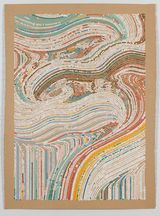
Mechanical Hand, Tyler Hobbs’ first solo exhibition with Unit London explores the interactions between man and machine, digital and analogue, and computer-driven and hand-made creations. Hobbs states that as our lives become increasingly digital ‘there is an imperative for artists to help us develop a healthy relationship with computers - to help us build beautiful things.’
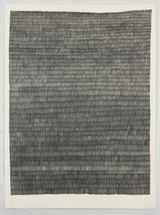
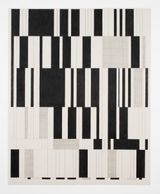
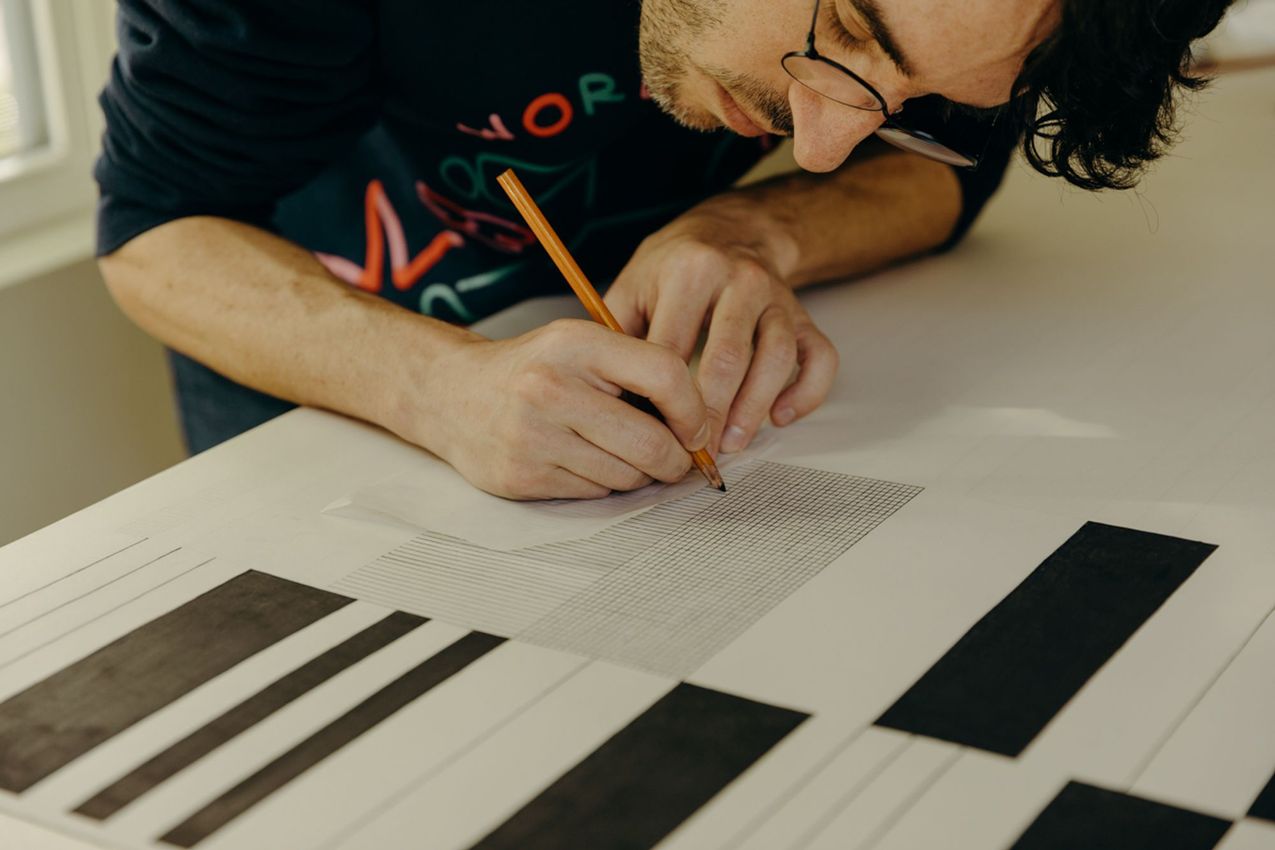
Systems are at the crux of Hobbs’ practice. He is a Generative Artist, meaning he uses autonomous systems to inject randomness into his pieces. In Hobbs’ work, this could include anything from building an algorithm that assigns randomised probabilities to the features in the images it produces such as in Return Zero (2021) to using his hand to execute a methodical, mechanical pattern such as in Inevitable Triumph (2020).
This show aims to expand viewers’ understanding of Generative Art. As a movement, its reliance on systems has resulted in a widespread misconception that Generative Art is always digital and created by algorithms, but Hobbs’ work highlights some of the ways that systems can be integrated into analogue works. Amongst his influences, are artists such as Cy Twombly and Richard Diebenkorn whose practices were exclusively analogue but who often cultivated a generative mindset and created pieces with vivid systemisation.
Then there are influences like Sol LeWitt, the pioneer of conceptual art, whose body of Generative work is widely acknowledged. His Wall Drawing no1118 for instance provided instructions that urged museum-goers to take a pencil to the wall in front of them, place 50 random points across it, and connect these points with straight lines.
Hobbs reflects that like the digital versus analogue dichotomy, Generative Art is not a category with hard boundaries. Instead, it is a spectrum that he describes as more about ‘the methodology and mindset of the artist than anything else.’
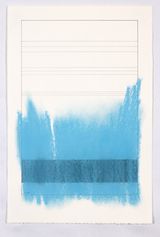
Whether drawing over patterns that plotters (robotic arms directed by computers) have produced such as in By Proxy Blue (2021), or hand-painting designs generated by the algorithms he builds such as in Aligned Movement (2020), Hobbs frequently works in a hybrid manner, crossing and recrossing the physical, digital barrier multiple times and in multiple ways.
To view his work is to engage in the art of discernment, as the eye starts to identify details that are either machine or man-made. In many instances, his work highlights the subtle differences that emerge in phenomena as seemingly simple as a line drawn with a pencil. In other cases, however, distinguishing between what is machine-made and what is human-made becomes more challenging. In these moments, the dichotomy between digital and analogue starts to unravel, and in its place emerges a sense of creative collaboration between Hobbs, and computers and machines.
‘I want people to wonder how the pieces are created and what was by hand and what is by computer, and what are those tell-tale signs,’ he says. ‘A lot of my work exists in that ambiguous space between the two.’
One of the most distinctive characteristics of the machine or computerised features is a level of precision that would be almost impossible to achieve organically. If the technological inputs embody order, however, the human inputs embody chaos, injecting a sense of freedom and spontaneity that algorithms and plotters struggle to achieve. This contrast can be observed most clearly in the sister pieces Untitled and Inevitable Triumph (2020). In this series, Hobbs designed and executed a system for covering the sheet of paper with rows of graphite, but one is created by hand and the other with a plotter. In many ways the outcome is surprising - yes, the plotter is more precise, but amongst such exactness the imperfections are more pronounced, reminding us of the ways that machines, like humans, err.__ Here the practice of Agnes Martin comes to mind and her meticulously ordered geometry that co-existed in harmony with the imperfections of the human hand. Referring to Martin’s work for inspiration for many years, Hobbs too embraces the fact that it is the quivering nature of human presence that leaves the viewer with a quiet feeling of introspection.
The series reflects on how machines and humans create differently, utilising systems in divergent but complementary manners. As well as highlighting the distinction between man and his machines, Hobbs’ show is a testament to the ways we can successfully integrate the digital into our lives, work, and art in a manner that does not alienate but enrich us.
Unit seeks to preserve the artist’s essential role as the flag-bearer of creativity in our future.

A respected voice in contemporary art discourse.
Focusing on ambitious storytelling and insightful art-world commentary. Ocula Magazine publishes in-depth interviews, critical essays and timely analysis on the artists, exhibitions and ideas driving the global art world.
Learn more about Ocula Magazine
Showcasing the best of the art world.
Ocula partners with galleries from around the world to highlight their artists, artworks and exhibitions. Gallery membership is by application and invitation, with each member vetted by an independent panel.
Learn more about Ocula Membership

Specialises in the sale of major artworks.
Led by a team with deep ties to the world’s leading auction houses, galleries and collectors. Ocula’s advisory team offers bespoke services to high-net-worth clients from around the world who are looking to acquire the best of contemporary and modern art.
Learn more about our team and services