

The art world in focus
Subscribe to our newsletter for news and insights on artists, galleries and exhibitions.
She came into the world in 1926. Ruth was her American name. Her given name, Aiko (“beloved child”), was taken away after a primary-school teacher suggested her parents should give it up. This is not dissimilar to how I lost my own Japanese name. Later, she gave the name Aiko to her own daughter, her own small beloved. I think Ruth Asawa’s work is characterised by her ability to give what she herself did not receive: a happy, playful childhood; wire forms that were beautiful instead of threatening; public artworks that enabled whole communities to process what they had collectively experienced.
The writer Madeline Thien, discussing the physicist Carlo Rovelli, has said: “A stone, [Rovelli says] is ‘a process that for a brief moment manages to keep its shape, to hold itself in equilibrium before disintegrating again into dust’. When I look up from his words, the surfaces around me—book, table, chair, trees, rain—reveal themselves as made out of time, built from it.”
When I look at Asawa’s wire sculptures, paintings and bronze casts, I see the events and conditions that shaped her inner and outer life made into a series of objects. The horrors of the Japanese American internment camps, the rise of mid-century industrial innovation, modernist architecture and American abstract expressionism, the changing landscapes of California, the contested role of women in society across the 20th century, and changing approaches to children’s education.
Asawa’s work can serve as a record of what it was like to be a Japanese American woman artist living inside these events and conditions. At the same time, as she liked to say, she was “a minority of one”. Both can be true. As she knew, and as the tenets of Zen Buddhism taught her, “everything is connected, continuous”. I am grateful to connect to Ruth Asawa, in my own way, and to be influenced by the way she saw the world: as one continuous form.
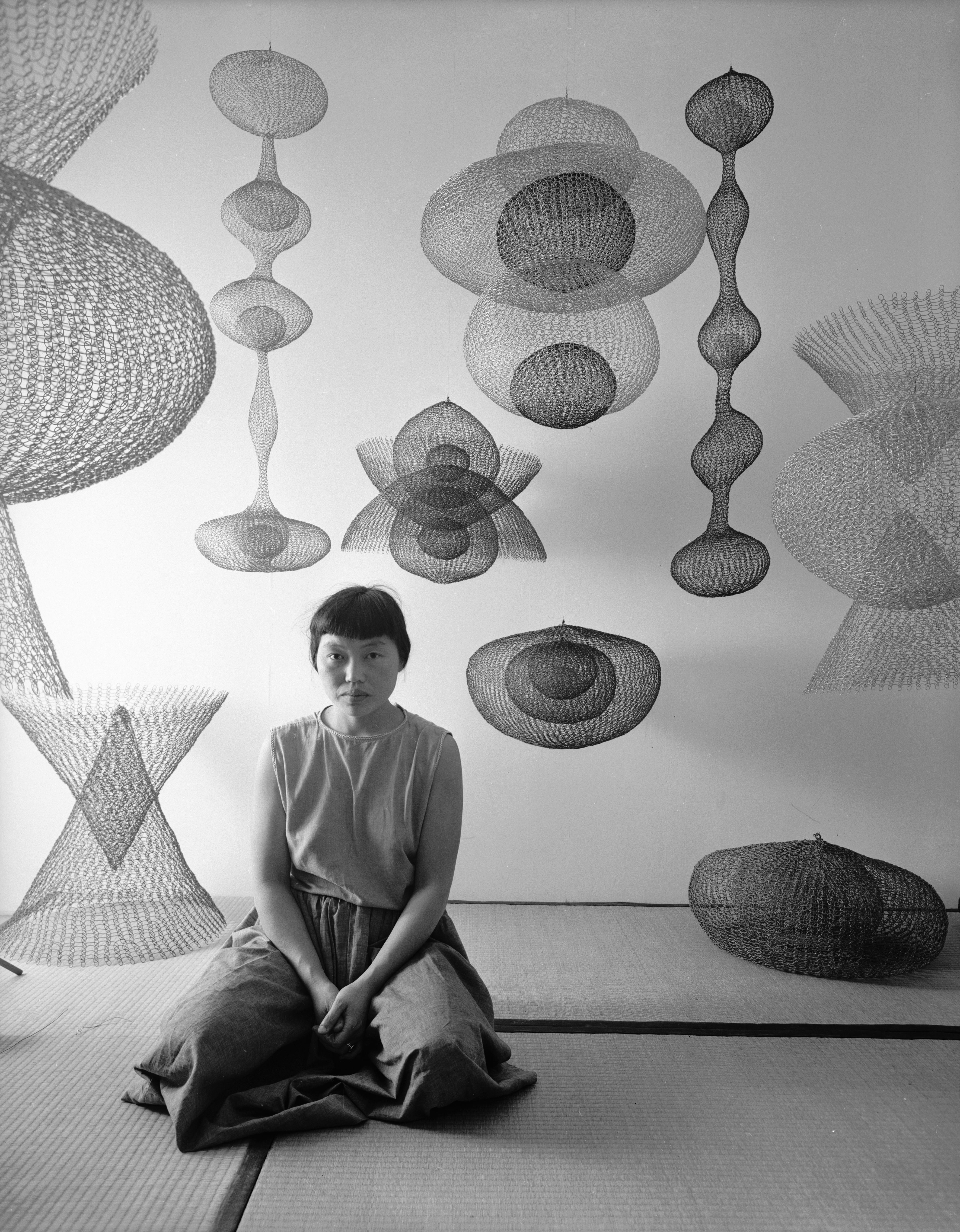
It starts with her face. She stares out at me from a picture taken almost 30 years before I was born. Her fringe is thick and uneven, bluntly cut as if she’d recently wielded a pair of kitchen scissors. She looks like me, with the same micro-bangs, the same high cheekbones, button nose, curved upper lip and soft arms. We could be friends, I think. But she is more at ease than I am or can be, then. She seems focused and calm there on the tatami, happy in her body.
Later, I learn she is a dancer at Black Mountain College and it makes sense: the graceful shape she inhabits even at rest, among all her other elegant shapes. She is determined for her perspective to decorate the space around her and look back at her. By the time I first see this picture, all I have managed to make is a shop on Etsy that sells embroidered Christmas decorations, and half a novel draft.
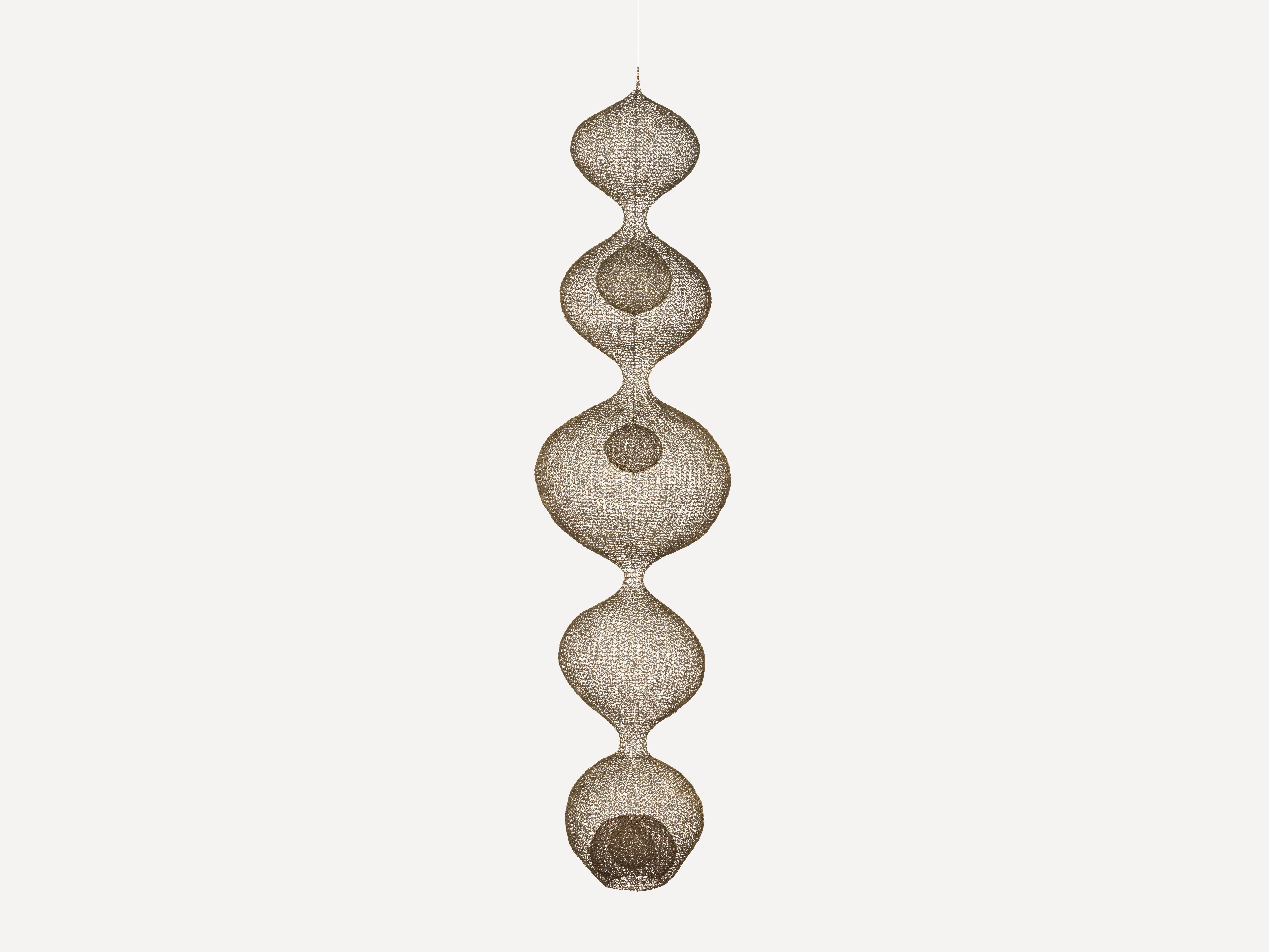
I see Asawa’s sculptures at the Museum of Modern Art in New York City and leave with a print of these spheres, hoping to bring some of their magic with me. But I can’t bring the light or shadows they refract, the way against the surrounding wallsthe orbs reproduce themselves again and again in different combinations depending on the angle of the sun, or my own gaze. I can’t walk around them, taking in their gestational forms, the opposite of the plinthed statues of men that I’ve studied at university.
This sculpture floats. It makes me think of fruit bowls and wicker baskets, and the continuous hours spent weaving by generations of women. With these spheres, Asawa reveres the work done by women—whether that be gestation or craft or manual labour—and insists that there are no boundaries or choices to be made between them.
For Asawa, there is no choice between being an artist or mother, a perennial question I have grappled with over the years. She makes her work surrounded and interrupted by six children and still she continues. For her, the work is inevitable, flowing with no harsh angles or right turns.
Asawa spends part of her childhood living in a horse stall on the Santa Anita racetrack. She also lives with her mother and five siblings in a Japanese American internment camp encircled by barbed wire, then a similar camp in Rohwer, Arkansas. Her father, a farmer, is interned in New Mexico. She hardly speaks about this experience until she is invited to make the Japanese American Internment Memorial in San Jose, in 1994—a bronze bas-relief rising from marble.
But, to me, it seems like her entire body of work—her whole life—is a memorial to the livelihoods that were lost, the families that were ruptured, and the culture that was interrupted by Roosevelt’s Executive Order 9066 that resulted in the forcible relocation and incarceration of 120,000 people of Japanese descent.
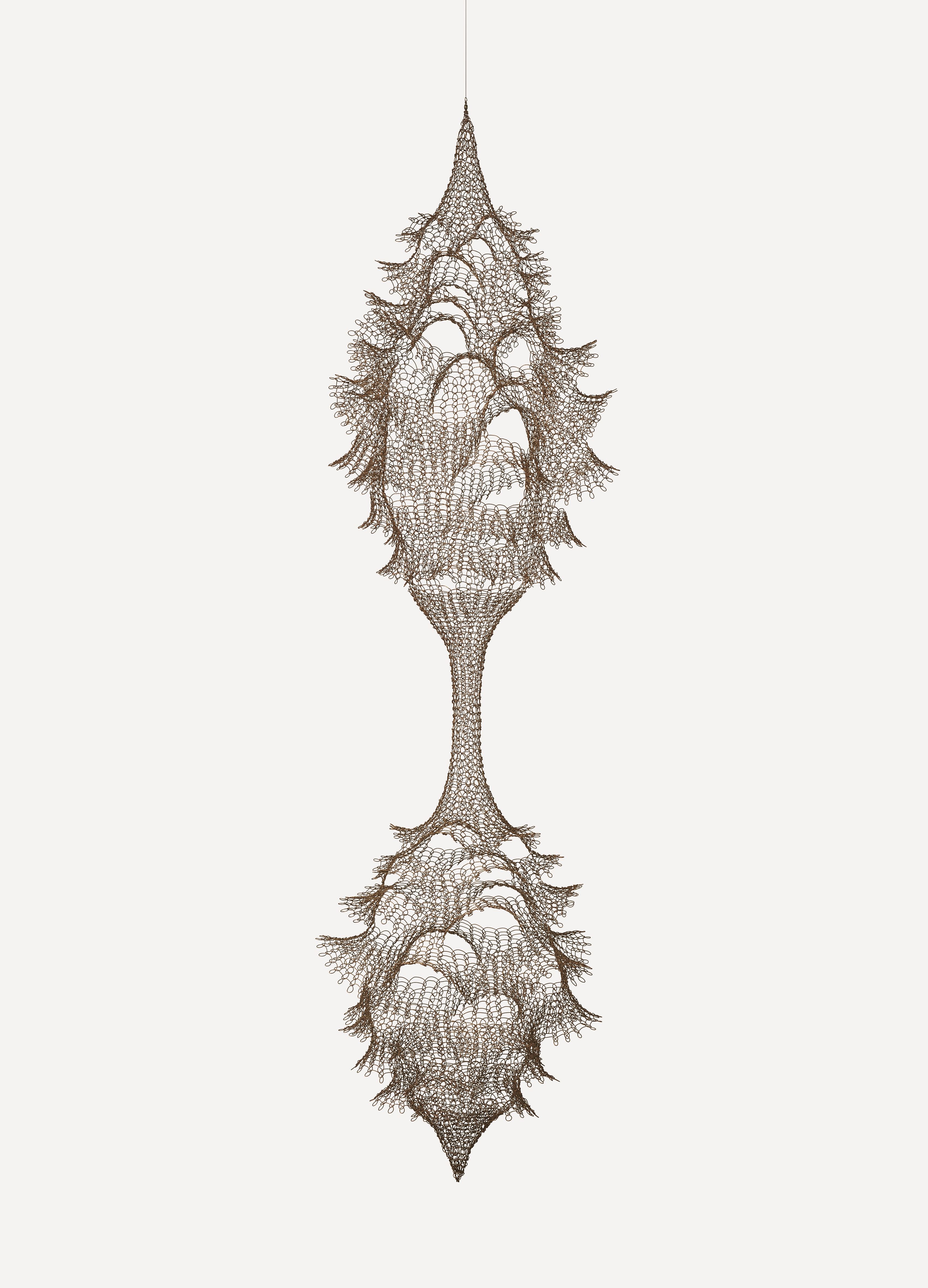
During her art school education, Asawa realised that “wire can play”. As I take in this “open-window” sculpture at MoMA with its feathered wings of wire, I see the trap door she escapes through, the artistic life she nurtures, the multitude of options that she refuses to let go of—even when it must, at times, seem like there is no way out. While I walk around the gallery, khaki-clad ICE agents with guns on their hips and balaclavas round their mouths are zip-tying and detaining local street vendors downtown on Canal Street.
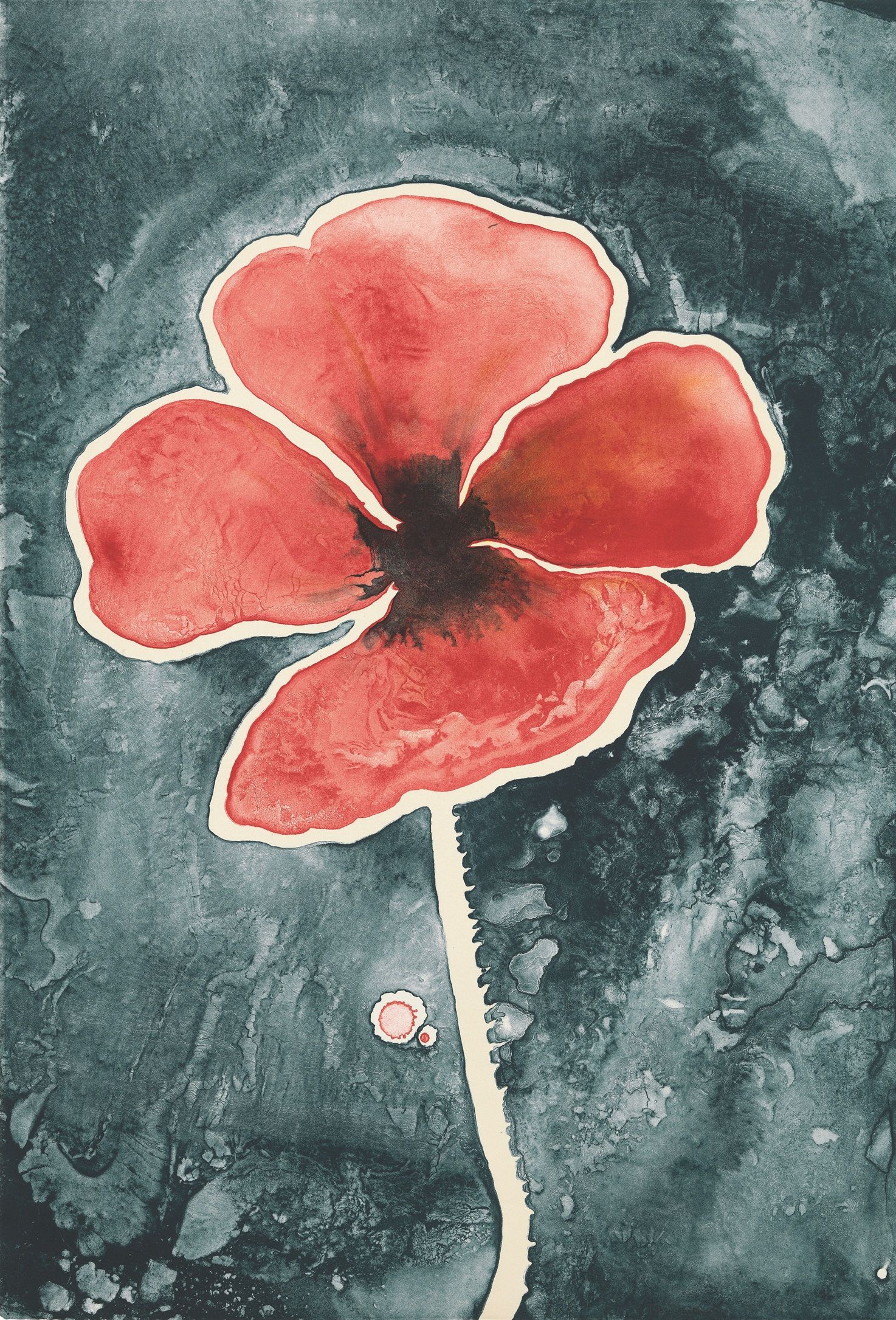
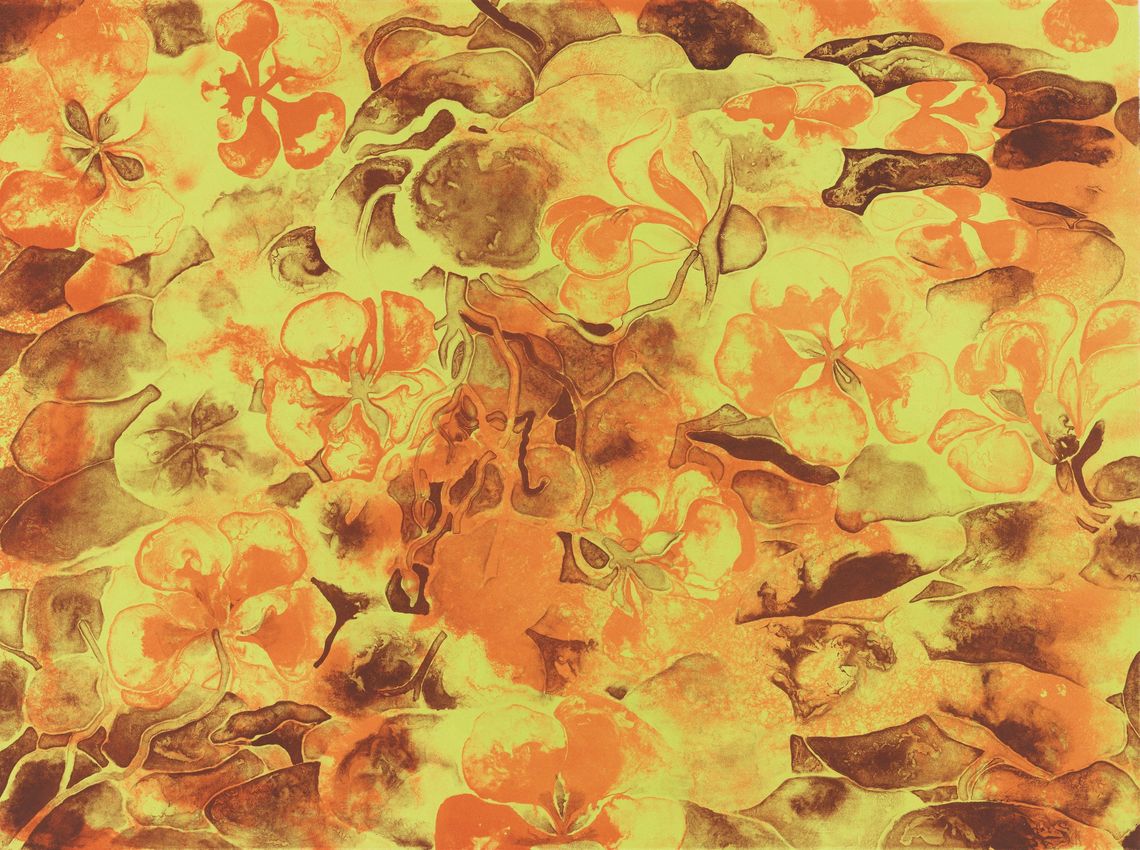
When I think of California poppies, I think of the orange ones I saw scattered around the Mendocino coast, three hours north of San Francisco, while there on a writing residency in Spring 2022. I’d leave my laptop on the table in the wooden cabin where I planned to finish my novel draft and wander through the garden. The bright faces of the orange flowers cheered me on—I never saw a red one there.
Does Asawa see red poppies around her home, or does she choose this subject because of its other connotations—the blood in the fields during the First and Second World Wars, or further back to the Opium Wars between Britain and China? Or is she not thinking of any of that? In Japan, the red poppy signifies good times and romance. That’s what I think of here. A fun flower in full bloom, protected by a shining border of blank space from the darkness that surrounds it.
I wonder about the red dot and the smaller one beside it. Are they intentional? I think so—to me they are seeds, waiting for their turn to blossom. Asawa makes this lithograph in 1965; the Civil Rights Act of 1964 and the Voting Rights Act of 1965 has just passed. Two years later, so does Loving v Virginia, the landmark ruling that strikes down laws prohibiting interracial marriage, making Asawa’s union with her husband, Albert Lanier, legal in every state.
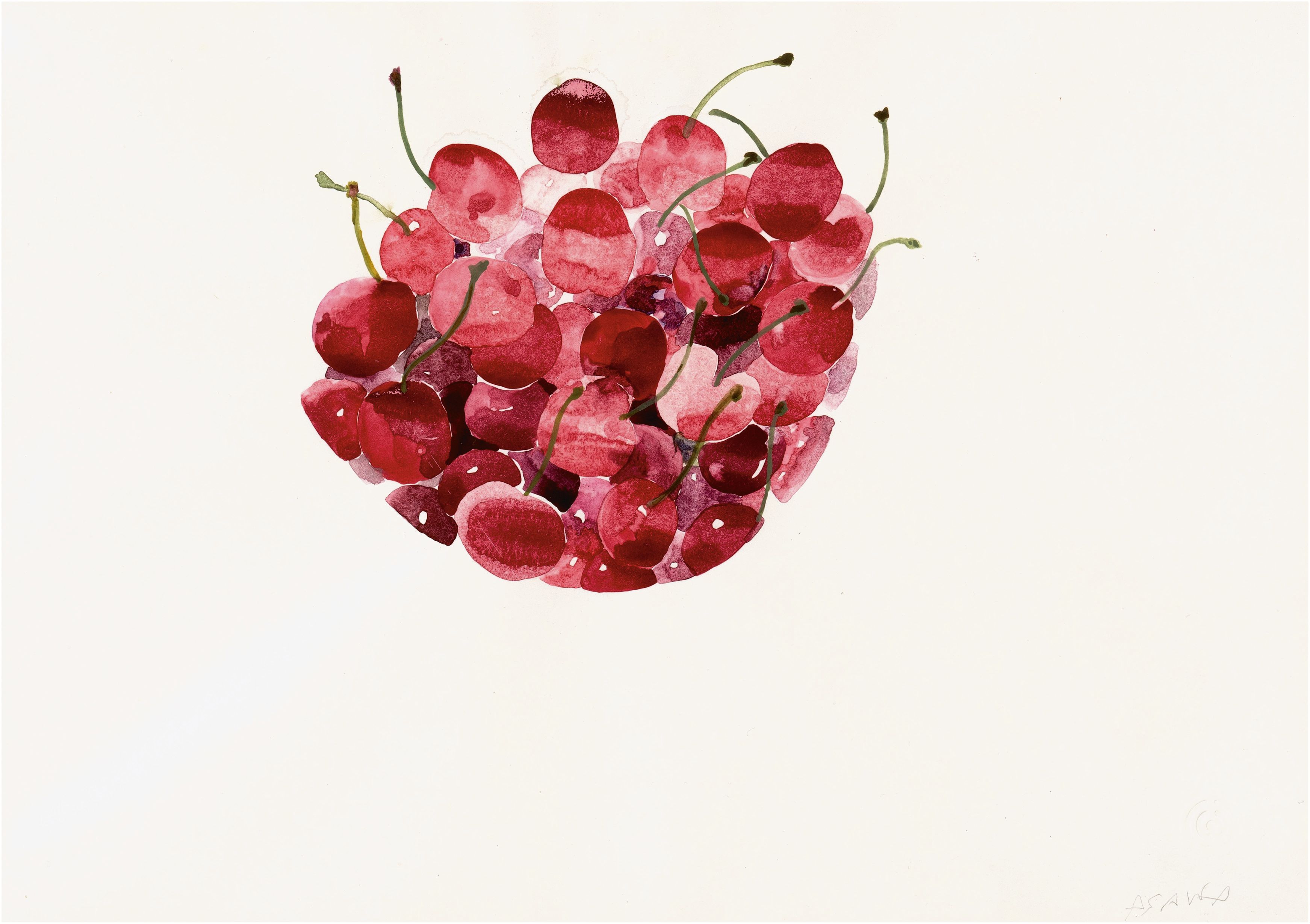
What a joy this painting is. A joke, an invitation and a meditation all in one. It’s called Cherries in a Bowl but the ruse, of course, is that there is no bowl that we can see. Just ripe, juicy fruit waiting to be plucked from the heap, their tight, shiny skins pressing against an invisible boundary. Here Asawa is again, towards the end of her working life, making the interior exterior, just as her wire forms have no inner or outer, each one a Möbius strip.
Is she taking the advice of her old tutor, Josef Albers, and drawing what she can see with her own eyes, even if she knows that a glass bowl is there? Is she making a mockery of any border that tries to claim or contain the gifts that are held within? Or is she acknowledging some unseen and undeniable force that supports the cherries and stops them from scattering to the ground? Perhaps she is invoking the Zen Buddhist concept of “emptiness”, and the Heart Sutra that states “Form is emptiness, emptiness is form”—that a cup is empty of “intrinsic cupness” without the tea that comes to fill it. In that case, in this painting it’s the cherries themselves that make the bowl, that give the bowl its bowl-ness.
In Asawa’s world, things exist only in relation to each other. A form becomes another form with no break between them. And I exist only because she does. —[O]
A respected voice in contemporary art discourse.
Focusing on ambitious storytelling and insightful art-world commentary. Ocula Magazine publishes in-depth interviews, critical essays and timely analysis on the artists, exhibitions and ideas driving the global art world.
Learn more about Ocula Magazine
Showcasing the best of the art world.
Ocula partners with galleries from around the world to highlight their artists, artworks and exhibitions. Gallery membership is by application and invitation, with each member vetted by an independent panel.
Learn more about Ocula Membership
Specialises in the sale of major artworks.
Led by a team with deep ties to the world’s leading auction houses, galleries and collectors. Ocula’s advisory team offers bespoke services to high-net-worth clients from around the world who are looking to acquire the best of contemporary and modern art.
Learn more about our team and services