






SIMON HANTAÏ
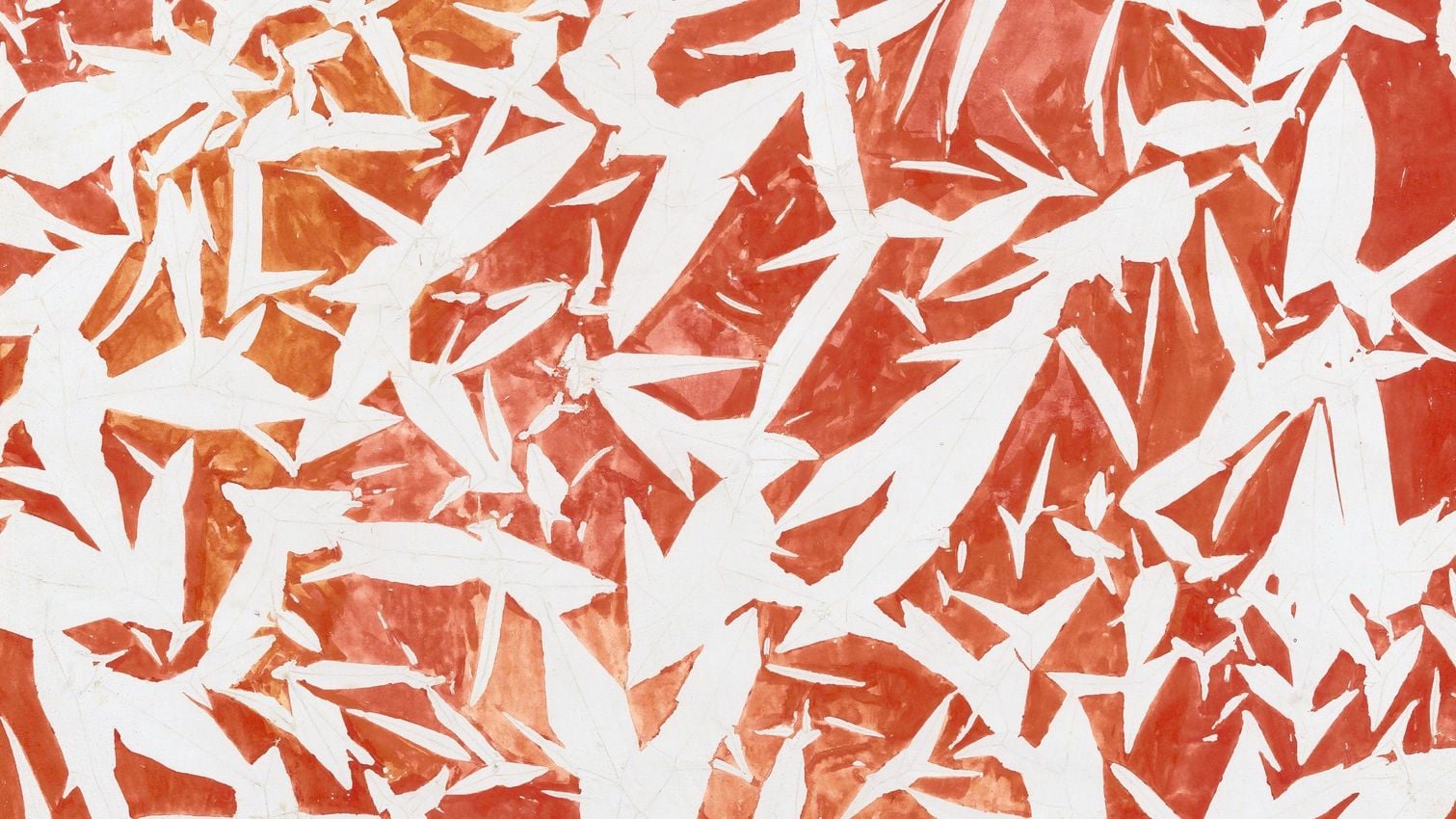
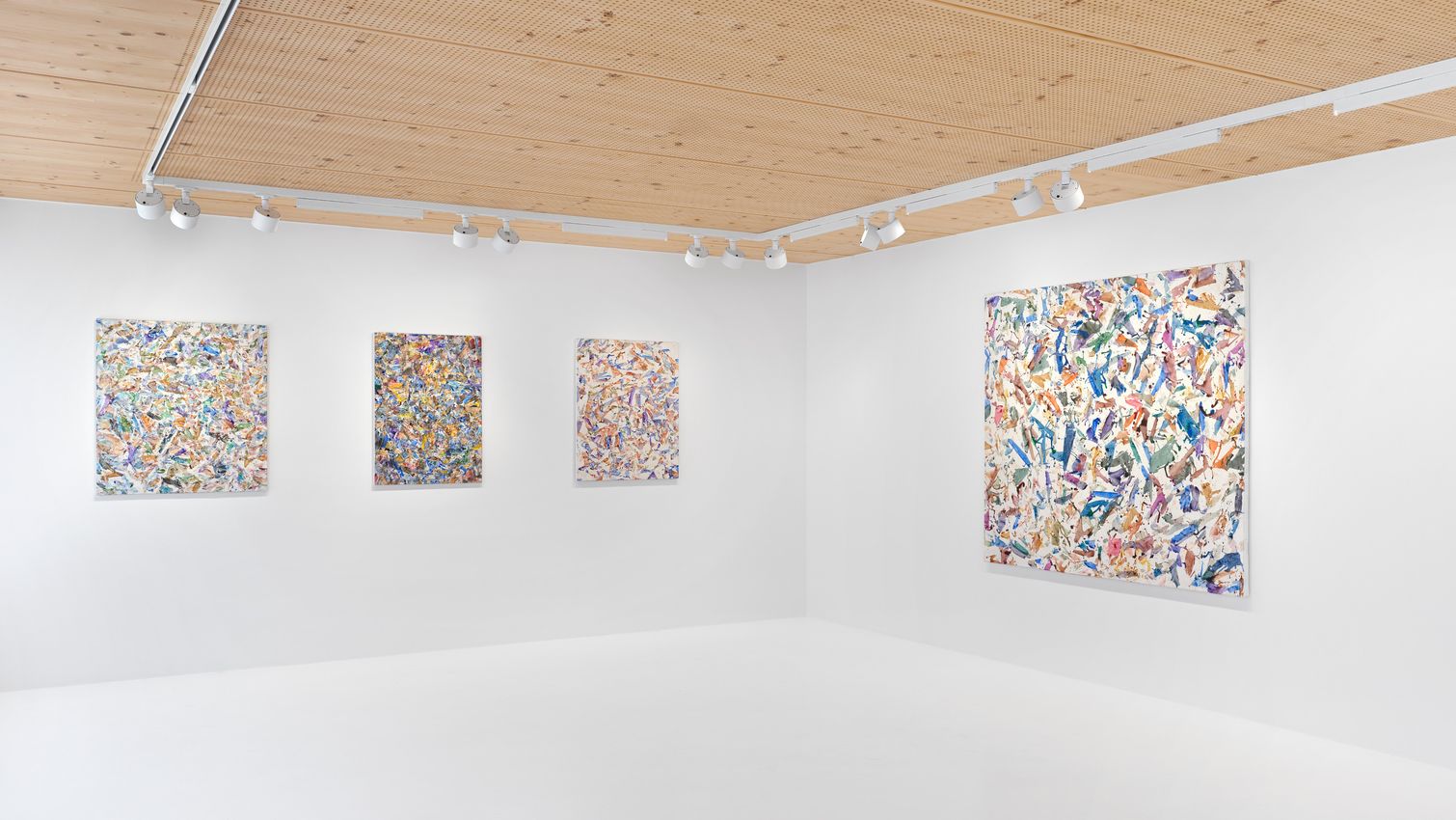
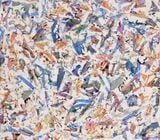
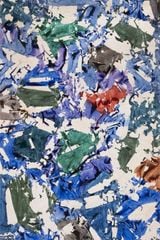
1922-2008, HungaryKnown for his kaleidoscopic abstract works, Simon Hantaï (1922–2008) originated the technique of pliage (folding), in which a canvas is crumpled and knotted, uniformly painted over, and then spread out to reveal a matrix of alternations between pigment and ground. Born in Bia, Hungary, Hantaï studied at the Budapest School of Fine Arts from 1941 to 1946. In 1948 he moved to Paris after receiving a government grant to study there; after his grant was later revoked in the wake of the escalating Sovietisation of his homeland, he decided to stay. In Paris, he met André Breton in December 1952 and quickly became associated with the Parisian Surrealists, completing several fantastical animal-themed paintings before encountering the work of Jackson Pollock and breaking with the Surrealist ideologies in 1955. Pollock’s action paintings and the work of the Abstract Expressionists directly inspired Hantaï’s own turn toward monumentally scaled abstraction.
Hantaï began creating pliage paintings in 1960, conceiving of the process as a marriage between Surrealist automatism and the allover gestures of Abstract Expressionism. The technique dominated the work he made during the rest of his career, re-emerging in diverse forms–sometimes as a network of crisp creases of unpainted canvas spanning the composition, and at other times as a monochrome mass manifesting in the centre of an unprimed canvas. Hantaï left Paris and moved to Meun, France, in 1966, becoming a French citizen that year. He gained increasing recognition in France throughout the 1960s and 1970s, culminating in his selection as the country’s representative at the 1982 Venice Biennale. Months later, however, he withdrew from the public eye and chose not to exhibit new works until 1998, when he ended his self-imposed retreat. In 2008 Hantaï died at his home in Paris, leaving behind a corpus of fractal-like compositions whose surfaces exist in flux between deliberate and arbitrary mark making.
Courtesy Gagosian







Explore and Follow Artists Shaping Contemporary Art
A respected voice in contemporary art discourse.
Focusing on ambitious storytelling and insightful art-world commentary. Ocula Magazine publishes in-depth interviews, critical essays and timely analysis on the artists, exhibitions and ideas driving the global art world.
Learn more about Ocula Magazine
Showcasing the best of the art world.
Ocula partners with galleries from around the world to highlight their artists, artworks and exhibitions. Gallery membership is by application and invitation, with each member vetted by an independent panel.
Learn more about Ocula Membership
Specialises in the sale of major artworks.
Led by a team with deep ties to the world’s leading auction houses, galleries and collectors. Ocula’s advisory team offers bespoke services to high-net-worth clients from around the world who are looking to acquire the best of contemporary and modern art.
Learn more about our team and services