Press Release

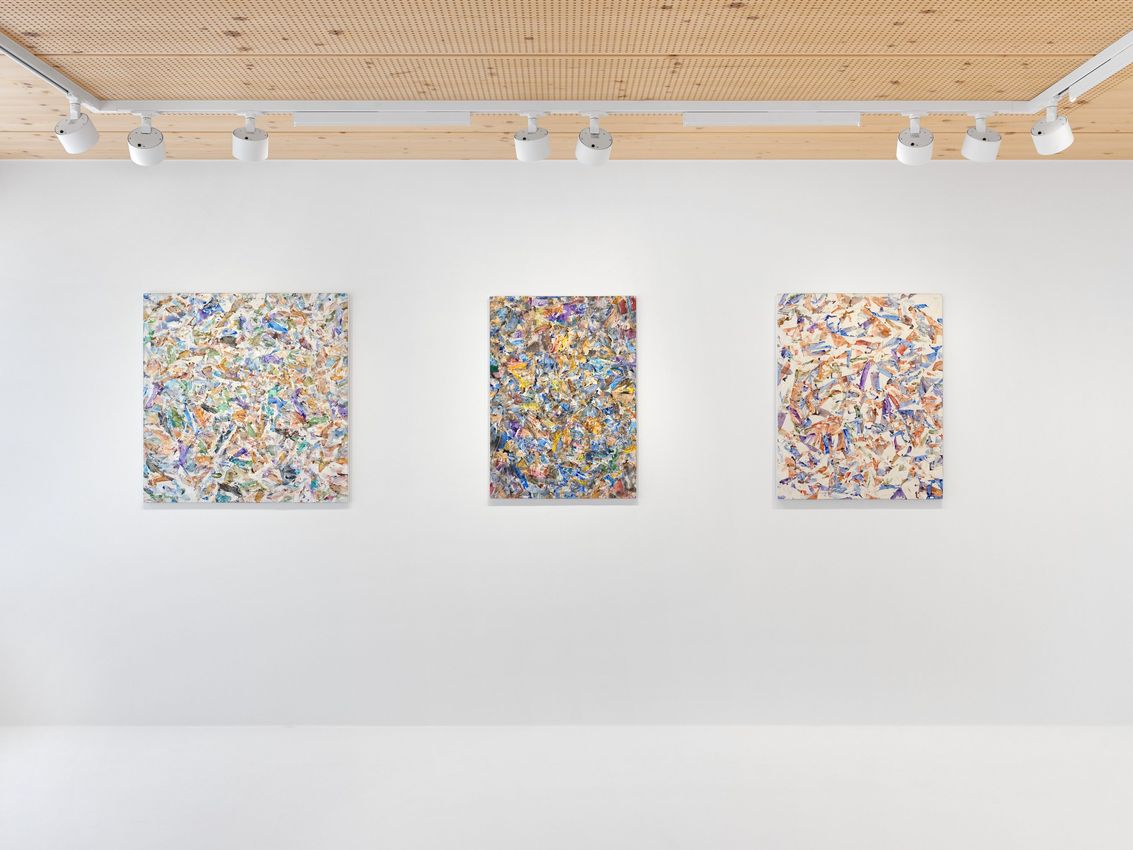
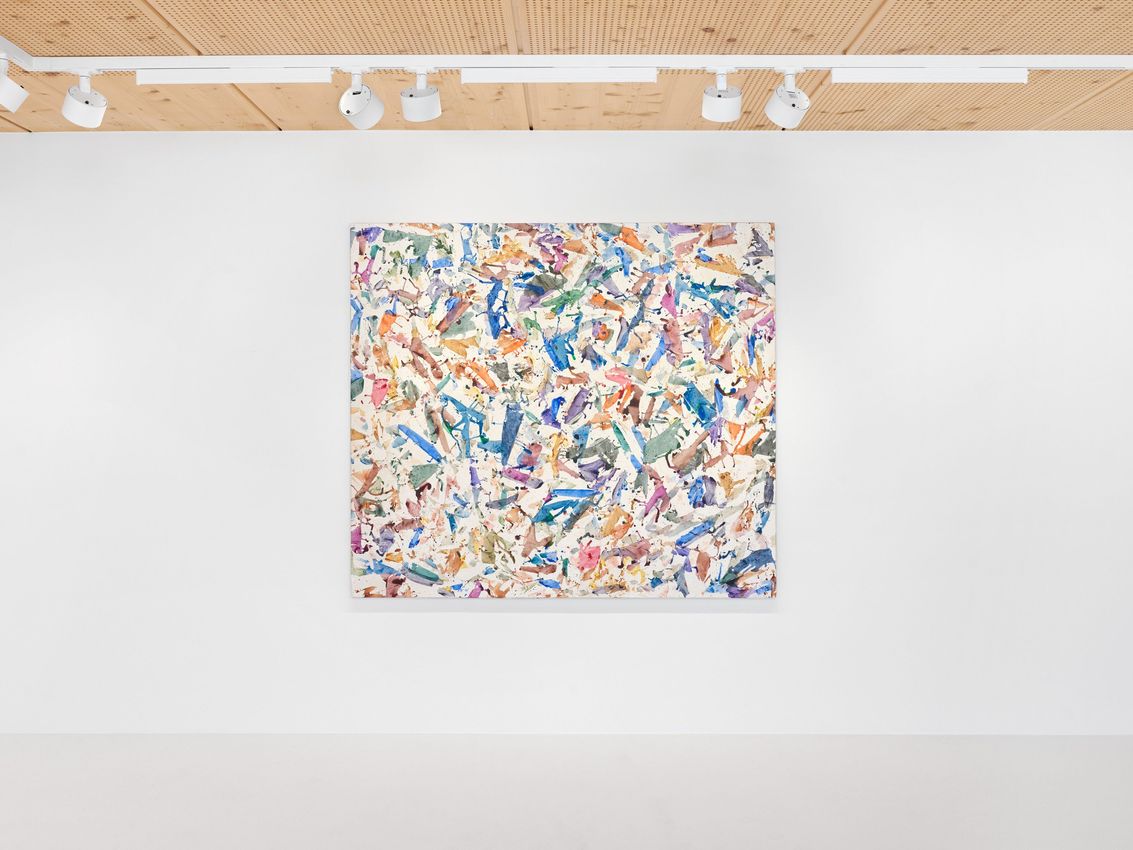
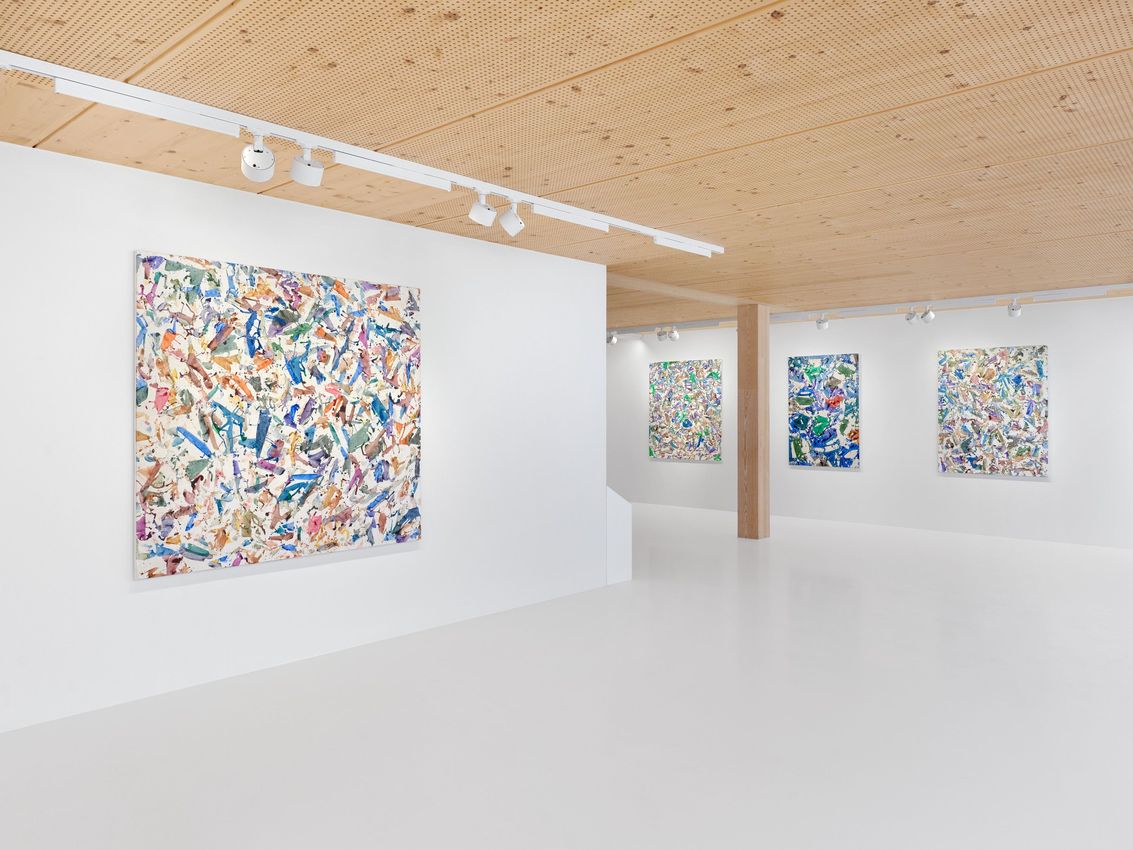
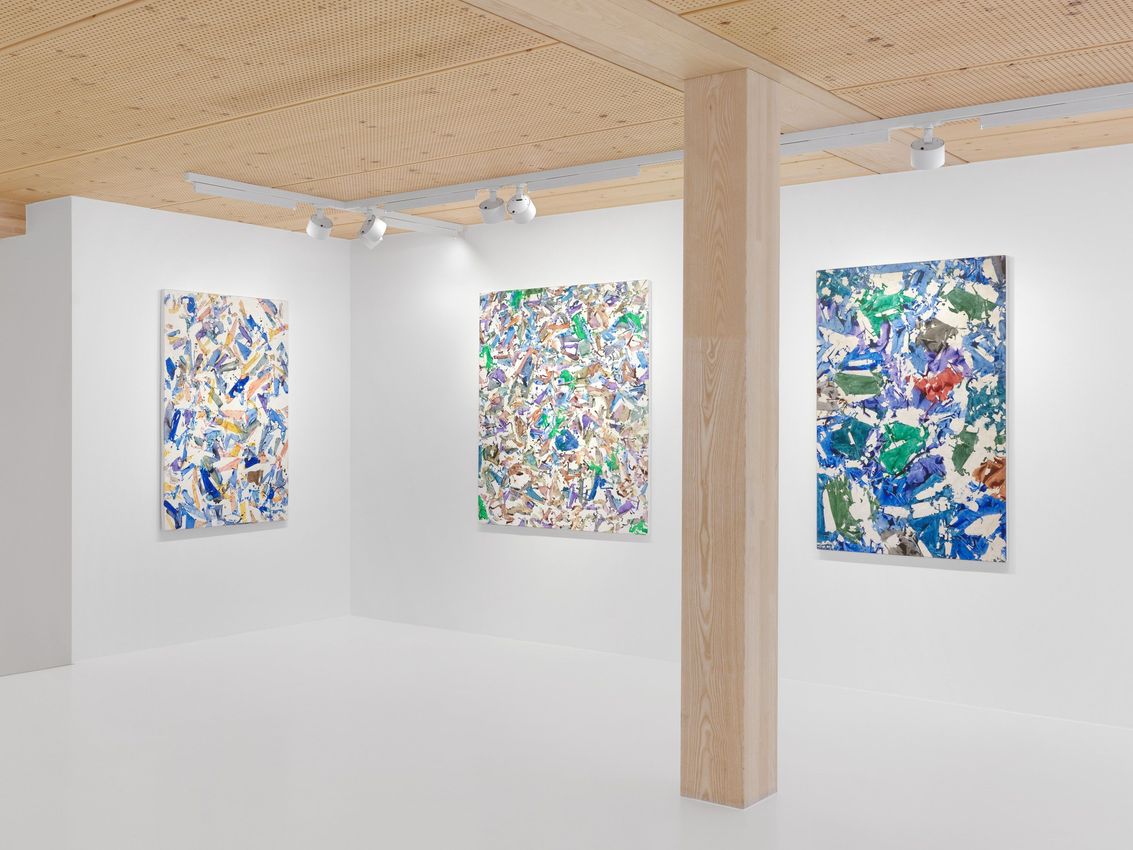
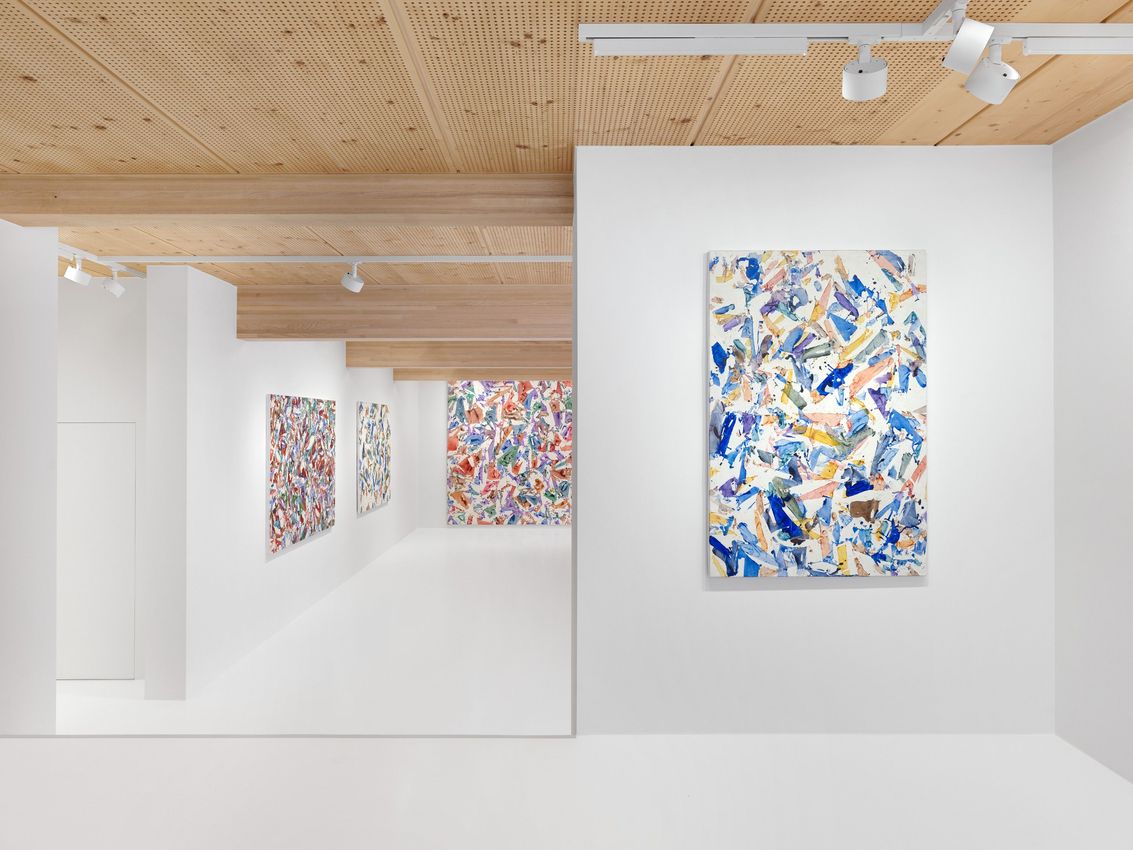
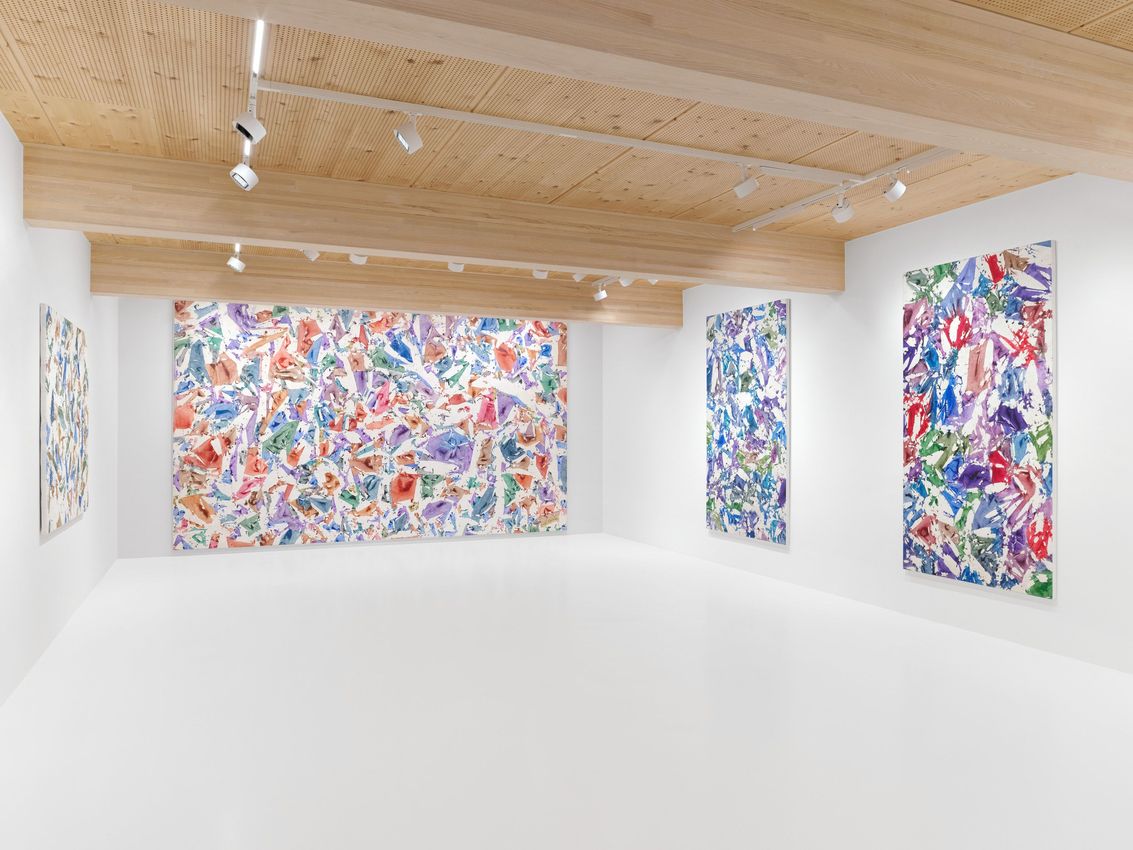
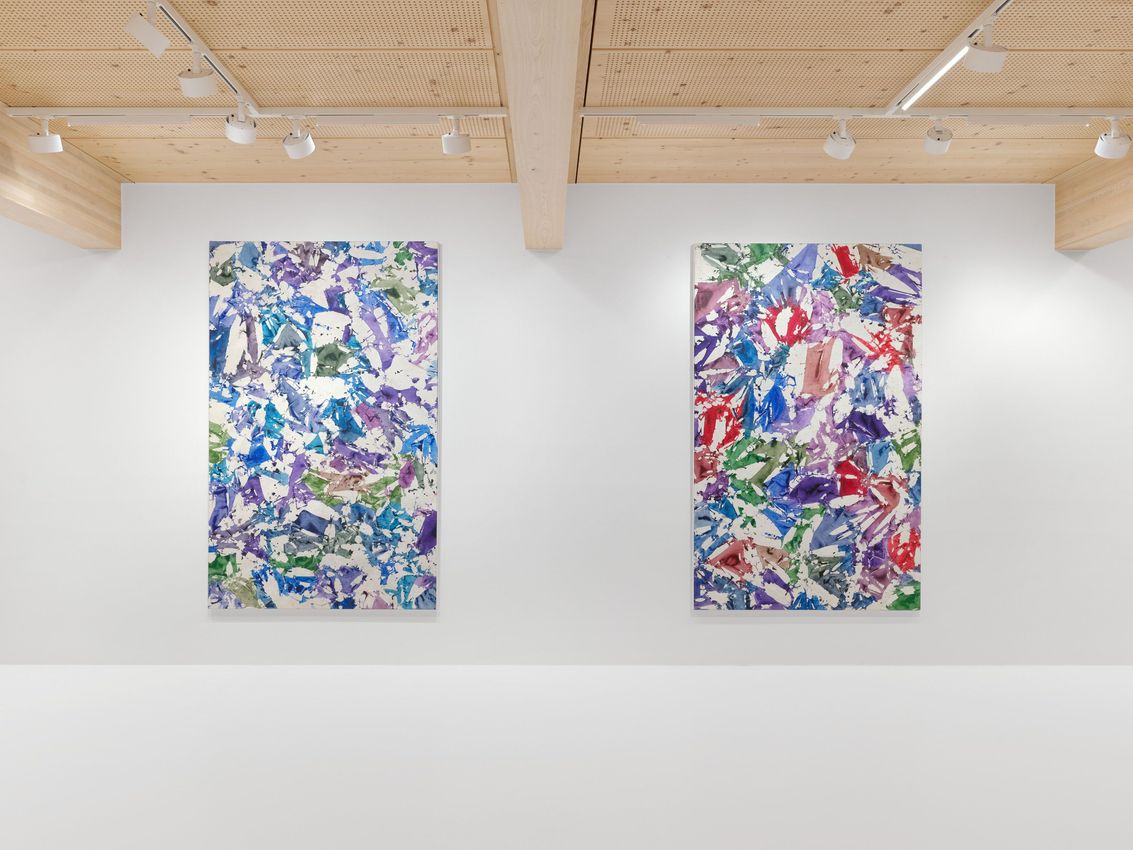
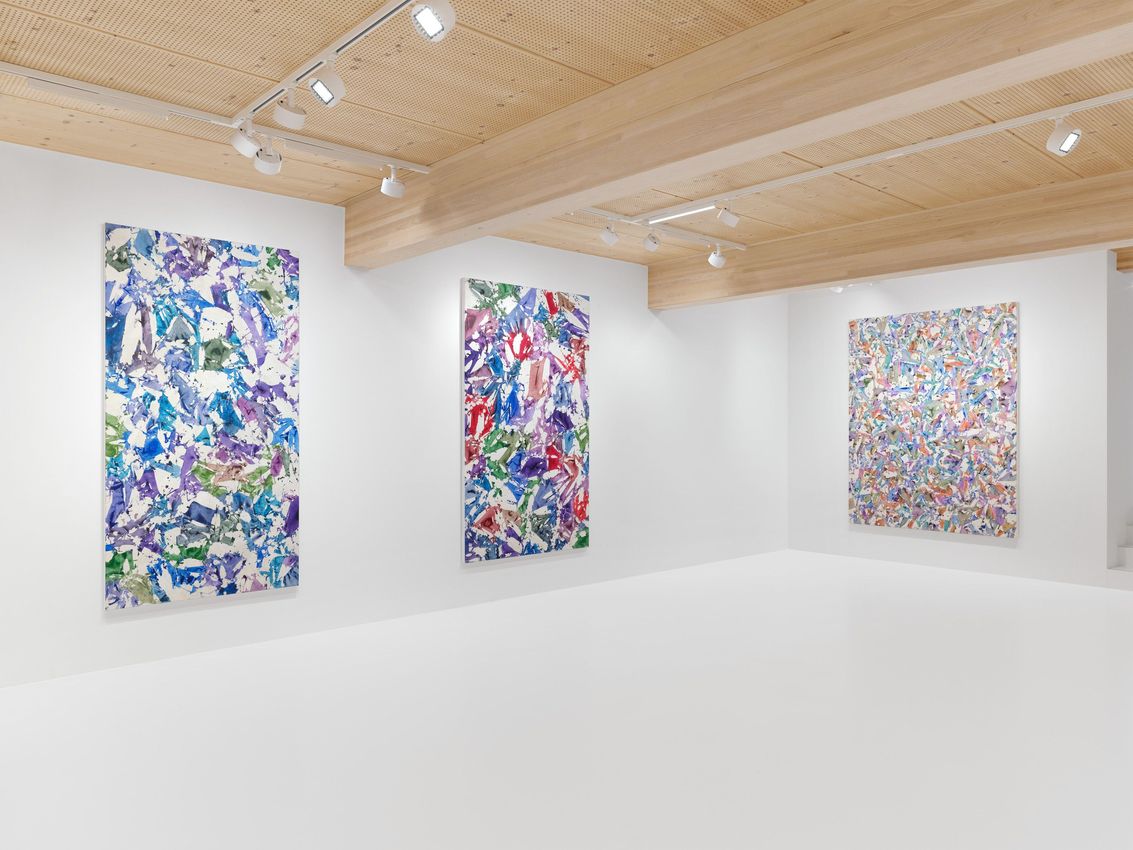
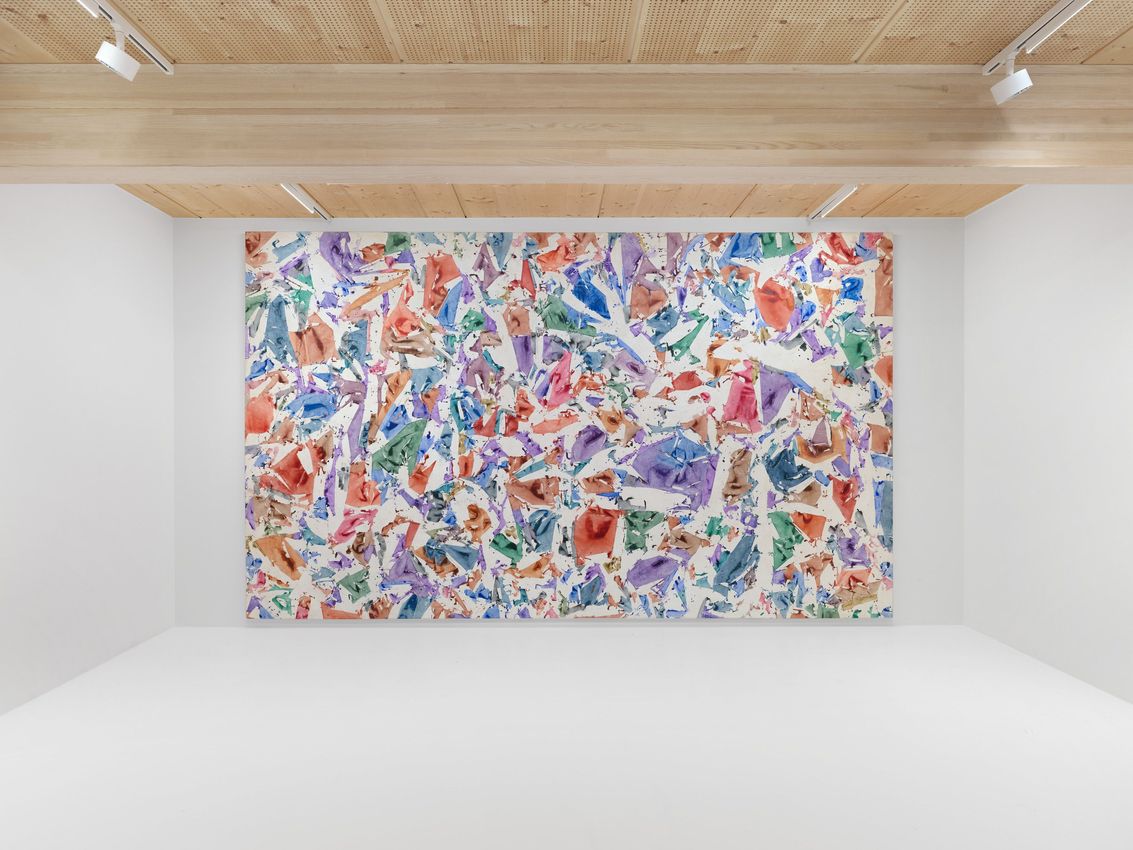
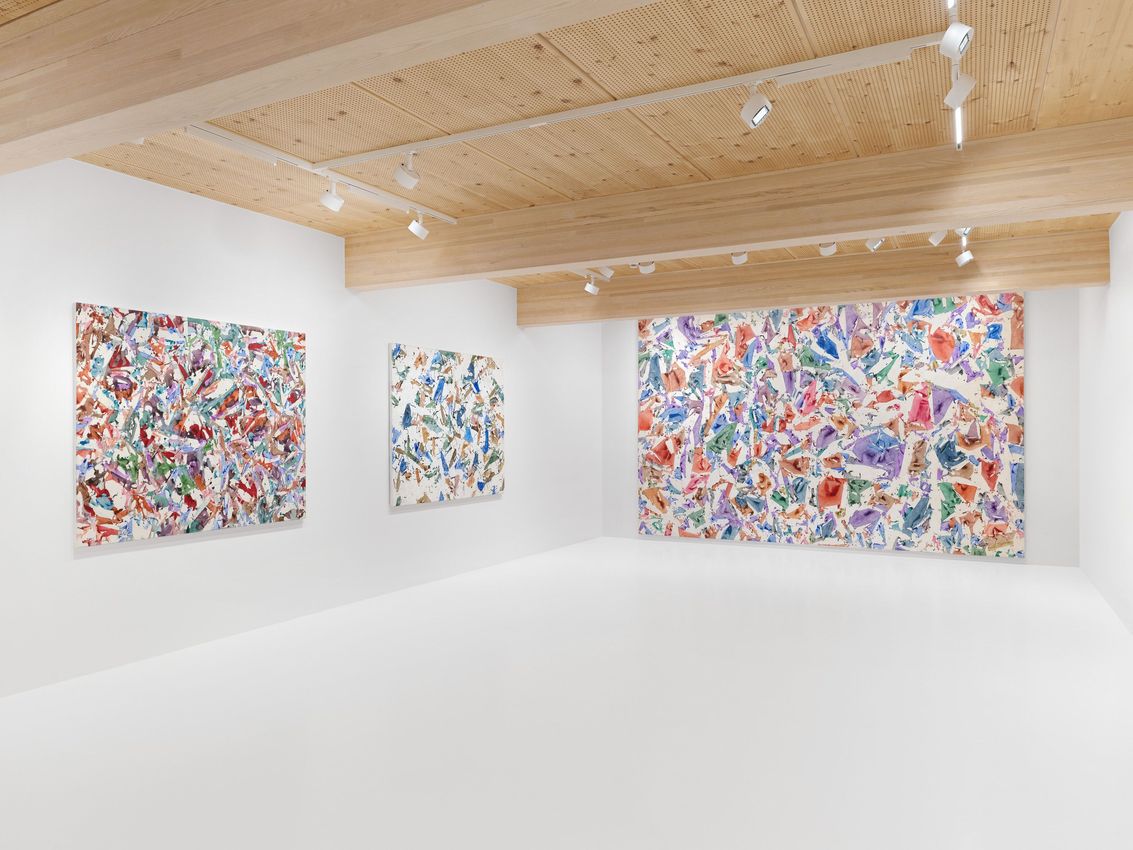
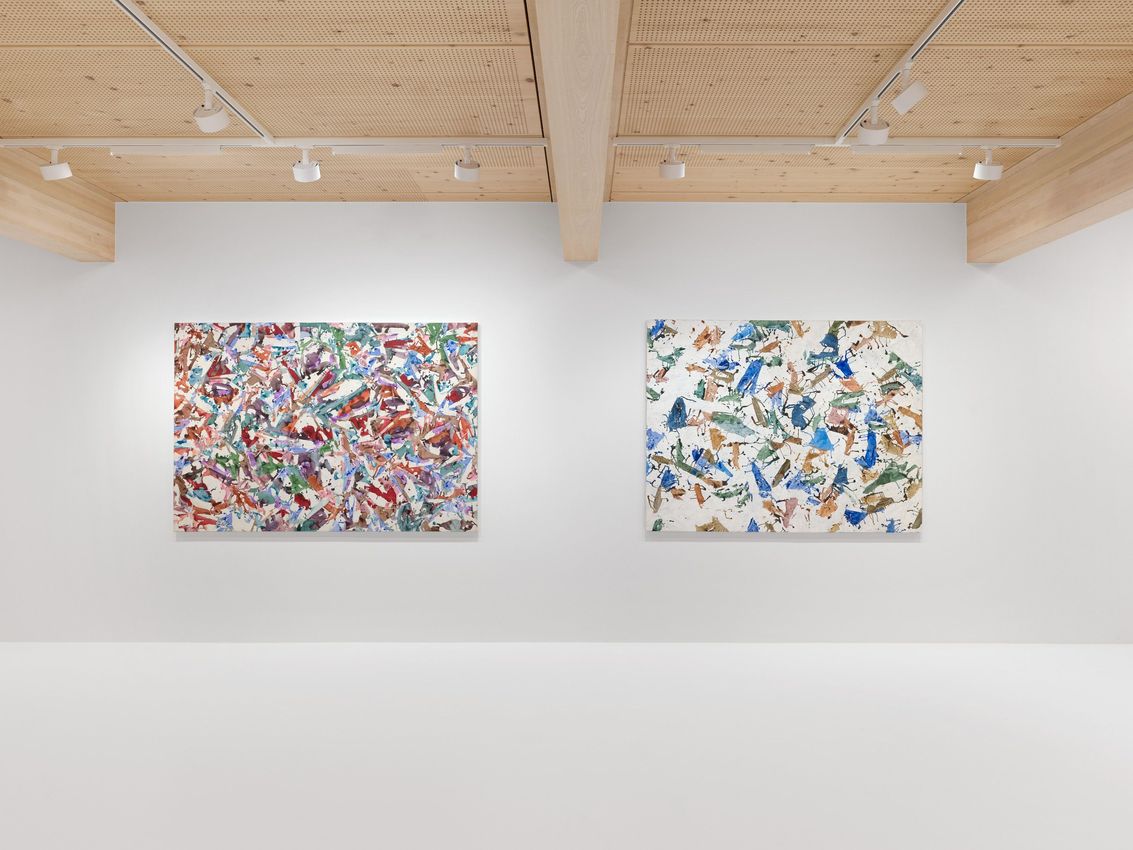
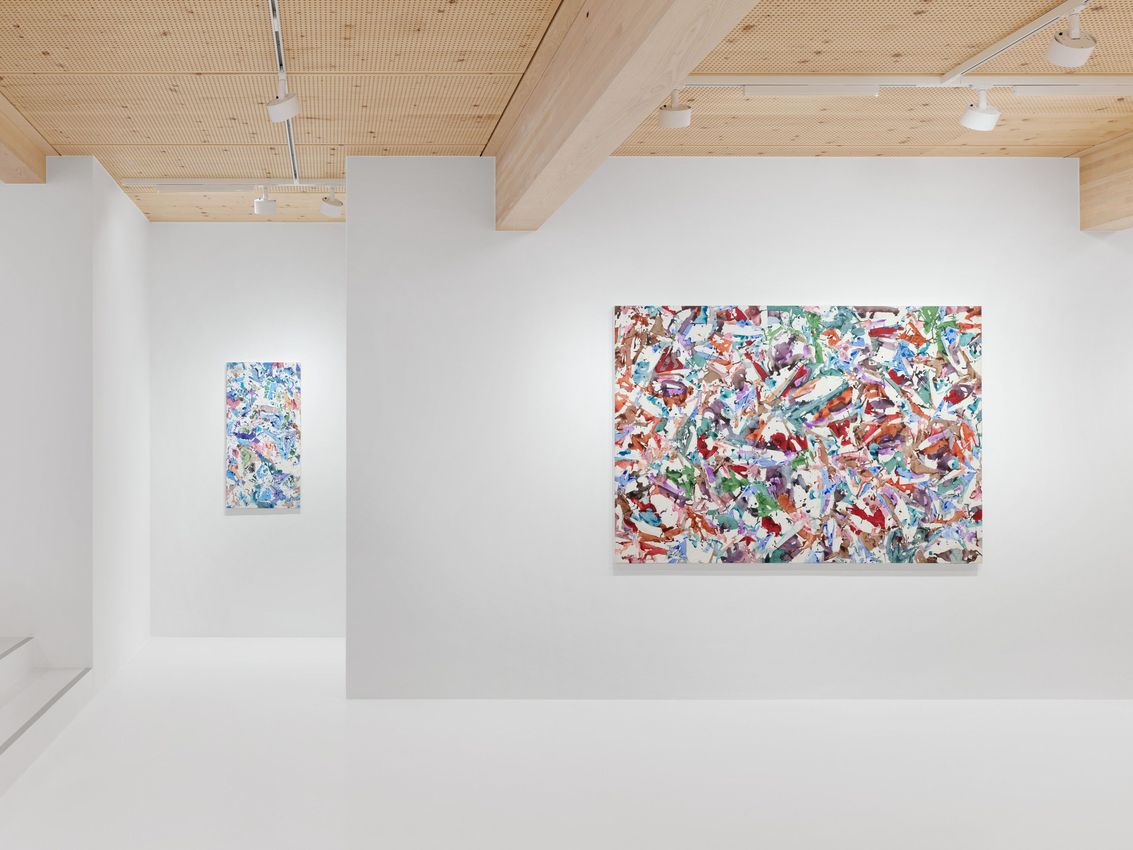
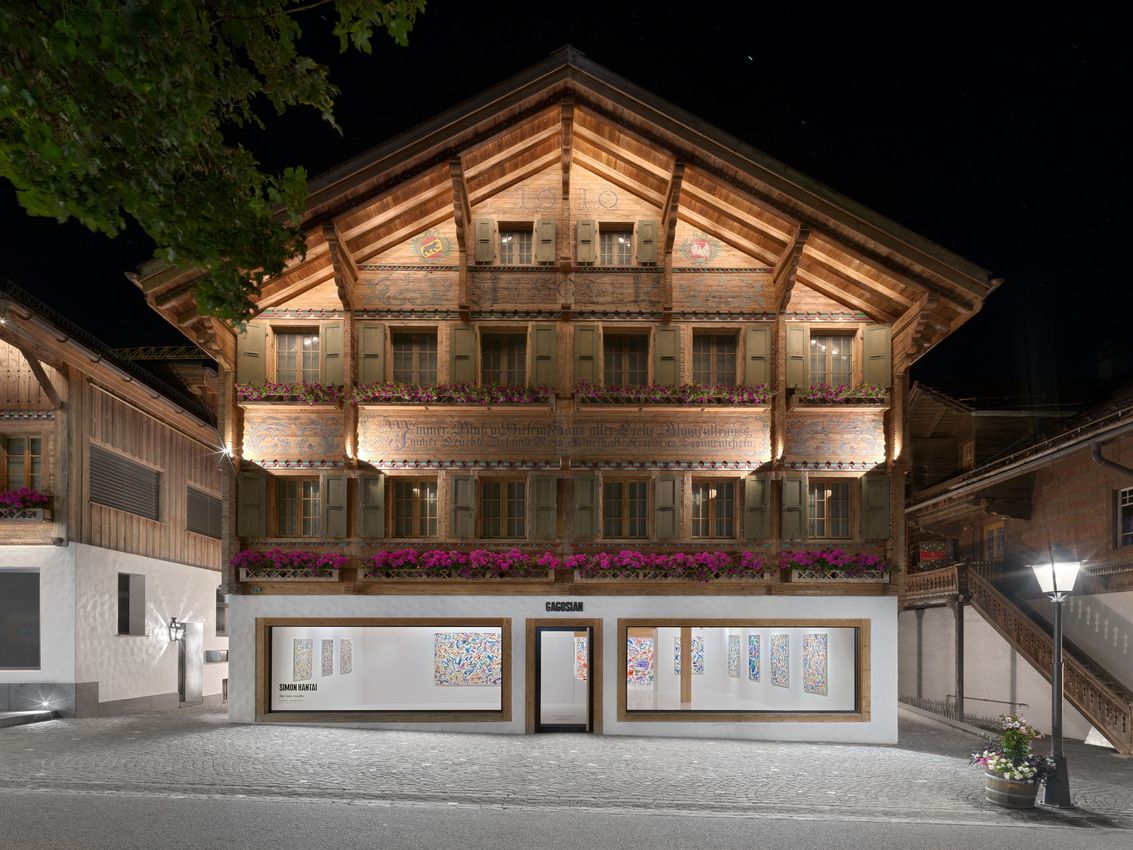
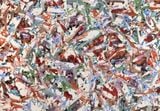
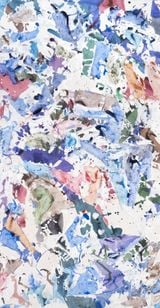
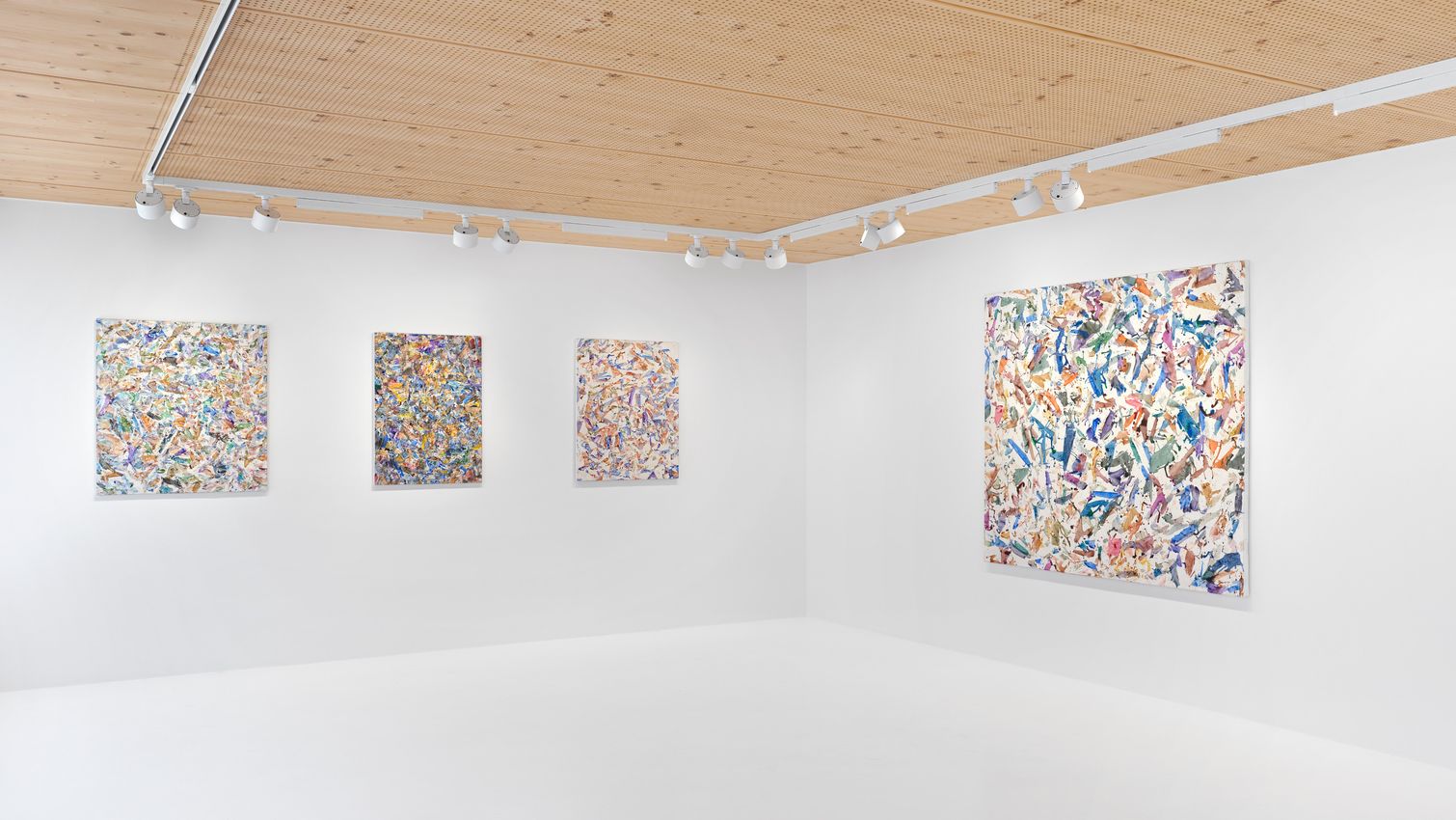
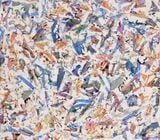
Gagosian is pleased to announce Simon Hantaï: the last studio, opening at the Gstaad gallery on July 9. The exhibition, curated by Anne Baldassari, features sixteen of Simon Hantaï’s dernier atelier (“last studio”) paintings of 1982–85, which are distinguished by vibrantly colored abstract forms derived from a combination of folding and dripping techniques. Examples from the body of work were first shown in Hantaï’s 2022 retrospective curated by Baldassari at Fondation Louis Vuitton, Paris, which incorporated a spectacular evocation of the artist’s studio of the era.
Hantaï was the originator of the pliage (folding) technique, in which a canvas is crumpled and knotted, painted over, then spread out to reveal alternations between pigment and reserve. He produced the “last studio” works during his withdrawal from public life after representing France at the 1982 Biennale di Venezia (he declined to exhibit new work until 1998). Hantaï stapled many of the paintings atop one another in a studio installation that Baldassari deconstructs in her writing with stratigraphical precision, noting that Hantaï spent the interval from 1960 to 1982 “seeking, as Pollock had, to attain a boundlessness of painting via the continuous expansion of its formats. Now, by ‘padding’ the walls of the last studio with layers of painting-upon-painting, he seems to have achieved boundlessness via depth.”

The point of origin for the exhibition and its catalogue was Baldassari’s extensive original research into a body of iconic photographic portraits of Hantaï at work, taken by his close friend Édouard Boubat (1923–1999) at the artist’s own request. Boubat was an established Paris-based French photographer acknowledged as a representative of humanist photography alongside Henri Cartier-Bresson, Robert Doisneau, and Willy Ronis. In the 1970s, he was particularly famous for his international reporting for the Franco-American photo agency Rapho. In the context of the last studio, Boubat’s shots function as a guide to Hantaï’s series and sub-series, revealing aspects of their development, chronology, and display.

Read More
About the Artist

Known for his kaleidoscopic abstract works, Simon Hantaï (1922–2008) originated the technique of pliage (folding), in which a canvas is crumpled and knotted, uniformly painted over, and then spread out to reveal a matrix of alternations between pigment and ground. Born in Bia, Hungary, Hantaï studied at the Budapest School of Fine Arts from 1941 to 1946. In 1948 he moved to Paris after receiving a government grant to study there; after his grant was later revoked in the wake of the escalating Sovietisation of his homeland, he decided to stay. In Paris, he met André Breton in December 1952 and quickly became associated with the Parisian Surrealists, completing several fantastical animal-themed paintings before encountering the work of Jackson Pollock and breaking with the Surrealist ideologies in 1955. Pollock’s action paintings and the work of the Abstract Expressionists directly inspired Hantaï’s own turn toward monumentally scaled abstraction.

View Artist Profile

Also Exhibiting at Gagosian

Address
Promenade 79
Gstaad
Switzerland
Opening Hours
Mon - Sun, 11am - 1pm; 3pm - 6:30pm
(1)
Gstaad Promenade 79
GAGOSIAN
Promenade 79, Gstaad, Switzerland
+41 33 748 49 80
http://gagosian.com

Opening hours
Mon - Sun, 11am - 1pm; 3pm - 6:30pm
The art world in focus