Presented by DMINTI.
For over six decades, Italian artist Michelangelo Pistoletto has returned to the mirror throughout his lifelong practice as a way to place the viewer at the center of art. His early Mirror Paintings of the 1960s reflected the spectator directly into the image, making each encounter unique and unrepeatable. With Mirror of Eternity, Pistoletto extends this exploration into the digital age, where reflection, presence, and memory take on new dimensions. ”
As the artist explains:
Why Eternity?
Mirror of Eternity is a work of art that invites all of humanity to step into a state of immortality through artificial intelligence. As technology evolves, we have created a virtual sky—a digital dimension—around our planet.
To participate in Mirror of Eternity, you upload a portrait of yourself, the system merges it with another’s portrait, and you witness the birth of an entirely new face—one that has never existed before. In this act of artificial creation, we mirror the processes of nature—perpetual renewal, generation after generation.
In Mirror of Eternity, your likeness is preserved not as static memory, but as an ever‑evolving presence. It remains active in the virtual world, continually meeting others, giving rise to new combinations—new expressions of shared humanity. In this way, your digital self participates in an ongoing cycle of creative rebirth, echoing the timeless rhythms of life itself.
A powerful, immersive, and unifying experience, Mirror of Eternity invites audiences not only to view the artwork, but to become part of it—as vital, active participants within Pistoletto’s visionary practice_._ The work raises profound questions: How do we see ourselves in technology? What does it mean for identity to persist beyond life? And how can art invite us into a collective space that merges past, present, and future?
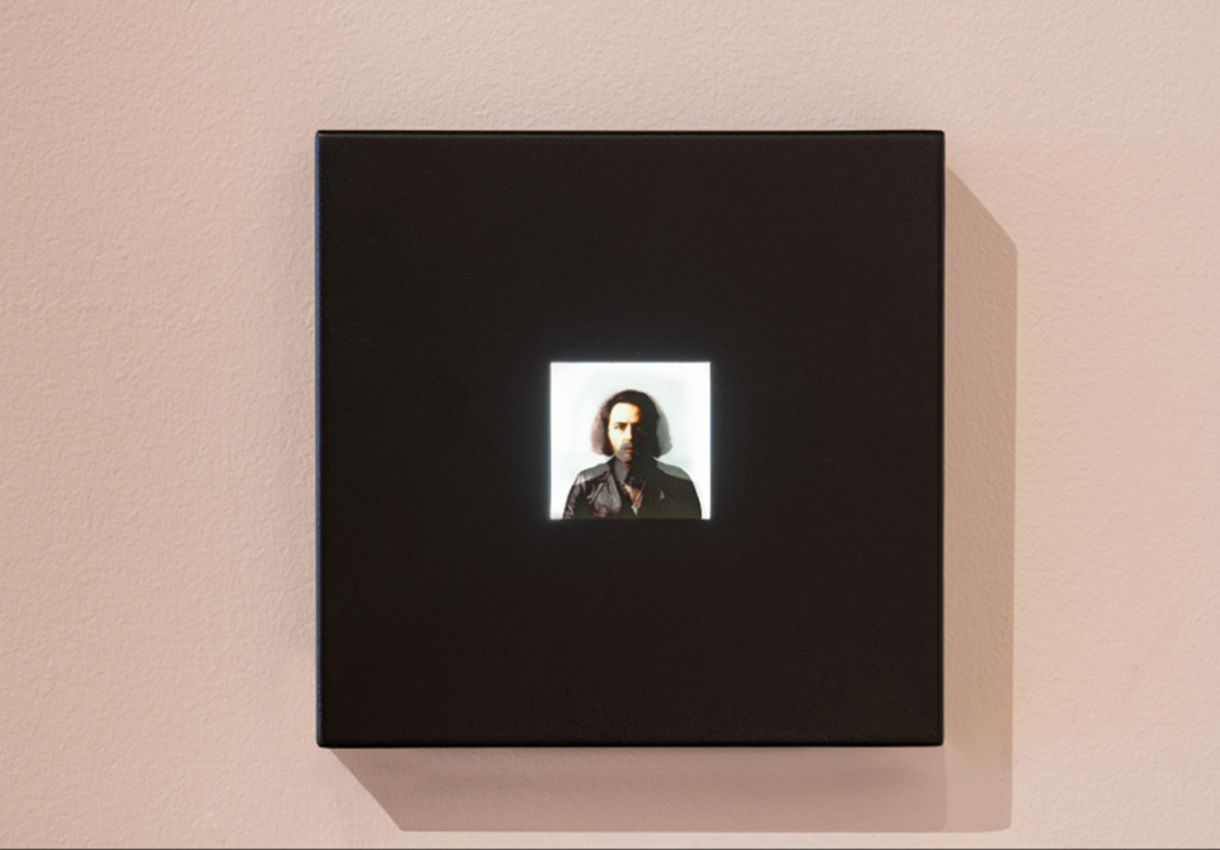
Mirror of Eternity features the 1971 work_Plagio,_ which__consists of a lightbox containing two transparent backlit photographs: one depicts Pistoletto’s face, the other that of Vettor Pisani. The superimposition of the two artists’ faces thus creates the face of a third virtual person generated by their encounter. The work was created in 1971 as part of an extensive collaboration between the two artists. It is the ‘creative collaboration’ that Pistoletto announced in a manifesto published on the occasion of the 1968 Venice Biennale and which characterizes much of his artistic research, from the Mirror Paintings, also defined by the artist as ‘self-portraits of the world’, to the large-scale participatory work spread throughout the world known as the Third Paradise, which now sees a further development in Mirror of Eternity.


The Bass is a celebrated contemporary art museum in Miami Beach, renowned for connecting international contemporary art with the city’s vibrant, diverse audiences.

A respected voice in contemporary art discourse.
Focusing on ambitious storytelling and insightful art-world commentary. Ocula Magazine publishes in-depth interviews, critical essays and timely analysis on the artists, exhibitions and ideas driving the global art world.
Learn more about Ocula Magazine
Showcasing the best of the art world.
Ocula partners with galleries from around the world to highlight their artists, artworks and exhibitions. Gallery membership is by application and invitation, with each member vetted by an independent panel.
Learn more about Ocula Membership

Specialises in the sale of major artworks.
Led by a team with deep ties to the world’s leading auction houses, galleries and collectors. Ocula’s advisory team offers bespoke services to high-net-worth clients from around the world who are looking to acquire the best of contemporary and modern art.
Learn more about our team and services