





EGON SCHIELE
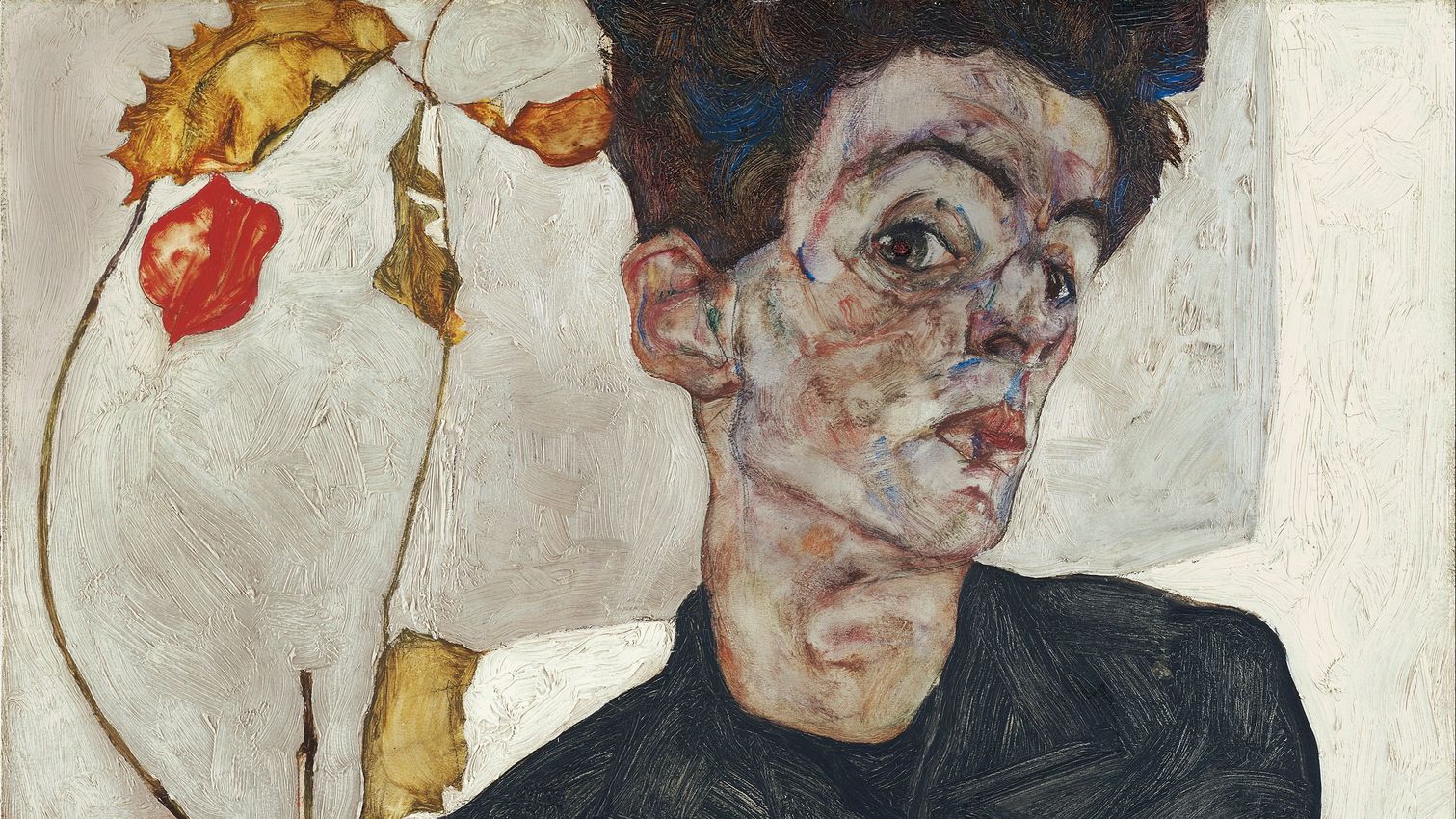
1890-1918, AustriaEgon Schiele was an Austrian Expressionist artist whose emotionally charged and provocative paintings are art historically significant and recognised for their ongoing influence on contemporary art.
Schiele’s work is distinguished by a jaunty, sketchy style imbued with great psychological depth. It explores themes of sexuality, mortality, and identity. Despite his brief career, which ended with a premature death from the Spanish flu at 28 years old, Schiele was hugely prolific.
Early Years
Born in Tulln an der Donau, Austria, Schiele demonstrated artistic talent from a young age. After his father died in 1905, he became a ward of his uncle, who supported his artistic pursuits for some time, hiring a tutor for the young Schiele. In 1906, Schiele enrolled in Kunstgewerbeschule (School of Art and Craft), where Gustav Klimt had been a student. However, the faculty encouraged him to apply to Vienna’s more traditional and prestigious Academy of Fine Arts. Klimt became frustrated with the conservative teaching of Christian Griepenkerl, and he withdrew in his third year in 1909.
Influences and mentors
In 1907, Schiele became a mentee of Gustav Klimt, who took an interest in the young artist. Many of Schiele’s works from this period were heavily influenced by Klimt’s ornamental sensibility and Art Nouveau style.
After leaving the Academy in 1909, Schiele formed the Neukunstgruppe (‘New Art Group’) with like-minded artists seeking to challenge traditional art norms. Informed by Klimt’s work, as well as Edvard Munch, Jan Toorop, and Vincent van Gogh’s, Schiele further developed his signature style. Many works from this period were sexually charged nudes.
Imprisonment, marriage and military service
In 1912, Egon Schiele was arrested under suspicion related to the alleged seduction and abduction of a minor. When police came to find him, they seized over a hundred of his artworks, considered pornographic. The artist had to serve 24 days in custody, including 3 days of solitary confinement.
Schiele married Edith Harms in 1915, the same year he was conscripted into the Austro-Hungarian army to serve in World War I. Initially assigned to menial duties, he was later stationed in Prague and eventually moved to a supply depot in Mühling, where he had more freedom to draw and continue his artistic practice.
Artworks
Schiele was a prolific painter. During his short life, he is estimated to have produced over 300 oil paintings , around 3,000 drawings, and works on paper. The last four years before his death have been seen as a maturing of the artist’s practice, with a developed technical mastery and less overt sexual themes, Schiele instead exploring the emotional lives of his subjects.
Portrait of Wally (1912)
This intimate portrayal of Schiele’s muse and lover, Walburga Neuzil, captures the emotional depth and vulnerability that define much of Schiele’s portraiture. It is speculated that Wally may have also modelled for Gustav Klimt. Portrait of Wally has a storied and contested ownership history during and following the Second World War. Still, it now resides in the Austrian Leopold Museum, with many other works by Schiele.
Edith Schiele in a Striped Dress, Seated (1915)
A poignant portrait of Egon Schiele’s wife, Edith Harms, was created shortly after their marriage. Harms is depicted in a long, vertically striped dress, her expression reserved and introspective. Schiele’s distinctive contour lines and scrubby paint application heighten the emotional complexity of the subject.
Seated Woman with Bent Knees (1917)
Perhaps Egon Schiele’s most iconic and arresting figure studies. It is understood to be a portrait of the artist’s wife (although debated, as this portrait features auburn hair and dark eyes), seated with her knees pulled to her chest and her gaze directed outward. Schiele’s expressive linework and sparse yet specific use of colour emphasises the vulnerability and defiance in the pose: parted legs, shielding arm, and direct gaze. The painting exemplifies Schiele’s mature approach to the human body and sexuality, subtly loaded with psychological depth and emotional intensity.
Notable Exhibitions
While Schiele did not receive formal awards during his lifetime, his work gained significant recognition in the years leading up to his death. In 1918, he was invited to exhibit at the 49th Vienna Secession, where he displayed 50 works and designed the exhibition poster. This marked a turning point in his career, solidifying his reputation in the Viennese art scene.
Schiele’s work has been the subject of numerous exhibitions during his life and posthumously. Notable exhibitions include:
- Changing Times: Egon Schiele’s Last Years (1914–1918), Leopold Museum, Vienna (March 28–July 13, 2025)
- Egon Schiele: Living Landscapes, Neue Galerie New York (17 October 2024–13 January 2025)
- Life in Motion: Egon Schiele/ Francesca Woodman, Tate Liverpool (24 May–23 September 2018)
Egon Schiele FAQs
Who is Egon Schiele?
Egon Schiele was an Austrian Expressionist painter known for his intense and often provocative depictions of the human form. Expressive lines, distorted figures, and explorations of themes such as sexuality and mortality characterise his work.
What is Egon Schiele’s most famous work?
Portrait of Wally (1912) is among Schiele’s most renowned paintings. It depicts his muse, Walburga Neuzil, with striking emotional depth. The work’s infamy is heightened by its fraught history of ownership during and after WWII.
What influenced Egon Schiele’s art?
Schiele was influenced by his mentor, Gustav Klimt, the Jugendstil (Art Nouveau) movement, and artists like Vincent van Gogh and Edvard Munch. His personal experiences and psychological introspection also significantly shaped his artistic vision.
Where can I see Egon Schiele’s artworks?
Significant collections of Schiele’s works are housed in the Leopold Museum, the Egon Schiele Museum in Austria, and the Neue Galerie in New York.
What themes did Schiele explore in his art?
Schiele’s art delves into themes of human sexuality, existential angst, identity, and the complexities of human relationships, often portrayed through distorted and emotionally charged figures.
Ocula | 2025


Explore and Follow Artists Shaping Contemporary Art
A respected voice in contemporary art discourse.
Focusing on ambitious storytelling and insightful art-world commentary. Ocula Magazine publishes in-depth interviews, critical essays and timely analysis on the artists, exhibitions and ideas driving the global art world.
Learn more about Ocula Magazine
Showcasing the best of the art world.
Ocula partners with galleries from around the world to highlight their artists, artworks and exhibitions. Gallery membership is by application and invitation, with each member vetted by an independent panel.
Learn more about Ocula Membership
Specialises in the sale of major artworks.
Led by a team with deep ties to the world’s leading auction houses, galleries and collectors. Ocula’s advisory team offers bespoke services to high-net-worth clients from around the world who are looking to acquire the best of contemporary and modern art.
Learn more about our team and services