



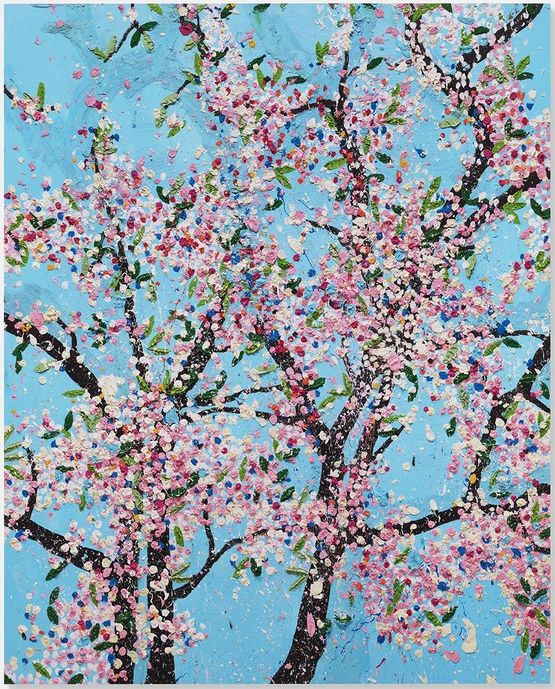
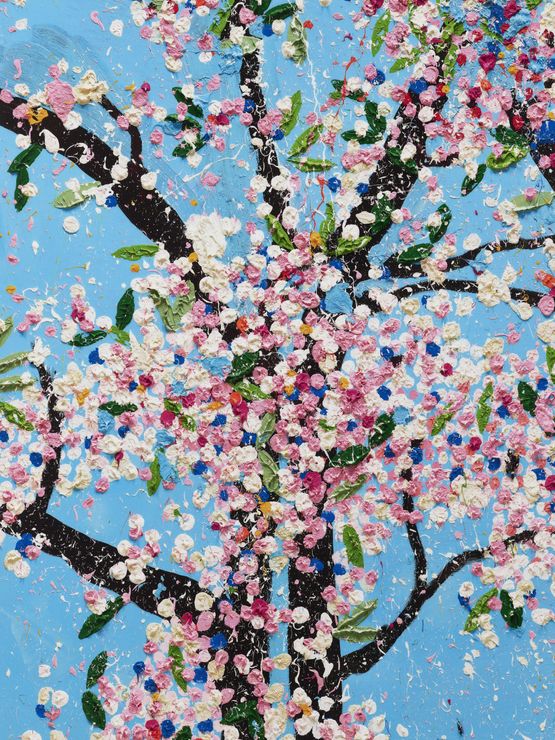
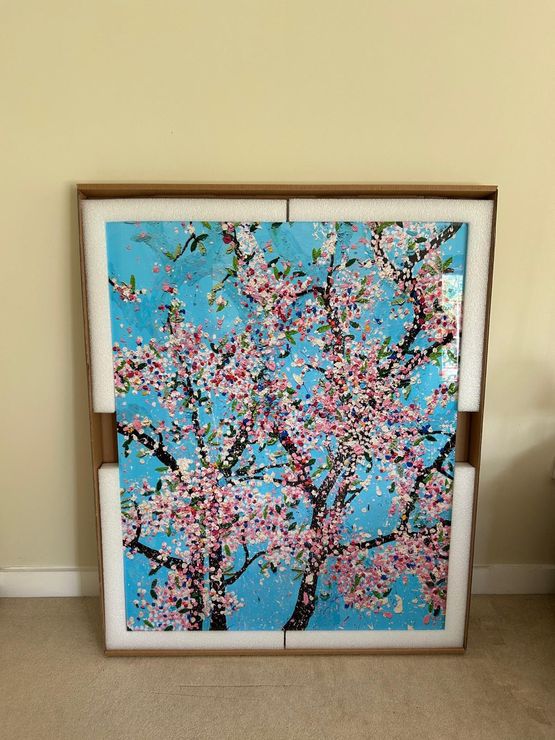
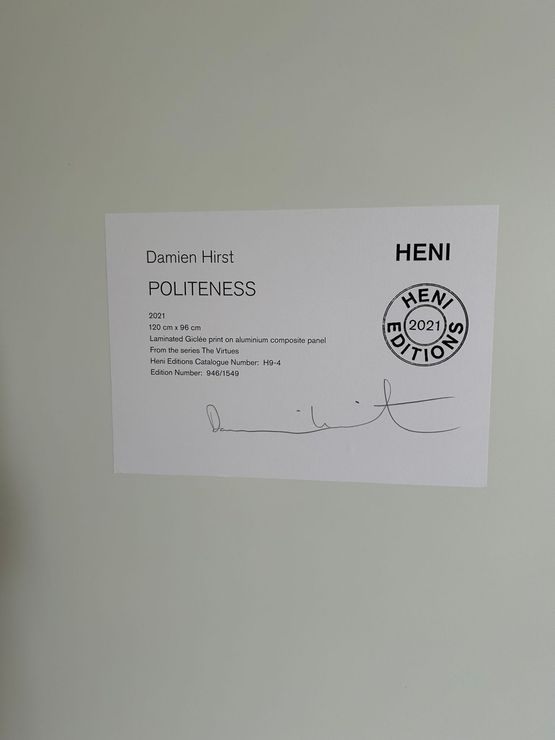
The Virtues - Politeness [H9-4], 2021
Laminated Giclée print on aluminium composite panelEdition of 1549
120 x 96 cm
47 1/4 x 37 7/8 inches
Here, Hirst returns to the floral patterns for which he is so well known, but this time, it is through the appropriation of historical Japanese forms and narrative. Taking as his subject matter Bushidō: The Soul of Japan, which, published in 1900 by Nitobe Inazō, translates the Samurai code of ethics for Western audience. In Nitobe’s account this code is divided into eight virtues, which are responsible for customs such as the tea ceremony and behaviour like tranquillity even in the face of danger. Referencing this ancient code, Hirst draws on the Western stylistic movements of Impressionism, Pointillism and Action Painting to explore the joy and beauty of Spring and new life while also suggesting their ephemerality.

A respected voice in contemporary art discourse.
Focusing on ambitious storytelling and insightful art-world commentary. Ocula Magazine publishes in-depth interviews, critical essays and timely analysis on the artists, exhibitions and ideas driving the global art world.
Learn more about Ocula Magazine
Showcasing the best of the art world.
Ocula partners with galleries from around the world to highlight their artists, artworks and exhibitions. Gallery membership is by application and invitation, with each member vetted by an independent panel.
Learn more about Ocula Membership
Specialises in the sale of major artworks.
Led by a team with deep ties to the world’s leading auction houses, galleries and collectors. Ocula’s advisory team offers bespoke services to high-net-worth clients from around the world who are looking to acquire the best of contemporary and modern art.
Learn more about our team and services