



Gallery Weekend Beijing

Each Modern
Booth 301
22–31 May 2026 Taipei
Press Release

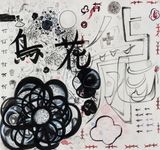
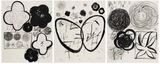
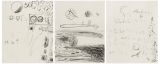
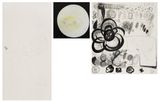
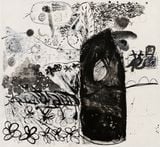
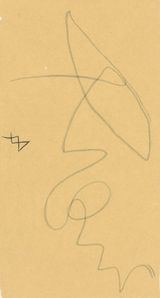
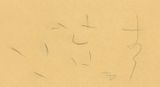
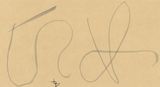
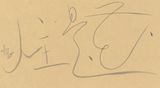
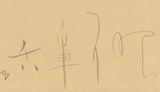
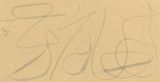
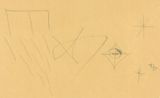
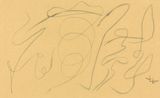
Xu Jiong (b. 1983, Hangzhou, China)’s practice has consistently centered on the traditional medium of ink on paper. For him, the encounter between ink and paper is not merely a display of technique, but an immediate inscription of life’s traces. Having lived in Beijing for over a decade, he translates the subtle, lyrical sensibility of Jiangnan into a visual language marked by the intensity of the North. Through the seepage, voids, and accumulations of ink on paper, he constructs an abstract structure that hovers between writing and image.

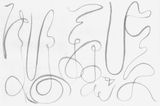
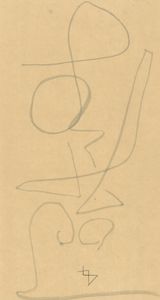
His solo exhibition As flower, as fire, as me, as cicada further intensifies this notion of “writing as life.” Xu moves beyond the formal constraints of traditional calligraphy, approaching “writing” instead as a physiological rhythm—akin to breathing or the chirring of cicadas. On the paper’s surface, variations in ink—dry and wet, dense and diluted—become visual translations of his daily perceptions: the fragrance of orchids, fallen blossoms, lingering shadows, and waking dreams. These works are deeply personal, yet through the visual language of a “new cursive script,” they transform the persistence and vulnerability of midlife into a restrained yet universally resonant contemporary aesthetic.

Since childhood, I have remembered a special fragrance on my mother. Only later did I learn that it was the scent of orchids. So after leaving the south of the Yangtze and taking up residence in Beijing, I have kept orchids at home. The north is dry, and orchids struggle to survive here, yet fortunately, they bloom every year. When the flowers open, the room fills with a delicate fragrance that soothes the heart and brings a sense of security.

Again it is mid-spring. In Beijing, flowers burst into bloom with wild abandon—nearly a hundred blossoms crowding a single branch, a profusion rarely seen in the south. The more profuse the blooming, the more numerous the falling petals. I often find myself lost in thought before the flowers and their falling petals, squinting as I watch them drift down like an endless, burning fire. Then I recall my middle school Chinese teacher—a woman deeply passionate about literature and poetry, with an indescribable power to inspire. In those years, I followed her and fell deeply in love with ci poetry. “With falling flowers and flowing water, spring departs—one in heaven, one in the human world.” This line etched itself into my youth, half-understood yet unforgettable.

“Heaven and the human world”—why did Li Houzhu write such a line? Back then, I truly wanted to understand. I have never experienced great hardships or setbacks in life. I have walked a smooth and steady path, and somehow found myself in Beijing, where I have lived for more than a decade. My circle is small, and my days are simple: looking at flowers, looking at mountains, looking at paintings, reading books, and cherishing close friends who have loved and accompanied one another through these ten-odd years. Gradually, I seem to understand—so-called heaven and the human world are, in the end, none other than myself.

A middle-aged man who daydreams, who wishes to hold fast to truth, goodness, and beauty—naive, narrow-minded, and stubborn.

In truth, I am no more than a cicada. After several years of burrowing underground, I break through the soil, crawl a while, sing a while, fly a while, and finally leave behind a thin, translucent shell—carved into jade, or left to rest upon the moss.

Xu Jiong (born in 1983 in Hangzhou, China) currently lives and works in Beijing. He graduated from the Calligraphy Department of the China Academy of Art, an institution renowned for pioneering contemporary Eastern aesthetics. The artist received rigorous training in calligraphy and traditional Chinese painting from an early age. Driven by a deep interest in Western contemporary art, he has engaged in long-term cross-cultural research, experimentation, and practice. With his creative thinking deeply rooted in the core of Chinese artistic spirit, Xu Jiong integrates his understanding of Western visual language with his personal life experience, gradually liberating calligraphy and landscape painting from the traditional framework of literati art and developing a new, contemporary form of expression characterized by a highly personalized compositional structure and vivid, dynamic brushwork.

By reinterpreting Western artistic methodologies, Xu Jiong has achieved a creative revitalization of Eastern traditions. His work constitutes a declaration that the future of Eastern aesthetics lies in unleashing its intrinsic energy and actively shaping new forms within the contemporary context. His practice employs Eastern spiritual principles as the driving force for contemporary visual syntax, dedicated to revealing the diversity and possibilities inherent in Eastern culture.

These periods encompass Cursive (2012–2016), Jia Dao (2016–2018), Spring Monster (2017–2018), Collage (2019–2024), and, commencing in 2020, the ongoing New Cursive phase. This latest period represents an enduring quest to refine his writing and visual frameworks, demonstrating an unwavering commitment to extending the parameters of contemporary calligraphy.

Read More
The art world in focus
