The art world in focus
Subscribe to our newsletter for news and insights on artists, galleries and exhibitions.

Osaka has worn many nicknames throughout history. In the Edo period (1603–1868) the city was the “nation’s kitchen”, with bustling waterways where merchants sold food from all over Japan. As it transformed into an industrial powerhouse, Osaka earned the title “Manchester of the East”, and more recently it has been dubbed the “downtown of Japan” for its lively drinking culture and frenetic atmosphere.
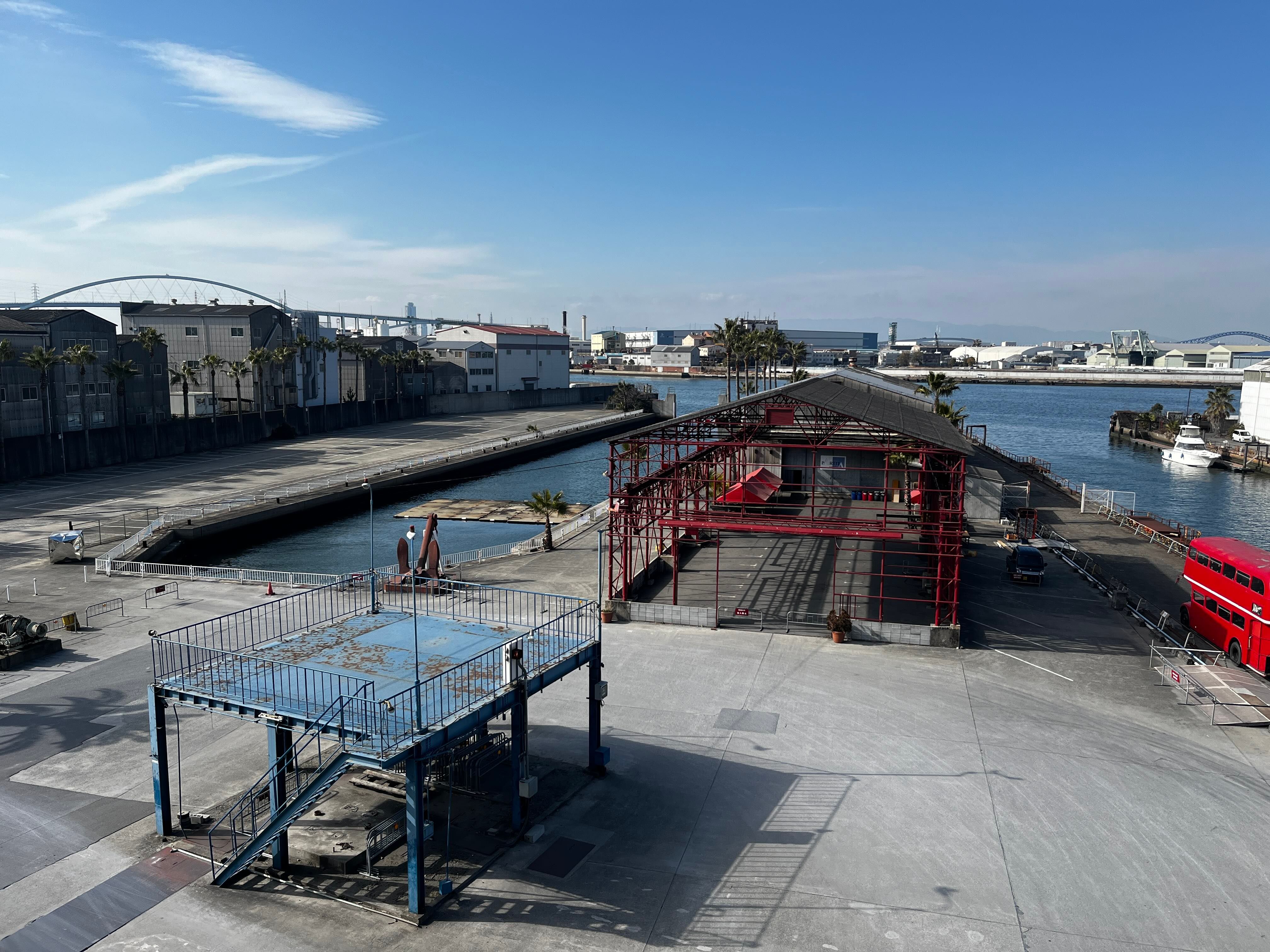
As Japan’s third-largest city, and the largest in the Kansai region, Osaka’s history of cultural activities runs deep, with distinct theatre traditions and world-class art museums including the National Museum of Art. Yet Osaka has never quite been able to shake its reputation as a merchant city, caught between a Tokyo-centric art world that has long monopolised institutional prestige and its neighbour Kyoto, which draws visitors from all over the world for its imperial histories and rich craft traditions. However, in Kitakagaya, in Osaka’s south-western fringes, a cluster of redevelopments show signs of a cultural regeneration in the city, with a focus on contemporary art.
After the Second World War, as many as 20,000 people worked in Kitakagaya’s shipyards. When the industry went into decline in the 1970s, Kitakagaya plunged into a period of prolonged stagnation leaving only a handful of working factories behind. In 2004, the Chishima Foundation (the landowner of around a third of the area) began to introduce creative initiatives, which are attracting a new generation of young artists and business-owners. Between rustic cafés, antique furniture shops and performing arts venues, around 50 spaces are now home to more than 100 artist studios.
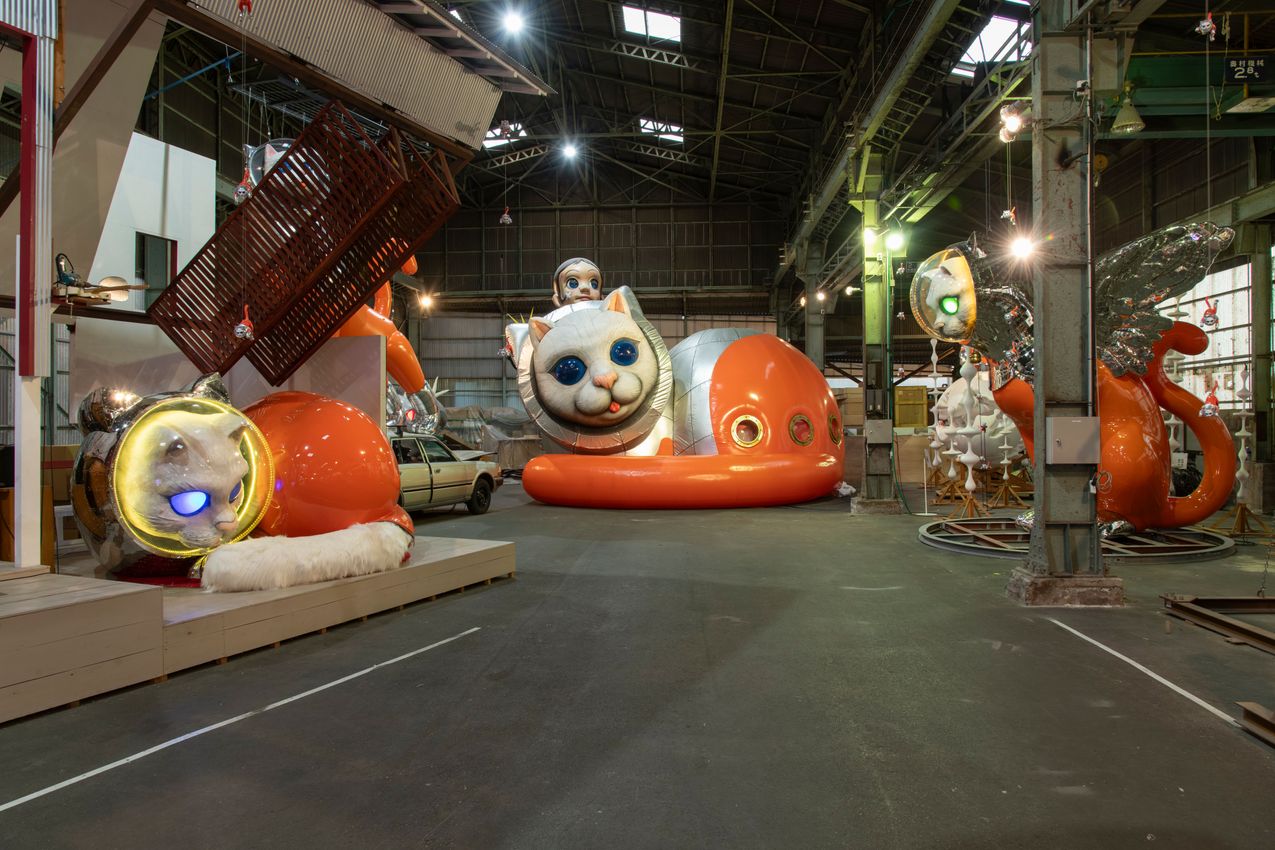
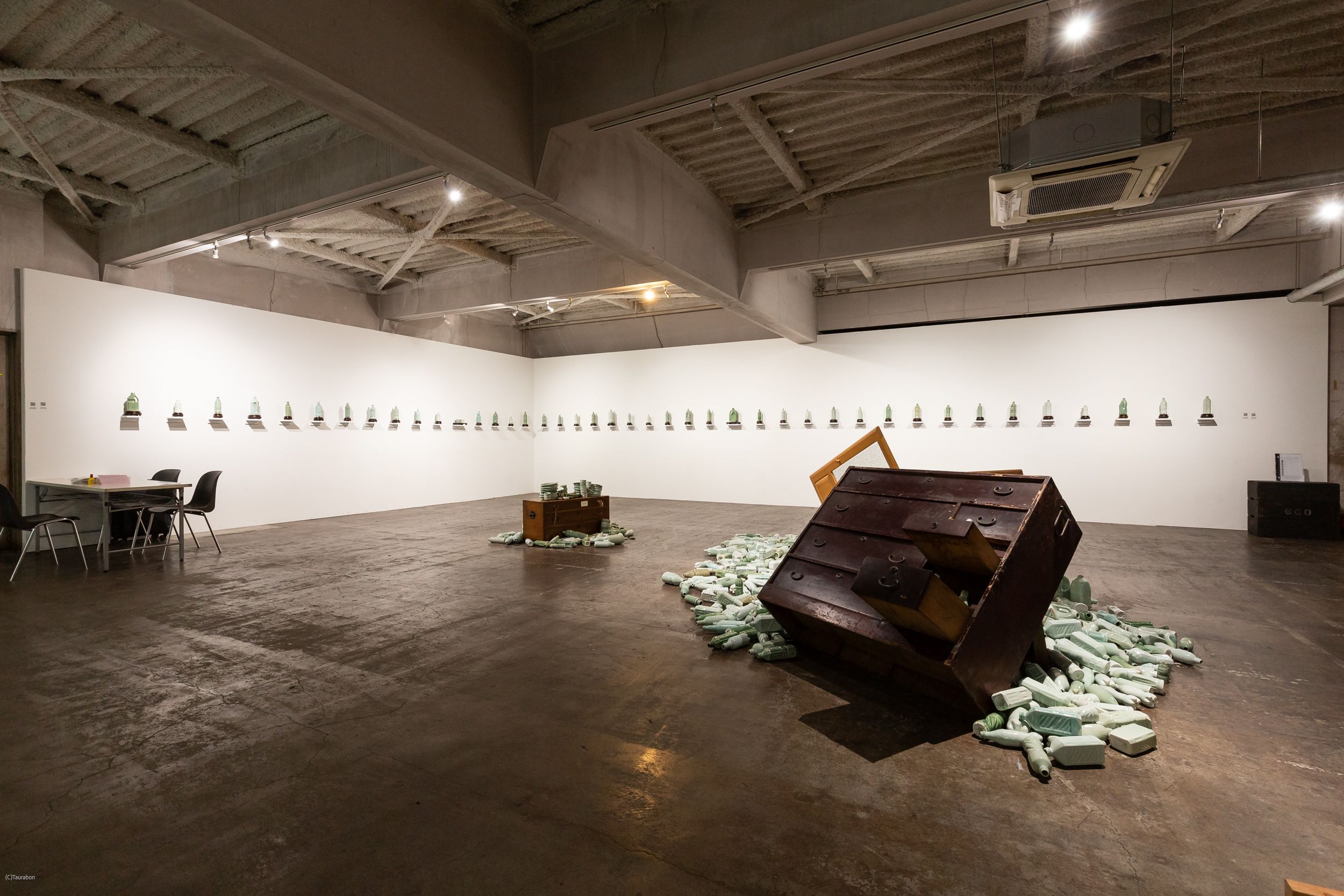
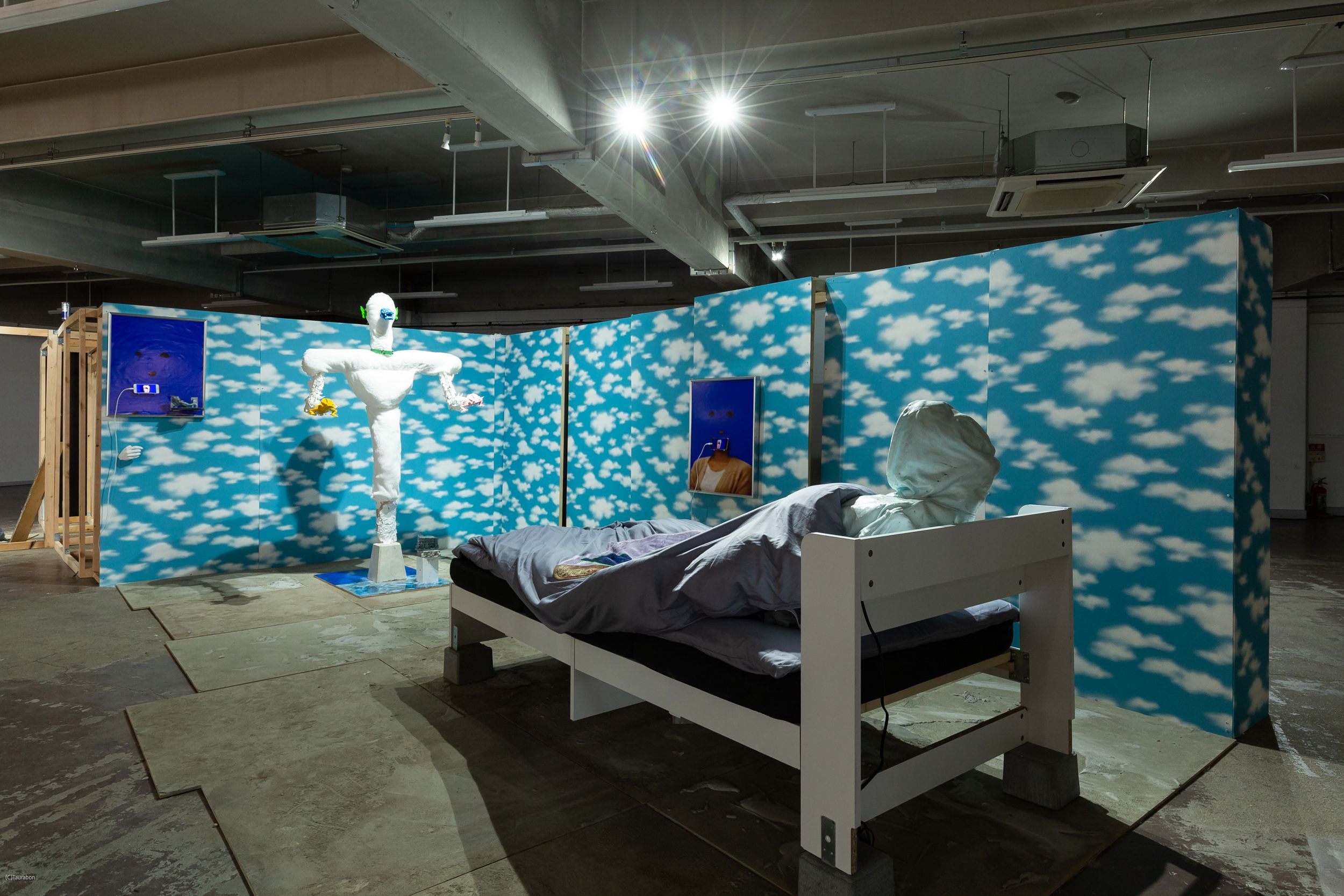
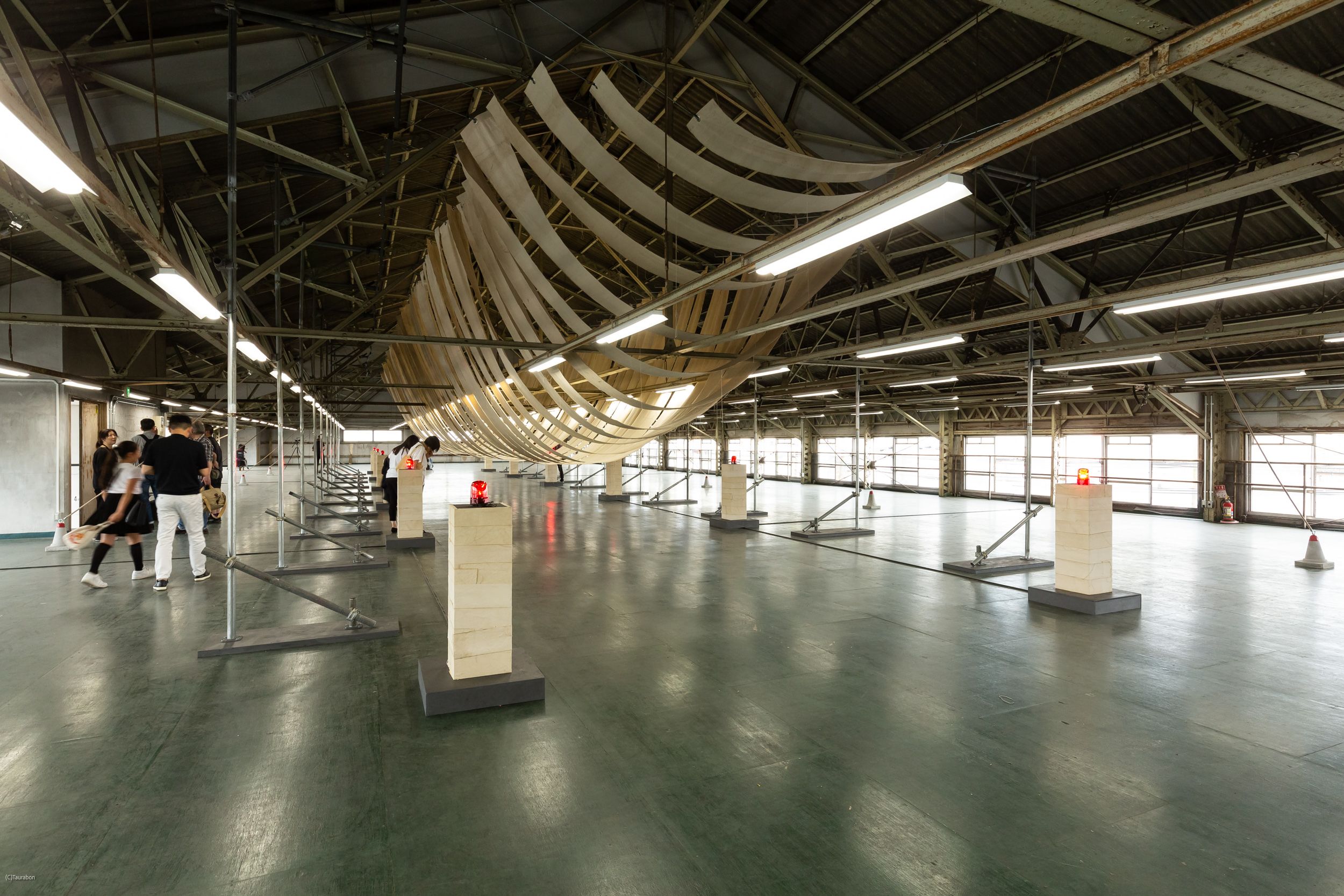
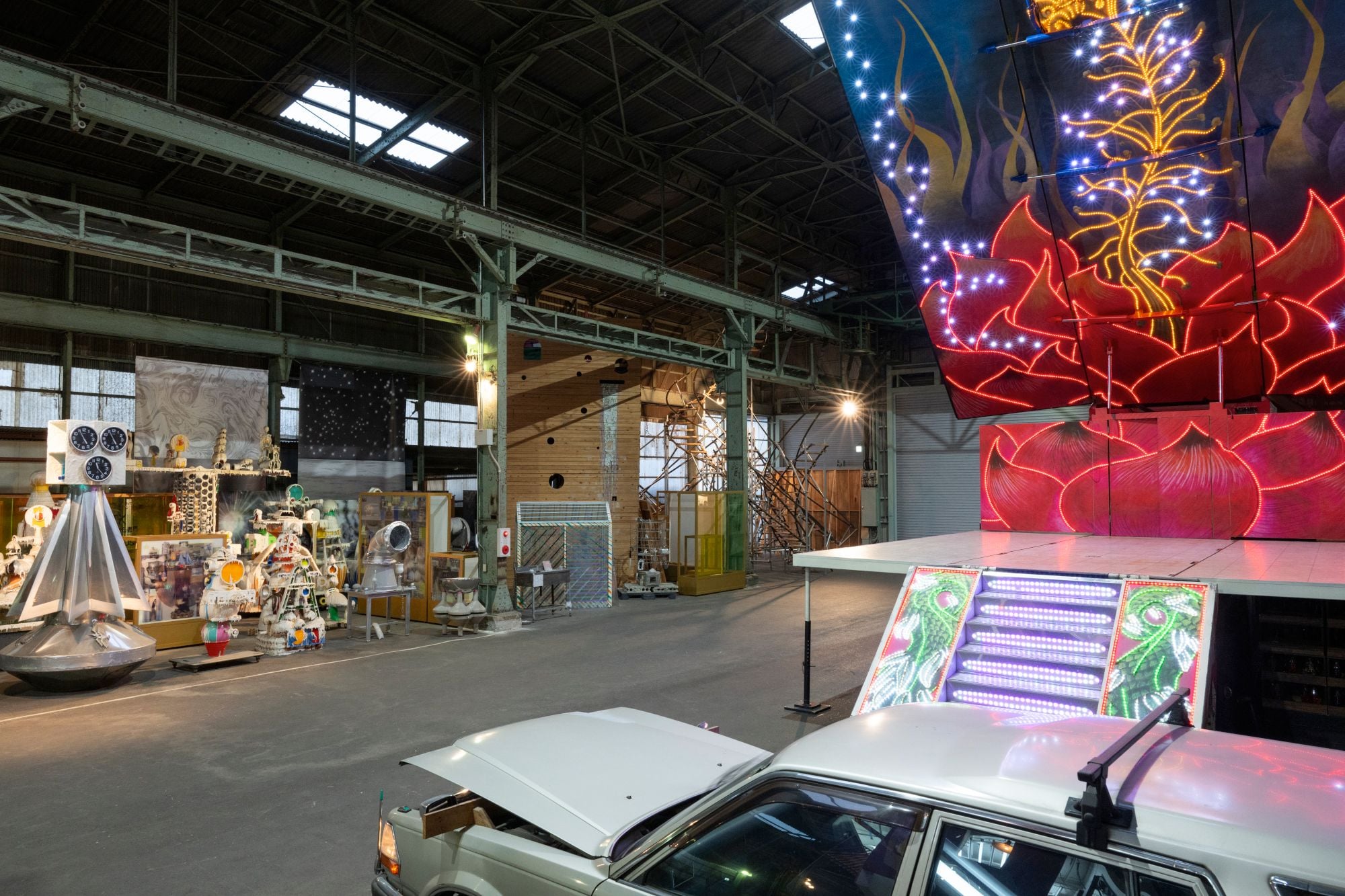
This weekend, Art Osaka will host Expanded, an off-site, experimental offshoot of the fair, at Kitakagaya’s Creative Centre Osaka. Formerly a four-storey shipyard sitting at the edge of the port, the building now houses cavernous exhibition spaces, dotted with hints of its industrial past: chalkboards for company notices and abandoned kitchenettes once used by resident engineers. Fittingly, the fair presents its most provisional pieces here: 14 large-scale installations by a mix of emerging and established galleries from around Japan and Asia.
On the first floor, in a dark room usually used for music events, artists Takashi Kunitani and Tomoko Hashimoto are exhibiting as a duo under the alias “Antitail” with Osaka gallery +1art. They are both making their Expanded debuts. “It’s unusual to be able to present work in such a large space,” says Hashimoto, born in Osaka but now based in Kyoto. Kunitani, a Kyoto native active across the Kansai art scene since the early aughts, says the availability of space is a clear advantage. “The cost of living and rent here is lower compared to Tokyo, so in terms of sourcing materials and dealing with space issues, it feels easier to work here,” he says. “Artists are also working quite close to one another, so it definitely feels like people can connect with each other easily.”
“Formerly a four-storey shipyard sitting at the edge of the port, the building now houses cavernous exhibition spaces”
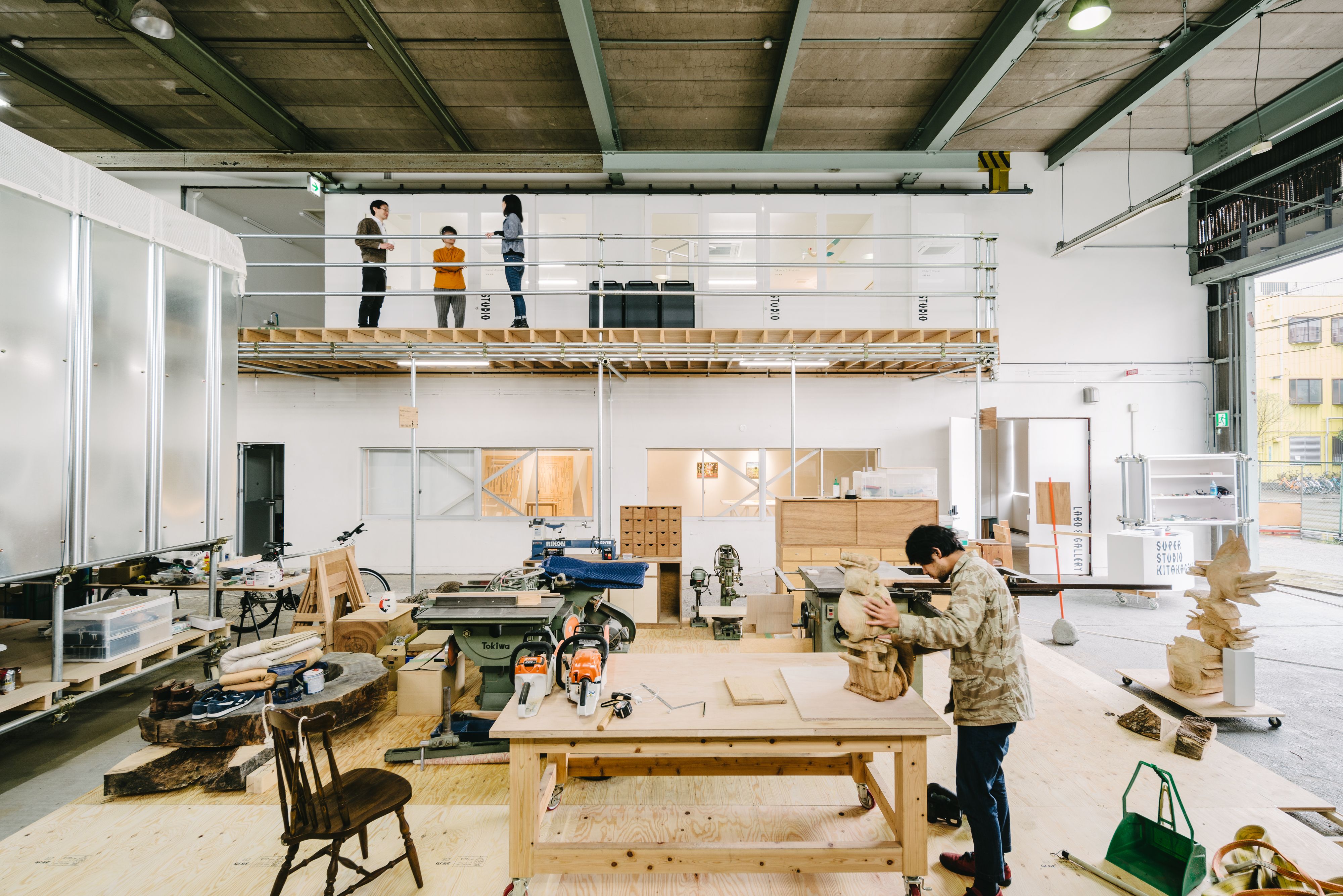
Along the same road is Super Studio Kitakagaya (SSK), a co-working space for early-to-mid career artists, also operated by Chishima Foundation. The converted warehouse offers studios for up to 10 local artists and two international residents, with a shared exhibition space and a rental kitchen for events. There are four large 50-square-metre atriums for artists working in scale, as well as 10 closed rooms of half the size. Even so, the rent is capped for every member at ¥34,000 a month (around £160), with a maximum contract length of four years. “I would obviously appreciate it if it was a little lower,” says SSK member Kenichi Yamamura, half-joking. The 45-year-old Osaka-born graffiti artist became a member around two years ago, after living in various cities including Tokyo and London.
Yamamura argues that he has not found Osaka a good place to sell work. He prefers to exhibit in Tokyo or Fukuoka, where there are more local collectors. But in terms of living and making, Osaka is comfortable. “[Kitakagaya] is like an abandoned city. Land here is so cheap because most people go into the city, not to the suburbs. Since all the ship factories left, there’s no one here and the population decreasing, so the landlord decided to support artists and make the rent cheap, to draw more people in,” he says.
That plan has been successful, with the area attracting other initiatives like Morimura @ Museum, the internationally acclaimed, Osaka-born artist Yasumasa Morimura’s personal museum, and MASK, a storage facility for large-scale artworks, usually closed to the public.
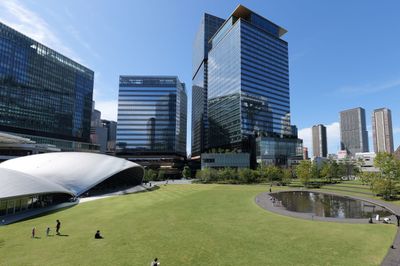
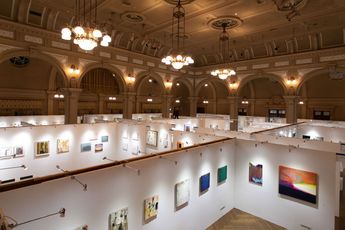
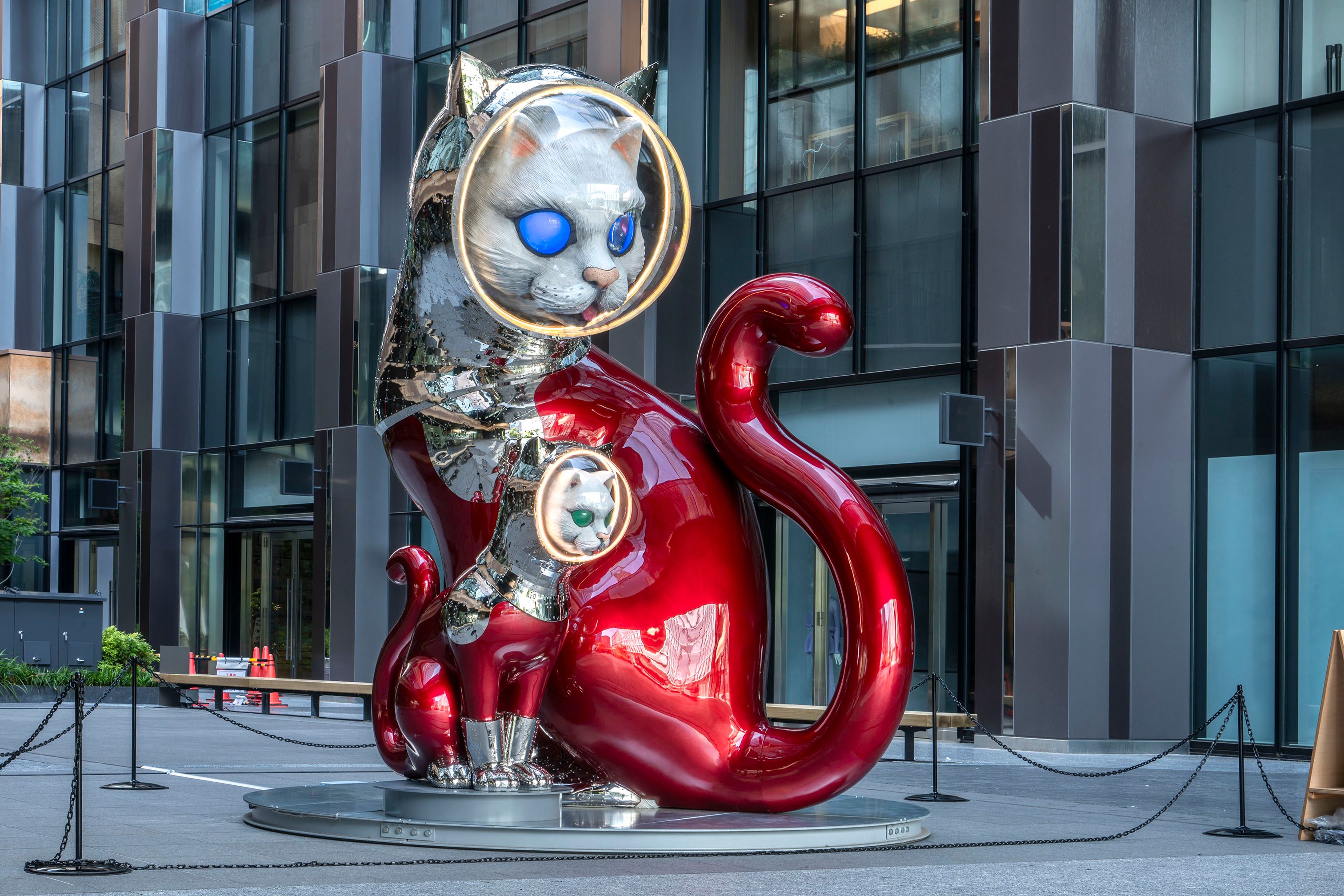
While the fair’s Kitakagaya section unfolds against low-slung warehouses and the whirring of two-tonne trucks, Art Osaka’s main venue represents the opposite extreme. Congrès Square Grand Green Osaka is a convention centre in Umekita, a rapidly developing, gleaming business district of towering glass and steel. This is a new venue for the fair, offering more space to present 52 galleries from Japan, South Korea, Taiwan, the Philippines and Hong Kong, and to introduce a new layout that splits the exhibitions into four sections: Galleries, Focus, Wall, and Screening. Crucially, the new venue is connected to Osaka station, significantly improving access.
Art Osaka is the country’s longest-running contemporary art fair, founded in 2002 by a coalition of Kansai-based gallerists now known as the Association for the Promotion of Contemporary Art in Japan (APCA Japan). The fair has operated independently since, without public funding. “Because of that it has developed a distinct culture,” says Yuichi Mori, APCA Japan’s current president and owner of Mori Yu Gallery in Kyoto, which has exhibited at Art Osaka since its first edition. “There is autonomy for participating galleries, a broad price range that pushes emerging and mid-career artists into the market, and a space where gallerists, artists, collectors and museum professionals can talk to each other face to face.”
Mori suggests that because of its grassroots nature, the fair struggled to attract the large-scale outside investment it needed to grow. Participating in the launch of its neighbouring fair Art Collaboration Kyoto (ACK) in 2021 taught him what front-loaded investment can do. “It opens up international possibilities almost overnight,” says Mori. “We came away understanding that reaching the next level as an international art fair means securing the right partnerships and investment, while holding on to everything that makes a bottom-up fair worth running.”
That lesson is now being put into practice. This year, new sponsorships have arrived alongside permission from Osaka Customs to operate as a bonded exhibition hall. Overseas works can now be displayed with customs duties temporarily suspended, dramatically cutting the administrative burden on international galleries. For a city that tends to be overlooked in favour of Tokyo, the move signals a shift that Osaka is a viable destination for the global art market.
“A commercial fair can be a place for historical reckoning”
Upon entering Congrès Square Grand Green Osaka, visitors are greeted by an introductory exhibition of 14 abstract and experimental works, ranging from large expressive oil paintings to whimsical sculptural works. Another 1990s—Kansai Artists Beyond Time presents seven Kansai artists, including Osaka-born Oshie Chieko, Tashima Etsuko and Nakagawa Yoshinobu. “Artists, movements, and modes of expression originating here have never been fully recognised on their own merits,” says Mori.
The Gutai movement is a prime example: founded in 1954 by a group of radical artists, it pioneered avant-garde ideas that predated and informed both the local post-war art movement and 1960s Western performance and conceptual art. At the time, the Tokyo-centred art world largely neglected its activities. Recognition in Japan didn’t come until 1986, when critic Shigeo Chiba published Contemporary Art: History of Deviation. Global attention arrived three decades later with a critically lauded 2013 Guggenheim retrospective.
“A commercial fair can be a place for historical reckoning and reassessment,” says Mori. At Art Osaka, that openness extends to who gets a seat at the table. The Wall section of the fair is dedicated to first-time exhibitors and emerging artists, with price points starting at around £200, and the fair makes room for galleries that might not necessarily find a place in more traditional art world contexts.
Among them is Capacious, an organisation that represents Osaka-based artists with disabilities. The project operates out of a small office with no permanent exhibition space, showing work through pop-up exhibitions, fairs, and external projects. For Capacious, Osaka is a natural fit. “It’s a place where new initiatives are embraced naturally,” says art manager Sayaka Tanaka, “and many people trust their own personal sense of judgment. If something is good, they simply feel it is good.”
“I think if art and commerce can ever connect successfully, this city holds enormous untapped potential”
But goodwill only goes so far, and a commercial fair still needs to sell. Ryo Takei, founder of Shinsaibashi’s Wa.Gallery, thinks the city should lean into its identity as a trading hub. “The foundation of the Osaka mindset is ‘business’,” he says. “Since the instinct to weigh profit and loss tends to come first, I think if art and commerce can ever connect successfully, this city holds enormous untapped potential.”
Here in Osaka, you can feel how the city has wrestled with these changing identities over time, and how they manifest across its different faces. Whether it will ever level with Tokyo as a cultural centre is up for debate. At the fair, the focus on artists from Osaka and the Kansai region is noticeable, but galleries from the capital still make up the majority of exhibitors, with 23 from Tokyo and 21 from Kansai. Still, for Mori and the organisers of Art Osaka, it’s only a matter of time. “It won’t happen all at once, but we’re convinced that as the government, the private sector and the art world commit to working together, Osaka will come to be seen as a centre of contemporary art in Japan.” —[O]
A respected voice in contemporary art discourse.
Focusing on ambitious storytelling and insightful art-world commentary. Ocula Magazine publishes in-depth interviews, critical essays and timely analysis on the artists, exhibitions and ideas driving the global art world.
Learn more about Ocula Magazine
Showcasing the best of the art world.
Ocula partners with galleries from around the world to highlight their artists, artworks and exhibitions. Gallery membership is by application and invitation, with each member vetted by an independent panel.
Learn more about Ocula Membership
Specialises in the sale of major artworks.
Led by a team with deep ties to the world’s leading auction houses, galleries and collectors. Ocula’s advisory team offers bespoke services to high-net-worth clients from around the world who are looking to acquire the best of contemporary and modern art.
Learn more about our team and services