The art world in focus
Subscribe to our newsletter for news and insights on artists, galleries and exhibitions.

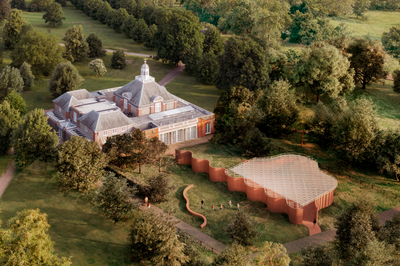
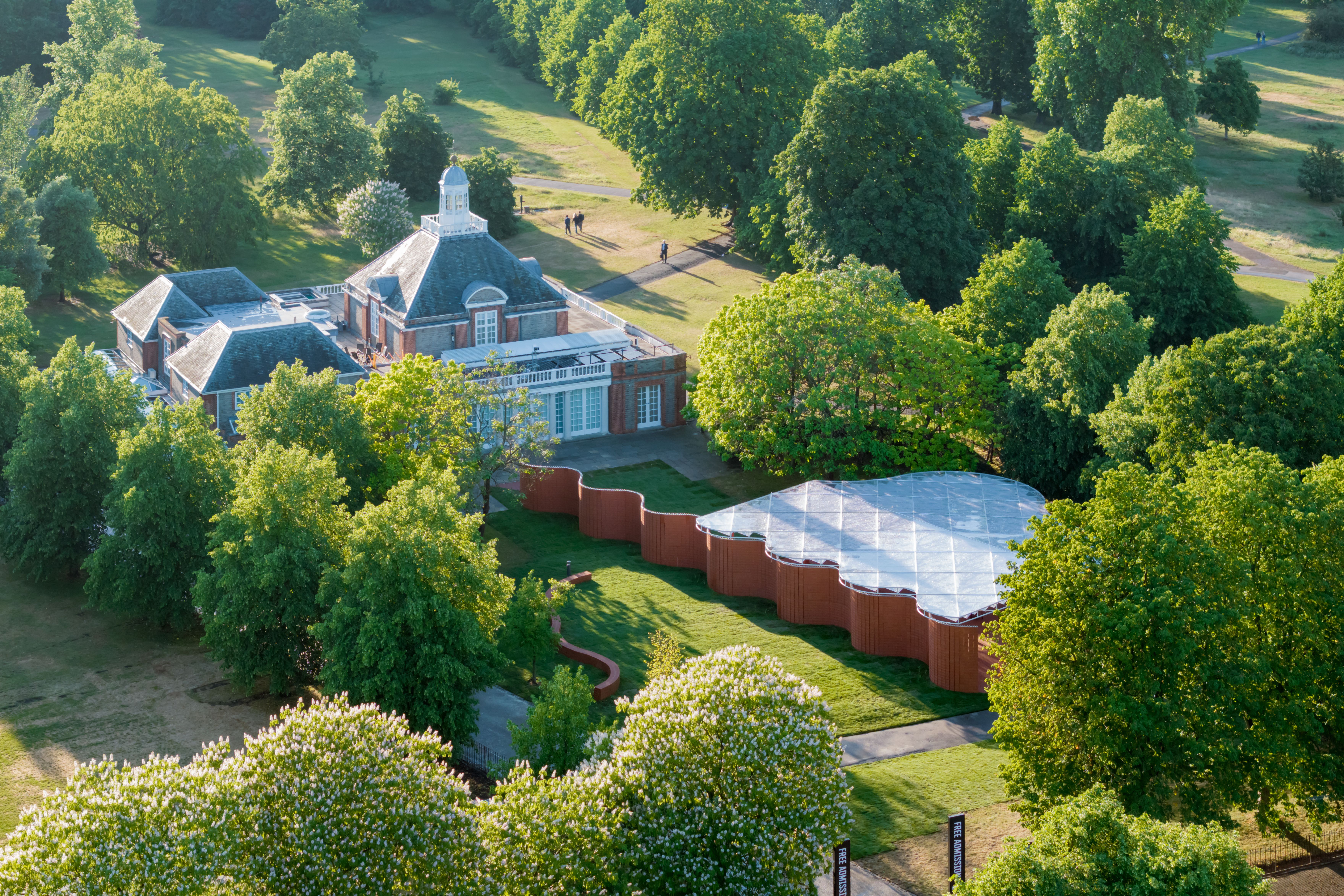
In the end it’s a gallery café. This has often felt like the limitation for the bombastic architectural statements that have landed in the leafy surrounds of Kensington Gardens since 2000. Every year since its inception, the Serpentine’s temporary commission has seen buildings straining to accommodate both the vision of their architects and the desire of the visiting public to have a sandwich. This year’s newly opened Serpentine Pavilion (part of an annual initiative that sees international architects design their first built structure in England) has tackled head-on the tension between the spectacular and the ordinary. This time around it is the turn of Mexico City’s Lanza Atelier, and the architecture studio has made a building that is generous enough to accommodate the scrunched-up napkins and discarded straws of the sticky-handed masses.
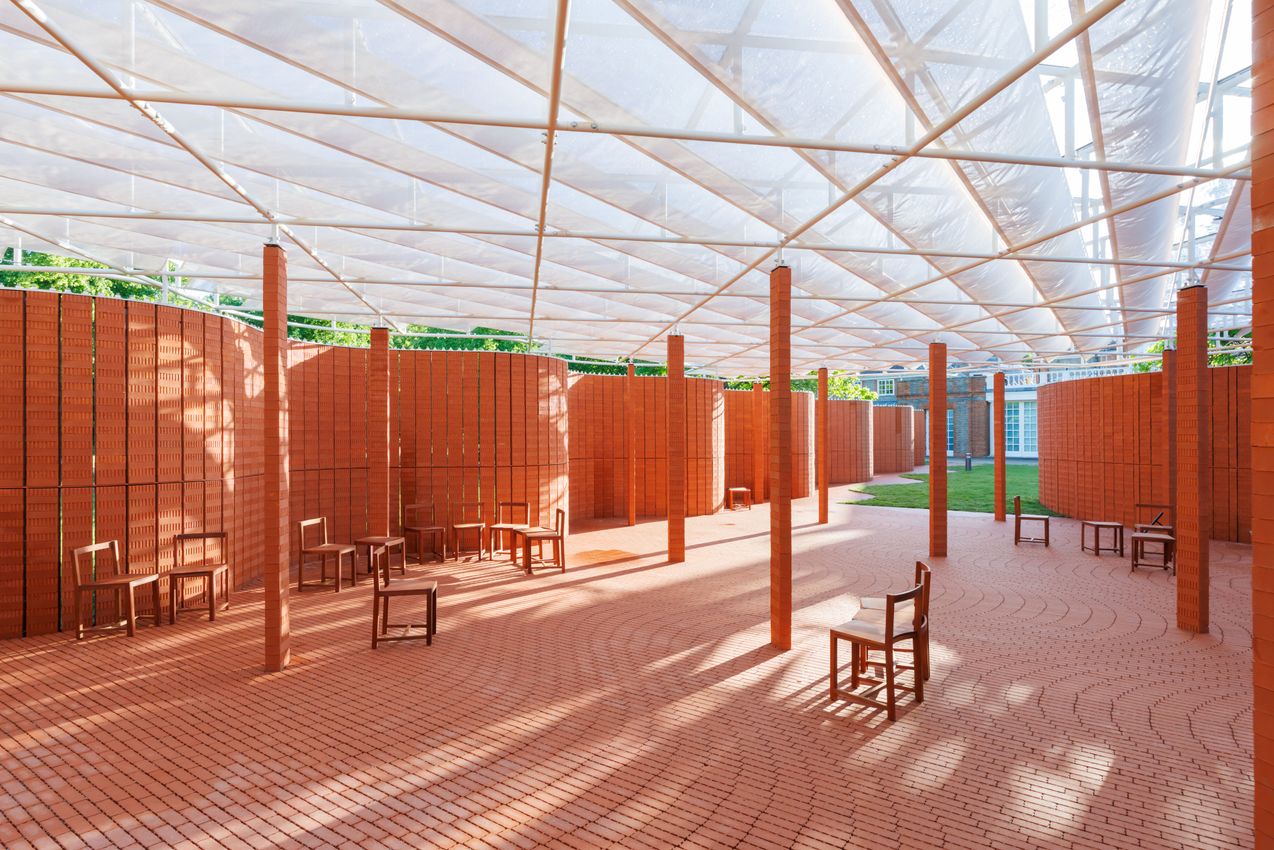
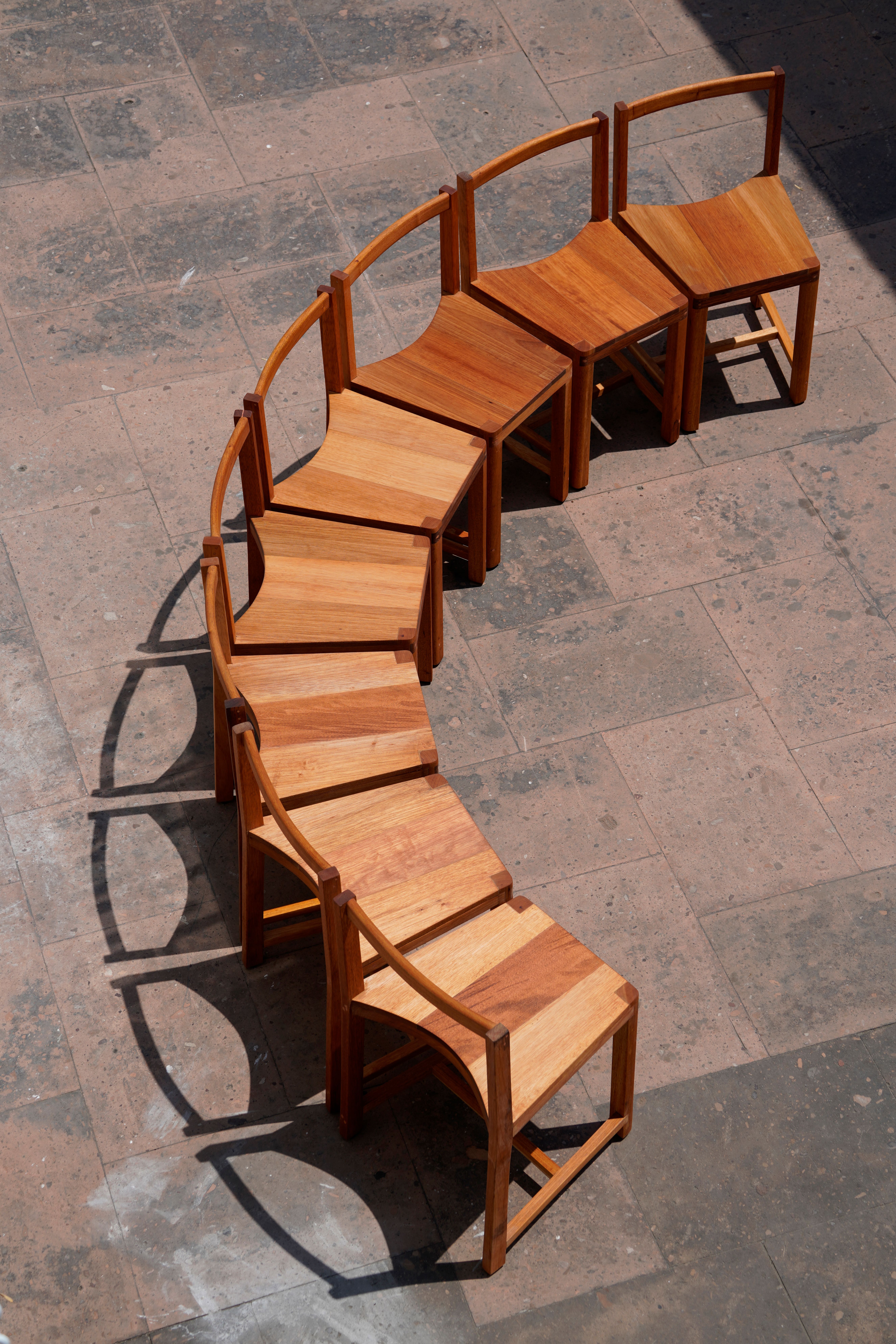
At the press launch Isabel Abascal, one of the architects of the pavilion—alongside her partner (in work and life) Alessandro Arienzo—explained that the pair were most looking forward to seeing how people would use and occupy the space when it opens to the public this weekend. The studio’s design invites a playful engagement. The pair say their custom chairs and tables are ready to be arranged and rearranged by visitors on the brick paved floor. Made of deep coloured hardwood, each table has a handle to make it easier to move. The simple shapes are narrower at the front than the back so, when arranged beside one another, they make gentle curves.
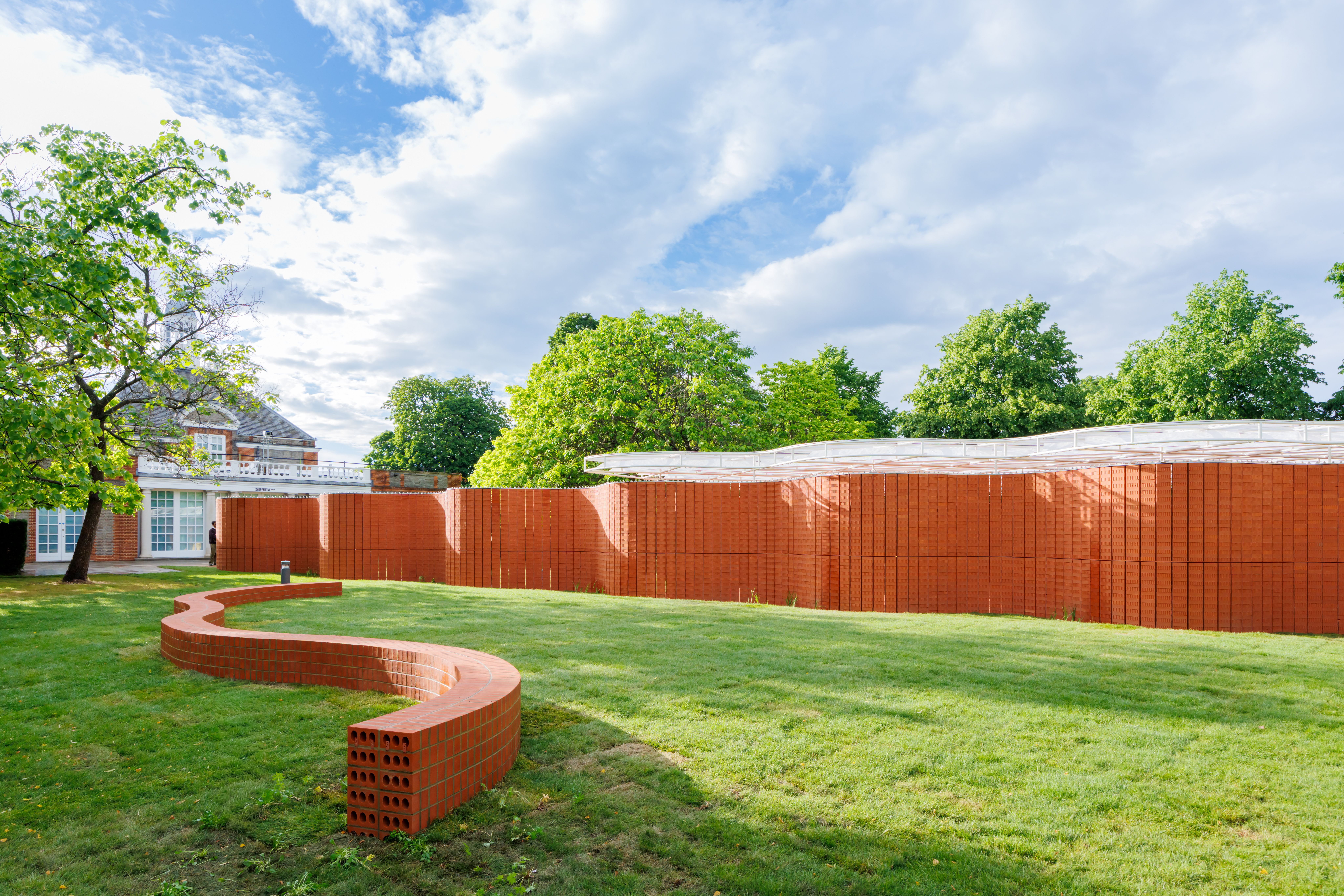
It’s “wiggly wall summer”, I overhear one commentator say, and the brick “crinkle crankle” design invokes an English vernacular that toes the line between magical and quaint. Until the sun illuminates the slanting solar shades, the roof could be said to have something of the service station about it. And that association is no bad thing. Maybe the building’s redeployment of the ordinary will make the space feel easier to enjoy.
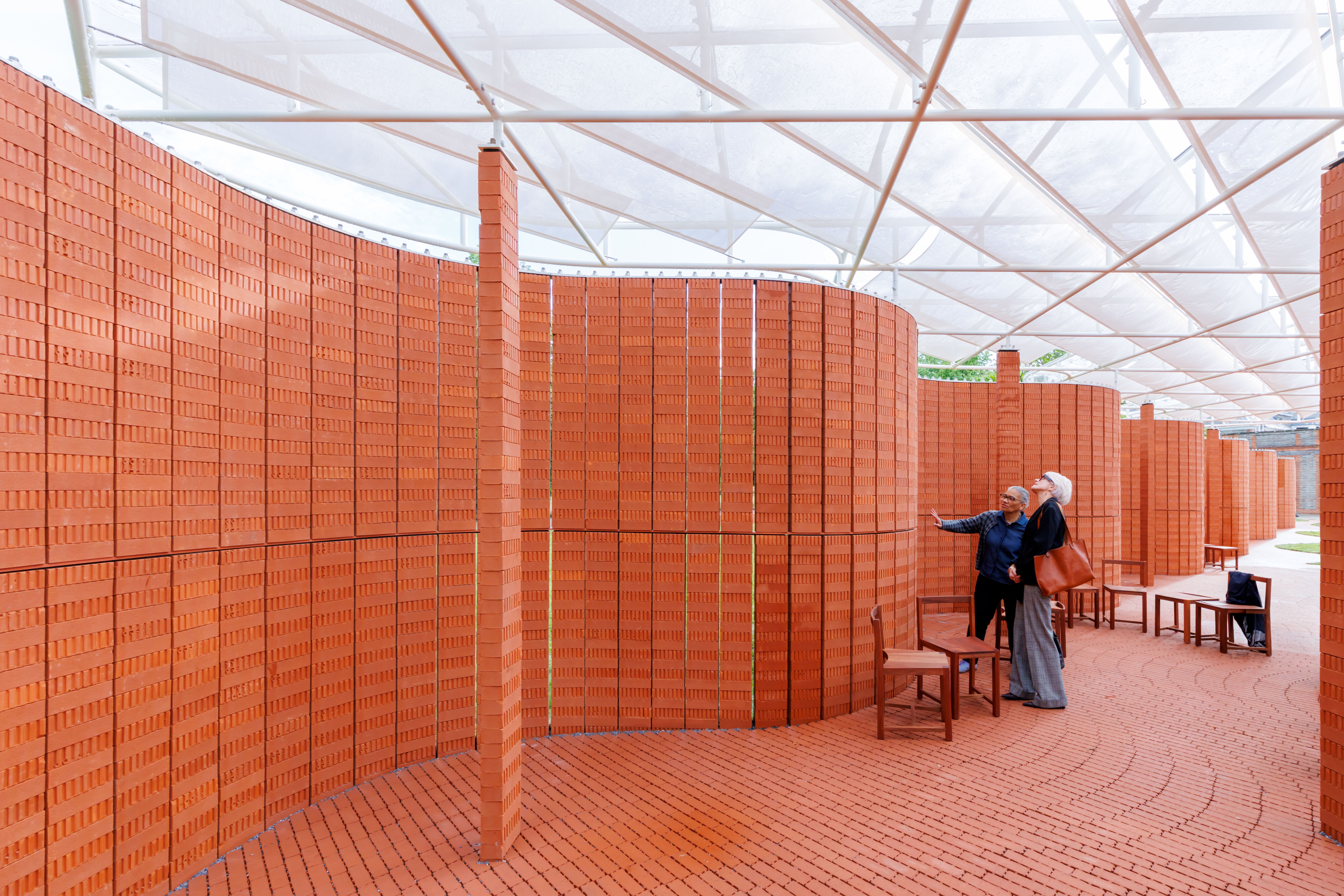
I’m told that the young children of the architects have visited the site already. I try to look around like my two-year-old daughter would. “What’s that?” she likes to say, challenging me to see what she sees. I see cracked bricks, edges knocked off, damp patches in the white fabric shades. Accidents, but retained willingly by the architects. I look at the white cables tidily strung between the steel tubes that make up the roof, and the neat custom lighting, tidied away in white housing to match the roof. The stamped code on the rotated bricks, 93020, would ordinarily be hidden inside the wall but instead has been purposefully exposed by Lanza; the imprinted numbers look like the marks left behind by five fingers prodding.
“Until the sun illuminates the slanting solar shades, the roof could be said to have something of the service station about it”
These 30,000 bricks are the first to be used in the pavilion’s 25-year history. An expanse of Sienna Red Brick has been threaded on to steel like friendship bracelets and stacked like children’s blocks. Each brick was extruded, wire-cut, fired and stacked on pallets in Ewhurst, Surrey before being transported here to be assembled in the rapid six-week build. Without mortar and designed to be dissembled, they promise (but do not deliver) the possibility of imminent collapse. More than once, I see someone push or lean against the unyielding brick surface to see if it moves.
Built to trace the row of mature sweet chestnut trees that one edge of the pavilion sits alongside, Lanza became interested in sinuous crinkle crankle walls, a design that reduces the need for bricks by using curves to add stiffness. They are a feature of the East Anglian pastoral. I have often driven alongside long stretches of these entertaining features, stretching around Suffolk estates.
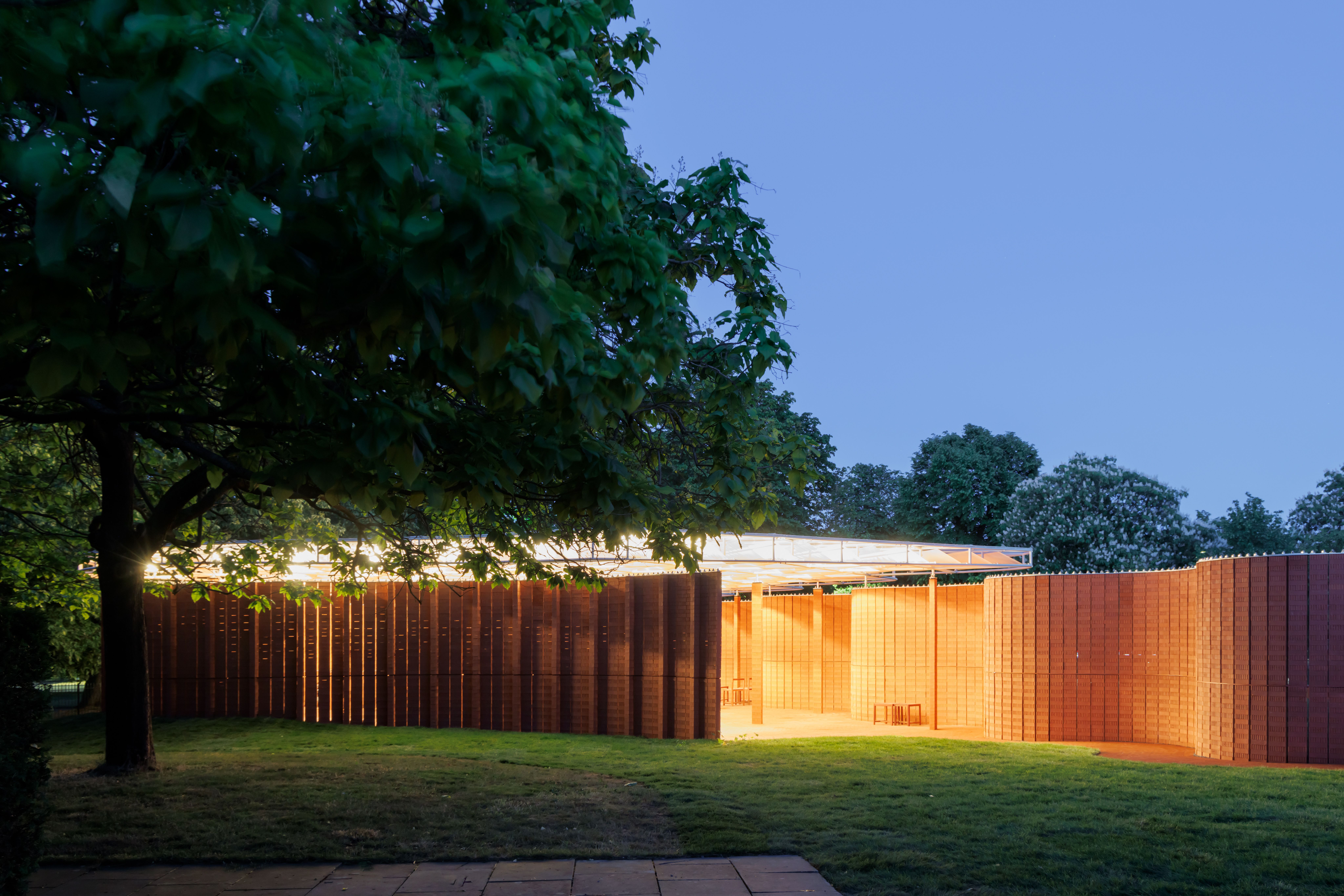
Kensington Gardens, the royal park where the Serpentine building once served as a tearoom, has often inspired a kind of English indulgent fancy. It was the setting for JM Barrie’s first Peter Pan novel, while an 18th-century poem by Thomas Tickell created a fairy lore for the sunken Dutch Garden in nearby Holland Park. The “English garden” in popular imagination is still a place where adults indulge a sense of dreamy play. In its restrained use of familiar materials, there is something inviting about this year’s pavilion, and I too would like to see how it is reimagined in real life by those who will use it this summer.
The apparent parochialism of the local architectural tropes referenced by the architects belies the firmly transnational nature of the project. For its funding Serpentine pavilion relies on global resources. It is “made possible by” Goldman Sachs, a New York based investment firm with a total balance sheet of $1.81 trillion USD (£1.34 trillion). It is the first building I have visited that boasts an official timepiece, provided by Rolex. AECOM, the engineering, infrastructure and built environment giant, serves as technical advisor. Purposeful or not, the pavilion in its royal setting lays bare the history of the English vernacular, both global and grim. It remains to be seen whether the privatised space can be reclaimed by those that visit, through their leisure and their play.
“The pavilion in its royal setting lays bare the history of the English vernacular, both global and grim”
With all its clever use of lawn and brick, the building draws on references freighted with power. The first of these serpentine walls in England appear to have been built by Dutch engineers working in East Anglia to help landowners marshal the damp and flat landscape. In Dutch they are called slangemuren, “snake walls”. But, as with garden gnomes, water features and the lawn, perhaps this technology of the landed might be incorporated into a more interesting and more equitable aesthetic language.
I hope to see this building succeed in its quiet iconoclasm. At once a tale of the English brick, and a testament to the links between the global and the local. Artists and architects alike are prone to believe in a kind of alchemy: that from the filthy lucre of global capital they can create golden pockets of collective experience. Here is a place, free to visit, where the public can encounter one fairytale of how we might assemble and take command of a place.
In the stiff press day crowd, where men’s ankles were exposed by hoiked-up trousers, women’s hair carefully tied in ribbons, where the archetype of the Margaret Howell-wearing curator was replicated in the uniforms of the catering staff, it was not possible to indulge this architectural dream. Sitting there for a few hours and drinking cups of coffee, I was not sure that it would be appropriate for me to move my chair, or to stand on the stage, or to lie down. But perhaps, in the coming weeks when people lean against sun-warmed brick, there will be real opportunity for play. —[O]
A respected voice in contemporary art discourse.
Focusing on ambitious storytelling and insightful art-world commentary. Ocula Magazine publishes in-depth interviews, critical essays and timely analysis on the artists, exhibitions and ideas driving the global art world.
Learn more about Ocula Magazine
Showcasing the best of the art world.
Ocula partners with galleries from around the world to highlight their artists, artworks and exhibitions. Gallery membership is by application and invitation, with each member vetted by an independent panel.
Learn more about Ocula Membership
Specialises in the sale of major artworks.
Led by a team with deep ties to the world’s leading auction houses, galleries and collectors. Ocula’s advisory team offers bespoke services to high-net-worth clients from around the world who are looking to acquire the best of contemporary and modern art.
Learn more about our team and services