





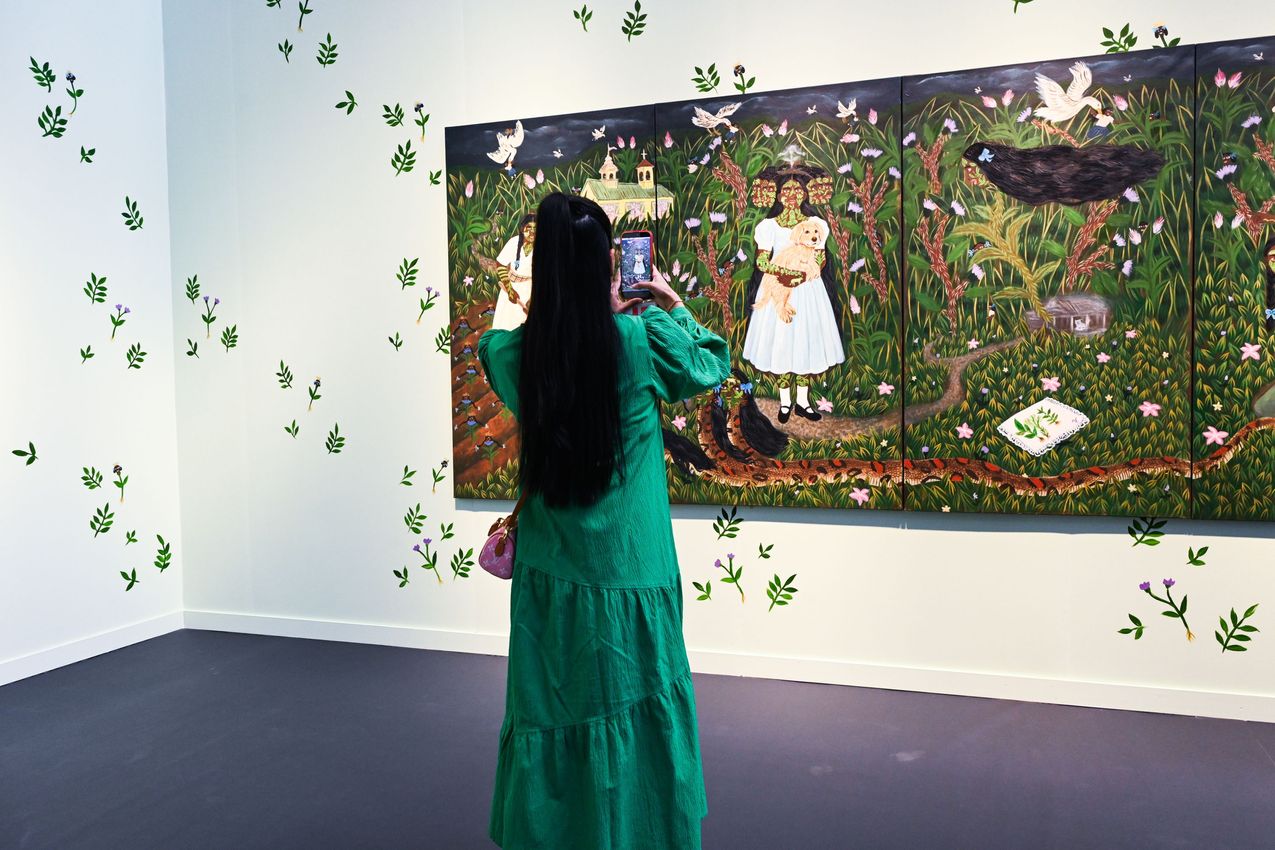
‘Like a Malfunctioning Theme Park Ride’: Banality and Body Horror at New York Art Week
The spate of art fairs and auctions in New York this May had much to reveal about the state of American art, as Harry Tafoya writes in a new diary. Save to My OculaThere’s no such thing as a convenient or neutral way of looking at art. When I teach, I try to get my students to consider the ways that their setting shapes their opinion: how the sound of the city nags at their focus, how the music I play subtly sets the mood, how being in a classroom forces them to write and think in particular ways. If they mention that they hate my DJ-ing in their responses, I’ll know they have the presence of mind to recognise other, more subtle forms of annoying manipulation. My intention is to get them to listen for background noise, to suss out the commercial and political interests lurking at the edge of entertainment. It’s impossible to account for all the layers of static, but with a certain amount of effort and attention, they can hopefully dial down the chaos to reach a point of understanding that’s entirely their own.
Even prior to New York Art Week, I could feel my brain being strained by outside noise. Like a malfunctioning theme park ride, the geopolitical structures supporting the art world have become so rickety and perilous that it’s hard to get much amusement out of it; never mind pay attention to the work itself. It was fitting that the enduring image of this year’s Venice Biennale was of people scuba-diving in tanks of filtered piss. New Yorkers don’t typically go for topless, performative nonsense (unless it’s Fashion Week), so I didn’t expect this May’s spate of art fairs to radically rock the boat one way or another. The art market, like any form of business, relies on storytelling as a point of sale. But my overriding impression as the week approached was of an eerie stillness and indecision, an industry-wide trepidation about the state of the world and art’s place in it.
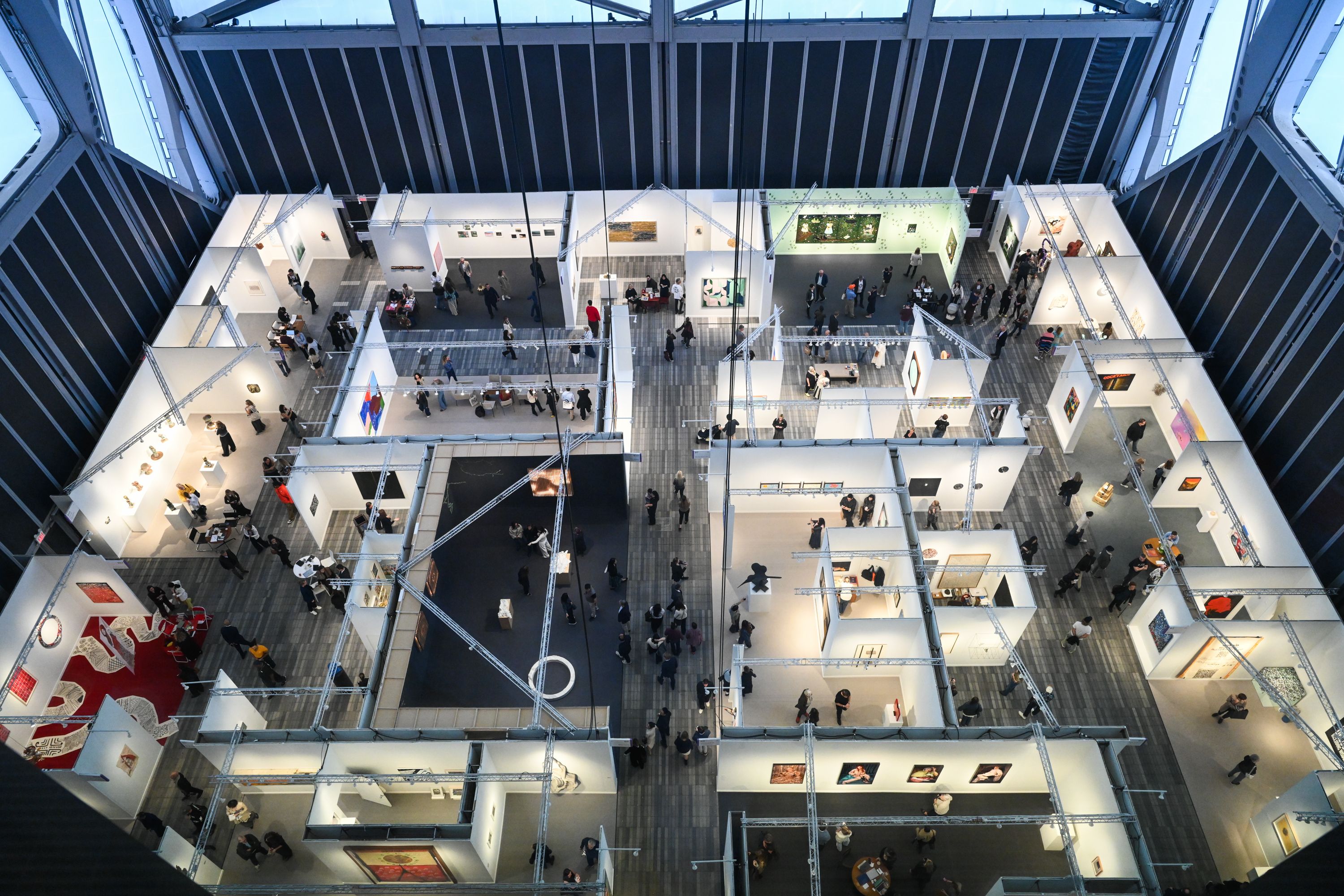
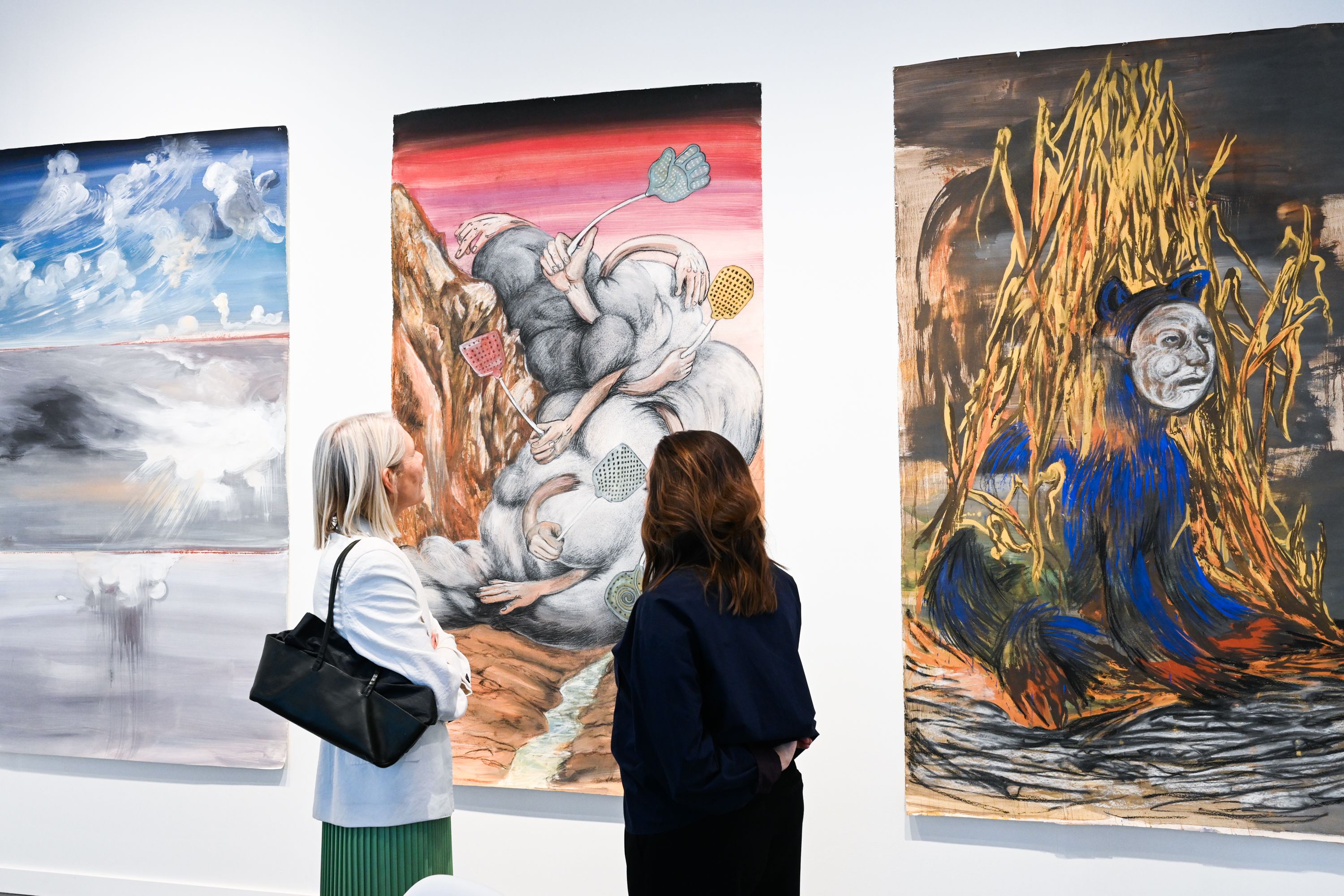
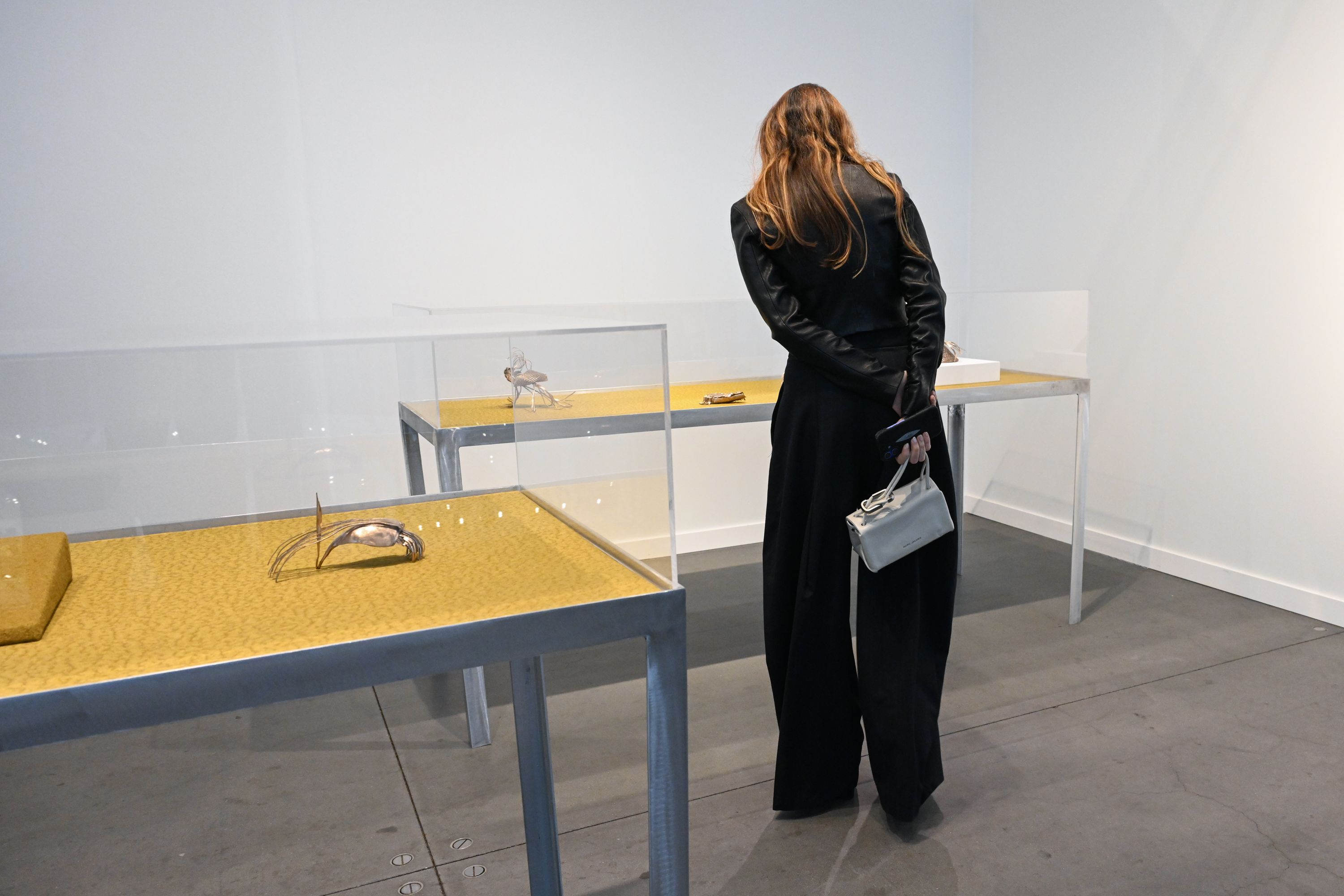
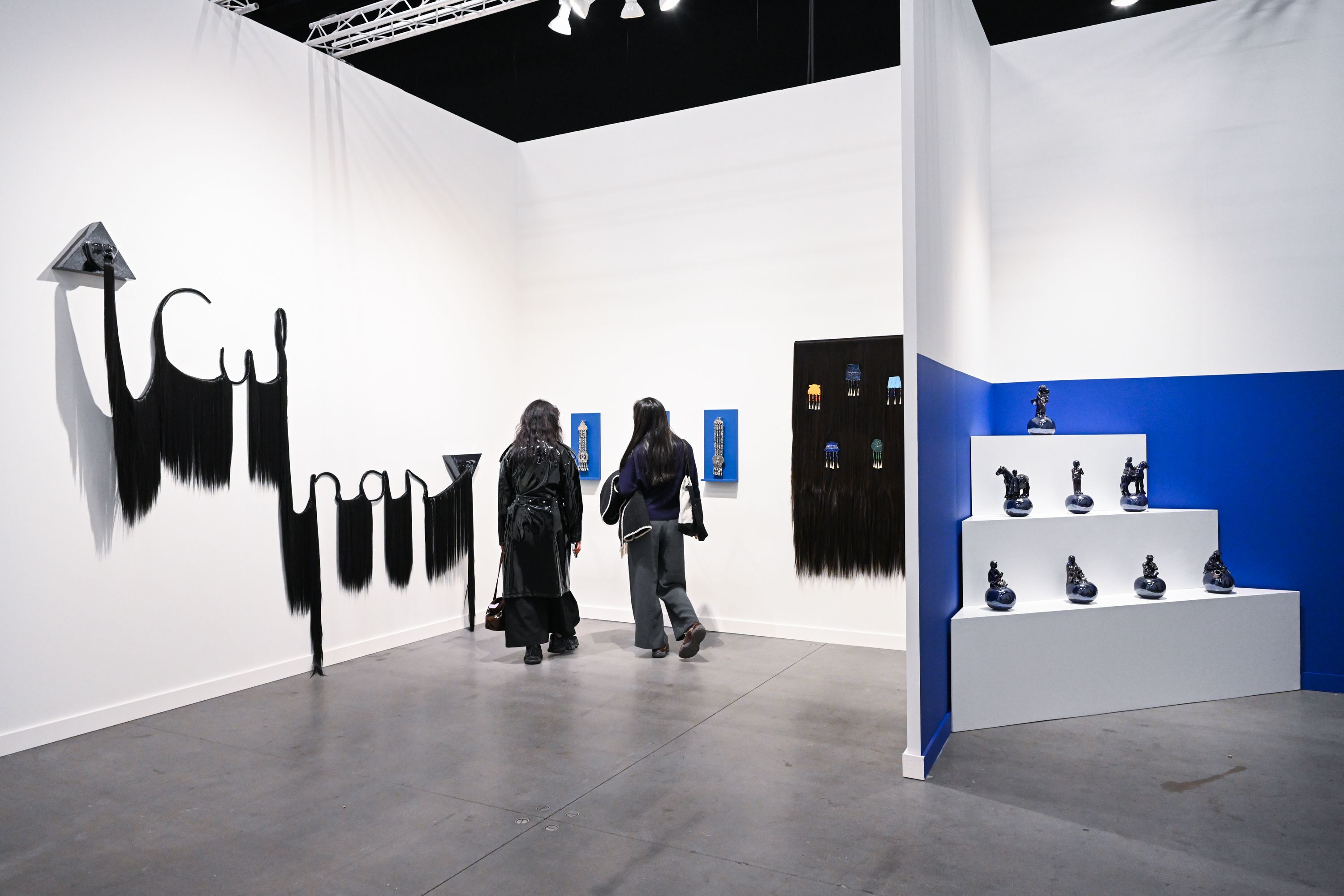
I was sick at the beginning of this art week, bogged down by a chest infection I’d started calling my “lung complaint”. There’s no evidence that being dramatic has health benefits, but the more hoarse and disgusting I sounded, the more weirdly animated I felt. I attended art fairs, gallery openings and one-off events by leaning into upsurges of energy when I wasn’t coughing or wilting on to my fainting couch. I’m not sure if the overwhelming lethargy I felt was medical or just the ordinary ennui I usually feel when I have to go to art fairs. Artist Josh Kline’s much-discussed recent essay, New York Real Estate and the Ruin of American Art opens with an acknowledgment that the art world is itself deeply sick, and I had a vague plan to keep a running list for broader symptoms to match to my own. I gave up on this idea pretty quickly: banality and body horror don’t go great together, and projecting your own sickness everywhere is about as unpleasant as it sounds.
“The geopolitical structures supporting the art world have become so rickety that it’s hard to get much amusement”
“New York City itself now constitutes a core problem in American art,” I kept wheezing, as I hauled myself out of bed to make-do galleries and convention centres across town. Like everyone who I spoke to about Kline’s essay, no one disagrees with his diagnoses: an absurdly high cost of living, art school debt traps, galleries boosting and rewarding risk-averse work, which one day (if it’s very lucky) might one day get treated as a financial asset itself. As far as I know, no one has heeded Kline’s call to move to Philadelphia—or possibly Indonesia. Even if they did, it’s not like they’d need extra help gentrifying themselves one way or another.
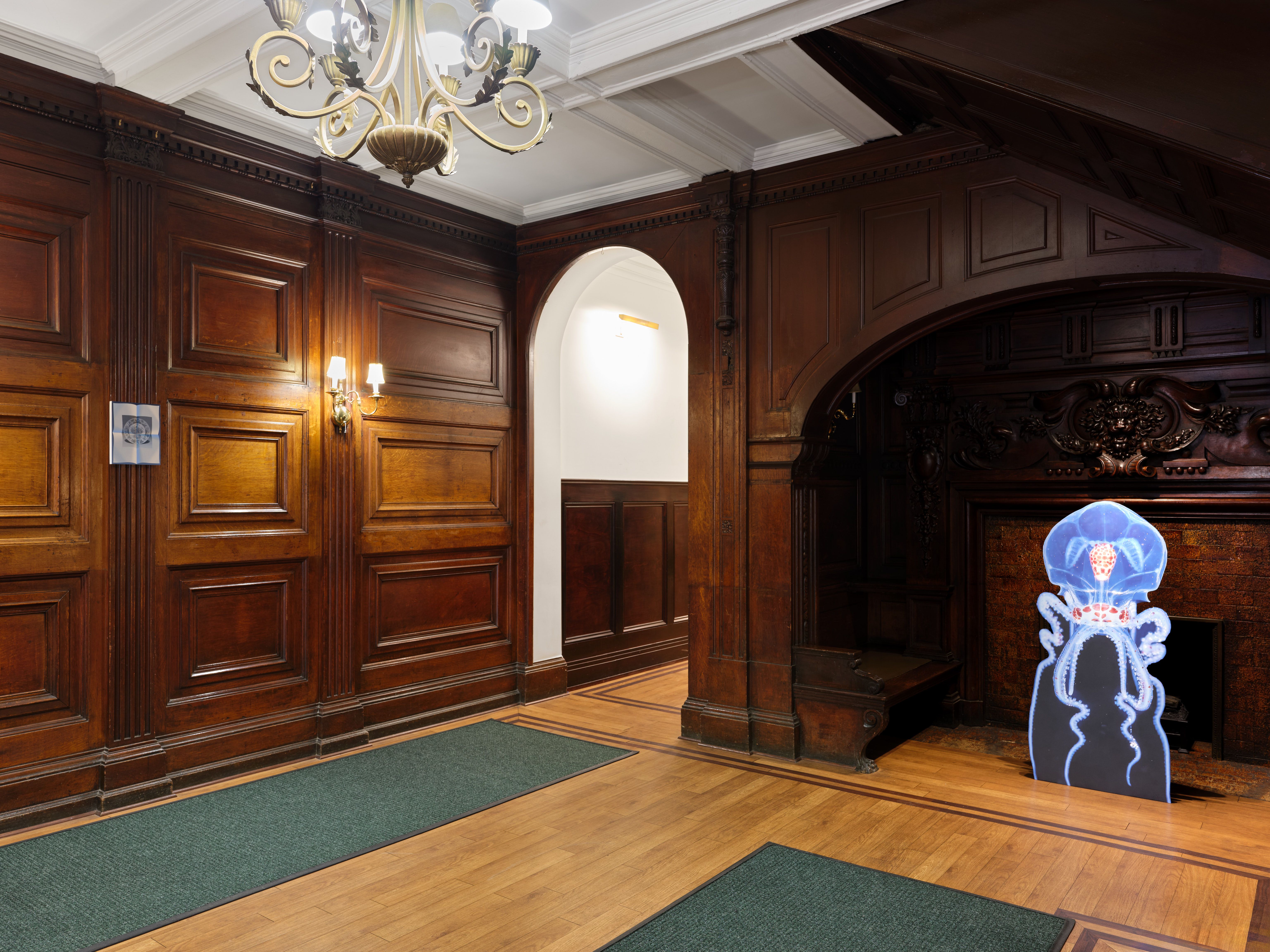
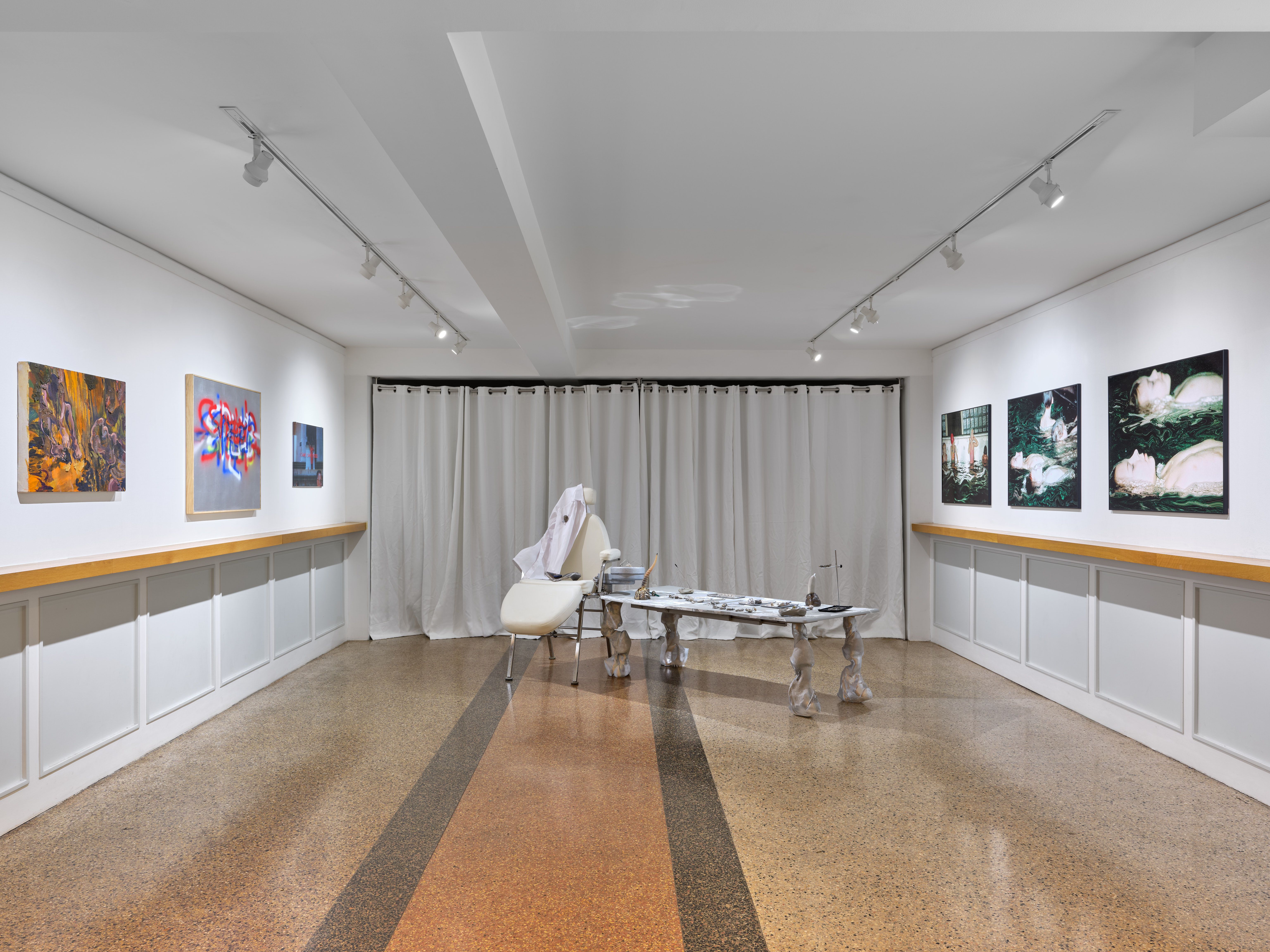
American hegemony represents another core problem in American art, and a senile global power prone to violently lashing out and frantically changing the rules of engagement can’t possibly seem like a reliable place to do business. That said, it didn’t stop Christie’s netting a record-breaking $1.1 billion USD in the city’s spring auctions. One London dealer, relieved at selling out her wares, confessed that it’d been a risk and a headache coming to the States in the first place. Esther III, the only fair I’m aware of that people actually seem to enjoy going to, isn’t likely to return next year. The venture, run by Margot Samel and Olga Temnikova out of the Estonian House, was notably short on European dealers this year but heavy on downtown New York players.
Unlike Frieze or TEFAF, Esther III’s charm is that, despite its polish, it still feels incredibly make-do. Originally serving blue-collar residents, the Estonian House’s Beaux-Arts building (where the Esther fairs have been held since 2024) was purchased by Estonian refugees after the Second World War, who transformed it into a cultural and community centre. I love seeing the centre’s gorgeously overwrought wood panelling, vitrines full of creepy folk art dolls, and looming hallway portraits of old club presidents interspersed with offerings of weird new art from the fair itself.
“American hegemony represents a core problem in American art”
Apart from the questionably ergonomic seating provided by experimental furniture designer chairchairchair, Esther was markedly less freaky and more tasteful than in past editions. My favourite pieces were Canadian artists Delphine Hennelly’s neon Rococo-riffing canvases and Eli Bornowsky’s mathematically busy abstraction, both of which wouldn’t rock the boat in any well-appointed living room. The surest sign that we’re stuck in an interregnum is that half-figurative, half-abstract painting (halfstraction?) was king. It dominated the big fairs and even much smaller showcases. Here were the gallery shows who did it right: Seth Price’s metallic minimalism at Petzel, Philadelphia-born painter Sedrick Chisom mogging Peter Doig at Matthew Brown, Jed Moch’s horse-y-scented, yee-haw group show The Hammer at Amity, Magnus Peterson Horner’s smutty riffs on art history (complete with porn-y subjects and a loop of the artist showing his balls and taint) at Galerie Tenko Presents.
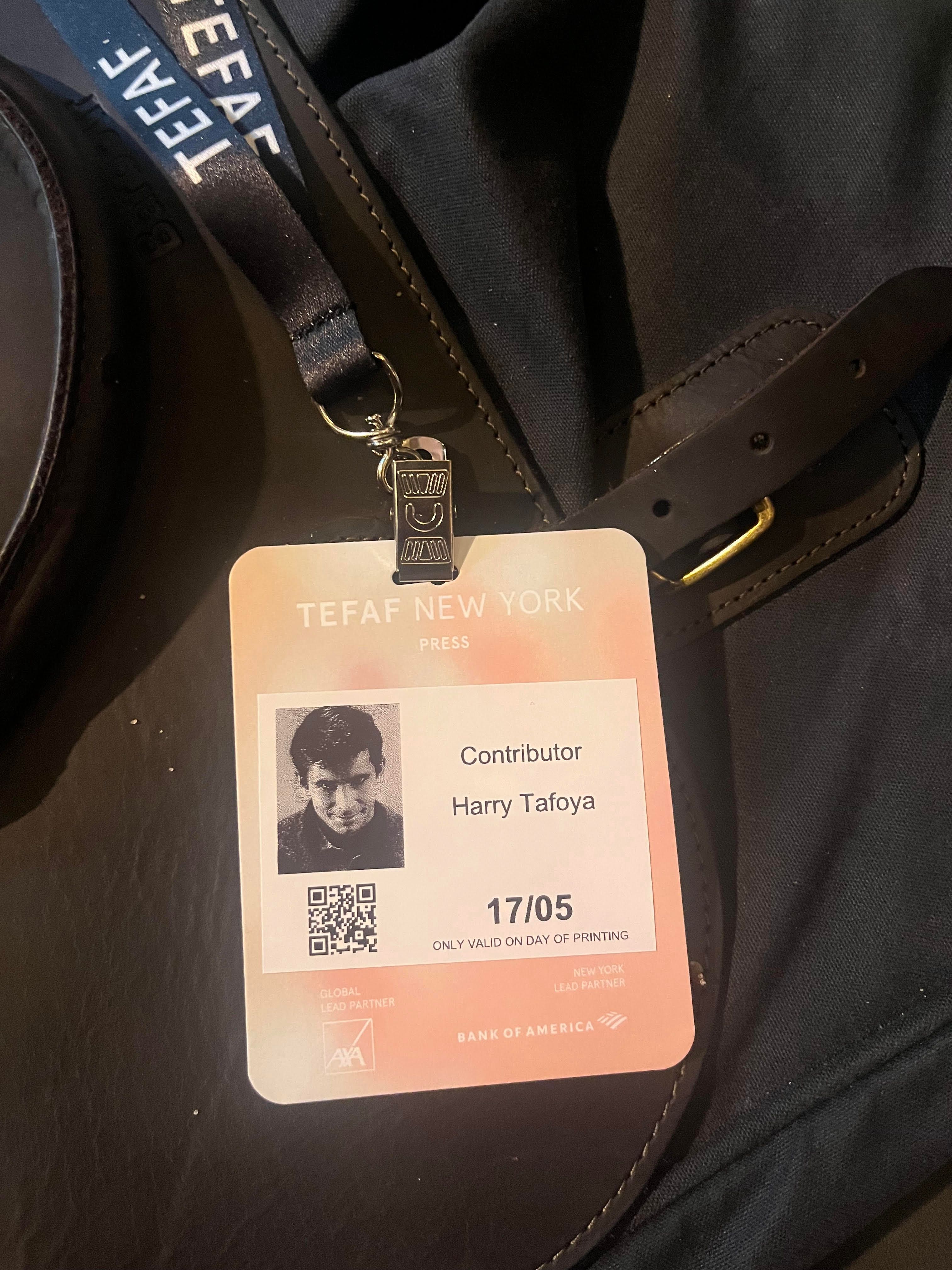
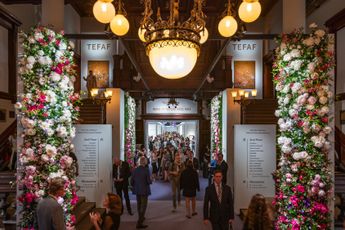
I was already tired of TEFAF (the fair organised by The European Fine Art Foundation) within moments of setting foot in the Park Avenue Armory. After going through the wrong entrance and being escorted like a peasant to the correct one, I’d discovered that they’d accompanied my press pass with a picture of actor Anthony Perkins as Norman Bates in Psycho, mistaking a film still I’d once used on social media for a self-portrait. I wouldn’t have expected much social commentary from such an unapologetically luxurious art fair, but while lingering at one gallery’s suite, I overheard a salesperson exclaim that Gordon Parks’ photographs of segregation in the South were his most valuable and sought-after.
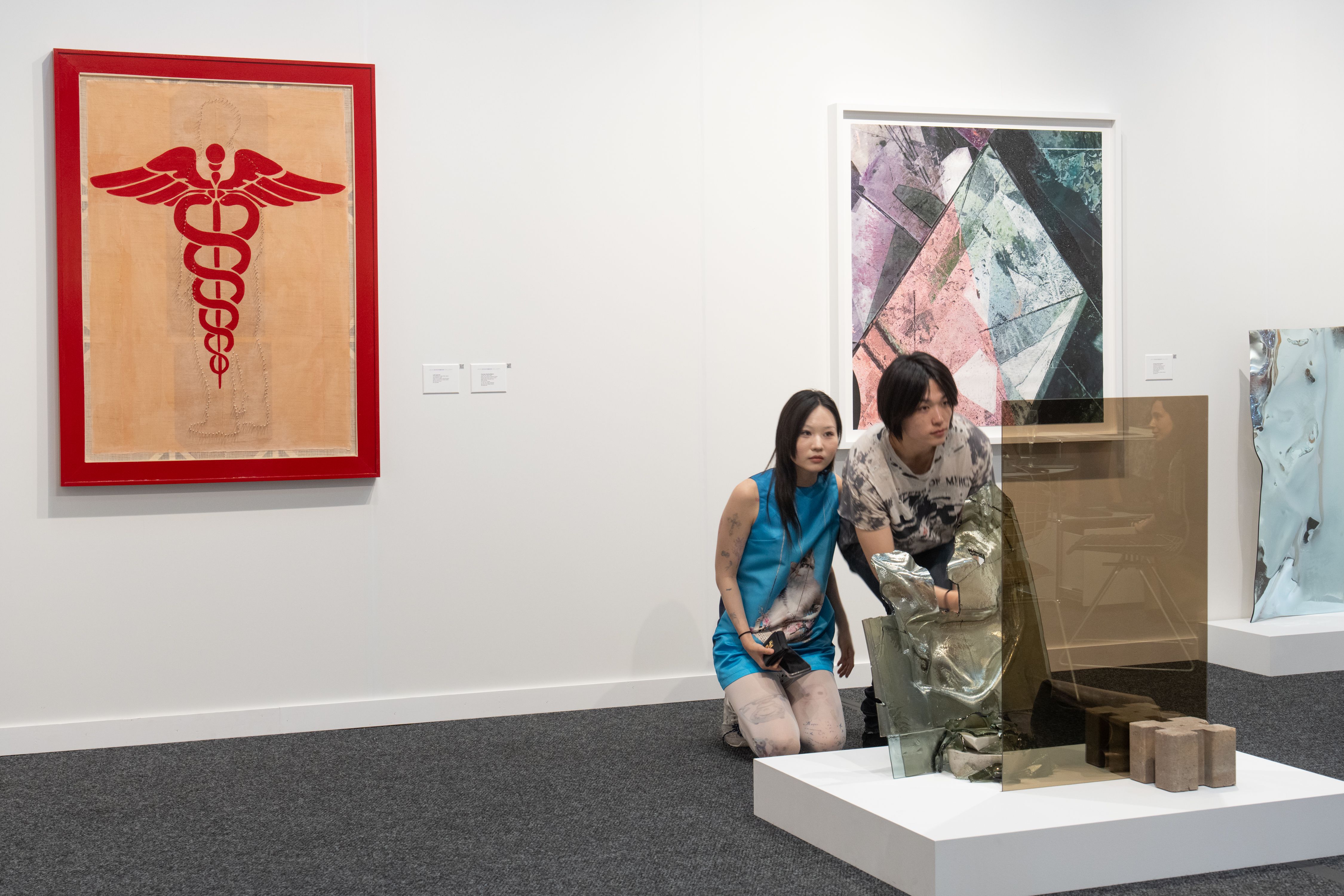
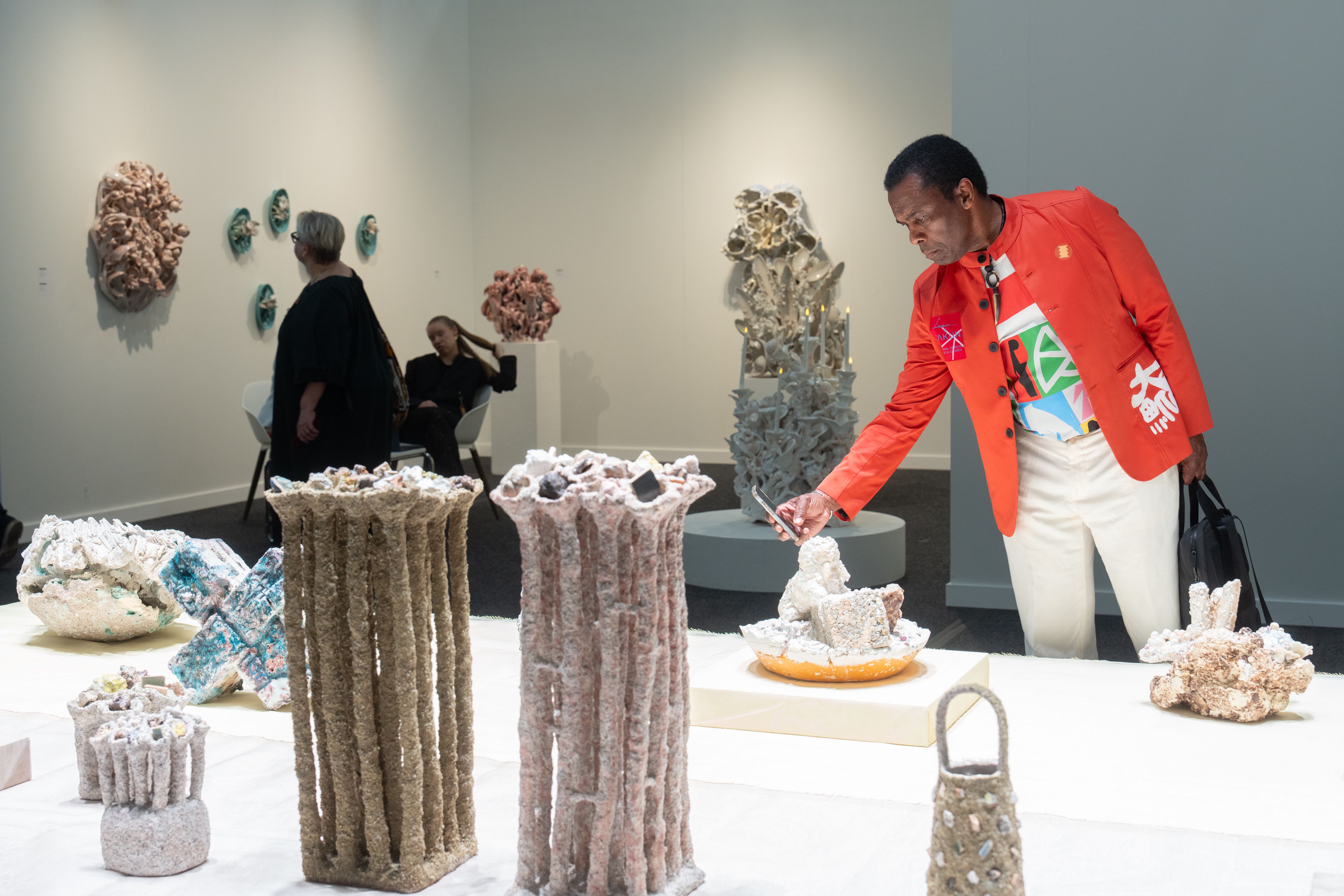
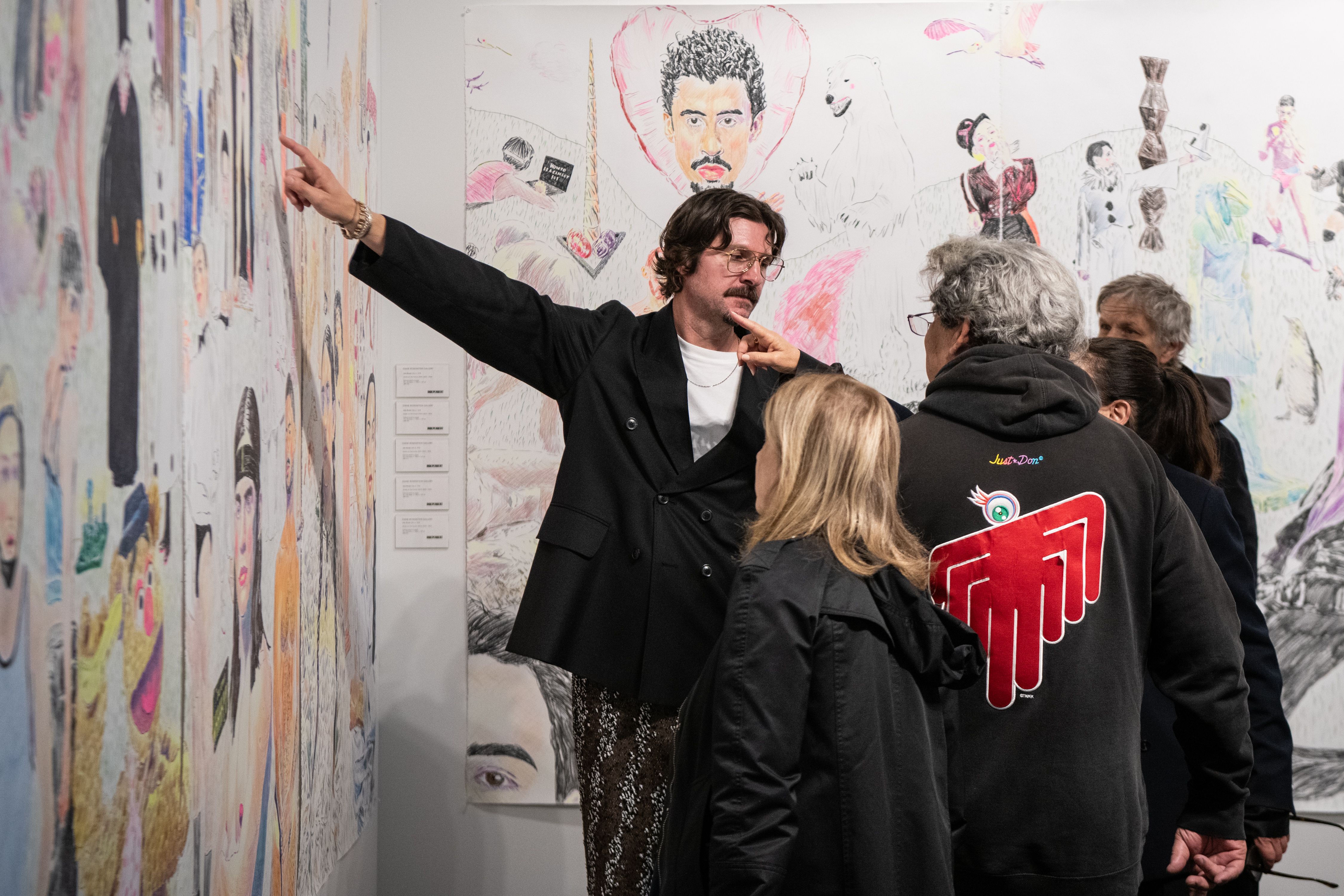
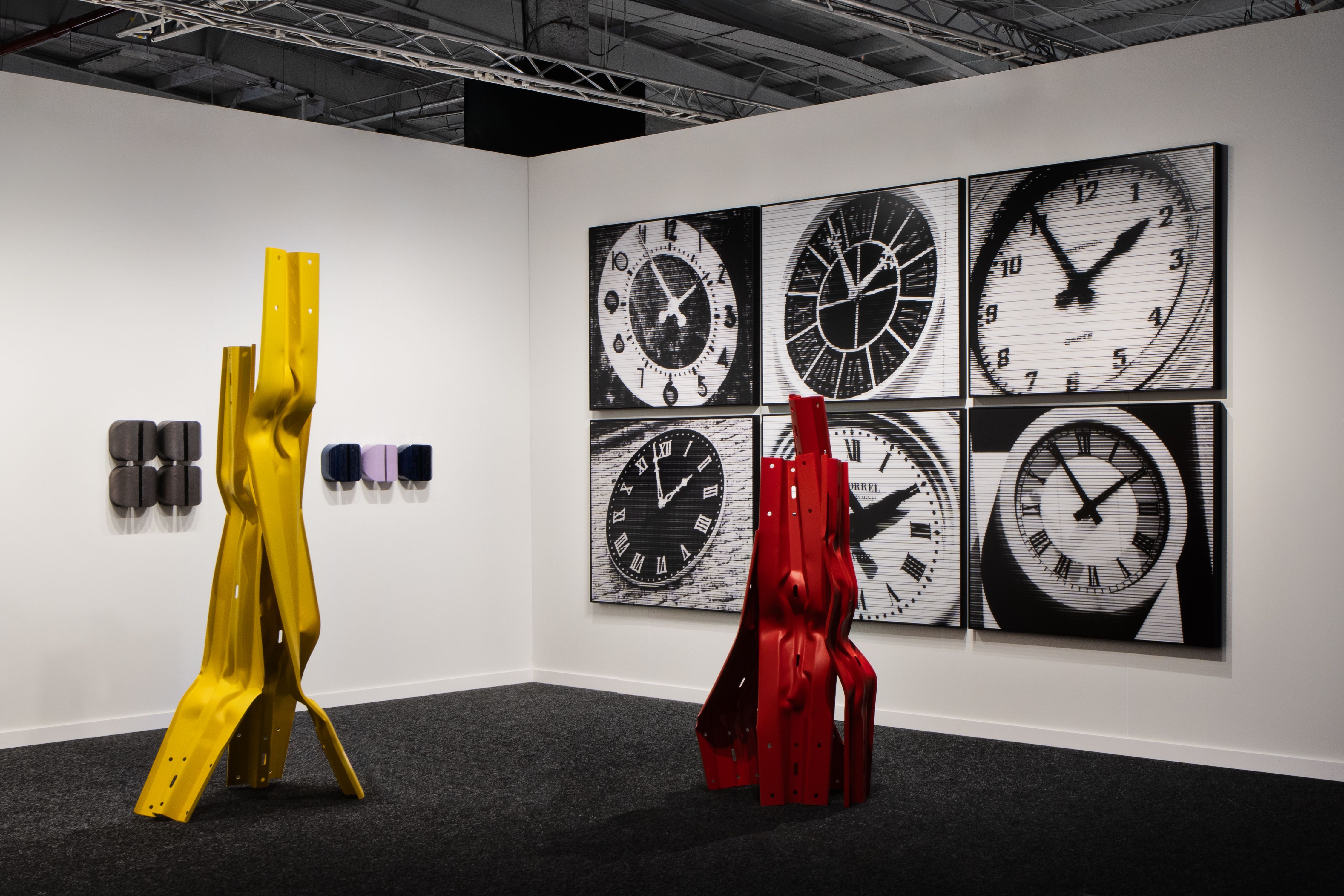
Frieze and the Independent fairs went by in a blur. Sales at Frieze included two works by El Anatsui for $2.2 million and $1.9 million at White Cube, and a work by the late Georg Baselitz for €1.4 million at Thaddaeus Ropac, while Hales sold the centrepiece of its solo presentation by Virginia Jaramillo for $540,000. Frieze’s Focus section was great, especially the booths by Soft Opening, Gordon Robichaux and Europa. I remember noting certain trends: shiny magpie objects, cheesy animatronics, photography stretched on to canvas or mapped on to objects as outlandish sculpture.
Both fairs exceeded my expectations in terms of tasteless corporate partnerships. At Deutsche Bank’s Reflections of Commitment, a mirror to take selfies provided a good opportunity to contemplate the company’s recent money-laundering charges. Comme Des Garçons’ pop-up in the middle of the Independent, which was more or less a forest of dresses, felt more cynical than craftsman-like. The only thing missing from Frieze’s Turkish Airlines booth was a cut-out of former New York mayor Eric Adams.
“The surest sign that we’re stuck in an interregnum is that half-figurative, half-abstract painting (halfstraction?) was king”
Both the Independent and TEFAF dedicated sections to two of my very favourites: American Pictures Generation artist Gretchen Bender and Danish “painter of silence” Vilhelm Hammershøi. But the effect of seeing them in a fair context was bizarre. Bender’s television sets, emblazoned with prompts like “Military Research” and “Money For War” are meant to trouble passive entertainment; framing the endless glut of 24-hour news, trashy reality TV and soap opera programming as crafting our sense of reality while obscuring larger structures of power. Showcased beside a bunch of inventory, her critique of ideology became just another piece of content to skip over. Hammershøi’s paintings of empty rooms are all about atmosphere, offering a private ballroom all to oneself to feel out the contours of a suspended moment of pause. Set against the rush of an art fair, the noise becomes too deafening for a viewer to understand what is roiling from within.
As a critic, I’m interested in how the frame of commerce shapes and determines what we understand art to be. I’d love it if it were only enough to just love and hate art on its own merit. Instead, the overwhelming thud of a disjointed art week made it difficult to appreciate most of the work with your own eyes. —[O]
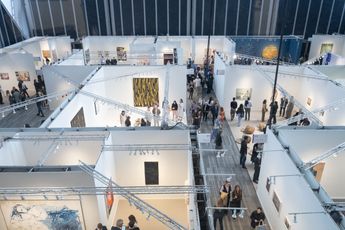
Main image: Frieze New York (2026). Courtesy Frieze.





















A respected voice in contemporary art discourse.
Focusing on ambitious storytelling and insightful art-world commentary. Ocula Magazine publishes in-depth interviews, critical essays and timely analysis on the artists, exhibitions and ideas driving the global art world.
Learn more about Ocula Magazine
Showcasing the best of the art world.
Ocula partners with galleries from around the world to highlight their artists, artworks and exhibitions. Gallery membership is by application and invitation, with each member vetted by an independent panel.
Learn more about Ocula Membership
Specialises in the sale of major artworks.
Led by a team with deep ties to the world’s leading auction houses, galleries and collectors. Ocula’s advisory team offers bespoke services to high-net-worth clients from around the world who are looking to acquire the best of contemporary and modern art.
Learn more about our team and services