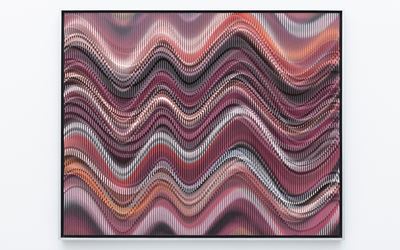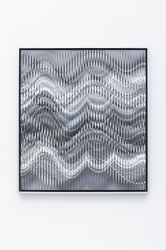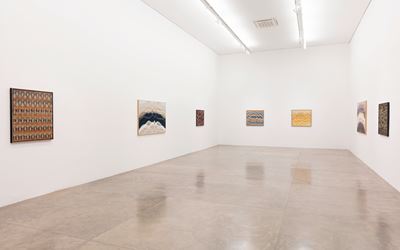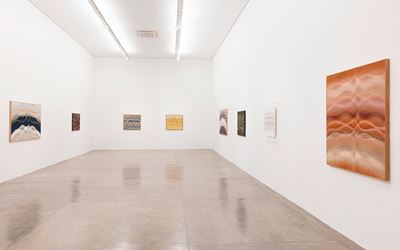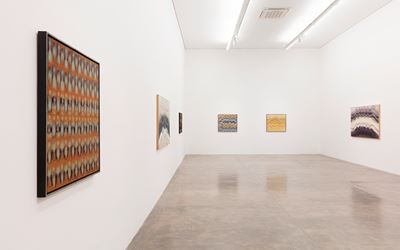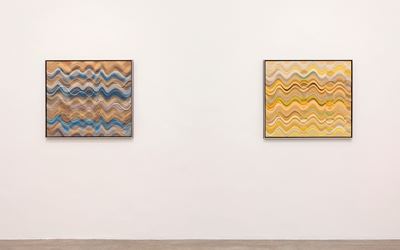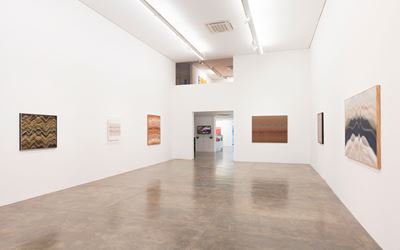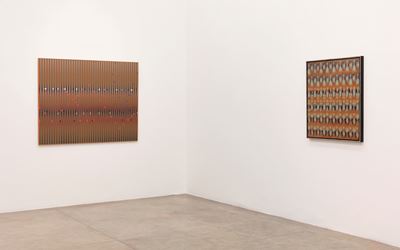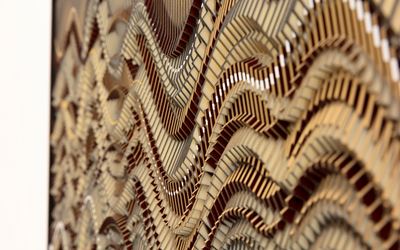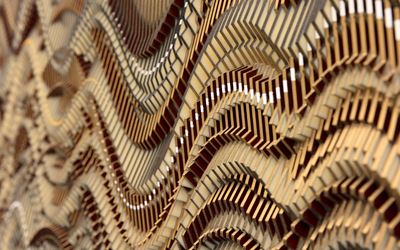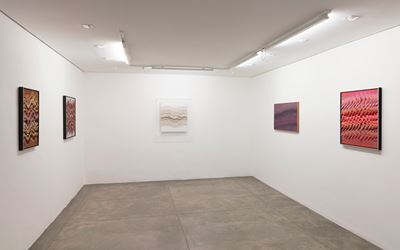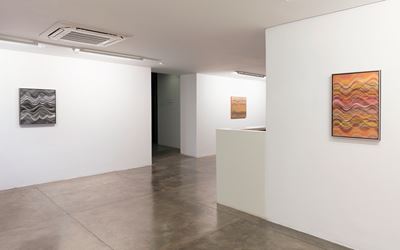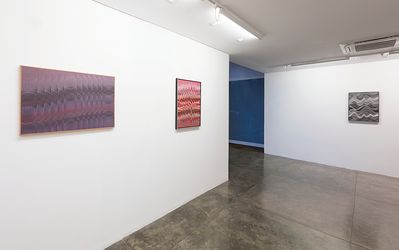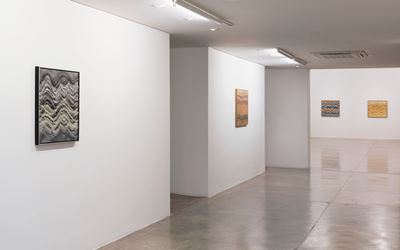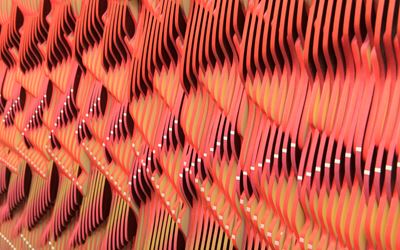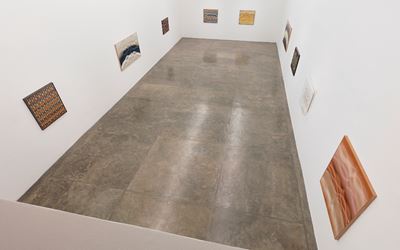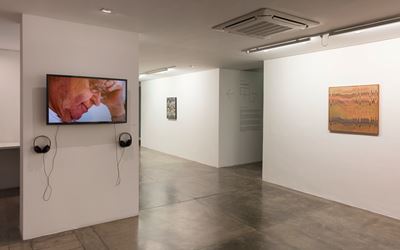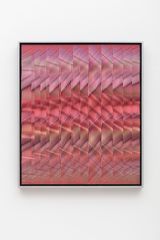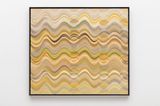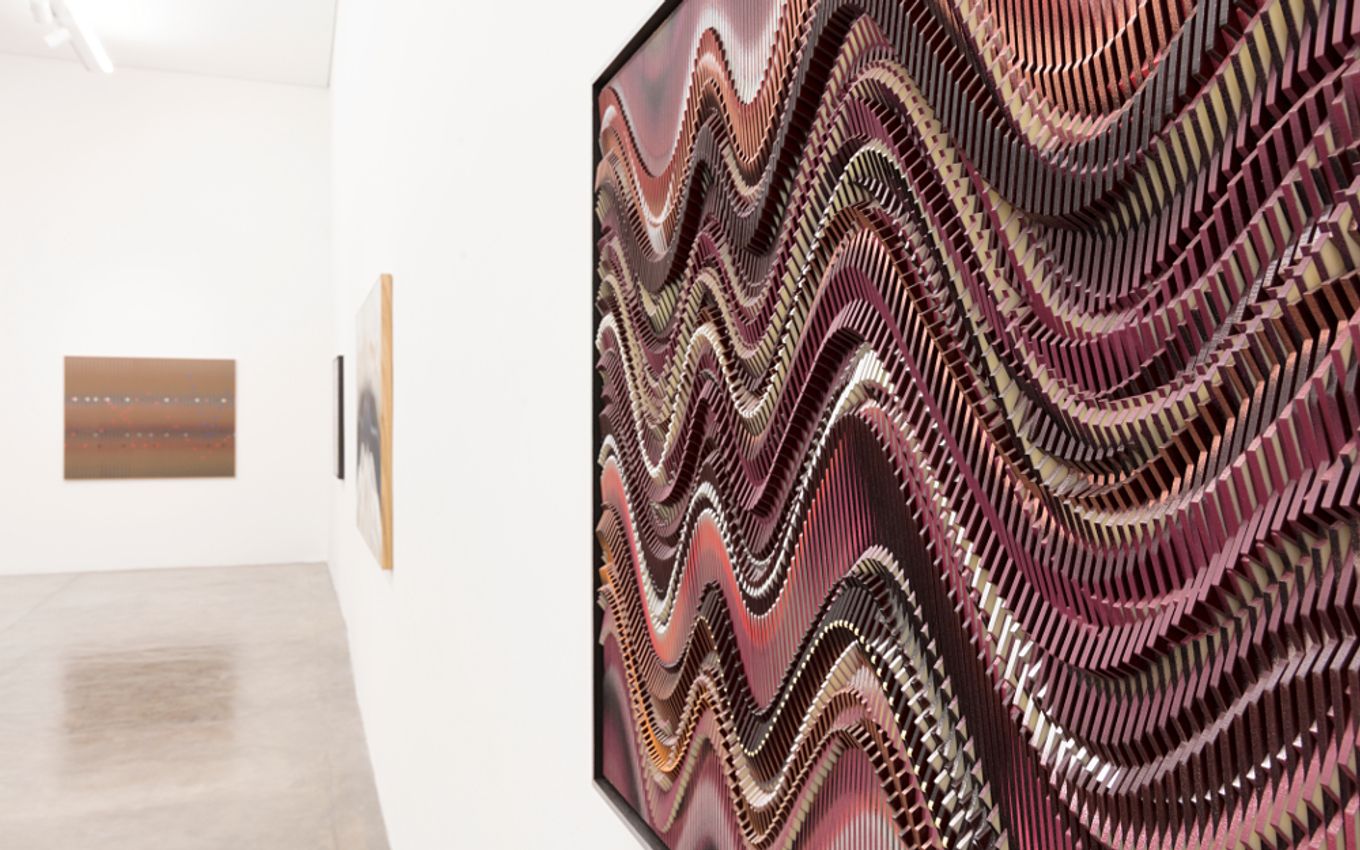
One of the pioneers of kinetic art in the world, Abraham Palatnik (1928, Natal, RN, Brazil) brings his recent works to São Paulo at Galeria Nara Roesler, which has represented him for almost two decades. The exhibition comprises approximately 15 reliefs, most of them never seen before, created in the last year (2016/2017). They are three dimensional progressions produced from his current investigations with acrylic paint.
The exhibition features this pictorial investigation in his works, connecting his new production with previous works, such as the historical RS-11, from 1976 (polyester sheets – sole edition) and the painting on wood from 1992, besides the famous series W (from the 2000s) and some progressive reliefs on duplex paperboard.
According to Luiz Camillo Osório, this new experience with acrylic paint restores an interesting internal genealogy. “On the one hand, it comprises his previous experimentations with reliefs created on paperboard; on the other hand, it goes further with the optical-kinetic series initiated with the progressions on wood, produced on polyester during the 1970s and, recently, from the beginning of the 2000s, with the coloured wooden slats”, he adds.
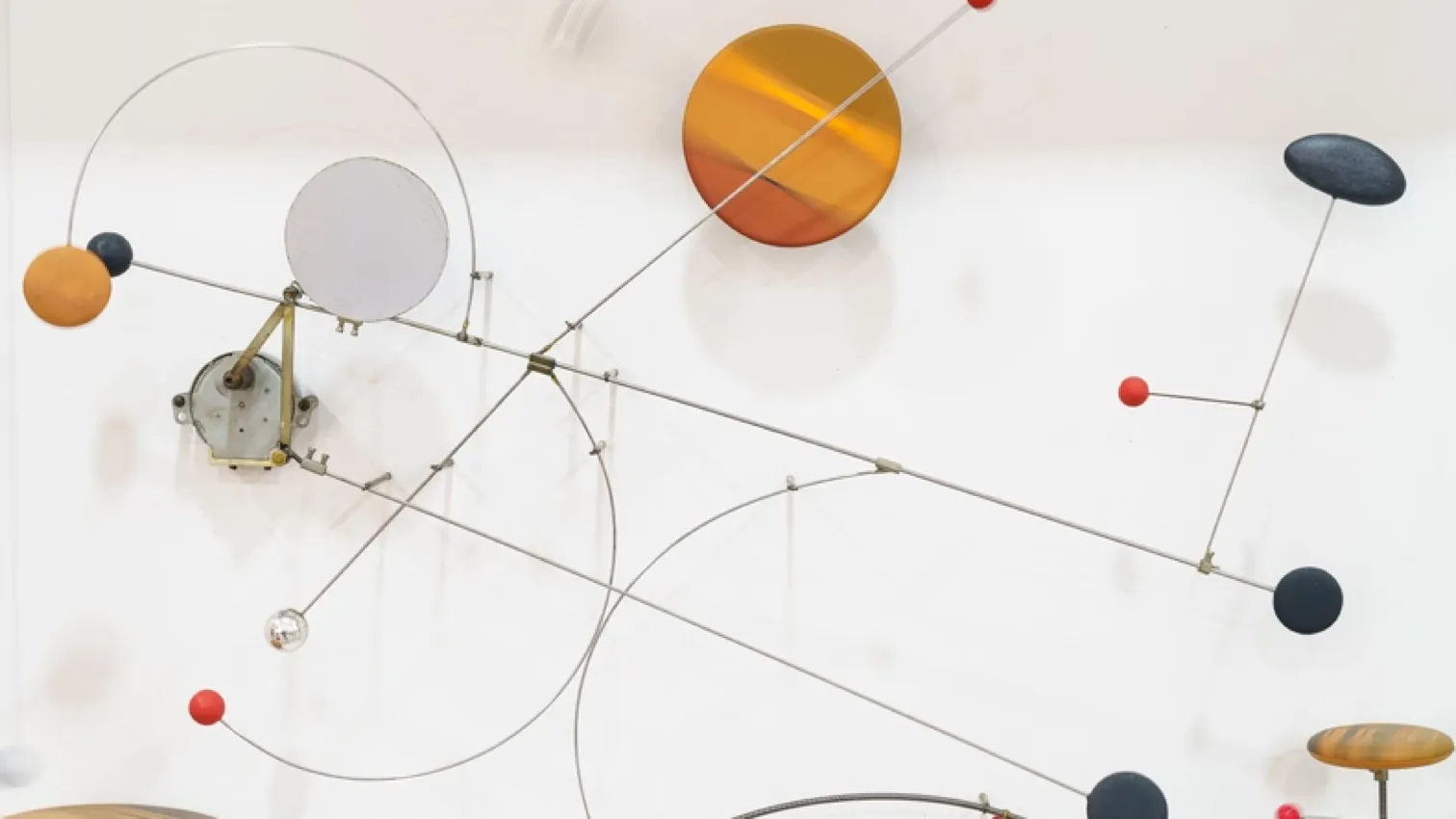
Almost 90 years old, Palatnik keeps the energy and vigour with which he created the Kinechromatic Device, as named by Mário Pedrosa, presented at the first São Paulo Biennial, in 1951. Initially, the work was not accepted due to the lack of a precise category in which to place it, but, soon after, it would win the International Jury Award. Since then, as Osório remarks, a type of controlled chance imbues Palatnik’s production. “He associates investigations into new materials and methodological rigour with perceptive delirium”.
The critic highlights the artist’s attention to details, the careful craftmanship regarding his artistic processes, and the fact that his great ability to handle automated machines have never withdrawn him from hand working. “In a time of compulsive virtuality, this combination is both a poetic and an ethic lesson”, he says.
In the 1950s, Palatnik created, along with kinechromatic devices and kinetic objects, compositions on cardboard and wood. For more than sixty years, his works interrogates time, movement and the relationship between human beings and nature. For him, the artist’s role is to discipline our perception of chaos.
Among his most important solo exhibitions is the great retrospective “A Reinvenção da Pintura” (2013), shown at Centro Cultural Banco do Brasil, in Brasília. The exhibition was later presented at the Museu de Arte Moderna de São Paulo – MAM-SP (2014), at the Museu Oscar Niemeyer, in Curitiba (2014), at the Museu Iberê Camargo, in Porto Alegre (2015) and at Centro Cultural Banco do Brasil, in Rio de Janeiro (2017).
Pioneer of the kinetic art movement in Brazil, Palatnik is always a central figure in international exhibitions about kinetic art. Among the most recent ones, the most prominent are: “Kinesthesia: Latin American Kinetic Art, 1954-1969” (2017/2018), currently on show at the Palm Springs Art Museum, in Palm Springs; “Delirious – Art at the Limits of Reason 1950-1980” (2017/2018), currently at The Met Brauer, in New York; and also the group exhibition in tribute to art critic Mário Pedrosa, “Mário Pedrosa – Da natureza afetiva da obra”, through October 16 at the Reina Sofia Museum, in Madrid, where he also joined the anthological “Os Cinéticos”, in 2007, which was also presented in Brazil at Instituto Tomie Ohtake, in 2007/2008.
Palatnik’s works were exhibited in eight editions of the São Paulo Biennial (from 1951 to 1969), as well as the 32nd Venice Biennial (1964), with Mavignier, Volpi and Weissmann. Nowadays they are part of collections of the most important museums around the world, such as the Museum of Fines Arts, in Houston, and the Museum of Modern Art, in New York, both in the United States. In Brazil, they are part of collections of MAM – SP, MAM – RJ, MAC São Paulo, MAC Niterói and Itaú Cultural.


Abraham Palatnik is a seminal figure of Brazilian kinetic and optical art. His interests lie in technology and the study of motion and light, the realms responsible for the functional, playful, poetic results that made his work known over seven decades’ worth of output. He rose to prominence in the art scene after creating his first Aparelho Cinecromático (Kinechromatic Device, 1949), whereby he set out to reinvent painting practice through light interplay and by relying on technological apparatus to create kaleidoscopic images on screen. Shown in the 1st Bienal de São Paulo (1951), his light installation was not included in the grand prize competition because it didn’t fit any of the art categories then in existence, but its originality won it an honourable mention from the international jury.
Founded in São Paulo in 1989, Galeria Nara Roesler is a leading Brazilian gallery dedicated to showing the work of contemporary Brazilian and international artists. The gallery established another branch in Rio de Janeiro in 2014, followed by its first international outpost in New York City in 2015.

A respected voice in contemporary art discourse.
Focusing on ambitious storytelling and insightful art-world commentary. Ocula Magazine publishes in-depth interviews, critical essays and timely analysis on the artists, exhibitions and ideas driving the global art world.
Learn more about Ocula Magazine
Showcasing the best of the art world.
Ocula partners with galleries from around the world to highlight their artists, artworks and exhibitions. Gallery membership is by application and invitation, with each member vetted by an independent panel.
Learn more about Ocula Membership

Specialises in the sale of major artworks.
Led by a team with deep ties to the world’s leading auction houses, galleries and collectors. Ocula’s advisory team offers bespoke services to high-net-worth clients from around the world who are looking to acquire the best of contemporary and modern art.
Learn more about our team and services