





10 Exhibitions to See Around the World This June
Save to My OculaOcula’s global team of editors rounds up the shows and events not to be missed in June, including illuminated marquees in New York City, environmentally conscious tapestries in Valencia and Hong Kong’s queer archives.
California Light and Space (The 21st Century Version) (4 June–1 August 2026) at David Zwirner, Los Angeles
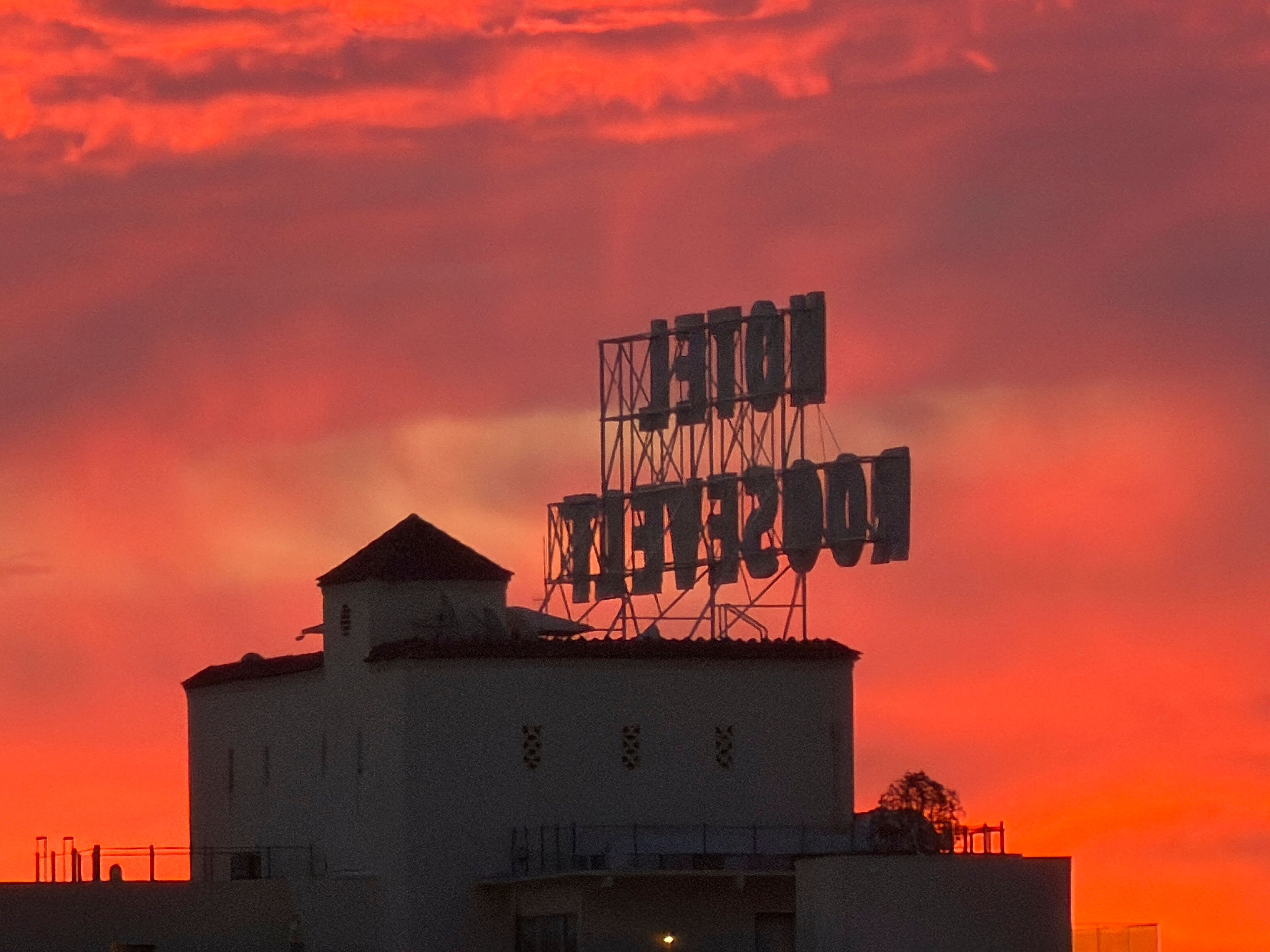
The California Light and Space artists of the 1960s and 1970s (including James Turrell, Robert Irwin and Larry Bell) created experiential works that trouble and enchant human perception. A new group exhibition organised by Los Angeles curator Helen Molesworth seeks to define the 21st century version of this movement, featuring 17 quintessentially Los Angeles artists who make—or made—work in concert with the spatial and visual qualities of the city. “The new LA artists are deeply embedded in the vernacular quality of the city,” explains Molesworth. “They are making work that couldn’t be made anywhere else but in LA.” This includes Noah Davis’s representation of the Pueblo del Rio housing project in Los Angeles Pueblo del Rio: Prelude (2014) alongside the late artist Jason Rhoades, whose neon sculptures playfully reinterpret luminescence, and queer photographer Catherine Opie’s apocalyptically lit backside of the notorious Hotel Roosevelt, Hollywood Blvd (Moon and Sunrise) (2026). Molesworth’s exhibition broadens ideas around light and space to reflect a 21st century vision. It is one that is less concerned with perception than with identity and formal invention.—Aimee Walleston
Forever Tomorrow: Chinese Art Now (until 23 August 2026) at Auckland Art Gallery Toi o Tāmaki
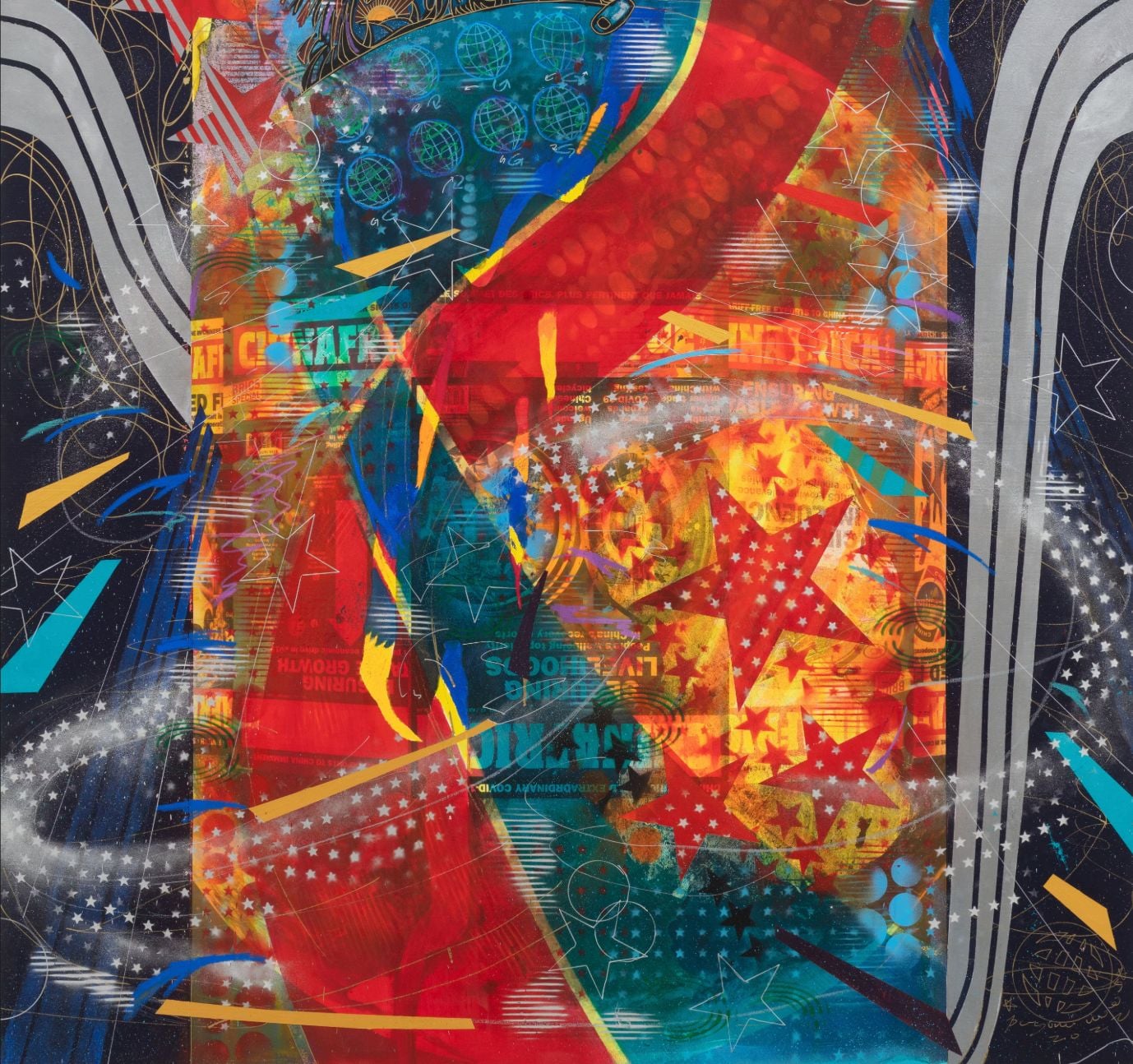
Exhibitions framed broadly around “Chinese contemporary art” may seem somewhat dated, and yet major museums continue to present China as a geopolitical and cultural phenomenon, from 2018’s Art and China after 1989: Theatre of the World at the Solomon R. Guggenheim Museum in New York City to 目 Chine: A New Generation of Artists (2024) at the Pompidou Centre in Paris. In Auckland, however, such a proposition feels unexpectedly timely: roughly 12 percent of the city’s population is of Chinese ethnicity. The exhibition spans generations, from artists who shaped the early visual language of post-socialist transformation—such as Xu Bing, Ai Weiwei, and Yang Fudong—to younger figures including Pixy Liao and Li Binyuan, whose practices are more intimate and transnational, yet still deeply shaped by the country’s shifting realities. A rare sense of radicality runs through the exhibition, from Xiyadie’s traditional papercuts depicting homoerotic life in rural China to Ren Hang’s ethereal, provocative photographs of bodies and desire.—Shanyu Zhong
![Willem de Kooning. Untitled [man and woman], about 1947–48. Private collection.](https://files.ocula.com/rf/de/def7bf13-9b19-40dc-8131-64074f41e914/untitled-man-and-woman-about-194748.jpg)
Willem de Kooning Drawing (14 June–20 September 2026) at Art Institute Chicago
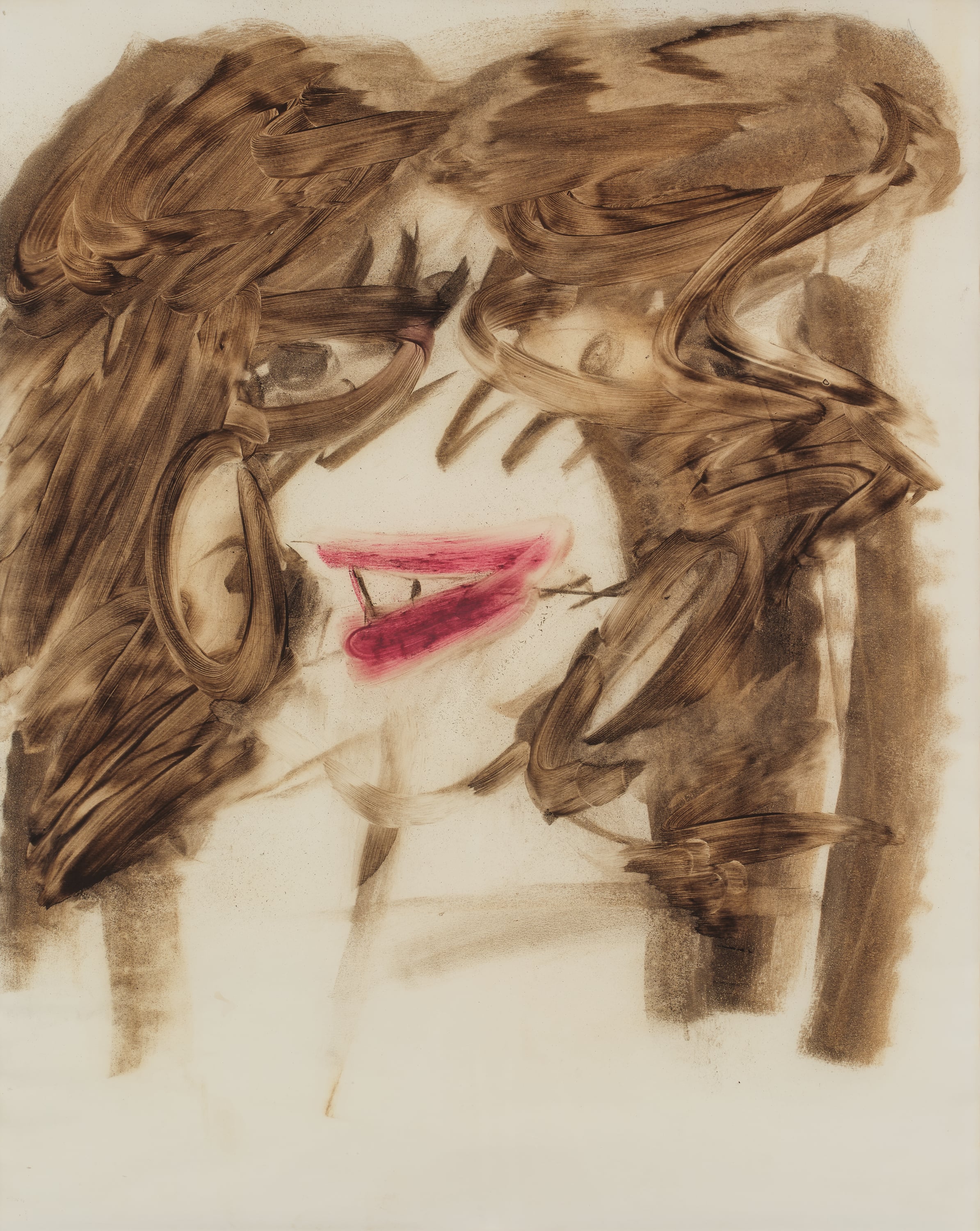
Willem de Kooning honed his skills as a draughtsman at art school in Rotterdam, where he was encouraged to regularly sketch the sculptures and paintings in the school. The practice of drawing stayed with him through his move to New York in 1926, where he sought to become an illustrator and eventually began painting the large abstract works for which he is now known. A new exhibition at Art Institute Chicago is the first to centre solely on his drawing practice, bringing together more than 200 works, including paintings and sculptures. De Kooning continued to experiment with the form even as he found success as a painter: drawing with his eyes closed or depicting the same subject over and over again. The exhibition traces the evolution from the delicately rendered still life Dish with Jugs (c 1919–21) through to late work such as an untitled puzzle of shapes in different shades of blue. Like the paintings we now know him for, in the latter it’s possible to see the curves and forms of the human body. “I draw in paint,” he once said, “and usually I don’t feel so much difference between drawing and painting.”—Baya Simons
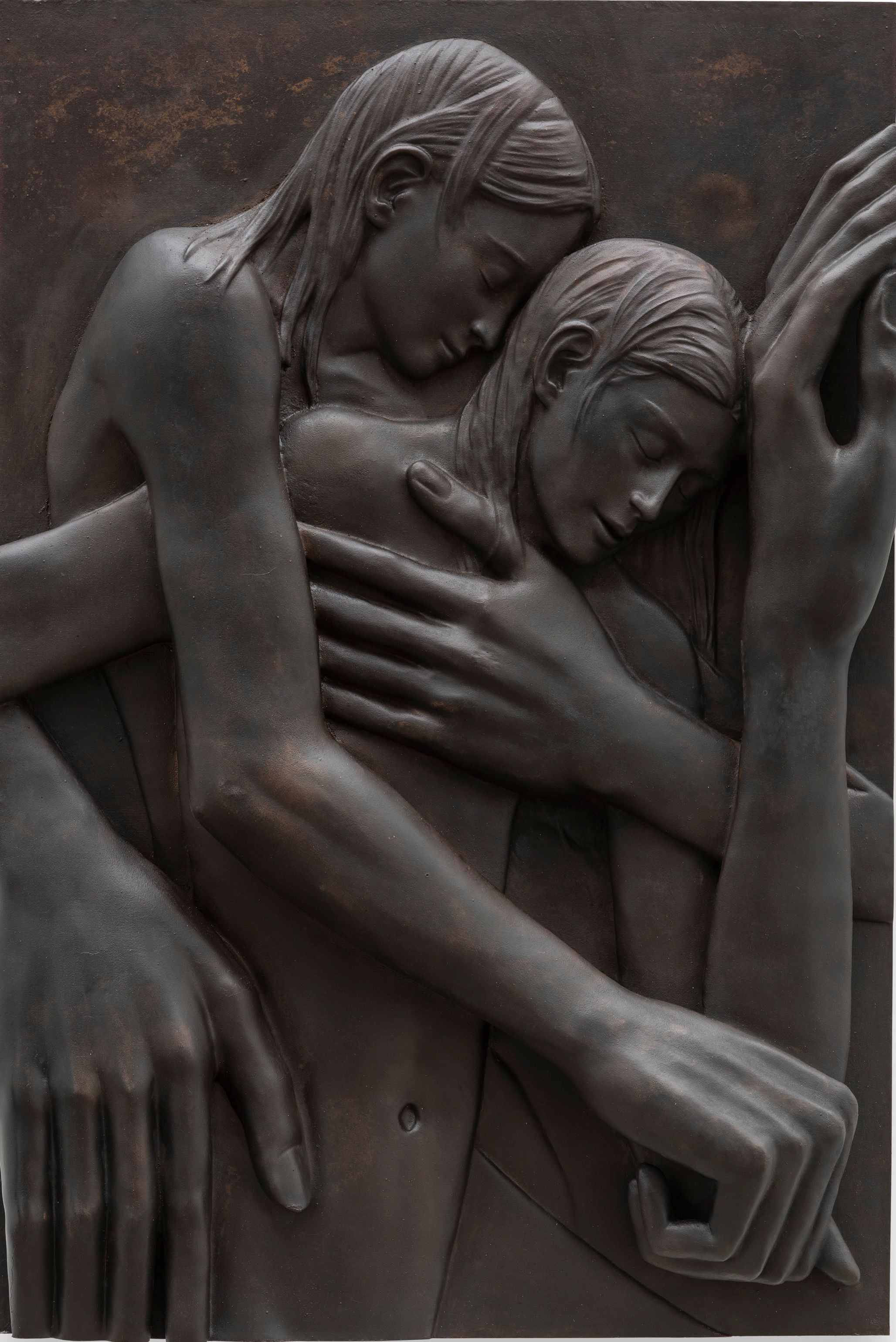
Anne Imhof, Citizen (5 June–4 August) at Sprüth Magers London
The work of German artist Anne Imhof sits between choreography and performance art: one-third spectacle, one-third conceptual sculpture, one-third flashmob. Her most recent show, Doom: House of Hope, held last year at Park Avenue Armory in New York City, saw skateboarders and ballet dancers alike perform Romeo and Juliet in reverse. This month, she will unveil her solo exhibition, Citizen, at Sprüth Magers in London. While Citizen will build upon Imhof’s recent work, it will also showcase her breadth. It includes new, large-scale paintings of waves, a four-channel film, site-specific crowd barrier sculptures and the latest in her bronze relief friezes depicting androgynous bodies. Sprüth Magers’ choice to exhibit Imhof within its meticulously arrayed West End Georgian townhouse is likely to produce some interesting tension between visitors, Imhof’s work and the security guards.—Lydia Eliza Trail
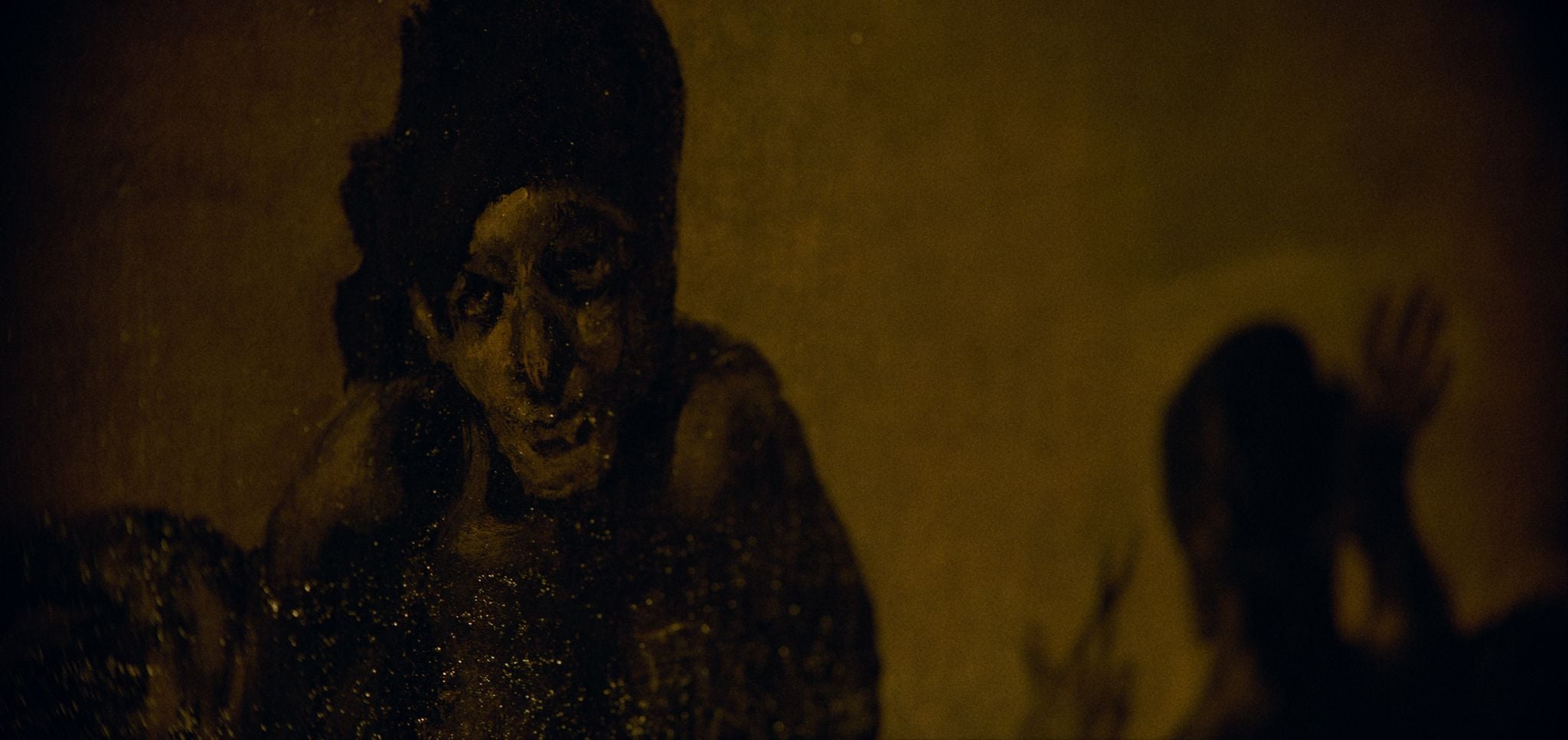
Philippe Parreno, Noor (13 May–26 June) at Gladstone (21st Street) New York City
Inspired by a dream wherein he was visited by Aristotle, Islamic Golden Age philosopher Shihāb al-Dīn Abū al-Futūḥ Yaḥyā ibn Ḥabash ibn Amīrak al-Suhrawardī developed his theory of Illuminationism, which asserts that reality is a continuum of Light culminating in God. This unusual framework is one of the guiding forces underpinning Noor, French artist Philippe Parreno’s newest installation, which once again draws on his signature motif: the illuminated marquee. The exhibition was conceived as a tribute to the late gallerist Barbara Gladstone, and features several large hanging marquees, advertising nothing more than their own luminescence, set against the quotidian charms of workaday table lamps and the polite glamour of a few minimalist chandeliers. Also showing is La Quinta del Sordo, a “filmic meditation” shot at the Museo Nacional del Prado. The film is meant to conjure the walls of the final home of Francisco Goya, where he painted his famously ominous Black Paintings. The resulting collection of works composes an ecstatic memoriam to Gladstone.—Aimee Walleston
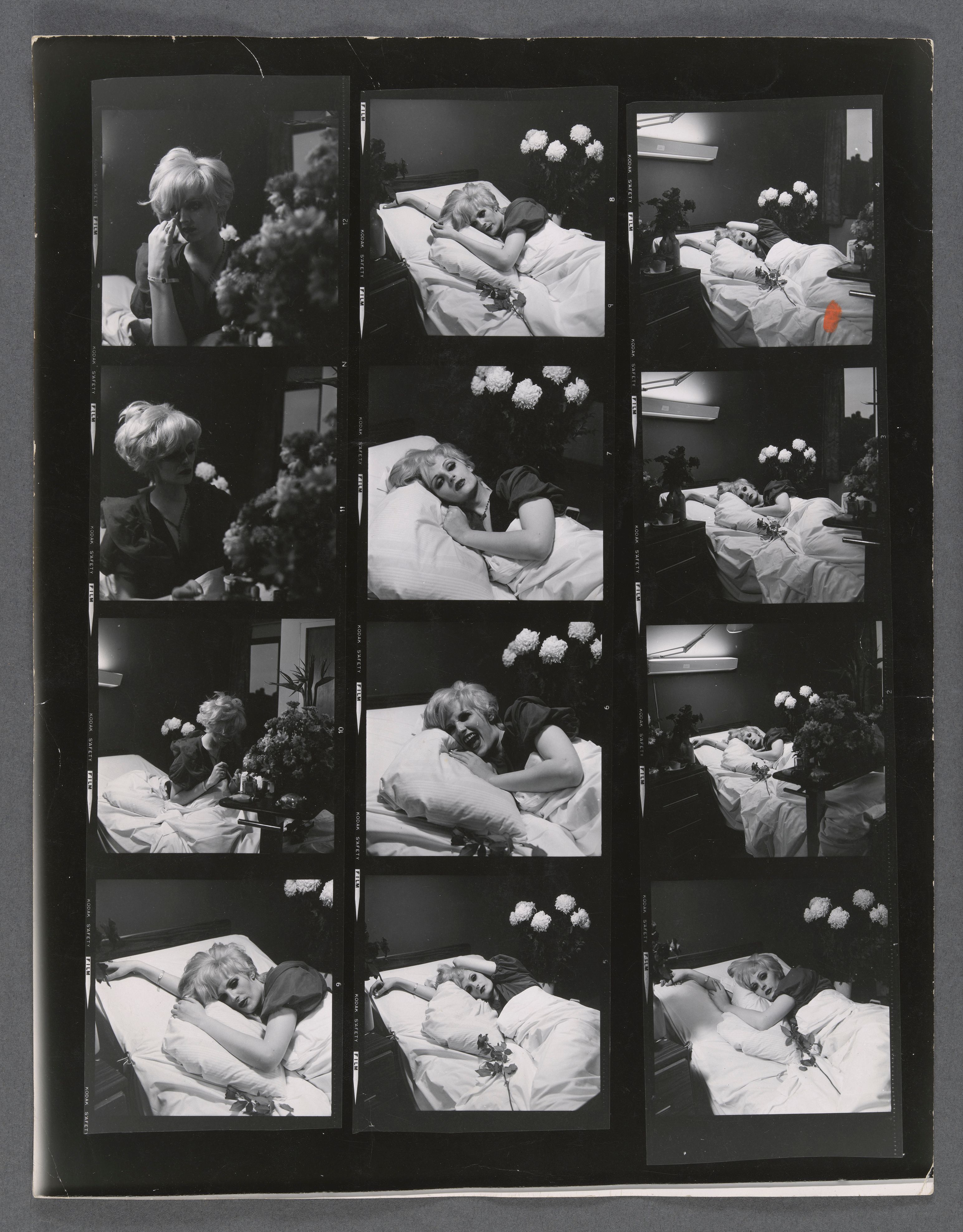
Hujar: Contact, (until 25 October) at The Morgan Library and Museum, New York City
More than 110 contact sheets made by Peter Hujar, chronicler of 1970s downtown New York, are going on show in a new exhibition at The Morgan Library and Museum. Curators went over roughly 5,700 of his contact sheets, which were labelled and annotated by the artist throughout his career and kept in storage. Contact sheets are interesting because, from each one, only a single image would usually be chosen to be enlarged and printed; searching through discarded sheets turns up hundreds of photographs that would otherwise have been left behind. Like a smartphone camera roll, Hujar’s sheets are meticulously dated, allowing the viewer to see his practice develop from his early years during the 1950s and 1960s to his mature period in the 1970s and 1980s, when his work became more intimate and domestic, a shift seen in works such as Candy Darling on her Deathbed (1973) and Joe Brainard at Home (1975).—Lydia Eliza Trail
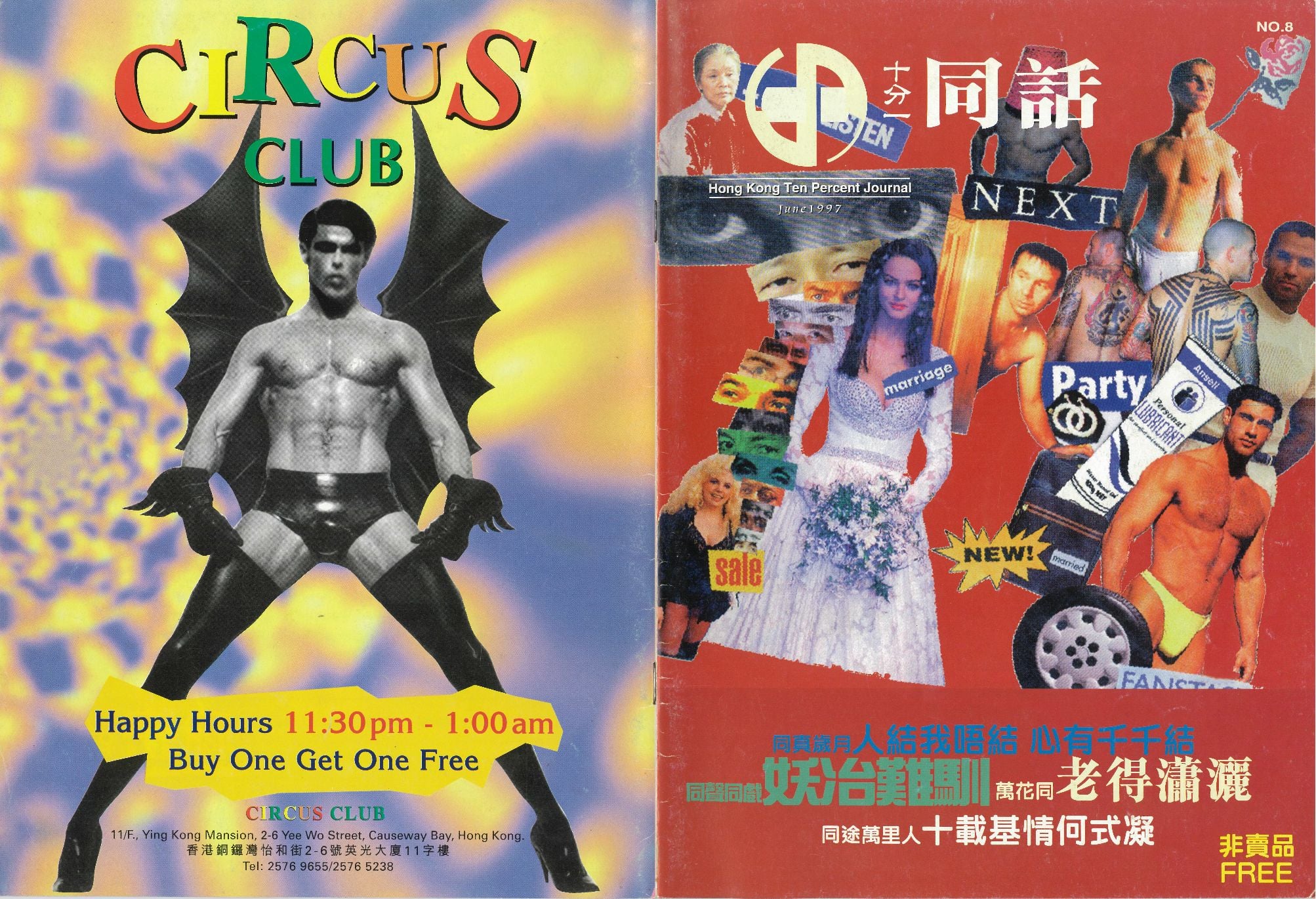
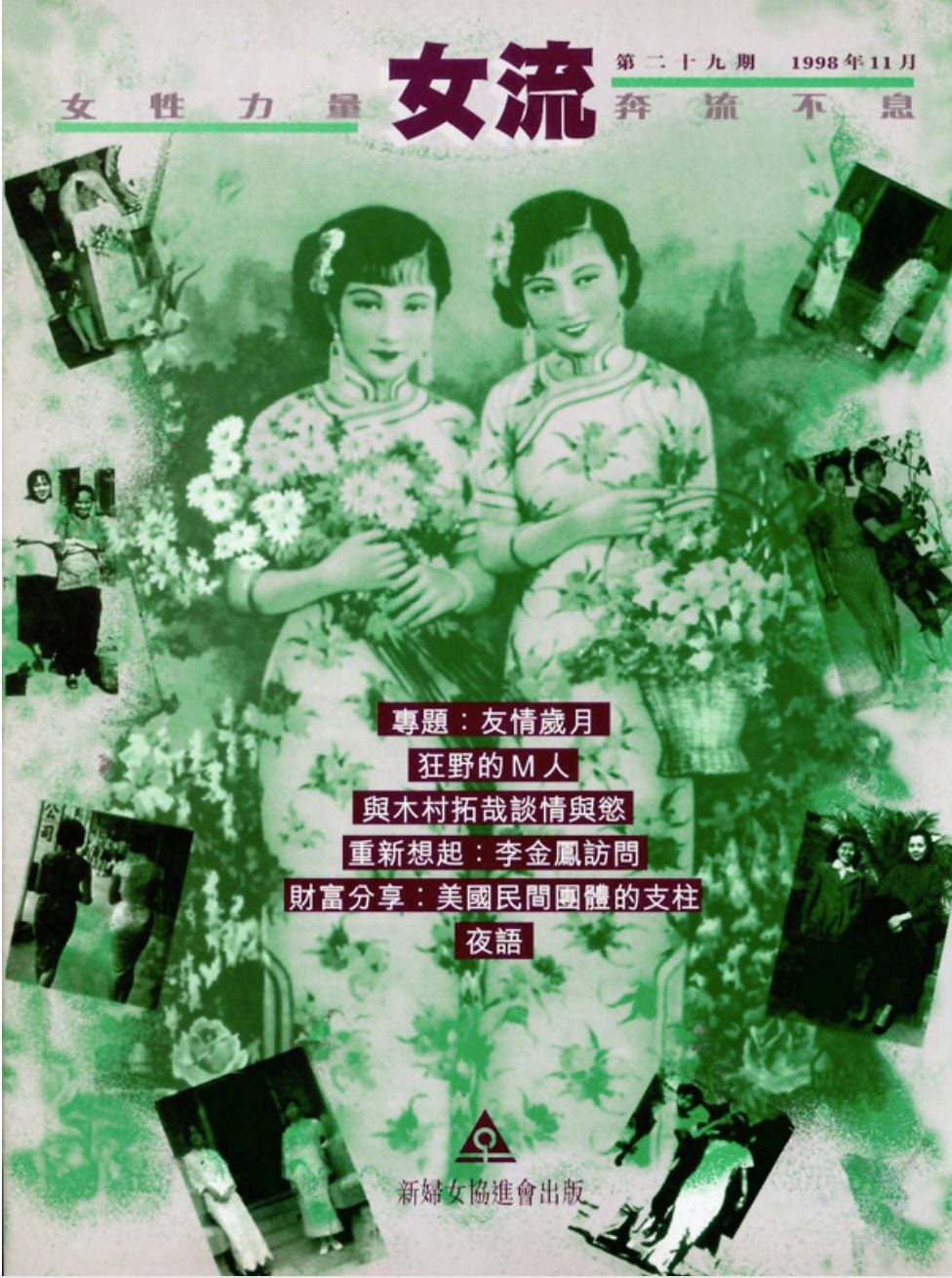
Offline Memories: Hong Kong LGBTQ+ Archive of Printed Matter from the Pre-Internet Era (18 June–26 July) at Tomorrow Maybe, Hong Kong
This exhibition grew out of an archival project by artist Anson Mak that sought to recover newsletters, indie ’zines, handwritten letters and oral histories surrounding the 1991 decriminalisation of homosexuality in Hong Kong. For this new group exhibition, seven queer and trans artists from Hong Kong present commissioned works responding to the archive. Emerging artist Chan Ting reworks industrial debris into vessels to be used in an imagined queer afterlife, and media artist Ellen Pau’s Song of the Goddess (1992) documents the real-life lesbian romance between two legendary opera singers. In Dorothy Cheung’s visual novel, Into an Unmemorable Night, We Drift (2026), a low-resolution yet navigable game space, rendered in a Chibi role-playing Game aesthetic, follows a queer woman as she is returned to a room she built with her partner and peers, retracing the memories that have shaped her identity. It becomes a threshold space where archival fragments, emotional return and digital navigation fold into one another, and where remembering turns into a form of drifting.—Zian Chen
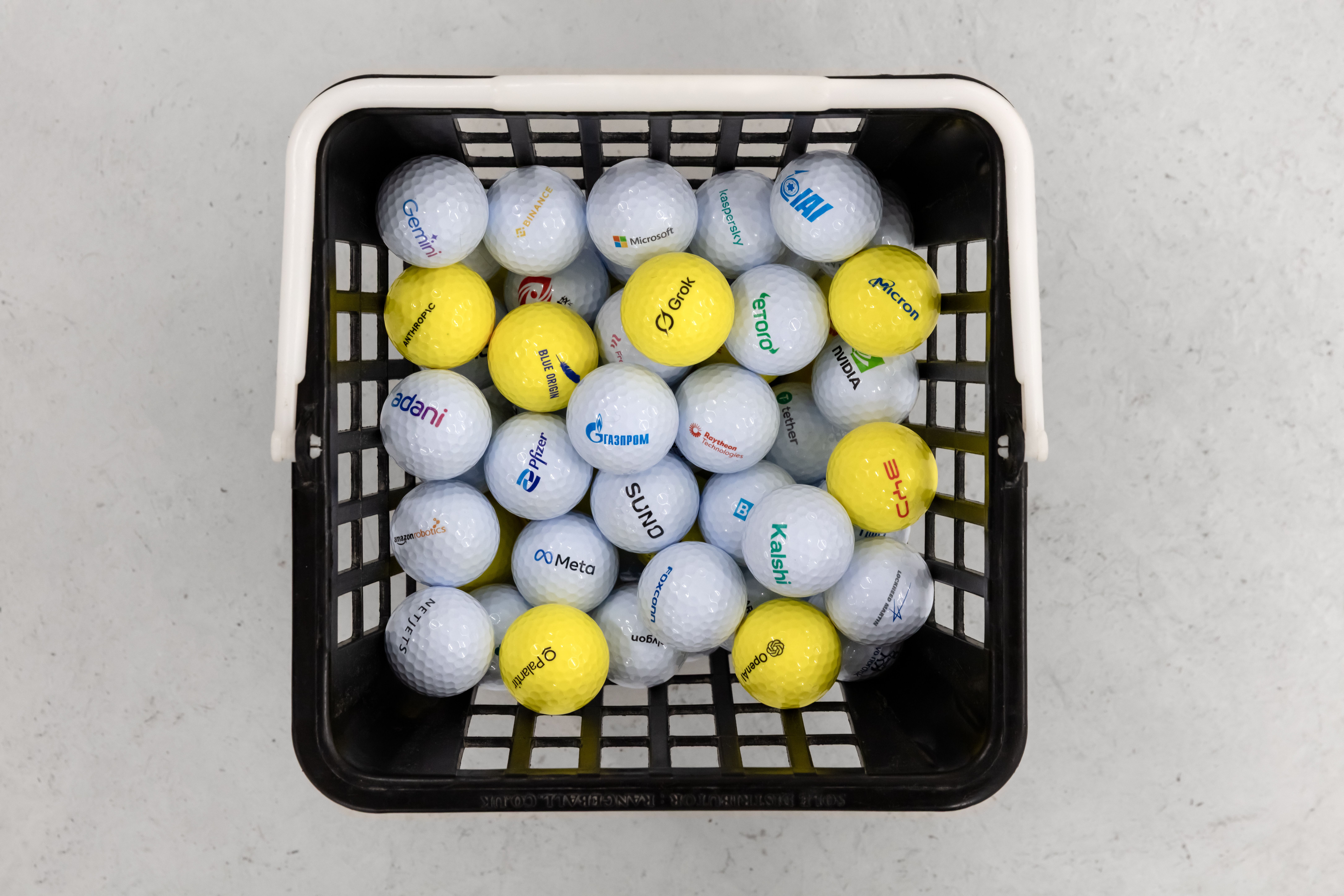
Georgie Nettell, Techno-Libertarian Realism (until 12 July) at Pusher Gallery, London
Georgie Nettell’s early 2026 Berlin exhibition was named Post Painterly Neo-Pointillism and included pointillist pen drawings of think tank logos and 20th-century economist John Maynard Keynes. Her new show, opening at London’s Pusher Gallery, is named Techno-Libertarian Realism. Both titles feel like snarky allusions to the collusion between the art world and the money emerging from global Tech titans: Amazon, Meta, Tesla et al. At Pusher Gallery, intricate drawings using pen on paper to detail irreverently titled charts such as Living in the Bubble and War and Venture Capital hang alongside mounted golf clubs and golf balls, each of which features the logo of a different company: Anthropic, Amazon Robotics, Deloitte, Darktrace. The balls are organised alphabetically by corporation name inside a bound folder which she calls a “Glossary of Balls”. It sees Nettell once again utilising her sculpture and drawings as acerbic critiques of an increasingly topsy-turvy world order.—Lydia Eliza Trail
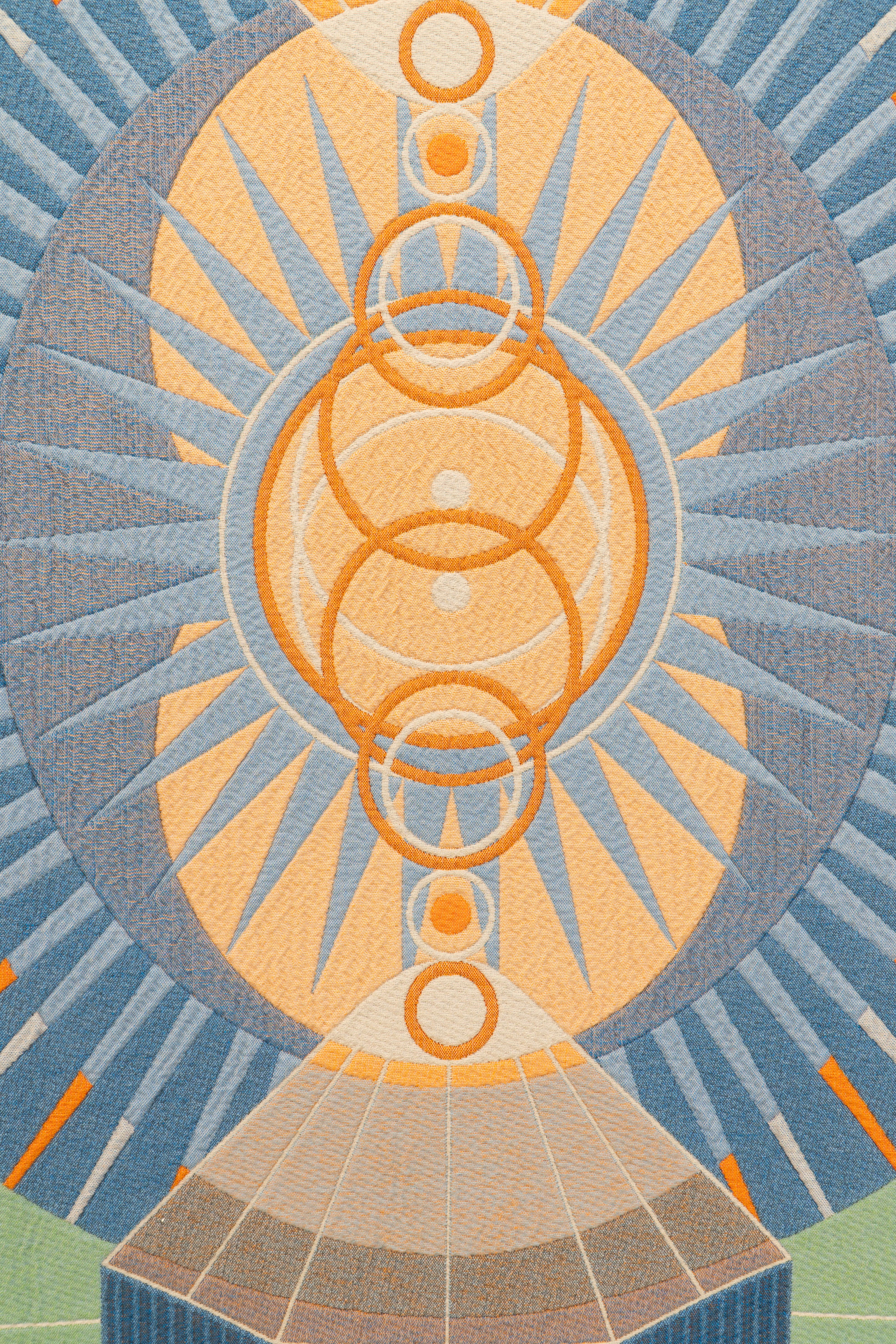
Yelena Popova, Moments of Grace (until 16 July) at Osnova Gallery, Valencia
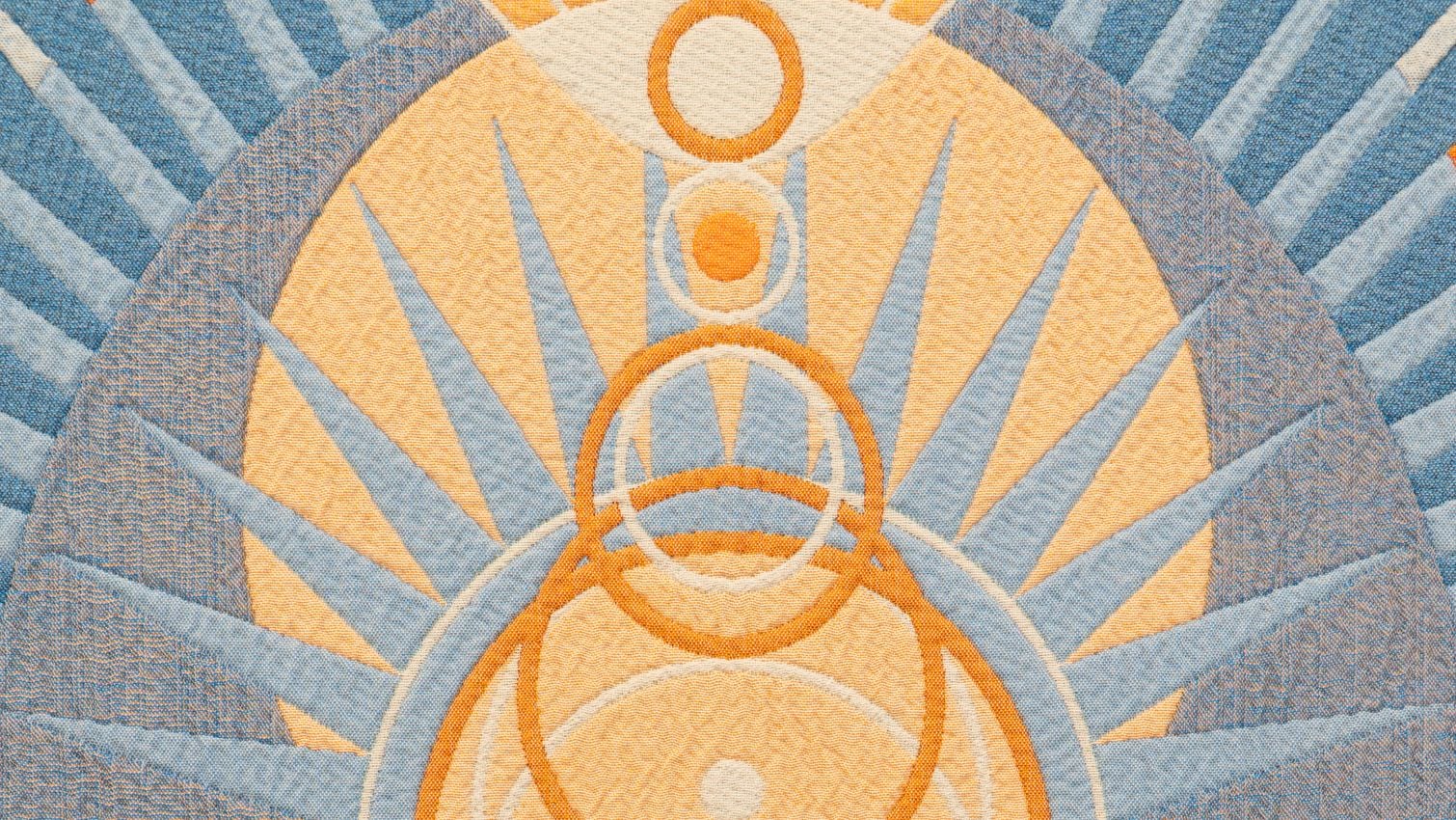
Yelena Popova’s first-ever tapestry, made in 2017, explored the idea of spiritual energy. In the textile works that followed, she replaced the immaterial with the scientific, critiquing nuclear energy and cautioning against the dangers of weapons and radiation fuelled by fission and fusion. Recently, she has combined these two modes of thinking: 2024’s I Feel Thy Footsteps with My Skin drew on the vibrations through which snakes experience the world to consider the energy that connects the Earth, its inhabitants, and the cosmos. In her new exhibition, Moments of Grace, this jacquard-woven tapestry is paired with two other textile works that extend Popova’s interests in the shared symbolisms of scientific and mythological forms of knowledge. 2025’s Fern Flower takes its name from a bloom recognised in Slavic and Baltic mythology for its magical properties. Said to bring love and abundance, it can be found only on the summer solstice. Meanwhile Ripple-Marked Radiance (after Hertha Ayrton) (2019), features an electric arc—a lightning-like electrical phenomenon that can lead to a sudden, explosive release of thermal energy and light. Together they reveal a practice that is at once layered and cyclical, but always rooted in the energies of people, planet, time and space.—Philippa Kelly
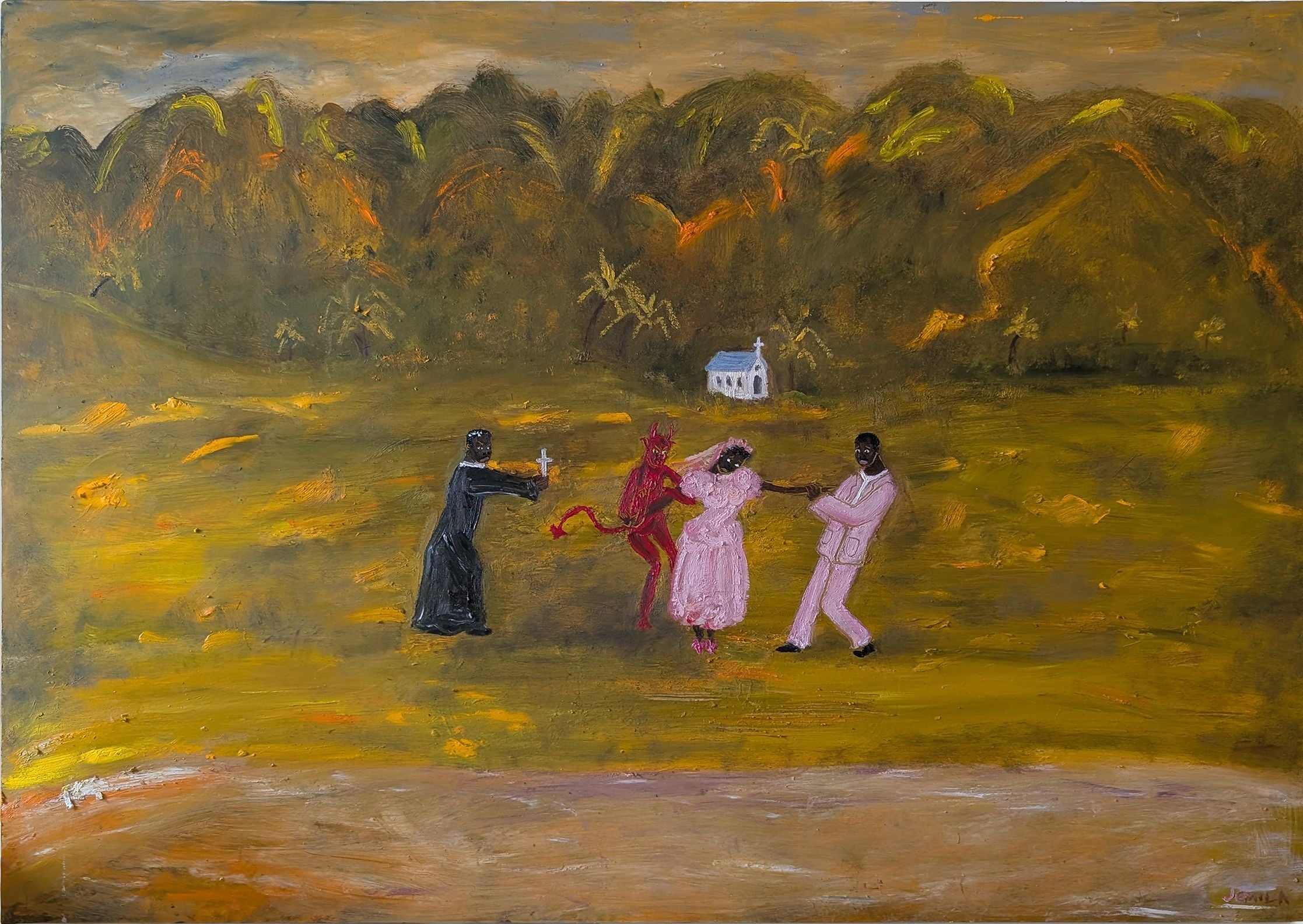
Jemila Isa, Dreams Lost Upon Waking (4 June-25 July 2026) at Maureen Paley, London
The London-born painter Jemila Isa had a dream a few years ago which stayed with her. “I dreamt that I was stood on a tall yellow hill, and beside me there was a one-legged swan”. A man appeared opposite her, and she knew intuitively that she was “his bride”. The dream set her off on a trail of references, moving from the Brazilian 1959 film Black Orpheus, a retelling of the Greek tragedy of newly weds Orpheus and Eurydice, to the work of the Haitian artists Ernst Prophète, Philomé Obin, and Edger Jean-Baptiste to 18th-century chapbook woodcuts. All of these references have fed into a new body of paintings, now going on show in an exhibition at Maureen Paley gallery which opens on the evening of London Gallery Weekend. In the paintings she has staged scenes from her dream, bringing in elements from the research that followed and from the break up of her own marriage. In one, a devil, a bride and a man dressed in a pink suit engage in a tussle against a sludgy yellow-brown landscape. “The red devil who murders a young bride’s groom on her wedding day becomes an ambiguous figure,” Isa writes in a text accompanying the exhibition. “Is he a force of cruelty and destruction, or does he instead emancipate the bride from a life that may eventually have demanded her diminishment?”—Baya Simons
Main image: Yelena Popova, Ripple-Marked Radiance (after Hertha Ayrton) (2019) (Detail) Courtesy of Osnova Gallery.




A respected voice in contemporary art discourse.
Focusing on ambitious storytelling and insightful art-world commentary. Ocula Magazine publishes in-depth interviews, critical essays and timely analysis on the artists, exhibitions and ideas driving the global art world.
Learn more about Ocula Magazine
Showcasing the best of the art world.
Ocula partners with galleries from around the world to highlight their artists, artworks and exhibitions. Gallery membership is by application and invitation, with each member vetted by an independent panel.
Learn more about Ocula Membership
Specialises in the sale of major artworks.
Led by a team with deep ties to the world’s leading auction houses, galleries and collectors. Ocula’s advisory team offers bespoke services to high-net-worth clients from around the world who are looking to acquire the best of contemporary and modern art.
Learn more about our team and services