Press Release

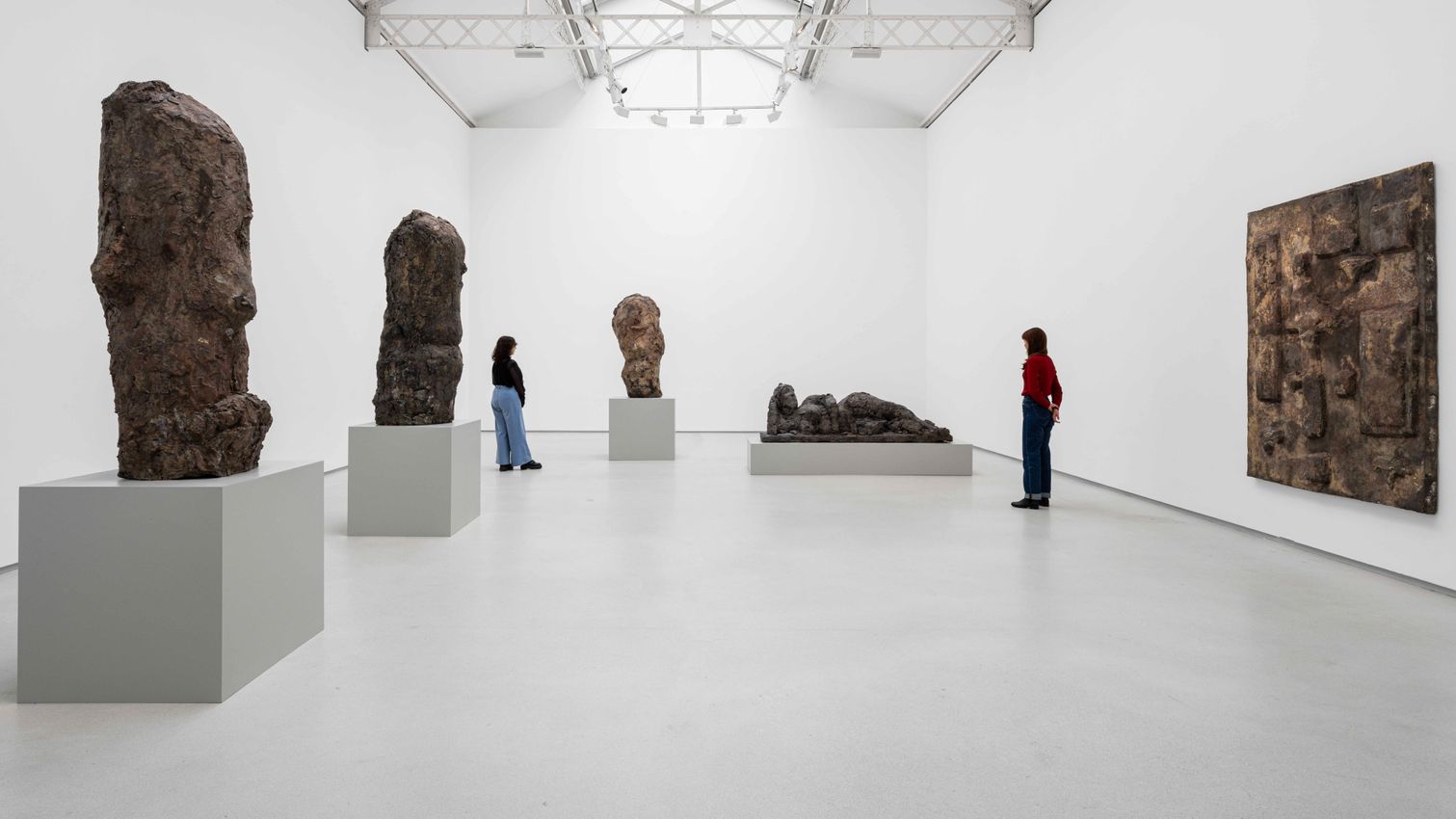
Following the retrospective dedicated to Hans Josephsohn’s work at the Musée d’Art Moderne de Paris last year—the artist’s first retrospective in France—Thaddaeus Ropac Paris Marais presents an exhibition retracing 50 years of the Swiss sculptor’s practice, from 1952 to 2002. Spanning Josephsohn’s key sculptural typologies, the ground floor of the gallery brings his tender, solitary early standing and reclining figures into conversation with the abstract volumes of his late half-figures, while the walls of the first-floor space become home to a focused presentation of the artist’s reliefs.

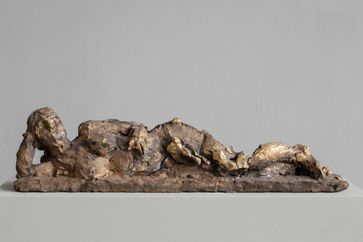
Josephsohn’s practice is characterised by his lifelong preoccupation with the human figure and by a process in intense union with his medium, both of which are central to all the works on view. The exhibition looks back over his stylistic development over five decades, bearing witness to several stylistic periods which correspond, broadly, to his shifting relationship to figuration and abstraction, the evolution of which is evidenced in the contrasts and dialogues in the ground floor space of the gallery. In the 1950s, against the backdrop of post-war abstraction, Josephsohn remained attached to a purified figuration, as visible in his 1958 Ohne Titel (Ruth). It was throughout the 1960s and 1970s that these early figures gained in mass and in the raw, haptic, roughly finished quality of their surfaces, exemplified by the 1971 reclining figure that commands the surrounding space: lonesome and stoic, and yet quietly elegant.

Around this recumbent figure is presented a group of Josephsohn’s half-figures, an expansive typology of work he commenced in the 1980s, which, over time, became increasingly abstract as the formal definition between head and shoulders dissolved. This gradual shift towards abstraction – some of the half-figures on view only subtly allude to the body – was facilitated by the sculptor’s choice to work his figures in plaster before casting them in bronze. Plaster’s malleability allowed him to add and remove volume as he worked, and its responsiveness to touch gives his sculptures a tactile, immediate finish. Often traces of the artist’s fingermarks are visibly embedded in their surfaces, testaments to his unmediated working process. Emphasising the substance of the body, the resulting sculptures resound with a timeless, almost geological quality.

The first floor of the Paris Marais gallery presents a survey of Josephsohn’s reliefs. The artist worked on reliefs in parallel to his standalone sculptures throughout his career, and the reliefs on view in the exhibition span more than three decades of his engagement with the practice. Punctuating the walls of the gallery, the reliefs take on a frieze-like, sequential aspect; individually, many depict two or more figures, lending them a narrative quality. Digging into the matter with his hands, Josephsohn brings volumes and elements forth in arresting haut-relief, with the excavated niches formed in the process forming shadowy, dynamic grounds for his reflections on human relationships. For the artist, these works are profoundly personal. As he stated, ‘The reliefs come in some way from life’: originating in and directly translating his experiences and interactions.

Josephsohn’s sculptural practice deeply engaged with the flesh, the substance, the brawn of the body, but also with its ineffable humanity. As critic Jackie Wullschläger recently wrote of his figures: ‘It is as if they came uneasily into being, these resisting, insistent, crude, and vulnerable figures. Static and permanent in their weighty materiality, they are also restless. Their agitated surfaces, vital and alert with the imprint of the artist’s hand, sometimes suggest intimacy, tender tactility; sometimes, where Josephsohn has cut away with an axe, they are jagged and flayed.’ The exhibition invites visitors into an encounter, in breathtaking stillness, with at once the most corporeal and the most sublime qualities of Josephsohn’s subjects. Working and reworking until, as the artist put it, ‘only the core of the thing was left’, Josephsohn is remarkable for his mastery in giving form to the human condition itself.

Read More
About the Artist

Hans Josephsohn was a Swiss sculptor who specialised in figurative busts, torsos, and standing or reclining figures made in thick plaster or cast bronze. After years of being little known, in the early 2000s Josephson was launched into international stardom through exposure via a series of prestigious institutional group and solo shows.

View Artist Profile Hans Josephsohn contemporary artist
About the Gallery

Founded in 1983, Thaddaeus Ropac has galleries across Europe and Asia, located in London, Paris, Salzburg and Seoul.

View Gallery Profile
Address
7 Rue Debelleyme Fr
Paris
France
Opening Hours
Tuesday – Saturday,
10am – 7pm
(1)
Paris 7 Rue Debelleyme Fr
Thaddaeus Ropac
7 Rue Debelleyme Fr, Paris, France
+33 1 42 72 99 00
https://www.ropac.net

Opening hours
Tuesday – Saturday,
10am – 7pm
The art world in focus