GRIMM is pleased to present Drift, a solo exhibition of new paintings by Dutch artist Tjebbe Beekman (b. 1972, Leiden, NL) on view at the gallery’s London location from 11 January to 24 February, 2024. This is the artist’s fourth solo exhibition with GRIMM and his first solo exhibition in the United Kingdom.
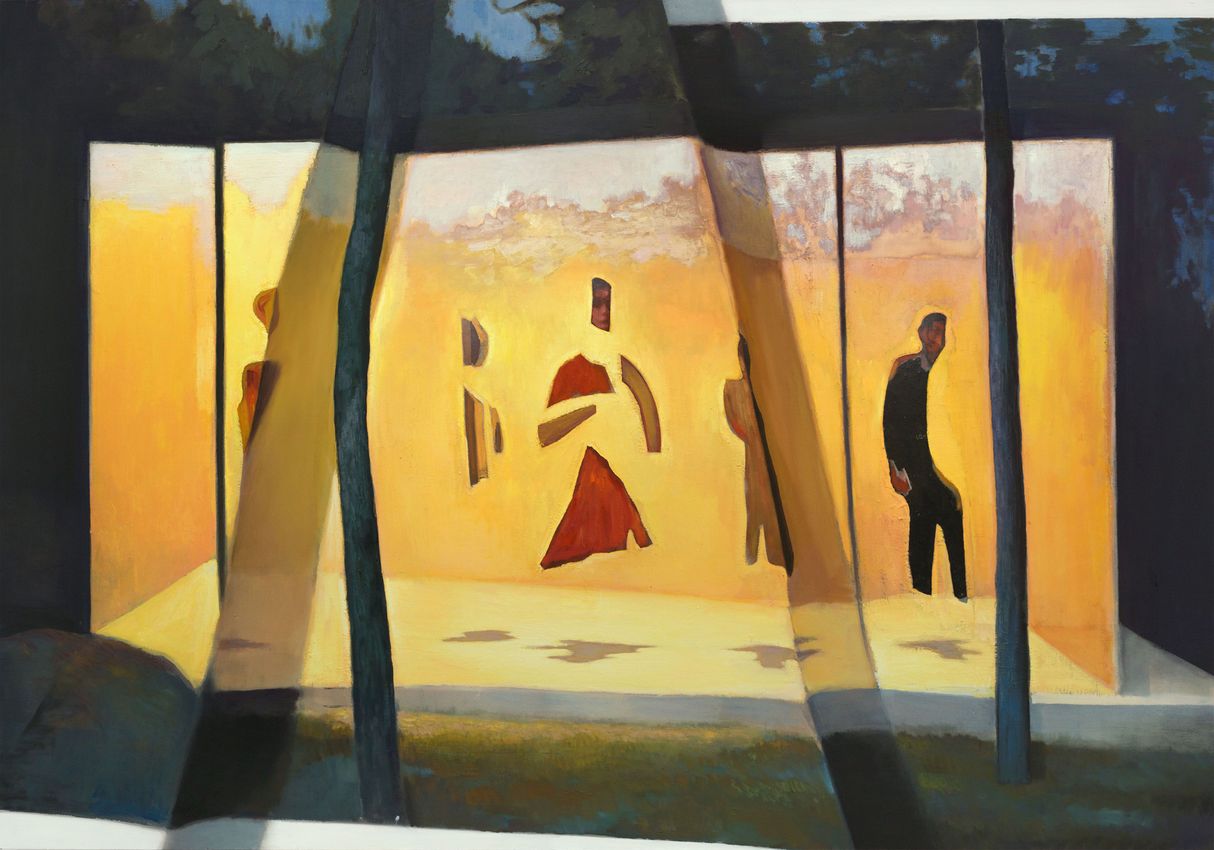
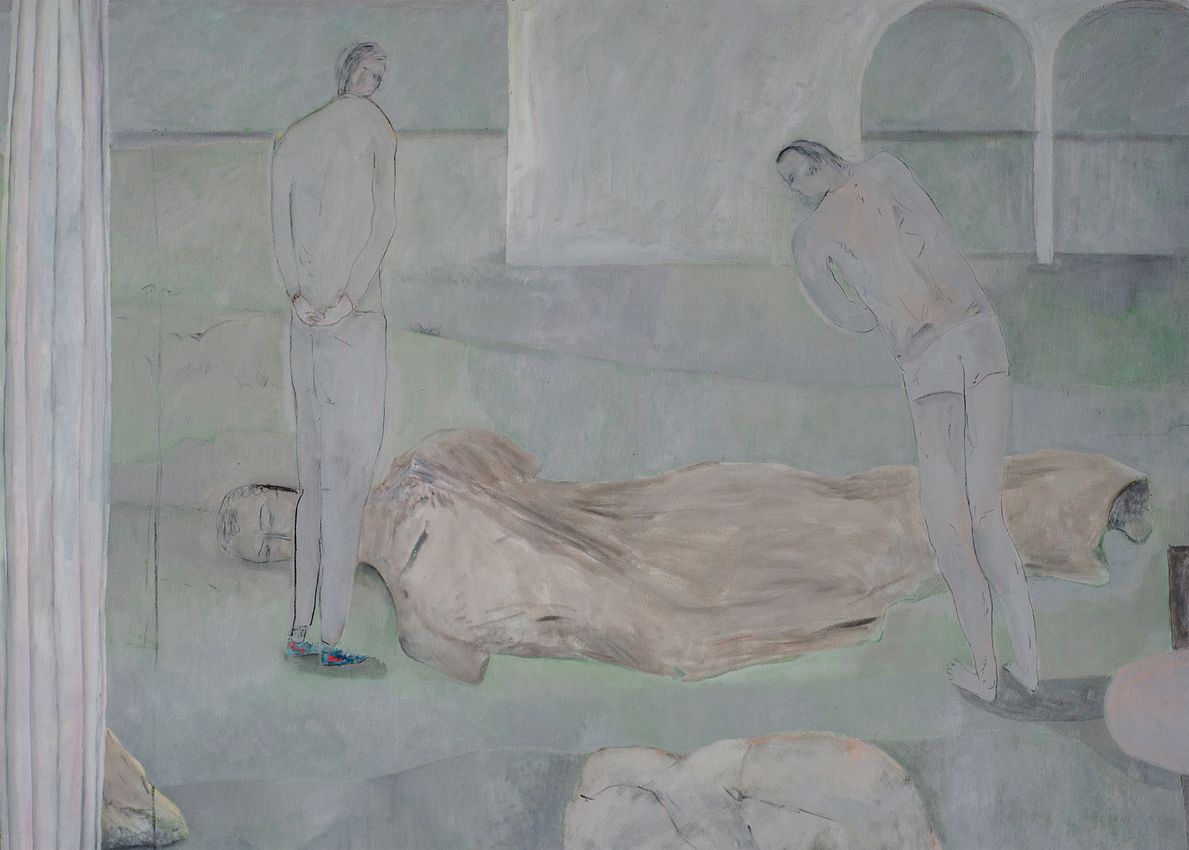
On view in Drift is a body of work exploring the artist’sinterest in painting as a philosophical process, a vehiclefor reflecting on society and human power dynamicswithin it. For Beekman paint functions like language, ableto give form to thoughts and feelings through pictoriallogic, though avoiding a didactic approach in favour ofimagery that remains open to interpretation. Building onthe past two decades of his work, Beekman has taken amore intuitive approach in his latest canvases, focusing onthe unfolding process of painting itself in order to realisemeaning, rather than searching for direct narrative ormetaphor in advance. As such, the result has been to honein on a particular intensity, drama or kind of apotheosis inpainting, a charged or elevated moment.
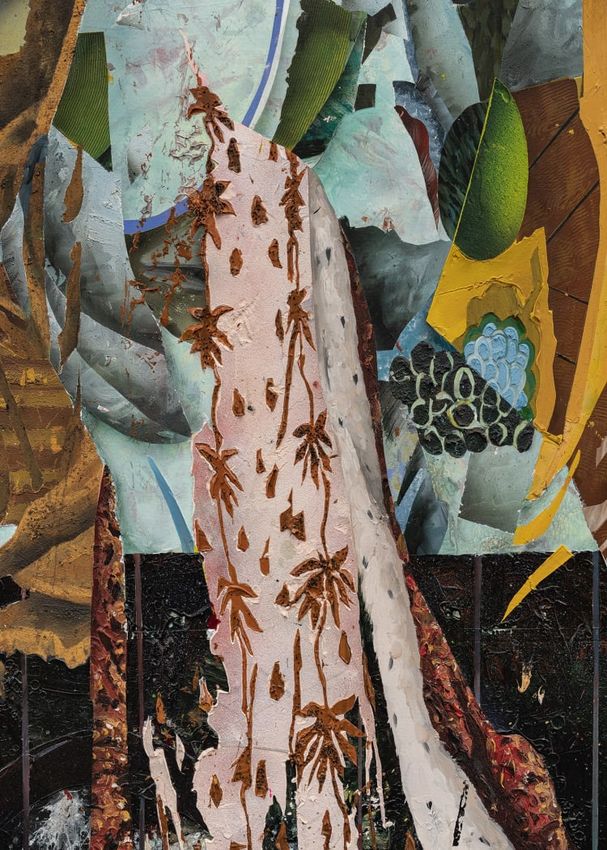
Composed over the course of several months, each work ismade up of multiple visual and textural cues. Thick swathesof acrylic and emulsion, often combined with grit or sand,are heavily applied to each surface, giving sculptural weightto his figures, landscapes and interiors.
Replete with art historical allusions, Beekman compoundsimagery culled from various generations of his peers andartistic progenitors, paying homage to the wide-rangingtraditions of his medium. Particularly inspired by a recenttrip to Rome, the canon of the Roman Renaissance leavestraces in the recent work of Beekman, in both thematicand compositional devices. One can recognise in hispaintings an interest in the construction of power ordivinity, yet at the same time witness the deconstructionof religious painting into constituent motifs, as figures,gestures, scenery and clothing is cropped, appropriatedand synthesised in a quasi-cubist rearrangement of space.The effect of this is deliberately disorienting, with legiblestorylines supplanted by fragmentation as a reflection ofthe human condition and existential uncertainty, an uncannyfeeling of being adrift within familiar environments. Setagainst the backdrop of increasing political and societaltension, one can sense in Beekman’s recent works aparticular poignancy.
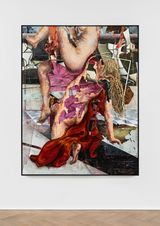
Spanning parallel walls of the gallery are two paintings withpanoramic dimensions, Drift I and Drift II. Each combines arange of techniques simultaneously recalling Mannerism,Futurism and Abstract Expressionism as overlappinggeometric planes intersect with gestural abstraction andmeasured figuration.
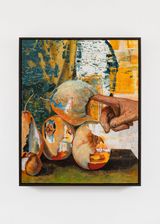
Gesticulating bodies coalesce in a flurry, bringing to mindconflict or protest, with figures rising and falling, andoutstretched limbs grasping for one another. In two smallercanvases, Beekman explores the time honoured genre ofstill life painting, combining the careful study of rotting fruitwith an anonymous figure’s hand pointing into the scene,a reference to Doubting Thomas. In doing so he combineshistorical motifs to produce a contemporary reflection ondecay, scepticismand transience.
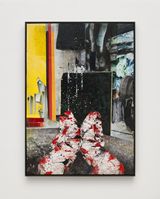
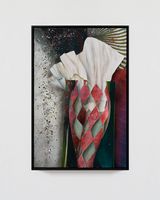
The exhibition’s central triptych The Transformation makesuse of the three-panel format most often associated withreligious altarpieces, however, in Beekman’s case theinfluence of Max Beckmann and Francis Bacon isequally pronounced. In this work, as in his panoramas,there is an emphasis on striking body language, withoutstretched fists signifying power, violence and dynamism.
The pose of the figure, shrouded and doubled over,however, undermines any single symbolic reading, as itsimultaneously recalls the crucifixion and may just asreasonably stand in for suffering or sacrifice. This pursuitof painting’s pliable communicative ability is at the core ofBeekman’s recent works, finding imagery that eludes directnarrative or moralising and instead engenders dichotomiesthat create space for reflection and even catharsis. Acrossall of the paintings in Drift, Beekman deploys the receivedwisdom of centuries of art and visual culture to exploretimeless human emotions and stories; struggles betweenthe powerful and powerless, between order and chaos,glory and shame, triumph and doubt.


GRIMM is an international contemporary art gallery with locations in Amsterdam (NL), London (UK) and New York, NY (US). Since launching in 2005, it has been the gallery’s mission to represent and support emerging and mid-career artists who work in a diverse range of media. The gallery represents over 30 international artists, and in addition to its exhibitions programme, museum presentations and international art fairs, GRIMM maintains a popular publications series offering critical insight into its artists’ practices. GRIMM is a proud member of the International Galleries Alliance (IGA), Dutch Galleries Association (NGA) and the Gallery Climate Coalition (GCC).
A respected voice in contemporary art discourse.
Focusing on ambitious storytelling and insightful art-world commentary. Ocula Magazine publishes in-depth interviews, critical essays and timely analysis on the artists, exhibitions and ideas driving the global art world.
Learn more about Ocula Magazine
Showcasing the best of the art world.
Ocula partners with galleries from around the world to highlight their artists, artworks and exhibitions. Gallery membership is by application and invitation, with each member vetted by an independent panel.
Learn more about Ocula Membership

Specialises in the sale of major artworks.
Led by a team with deep ties to the world’s leading auction houses, galleries and collectors. Ocula’s advisory team offers bespoke services to high-net-worth clients from around the world who are looking to acquire the best of contemporary and modern art.
Learn more about our team and services