






ALBERT OEHLEN
b. 1954, GermanyAlbert Oehlen is a pioneering German contemporary artist known for his provocative and self-reflexive paintings that disrupt the boundaries of abstraction, figuration, and digital art.
Early Years
Albert Oehlen was born in Krefeld, Germany, in 1954 and grew up in a postwar culture defined by scepticism and artistic reinvention. He studied at the Hochschule für bildende Künste in Hamburg under Sigmar Polke, whose irreverent and boundary-pushing approach would deeply influence Oehlen’s own outlook. Emerging in the 1980s, he aligned with Germany’s Neo-Expressionist wave and collaborated frequently with fellow artists like Martin Kippenberger.
Since the 1980s, Oehlen has divided his time between Switzerland, Spain, and Germany, continuing to defy categorisation in the global contemporary art scene
Early Figurative Work and “Bad Painting” (1980s)
In the 1980s, Oehlen began creating figurative paintings that consciously embraced what he called “bad painting.” These works were deliberately crude, with distorted bodies, garish colours, and jarring compositions that mocked traditional painting conventions. Paintings such as Self-Portrait with Shaded Eyes (1984) subverted the seriousness of portraiture, embracing irony and visual provocation.
These early works were shaped by his association with Martin Kippenberger and the punk ethos of post-war German art. Oehlen’s canvases from this era often feature absurd or offensive content, designed to shock or confuse, highlighting the artist’s irreverent stance toward art history.
Transition to Abstraction (Late 1980s–1990s)
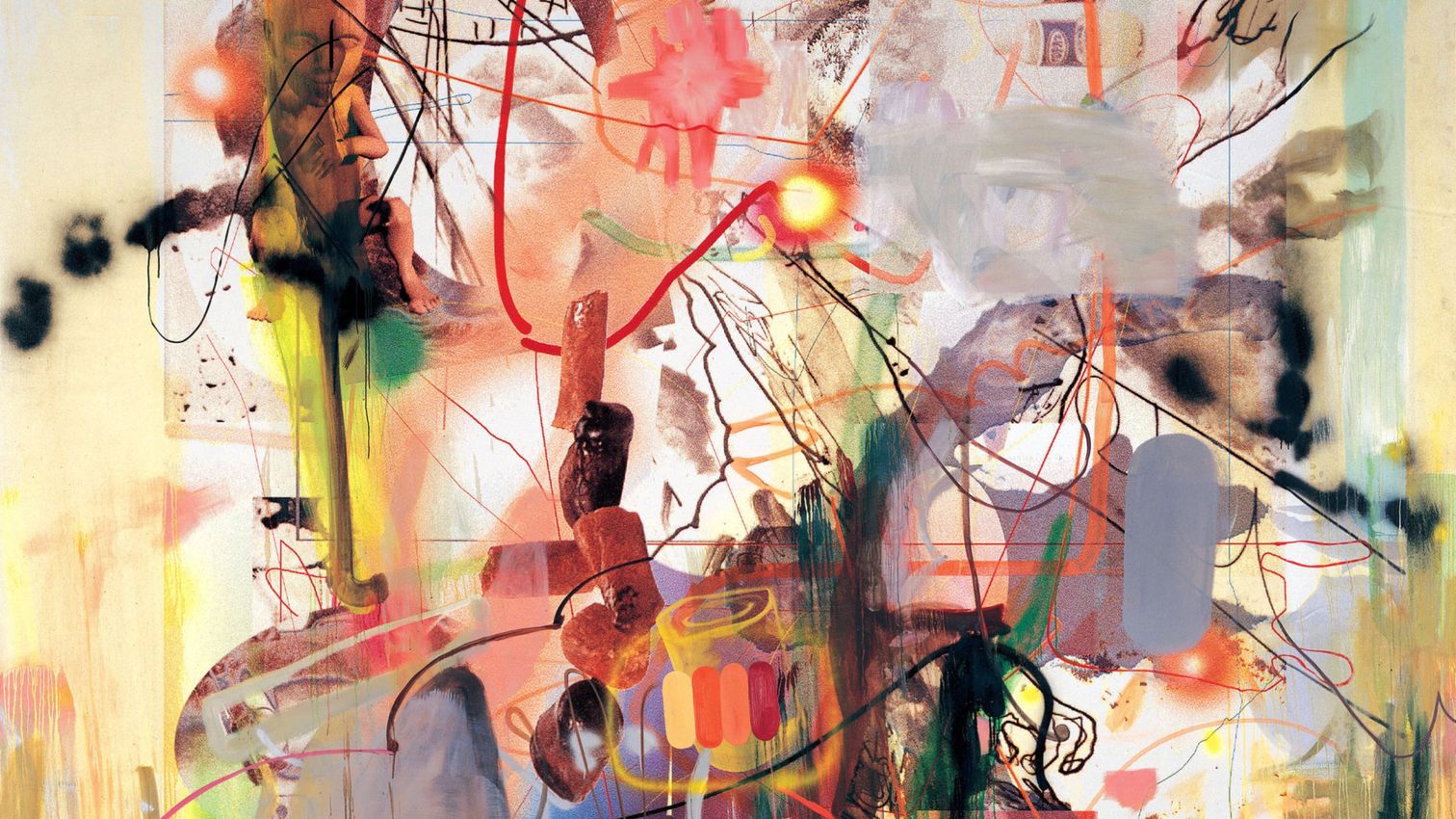
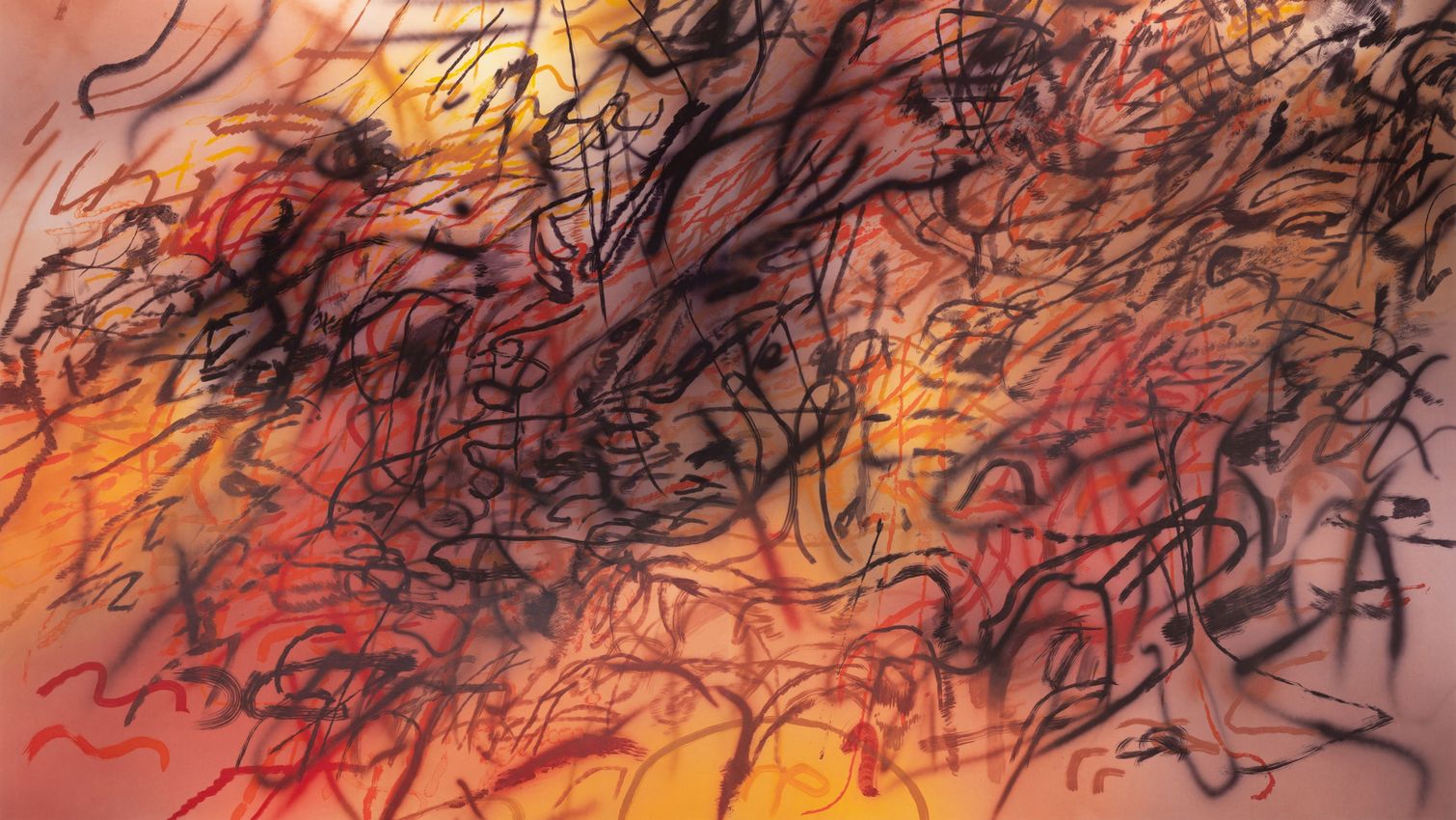
By the late 1980s and early 1990s, Oehlen transitioned into abstraction, developing a unique visual language that merged expressive brushwork with graphic overlays. In these abstract paintings, he introduced limited colour palettes and set formal restrictions to challenge himself—such as using only grey tones or combining oil paint with sprayed elements.
Series such as the Grey Paintings (1997–2008) exemplify this method, as Oehlen used restricted palettes to reduce painting to its most essential components—gesture, space, and structure. These canvases teeter between chaos and compositional control, exemplifying his commitment to problematising painterly expression.
Computer Paintings and Digital Interventions (1990s)
In the 1990s, Oehlen began working with early digital technologies, producing computer-generated compositions that he would then translate into oil paintings. These Computer Paintings marked a critical point in his practice—merging digital precision with human gesture. Works like Untitled (Computer Painting) (1992) feature pixelated patterns, jagged lines, and garish digital effects that are made painterly through thick, physical brushstrokes.
Recent Works and Ongoing Experimentation (2010s–Present)
In recent years, Oehlen has continued to experiment with large-scale compositions that blend gestural abstraction with digital imagery, silkscreen, and collage. His paintings increasingly explore the idea of layering—of image upon image, idea upon form—offering a meta-commentary on the history of contemporary art.
Works shown in major exhibitions such as Cows by the Water (Palazzo Grassi, 2018) demonstrate a career-spanning exploration of what painting can be in the 21st century. Oehlen remains a central figure in the evolution of postmodern painting, unafraid to contradict himself or reinvent his process entirely.
Exhibitions
Albert Oehlen has been the subject of both solo exhibitions and group exhibitions at important institutions. A selection of important exhibitions are provided below.
Solo Exhibitions
- Albert Oehlen: Computer Paintings, Hamburger Kunsthalle, Hamburg (2024–2025)
- Albert Oehlen, Serpentine Gallery, London (2019)
- Cows by the Water: Albert Oehlen, Palazzo Grassi, Venice (2018)
- Albert Oehlen: Recent Works, Guggenheim Bilbao, Bilbao (2016)
- Albert Oehlen: Malerei, Museum Moderner Kunst, Vienna (2013)
- I Will Always Champion Good Painting, Whitechapel Gallery, London (2006)
Group Exhibitions
- Space for Imaginative Actions, Kunstmuseum Bonn (2022)
- Christen Sveaas Art Foundation: This is the Night Mail, Whitechapel Gallery, London (2021)
- Crossing Views, Fondation Louis Vuitton, Paris (2020)
- Oracle, The Broad, Los Angeles (2017)
- Variations: Conversations in and around Abstract Painting, Los Angeles County Museum of Art (LACMA) (2014)
- Riotous Baroque, Guggenheim Museum, Bilbao (2013)
Critical Reception
Albert Oehlen’s art has been widely reviewed in publications such as Artnet, Interview Magazine, and The New Yorker.
Albert Oehlen FAQs
What is Albert Oehlen known for?
Albert Oehlen is known for his radical and continually evolving approach to painting, where he blurs the lines between abstraction and figuration, high art and low culture, digital and analogue techniques. Over four decades, his artworks have challenged the conventions of visual art, often embracing contradiction, irony, and visual overload. He is particularly recognised for his “bad painting” style, computer-generated works, and collage-infused canvases that critique consumerism, painting history, and the very act of art-making itself.
Has Oehlen worked with other artists?
Albert Oehlen has collaborated with several artists throughout his career, most notably Martin Kippenberger, with whom he shared a rebellious, anti-establishment spirit. Together, they produced paintings, installations, and performances that challenged traditional aesthetics. Oehlen has also worked with artists such as Jonathan Meese and was involved in collaborative music and visual art projects. These partnerships reflect his interest in crossing disciplinary boundaries and expanding the scope of contemporary art through humour, experimentation, and critical engagement with cultural norms.
What are Albert Oehlen’s influences?
Albert Oehlen draws influence from a wide array of sources, including artists like Sigmar Polke and Gerhard Richter, as well as punk music, Surrealism, and commercial advertising. He often references the history of painting—both to honour and subvert it—while embracing digital aesthetics and media culture. Oehlen’s work reflects a deep engagement with visual language, filtered through a critical, irreverent lens. His influences contribute to his commitment to pushing painting into unexpected territories, where chaos, humour, and control coexist.
Ocula | 2025

Albert Oehlen's Exhibitions Opening Soon










Explore and Follow Artists Shaping Contemporary Art
A respected voice in contemporary art discourse.
Focusing on ambitious storytelling and insightful art-world commentary. Ocula Magazine publishes in-depth interviews, critical essays and timely analysis on the artists, exhibitions and ideas driving the global art world.
Learn more about Ocula Magazine
Showcasing the best of the art world.
Ocula partners with galleries from around the world to highlight their artists, artworks and exhibitions. Gallery membership is by application and invitation, with each member vetted by an independent panel.
Learn more about Ocula Membership
Specialises in the sale of major artworks.
Led by a team with deep ties to the world’s leading auction houses, galleries and collectors. Ocula’s advisory team offers bespoke services to high-net-worth clients from around the world who are looking to acquire the best of contemporary and modern art.
Learn more about our team and services