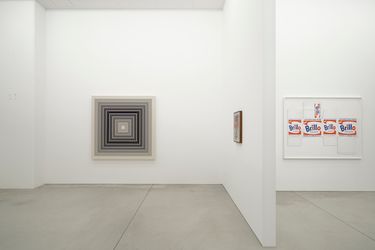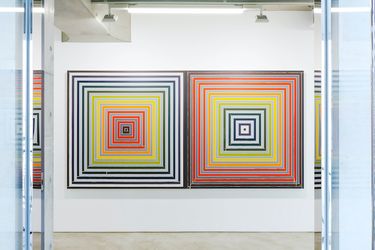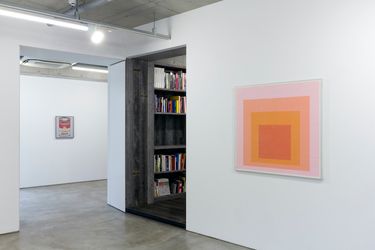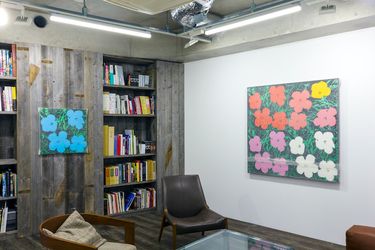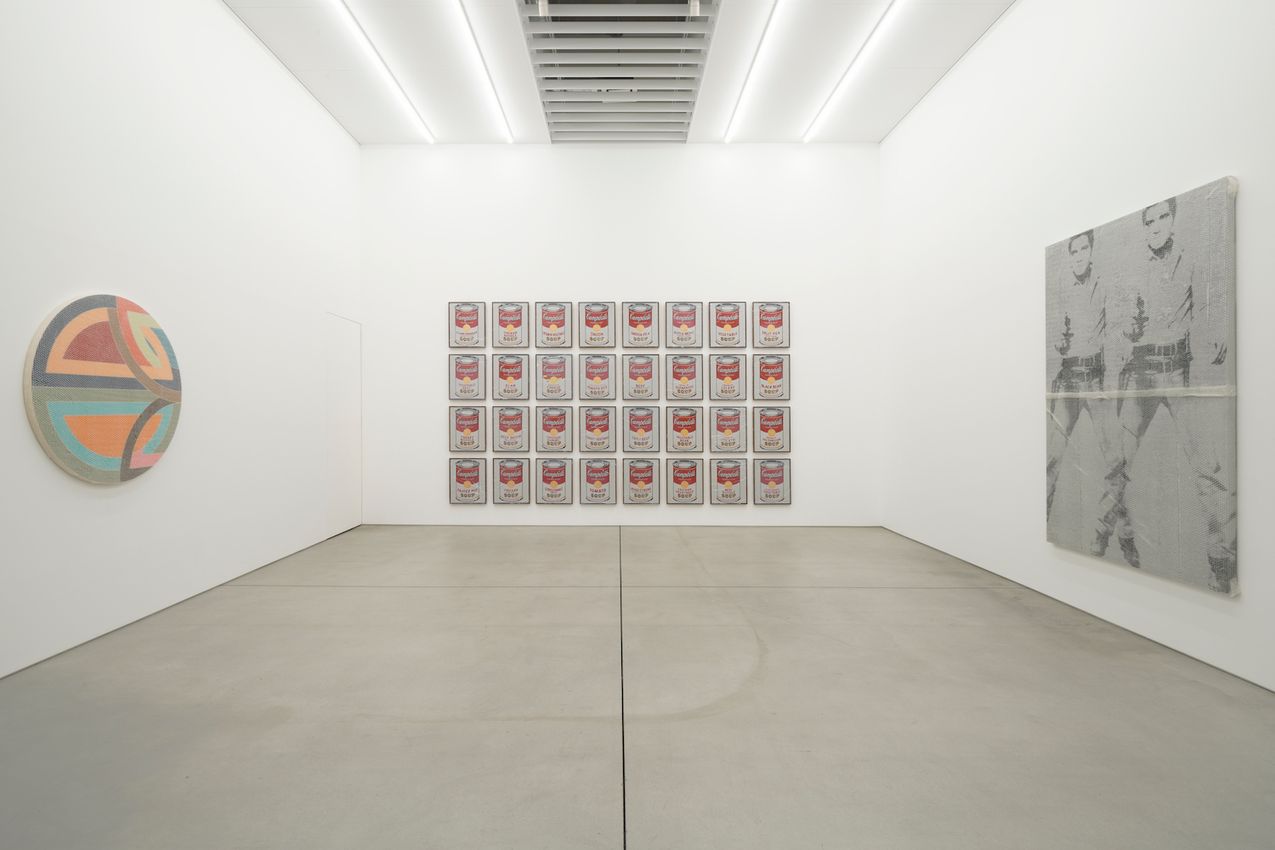
MAKI Gallery is pleased to present Exactly Wrong, Canada-based artist Tammi Campbell’s first solo exhibition in Asia. Premiering across both Tennoz I and Omotesando, Tokyo, the extensive survey will showcase nearly 30 new paintings that continue the artist’s practice of replicating iconic artworks by Frank Stella, Ed Ruscha, Josef Albers, and for the first time, Andy Warhol. Campbell has intervened in the works with her signature simulated packaging materials—wrapping or covering them in hyperreal bubble wrap or corrugated cardboard that is actually cast acrylic polymer—to obscure the hard-edge abstraction or color studies underneath.
The exhibition title is drawn from a quote by Andy Warhol, “When you do something exactly wrong, you always turn up something.” For Campbell, this phrase designates the moment she knows a painting is done—when it can be described as exactly wrong. It’s the point at which you start to notice the bubble wrap is thick and hefty, communicating none of the airiness you would expect, that the corrugated cardboard is only half filled and the packing tape doesn’t waver when you pass it; it’s when the materials suddenly transform from something instantly recognizable into a deeply unfamiliar thing. Just wrong enough to be right, until it isn’t.
The introduction of Warhol as a subject marks a shift in focus in Campbell’s practice in terms of art historical periods (from Modernism to Pop Art). Yet, it’s also a reflection of a deepening consideration of the means and meaning of replication and how her work responds to a legacy of engagement with those ideas, by Warhol and others. To this end, nearly half of the exhibition is devoted to reproductions of Warhol’s works. Drawn and painted in the style of the original, the classic red paint on the ripped label of Small Torn Campbell’s Soup Can (Pepper Pot) with Masking Tape (2020) runs over the edge of a peeling piece of tape of Campbell’s creation, while the more sculptural Brillo Soap Pads Box Flattened (2021) demonstrates a new casting technique innovated by the artist that allows its shape to correspond directly with the original version. Similarly to her past selections of key works or series in an artist’s practice—like Frank Stella’s Black Paintings or Josef Albers’ Homage to the Square (which is also represented in this exhibition)—Campbell chose to reproduce what have become some of Warhol’s most well-known works. Not only in a commercial sense, but also in our collective cultural imagination.
For Exactly Wrong, Campbell has assembled works by white male artists that have achieved the kind of entrenched canonization that’s predicated on countless museum shows, ubiquitous collecting by private and public collections, and ongoing scholarly attention. The immense amount of time and effort Campbell invests in reproducing these works can be understood as both a nod to the past, but also a representation of the labor that has been committed to upholding their status—energy that could be redirected to those artists who have yet to be recognized. Campbell’s encased works are subtle in their final form, functioning superficially as delicious examples of expertly executed trompe l’oeil. However, once the illusion dematerializes with closer inspection, the painting’s apparent interim status of a work in transit prompts a series of questions. What unseen person is responsible for transporting them? Where are they going? And, perhaps most importantly, what might replace them on the empty wall?
Written by Amanda Nudelman
Press release: Courtesy of MAKI.


Tammi Campbell (b. 1974) holds a BFA from the University of Saskatchewan, Saskatoon. The artist is known for her meticulously researched replications of iconic works by Modernist and Pop masters, such as Frank Stella, Ed Ruscha, Josef Albers, and Andy Warhol. She distinguishes her works from the originals by applying hyperreal mock packaging materials cast in acrylic paint or purposefully leaving some areas unfinished, playfully subverting the many myths and assumptions that pervade Western art historical canon.
MAKI Gallery was first established in Tokyo in 2003, with the aim of promoting works by seminal avant-garde Japanese artists of the 1950s-60s. The gallery has since gradually shifted its focus to working with emerging contemporary artists. After opening a location in the bustling, high-end shopping district of Omotesando in 2014, MAKI Gallery opened an expansive, museum-caliber space in the growing gallery hub of Tennoz in 2020. Across these two outposts, MAKI Gallery presents a broad range of works by internationally active artists, including Mungo Thomson, Miya Ando, Susumu Kamijo, and Marius Bercea, while also introducing younger Japanese artists, such as Anne Kagioka Rigoulet, Keisuke Tada, and Takuro Tamura, to a global audience. The gallery has also participated in various international art fairs such as Frieze New York, The Armory Show, Asia NOW, and West Bund Art & Design.

A respected voice in contemporary art discourse.
Focusing on ambitious storytelling and insightful art-world commentary. Ocula Magazine publishes in-depth interviews, critical essays and timely analysis on the artists, exhibitions and ideas driving the global art world.
Learn more about Ocula Magazine
Showcasing the best of the art world.
Ocula partners with galleries from around the world to highlight their artists, artworks and exhibitions. Gallery membership is by application and invitation, with each member vetted by an independent panel.
Learn more about Ocula Membership

Specialises in the sale of major artworks.
Led by a team with deep ties to the world’s leading auction houses, galleries and collectors. Ocula’s advisory team offers bespoke services to high-net-worth clients from around the world who are looking to acquire the best of contemporary and modern art.
Learn more about our team and services