Press Release

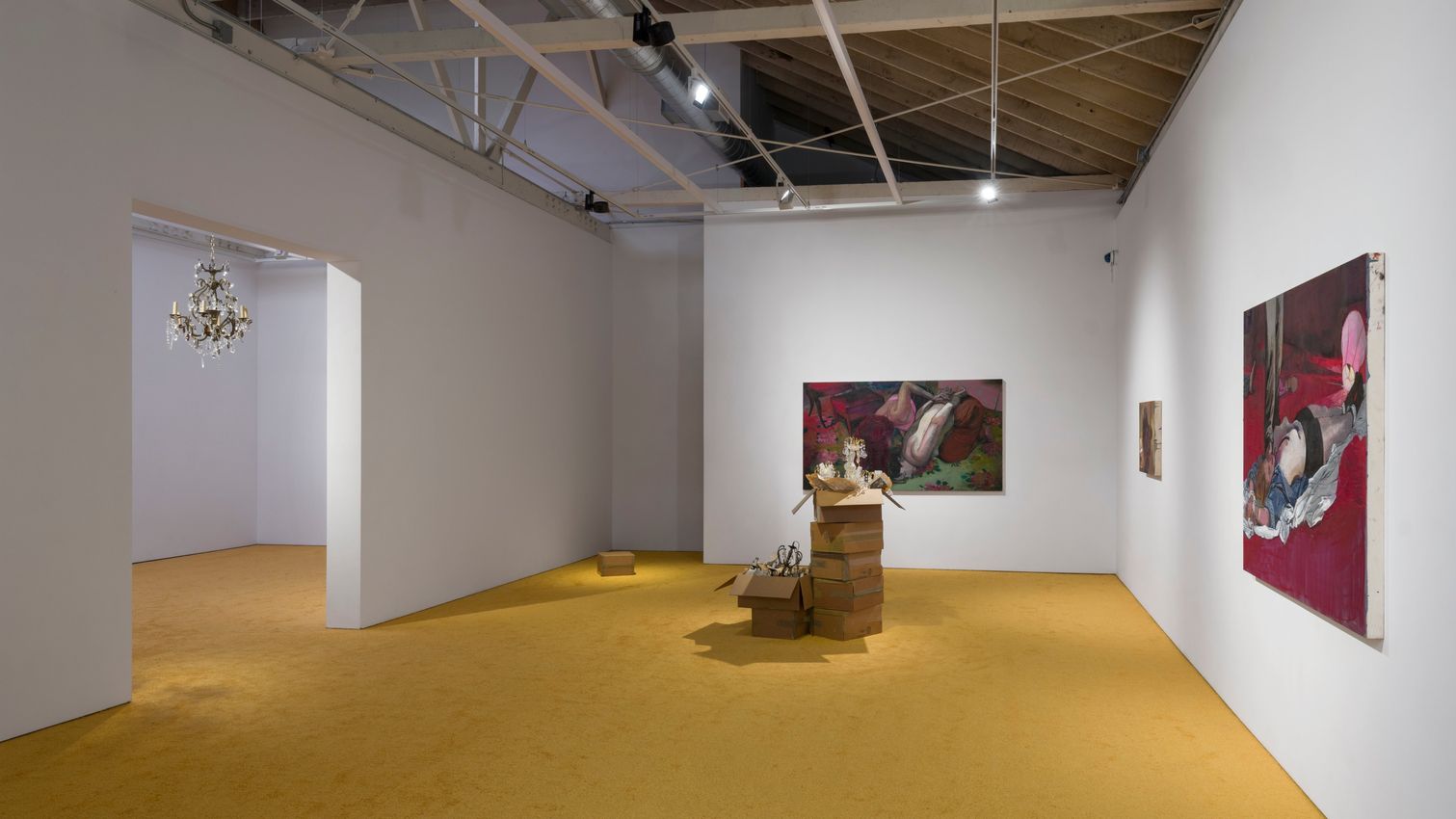
The whole of Michelle Uckotter’s (b. 1992, Cincinnati, OH) Moviestar unfolds in three interconnected parts: a solo exhibition at Matthew Brown, a parallel exhibition at Marc Selwyn Fine Art, Camden Annex, juxtaposed with an exhibition of works by Marjorie Cameron (1922–1995), curated by Uckotter, and the debut of a short film by the same title directed by Uckotter and co-written by poet Riley Mac.

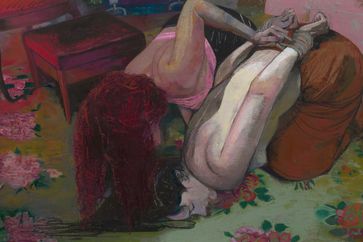
The paintings in Moviestar, inspired by stills from the film, position the viewer as both witness and accomplice, immersed in Uckotter’s ‘cinema of painting.’ These works, rendered in dusky jewel tones of oil pastel, show a sequence of events—perhaps a night of partying gone very, very wrong, or a Manson-style cult ritual—that devolve into a fever dream of violence and eroticism. These scenes, in both content and sensation, are reminiscent of 1970s B-horror and exploitation films, like the final acts of Russ Meyer’s Beyond the Valley of the Dolls (1970), where surreal Hollywood decadence spirals into the psychedelic carnage of a cast of Playboy Bunnies, or the dinner table scene in Tobe Hooper’s The Texas Chain Saw Massacre (1974), where domesticity is reconfigured as a sadistic ritual. In both of these climaxes, the bodies of the villains and victims shift between states—idolized, violated, consumed—while identities remain in flux. In Moviestar, Uckotter’s figures slip and shift between archetypes in a similar fashion: starlet and sacrifice, predator and prey, their roles never fully fixed.

By modifying stills from her own film to fit the confines of the compositions, Uckotter assumes the role of artist-as-director, orchestrating the viewer’s gaze—but also disrupting the passive consumption of violence.

Removed from their original context, these images resist narrative closure, allowing the tenuous boundaries between violence and pleasure to exist as something sublimely unresolved: the paintings reclaim agency from the cinema of exploitation, and reposition the act of looking as both an indictment and an invitation.

Uckotter’s articulation of the interiors of her paintings is crucial: in contrast to the violence and laborious intensity of her markmaking, her fastidious ability to render architecture allows for the precariousness and sensuality of her scenes to take full effect. The set constructed for Moviestar is, in a way, Uckotter’s own Étant donnés (Marcel Duchamp, 1946–1966). The rigidity of the constructed set contrasts with the painterly, impressionistic fluidity of the image viewed through the “peephole,” in this case her direction of the camera in the film and the viewer’s gaze in the paintings. The scene in one painting easily flows into another based on individual interpretation, asserting focus on the organic disorder of the posed female figures.

These figures, in Uckotter’s paintings and film are more ‘archetypes’ than subjects, styled and posed in ways that interrogate anxieties surrounding unstable bodies and identity, where the boundaries of the feminine exist as sites of both desire and destruction. Like the lustmord painting of the Neue Sachlichkeit painters of Weimar Germany, where scenes of sexual murder represented a desire for agency with shifting gender and societal norms after the ravages of World War I, Uckotter’s figures address the contradictions of how a woman can create herself—or be destroyed—in a world not built for her.

Uckotter’s Moviestar walks the thin, volatile line between agency and objectification, spectacle and destruction. In her world, femininity is unstable, slipping between performance and erasure, violence and becoming. Like the experience of womanhood itself, her scenes resist resolution, caught in the tension between transformation and the structures that seek to contain it. In reanimating the language of exploitation cinema, Uckotter exposes and shatters the frame, but never fully reveals her own role in the production. Like any skilled director, she is everywhere in the scene—yet nowhere to be found.

Read More
About the Artist

Michelle Uckotter is a New York—based contemporary artist and filmmaker whose oil pastel paintings and drawings stage doll-like women in suspense-filled, filmic interiors informed by horror cinema and modernist painting. Her artworks and film projects explore femininity, performance, and the unstable body through a self-described ‘cinema of painting’ that loops between set, screen, and canvas.

View Artist Profile Michelle Uckotter contemporary artist
About the Gallery

Founded in 2019, the gallery presents ambitious projects by emerging and mid-career artists. The gallery opened its first space in 2019 with a solo exhibition of Los Angeles based artist Kenturah Davis, and opened its second Los Angeles location in 2021 with the debut solo exhibition of New York based artist Sasha Gordon.

View Gallery Profile
Address
633 North La Brea Ave
Suite 101
Los Angeles
United States
Opening Hours
Tuesday – Saturday
11am – 6pm
(1)
Los Angeles 633 North La Brea Ave, Suite 101
Matthew Brown
633 North La Brea Ave, Suite 101, Los Angeles, United States

Opening hours
Tuesday – Saturday
11am – 6pm
The art world in focus