





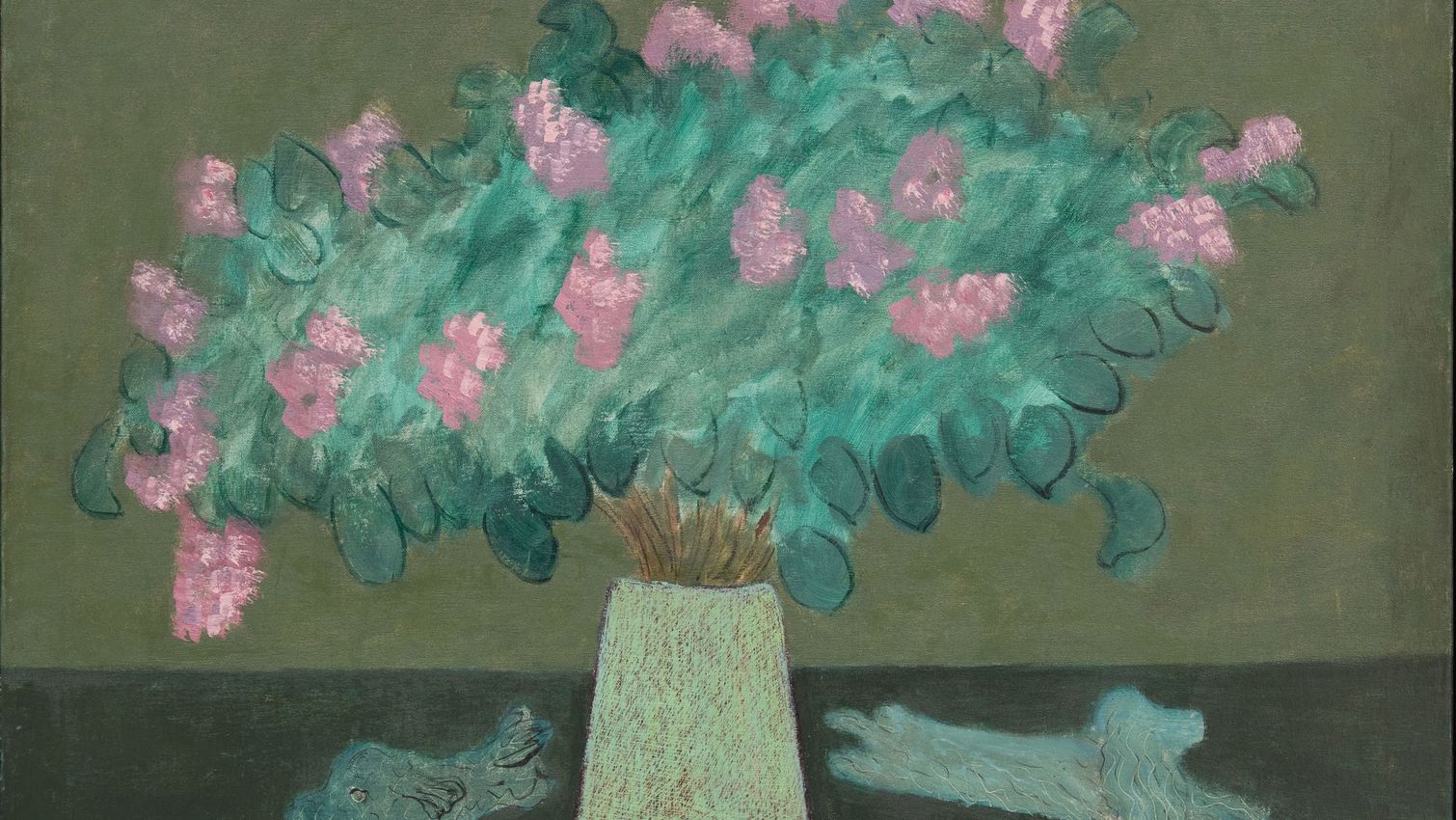
MILTON AVERY
1885-1965, United StatesMilton Avery (1885—1965) bridged the gap between realist and abstract art. His landscapes, figures and still lives featured expressive colour and energetic brushwork, but he did not align himself with any particular movement or fashion—an approach that has arguably given his work posthumous popularity and longevity.
Early Years
Milton Avery was born in March 1885, the youngest of four children in a working-class family. He left school at 16 and worked in various factory jobs for a decade before enrolling at the Connecticut Leage of Art Students in Hartford in 1905. Initially in a commercial lettering class, his tutor suggested he switch to life drawing instead. In 1925 he moved to New York City and married the illustrator Sally Michel in 1926—her earnings supported his painting. Milton and Sally’s daughter, March, was born in 1932.
Milton Avery: Artworks
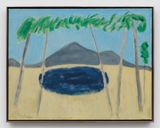
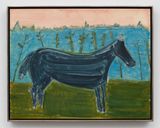
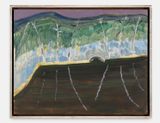
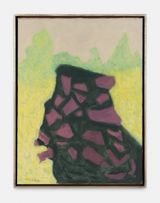
Avery was inspired by the world around him, whether that was the landscapes of Connecticut, beach holidays or his wife and daughter, creating accessible art using simplified forms in sometimes unexpected colours. Although his early landscapes were reminiscent of Impressionist work, his practice continually evolved: his paintings of fields and seaside towns became tonally flatter (something he also eventually applied to his portraits) and his images became more pared back, focusing on their most important aspects. Often described as one of America’s greatest colourists, his washes of luminous paint paved the way in part for the Colour Field movement.
However, even if Avery’s work tended more towards abstraction as his career progressed, he always resisted aligning himself with a particular category. He told Art Digest in 1952, “I never have any rules to follow. I follow myself.” His output was prolific—in 1944 alone he produced 100 paintings—until a 1949 heart attack rendered him too weak to paint. During this period, he experimented with monotype painting, using thinned pigments on a glass surface, then transferring it to paper.
- Milton Avery often painted his wife and daughter. Pink Baby (1933) marks Avery’s early adoption of non-naturalistic colour, painting Sally turquoise and March a bright candy pink. Later in his career, an older March is still his muse, for example in 1961’s Bather, in which she wears a yellow swimming costume.
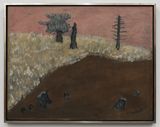
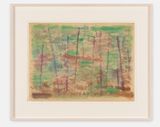
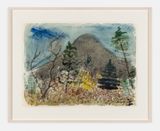
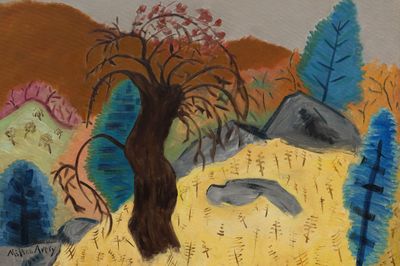
- In Dead Trees with Firs (1944), Avery creates a landscape of distorted bare trees and fir trees where patches of yellow and pink contrast against areas of blue and terracotta.
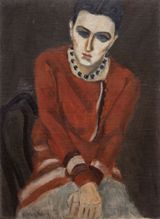
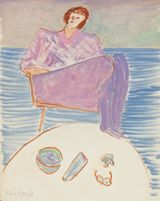
- An example of Avery’s gradual paring back of images can be seen in two paintings of Sally, painted around 20 years apart. In 1926’s Sally Avery with Still Life, Sally’s facial features are obvious. But by the time Avery painted Sally in 1946, the figure, while naturalistic in colour, is identifiable by her clothes rather than her face.
Milton Avery: Exhibitions
Select Solo Exhibitions
- The Figure, Karma, Los Angeles (2026)
- Milton Avery, Royal Academy of Arts, London (2022)
- Summer with the Averys [Milton | Sally | March], Bruce Museum, Connecticut (2019)
- Milton Avery, Victoria Miro, London (2017)
- Milton Avery: A Concentration of Drawings and Prints, Fischbach Gallery, New York City (2014)
- Milton Avery: Industrial Revelations, Knoedler & Company, New York City (2010)
- Milton Avery and the Sea, Alpha Gallery, Boston (2006)
- Milton Avery: Works on Paper, Waddington Custot Galleries, London (2004)
- Milton Avery, DC Moore Gallery, New York City (1999)
- Milton Avery’s Ebb & Flow, Cornell Fine Arts Museum, Winter Park (1997)
- Milton Avery: Watercolours 1929—1960 (touring Maine and Florida) (1991—1992)
- Milton Avery on Paper, Whitney Museum of American Art, Stamford (1982)
- Milton Avery: Large Late Paintings, Art Gallery of Hamilton, Ontario (1981)
- The Graphic Work of Milton Avery (touring the USA) (1973)
- Milton Avery Retrospective, Brooklyn Museum, New York City (1970)
- Milton Avery Paintings: 1941—1963, MoMA and then touring the USA (1965—1966)
- Milton Avery (touring the USA) (1952—1953)
- Milton Avery, Phillips Memorial Gallery, Washington DC (1943)
Select 2020s Group Exhibitions
- The Great Unseen Collection, David Zwirner, New York City (2026)
- Colour Form and Composition: Milton Avery and his enduring influence on contemporary painting, MICAS, Malta (2025)
- Forms of Nature, Xavier Hufkens, Brussels (2023)
- Unmasked, Victoria Miro Venice (2022)
Further Reading
Notes from the 2022 Royal Academy Exhibition Artist biography from Victoria Miro Artist biography from DC Moore 2022 article from _Prospect _magazine
Milton Avery FAQs
Was Milton Avery an Impressionist?
Although Avery produced artwork when the American Impressionism and Abstract Expressionism movements were fashionable, he stood apart from both. His use of flat planes of paint and his colour palette could be said to be an influence on Abstract Expressionism.
Did Milton Avery work from a studio?
No, Milton Avery painted in the living room of his New York City home. His daughter March has said that he would paint between breakfast and lunch, and then again during the afternoon, finishing at around 5pm and often completing a painting in a day.
Was Milton Avery friends with Mark Rothko?
Yes, Milton Avery and Mark Rothko were friends. They met via the Opportunity Gallery, which was established in New York City in 1928 to give young artists a chance to exhibit. Avery and Rothko were art of a friendship circle that also included Adolph Gottlieb and Joseph Solman.
Ocula


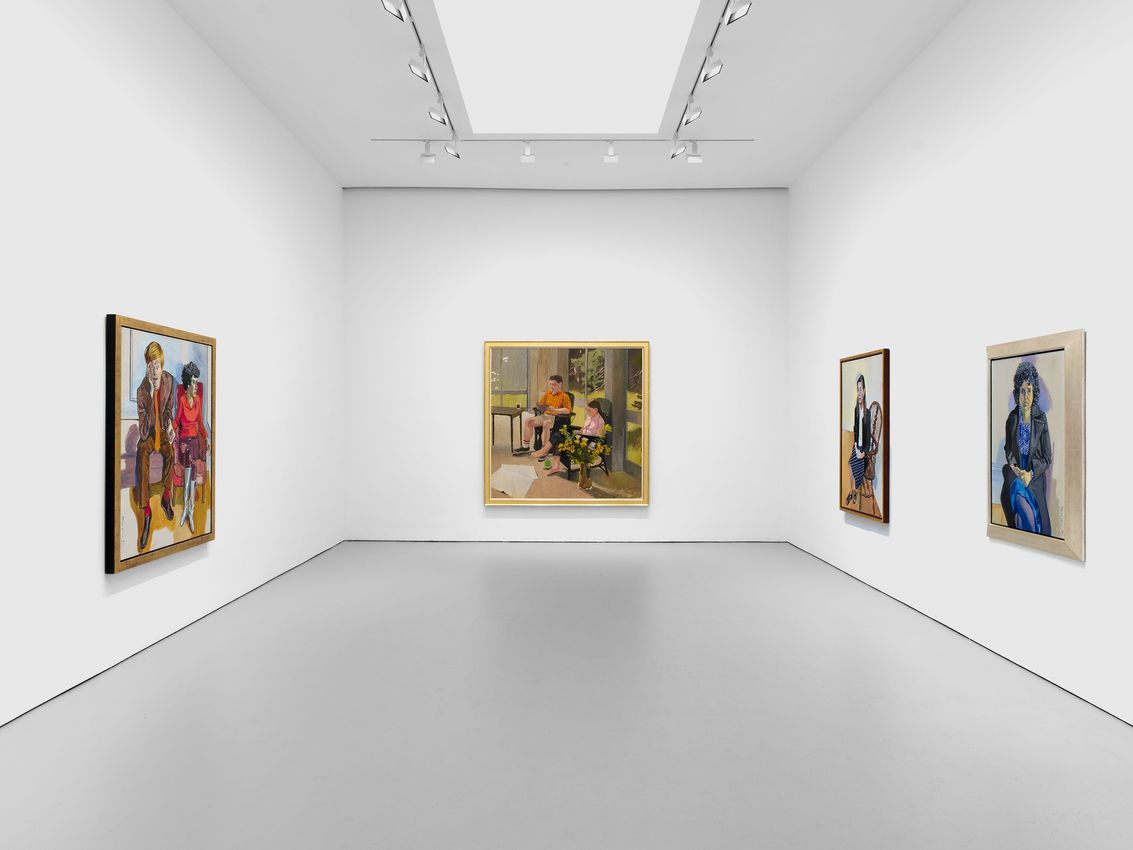
View Milton Avery's Artworks



























Explore and Follow Artists Shaping Contemporary Art
A respected voice in contemporary art discourse.
Focusing on ambitious storytelling and insightful art-world commentary. Ocula Magazine publishes in-depth interviews, critical essays and timely analysis on the artists, exhibitions and ideas driving the global art world.
Learn more about Ocula Magazine
Showcasing the best of the art world.
Ocula partners with galleries from around the world to highlight their artists, artworks and exhibitions. Gallery membership is by application and invitation, with each member vetted by an independent panel.
Learn more about Ocula Membership
Specialises in the sale of major artworks.
Led by a team with deep ties to the world’s leading auction houses, galleries and collectors. Ocula’s advisory team offers bespoke services to high-net-worth clients from around the world who are looking to acquire the best of contemporary and modern art.
Learn more about our team and services