




CARLA ACCARDI
1924-2014, ItalyCarla Accardi (1924 - 2014) is one of the most important exponents of abstract painting in Italy after World War II. Born on October 9, 1924, in Trapani, she studied at the Academy of Fine Arts in Florence before moving to Rome in 1946, where she founded the influential postwar group Form 1 (1947–51), the main reference for abstract art in Italy in the ‘40s and ‘50s.
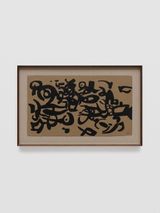
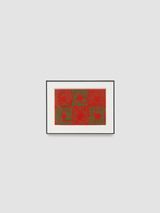
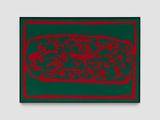
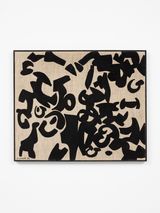
Her early paintings consisted of interlocking geometric forms. In the 1950s, Accardi was involved in the wide-reaching attempts to revolutionize abstraction through the hybridization of geometric and gestural painting, both in Italy and in France, where art critic Michel Tapié took an interest in her work. In 1953 Accardi began to introduce pseudo-calligraphic signs into abstract images, while reducing her palette to white-on-black compositions to explore the relationship between figure and ground.
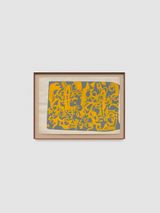
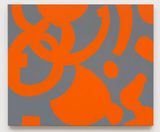
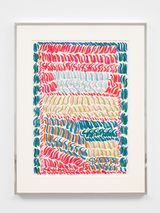
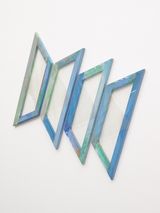
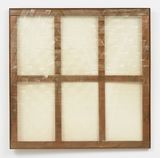
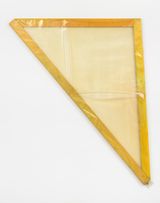
In the 1960s, however, there is a rejuvenation of color in her works with references to the metropolitan culture and optical effects. Accardi’s artistic research was characterized by a continuous experimentation radicalized with the use of transparent plastic supports that accentuate the nature of the painting as a luminous diaphragm. In 1961 indeed, she began painting on sicofoil, a transparent plastic, instead of canvas. She showcased these new strategies at the 1964 Venice Biennale. By the mid-1960s, she was using these new materials sculpturally. This phase of Accardi’s oeuvre, which was celebrated in the Ambiente/Arte section of the 1976 Venice Biennale, would prove infl uential for Arte Povera. In the 1980s she returned to canvas and shift ed her focus to the use of signs and chromatic juxtapositions. In 1988 she participated again at the Venice Biennale, while in 1994 she took part to The Italian Metamorphosis 1943–1968, held at the Solomon R. Guggenheim Museum, New York, in 1994. Her work is part of many important collections, including the Galleria Nazionale d’Arte Moderna in Rome, the Museo d’Arte Contemporanea of Castello di Rivoli (Turin), the Gallerie Civiche of Modena and Bologna, the Palazzo Reale in Milan, and the Museo Civico in Turin. Th e artist died in Rome on February 23, 2014.
Text courtesy MASSIMODECARLO.


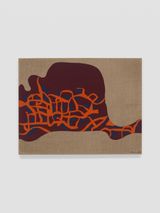

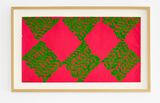

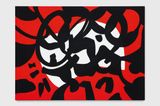















Explore Carla Accardi's Exhibitions









Explore and Follow Artists Shaping Contemporary Art
A respected voice in contemporary art discourse.
Focusing on ambitious storytelling and insightful art-world commentary. Ocula Magazine publishes in-depth interviews, critical essays and timely analysis on the artists, exhibitions and ideas driving the global art world.
Learn more about Ocula Magazine
Showcasing the best of the art world.
Ocula partners with galleries from around the world to highlight their artists, artworks and exhibitions. Gallery membership is by application and invitation, with each member vetted by an independent panel.
Learn more about Ocula Membership
Specialises in the sale of major artworks.
Led by a team with deep ties to the world’s leading auction houses, galleries and collectors. Ocula’s advisory team offers bespoke services to high-net-worth clients from around the world who are looking to acquire the best of contemporary and modern art.
Learn more about our team and services