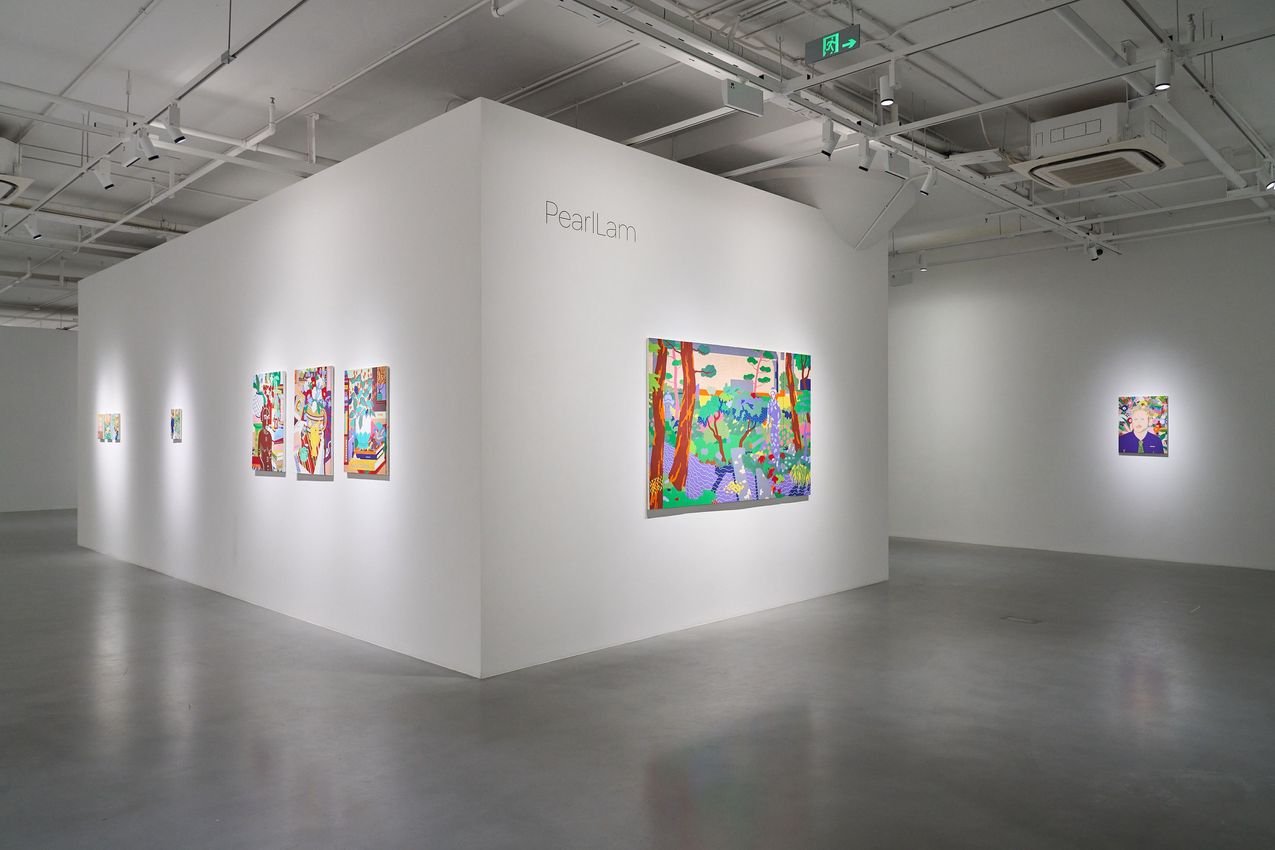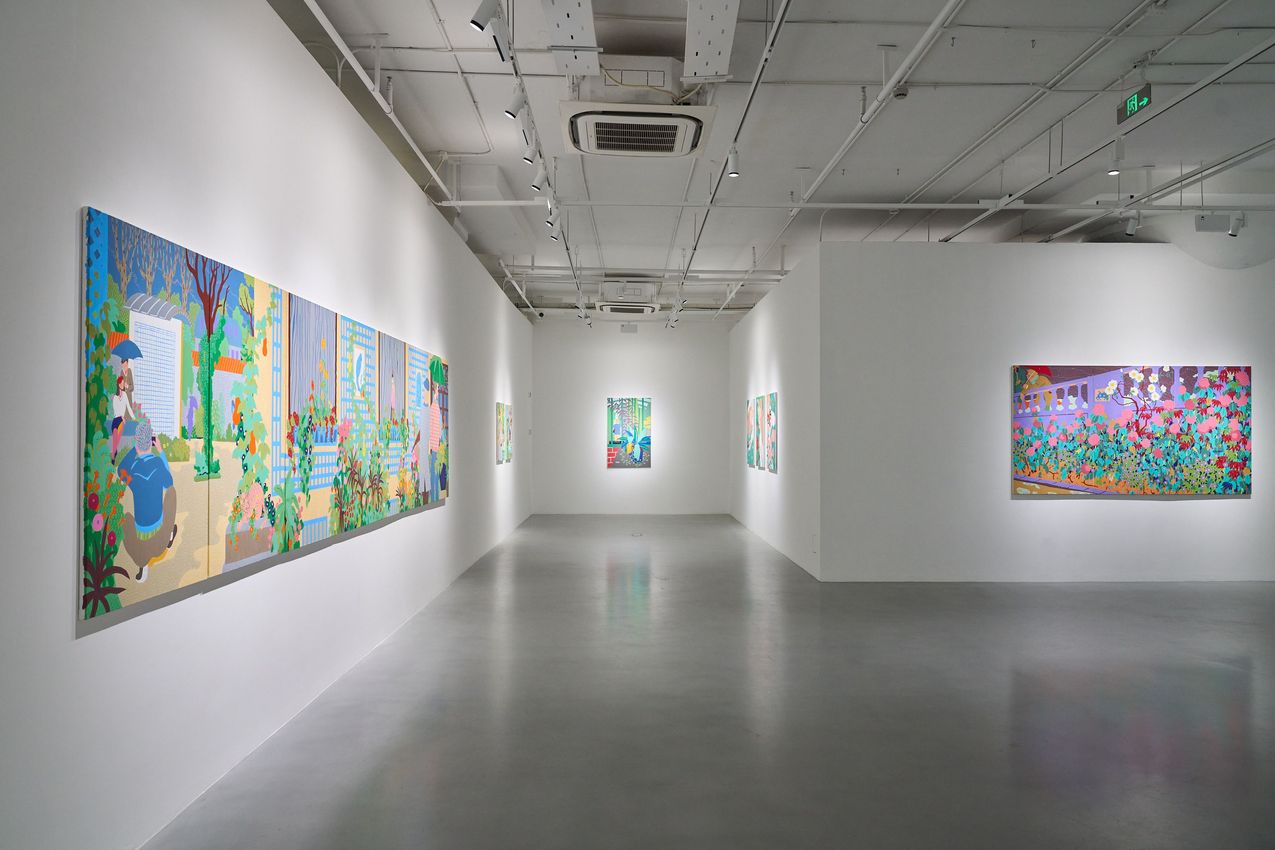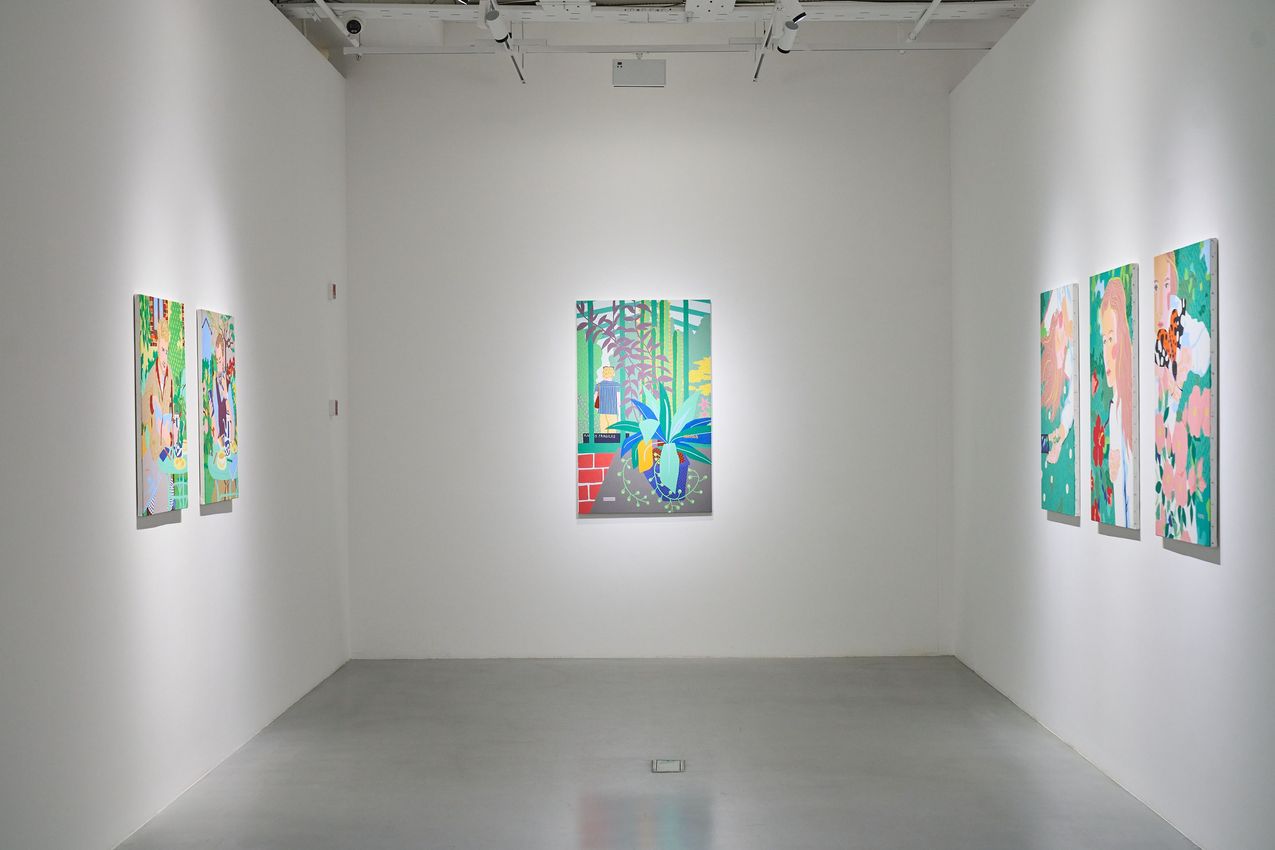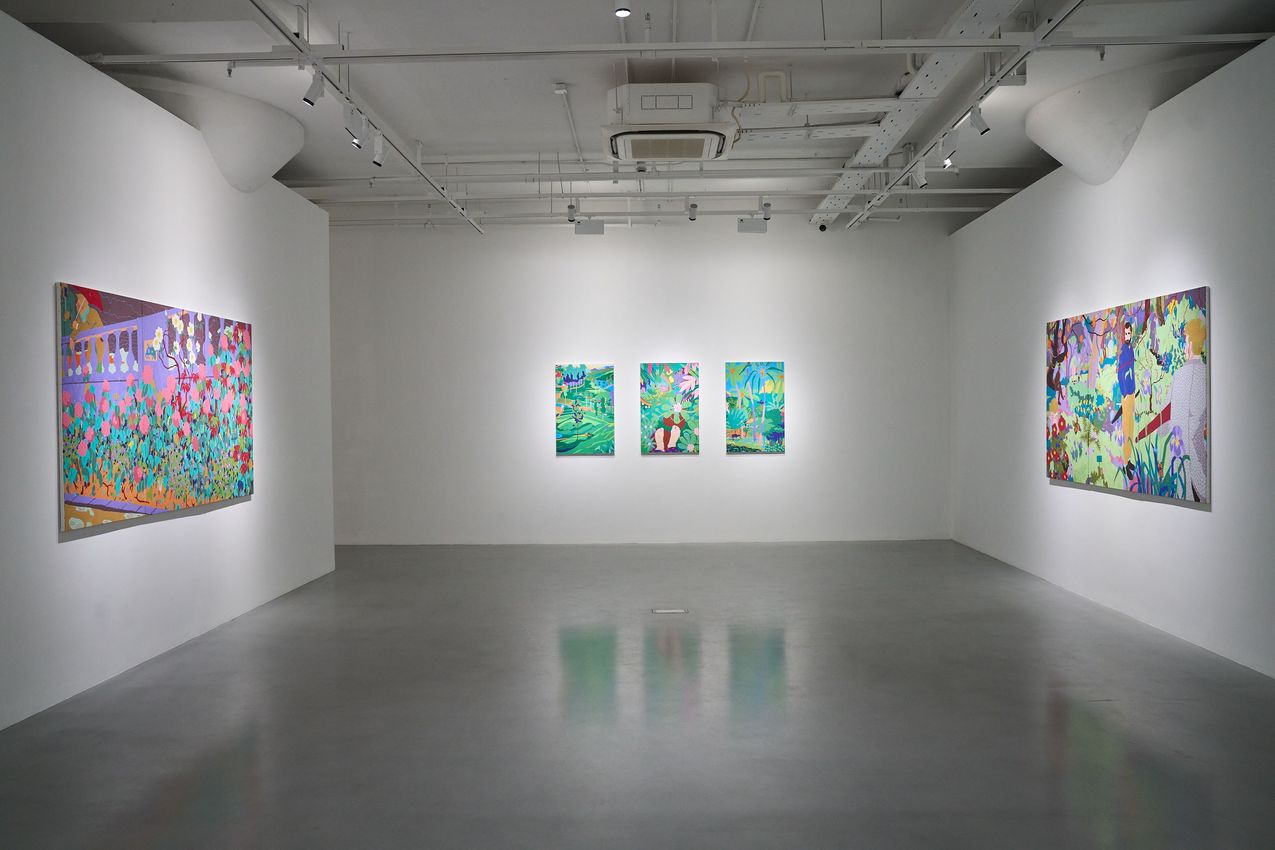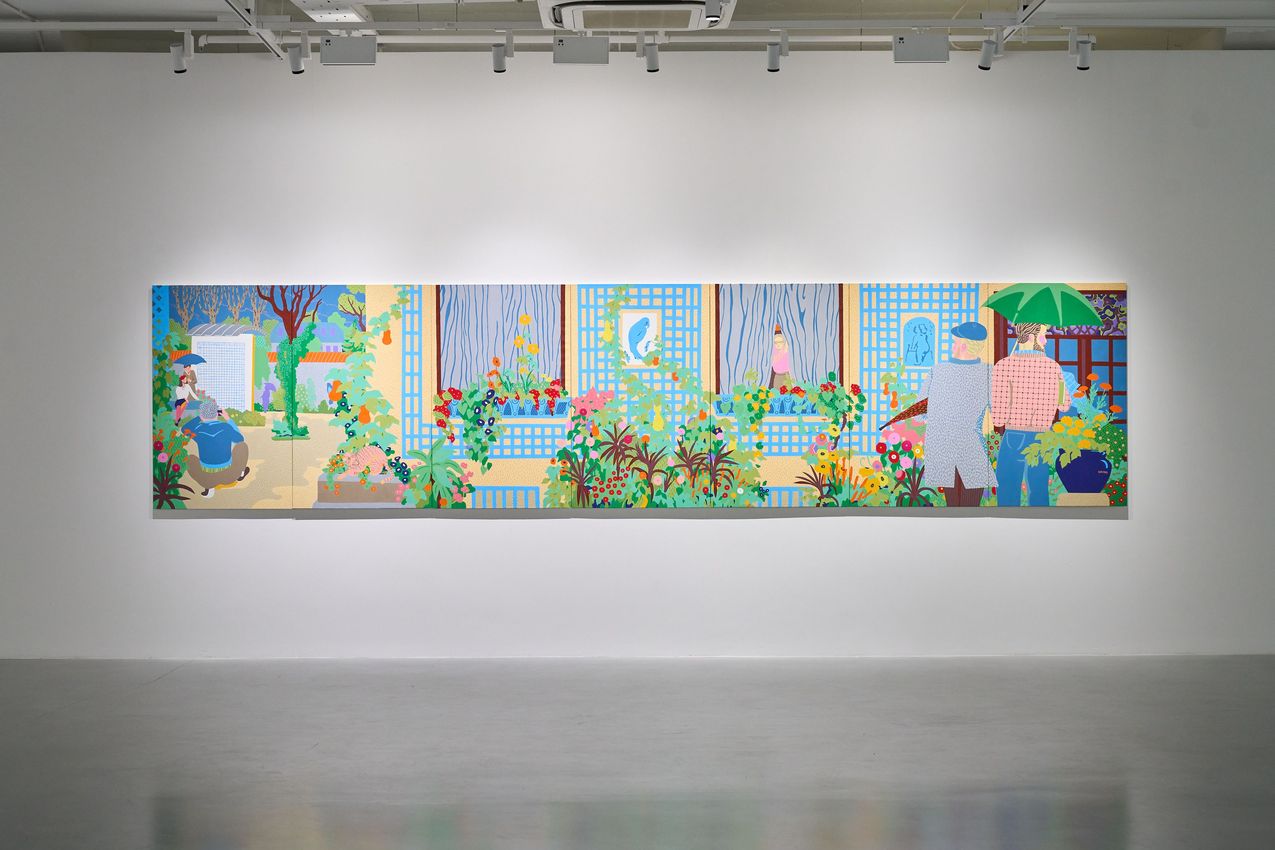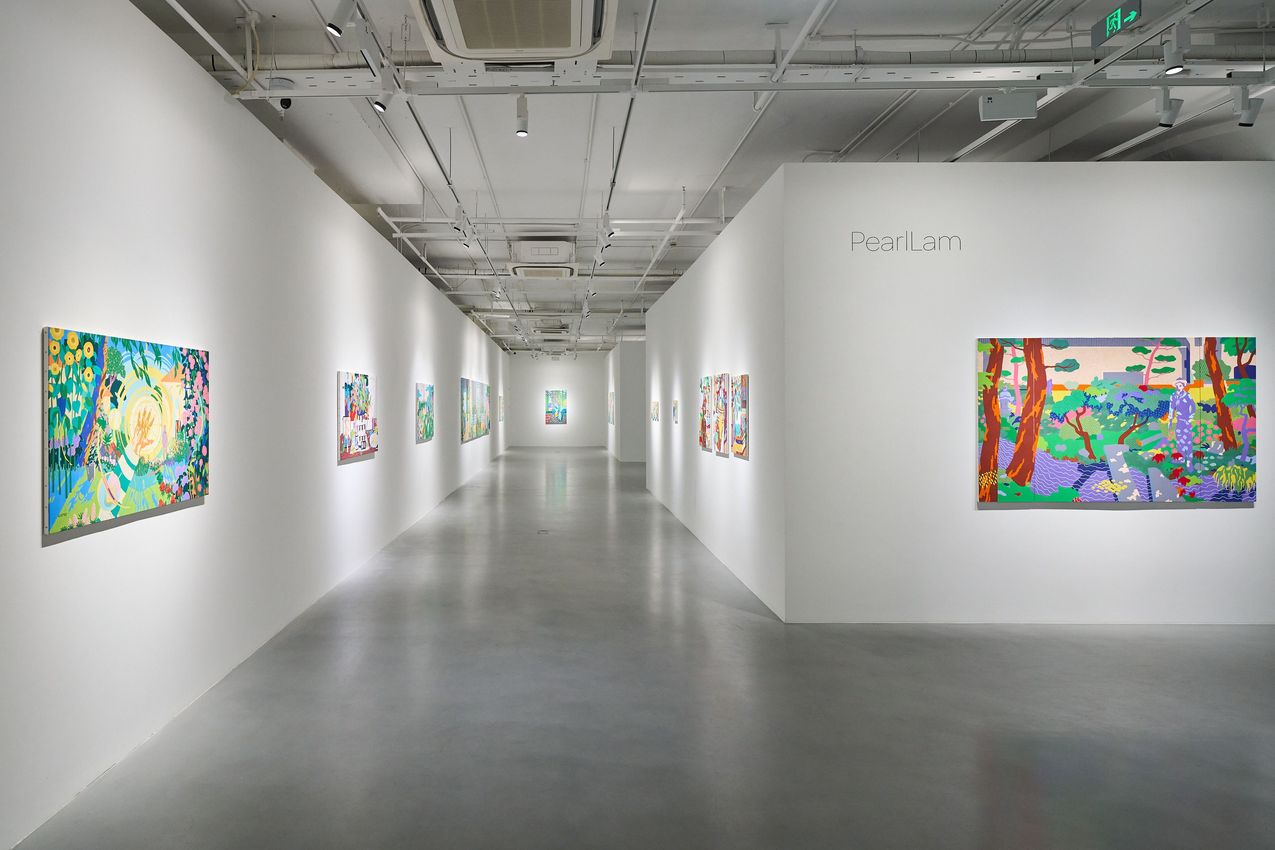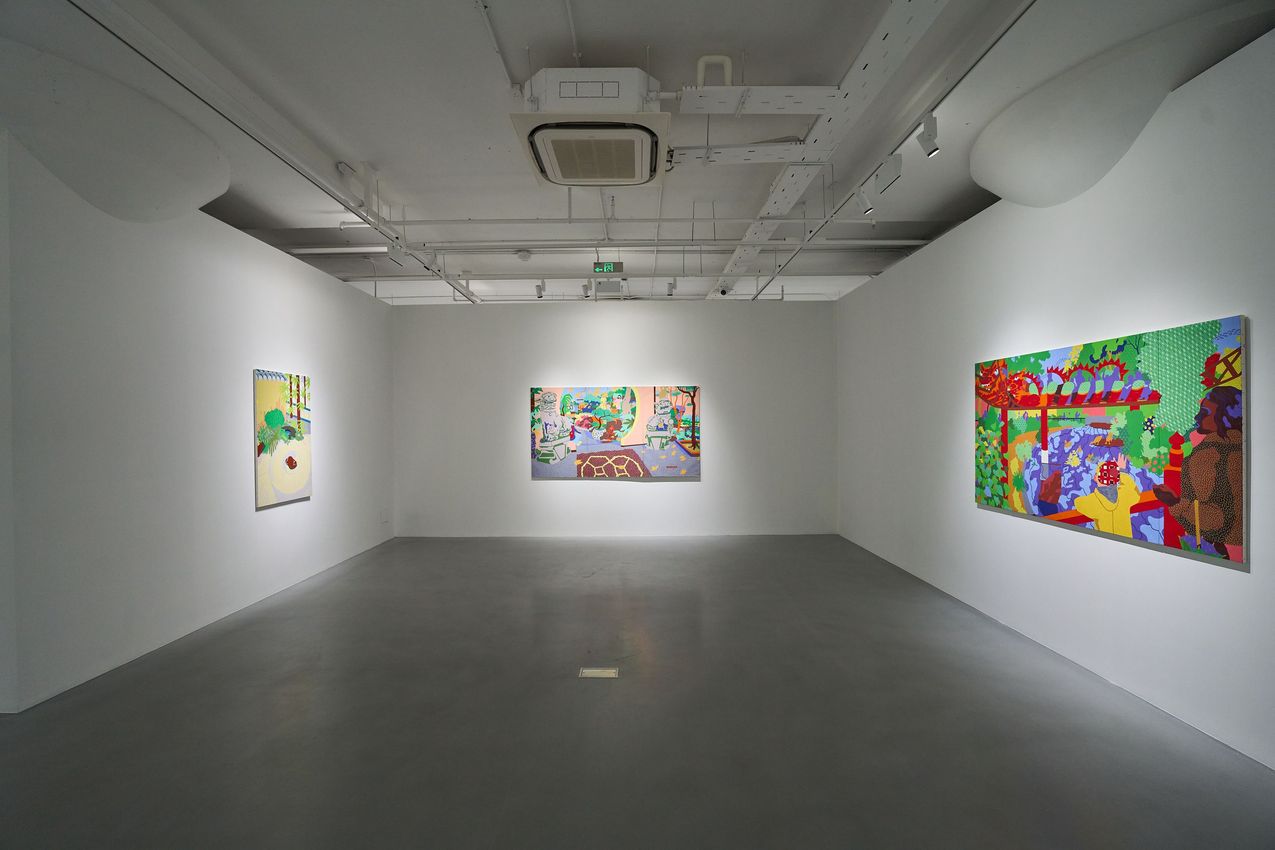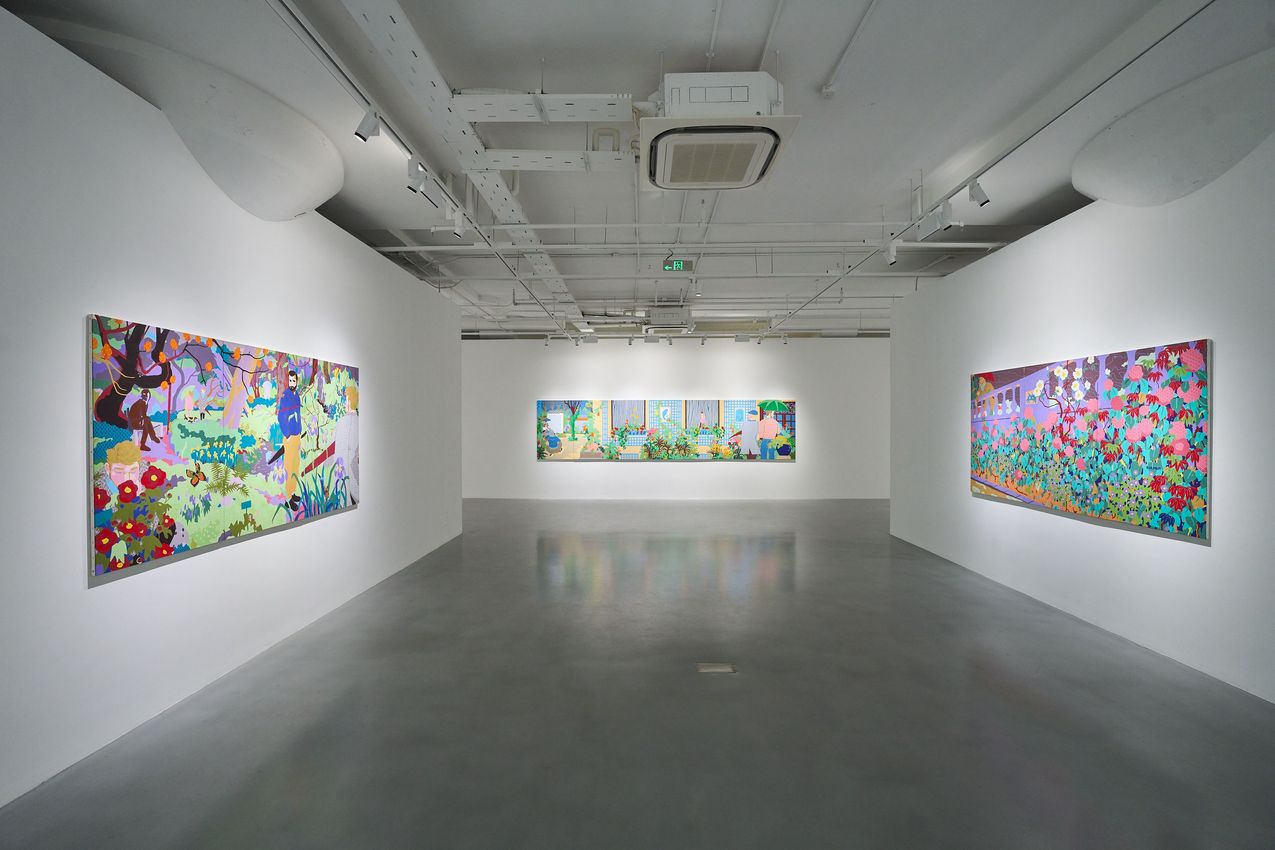
Shanghai—Pearl Lam is delighted to announce the upcoming exhibition __Les Fleurs du Jour, the first solo show in China by Paris-based Slovakian painter Michal Korman (b. 1987), curated by Maria Rus Bojan. This exhibition heralds a new chapter for Korman and includes an impressive selection of recent paintings of different scales, alluding to a variety of genres, from flowers and still lives to interior scenes, landscapes, gardens, portraits, and self-portraits. Central to the ethos of this exhibition is the artist’s determination to celebrate the beauty of life in each work by perpetually searching for an ideal expression that is able to recreate a holistic connection with everything that holds importance in his life.
Answering the difficult question of how to survive and create art in our current aggressive-regressive times, Korman’s proposal is disarmingly simple: to create visual narratives that prompt a deeper connection with nature, nurturing meaningful relationships, and savouring life’s simple pleasures. From this perspective, his paintings are first and foremost intimate visual conclusions of his daily triumph to defy the rapid changes that are constantly altering our world.
In his attempt to give shape to these personal aspirations, Korman inevitably draws from art historical examples such as Italian Proto-Renaissance painting and Japanese Ukiyo-e prints, Persian miniatures, the intimate interiors of the Nabis, and the still lifes of Henry Matisse. His artistic vocabulary also includes certain references to the Belle Époque aesthetics, as well as to the architectural ornaments, embroidery, and ceramics from his parents’ home in Partizanske, the town where he was born in Slovakia and where he became fascinated by interiors, flowers, and gardens.
Korman’s ability to paint flowers and create unique interior environments comes, in part, from his desire to convey the power of several seminal childhood experiences. As a child, he suffered from hay fever and was not allowed to approach flowers, especially during their blooming season. As an adult, flowers not only became his favourite painting subjects but also a compulsory part of his daily décor, inevitably complementing the ambience and the spirit of each day.
Alluding to Baudelaire’s volume Les Fleurs du Mal, where the poet explores how beauty can arise from suffering and despair, Les Fleurs du Jour encapsulates Korman’s aspiration to capture the beauty of the quotidian by eloquently appealing to flowers, their language, and symbolism in their full expressive complexity.
Beyond the deliberate reference to the famous Dante Alighieri’s verse, “Du Paradis, nous sont restées trois choses: les étoiles de la nuit, les fleurs du jour et les yeux des enfants [from Paradise, we have three things left: the stars of the night, the flowers of the day and the eyes of children]”, this title conceptualises the artist’s drive to articulate his own view of a possible earthly paradise in a constantly evolving form around the flower of the day.
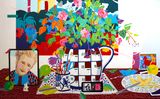
“A flower is not only an element of décor—it is a fundamental expression of beauty and nature’s intelligence,” the artist explains. A central part of the exhibition is therefore dedicated to still lifes and flowers captured in their different blooming moments, compositions that allude to themes of renewal and rebirth such as the Vanitas and the ever-changing seasons. Though attributes vary in each work, such as the flower species, type of vase, colours, and patterns of the tablecloth, there are some consistent elements, which indicate the artist’s deliberate choice of undermining certain clichés referring to this genre. The introduction of elements such as mobile phones, the artist’s favourite books, and small sketches depicting pictures of his loved ones complement the scene, actualising the composition, and making it more contemporary. The boldly coloured, almost graphic composition of the still lifes offer the viewer a new way of experiencing colour, form, and space, fostering a level of immediacy that conveys a sense of familiarity, warmth, and comfort.
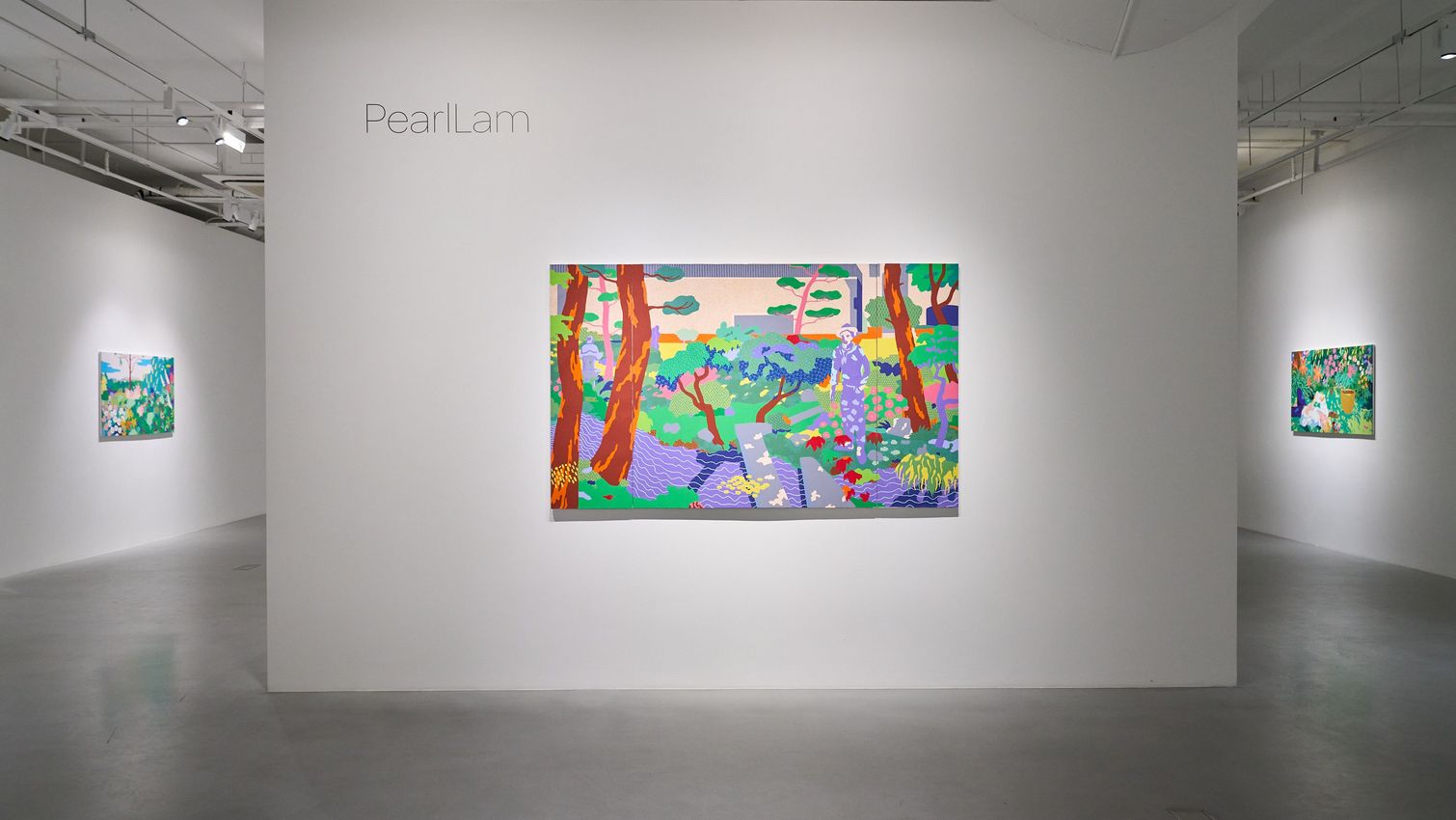
An abundant and focused range of blue and green contrasting the red and orange exude from the second largest series of works present in the exhibition. Luxuriant, overwhelming, and surprising, these paintings provide a wholly contemporary take on garden and landscape painting. Aspiring to capture the equilibrium between the natural and artificial, the artist includes various characters in almost every painting, either for the purpose of creating the illusion that the viewer is walking through the picture or for highlighting the need of reconnecting with beauty and nature whilst living in the city.
The flat painted surfaces and the lack of perspectival depth prompt viewers to look at the graphically delineated patterns and decorative rhythms of the picture rather than the illusory three-dimensional space implied by the subject. Even in the small format paintings, the artist addresses the same attention to his subjects, considering that every place we encounter on a daily basis, whether it is a beautiful, cultivated garden or the park we pass through every day, can turn into a space of healing and meditation. Through the very act of painting, these idyllic scenes are imbued with an elevated meaning, becoming sort of timeless microcosms, a piece of paradise or an inner garden, which the artist bears inside him.
Finally, the third category of works, the portraits and self-portraits, provides insights into Korman’s intense observations of his own state of mind and the people close to him. Suffused with the melancholic light of memory, these depictions reveal emotional depth and psychological insight, focusing on a sense of intimacy that allows viewers to connect with the portrayed figures on a personal level.
In terms of aesthetic vocabulary, Korman uses predominantly bright, vivid colours and dense visual patterning in most of his paintings to add depth or enhance the composition’s harmony. By reducing the medium’s capacity of expression to flat coloured surfaces displayed in reverse order— applying the front-most layer of paint to the back side and building up subsequent layers with the background coming to the same level—the artist appropriates the subject by fully reconstructing it.
Encompassing all the characteristic elements of his vocabulary, the new body of works from this exhibition reveals an increased formal and compositional sophistication and a mature artistic vision.
About Michal Korman
Michal Korman (b. 1987) began his art education at the age of five when the Slovak academic painter Jozef Jelenak (working in the tradition of expressionism) admitted him to his courses for children at the school of art in Korman’s hometown, Partizanske. These classes formed his artistic foundations over a period of three years. In 2005, Korman manifested his specific style: a combination of graphic-like oil painting branded with his signature as a logotype.
In 2006, he mastered the four-year curriculum at the school of art in only two years and graduated with a diploma. Since then, he has continued to develop his personal style of traditional oil painting using figurative motifs and graphic design. This led to his first solo exhibition outside Slovakia in Brussels in 2009. In Belgium that year, he was also recognised as one of the Committee of Regions Forum’s 100 Young European Creative People of Exceptional Talent with the selection organised by Europe’s Creative Cities and Regions on the occasion of the European Year of Creativity and Innovation.
In 2016, Korman began working with his signature themes inspired by Marcel Proust: the plants, flowers, books, and objects he collects, marking the passing of time, and his travels. Throughout the years, Korman spent a considerable time in Japan and studied Japanese woodblock prints; his works being heavily influenced by Japanese aesthetics including Rimpa School and Ukiyo-e. In 2020, he had a solo exhibition at Setouchi City Museum of Art, Okayama, Japan. The artist currently lives and works in Paris.
About the Curator
Maria Rus Bojan is a Romanian art critic and independent curator living and working in Amsterdam. During her 35-year career, she has organised projects and exhibitions with seminal figures of the international art scene and contributed to the debut of today’s most successful Romanian artists, such as Victor Man, Adrian Ghenie, Ciprian Mureșan, and others.
Her long-term collaboration with German artist Ulay (1943–2020) led to the publication of the authoritative monograph Whispers, which was awarded the AICA Netherlands Prize in 2015. She curated Ulay’s first international retrospective at Centro Parraga Murcia in 2005 and contributed as an expert to the recent retrospectives at Schirn Kunsthalle Frankfurt in 2016 and the Stedelijk Museum Amsterdam in 2020.
Maria Rus Bojan was the co-curator of Performing History, the Romanian Pavilion at the Venice Biennale in 2011. Between 2017–2020, she curated three retrospective exhibitions and was editor of several publications dedicated to the renowned Polish artist Magdalena Abakanowicz, including published research on her work in the UNESCO Art Collection.
Pearl Lam Galleries is a driving force within Asia’s contemporary art scene. Founded in 2005, the gallery plays a vital role in stimulating international dialogue and cross-cultural exchange between the East and West.

A respected voice in contemporary art discourse.
Focusing on ambitious storytelling and insightful art-world commentary. Ocula Magazine publishes in-depth interviews, critical essays and timely analysis on the artists, exhibitions and ideas driving the global art world.
Learn more about Ocula Magazine
Showcasing the best of the art world.
Ocula partners with galleries from around the world to highlight their artists, artworks and exhibitions. Gallery membership is by application and invitation, with each member vetted by an independent panel.
Learn more about Ocula Membership

Specialises in the sale of major artworks.
Led by a team with deep ties to the world’s leading auction houses, galleries and collectors. Ocula’s advisory team offers bespoke services to high-net-worth clients from around the world who are looking to acquire the best of contemporary and modern art.
Learn more about our team and services