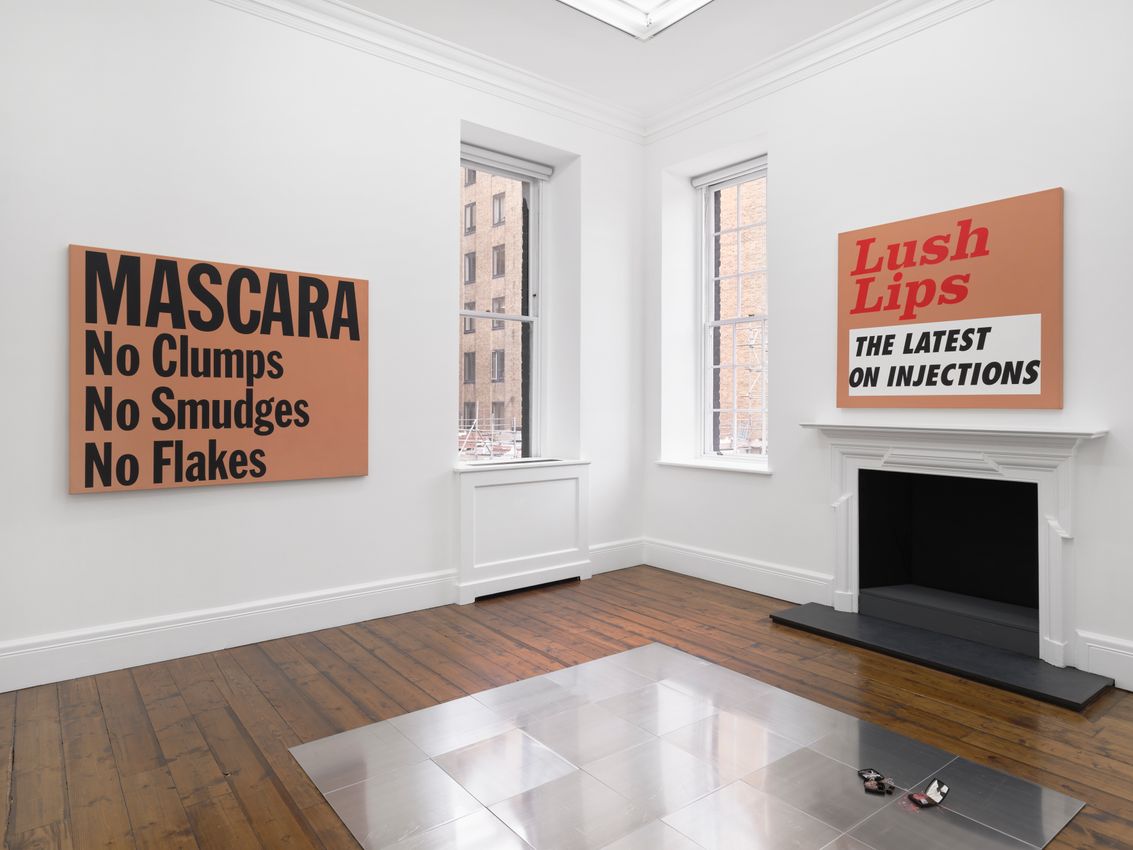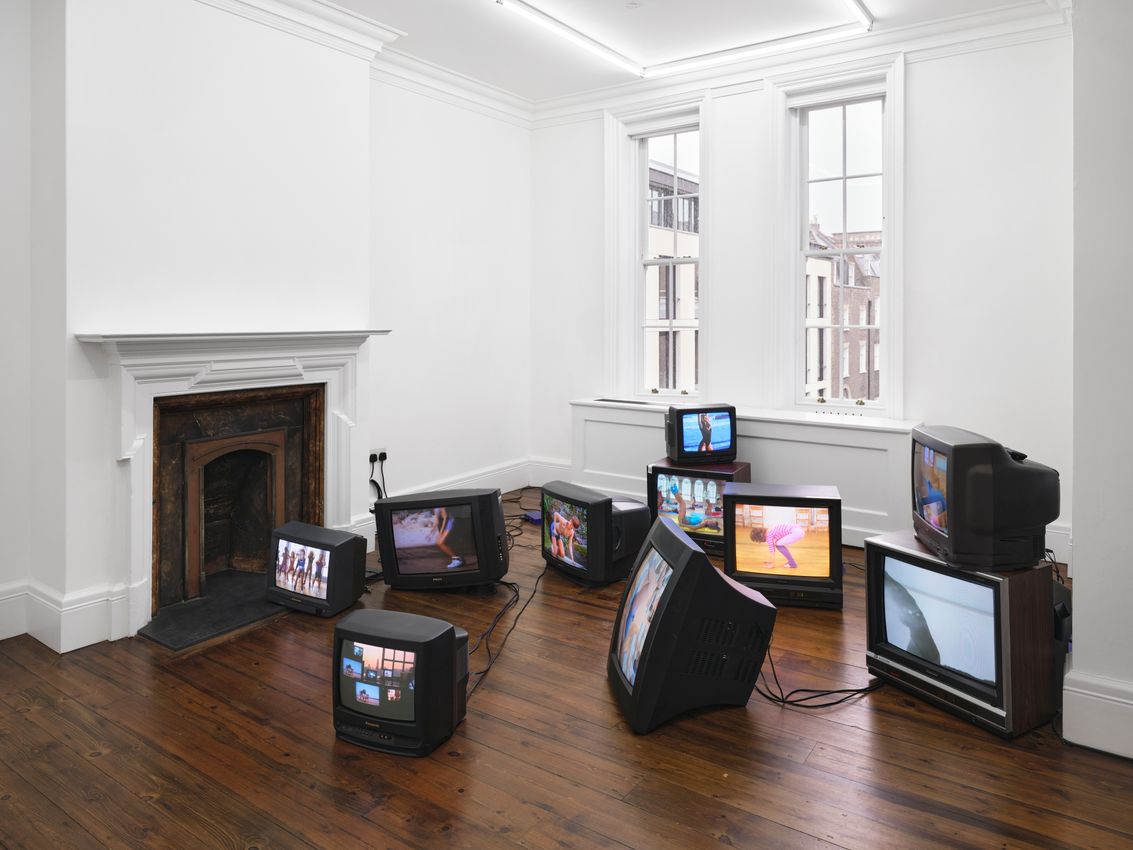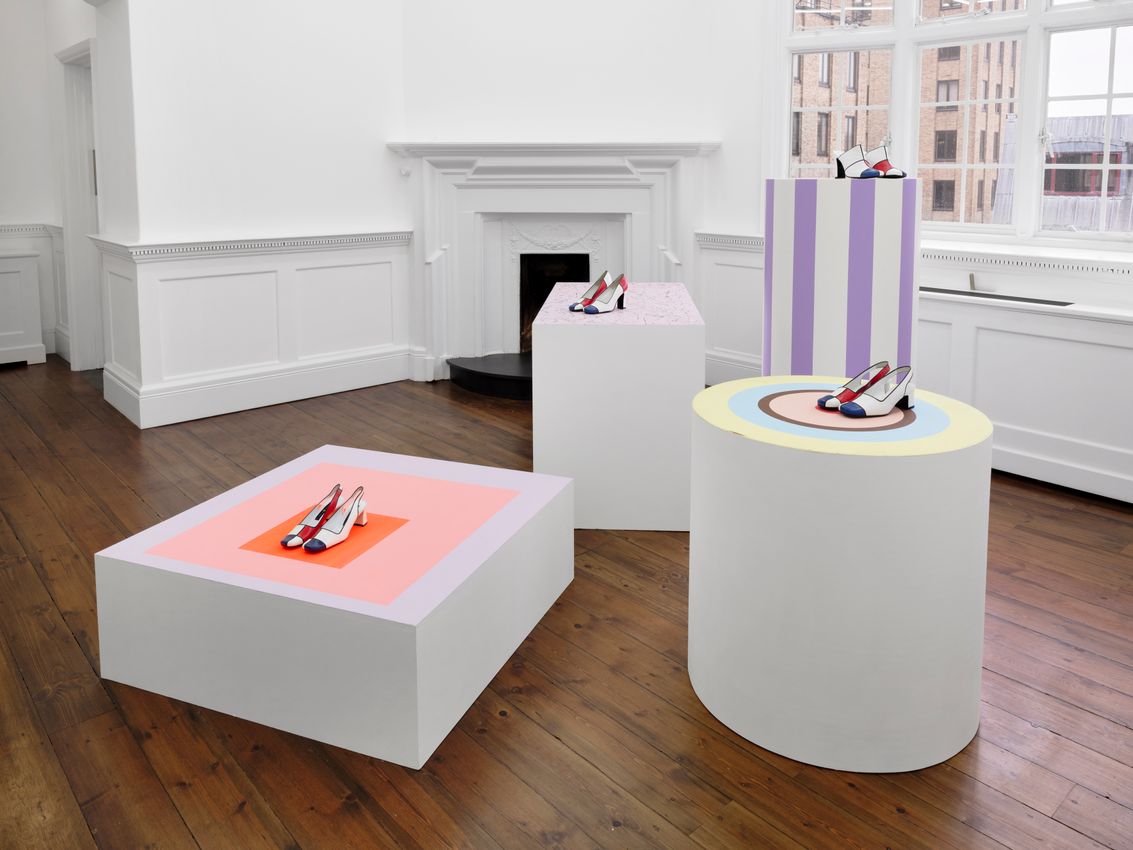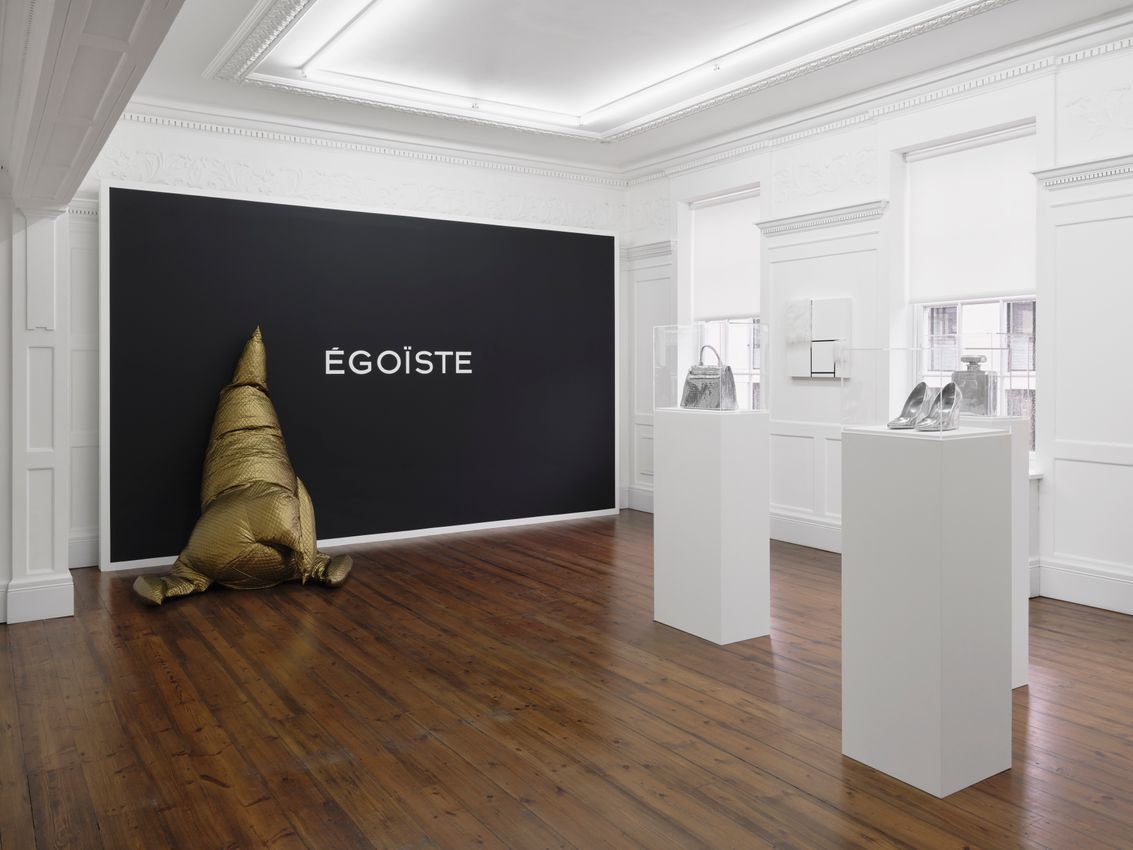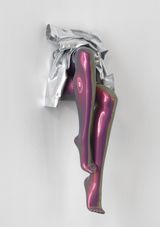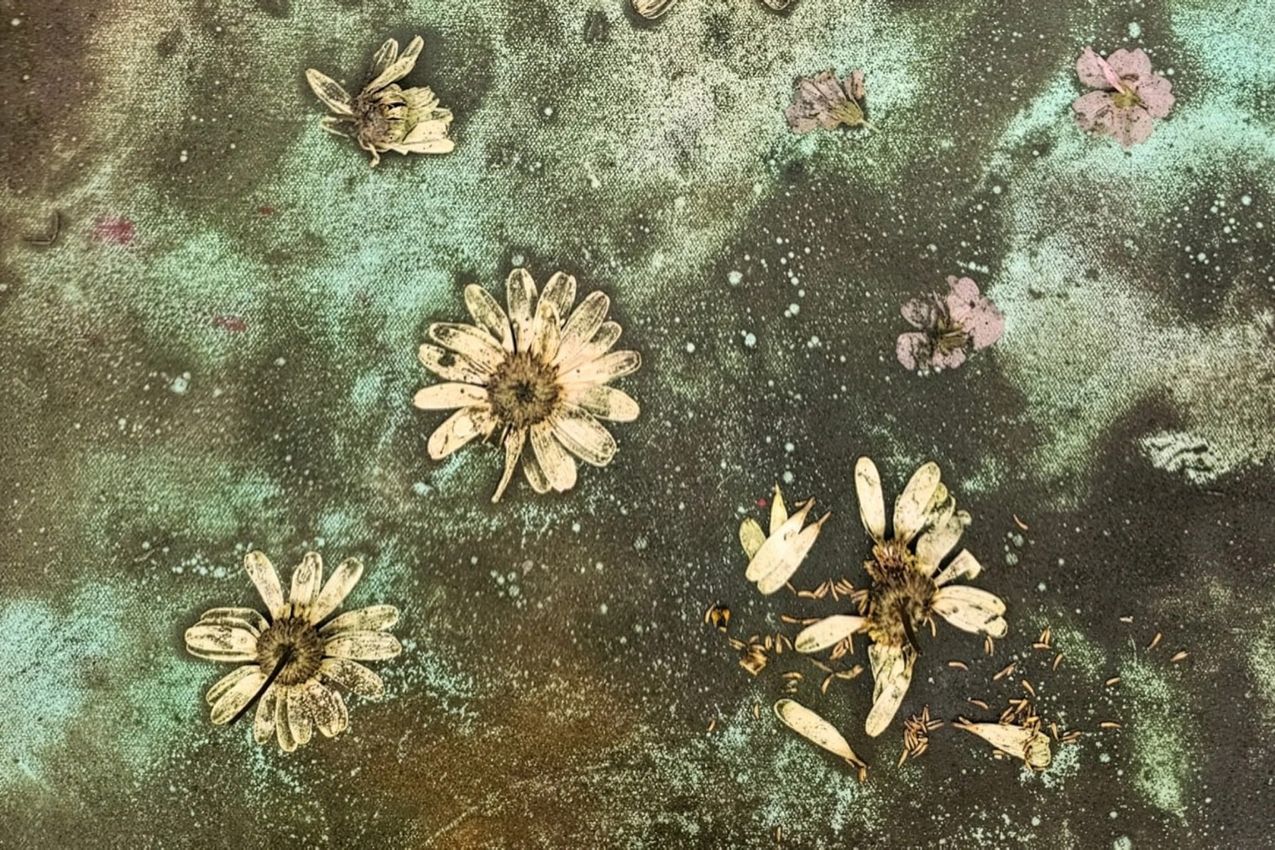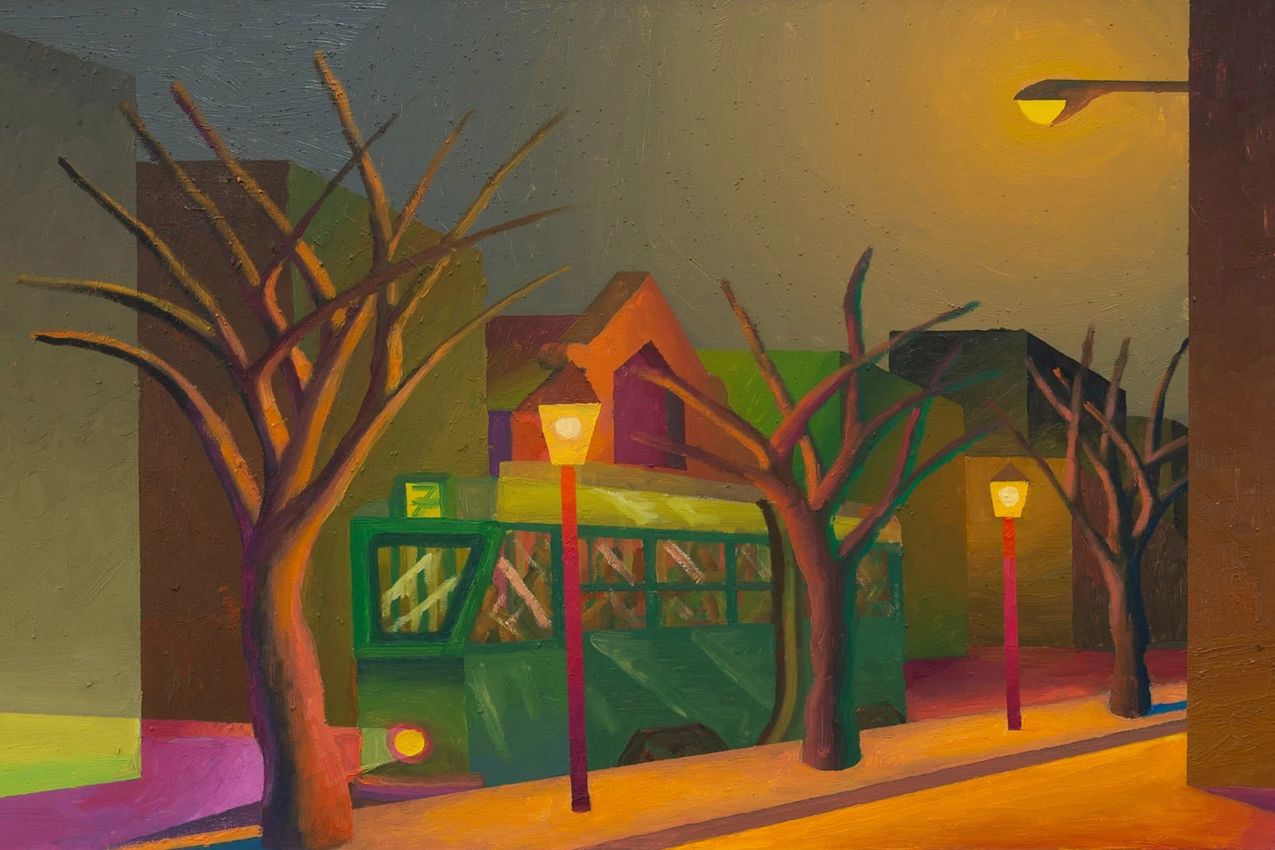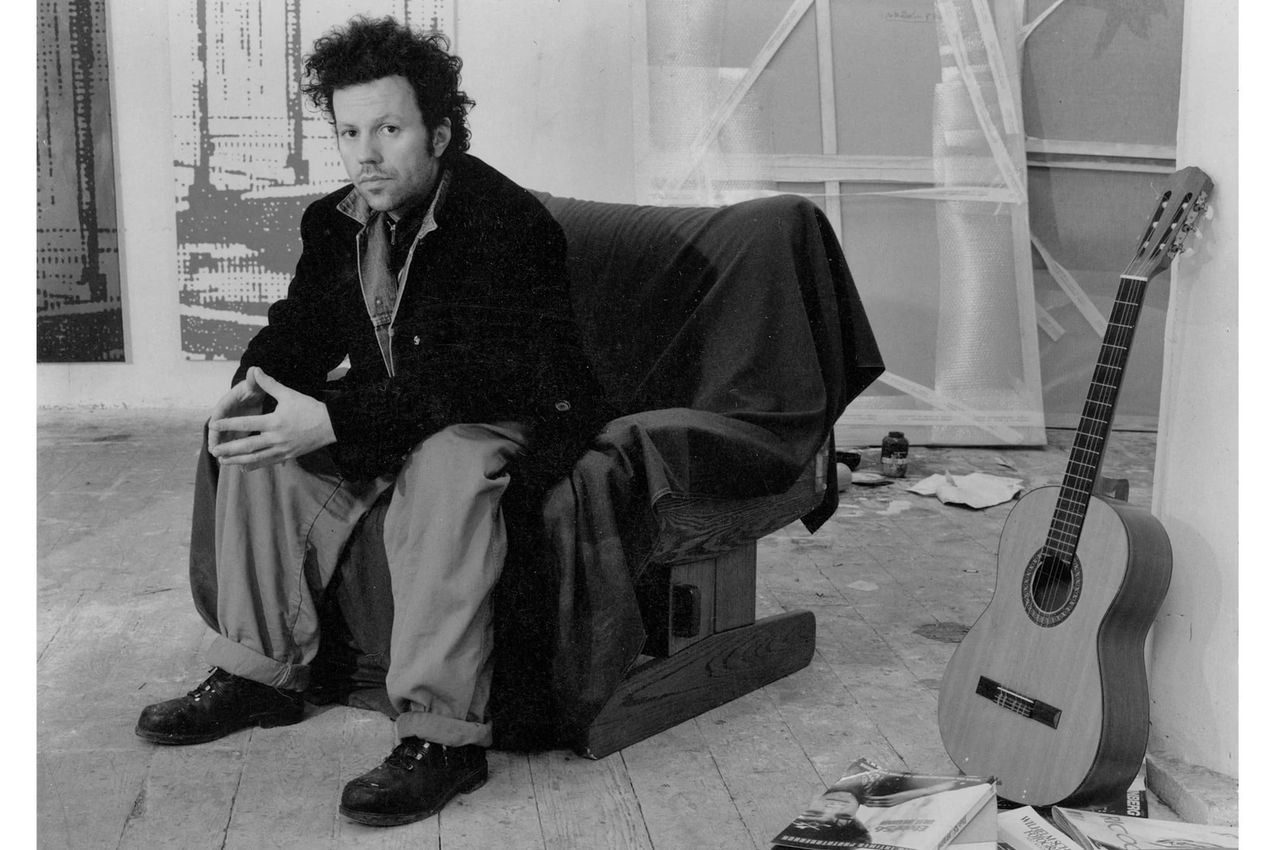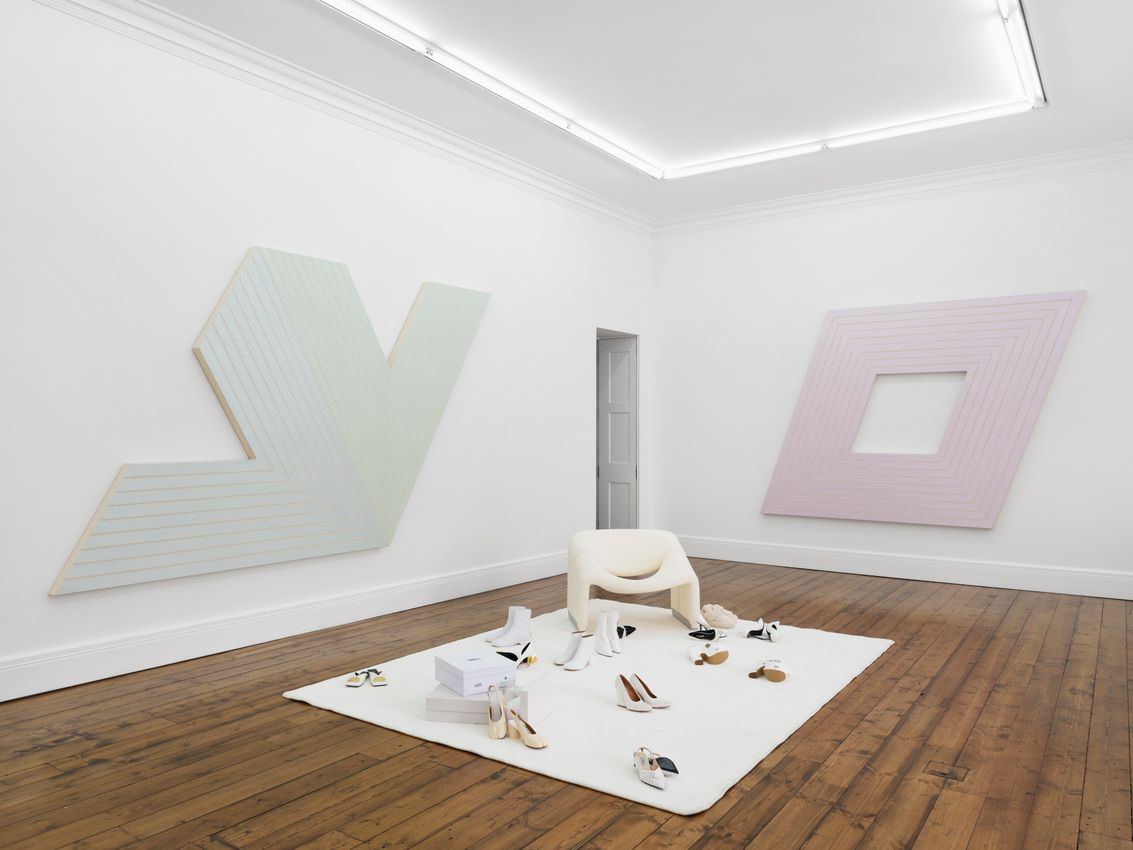
Sylvie Fleury’s practice produces enticing works which let art, consumerism and life collide. Speaking to contemporary conditions, her sculptures, paintings, neon pieces and videos continue to defy expectations and definitions and remain plural. Monika Sprüth and Philomene Magers are pleased to announce an extensive exhibition at Sprüth Magers, London, celebrating the gallery’s longstanding relationship with the artist and providing an insight into her spectacular and varied body of work spanning three decades. Transforming all of the gallery’s spaces, Fleury uses the strategies of the fashion, beauty and advertising industries to challenge paradigms of Western art history, its male modernist canon as well as examine the art world’s complicity with the dynamics of consumerism. Alongside several of Fleury’s iconic pieces, new works produced especially for the show will be on display.
The investigation into the creation of endless, insatiable desire is a throughline in the artist’s boundary-pushing career. Drawing from the fields of fashion, pop culture, car racing, cinema and science fiction, she has created an alluring and deceptively straightforward visual vocabulary with which she constructs surprising narratives. Interested in paraphernalia (originally a legal term that denotes a married woman’s property besides her dowry) that is dismissed as being superficial precisely because of its female connotations, Fleury twists the implied gendered rituals and obsessions, asking audiences to think critically about the world’s design. Commenting on the protagonists of Minimalism, such as Donald Judd, Robert Morris, Sol LeWitt or Carl Andre, she engages in polarities and contradictions to question the status of the artistic artifact. By letting art and fashion converge in her work, Fleury both renegotiates art’s limits and reflects on how the construction of our identity is often mediated by the commercial goods or cultural products we are drawn to.
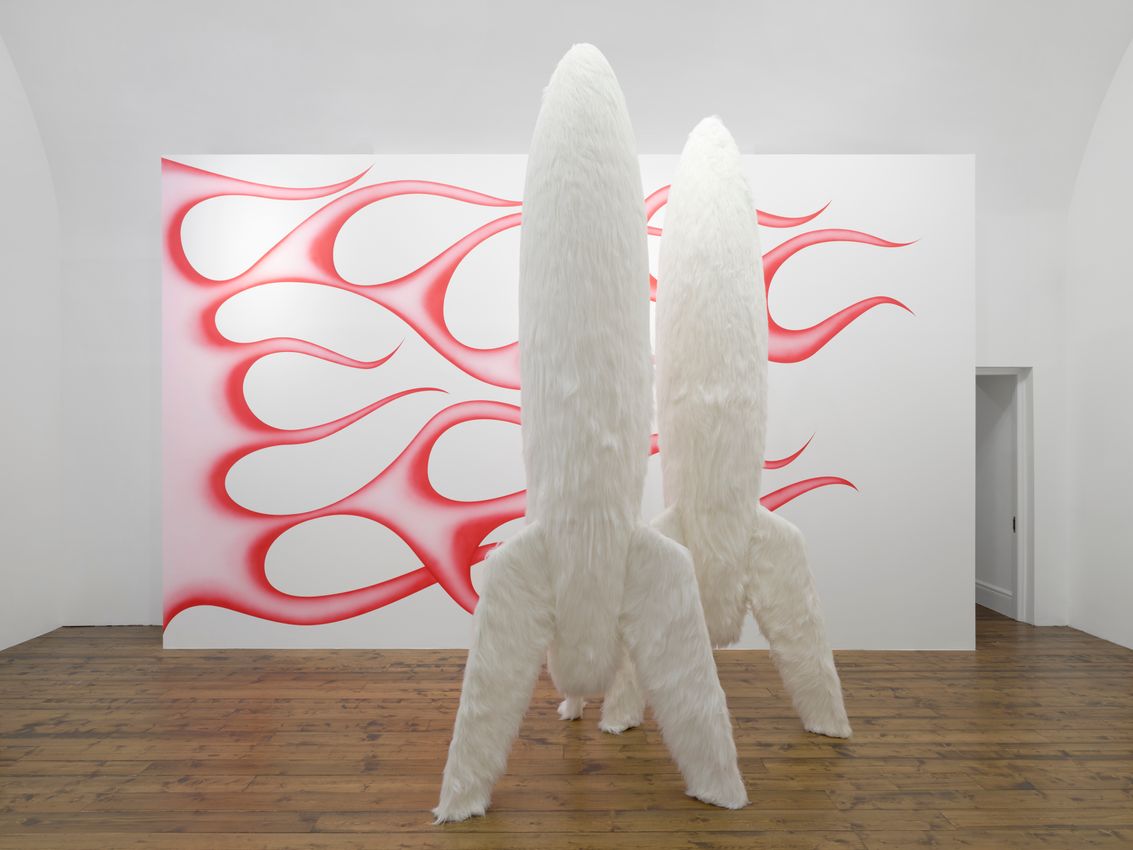
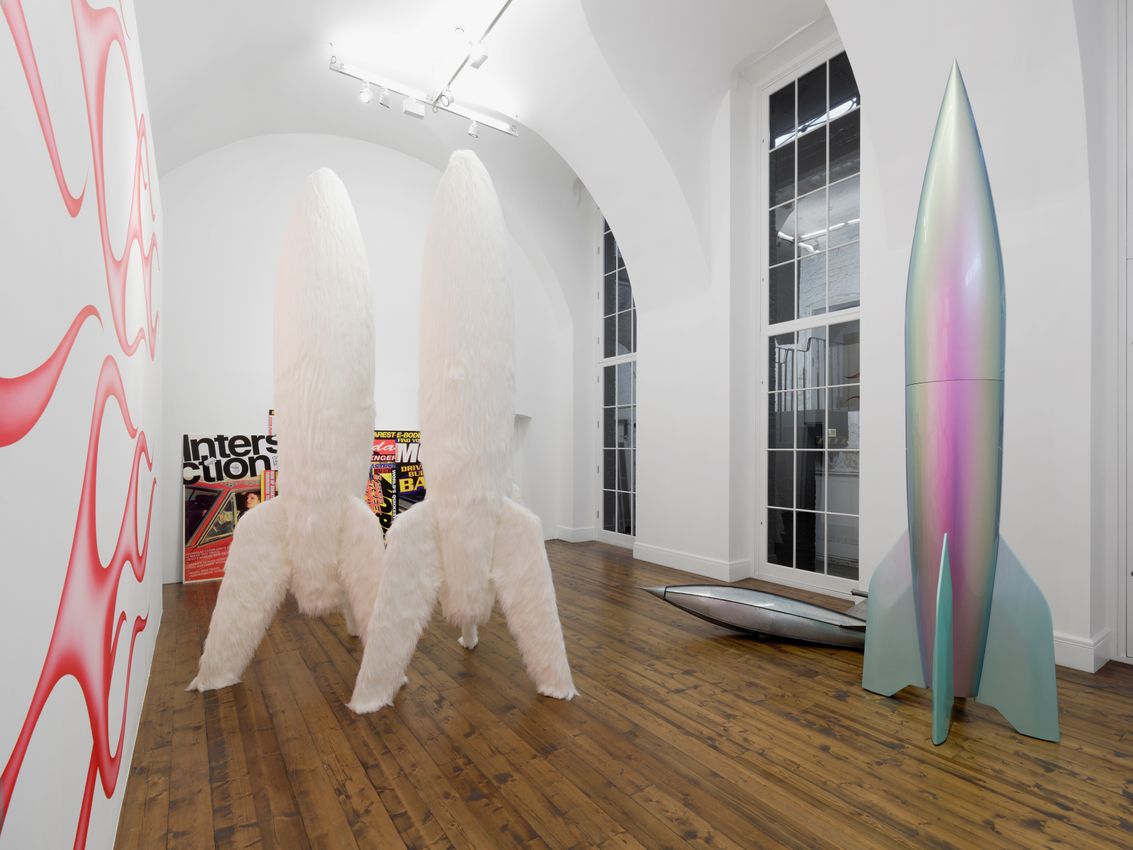
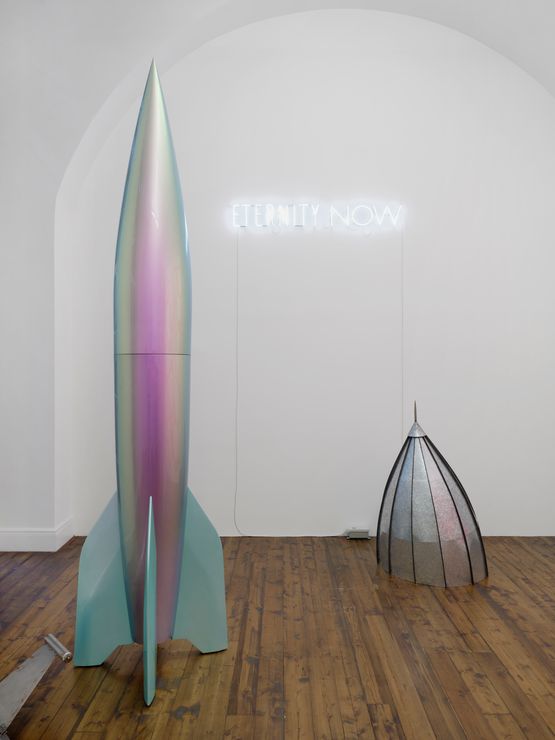
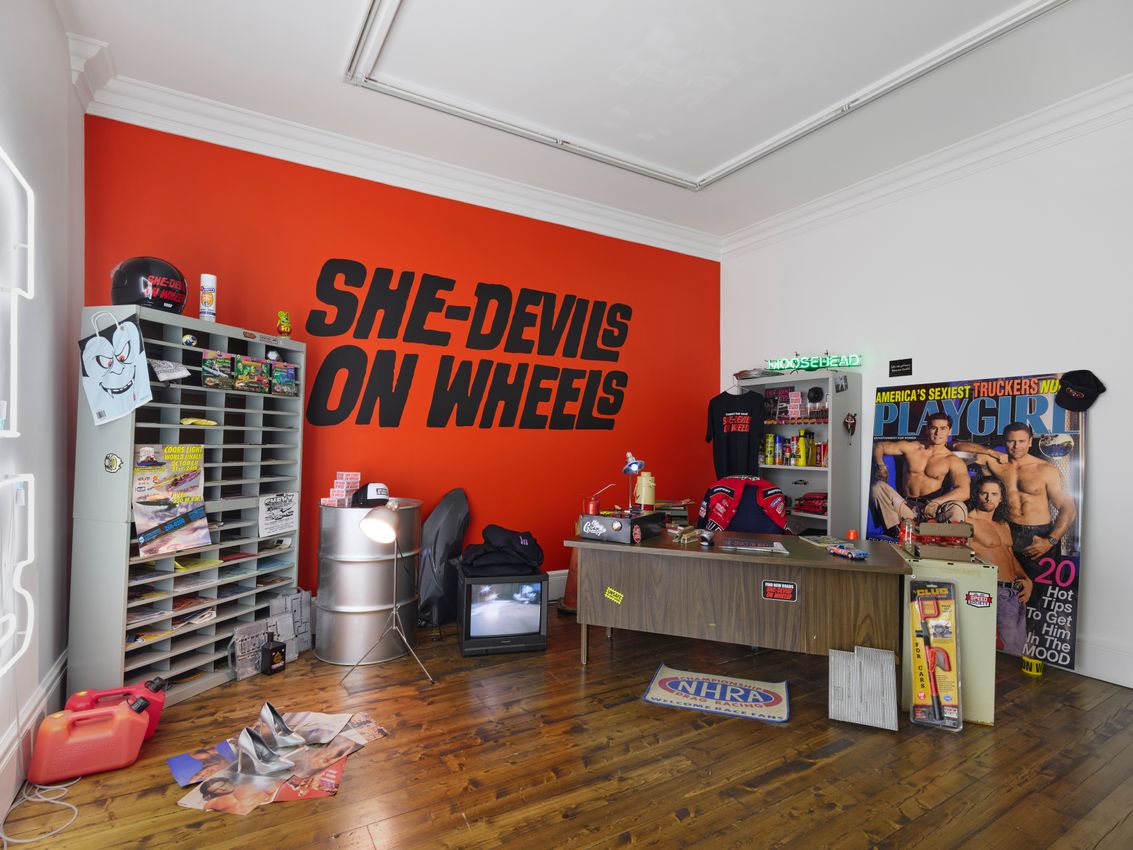
References to the project She-Devil on Wheels – a motoring club for women only, founded by Fleury in the 1990s after being refused membership to a car-racing club – suggest the organization set up its headquarters amid several artworks. First Spaceship on Venus is a series that delves into the imagery around science fiction and outer space, questioning its machismo. Creating rockets in a range of media, Fleury satirizes their phallic symbolism by employing colors and materials associated with ‘femininity.’ Frankie Goes to Hollywood, the series of monochromatic hard-edge paintings that echo Frank Stella’s works, consist of meticulously applied layers of acrylic paint mixed with small metallic specks, giving the pieces a tactile and unexpected sensual quality. Together these works explore the synonymy between objects of desire and art.
Wall paintings of vertical stripes – a play on the signature motif of conceptual artist Daniel Buren – provide the backdrop to one of Fleury’s celebrated works consisting of luxury brand shopping bags arranged on the floor. In No Man’s Time (2023), the Swiss artist revisits her first artwork from this series, C’est La Vie! (1990), in the form of a photograph of herself dressed head to toe in Alaïa installing the shopping bags. The work is titled after the exhibition it was first shown in and references Michelangelo Pistoletto’s Mirror Paintings. Pistoletto, one of the main proponents of Arte Povera, establishes an active relationship between the viewer’s reflection and the artwork’s figure, thereby creating a portal between art and life. Similarly, Fleury’s reflective plane invites viewers into the work to experience reality, image, time and space collapsing within it.
An immersive exhibition that guides audiences through the main themes of the artist’s practice, the show explores the proximity between art’s ready-made and fashion’s ready-to-wear. While re-dressing modern art in the garb of fashion and the instruments of consumerism, Fleury questions its male prerogative. Oscillating between fascination and distancing, sympathy and criticism, Fleury’s works leave viewers constantly re-evaluating what they are seeing. Both indulging and subverting the modes of power of consumer culture, the works scratch at the superficial to construct a complex and unique reflection on not only the art world but also present- day society.
Sylvie Fleury (*1961, Geneva) lives and works in Geneva. Selected solo exhibitions include Kunstmuseum Winterthur (2023), Pinacoteca Agnelli, Aranya Art Center and Bechtler Stiftung (all 2022), Kunstraum Dornbirn, the Instituto Svizzero, Rome (both 2019), Villa Stuck, Munich (2016), Centre de Arte Contemporaneo, Malaga (2011), MAMCO-Musée de l’art contemporain de Genève (2008–2009), the Mozarteum, Salzburg (2005), ZKM, Museum für Neue Kunst, Karlsruhe, Le Magasin-Centre National d’Art Contemporain, Grenoble (both 2001), The Museum of Contemporary Art Chicago (1995). Selected group exhibitions include Migros Museum für Gegenwartskunst, Zurich (2022/2013), Jeu de Paume, Paris (2020), Grand Palais, Paris (2019), Kunsthaus Zurich (2018), Museum für angewandte Kunst, Frankfurt (2017), Museum Haus Konstruktiv, Zurich (2016), Belvedere, Vienna (2012), Städtische Galerie im Lenbachhaus, Munich (2010), Chelsea Art Museum, New York (2007), PS1, New York (2006), Collection Lambert, Avignon (2003) and Museum Ludwig, Cologne (2000).
Sylvie Fleury mines twentieth-century Modernism and contemporary consumer culture to produce ambiguous works of sculpture, painting and installations. An approximation of high and mass culture often runs through her practice, as a way to expose the familiarities between the art market and the circulation of consumer commodities. Fleury is well known for her playful customisation of iconic Modernist works. For instance, in Pucci Paintings, 1992, she reinserted into the art world, a pattern that had been appropriated from early Modernist abstraction by the famed fashion house. In Walking on Carl Andre, 1997, she filmed the stiletto-clad legs of models as they strutted over floor pieces by the artist, and the concept of her Zylon Paintings – spray painted canvases in the vein of American Action painting – permitted the owner to modify the colour scheme of the work according to seasonal trend. Further customisation pieces include: denim canvases mounted on stretchers that bear Fontana-like slashes, brightly coloured fake fur patches forming a series of Schmusebild (Cuddly Paintings) that imitate Malevich’s infamous Black Square and, in works such as Tableau No. 1, 1992, fur adorns geometric designs akin to Mondrian. Upscaling the canonical works of male-centric Modernism with sensual, feminine flourishes serves a dual-purpose for the artist. Not only does it renegotiate the hierarchies of gender within artistic tradition, it also draws attention to the failures of radical twentieth-century avant-garde gestures, whose motifs have long-been co-opted by consumer culture in a deluge of copycat home wares and soft furnishings.
Sprüth Magers has expanded from its roots in Cologne (Germany) to become an international gallery dedicated to exhibiting the very best in groundbreaking modern and contemporary art. With galleries located in Berlin Mitte, London’s Mayfair and the Miracle Mile in Los Angeles–as well as an office in Cologne and an outpost in Hong Kong–Sprüth Magers retains close ties with the studios and communities of the German and American artists who form the core of its roster.

A respected voice in contemporary art discourse.
Focusing on ambitious storytelling and insightful art-world commentary. Ocula Magazine publishes in-depth interviews, critical essays and timely analysis on the artists, exhibitions and ideas driving the global art world.
Learn more about Ocula Magazine
Showcasing the best of the art world.
Ocula partners with galleries from around the world to highlight their artists, artworks and exhibitions. Gallery membership is by application and invitation, with each member vetted by an independent panel.
Learn more about Ocula Membership

Specialises in the sale of major artworks.
Led by a team with deep ties to the world’s leading auction houses, galleries and collectors. Ocula’s advisory team offers bespoke services to high-net-worth clients from around the world who are looking to acquire the best of contemporary and modern art.
Learn more about our team and services