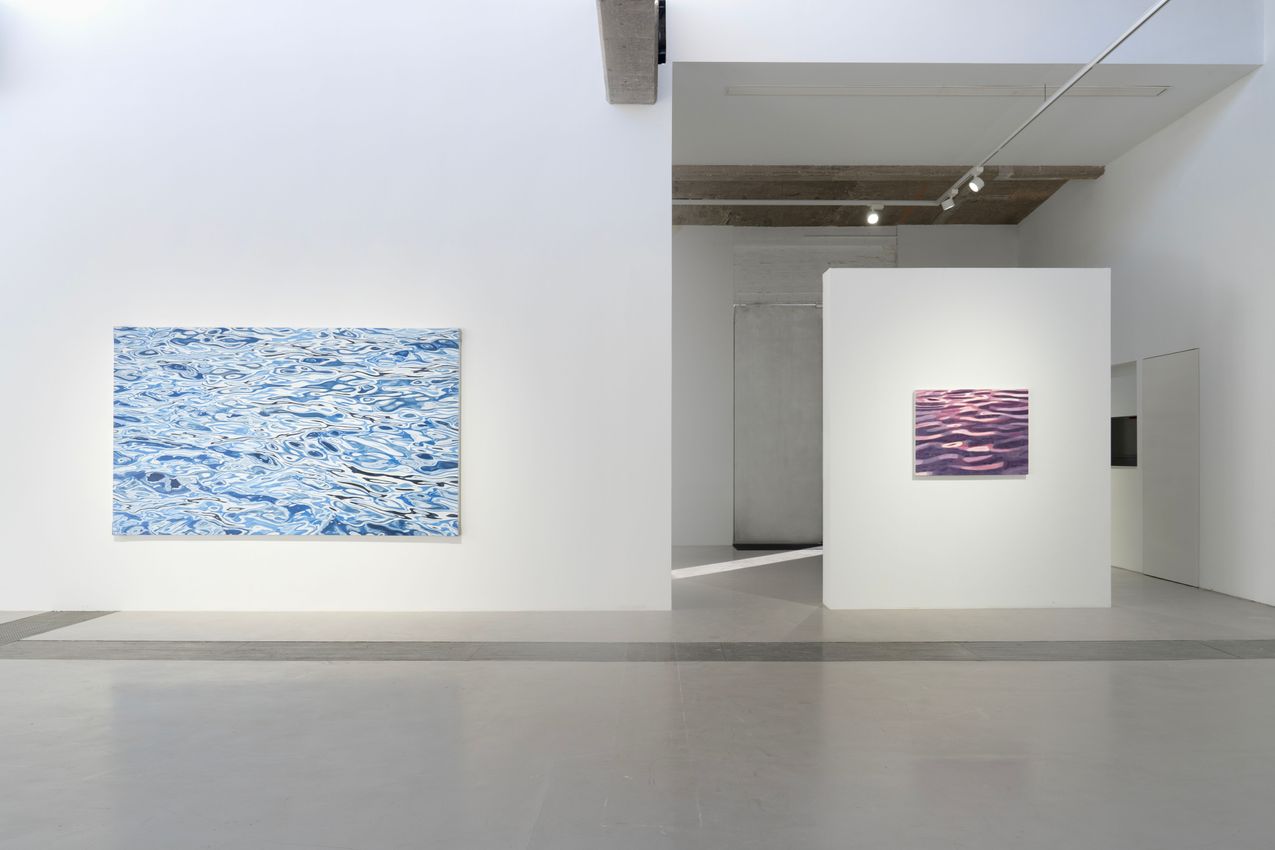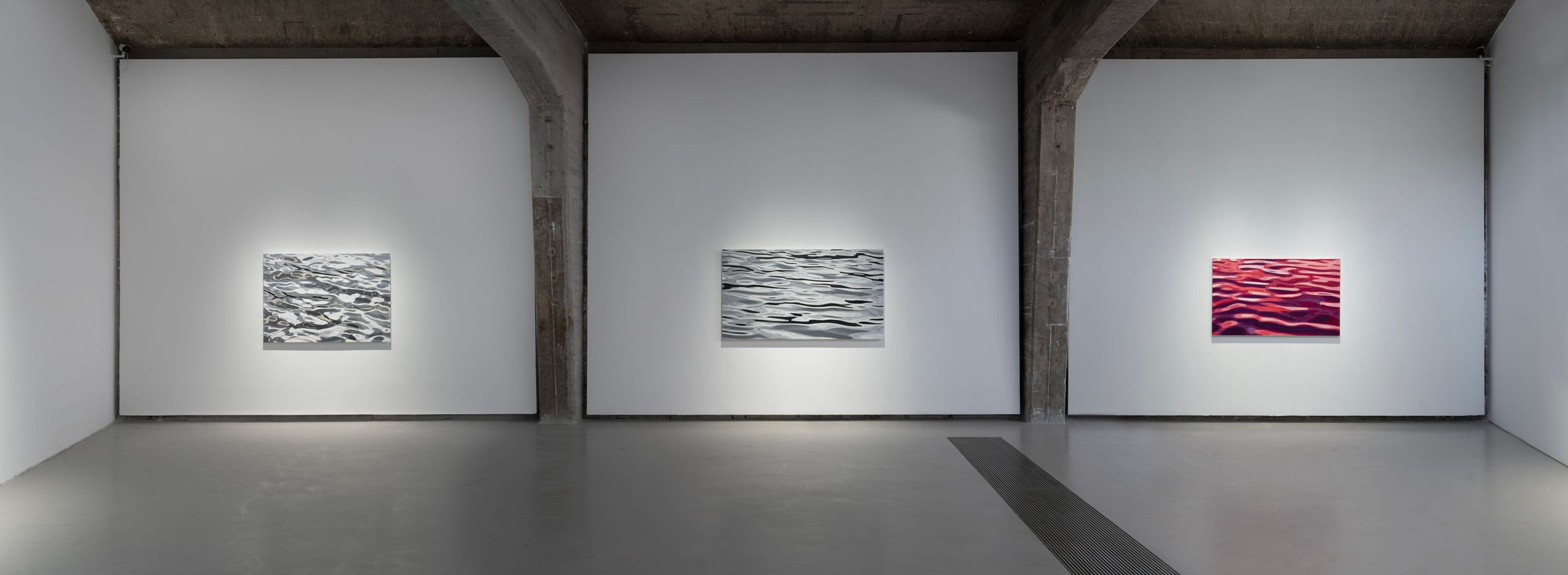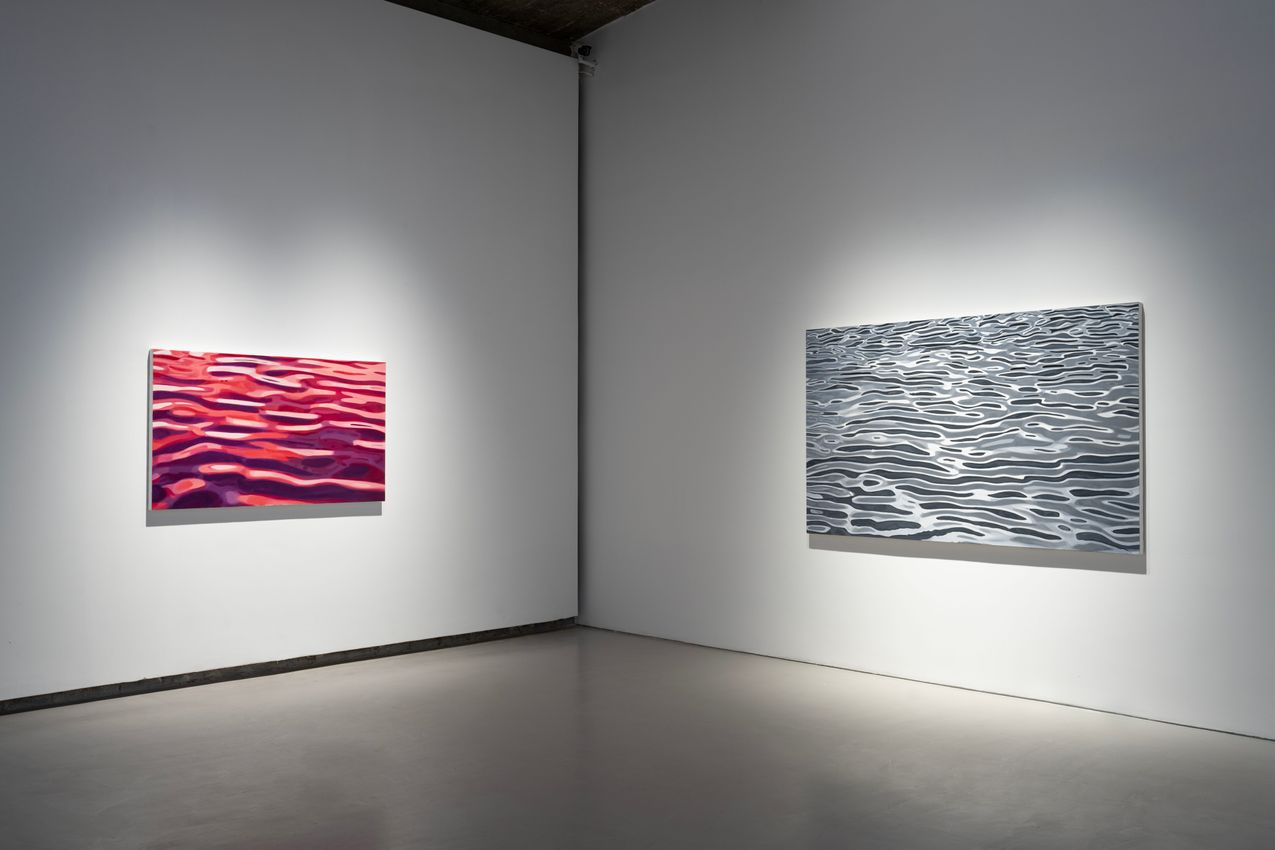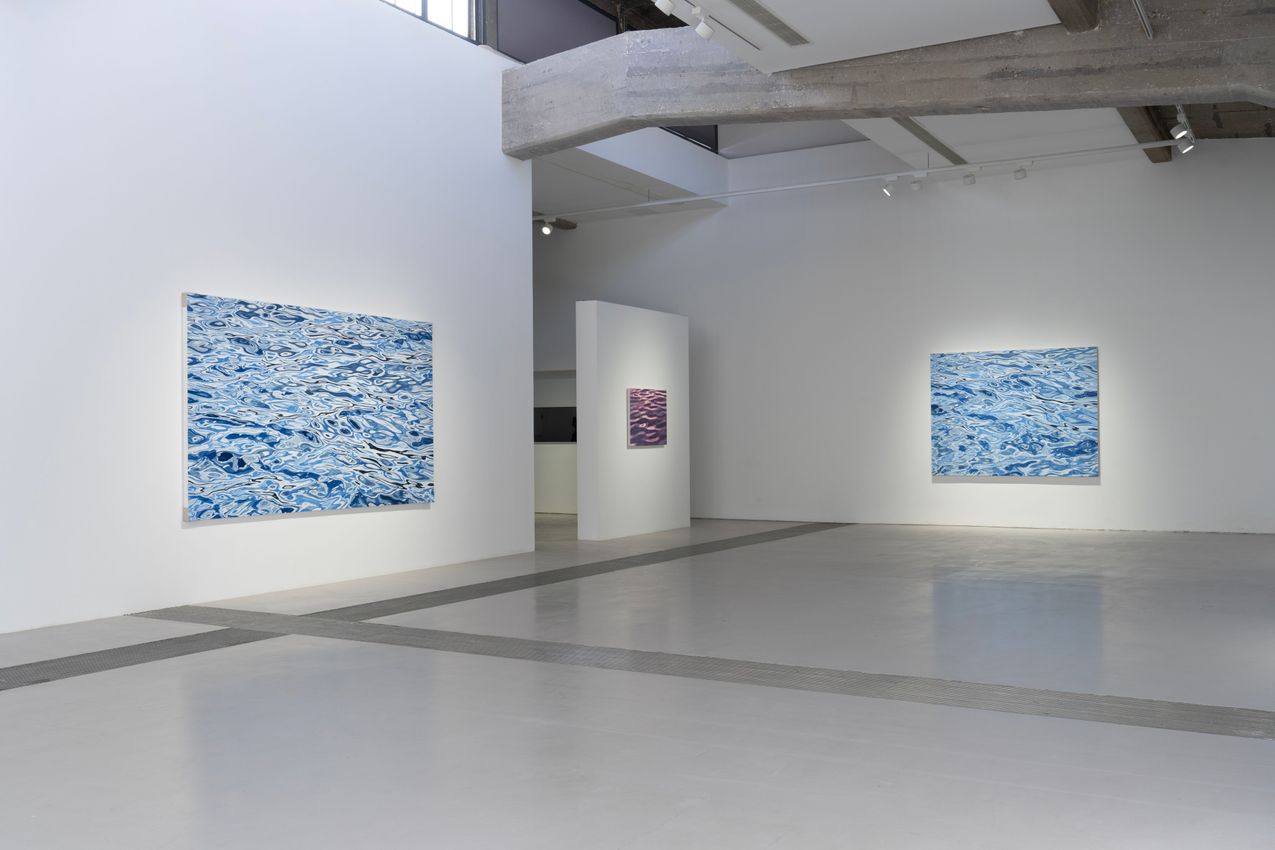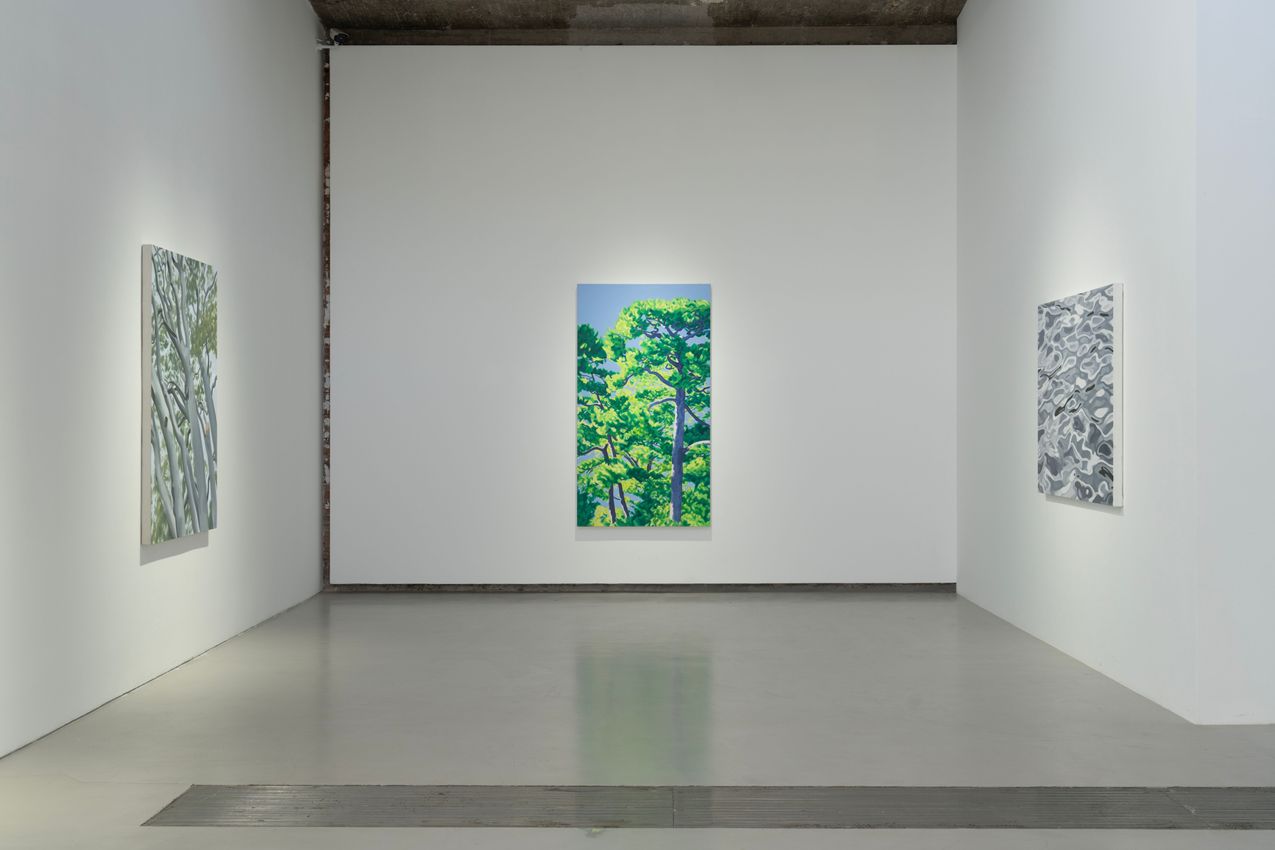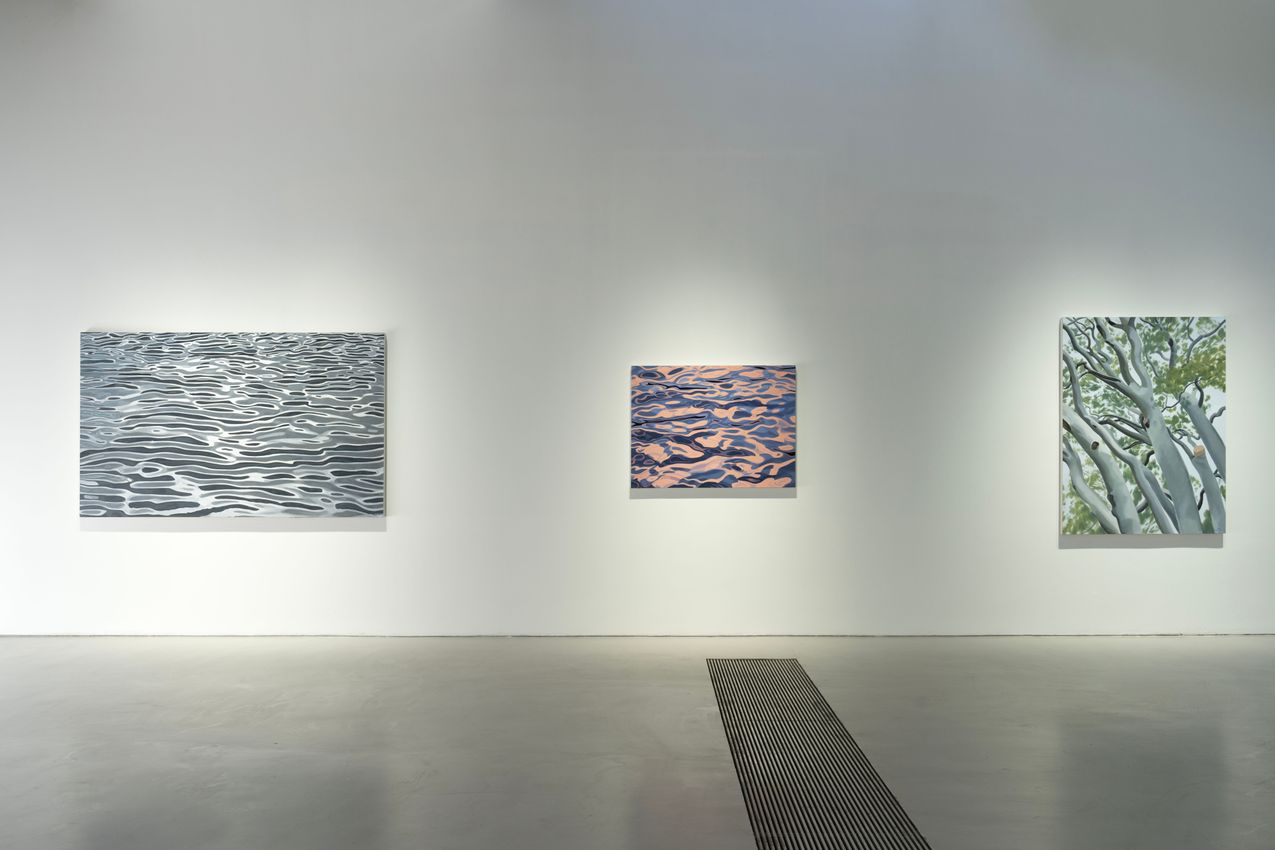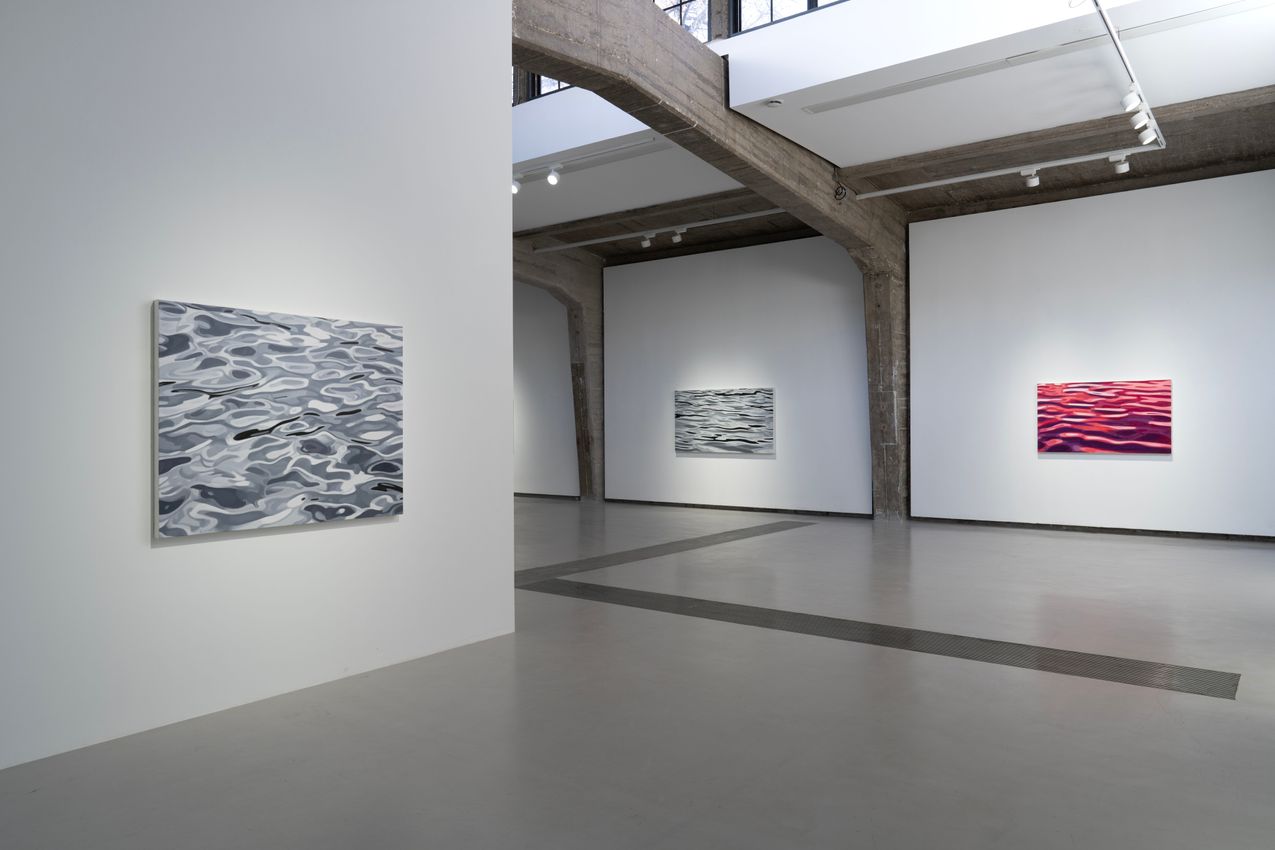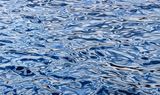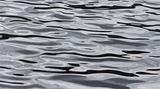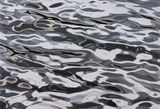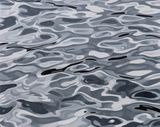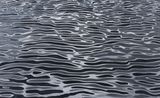



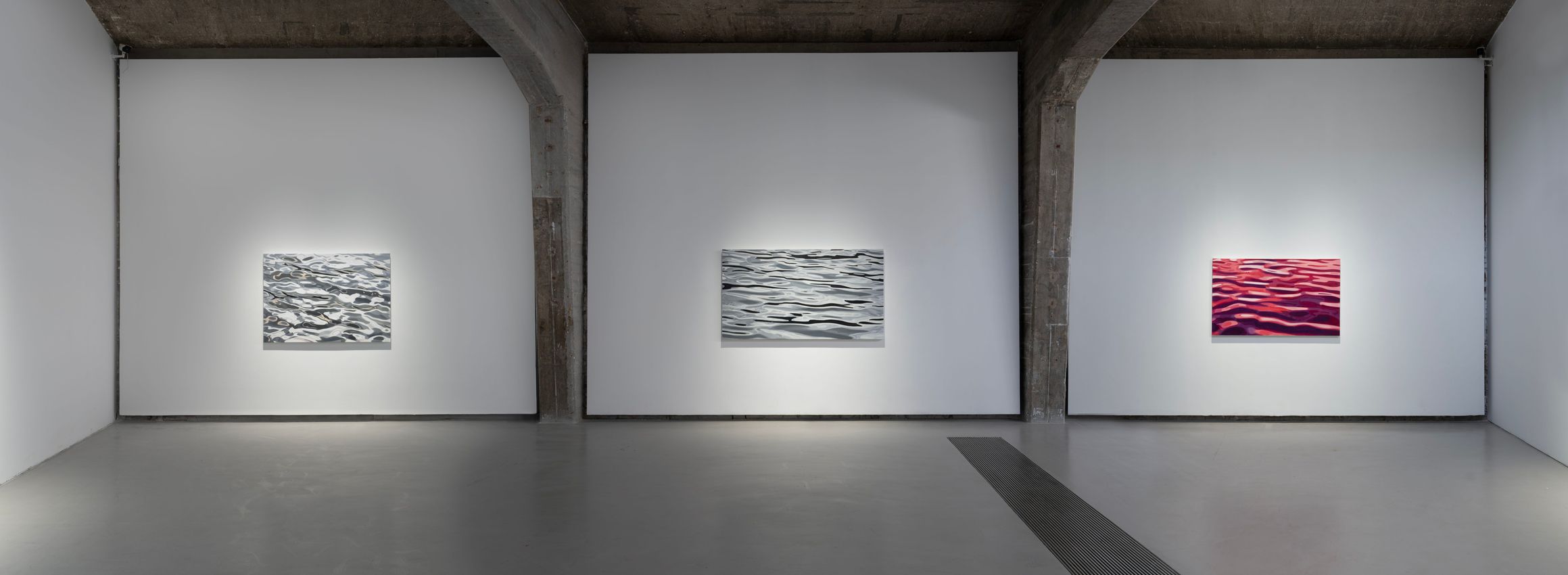
Long Quan has created many works featuring water, where the form of the water’s surface shapes the entire composition. However, just as Monet’s water lilies were not the true subject of his paintings, water itself is not the central theme in Long Quan’s work. In the artist’s own words, he paints floating light—the shifting play of light and shadow on the water’s surface. These variations are rooted in his exploration of the language of painting, emerging through the traces of pigments, lines, and brushstrokes.
This focus on light inevitably recalls the history of Impressionism, where traditional subjects gave way to light and shadow as the primary concerns of painting. But unlike the quick, spontaneous techniques of the Impressionists, Long Quan’s process is deliberate and slow. He silently layers restrained colors on the canvas, constantly adjusting the flow of lines and the arrangement of structures, adding new layers to enrich the surface. In contrast to the lightness and immediacy of Impressionist brushwork, Long Quan’s water is dense and complex. His works are not plein air sketches capturing fleeting moments; instead, they reflect a deep engagement with painting itself, informed by photographic references.
If Monet and the Impressionists sought to capture transient glimpses at sunrise or sunset, Long Quan’s approach is one of prolonged observation—an ongoing dialogue between landscape and the act of painting. In such detailed observation and amidst the ever-changing forms and colors of water, the use of contemporary photographic techniques becomes an essential means. In this sense, the floating light on his water surfaces is less an echo of Monet’s water lilies and more akin to Cézanne’s post-Impressionist inquiries. It represents an intersection of the modern and the classical in present moment, as the artist reexamines the world through the lens and images, conveying Long Quan’s re-evaluation and unique insights into the tradition of painting at this time.
While distinct from Impressionism’s bold brushstrokes and direct observation of nature, Long Quan’s work shares with it a fundamental concern: the depiction of movement. Yet, the nature of movement differs. For the Impressionists, it was the fleeting impression of a passing moment; for Long Quan, it is the suspended motion embedded within the painting’s structure. One relies on swift, intuitive strokes, the other on meticulous contemplation and sustained effort. Through these contrasting approaches to movement—one rapid, the other gradual—both allow painting to transcend objective representation. In this process, the names of objects and the subjects depicted dissolve into the formal language of painting itself. If classical painting was concerned with representation—depicting objects and their states in motion— Long Quan focuses on painting movement itself: capturing the sensation of floating light, analyzing the logic of perception.
Here, true movement dispels the mechanical paradox of the “motionless arrow.” Movement—whether of water or within the act of painting—unfolds under its own force, liberated from the constraints of objects. It seeks a new subjectivity that belongs to both the artwork and its creator. Through the depiction of such movement, Long Quan infuses painting with vitality, allowing the art form to grow and evolve, permeating the rippling surface of water, endlessly reflecting the mesmerizing shifts of floating light. In doing so, painting both returns to itself and liberates itself. It moves beyond the mere representation of objects, gently dissolving the boundaries between abstraction and figuration. It is not radical in form, yet it powerfully breaks free from conventional biases and rigid doctrines about what painting should be.
Long Quan’s images originate from photographs, but as these references are cropped, processed, and magnified, specific details—whether from the Pacific or the Atlantic—fade into the near-abstract flow of ripples. Representational elements decompose into lines; broad landscapes fragment into microscopic currents. At the blurry intersection between figuration and abstraction, we realize that the reality of an image is nothing more than the subjective construction of visual perception. At the edges of each water surface, layer upon layer, what we encounter is the density of Long Quan’s practice—a condensation of his entire understanding of painting. His water derives from the figurative, from photographs with concrete imagery. But when magnified infinitely, these details become like the natural world under a microscope, pulling us from the familiar into the unfamiliar.
In the discipline of art history, abstraction originated in the early 20th century with its inner spirit arises from a form of metaphysical reflection, pointing towards the Western philosophy or theology, while reality is seen as concrete and experiential. However, in this context, on one hand, at least from Long Quan’s perspective, what appears to be a modern invention of abstraction is not something created from nothing (or rather, Long Quan has not chosen a form of painting that is entirely original or without precedent).
Instead, it has long been embedded within ancient figuration, residing in the undulating landscapes or the floating water. The images reflected in the painting and its subjects on our retinas are inherently abstract. Furthermore, is there anything more abstract than the formal relationships between each stroke and line within the painting itself?
On the other hand, the water surfaces that Long Quan presents in their abstract form do not arise from grand narratives. On the contrary, they are the artist’s extraction of the micro and the mundane. It carries no ideological burden, revealing its own presence with ease. It comes from the artist’s pure gaze—a gaze that penetrates surfaces, holding both the minute and the vast in focus. Through this gaze, Long Quan’s work synthesizes the history and present of painting, its subjects, and its material language. His art thus engages both with the metaphysical question of “what is painting” and with the everyday rhythms of life, forming a connection with every viewer. In his paintings, eternal ideals, modernist fragmentation, and floating impressions are all relics of the past. What matters now is how we relate to that past—how we reflect on history’s formation, how we reconnect our experiences with the immediacy of the body and the eye. Through this process, painting pierces through the divisions of time, sheds the trappings of medium and technique, returning to its raw, essential form.
In this light, Long Quan’s depictions of water, landscapes, and floating light are deeply rooted in ontological inquiries about painting itself. His works exude a calm, contemplative quality, underpinned by a precise formal language. Yet, they defy easy categorisation. They cannot be neatly placed within the frameworks of modernism or formalism. Unlike the discourse of artistic autonomy from social and political contexts, Long Quan’s works reveal, beneath their formal clarity, subtle traces of the artist’s emotional landscape and his profound engagement with contemporary life.
In landscape theory, our perception of scenery often reflects issues of power—‘landscape’ as a noun is a construct shaped by cultural and ideological forces. By deconstructing this notion, Long Quan transforms landscape from a static noun into an active verb, pulling objects into motion. In this way, his art becomes a site of resistance, challenging both aesthetic conventions and the broader structures of power. At the same time, Long Quan’s fascination with water imagery resonates with the intellectual traditions of Chinese literati painting, where ink landscapes stand apart from Western notions of landscape art. Through his consistent depiction of both mountains and water, he bridges the politics of nature, evoking the contrasting temperaments of the benevolent and the wise. In this context, Long Quan’s floating light echoes Ma Yuan’s Water Map across time. If Ma Yuan’s work subtly conjured an idealized vision of the Southern Song dynasty, Long Quan’s paintings express his reflections on present moment. This perspective is shaped by a generational ethos, embedded not just in his art but in his daily life.
Just as the term floating light captures the transient social reality:The experience of time as ‘the past flows like this,’ the dialectic between eternity and the present moment, change and permanence, the danger of the flatness and imbalance of the water’s surface, the aimless wandering and endless inward spiral, all pointing to an uncertain and unknown future... The artist, in this way, encapsulates our lives—so full of density—onto the material surface of the canvas, silently hanging them on the wall.
Written by Zhang Chen
About the Artist
LONG Quan (b. 1956, Chongqing, China) holds both a BA and an MA from the Sichuan Fine Arts Institute, Chongqing, China. He has recently held solo exhibitions at Tabula Rasa Gallery in Beijing, James Fuentes Gallery in New York, and YIMA Gallery in Chengdu. His work has also been featured in group exhibitions at prestigious institutions, including the National Art Museum of China, the Yuan Art Center, and the Capital Museum in Beijing. He has served as a professor in the Department of Painting at the Sichuan Fine Arts Institute and as the Dean of the School of Art and Design at Beihang University in Beijing.
LONG’s minimalist, almost naïveté approach to landscape painting emphasises a stark, structural form. With restrained brushstrokes and a controlled palette, he attempts to capture the ephemeral, even elusive state between movement and stillness in nature. In his paintings, mountains, rocks, trees, water, and clouds grow naturally in a slow, deliberate manner, dissolving the immediate urgency that typically defines our relationship with external images. His work offers a calm dignity, achieved through a lucid merging of closeness and remoteness.
Long Quan (b. 1956, Chongqing, China) received a BA and MA from the Sichuan Fine Arts Institute, Chongqing, China. Most recently, he has presented solo exhibitions at Tabula Rasa Gallery in Beijing, James Fuentes Gallery in New York, and YIMA Gallery in Chengdu. His work has been included in group exhibitions at National Art Museum of China, Yuan Art Center, Capital Museum in Beijing. Quan has served as a professor and Vice Chair at the Department of Painting at Sichuan Fine Arts Institute, and as Chair of the School of New Media Art and Design, Beihang University, Beijing.


With spaces in Beijing’s 798 Art District and London’s East End, Tabula Rasa Gallery was founded in 2015 to present contemporary art across diverse cultural contexts. The gallery’s name comes from the philosophical concept of tabula rasa, or “blank slate,” which reflects its commitment to exhibitions that challenge assumptions and open new ground for artistic experimentation.

A respected voice in contemporary art discourse.
Focusing on ambitious storytelling and insightful art-world commentary. Ocula Magazine publishes in-depth interviews, critical essays and timely analysis on the artists, exhibitions and ideas driving the global art world.
Learn more about Ocula Magazine
Showcasing the best of the art world.
Ocula partners with galleries from around the world to highlight their artists, artworks and exhibitions. Gallery membership is by application and invitation, with each member vetted by an independent panel.
Learn more about Ocula Membership

Specialises in the sale of major artworks.
Led by a team with deep ties to the world’s leading auction houses, galleries and collectors. Ocula’s advisory team offers bespoke services to high-net-worth clients from around the world who are looking to acquire the best of contemporary and modern art.
Learn more about our team and services