Thomas Dane Gallery is delighted to announce Amie Siegel’s exhibition Backstory, comprised of an intimately connected constellation of video and works on paper that inquire after the social fashioning of value and how cultural memory evolves–itself becoming a product, artifact or experience. The artist’s work often creates layered, atmospheric tableaux, querying the genesis of images and the latent relationships between cinematographic, acoustic and architectonic space. Originally commissioned for the second part of Siegel’s double solo exhibition at the Kunstmuseum Stuttgart in 2016, Backstory is the inaugural presentation of this body of work in London.
Siegel’s series of framed works on paper, Body Scripts (2015) consists of pages from the English translation of Alberto Moravia’s novel Il disprezzo (A Ghost at Noon), the basis for Jean-Luc Godard’s film Le Mépris (Contempt) (1963). Selecting only the novel’s pages focused on the female protagonist, the artist further highlights these passages by painting over the surrounding sentences with ‘the average colour’ of the Tyrrhenian Sea. The resultant geometry of the monochrome blocks recalls architectural floor plans, the pages forming ‘scripts’ for the gestures and movements in the exhibition’s related work, The Noon Complex (2016).
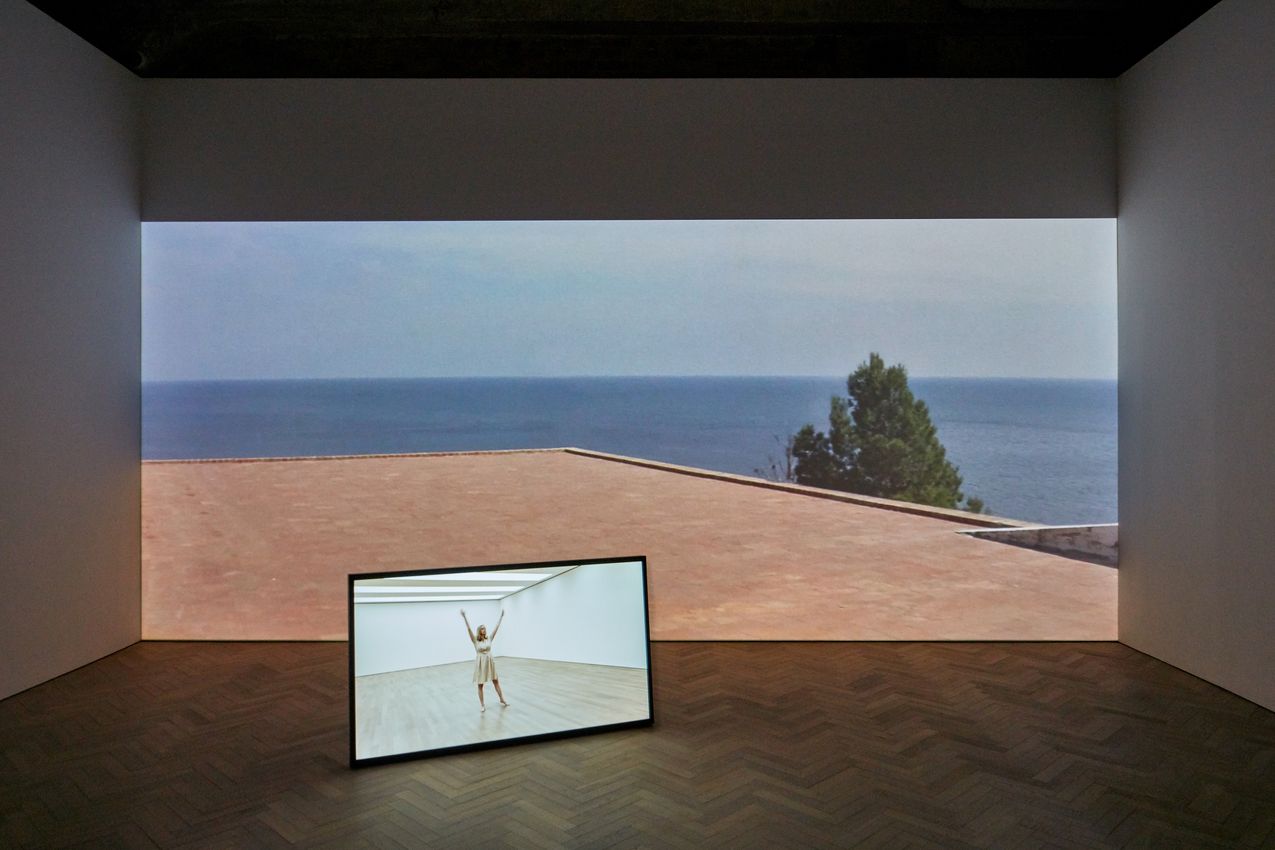
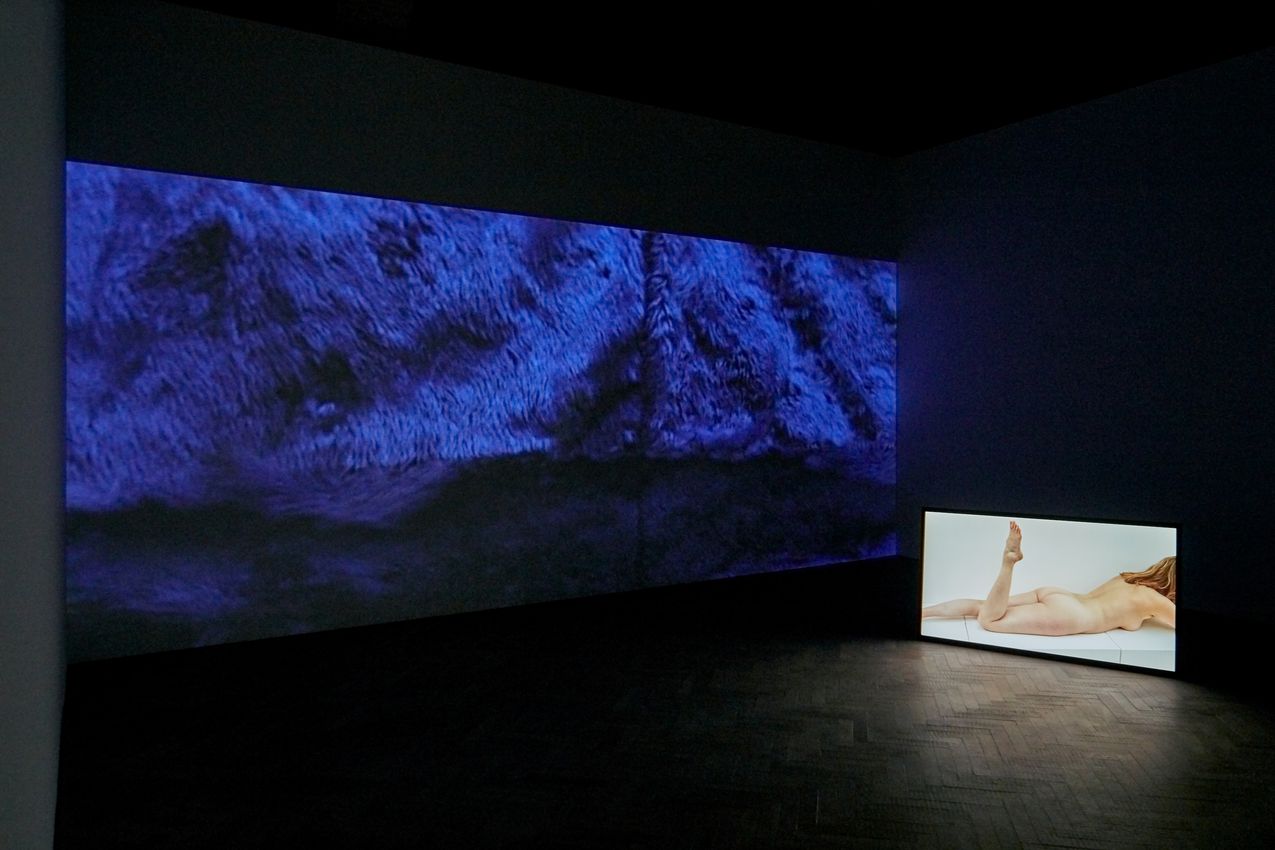
For the multi-channel video installation The Noon Complex (2016) Siegel reverses her approach, digitally removing the female protagonist played by Brigitte Bardot from key corresponding scenes in Godard’s film. As a result, the space portrayed in the film–the Villa Malaparte on the Italian island of Capri–is underscored, lending the sequences of tracking shots, directed at a now absent actress, an uncanny quality. Doubling this feeling, Siegel poses a surrogate actress as Bardot on an adjacent screen, in a neutral environment, emphasising her physical, yet ghostly, presence. The traced movements of the actress are experienced twice, against the film’s two different soundtracks–French and Italian–the scenes thus oscillating from melancholy drama to burlesque.
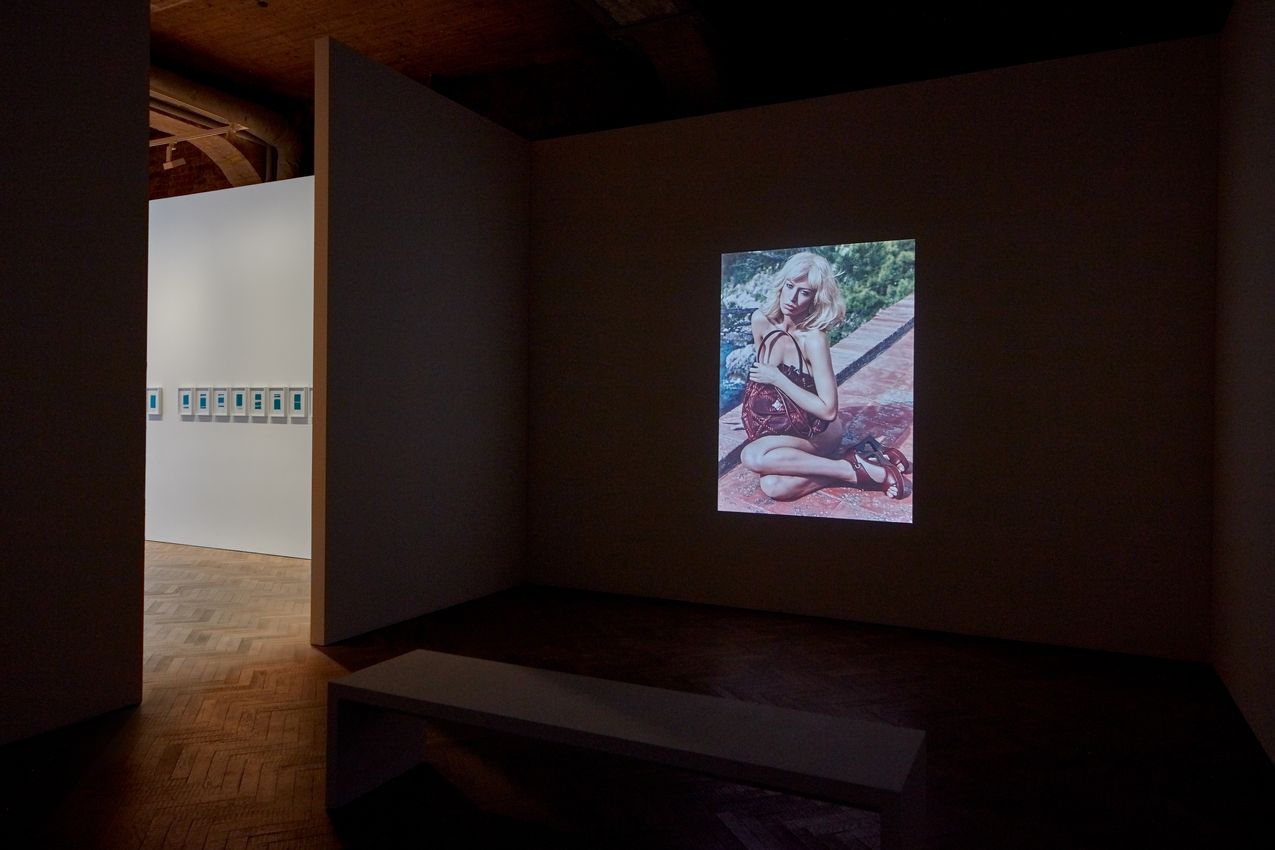
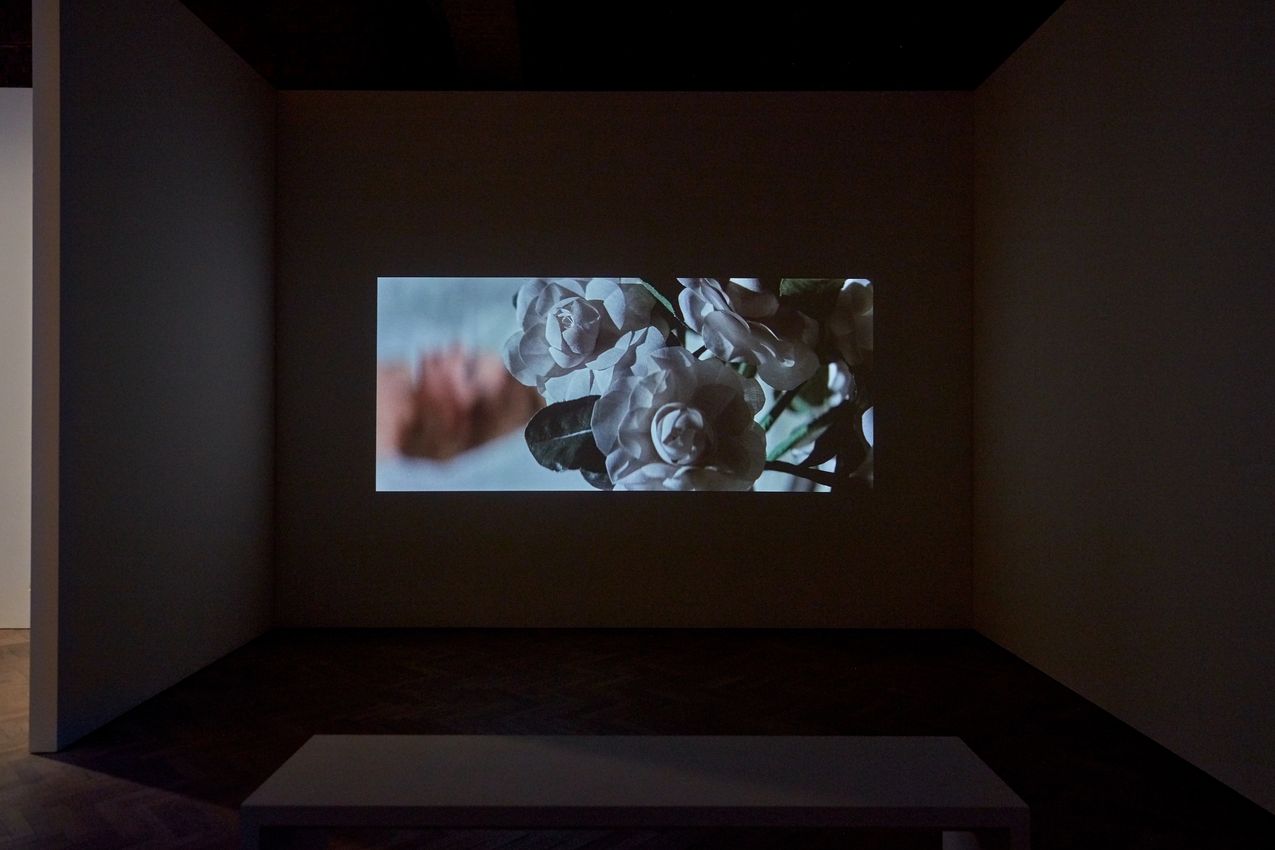
Genealogies (2016) suggests the artist’s associative thinking by combining novels, films, images, advertising and soundtrack recordings from multiple sources into a baroque invocation of image and artwork provenance, remake and copy. Extending from the choreography of Brigitte Bardot, infamously sunning her backside on the Villa Malaparte’s roof terrace, Siegel’s video traces an acute iconography of economies of architecture and the female body, suggesting how these are visualised in cinema, and harnessed by advertising and media. From Wilhem Jensen’s novella Gradiva, to Freud, de Chirico, Rossellini, Curzio Malaparte, Moravia, Resnais, Robbe-Grillet, Godard, Pink Floyd and the Beastie Boys to images by brands Hugo Boss and Persol, Genealogies maps a broadly layered trajectory of ideas shared and reprised, speculating on homage, influence and originality and, ultimately, drawing together a genealogical lineage of adaptation, appropriation and recurrence stripped from hierarchical order.
Together the works in the exhibition bring into high relief the sculptural, soundtracked backstory of gendered cinematic forms. Noon is the time of day when objects lose their shadow, but also the cinematic notion of a final, decisive confrontation.
Amie Siegel: Backstory is presented in collaboration with Simon Preston Gallery, New York, as part of a series of exhibitions hosting galleries with shared overlaps and synergies, following kurimanzutto’s recent Signals: If you like I shall Grow.
Born in Chicago in 1974, Amie Siegel lives and works in Brooklyn, New York. Her recent solo exhibitions include Winter, Guggenheim Museum Bilbao; Strata, South London Gallery; Double Negative, Museum Villa Stuck, Munich; Imitation of Life, Temple Bar Gallery, Dublin; Ricochet, Kunstmuseum Stuttgart; Provenance, The Metropolitan Museum of Art, New York and the Museum of Applied Arts, Vienna. She has participated in group exhibitions including the 2018 Gwangju Biennial; Dhaka Art Summit, Berlinische Galerie; CAPC Musée d’Art Contemporain de Bordeaux; Museum of Contemporary Art, Manila; Witte de With, Rotterdam; Haus der Kulturen der Welt, Berlin; Whitney Museum of American Art, New York; MAXXI Museum, Rome; Kunst-Werke Berlin; Walker Art Center, Minneapolis; CCA Wattis, San Francisco; Swiss Institute, New York; Vancouver Art Gallery and the Hayward Gallery, London.
Siegel has been a fellow of the DAAD Berliner-Künstlerprogramm and the Guggenheim Foundation, a recipient of the ICA Boston’s Foster Prize, Sundance Institute and Creative Capital Awards. Siegel’s films have screened at the Cannes, Berlin, Toronto and New York Film Festivals.
Siegel’s work can be found in the collections of The Museum of Modern Art, New York; The Tate, London; The Metropolitan Museum of Art, New York; Kunstmuseum Stuttgart; the Solomon R. Guggenheim Museum, New York; Carnegie Museum of Art, Pittsburgh and the Whitney Museum of American Art, New York, among others. Provenance (2013) is currently on display at Tate St. Ives, and the 2019 Sharjah Biennial will feature a new commission by the artist.
The meticulously constructed work of media-based, American artist Amie Siegel is complex and deeply layered, moving between film, video, photography, performance, and installation. Drawing from a variety of sources including old films, novels, advertising, and soundtracks, Siegel uses multi-channel films, projections and digitally altered photographs to explore ideas about and around objects, figures, and documents of cultural importance, and questions their perceived value as well as the power systems that uphold them.

Thomas Dane Gallery was established in 2004 and currently exists in two London gallery spaces at 3 and 11 Duke Street St. James’s, with a third space in Naples on Via Francesco Crispi which opened in 2018. A feature of the gallery is its commitment to the moving image, supporting the production and exhibition of works by Steve McQueen, John Gerrard, Akram Zaatari, Paul Pfeiffer and Bruce Conner.

A respected voice in contemporary art discourse.
Focusing on ambitious storytelling and insightful art-world commentary. Ocula Magazine publishes in-depth interviews, critical essays and timely analysis on the artists, exhibitions and ideas driving the global art world.
Learn more about Ocula Magazine
Showcasing the best of the art world.
Ocula partners with galleries from around the world to highlight their artists, artworks and exhibitions. Gallery membership is by application and invitation, with each member vetted by an independent panel.
Learn more about Ocula Membership

Specialises in the sale of major artworks.
Led by a team with deep ties to the world’s leading auction houses, galleries and collectors. Ocula’s advisory team offers bespoke services to high-net-worth clients from around the world who are looking to acquire the best of contemporary and modern art.
Learn more about our team and services