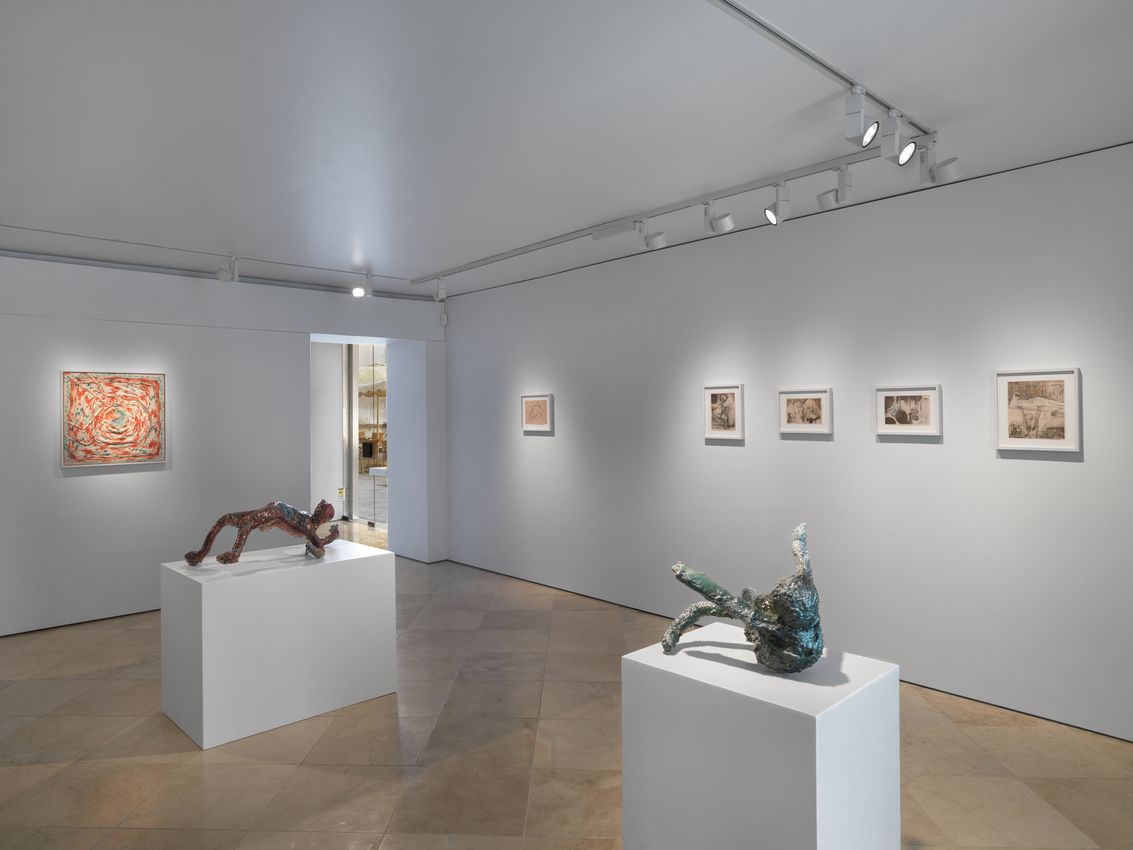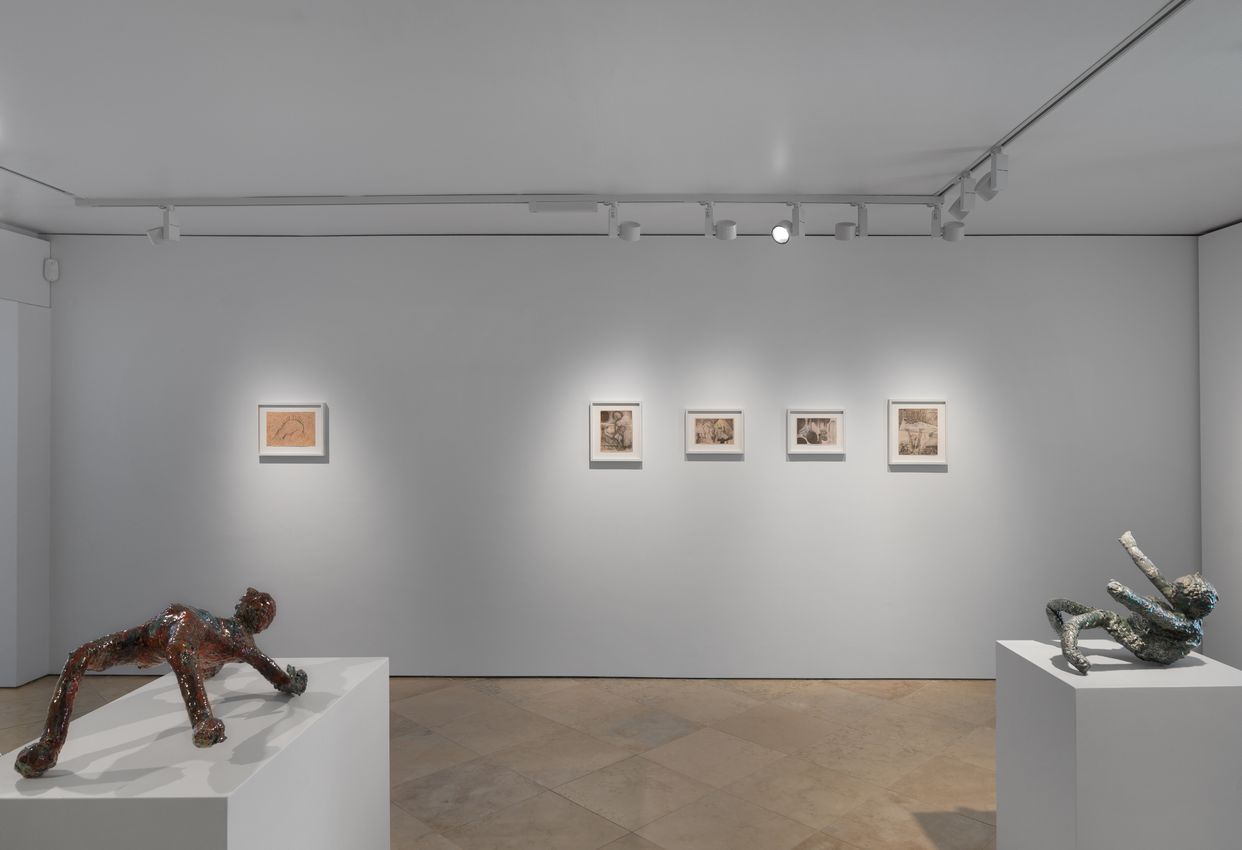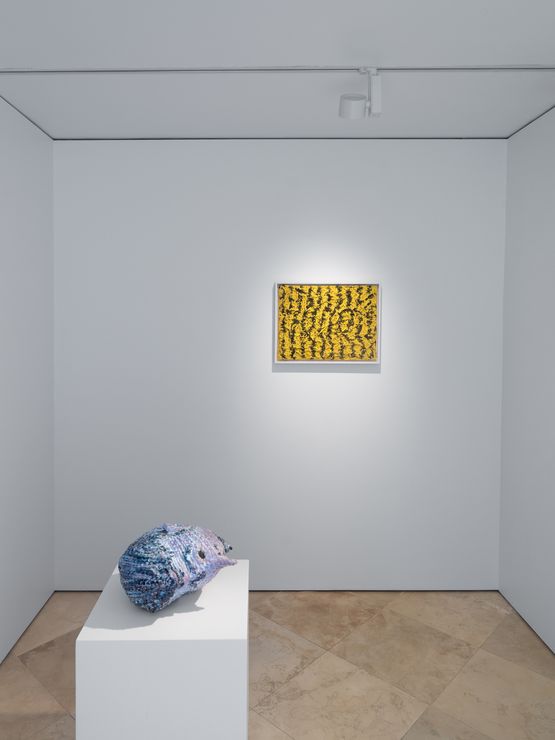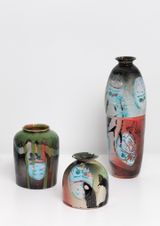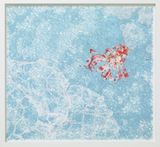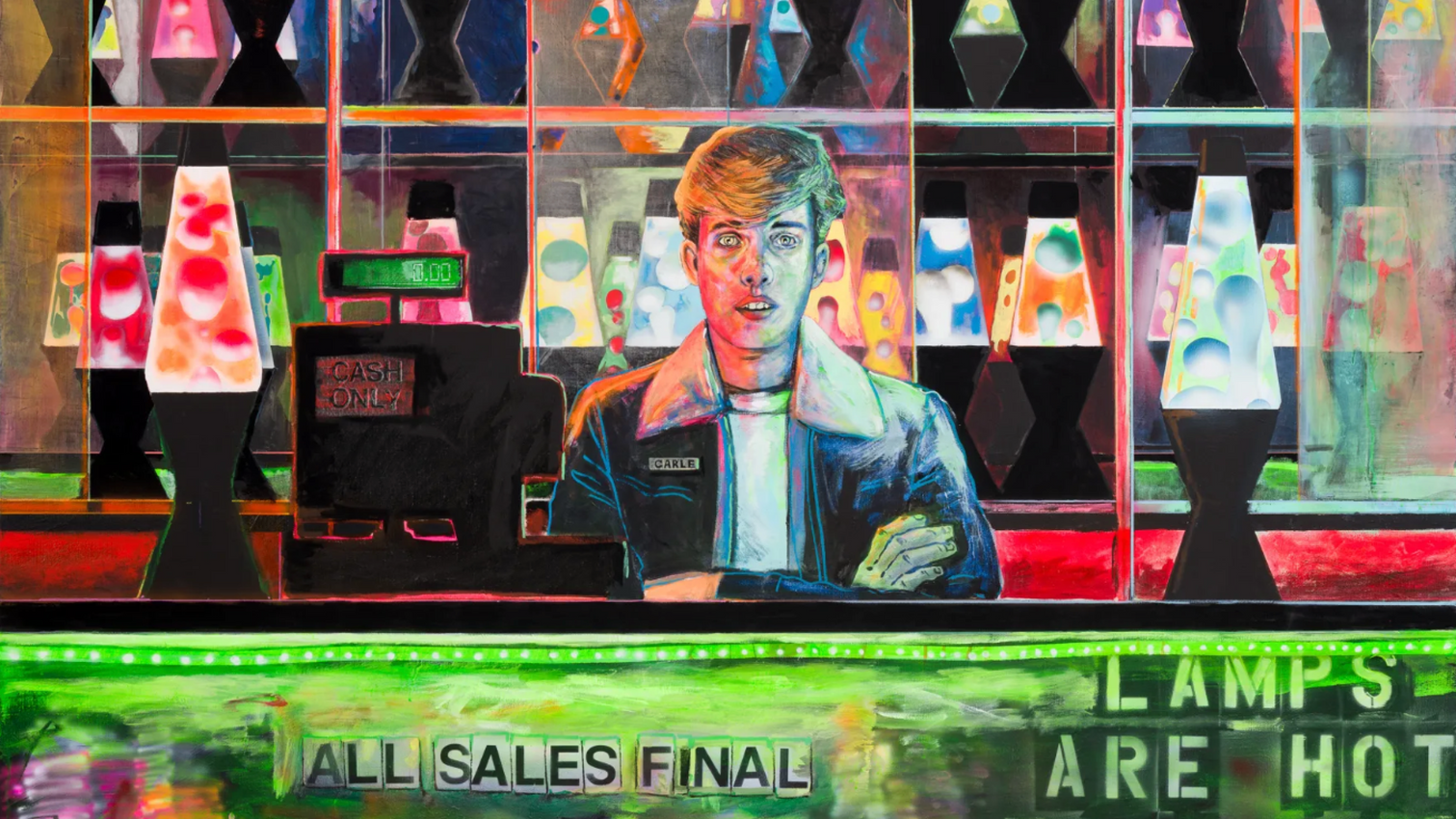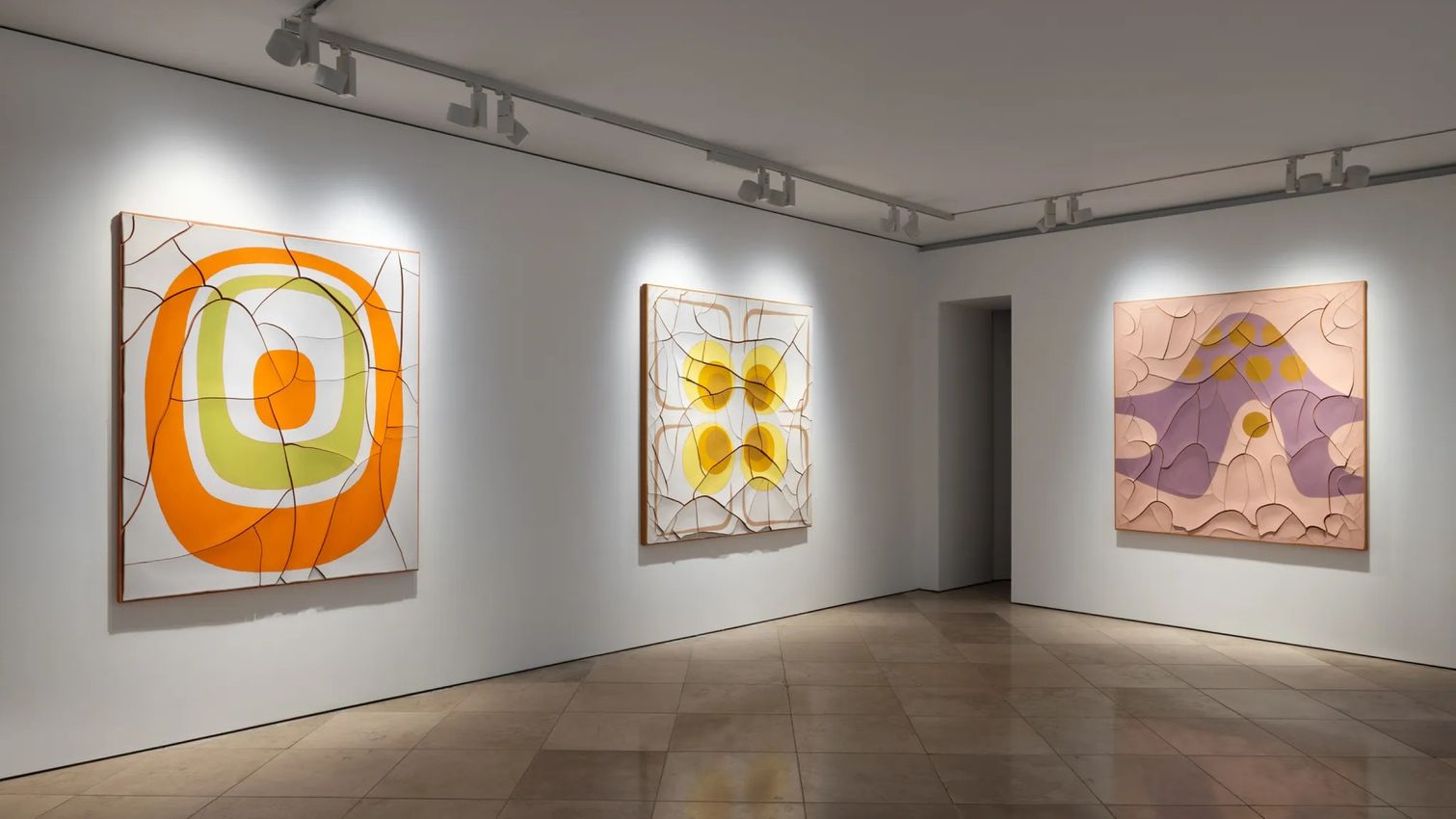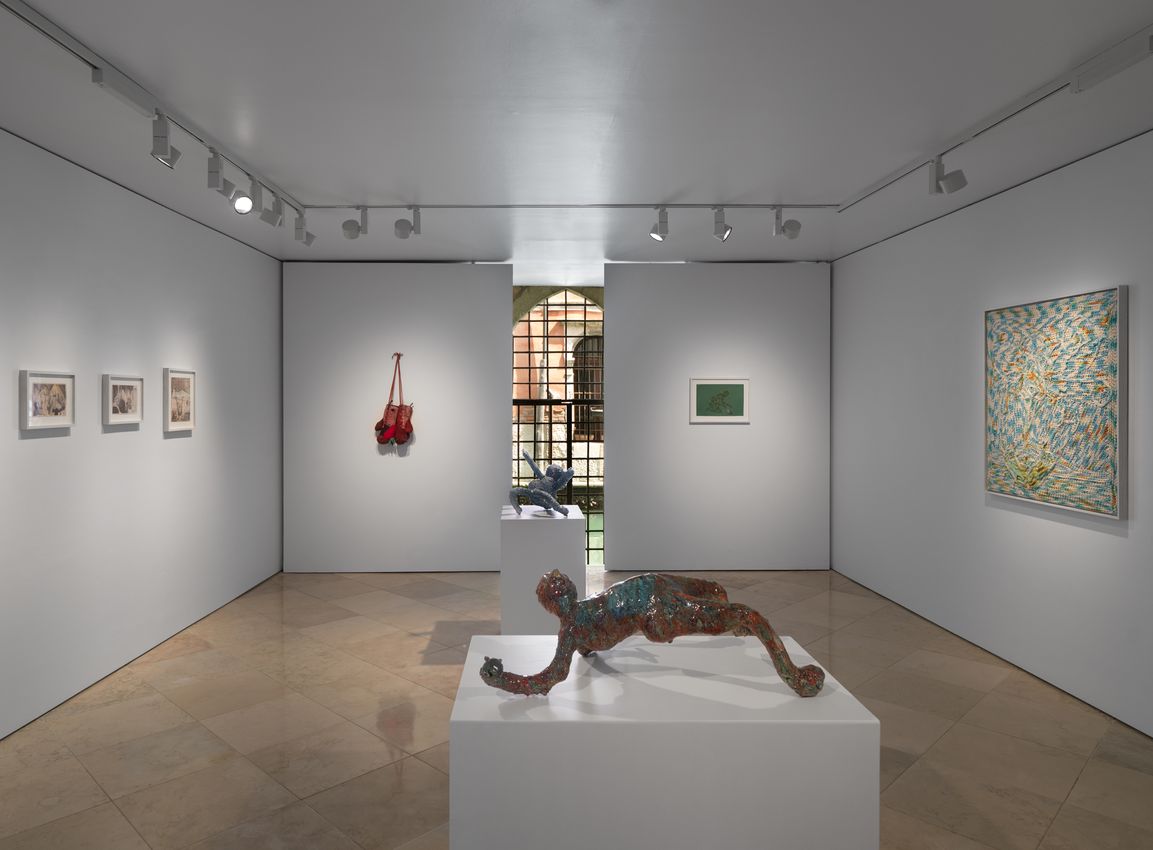
Victoria Miro is delighted to present an exhibition in Venice by Christian Holstad. The US artist’s fourth solo exhibition with the gallery, Time wounds all heels features new two- and three-dimensional works in ceramic, crochet, fabric and pencil, and an earlier Eraserhead drawing that acts as a touchstone for this body of work.
United by attitude rather than medium or method, Christian Holstad’s work probes received ideas about class, value, culture and society, often leading the viewer on richly evocative journeys into cycles of creation, growth, consumption and dissipation. The title of this exhibition is borrowed from a pun about comeuppance for poor behaviour (heel in this instance meaning a disreputable person), based on the aphorism ‘time heals all wounds’. Holstad first saw it in on a plaque in a queer bar, where it could also have referred to the heel of a foot or high heeled shoes. This shift of definitions, altered by specific contexts or codes, acts as one conceptual guidepost for the works on view.
From finely honed acts of drawing or crocheting to the fiery unpredictability of the kiln, the ways in which processes both controlled and uncontrollable have the potential to transform provide another thematic route through the exhibition. While many of the works impress upon us the intensity of their hand-crafted surfaces, hands and gloves feature literally as well as figuratively in the works on display. In one instance, a sculpture of a pair of boxing gloves is made from oven mitts; in another, an early example of the artist’s celebrated Eraserhead drawings (Grain fields, 2003), in which Holstad selectively erases sections of images cut from newspapers and magazines, meaning is altered in ways that hint at subtextual layers through the image. For the past year the artist has meditated close to this small drawing, returned to him after the passing of a close friend to whom Holstad had given the work. The artwork, transformed, bears new meaning.
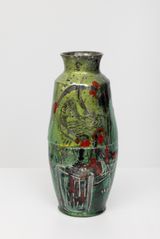
This theme is further explored in the exhibition by the idea of the portal, or conduit, from which materials emerge in a new form, or by which the viewer is transported. The crochet works on view, at once crafted in the artist’s lap, echo the position in which they were made, depicting the potter’s hands at a wheel, or the seated position taken during meditation, gateway to other states of being. The door of the kiln through which ceramic works are passed and emerge, spectacularly changed, is another portal that drives the creative process.Clay has long been a favoured medium of Holstad who, in his formative years, discovered its tactile, emotive and alchemical nature. The Italian word forno, meaning both kiln and oven, reflects the link between the artist’s work in ceramic and his passion for cooking, which he considers part of his artistic practice. Many of Holstad’s recent ceramic works are the result of an extended period living and working in Faenza, Italy, which is home to the historical manufacture of majolica ware known as faience. Collaborating closely with Italian ceramicists, he has developed new ways of working with clay, expanding on the vast array of techniques which he has been honing over three decades, borrowing from American, English and Japanese traditions.
To make the figurative ceramics on display, Holstad developed a process of first crocheting soft sculptures—including carnivalesque heads—dipping these forms into liquid clay and then firing them. Almost impossible to control, the process becomes less about authorial control than about alchemy. As the artist says, ‘These are about transformation. For each figure I make, I lose four in the process. For me they are a miracle.’
About the artist
Christian Holstad was born in Anaheim, California, in 1972 and lives and works in New York City. Recent solo exhibitions include Consider Yourself As A Guest (Cornucopia) staged at Artissima, Torino (2020) and Ca’ Foscari University of Venice (2019). The artist has participated in recent institutional group exhibitions including: Transitions and Transformations, NSU Art Museum, Fort Lauderdale (2019–2021); OnSite; A semi-permanent installation, Swiss Institute, New York (2018–ongoing); A Cool Breeze, Galerie Rudolfinum, Prague (2019); About a Vase, Fondazione Museo Montelupo Onlus, Montelupo Fiorentino (2018); Still Human, Rubell Museum, Miami, Florida (2017–2018); C.O.P., works from the de la Cruz collection, Nova Southeastern University, Fort Lauderdale (2017).
His work is in the permanent collections of institutions including the Museum of Modern Art, New York; Carnegie Museum of Art, Pittsburgh; Museum of Contemporary Art, Los Angeles; Museum of Contemporary Art, North Miami; Museum of Contemporary Art, Chicago; Astrup Fearnley Museet for Moderne Kunst, Oslo; Museo Internazionale delle Ceramiche, Faenza.
United by attitude rather than medium or method, Christian Holstad’s work probes received ideas about class, culture, sexuality and society. A keen eye on concepts of high and low informs a body of work that, encompassing sculpture, installation, performance, photography, collage and textiles, is concerned with the construction and manifestation of social and intimate spaces. Holstad’s practice has explored domestic and subcultural sites, often exploring and calling into question preconceived notions of identity and desire. His first show in New York was inspired by the story of David Phillip Vetter, the ‘boy in the bubble’ whose rare genetic immune disorder resulted in having to spend most of his short life in isolation in a plastic bubble. In contrast to the bedroom scene staged for that show, Holstad’s 2006 installation Leather Beach included references to S&M clubs, tanning salons, and high-end boutiques.


Since Victoria Miro founded her eponymous gallery in Cork Street, Mayfair, in 1985, the gallery has grown to represent over 40 artists and estates. With a reputation for presenting ground-breaking artworks from around the world, Victoria Miro has exhibition spaces in Mayfair and Wharf Road in London, and a further gallery space in Venice.

A respected voice in contemporary art discourse.
Focusing on ambitious storytelling and insightful art-world commentary. Ocula Magazine publishes in-depth interviews, critical essays and timely analysis on the artists, exhibitions and ideas driving the global art world.
Learn more about Ocula Magazine
Showcasing the best of the art world.
Ocula partners with galleries from around the world to highlight their artists, artworks and exhibitions. Gallery membership is by application and invitation, with each member vetted by an independent panel.
Learn more about Ocula Membership

Specialises in the sale of major artworks.
Led by a team with deep ties to the world’s leading auction houses, galleries and collectors. Ocula’s advisory team offers bespoke services to high-net-worth clients from around the world who are looking to acquire the best of contemporary and modern art.
Learn more about our team and services