





MANOLO VALDÉS
b. 1942, SpainManolo Valdés emerged from a Spanish interpretation of the Pop Art movement to develop his own career focused on the reinterpretation of classical artworks. He created his own distinct visual language while referencing art history in a practice spanning sculpture and painting.
Early Years
Manolo Valdés was born in Valencia on 8 March 1942. In 1957 he enrolled at the fine arts school of San Carlos in Valencia but left after two years to dedicate his life to painting, staging his first solo exhibition in 1962. His early pieces were critical of the Franco dictatorship. In 1964, alongside Rafael Solbes and Juan Antonio Toledo, he formed the Equipo Crónica group. When the group dissolved in 1981 after Solbes’ death, Valdés embarked on a solo career. Since 1990, the artist has lived in New York City.
Manolo Valdés: Artworks
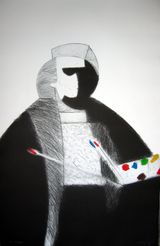
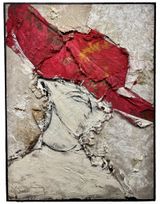
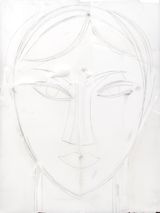
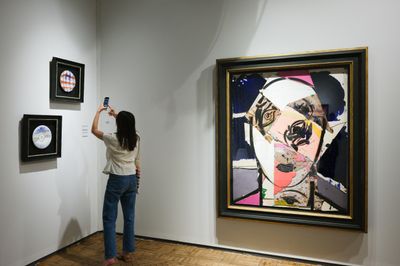
“I engage with art history,” Valdés said in a 2024 interview. He chooses work that captured his interest—notably Diego Velázquez’s portraits of Queen Mariana of Austria, Reina Mariana and then creates his own version, perhaps at large scale or in different materials. He has worked with jute canvas, stitching or folding it, or coating it in paint or tar. In sculpture, he has worked with wood, bronze, brass, alabaster and marble. Although he is inspired by existing artworks, Valdés has developed his own individual style that creates a conversation with history.
- The Menina sculptures are perhaps Valdés’ best-known works: rendered as bronze sculptures, or in resin, or brass or wood. The series creates a dialogue with Velázquez’s original work while also demonstrating Valdés’ own evolving artistic practice.
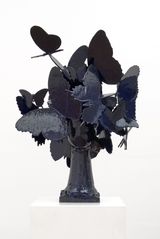
- The Butterflies series of monumental sculptures, some featuring many butterflies and others only a few, were inspired by Valdés seeing a sunbather with butterflies around their head. “All of a sudden, they were everywhere,” Valdés told The New York Times in 2012. “That’s how ideas start. You never know when one is going to pop in.”
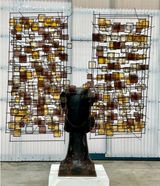
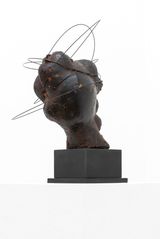
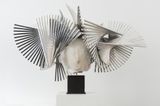
- The Head series featured static sculptures of heads, brought to life by a series of dynamic organic or architectural headdresses. Valdés said of the project: “I must admit that I adore the pronounced tension that is established between the two parts; it’s as if they were two entirely different sculptures. And the challenge is having them function as a harmonious whole, as well as allowing their initial different formulation to be seen not as something separate but as something enriching.”
Manolo Valdés: Select Awards
- Alfons Roig Prize for Visual Arts (1984)
- National Medal for Painting (Spain) (1985)
- Gold Medal of Merit for Fine Arts (Spain) (1998)
Manolo Valdés: Select Exhibitions
Select Solo Exhibitions
- Valdés, Anima Gallery at Marsa Arabia St Regis, Doha (2024)
- Manolo Valdés, Las Meninas in San Marco, Contini Gallery, Venice (2024)
- Manolo Valdés, Las Meninas in Napoli, National Archaeological Museum of Naples (2023)
- Manolo Valdés, Katonah Museum of Art, New York City (2023)
- Manolo Valdés: The Spanish Master in Montreal, Landau Fine Art, Montreal (2020)
- Manolo Valdés, Opera Gallery, Geneva (2018)
- Manolo Valdés at Gardens by the Bay, Marina Bay Sands, Opera Gallery, Singapore (2017)
- Manolo Valdés, A Personal Perspective, Bancaja Cultural Centre, Valencia (2017)
- Manolo Valdés: Sculpture and Works on Paper, Marlborough Gallery, New York City (2013)
- Manolo Valdés: Paintings and Sculptures, Pera Museum, Istanbul (2013)
- Manolo Valdés in Beijing, National art Museum of China (2009)
- Manolo Valdés at Bryant Park, New York City (2007)
- New Engravings, Galería Tiempos Modernos, Madrid (2004)
- Las Meninas, Peggy Guggenheim Collection, Palazzo Venier dei Leoni, Venice (2000)
- Manolo Valdés: Recent Work, Marlborough Gallery, New York City (1998) (and touring)
- Gallery Torres, Bilbao (1995)
- Palacio Almudí, Murcia (1990)
- Gallery Parpalló, Valencia (1986)
- Kunsthalle Bremen, Bremen (1981)
- Centro de Arte Contemporáneo, Porto (1977)
- Gallery Val i 30, Valencia, Spagna (1970)
- Sala Miqueldi, Bilbao, Spagna (1966)
Select Group Exhibitions
- Works from a Private Collection—from Bourgeois to Valdés, Beck and Eggeling, Dusseldorf (2023)
- Arte Fiera Bologna (2022)
- Pablo Picasso and Two Sculptures by Manolo Valdés, Beck and Eggeling, Dusseldorf (2020)
- Art Taipei, Opera Gallery, Singapore (2019)
- Summer Group Exhibition, Marlborough Gallery, New York City (2015)
- Works on Paper, Marlborough Gallery, New York City (2009)
- Art Basel Miami (2007)
- Monte Carlo International Sculpture Festival (2004)
- 1972—2000, Galería Punto, Valencia (2001)
- Pop Impressions Europe/USA: Prints and Multiples from the Museum of Modern Art_, MoMA, New York City (1999)
- Out of Wood, Rachel Adler Gallery, New York City (1995)
- Chicago International Art Exhibition (1991)
- Spanish Art in the 20th Century, Seibu Museum of Art, Tokyo (1989)
- The Presence of Reality in Contemporary Spanish Art, Porin Taide Museum, Eteläranta (1985)
- The Portrait, Sala Parpalló, Valencia (1981)
- 37th Venice Biennale (1976)
- Eighth Paris Biennale (1974)
- Colectiva, Green Gallery, New York City (1968)
- Comic Books and Narrative Figuration, Musée des Arts Décoratifs, Paris (1965)
Further Reading
- Manolo Valdés’ Instagram
- Artist profile page at Opera Gallery
- 2012 interview in The New York Times
- 2015 interview with Tate about Pop Art
Manolo Valdés FAQs
What was Equipo Crónica? Equipo Crónica was founded in Valencia in 1965 by Manolo Valdés, Rafael Solbes and Juan Antonio Toledo. Characterised by its own identity in a scene dominated by Abstract Expressionism, Equipo Crónica was inspired by Pop Art, but with its own interpretation of the US movement, determined to adopt a style that referenced everyday life. Toledo left the group fairly quickly, but Valdés and Solbes continued, producing pieces such as Police and Culture (1971), representing the police as a symbol of oppression. Other works manipulated press photographs or drew from comic-book iconography.
Were Valdés’ sculptures on Broadway?
Yes—in 2010, 16 bronze semi-figurative sculptures were displayed on Broadway in New York City, between Columbus Circle and 168th Street. Among the pieces on display were Reina Mariana (2005) and Dama a Caballo V (2008).
Which artists influenced Manolo Valdés?
Valdés sees art history as not simply something to be studied but something he engages with. He has said that Picasso demonstrated that it’s OK to depict unusual numbers of eyes or hands, so he may do that. Also, holes and stitches in his pieces are influenced by artists including Alberto Burri, Antoni Tàpies and Lucio Fontana. However, perhaps the artist that has had the most influence on Valdés is Diego Velázquez, whose 17th century portraits of Queen Mariana and Margarita Teresa directly inspired the Meninas series.
Ocula

















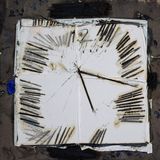


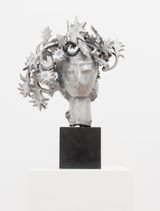

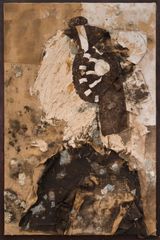
Explore Manolo Valdés' Exhibitions





Explore and Follow Artists Shaping Contemporary Art
A respected voice in contemporary art discourse.
Focusing on ambitious storytelling and insightful art-world commentary. Ocula Magazine publishes in-depth interviews, critical essays and timely analysis on the artists, exhibitions and ideas driving the global art world.
Learn more about Ocula Magazine
Showcasing the best of the art world.
Ocula partners with galleries from around the world to highlight their artists, artworks and exhibitions. Gallery membership is by application and invitation, with each member vetted by an independent panel.
Learn more about Ocula Membership
Specialises in the sale of major artworks.
Led by a team with deep ties to the world’s leading auction houses, galleries and collectors. Ocula’s advisory team offers bespoke services to high-net-worth clients from around the world who are looking to acquire the best of contemporary and modern art.
Learn more about our team and services