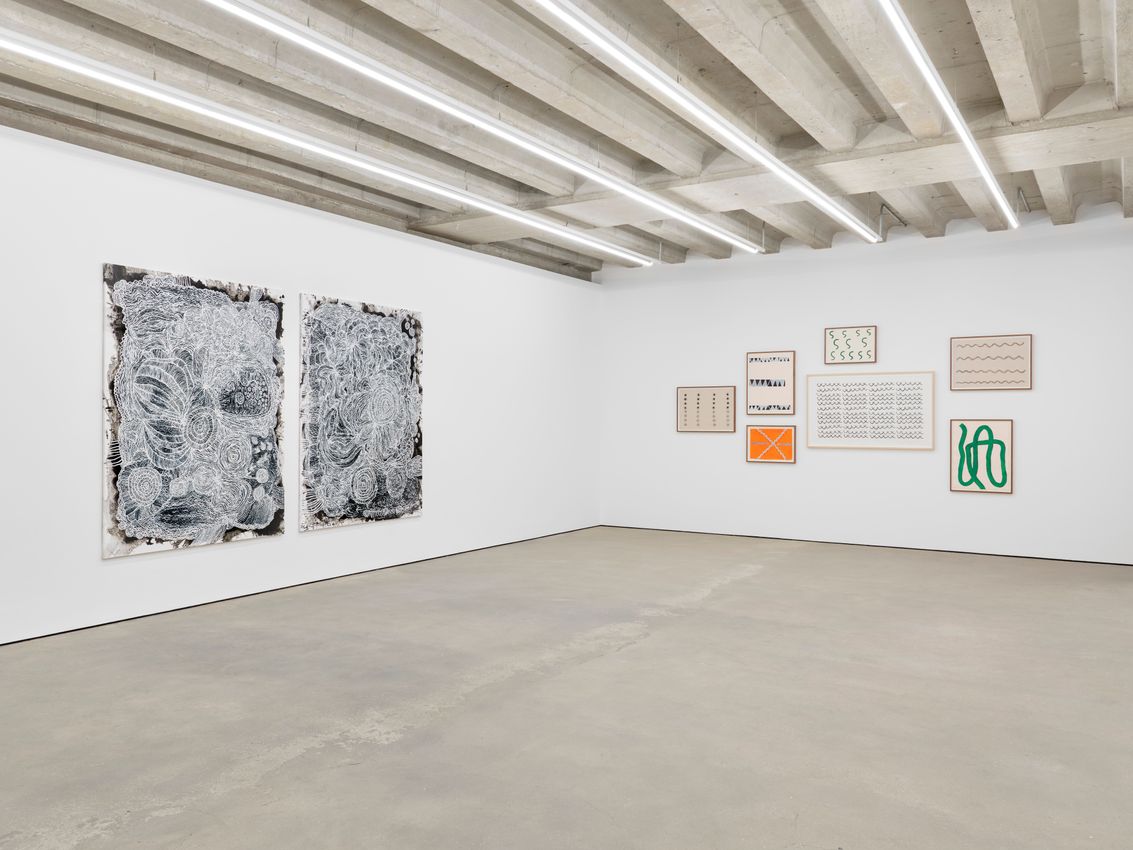
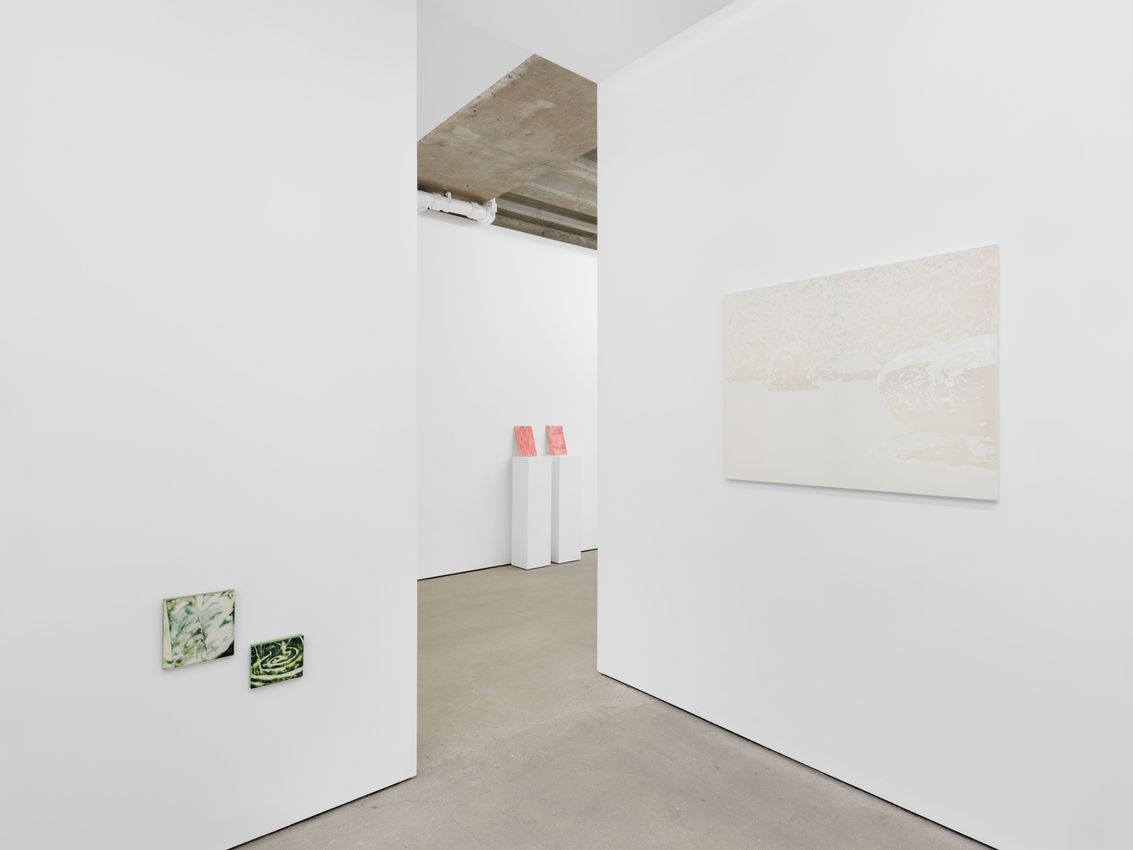
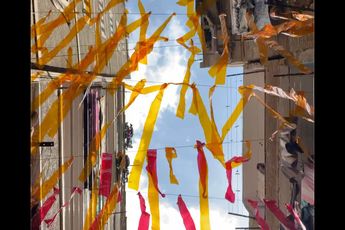
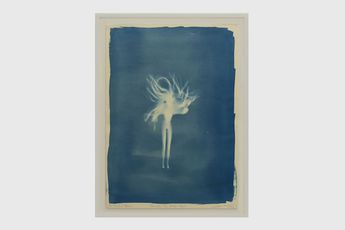
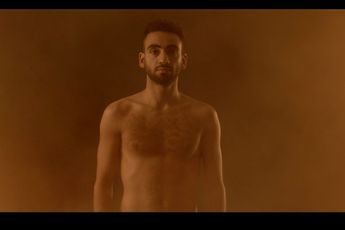
Polyphonies brings together a group of artists who challenge the intrinsic hierarchies and biases of language.The exhibition features Ibrahim Ahmed, Brook Andrew, Ana Bidart, Joy Gregory, Mehdi-Georges Lahlou, Sheroanawe Hakihiiwe, Betty Muffler, Seraphina Mutscheller, Thania Petersen, Stanislava Pinchuk and Lizi Sánchez.
The Greek word poliphōnia translates literally to ‘many sounds’, and in music, polyphony is given to mean two or more independent melodies played simultaneously. The group exhibition Polyphonies presents an array of voices who question dominant languages by calling forth alternative historical or non-verbal discourses. Although these narratives ‘play simultaneously’, they are frequently silenced by louder ones.
Translation, creolisation and colonisation have long been powerful and transformative actors across all languages. These events have often led to the creation of hybrid vernaculars that are enriched and diminished in their own particular ways, sometimes resulting in the corollary erosion or complete erasure of other tongues.
This presentation understands that language is the vessel for knowledge, history and communication, and that these are contrarily to be found in abundance outside of the written word. The exhibition includes works by several international artists who highlight the immense profundity and potential of different kinds of language, including those which rely on visual and oral articulation alone; those embodied entirely in nature, space or song, and verbal systems peppered so thickly with lacunae that much of their meaning remains beyond the page. The works presented here serve as a reminder of the complementary power of these systems, and make a case for the boundless epistemological possibilities to be found in polyphony.
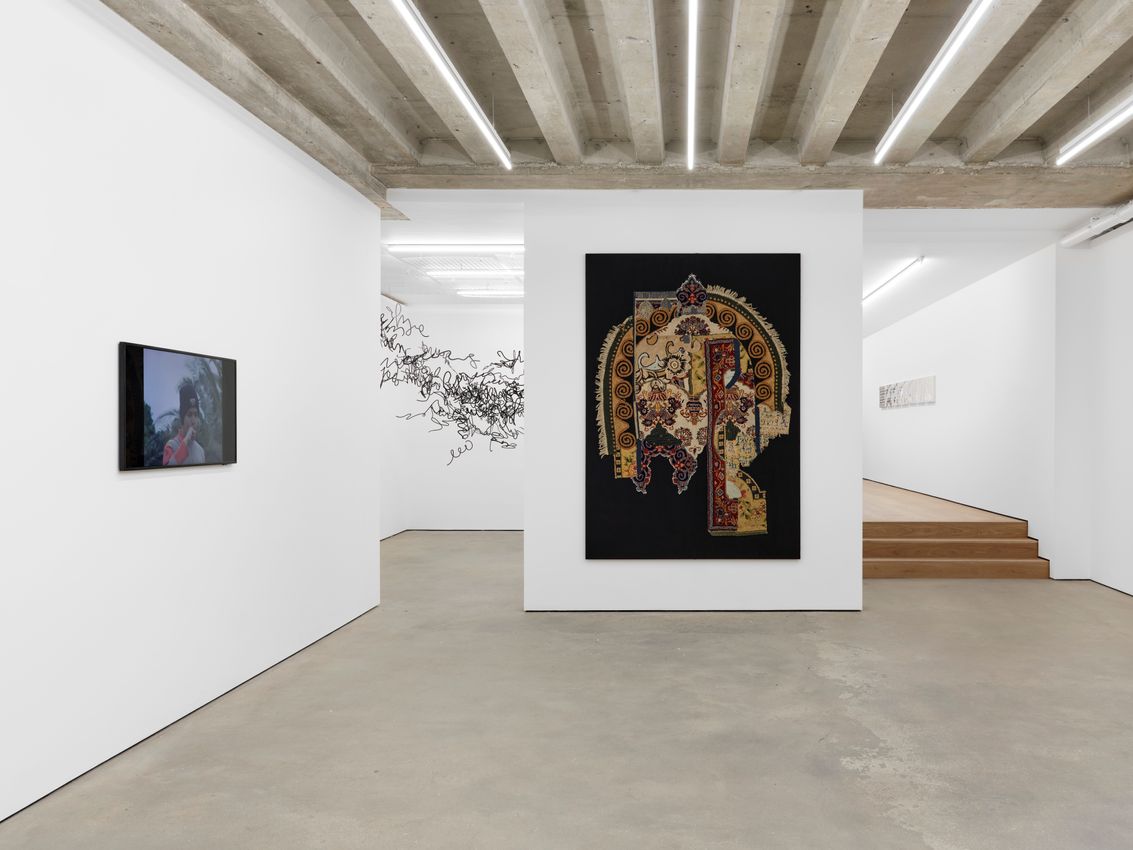
Ibrahim Ahmed presents a work made from archival and found textiles, continuing his investigation into how visual and material cultures are shaped by histories of circulation, particularly across the Levant, North Africa and Egypt.
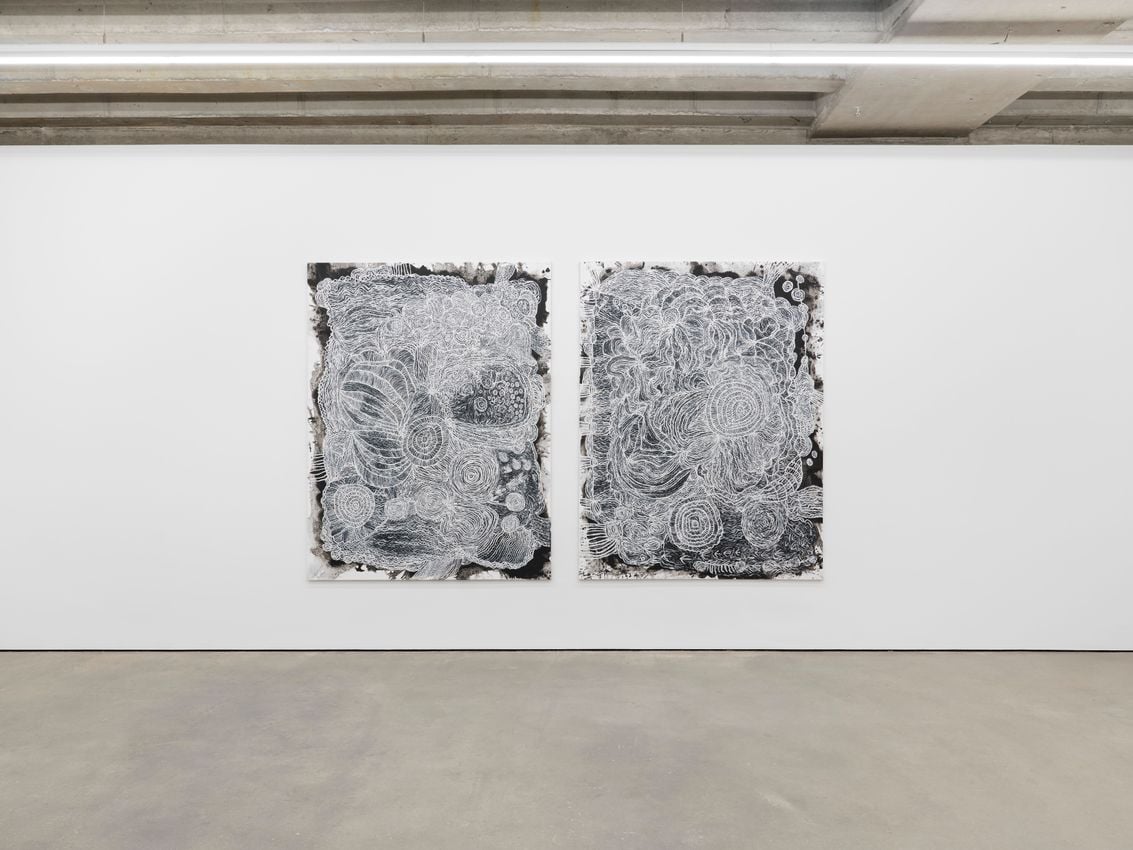
Brook Andrew presents a work on paper composed of black-and-white patterns traditionally carved into shields and trees, sometimes called dendroglyphs, inspired by his matriarchal Wiradjuri cultural heritage of western New South Wales, Australia.
Inspired by pre-historic rock art made with handprints in Serra da Capivara National Park, Brazil, Ana Bidart presents a ‘soft diary’ alongside a pigmented pad attached to a pulley system, installed such that the everyday movements of gallery visitors create marks on the diary pages.
Joy Gregory’s _Gomera (_2010) is a key work from the artist’s long-term research on endangered languages, specifically N|u, South Africa’s oldest surviving language, which was declared extinct in 1974.
Mehdi-Georges Lahlou presents a new body of ceramic works composed of doublereading patterns, in which motifs appear and disappear depending on how the works are viewed.
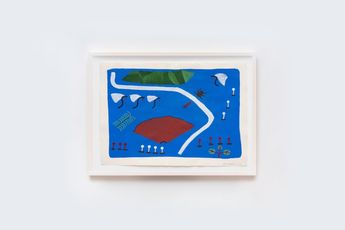
Sheroanawe Hakihiiwe presents a series of works on paper drawing from his ancestral knowledge of the signs and symbols of Yanomami culture and their decorative application in basketry and body painting for ritual ceremonies.
Betty Muffler’s densely layered and sprawling works translate the topographical features and cultural geography of Country, specifically her birthplace at Yalungu, into a visual language.
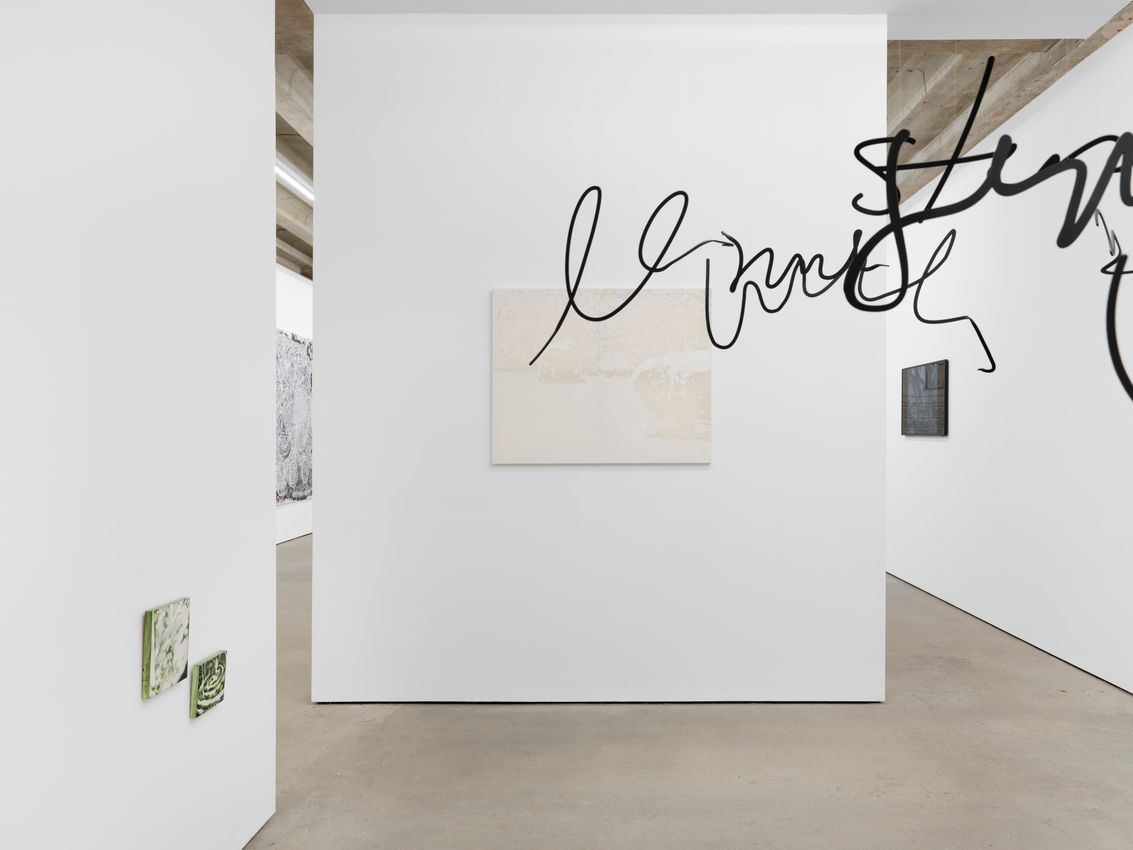
Seraphina Mutscheller layers, subtracts and cuts away layers of self-made paints to materially engage with ecological principles of ‘mycelial thinking’ and challenge anthropocentric ideologies.
South African artist Thania Petersen’s hand-embroidered textile works map imperialism across the Afro-Asiatic oceans and seas, combining Afrikaans text, hybrid figures and symbols of empire and exile.
Stanislava Pinchuk presents a series of paintings inspired by the inside covers of banned and confiscated books in Albania under dictatorial rule, calling attention to the contested framings of historical and literary canons.
Lizi Sánchez transforms notes taken during conversation into a monumental mobile, providing an encounter and entanglement with the physicality of language.


A respected voice in contemporary art discourse.
Focusing on ambitious storytelling and insightful art-world commentary. Ocula Magazine publishes in-depth interviews, critical essays and timely analysis on the artists, exhibitions and ideas driving the global art world.
Learn more about Ocula Magazine
Showcasing the best of the art world.
Ocula partners with galleries from around the world to highlight their artists, artworks and exhibitions. Gallery membership is by application and invitation, with each member vetted by an independent panel.
Learn more about Ocula Membership

Specialises in the sale of major artworks.
Led by a team with deep ties to the world’s leading auction houses, galleries and collectors. Ocula’s advisory team offers bespoke services to high-net-worth clients from around the world who are looking to acquire the best of contemporary and modern art.
Learn more about our team and services