Press Release

Oltre Terra, Formafantasma’s ongoing project and traveling exhibition, explores the history, ecology, and global dynamics of wool extraction and production. It goes further than the simple definition of wool as material, to look at it within a much broader ecology. Wool is the entry point for delving into the intricate interactions and interdependencies within an ecosystem. By looking at the history of sheep domestication, wool production, and material culture, Oltre Terra unravels the complexities of the cooperative symbiosis between animals, humans, and the environment. The exhibition explores this very intimate, yet complex, bond between humans and animals, emphasizing the impact they have on one another.

The Italian exhibition title, Oltre Terra, draws from the etymology of “transhumance,” combining the Latin trans (across, “oltre” in Italian) and humus (ground, “terra” in Italian). Transhumance describes the seasonal movement of livestock between grazing areas. Similarly, the idea of “crossing grounds” reflects the exhibition’s transdisciplinary approach, developed through collaborations with designers, artists, anthropologists, evolutionists, legal experts, curators, shepherds, and farmers.

While humans have shaped sheep through domestication, sheep have significantly influenced human history by providing wool – the boundaries between tamer and tamed are still constantly shifting. The exhibition examines the layered connections between humans and sheep, addressing the economic and ethical implications of extracting materials from living creatures.

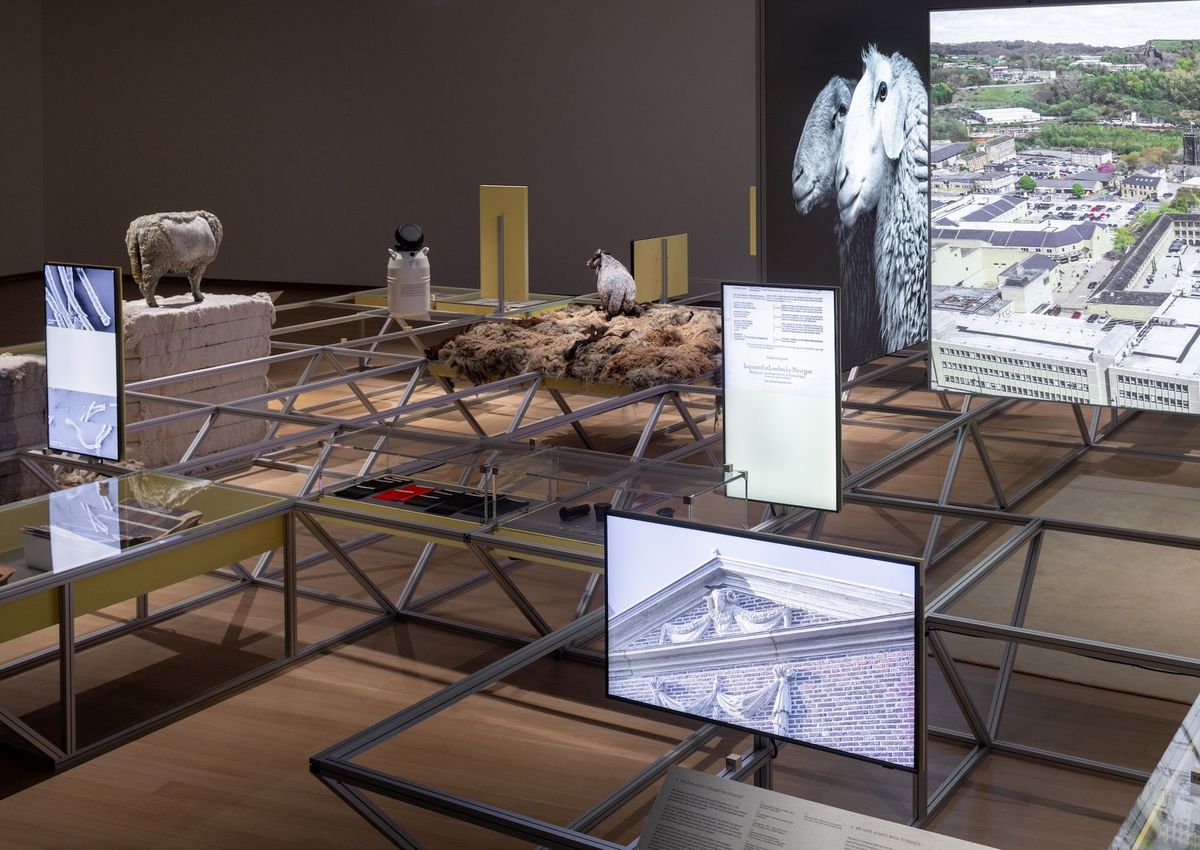
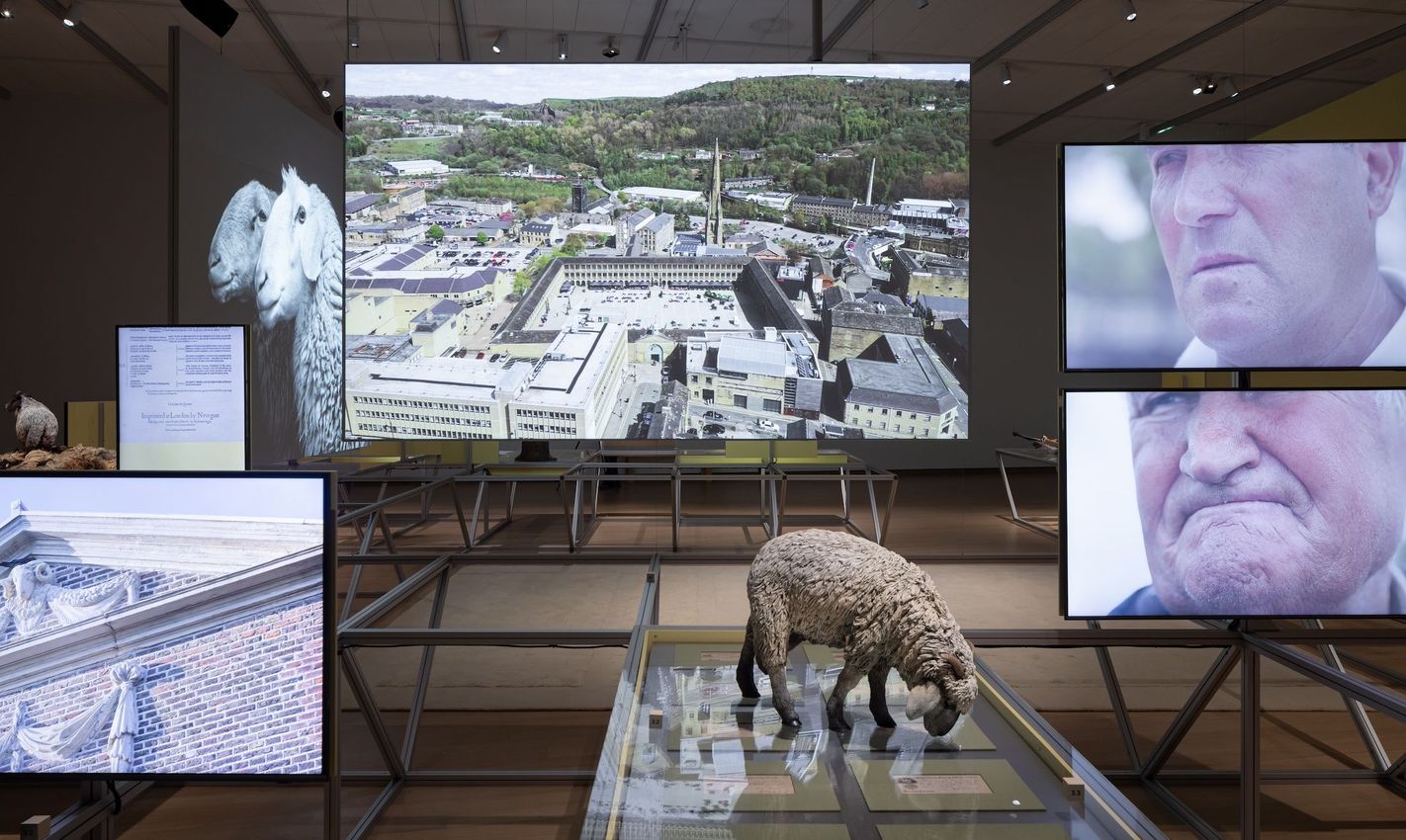
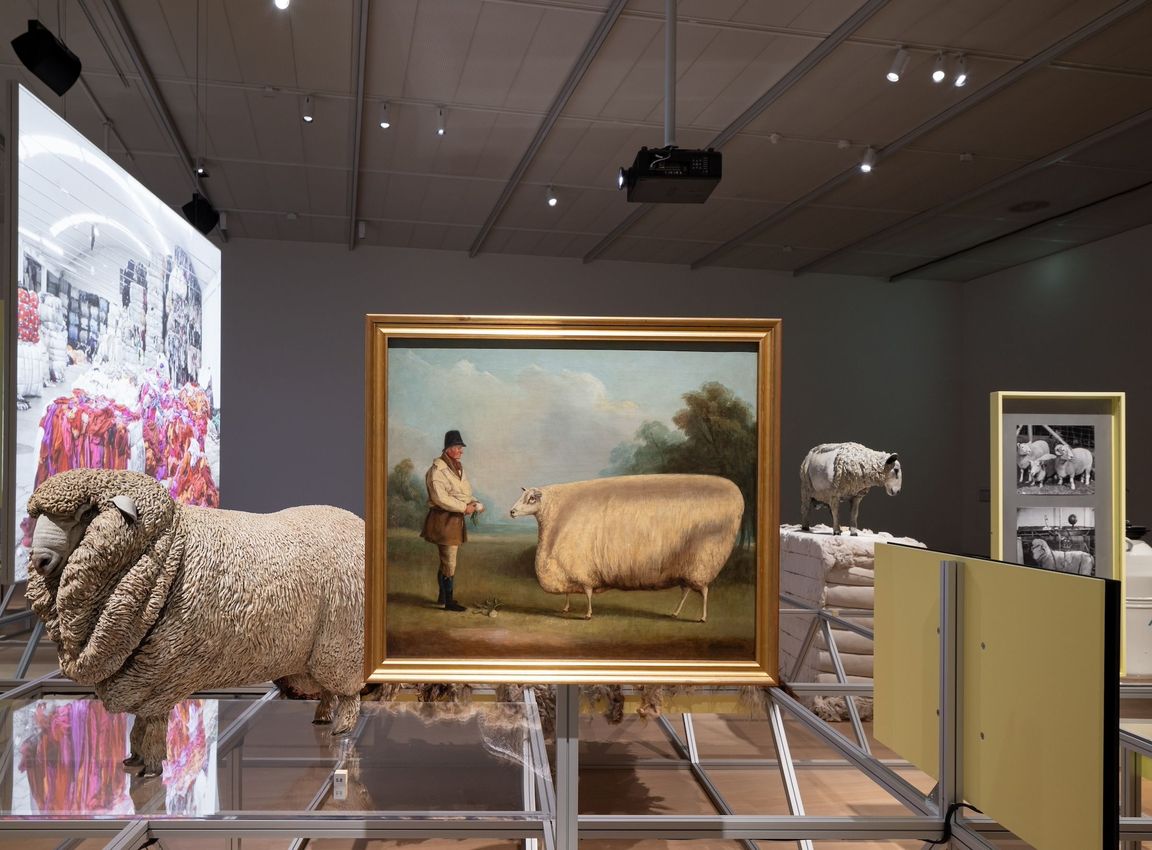
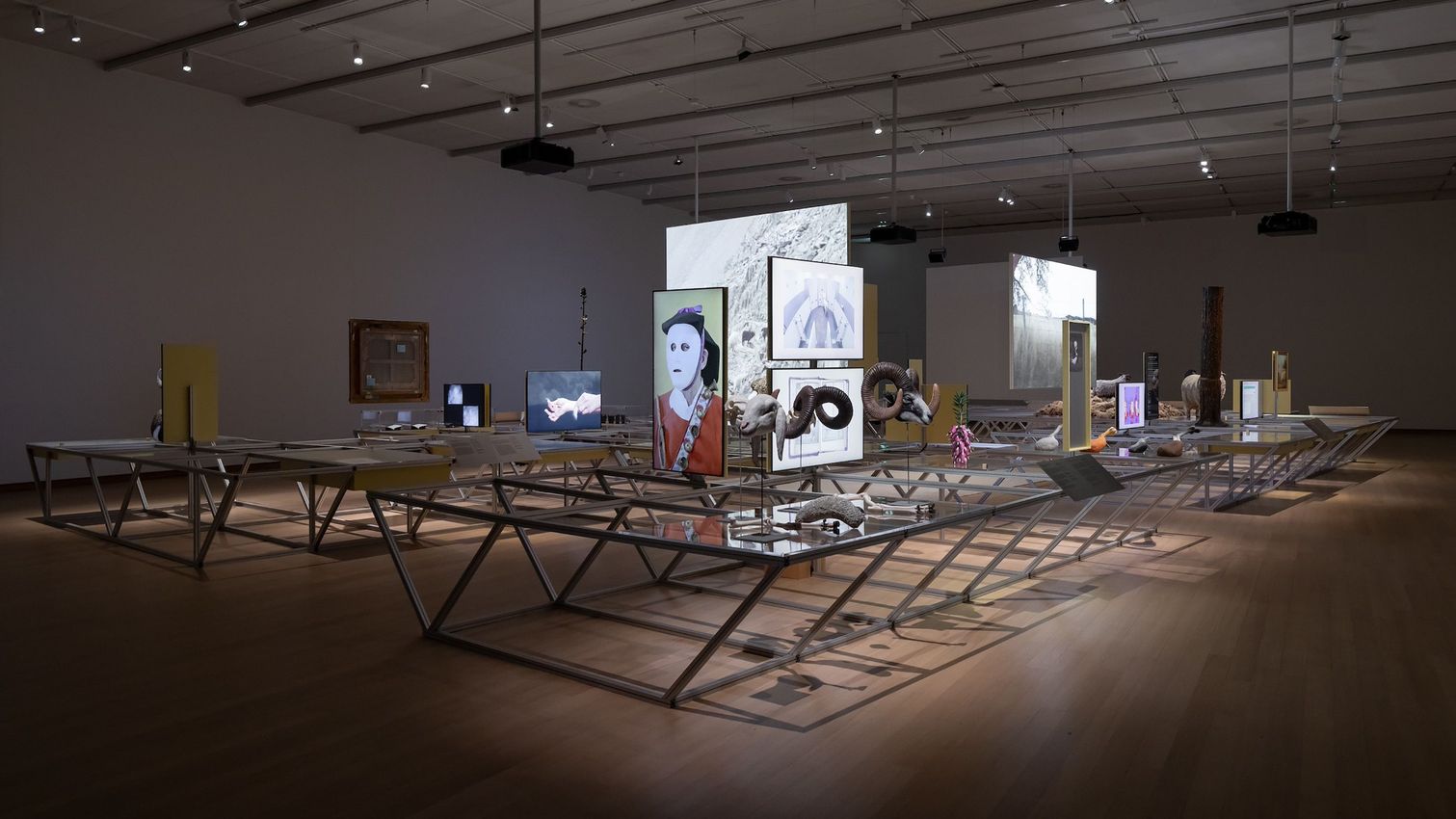
The setting of Oltre Terra offers a critical reimagining of the traditional diorama, often used in natural history museums to depict static scenes from nature. In this case, the diorama is expanded, featuring seven life-size reproductions of different sheep breeds, including the Dutch Drents Heideschaap, along with documents, films, byproducts from production processes, and various types of organic matter. By presenting materials, techniques, and living creatures together, the exhibition challenges current divisions between humans and animals, and between products and biological matter. Extensive captions, written by philosopher Emanuele Coccia, interpret these diverse materials and their interconnectedness.

At the heart of the exhibition is the video Tactile Afferents, created by artist Joanna Piotrowska and Formafantasma, co-produced by Nasjonalmuseet and Fondazione In Between Art Film. The film takes a unique approach to the exhibition’s themes, focusing on the sense of touch to explore co-domestication. It presents this concept both as an expression of interspecies tenderness and love, and as a form of violence. Oltre Terra also features a woolen carpet by cc-tapis, made from four different wool fibers sourced from twelve “rustic” Italian sheep breeds. Often discarded as low-grade material, these coarser fibers can still be used in products that are not in direct contact with the skin. Additionally, recycled wool bales by Manteco play a key role in the exhibition’s design

Read More

Installation Views

About the Gallery

The Stedelijk Museum is the place where everyone can discover and experience modern and contemporary visual art and design 365 days a year. The Stedelijk Museum was founded in 1874 by a group of private citizens in Amsterdam, led by C.P. van Eeghen, who donated funds and their art collections to establish a museum in the capital of the Netherlands that would be devoted to modern art. The collection, housed at first at the Rijksmuseum, was moved in 1895 into the Museum’s own building, designed by A.W. Weissman.

View Gallery Profile
Address
Museumplein 10
Amsterdam
Netherlands
Opening Hours
Daily, 10am – 6pm
*25 Dec and 1 Jan, 11am – 6pm
(1)
Amsterdam Museumplein 10
Stedelijk Museum
Museumplein 10, Amsterdam, Netherlands

Opening hours
Daily, 10am – 6pm
*25 Dec and 1 Jan, 11am – 6pm
The art world in focus