





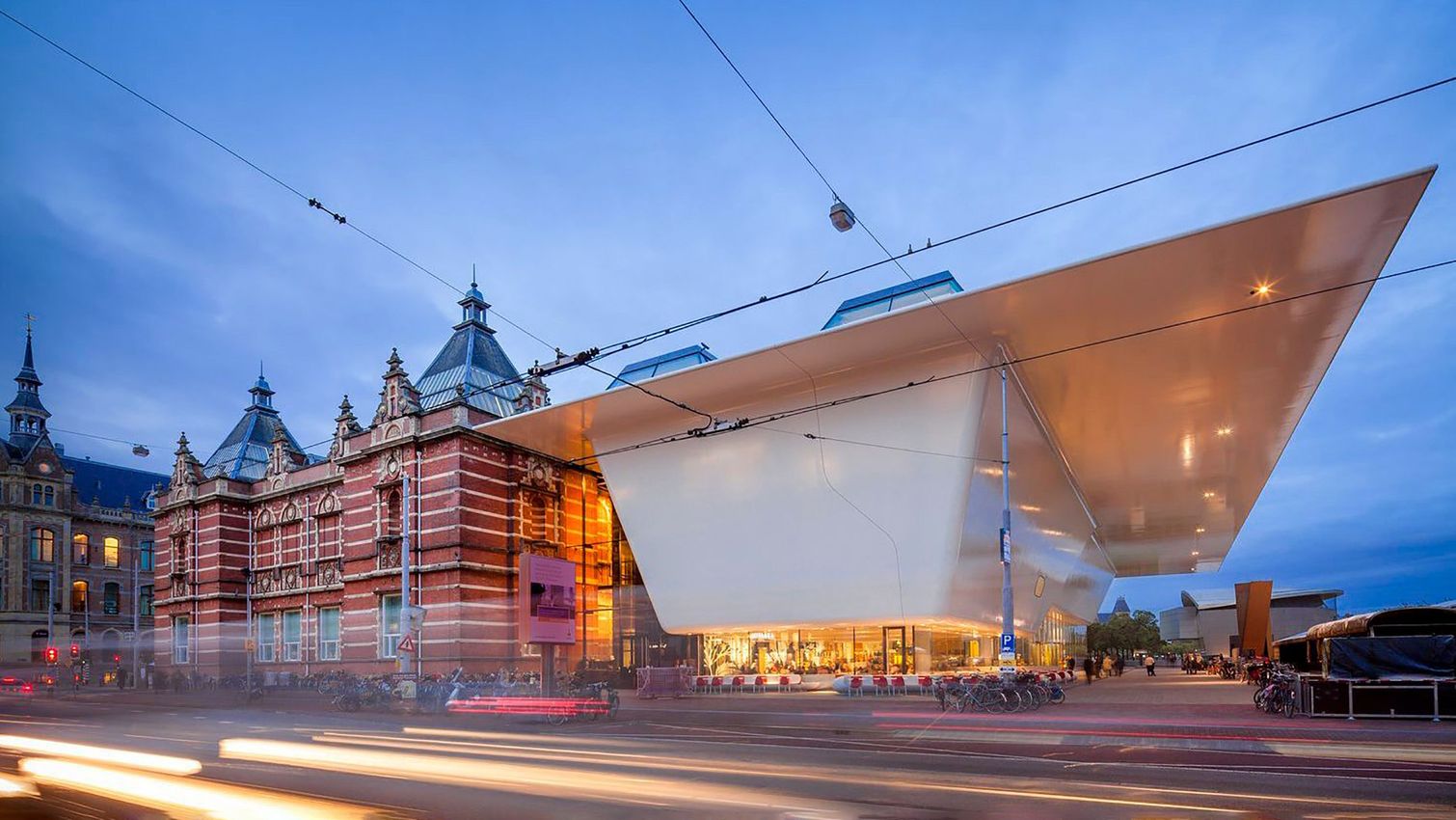
Stedelijk Museum
Amsterdam Learn more about what's on at Stedelijk Museum and the artists shaping its programme.The Stedelijk Museum is the place where everyone can discover and experience modern and contemporary visual art and design 365 days a year. The Stedelijk Museum was founded in 1874 by a group of private citizens in Amsterdam, led by C.P. van Eeghen, who donated funds and their art collections to establish a museum in the capital of the Netherlands that would be devoted to modern art. The collection, housed at first at the Rijksmuseum, was moved in 1895 into the Museum’s own building, designed by A.W. Weissman.
The aim of the Stedelijk is to enrich people’s lives with art. Our collection, exhibitions, publications, research and educational programs offer unique and compelling insights into today’s world and highlight topics that impact our societies and individual lives.
Our interactions between audiences and art are driven by dialogues with artists. We explore complex topics of yesterday, today and tomorrow – as defined by artists and signaled by ourselves – in an adventurous program. This vision is guided by a fresh, energetic approach to displaying, caring for and renewing our world-famous collection.
The Stedelijk Museum was founded in 1874 by a group of private citizens in Amsterdam, led by C.P. van Eeghen, who donated funds and their art collections to establish a museum in the capital of the Netherlands that would be devoted to modern art. The collection, housed at first at the Rijksmuseum, was moved in 1895 into the Museum’s own building, designed by A.W. Weissman.
For its first decades, the Stedelijk maintained a diverse collection, which included works of contemporary Dutch and French masters but also period rooms and even the banners of citizens’ militias. Beginning around 1920, however, the collection was culled and the focus concentrated more rigorously on modern and contemporary art, including pioneering collections and exhibitions of design and photography.
Already known to visitors from around the world because of its paintings by Vincent van Gogh (many of them later transferred to the Van Gogh Museum upon its creation), the Stedelijk began its rise to international prominence after 1945, when curator and designer Willem Sandberg became the Director. In addition to expanding the collection and working directly with many artists, Sandberg initiated an ambitious and farsighted exhibition program that put the Stedelijk at the forefront of contemporary art institutions—a program that continued under Edy de Wilde (Director 1963– 1985), Wim Beeren (1985–1993), Rudi Fuchs (1993–2003) and Gijs van Tuyl (2005–2009) and that contributed greatly to the development of the Stedelijk’s collection.




































A respected voice in contemporary art discourse.
Focusing on ambitious storytelling and insightful art-world commentary. Ocula Magazine publishes in-depth interviews, critical essays and timely analysis on the artists, exhibitions and ideas driving the global art world.
Learn more about Ocula Magazine
Showcasing the best of the art world.
Ocula partners with galleries from around the world to highlight their artists, artworks and exhibitions. Gallery membership is by application and invitation, with each member vetted by an independent panel.
Learn more about Ocula Membership
Specialises in the sale of major artworks.
Led by a team with deep ties to the world’s leading auction houses, galleries and collectors. Ocula’s advisory team offers bespoke services to high-net-worth clients from around the world who are looking to acquire the best of contemporary and modern art.
Learn more about our team and services