





Ireland Commits to Basic Income for Artists after Trial Programme
Irish artists have something to celebrate as the Basic Income for the Arts pilot is set to become permanent in 2026. Save to My Ocula

A scheme trialling a government-funded basic income for artists in Ireland is here to stay, with the nation’s newly revealed 2026 budget including a provision to make the Basic Income for the Arts (BIA) scheme a permanent source of income for the country’s artists, in an attempt to alleviate financial insecurity in the sector.
First launched in 2022, the BIA scheme provides 2,000 artists and creative arts workers, chosen at random following an open call, with payments of €325 per week for three years. The scheme was implemented as the top recommendation from a department task force report on recovering the arts sector in Ireland after the COVID-19 pandemic.
Pending government approval, the successor BIA scheme will open for applications in the first half of 2026. The original scheme is set to end in February 2026, following a six-month extension.
Patrick O’Donovan, Ireland’s minister for culture, communications, and sport, pledges to ‘bring a successor scheme to government with the intention of embedding a permanent basic income in the arts and culture sector’.
‘This scheme is the envy of the world,’ he says, announcing the budget, ‘and a tremendous achievement for Ireland, and must be made futureproof and sustainable.’
Communications specialist Aileen Galvin, who helped lobby for the implementation of the BIA as part of Ireland’s National Campaign for the Arts, describes this outcome as ‘an incredible moment’.
‘What will be significant now is how the permanent model is rolled out, how many artists will receive it, for how long, and how the awarding process will be developed,’ she tells Ocula. ‘Funding some but not all will need to be addressed, while tracking the impacts will be crucial in ensuring it is effective and sustainable.’
Last month, an external cost-benefit analysis by Alma Economics found that for every €1 of public funds invested in the scheme, there was a €1.39 return for society. The report also found that the real net cost of the BIA pilot decreased from €105 million to under €72 million, when factoring tax-generated and social welfare savings, such as unemployment allowances.
The 2026 budget also maintains support for the Arts Council, Culture Ireland, and Creative Ireland, government agencies promoting the arts both within Ireland and abroad. Additional funds have been committed for the major redevelopment of the Crawford Art Gallery in Cork.
Overall, Ireland’s budget for culture, communications, and sport will increase across the board, by 9.5 percent in total. —[O]
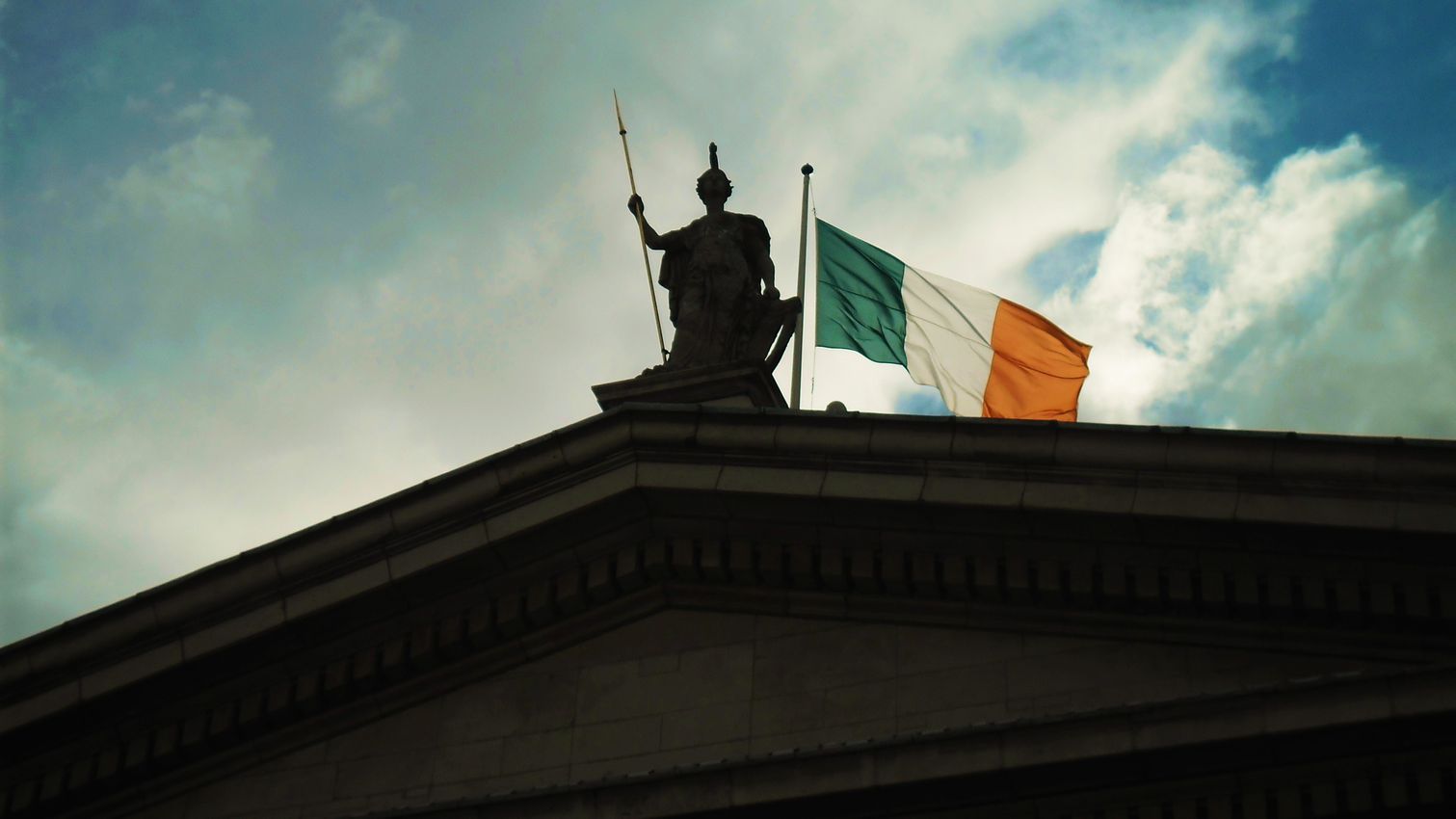
Main image: Ireland flag in Dublin, 2011. Photo: © Mith, Creative Commons 3.0.




A respected voice in contemporary art discourse.
Focusing on ambitious storytelling and insightful art-world commentary. Ocula Magazine publishes in-depth interviews, critical essays and timely analysis on the artists, exhibitions and ideas driving the global art world.
Learn more about Ocula Magazine
Showcasing the best of the art world.
Ocula partners with galleries from around the world to highlight their artists, artworks and exhibitions. Gallery membership is by application and invitation, with each member vetted by an independent panel.
Learn more about Ocula Membership
Specialises in the sale of major artworks.
Led by a team with deep ties to the world’s leading auction houses, galleries and collectors. Ocula’s advisory team offers bespoke services to high-net-worth clients from around the world who are looking to acquire the best of contemporary and modern art.
Learn more about our team and services