
The art world in focus
Subscribe to our newsletter for news and insights on artists, galleries and exhibitions.

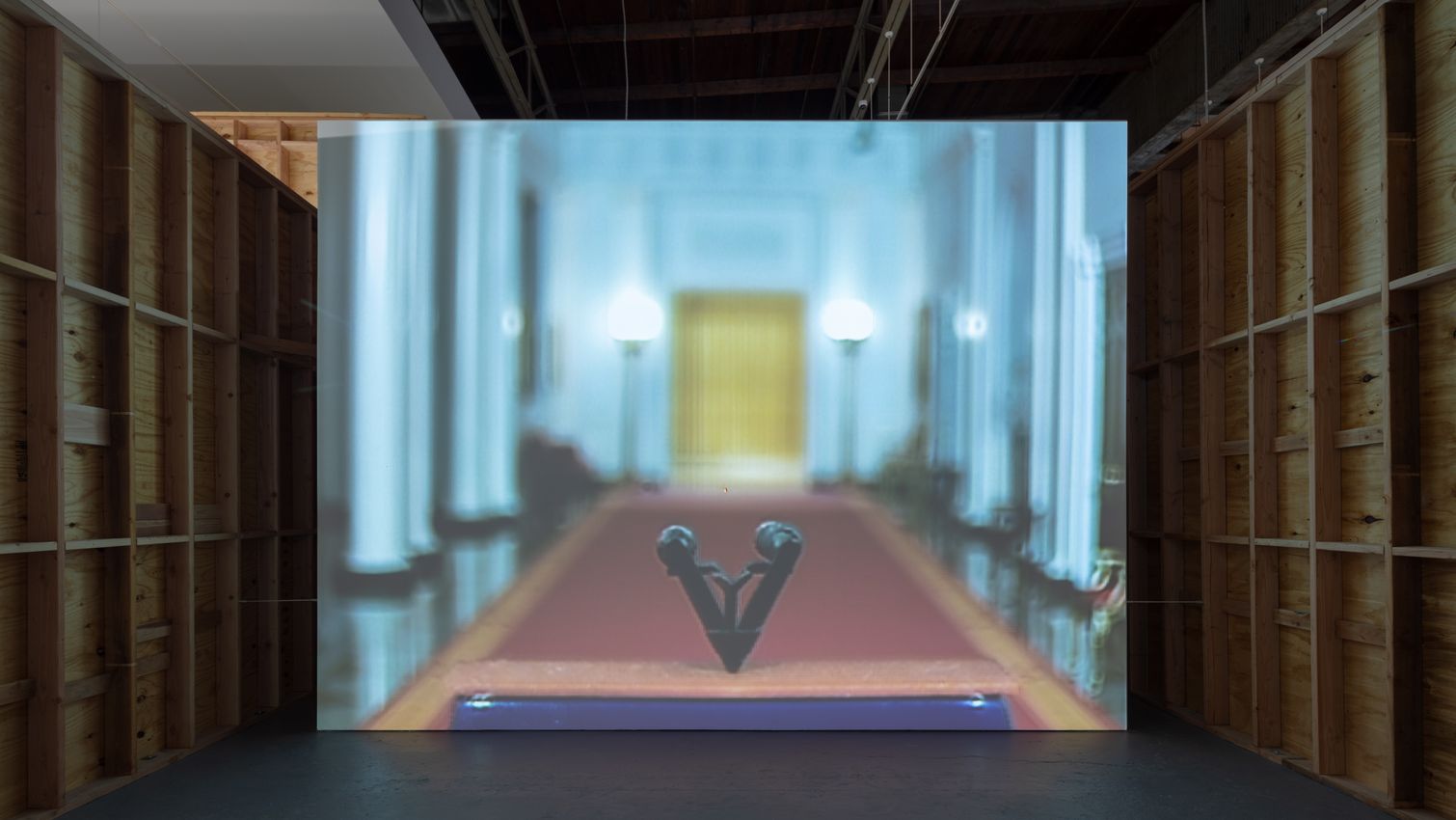
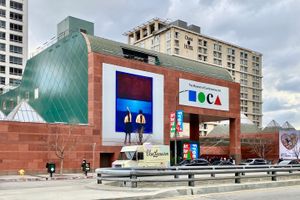
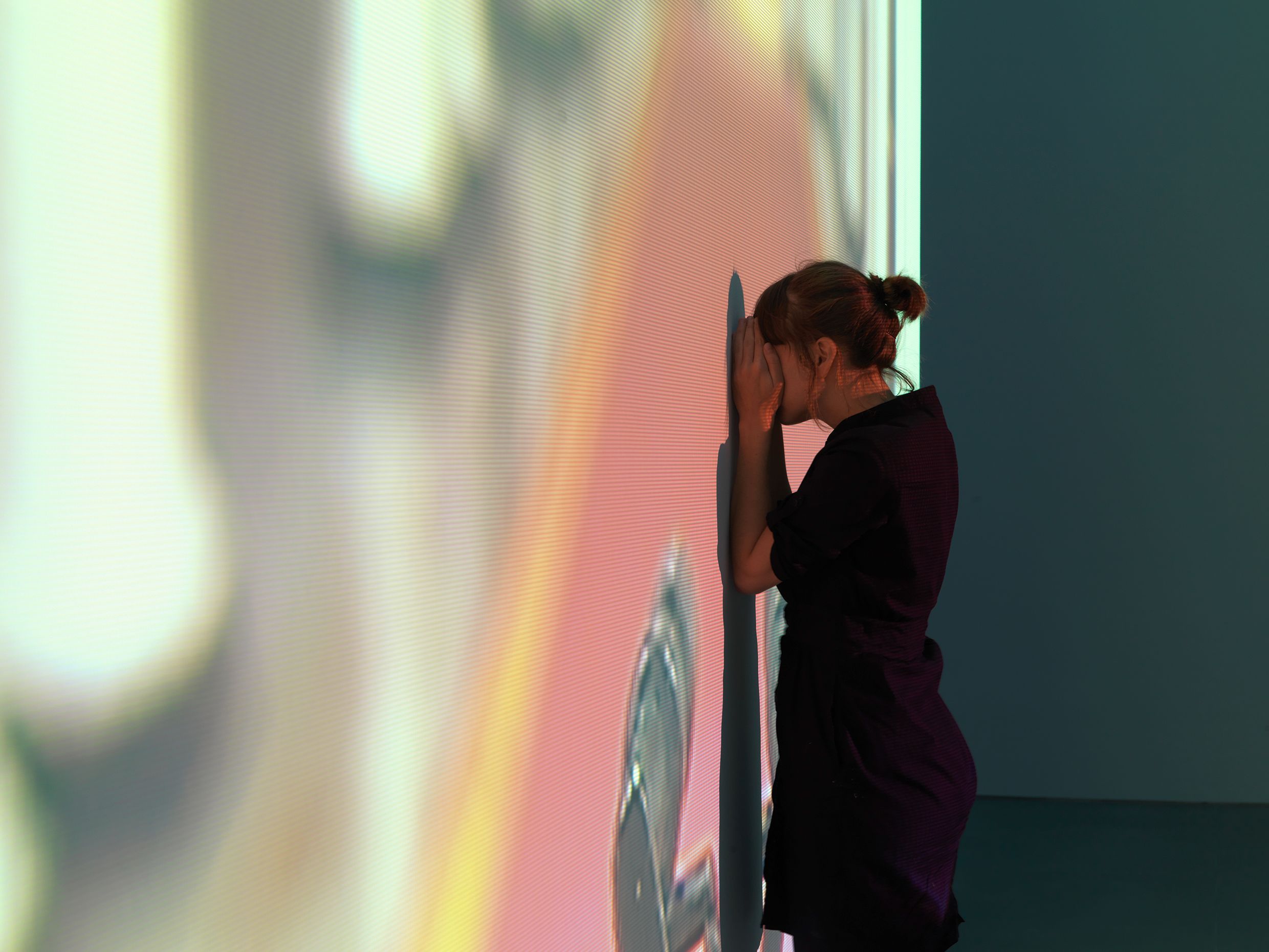
Last year when I first encountered Paul Pfeiffer’s Cross Hall (2008) at MOCA Geffen in Los Angeles, I was struck by a familiar image: a televised press briefing at the White House presidential podium, with two microphones. In this wall-sized static video projection, the speaker was absent. The podium waited as a mythic platform loaded with potential energy. As I walked closer to the video projection, I noticed the subtle glitch of a live broadcast signal. Then I was astonished to find a little hole in the centre of the projection wall. What a tease.
As I peered inside the hole, Paul let me in on a little secret—a miniature set of the White House podium lying nested inside the wall. It was a true Wizard of Oz moment. The grandeur of the White House lectern, the theatre stage of Empire, revealed itself as nothing but a tiny, childlike shoebox-sized set with a live camera feed. The magic of this realisation completed the circuit. I became a participant in this display of imperial spectacle, gazing at the apparatus of power while bathed in the amplification of its projected image. This is how we, as viewers of American spectacle, become consumers and participants in the system.
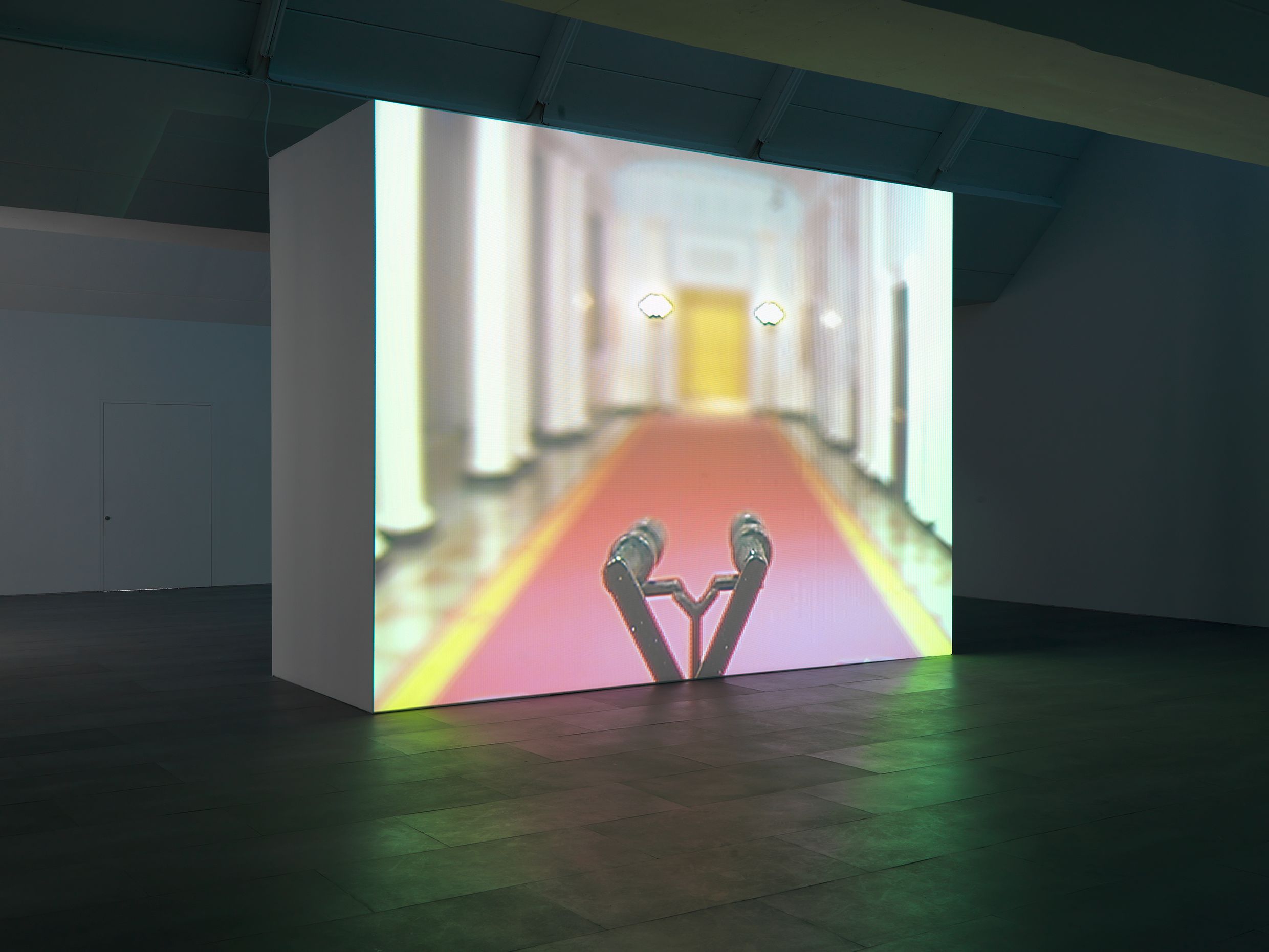
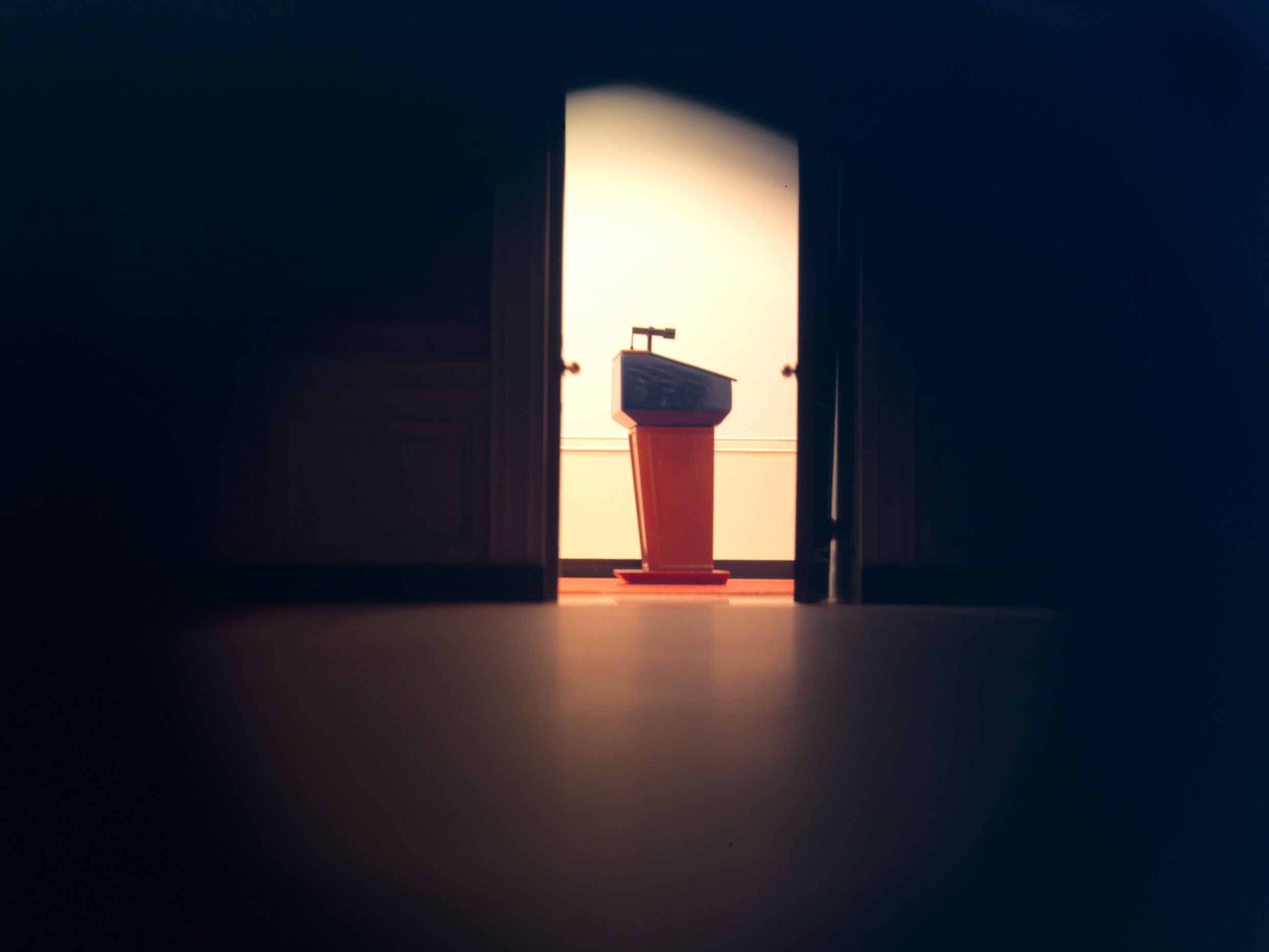
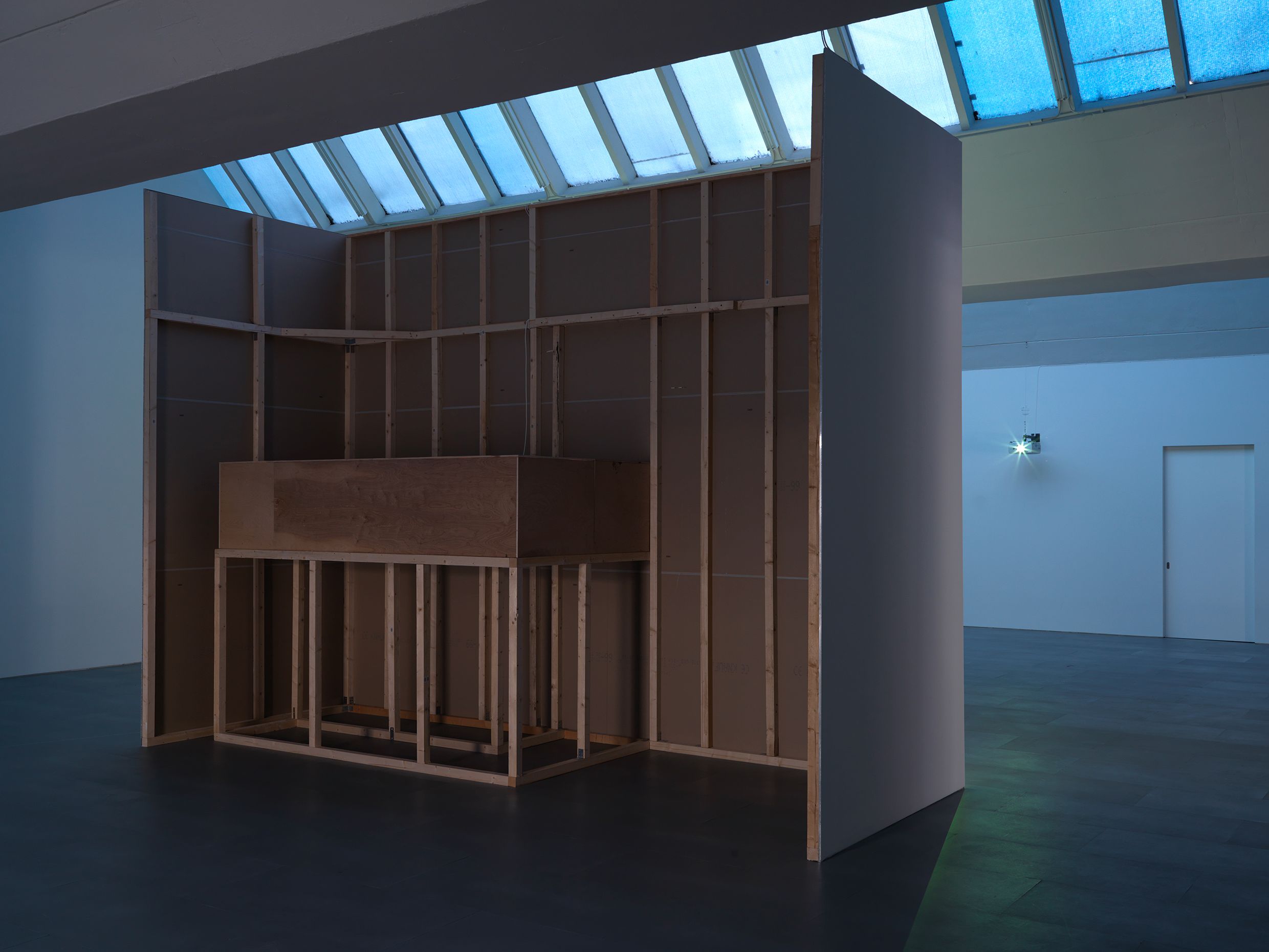
This is the genius of Pfeiffer, born in Hawaiʻi and raised in the Philippines, who grew up in the shadow of American Empire, stretching across the Pacific. Empire relies on theatre. The regality of the White House Cross Hall, the grandiosity of America-centrism: this spectacle forms the architecture of invisibility for the presidency, whose ghost at the podium wields power through its absence. Its power is transmuted through the presence of the objects: the homoerotic duality of two mics, two phalluses at the podium, entrapping us in the aura of the American pulpit.
I, as an image consumer, became lost in the signal loop between power and desire designed in the image of fascism, which, as Michel Foucault states, ‘causes us to love power, to desire the very thing that dominates and exploits us’. In this closed circuit between power and desire, reality and simulation, I lost myself in Pfeiffer’s infinite loop of Saṃsāra. If desire is the root of all suffering, then Pfeiffer’s Cross Hall trapped me in hell. I was smitten. —[O]


A respected voice in contemporary art discourse.
Focusing on ambitious storytelling and insightful art-world commentary. Ocula Magazine publishes in-depth interviews, critical essays and timely analysis on the artists, exhibitions and ideas driving the global art world.
Learn more about Ocula Magazine
Showcasing the best of the art world.
Ocula partners with galleries from around the world to highlight their artists, artworks and exhibitions. Gallery membership is by application and invitation, with each member vetted by an independent panel.
Learn more about Ocula Membership
Specialises in the sale of major artworks.
Led by a team with deep ties to the world’s leading auction houses, galleries and collectors. Ocula’s advisory team offers bespoke services to high-net-worth clients from around the world who are looking to acquire the best of contemporary and modern art.
Learn more about our team and services