





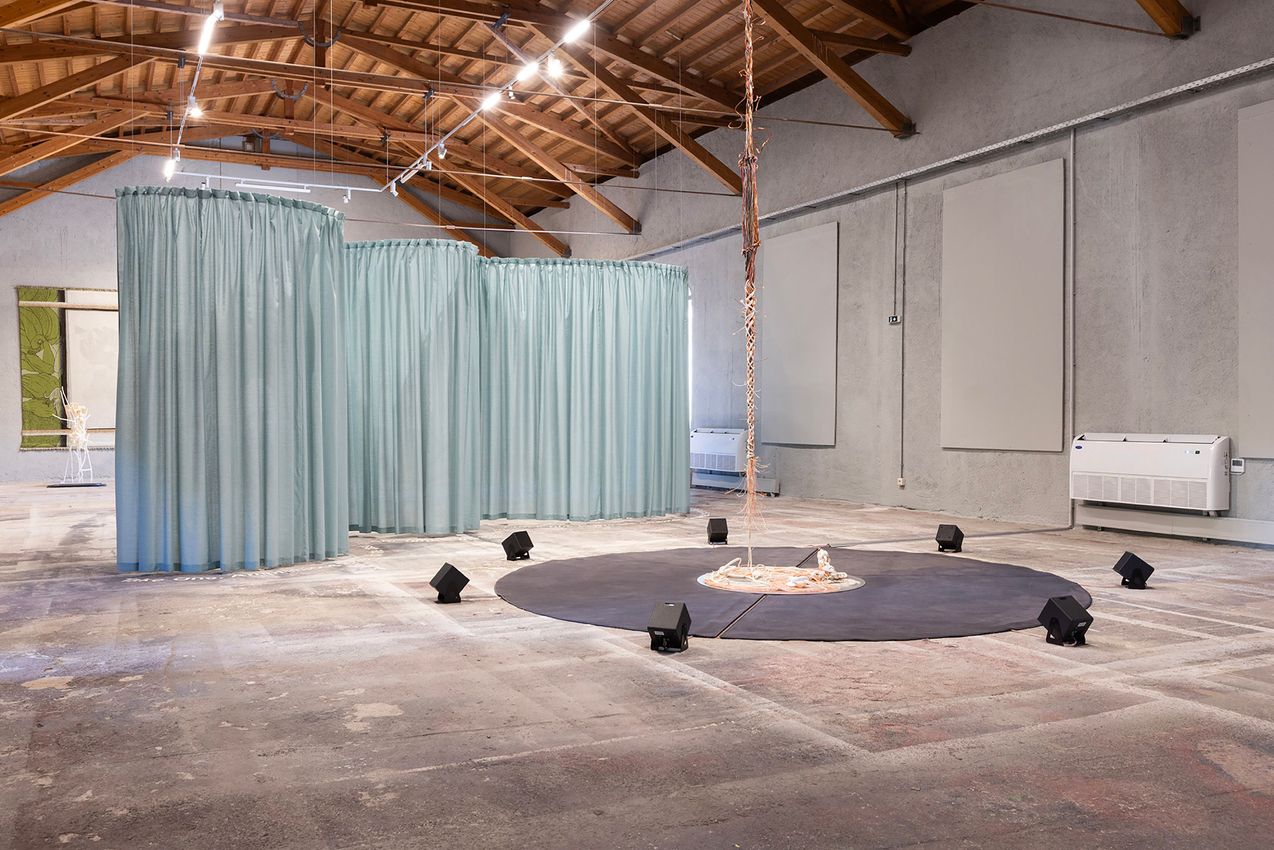
Critic's Pick: 'Space of Togetherness' at NEON, Athens
A powerful exhibition in Athens challenges viewers to engage with pressing social issues, echoing Bertolt Brecht’s call to use art as a tool for change. Save to My OculaIt’s apt that NEON foundation’s latest exhibition, space of togetherness, is staged at the Drama School of the National Theatre of Greece in Athens, as the ghost of the late Bertolt Brecht feels very present. In particular, the playwright’s oft-quoted maxim ‘art is not a mirror held up to reality, but a hammer with which to shape it’ springs to mind. Yet, despite Brecht’s firm Marxist beliefs, how hard or soft the impact of the hammer should be—and what shape it might, or should, create—remains up for debate.
Curated by NEON director Elina Kountouri, space of togetherness—which comprises the work of 20 artists and collectives from 13 countries—aims to explore ‘the assumptions and prejudices of contemporary society woven into our daily lives, around racism, social mobility, and the rights of different communities and migrants.’
To do justice to such a vast subject is an immense challenge, one that highlights both the possibilities and limitations of what art can, and should, do. That the works in the exhibition are wildly divergent—from painting and drawing to installation, film, sculpture, and more—is as it should be: if art is good at anything, it’s amplifying lone voices above the roar of the crowd.
Bearing witness is the beating heart of the exhibition. For her seven-channel sound installation Restor(y)ing Waters (2024), Cypriot German artist Marianna Christofides worked with Melissa Network, an Athens-based non-profit institution for migrant women. Using the subject of water as a springboard, the women tell their stories, which explore themes of freedom and migration, dreams and enchantment. The audio interweaves their voices with haunting improvised vocals by the Greek singer Savina Yannatou.
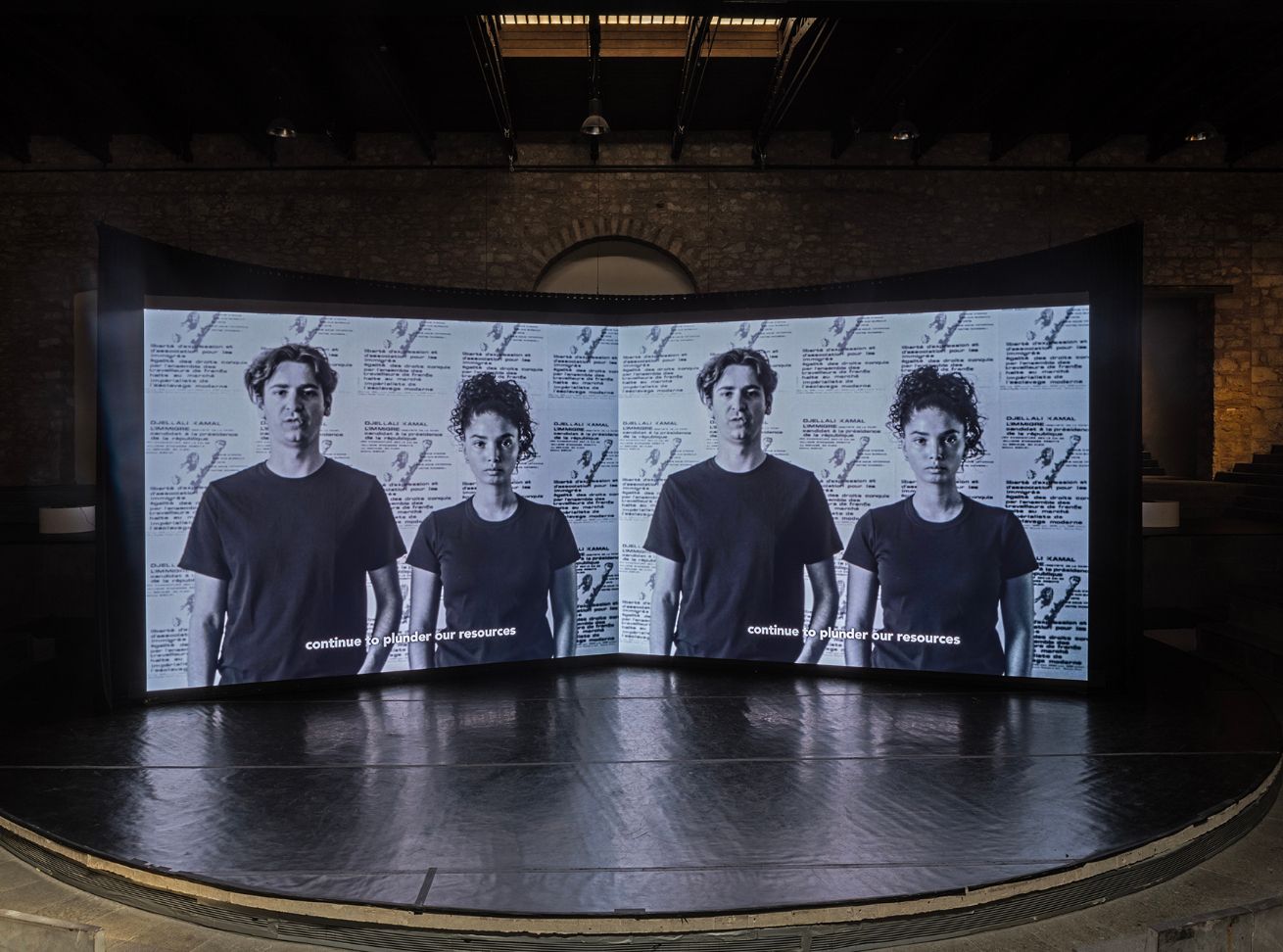
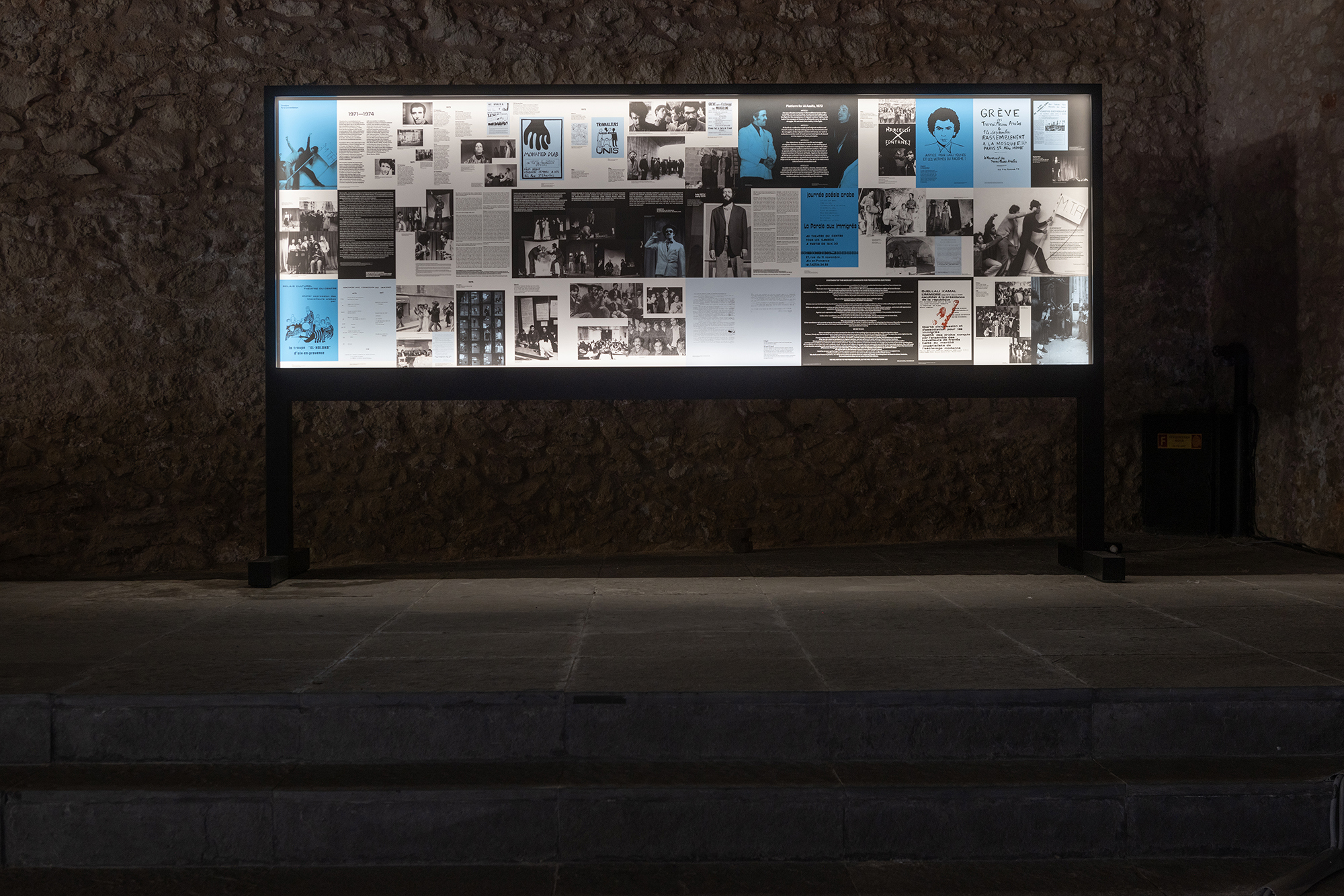
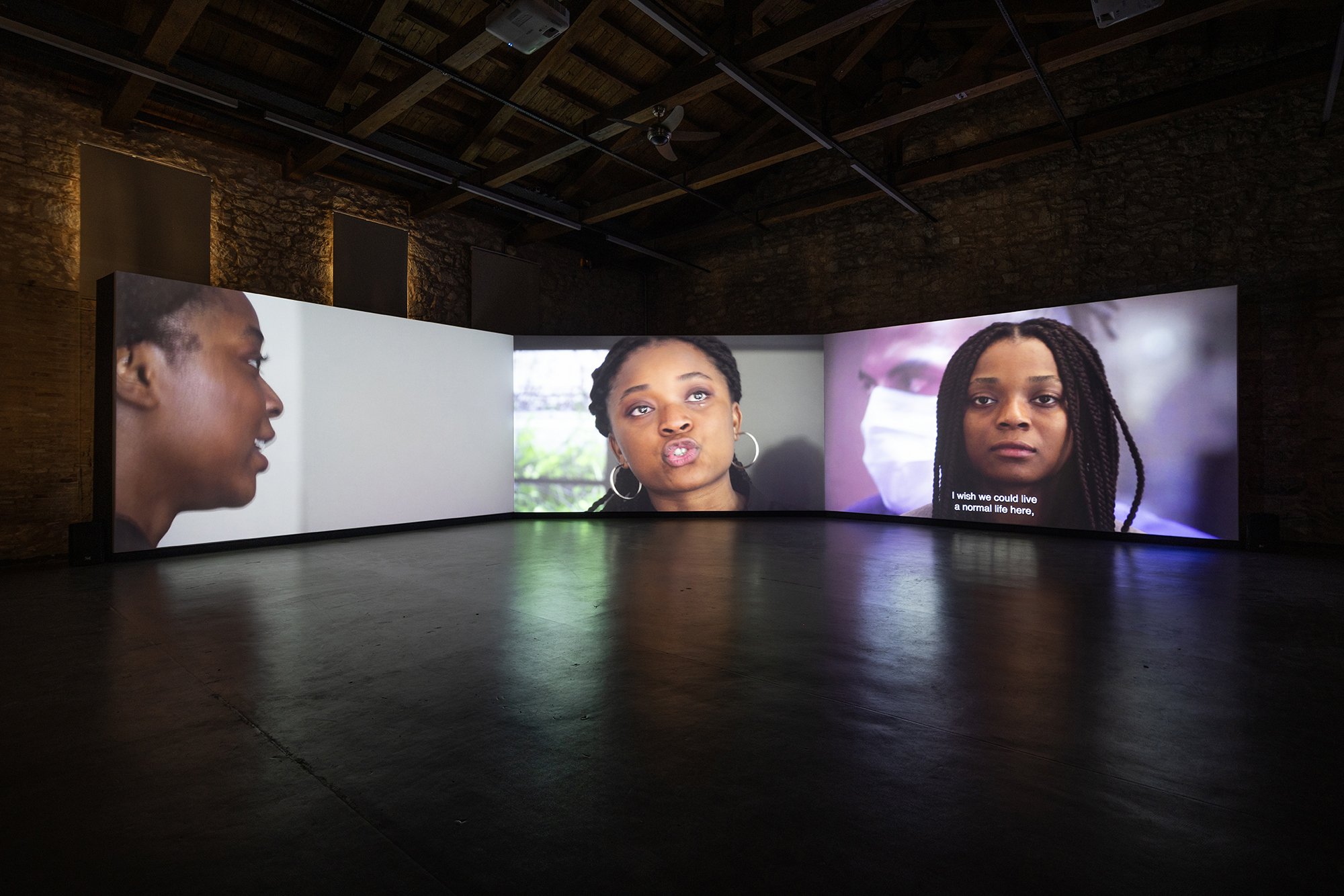
Moroccan French artist Bouchra Khalili‘s installation The Circle Project (2023)—which comprises a multiscreen installation, a video, and a mural poster—is a portrait, of sorts, of the Movement of Arab Workers and its theatre groups, Al Assifa (The Tempest) and Al Halaka (The Circle), which were formed in France in the 1970s to demand, in the words of the exhibition literature, ‘a right to papers, decent working and living conditions, and cultural and artistic expression’.
Another highlight are the nine films from the compelling documentary series ‘The AfroGreeks’ (2015–ongoing) by Døcumatism—an Athenian collective of filmmakers, artists, curators, historians, and social workers—which casts light on the various experiences of Greeks of African origin who live in the Kypseli neighbourhood of Athens.
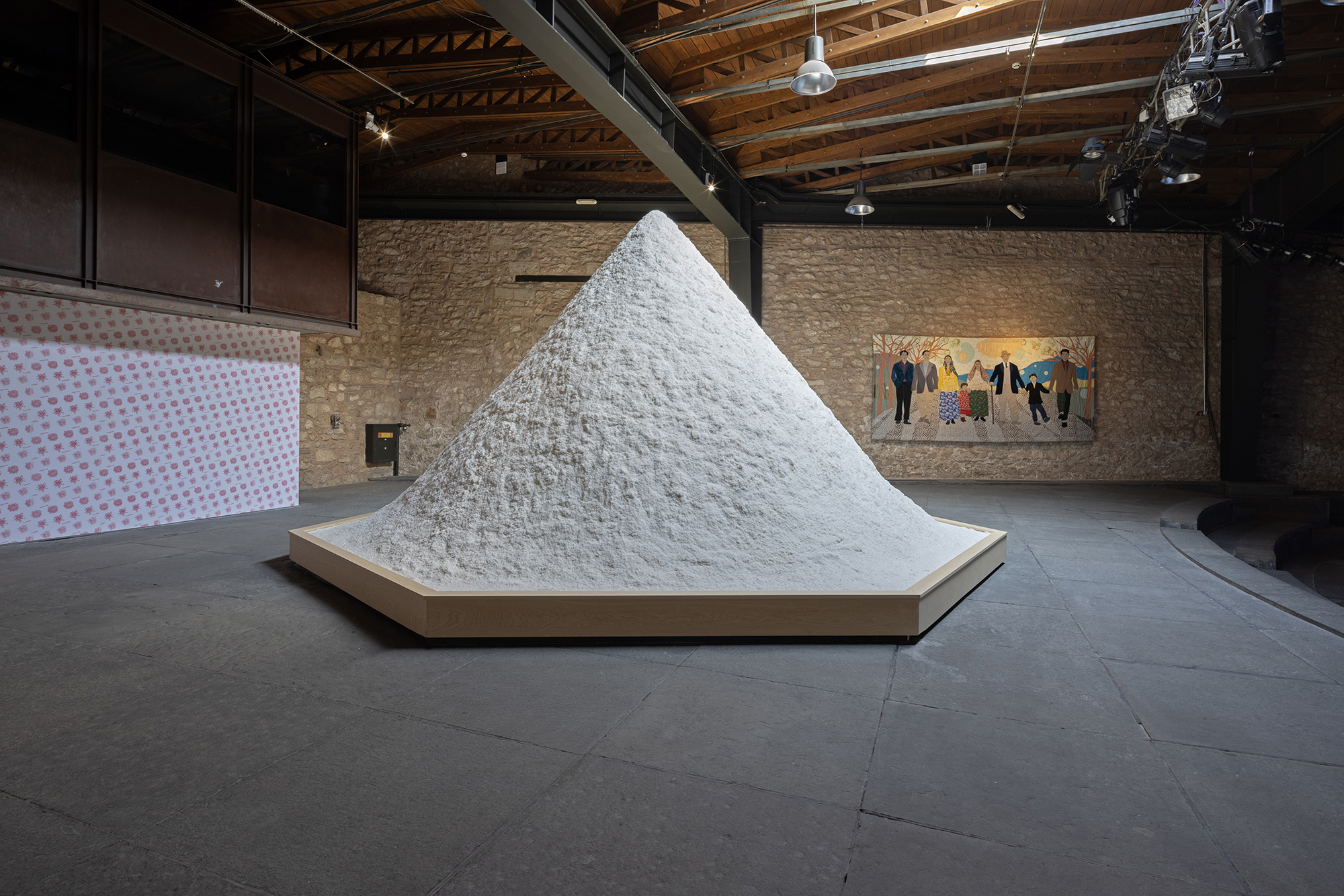
By contrast, the Afro-Dutch artist and activist Patricia Kaersenhout’s The Soul of Salt (2016/2024) employs symbolism over explication: a pyramid of 8,000 kilos of salt from the Mediterranean, a reference to the seas crossed and tears shed by enslaved people of the African diaspora.
![Taysir Batniji, Untitled [Delayed Reality] (2015–ongoing). Series of framed drawings, watercolour and pencil on paper. 34 × 41.5 cm and 28,7 × 35, 7 cm (framed).](https://files.ocula.com/anzax/Content/246A4448.jpg)
Honouring the details that become lost amid the sheer volume of images we’re confronted with every day, Taysir Batniji’s delicate series of drawings, ‘Delayed Reality’ (2015–ongoing), depicts an array of subjects—from chilis and a cloud to the back of a man in a keffiyeh—based on fragments of photographs sourced by the Palestinian artist from newspapers.
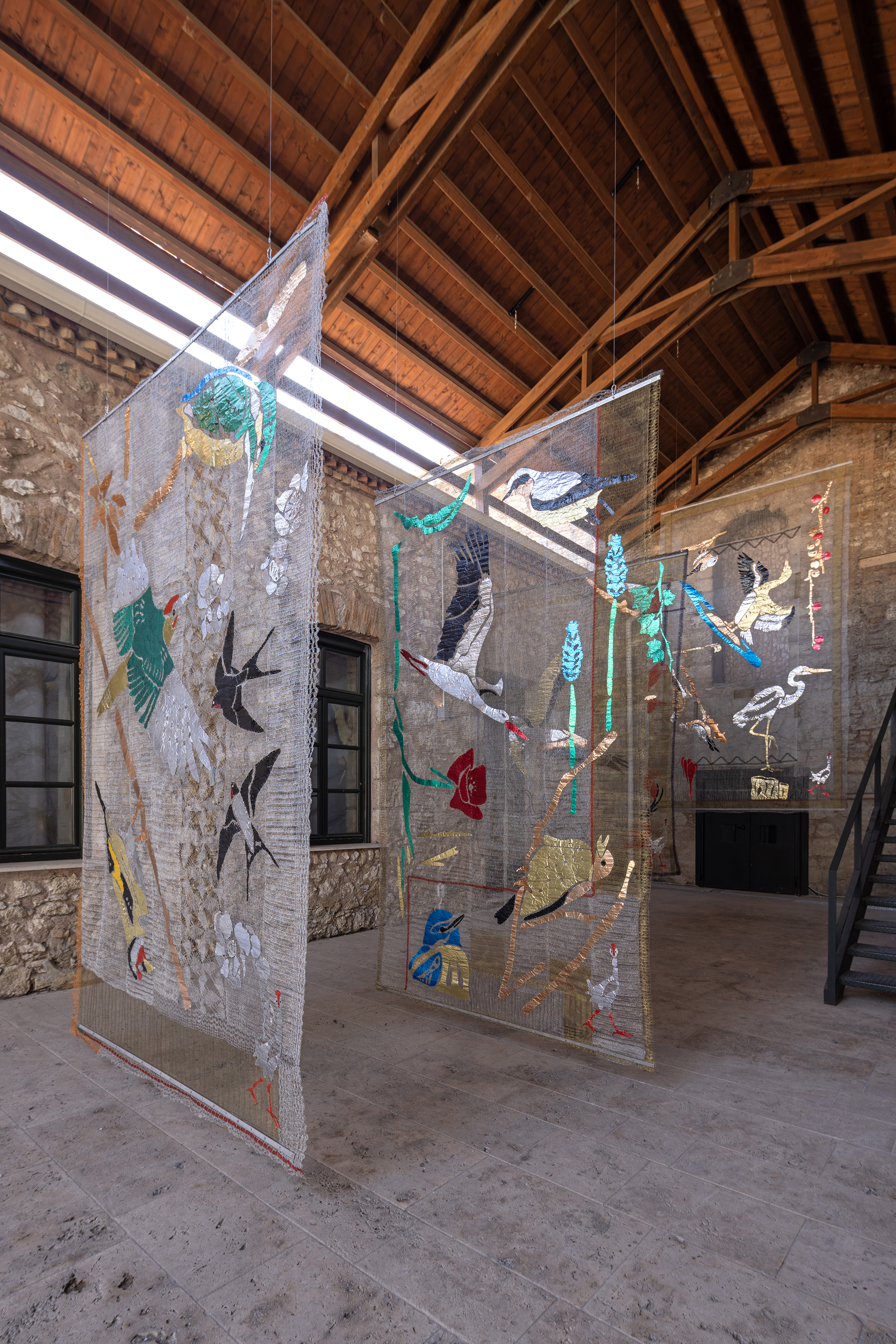
Elsewhere, Cypriot artist Maria Loizidou channels the past to respond to the vagaries of the present: her Volant Migrants (2023)—dreamy banners of vivid birds and flowers, hand-woven from stainless steel and metallic thread—alludes to the ancient Greek myth of the abduction of Persephone.
Overall, space of togetherness asks: What can art add to complex geopolitical debates and crises? Would justice be better served via blunt statements of fact? Or are blunt statements of fact too simplistic, too dismissive of the nuances of individual experience? That no single answer dominates is not simply a testament to art’s accommodation of complexity but also, conversely, a marker of the challenges it faces to remain relevant to the communities it serves. —[O]
space of togetherness is on view at NEON at the Drama School of the Greek National Theatre, Athens, until 20 October 2024.
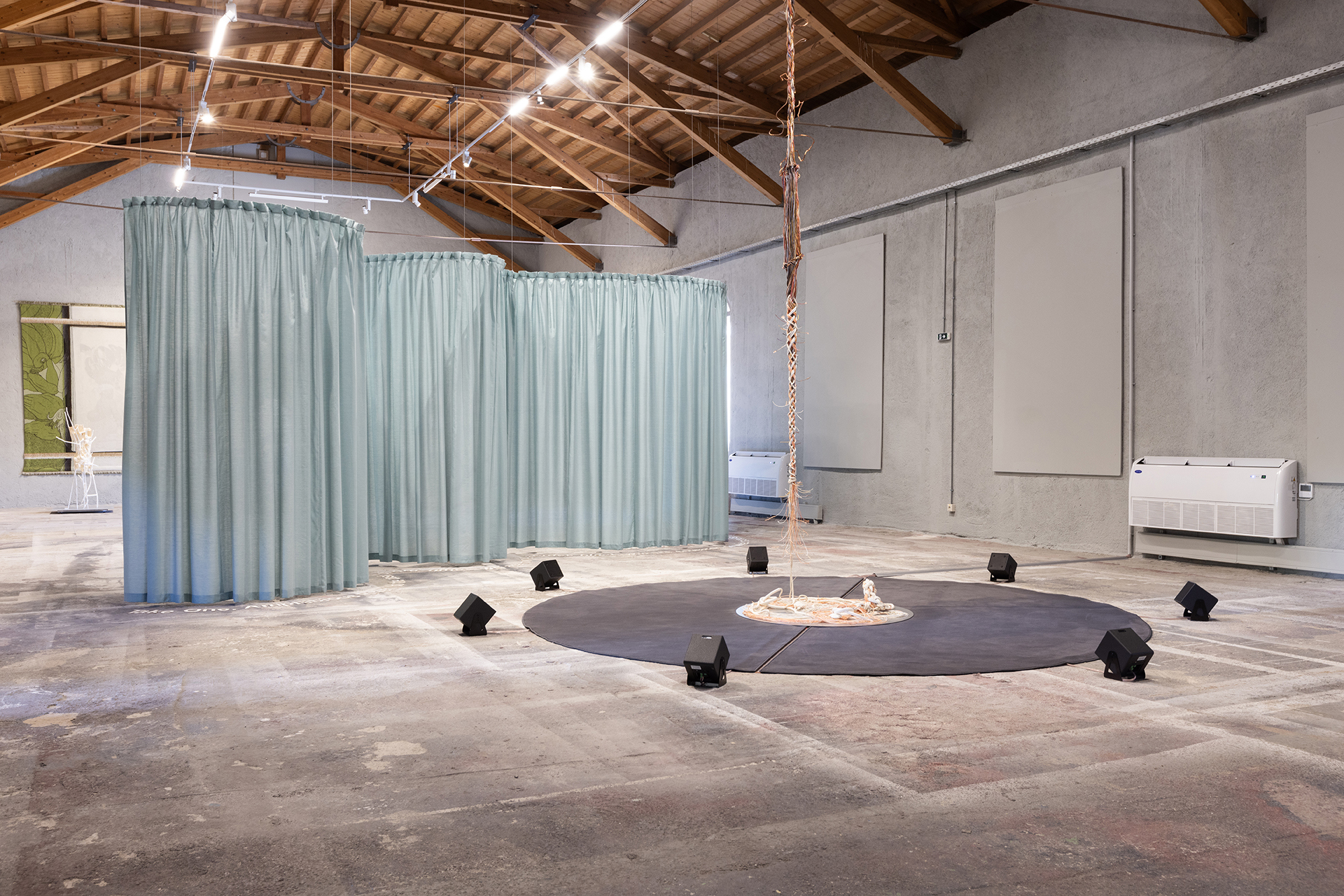
Main image: Exhibition view: space of togetherness, NEON at the National Theatre of Greece Drama School | School of Athens - Irene Papas | Photography (9 September–20 October 2024). Photo: © Natalia Tsoukala, Courtesy NEON.

A respected voice in contemporary art discourse.
Focusing on ambitious storytelling and insightful art-world commentary. Ocula Magazine publishes in-depth interviews, critical essays and timely analysis on the artists, exhibitions and ideas driving the global art world.
Learn more about Ocula Magazine
Showcasing the best of the art world.
Ocula partners with galleries from around the world to highlight their artists, artworks and exhibitions. Gallery membership is by application and invitation, with each member vetted by an independent panel.
Learn more about Ocula Membership
Specialises in the sale of major artworks.
Led by a team with deep ties to the world’s leading auction houses, galleries and collectors. Ocula’s advisory team offers bespoke services to high-net-worth clients from around the world who are looking to acquire the best of contemporary and modern art.
Learn more about our team and services