




SIMON HANTAÏ
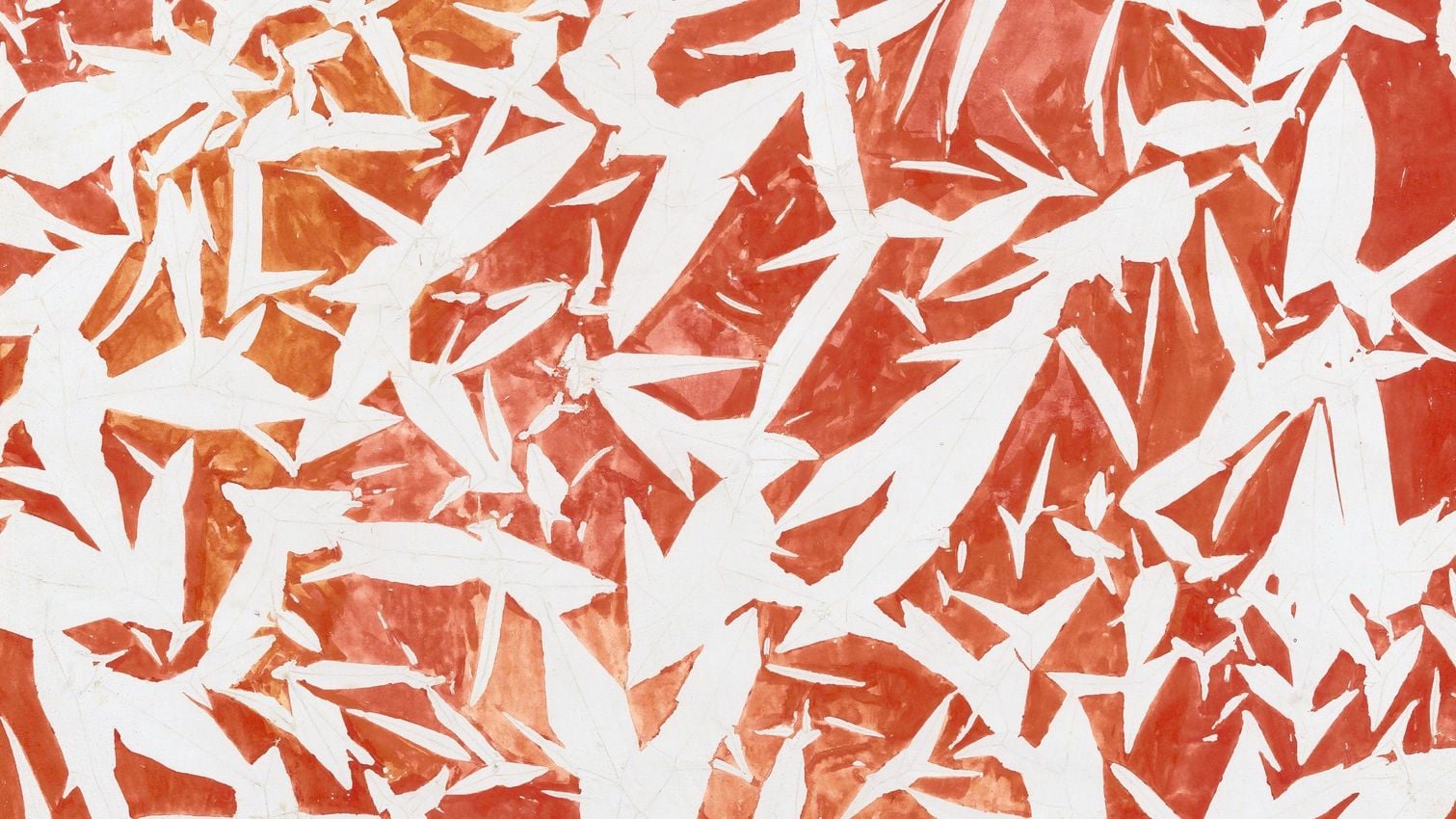
1922-2008, HungaryWell-known internationally for pliage—his tie-dye-related method of constructing paintings in which folded, scrunched-up bundles of canvas are splashed with colour and then unravelled before stretching—Simon Hantaї was a reclusive figure who did not enjoy being in the spotlight. Studying art initially in the School of Fine Art in Budapest, Hantaï moved to Paris in 1948, where he befriended the Surrealists, including André Breton. However, Hantaї fell out with Breton when Hantaї showed enthusiasm for the work of Jackson Pollock and claimed it had connections with automatic writing. Becoming an abstractionist and exhibiting at Galerie Kleber in Paris in 1956, Hantaї was influenced by and became friends with George Mathieu. He also became interested in philosophy and Christian mysticism, becoming friends with Jacques Derrida and Gilles Deleuze. In some works Hantaї transcribed texts onto the canvases.
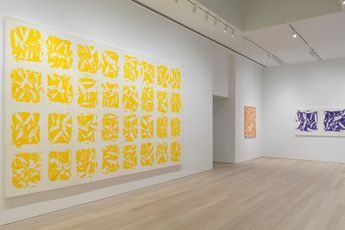
Hantaї developed his method of holistically and decoratively exploring landscape (Etude) and then the individual human figure (Meun) in the mid-1960s, and the white negative spaces became more compositionally dominant when he realised their importance. In the 1970s he then began working with a repetitive grid formation (Tabula), applied to very large sheets of canvas and resulting in rows and rows of splintery squares. In 1982 Hantaї represented France in the Venice Biennale, but in the following 16 years—apart from showing some white-on-white works with his Parisian dealer Jean Fournier—he stopped exhibiting. Hantai has had a large number of retrospectives: Centre Pompidou (1976, 2013); Simon Hantaï 1960–76, CAPC musée d’art contemporain de Bordeaux (1981); Simon Hantaï: Retrospective, Musée d’Art et d’Industrie, Saint-Etienne, France (1973); Simon Hantaї from 1960 to 1995: Retrospective, Westfälisches Landesmuseum Für Kunst Und Kulturgeschichte, Münster (1999).
His works are held at: Musée National d’Art Moderne, Centre Pompidou, Paris; Musée d’Art moderne de la Ville de Paris; The Museum of Modern Art, New York; National Gallery of Art, Washington, DC; Hirshhorn Museum and Sculpture Garden, Washington, DC; and Ludwig Museum of Contemporary Art, Budapest.
John Hurrell | Ocula | 2018

Explore Simon Hantaï's Exhibitions




Explore and Follow Artists Shaping Contemporary Art
A respected voice in contemporary art discourse.
Focusing on ambitious storytelling and insightful art-world commentary. Ocula Magazine publishes in-depth interviews, critical essays and timely analysis on the artists, exhibitions and ideas driving the global art world.
Learn more about Ocula Magazine
Showcasing the best of the art world.
Ocula partners with galleries from around the world to highlight their artists, artworks and exhibitions. Gallery membership is by application and invitation, with each member vetted by an independent panel.
Learn more about Ocula Membership
Specialises in the sale of major artworks.
Led by a team with deep ties to the world’s leading auction houses, galleries and collectors. Ocula’s advisory team offers bespoke services to high-net-worth clients from around the world who are looking to acquire the best of contemporary and modern art.
Learn more about our team and services