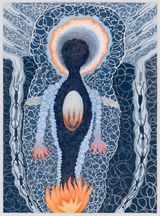
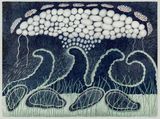
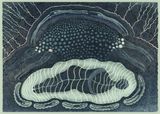
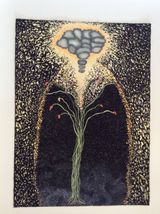
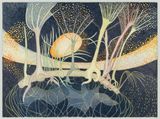
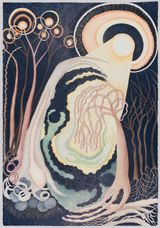
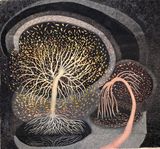
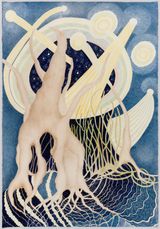
Ann Leda Shapiro’s art is a vibrant exploration of feminism, nature, and the subconscious. Over many decades, she has examined elements of personal history, activism, and healing, weaving these stories together through paintings, which are simultaneously mystical, magical, and perplexing. Her work focusses on a universal exploration of the nature of being and identities of self. Shapiro spent her formative years studying art-making techniques and exploring the vast collections of the Museum of Natural History and the Metropolitan Museum of Art in New York City. Providing additional insights into her art and ways of seeing are her experiences in the countercultural movements of the 1960s, which sought to heighten consciousness and counter injustice in the art world. Shapiro’s art has always reflected her thoughtful study of human existence and a deep engagement with the world around her.
Shapiro emerged as a pioneering voice in feminist art during the 1970s, challenging societal norms with her bold, often provocative imagery. A 1973 solo exhibition at the Whitney Museum of American Art marked a significant moment in her career. However, it exposed the limitations of institutional acceptance at the time—specific works were censored for their explicit engagement with gender and sexuality. Decades later, these once-excluded paintings found their rightful place in the Seattle Art Museum’s permanent collection, reaffirming the enduring relevance of Shapiro’s vision. As Glenn D. Lowry writes in the foreword of the catalogue of Vital Signs shown at Moma: ”[Ann Leda Shapiro’s work] is presented at a moment when the body is a particularly charged subject of governance and debate.”
Beyond the art world, Shapiro’s journey led her into the practice of acupuncture and holistic medicine, which deeply align with the themes present in her paintings—cycles of renewal, the balance of opposites, and the interconnectedness of all living things. Shapiro currently lives and works on an island in the Pacific Northwest, continuing to create, inspired by the resilience of trees and the healing forces of nature.
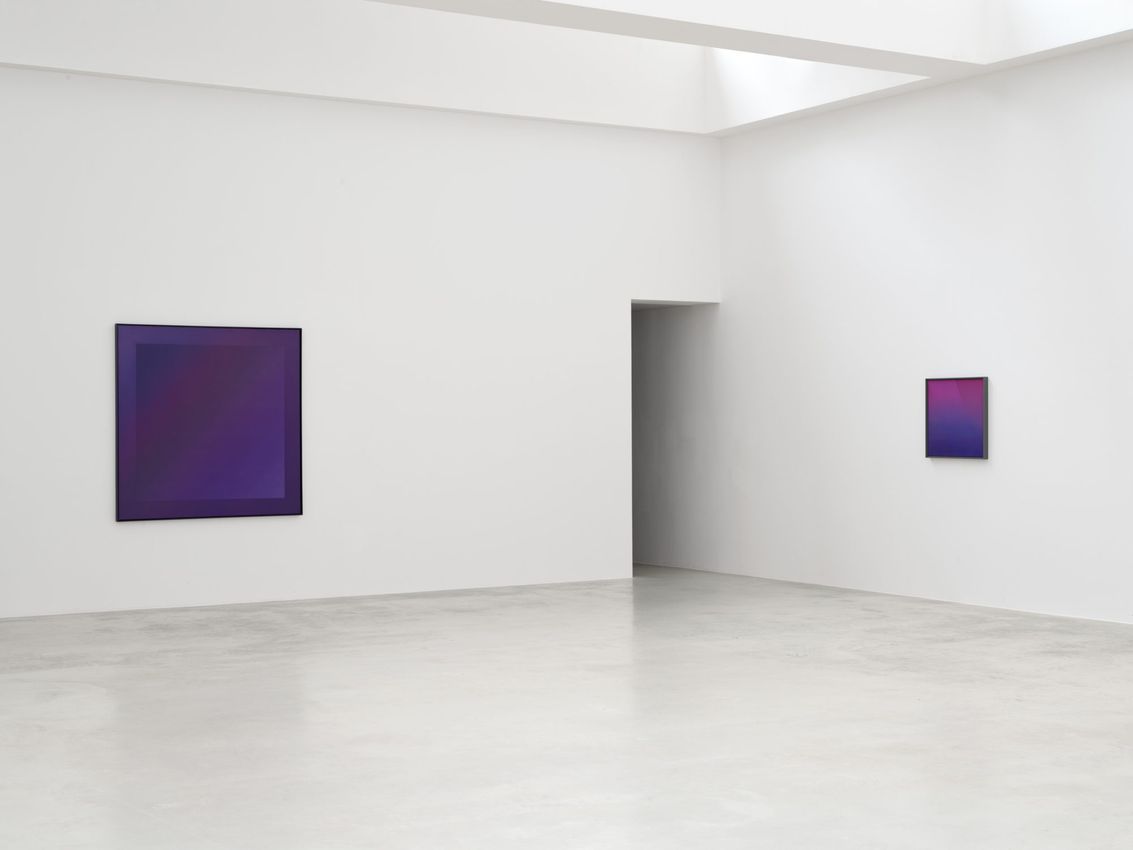
In this debut exhibition with the gallery, Shapiro’s works serve as portals into a richly layered universe where personal and collective histories intertwine. Through luminous colours and symbolic imagery, she invites us to reflect on the interwoven forces of nature, the human body, and the subconscious mind—a space where art and healing merge.


The Axel Vervoordt Company and Axel Vervoordt Gallery are located at a site known as Kanaal–a converted industrial distillery that has become a cultural and residential community.

A respected voice in contemporary art discourse.
Focusing on ambitious storytelling and insightful art-world commentary. Ocula Magazine publishes in-depth interviews, critical essays and timely analysis on the artists, exhibitions and ideas driving the global art world.
Learn more about Ocula Magazine
Showcasing the best of the art world.
Ocula partners with galleries from around the world to highlight their artists, artworks and exhibitions. Gallery membership is by application and invitation, with each member vetted by an independent panel.
Learn more about Ocula Membership

Specialises in the sale of major artworks.
Led by a team with deep ties to the world’s leading auction houses, galleries and collectors. Ocula’s advisory team offers bespoke services to high-net-worth clients from around the world who are looking to acquire the best of contemporary and modern art.
Learn more about our team and services