Press Release

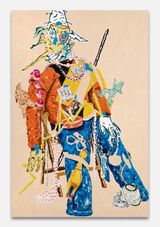
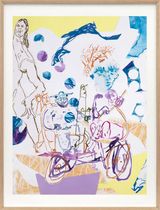
Multimedia artist Léonard Martin has joined the Galerie Templon family. The gallery is markinghis arrival with a solo exhibition of brand-new work, the fruit of a dialogue between painting andfilm he developed during his 2019 residency at Villa Medici.

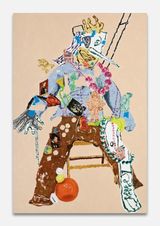
Painter, video maker and sculptor, he strives to build bridges between different eras and forms.The French art scene has been captivated by his work since he graduated from Beaux-Arts deParis in 2015. His creative process makes use of drawings, papers and precious sculptures heoccasionally animates with stop motion, a motor or video. Léonard Martin finds his subjects bydelving into literature and the history of art. Wooden figures on tracks bring to life the charactersof Irish novelist and poet James Joyce on their strolls. Italian painter Paolo Uccello’s horse ridersserve as a pretext to create an interactive piece. He sometimes takes a break from buildingmarionettes and automatons and uses painting to capture the theatre of objects that is hisworkshop. Visibly playing with perspective and cultural labels, particularly “painting” and”sculptures”, the scenes he creates generate a dialogue between mediums and eras.

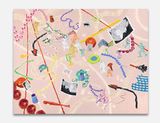
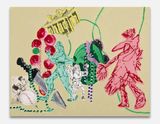
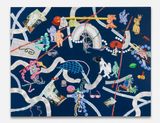
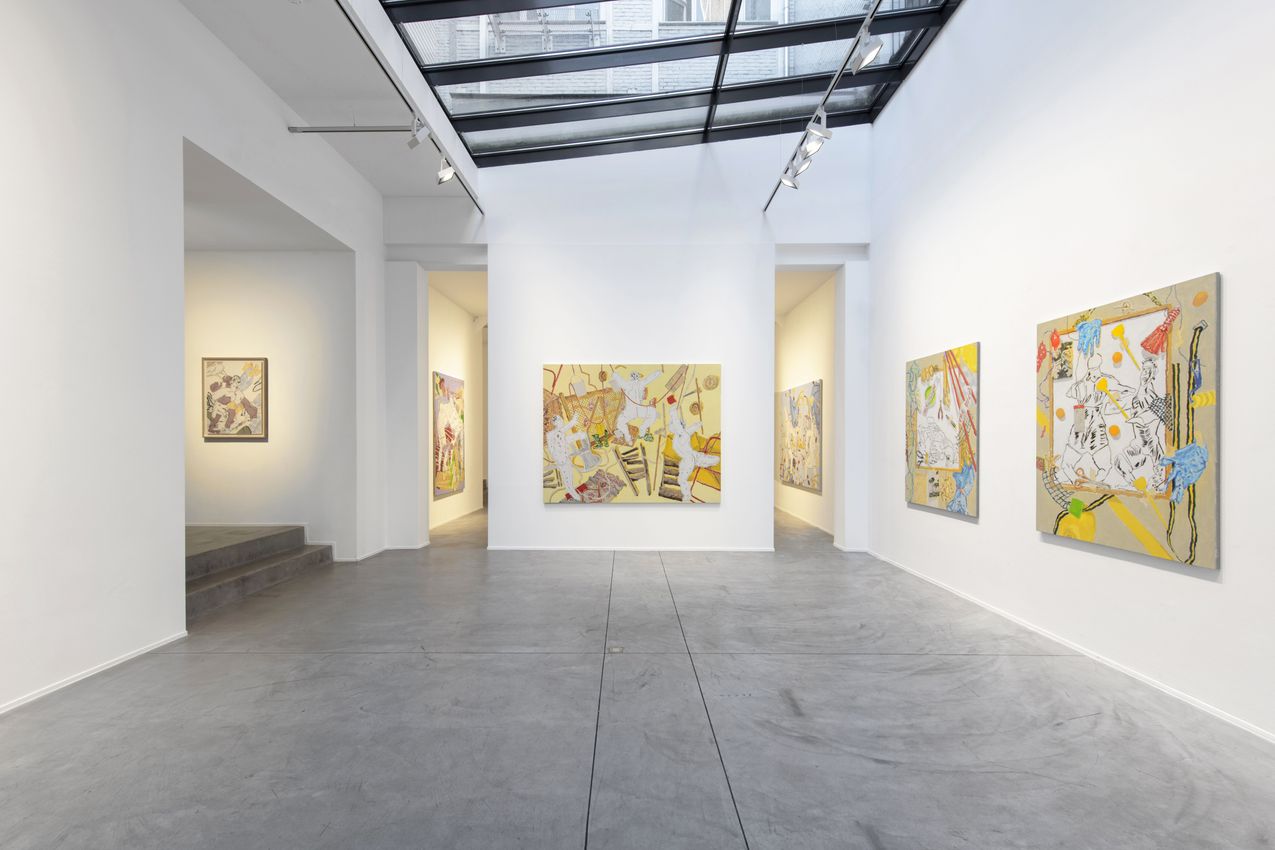
Suite Zabriskie is a new series of paintings that invents a possible sequel to ZabriskiePoint (1970), Michelangelo Antonioni’s famous movie, following on from the final scene. Thefilm ends with a luxurious villa exploding in a billowing cloud of smoke and household itemssuspended in the sky, all against a background of music by Pink Floyd. The canvases emerge ina landscape of objects it would be difficult to describe as still lifes, since their spatialrepresentation cuts loose from genre codes to embrace theatre design, for instance, or mentalmapping.

Antonioni’s film criticised the society of the time, disparaging consumerism, police violence andthe conservative system. While these problems have yet to be resolved, they have now beenjoined by other issues, such as the ecological crisis and need to protect the living world.

‘Watching the objects in Zabriskie Point explode raises the question of the repercussions thehistory of one generation has on the next, the mark it leaves,’ explains Léonard Martin.“I capture the objects on the fly. The film ends in what feels like a point of no return, whereasmy paintings imagine possibilities for what came next. How can we find our way through thedreams abandoned by our elders?”

Similarly to emaki, the Chinese, Japanese and Korean illustrated scrolls which foreshadowedcinema, the bird’s-eye view offered by Martin’s paintings prevent the viewer’s gaze fromstanding still. These paintings do not have a vanishing point, opening the door to multipleinterpretations and keeping the images in motion. The solid block of background colouraccommodates the objects like the characters on a page of writing. History constantly needs tobe rewritten. The profusion of marks that cover the surface of the paintings suggest the constantflow of images, texts and sounds that now fill our daily lives, sometimes blurring our vision. ForMartin, “painting might well make it possible to demolish the images, to make the cloud thathangs heavy above our heads rain.”

The series of paintings thus form a sort of musical suite. A next step following on from the film’smissing image (the items falling back to earth after being thrown in the air), from the blind spotsof a particular era (the ecological and social impact of the post-war boom years), from the battlesstill to be fought (police criminality, conservatism, the hubris of progress). The artist askshimself: “how can we stick the fragments of history back together? What should we look for andlisten for? My paintings do not take stock. They draw lines, from one memory to another, seekingto repopulate the desert that Antonioni’s lovers fly over.”

Born in 1991 in Paris, Léonard Martin currently lives and works in the French capital. Afterstudying at Beaux-Arts de Paris (graduating in 2015 with first class honours) and Fresnoy –Studio National des Arts Contemporains (graduating in 2017 with first class honours), he showedhis work at the Salon de Montrouge, Jeune Création and La Villette in Paris and CollectionLambert in Avignon.

In 2018-2019, he was artist-in-residence at the French Academy in Rome at the Villa Medici.His other prizes and residencies include the Cité Internationale des Arts in Paris in 2019, theADAGP Digital Art – Video Art Revelation prize in 2017, Prix Dauphine from Université Paris-Dauphine in 2018, and Lafayette Anticipations in 2021. His work was exhibited at the CollectionLambert in Avignon in 2017, La Villette in Paris, the Gwangju Biennale in Korea, Villa Emerigein Paris, and Beaux-Arts de Paris in 2018, and Palais de Tokyo in Paris and Lyon Biennale in2019.

Read More

Also Exhibiting at Templon

About the Gallery

The gallery was founded in 1966 by Daniel Templon, who was then only 21. It first opened rue Bonaparte, in Saint-Germain-des-Prés in Paris, before moving in 1972 to its current location, rue Beaubourg, in the Marais, close to the Pompidou Center, which opened in 1977. Daniel Templon first gained recognition by exhibiting conceptual and minimal artists such as Martin Barré, Christian Boltanski, Donald Judd, Joseph Kosuth, Richard Serra. In the seventies and eighties, Daniel Templon was one of the pioneers of the contemporary art and introduced many important American artists to the French public: Dan Flavin, Ellsworth Kelly, Willem de Kooning, Frank Stella, Andy Warhol. The gallery quickly became one of the references in contemporary art in France. In 1972, Daniel Templon and Catherine Millet co-founded the monthly art magazine ART PRESS.

View Gallery Profile
Address
Veydtstraat 13A
Brussels
Belgium
Opening Hours
Tues - Sat, 11am - 6pm
(1)
Brussels Veydtstraat 13A
Templon
Veydtstraat 13A, Brussels, Belgium
+32 253 713 17
http://www.templon.com

Opening hours
Tues - Sat, 11am - 6pm
The art world in focus