




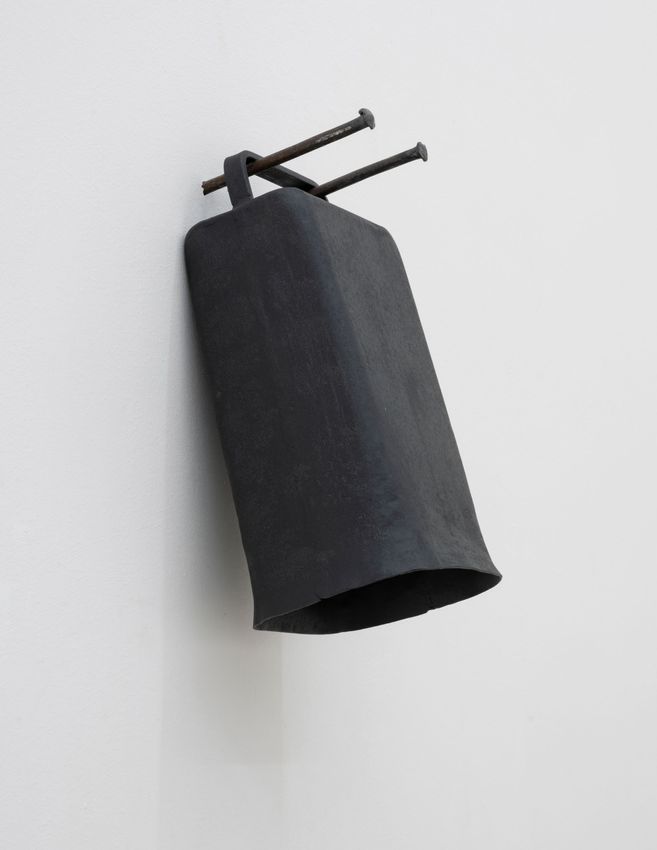
ARIA DEAN
b. 1993, United StatesThe Los Angeles-born artist and writer Aria Dean has created a multi-platform body of work based in trenchant critiques of representational systems. Confounding binaries such as abstraction and figuration, individual and collective, Dean’s sculptures, installations, videos, and essays trouble received ideas of race, power, and form. Concerned with what art objects can do, and have done, for their producers and receivers, Dean tracks artistic innovations against an array of theoretical positions, from poststructuralism to Afropessimism, not just to parse the social and material bases of art but also to grasp its impact on the ontology of Blackness. Her visual and intellectual provocations often build upon—and challenge—touchstones of contemporary art, from Robert Smithson and Robert Morris to Ulysses Jenkins and Lorna Simpson. Minimalism has proven especially fertile for Dean: “insofar as minimalism evades the representational sphere almost entirely,” she writes, “pure play of forms and volumes and densities—it’s like having an amusement park all to myself, with the lights out.”
A group of 3D-printed silicone sculptures—Dean calls them “impossible objects”—take Morris’s _Box with the Sound of Its Own Making _as their starting point. Dexterous with new media, Dean uses modeling software to embed the box in a dense assemblage of forms, some of them born-digital and others derived from artistic or commercial sources. Mingling historical interests with up-to-the-minute digital techniques, these artworks—like many others by Dean, such as a series of eerie mirrored silhouettes and a caged video installation shown at the Hammer Museum’s Made in L.A. 2020—betray a sly sense of humor as they unsteady our perception, refusing to cohere as either copy or original, or as any single material.
Like her growing roster of peculiar objects, which have featured in shows at international venues including Centre d’Art Contemporaine Genève and Schinkel Pavillon, Dean’s theoretical practice—expounded in her own writing and in the journal November, which she edits—demonstrate a capacious but cogent project, enmeshed within and critical of the art systems through which she maneuvers.
Text courtesy Greene Naftali.






Explore and Follow Artists Shaping Contemporary Art
A respected voice in contemporary art discourse.
Focusing on ambitious storytelling and insightful art-world commentary. Ocula Magazine publishes in-depth interviews, critical essays and timely analysis on the artists, exhibitions and ideas driving the global art world.
Learn more about Ocula Magazine
Showcasing the best of the art world.
Ocula partners with galleries from around the world to highlight their artists, artworks and exhibitions. Gallery membership is by application and invitation, with each member vetted by an independent panel.
Learn more about Ocula Membership
Specialises in the sale of major artworks.
Led by a team with deep ties to the world’s leading auction houses, galleries and collectors. Ocula’s advisory team offers bespoke services to high-net-worth clients from around the world who are looking to acquire the best of contemporary and modern art.
Learn more about our team and services